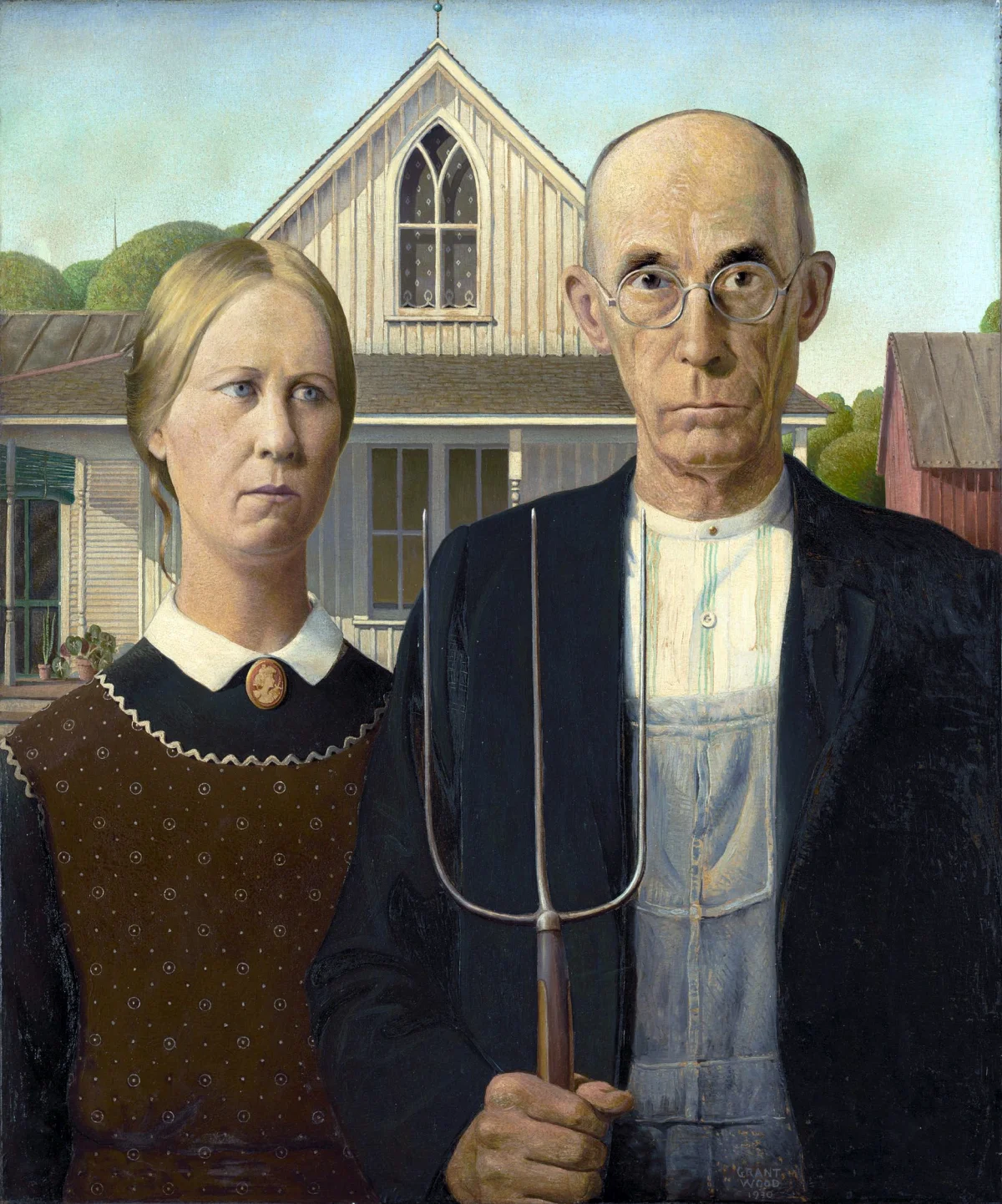
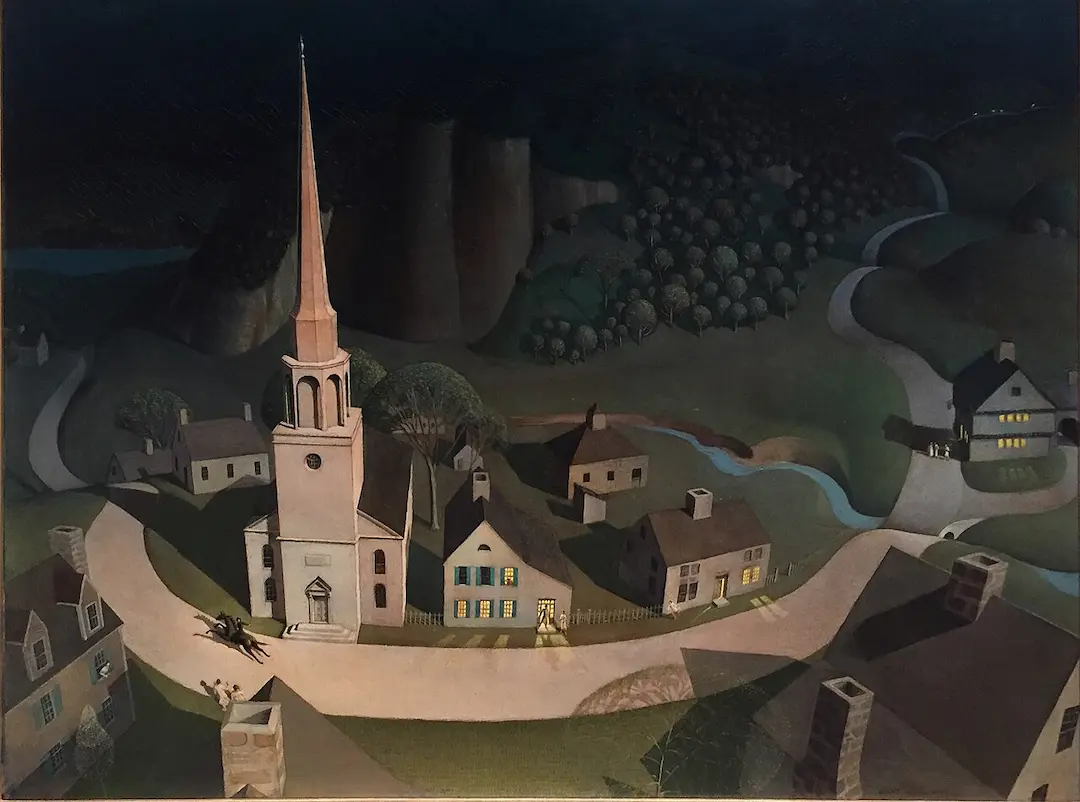
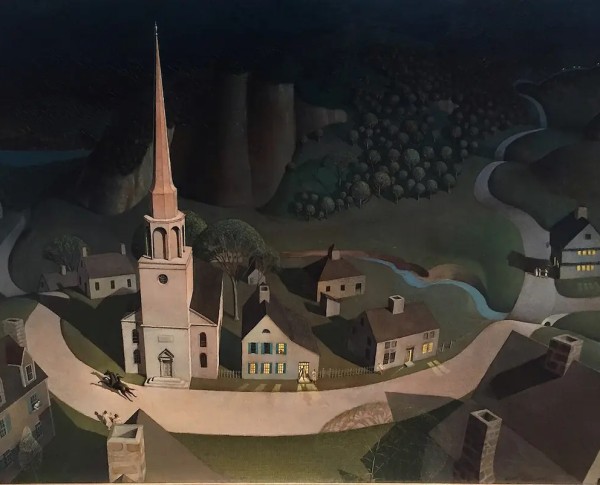
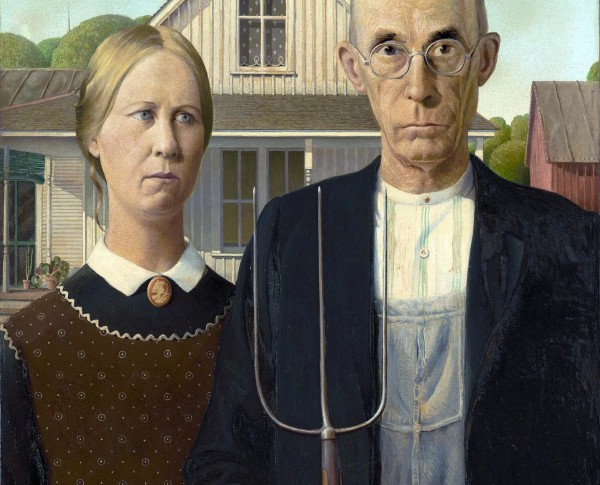
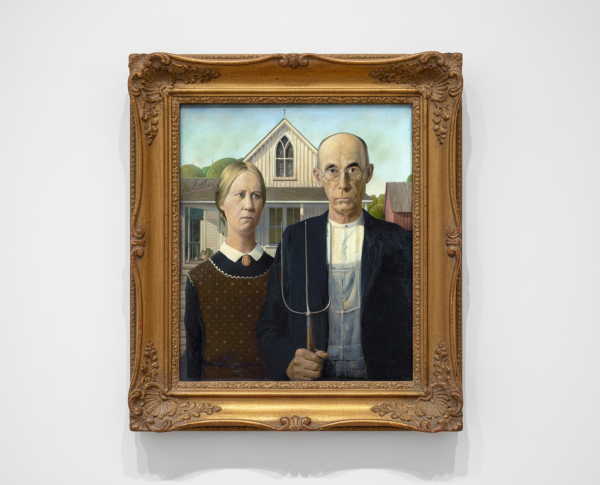
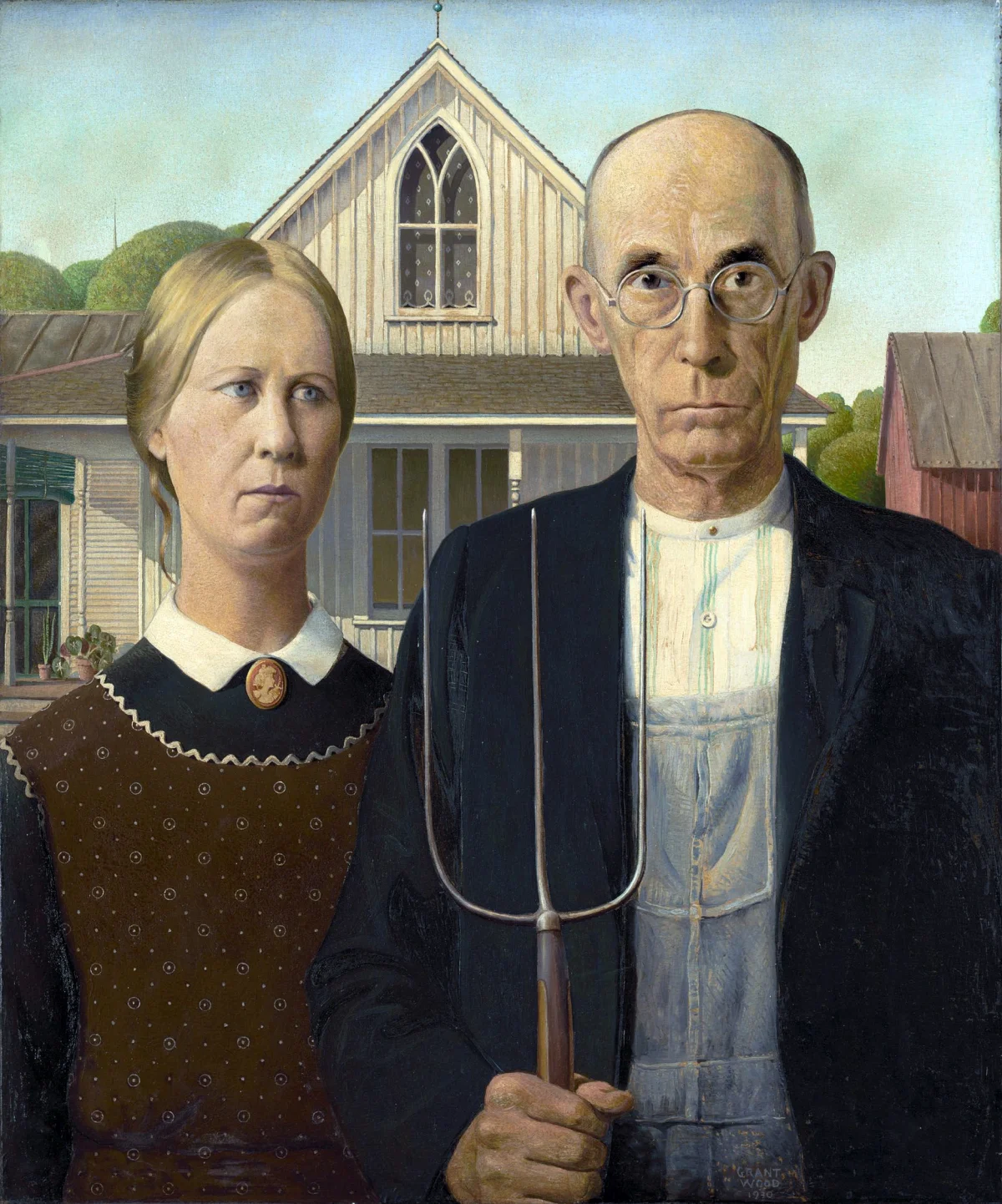
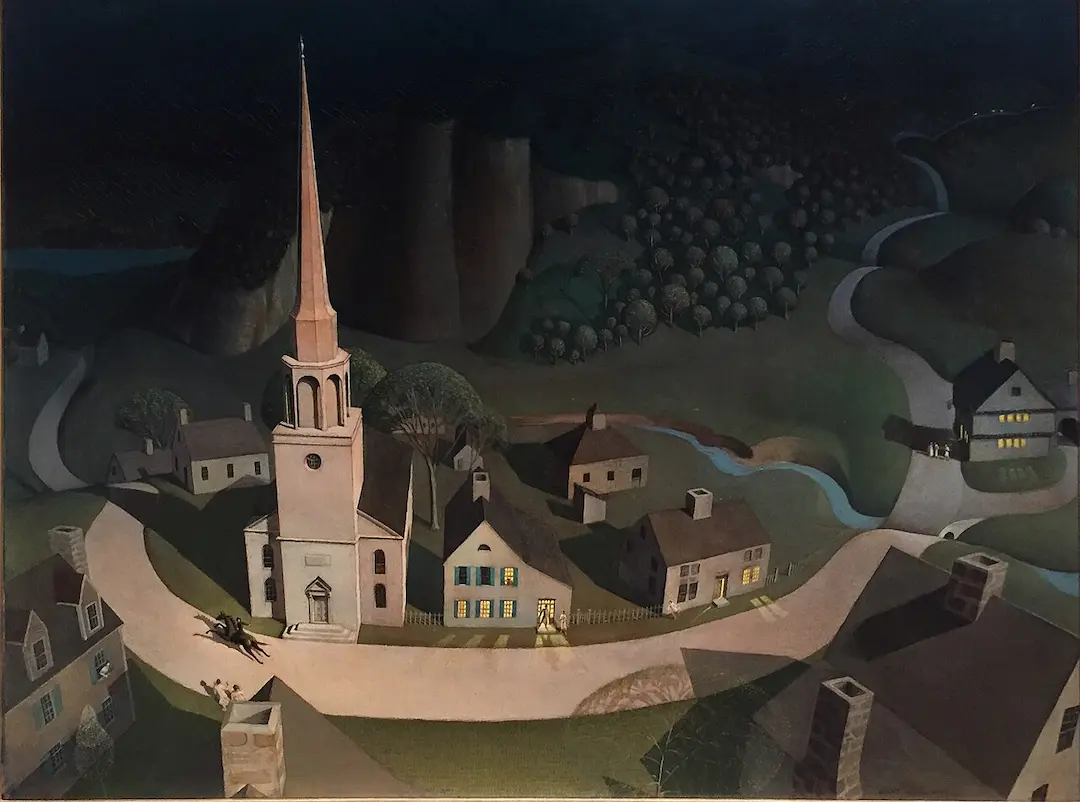
Grant Wood’s meticulous technique shines through in "American Gothic," a remarkable example of oil on canvas artistry. The painting’s sharp details and realistic textures showcase Wood’s command of his medium, characteristic of the American Regionalism movement. Each brushstroke brings depth to the figures and the iconic farmhouse, elevating this masterpiece to a paragon of American art. Collectors often pair such works with related products, including "The Midnight Ride of Paul Revere."
Every element in "American Gothic" tells a story, from the pitchfork to the somber expressions of the subjects. Grant Wood infused this hand-painted oil painting with rich symbolism representing rural values and the American spirit. The painting’s narrative depth, typical of the American Regionalism movement, invites viewers to interpret its meaning. For those seeking a fine art painting for sale, it makes a thoughtful companion to other iconic pieces like "The Midnight Ride of Paul Revere."
Owning "American Gothic" is a dream for many art enthusiasts who value oil on canvas masterpieces. Grant Wood’s celebrated painting is a cornerstone of the American Regionalism movement, making it a highly sought-after addition to any collection. Collectors often explore related products, such as "The Midnight Ride of Paul Revere," to complement their holdings. This fine art painting for sale offers not just visual appeal but also a piece of American heritage.
When Art Meets History
"American Gothic" by Grant Wood stands as a quintessential example of the American Regionalism movement, capturing a pivotal moment in rural American history. This hand-painted oil painting, completed in 1930, depicts a stern farmer and his daughter, symbolizing the resilience of Midwestern life during the Great Depression. Grant Wood’s masterpiece resonates with viewers, placing it among other celebrated works of its era and making it a must-see for those interested in art’s intersection with American culture.
Techniques That Speak
Grant Wood’s meticulous approach to oil on canvas is evident in every detail of "American Gothic." The painting’s sharp lines and clear forms reflect the influence of Flemish Renaissance art, a hallmark of the American Regionalism movement. Through precise brushwork and a realistic palette, Wood creates a scene both intimate and iconic. The use of oil on canvas allows for rich textures and depth, enhancing the lifelike quality that has made this work so enduring.
Emotions on Display
"American Gothic" evokes a complex range of emotions, from stoic determination to subtle vulnerability. Grant Wood’s portrayal of his subjects—the farmer and his daughter—captures the spirit of rural America with authenticity and empathy. This fine art painting for sale continues to captivate audiences with its emotional depth, solidifying its place in the legacy of American Regionalism. The painting’s ability to communicate so much through expression and posture is a testament to Wood’s artistic skill.
Coveted by Collectors
As one of the most recognizable works in American art, "American Gothic" remains highly sought after by collectors and museums. The painting’s status as a hand-painted oil painting by Grant Wood, a leading figure of the American Regionalism movement, adds to its allure and value. With its iconic composition and historical significance, "American Gothic" is a fine art painting for sale that continues to inspire admiration and demand among art enthusiasts worldwide.
Frequently Asked Questions About American Gothic
What is the historical context of American Gothic?
American Gothic was painted in 1930 during the Great Depression, a period marked by economic hardship in the United States. The painting reflects the values and struggles of rural America during this challenging time.
Who are the figures depicted in American Gothic?
The painting features a farmer and his daughter, often interpreted as a husband and wife. The models for these figures were Grant Wood's sister, Nan Wood Graham, and his dentist, Dr. Byron McKeeby.
What is the significance of the Gothic window in the background?
The Gothic window symbolizes the traditional values and steadfastness of rural America. It also serves as a visual anchor, connecting the figures to their environment and suggesting a sense of permanence.
What artistic techniques did Grant Wood employ in American Gothic?
Wood utilized a meticulous realism style, characterized by sharp lines and detailed textures. His use of light and shadow enhances the three-dimensionality of the figures and the architectural elements of the house.
How does American Gothic reflect American identity?
The painting embodies the spirit of American resilience and hard work. It has become an iconic representation of Midwestern values, emphasizing the dignity of labor and the importance of family and tradition.
What is the symbolism behind the pitchfork in American Gothic?
The pitchfork is often interpreted as a symbol of farming and labor, representing the agrarian lifestyle. It also conveys a sense of strength and determination, reflecting the character of the figures in the painting.
How has American Gothic influenced popular culture?
American Gothic has inspired numerous parodies and adaptations in various media, highlighting its status as a cultural icon. Its imagery has been referenced in films, literature, and advertising, demonstrating its lasting impact on American culture.
What was Grant Wood's intention in creating American Gothic?
Wood aimed to celebrate the American spirit and the values of rural life. He sought to portray a sense of pride in the American Midwest, while also addressing the complexities of its social and economic conditions during the 1930s.
What role did American Gothic play in the Regionalism movement?
American Gothic is a quintessential example of the Regionalism movement, which focused on depicting everyday life in rural America. The painting emphasizes local culture and identity, contrasting with the urban themes prevalent in contemporary art of the time.
How has the interpretation of American Gothic evolved over time?
Initially viewed as a straightforward representation of rural life, interpretations of American Gothic have evolved to include critiques of social norms, gender roles, and the complexities of American identity. This multifaceted approach continues to spark discussion among art historians and audiences alike.






















_GFM_Painting_(1).webp)


 100% Hand-Painted: Finished in 3-6 Weeks

.png)















_(1).webp)