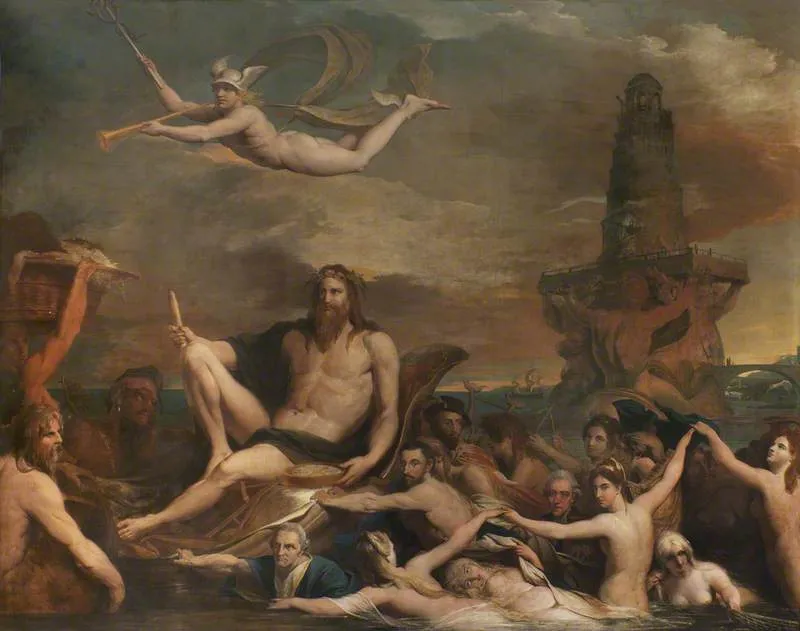
Frequently Asked Questions About Commerce, or the Triumph of the Thames
What is the historical context of "Commerce, or the Triumph of the Thames"?
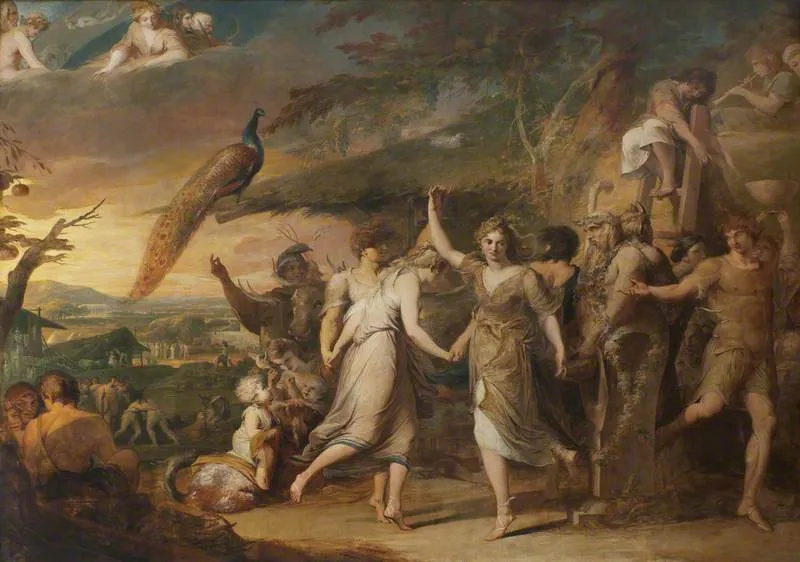
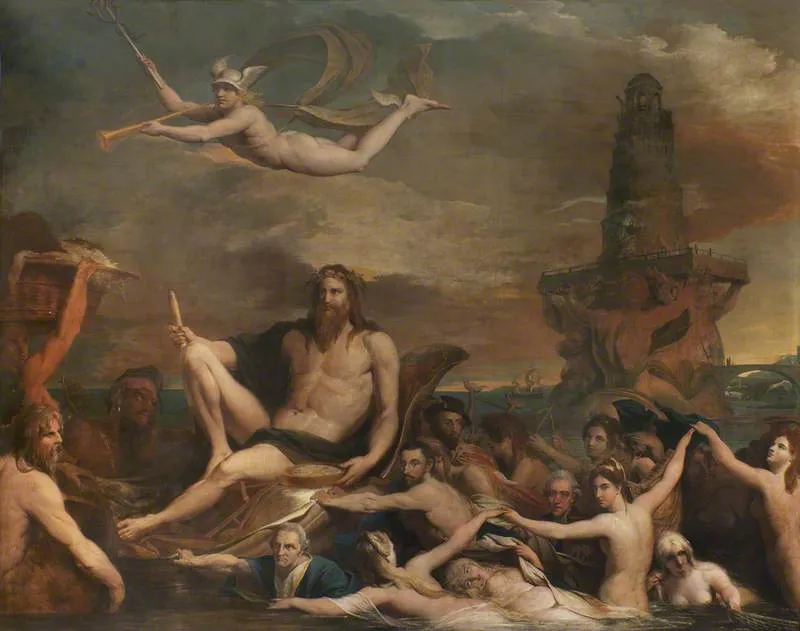
This painting was created by James Barry in the late 18th century, a time when Britain was experiencing significant economic growth and expansion due to trade and commerce, particularly through its naval power and colonial endeavors.
What are the main themes represented in the painting?
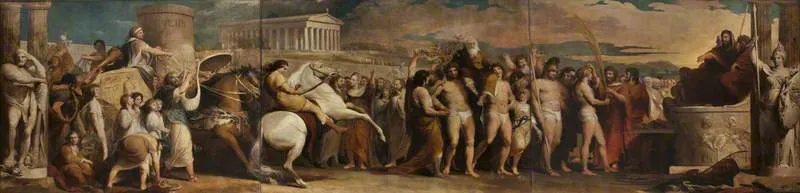
The painting embodies themes of commerce, prosperity, and the triumph of British naval power. It illustrates the importance of trade and the Thames River as a vital artery for economic activity in London.
Who are the central figures depicted in the artwork?
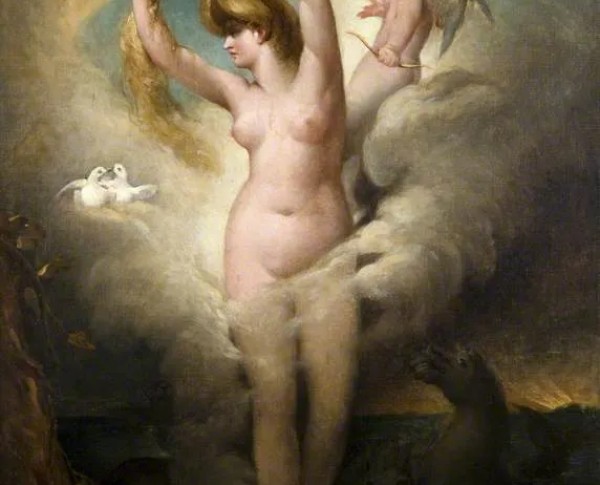
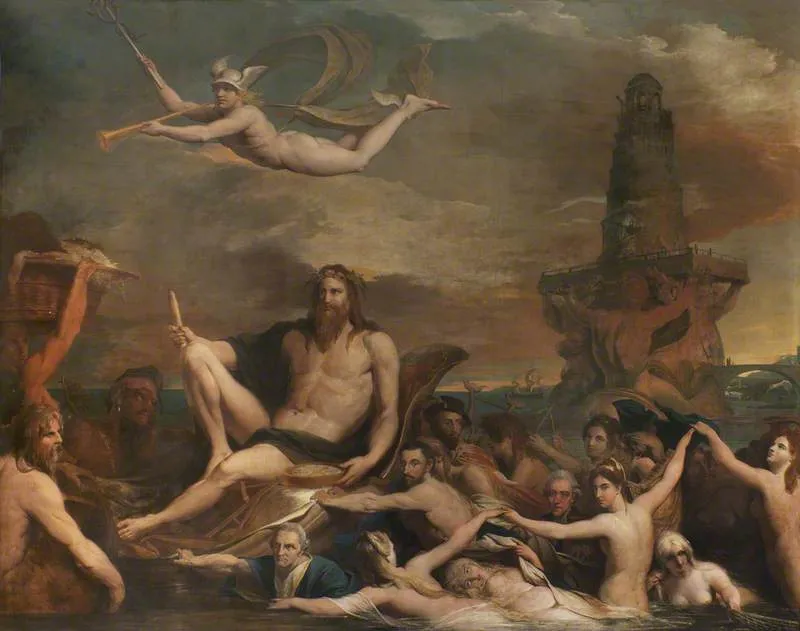
The central figures include personifications of Commerce and the Thames, along with various allegorical representations of trade, navigation, and prosperity, showcasing the interconnectedness of these elements in British society.
What artistic techniques did James Barry employ in this painting?
James Barry utilized a combination of classical composition and dramatic lighting to enhance the emotional impact of the scene. His use of color and dynamic poses contributes to the sense of movement and vitality within the artwork.
How does the painting reflect the values of the Enlightenment period?
The painting reflects Enlightenment values by celebrating reason, progress, and the potential of human achievement, particularly through commerce and trade, which were seen as pathways to societal improvement and wealth.
What symbols are present in "Commerce, or the Triumph of the Thames"?
Symbols such as ships, coins, and allegorical figures represent wealth, trade, and the maritime supremacy of Britain. These elements collectively convey a narrative of economic success and national pride.
In what ways does this painting serve as a commentary on British society?
The painting serves as a commentary on the burgeoning importance of commerce in British society, highlighting the role of the Thames as not just a river, but a lifeline that facilitated trade, cultural exchange, and national identity.
How does Barry's work compare to other artists of his time?
James Barry's work is notable for its grand scale and ambitious themes, setting it apart from contemporaries who often focused on more traditional subjects. His emphasis on allegory and narrative depth aligns him with the Romantic movement that followed.
What impact did "Commerce, or the Triumph of the Thames" have on subsequent art?
This painting influenced later artists by demonstrating the potential of allegorical themes in conveying complex societal messages. It paved the way for future works that explored the intersection of art, commerce, and national identity.
Where can I view "Commerce, or the Triumph of the Thames" today?
The painting is part of the collection at the Tate Gallery in London, where it continues to be a significant example of British art from the 18th century.























_GFM_Painting_(1).webp)


 100% Hand-Painted: Finished in 3-6 Weeks

.png)















_(1).webp)