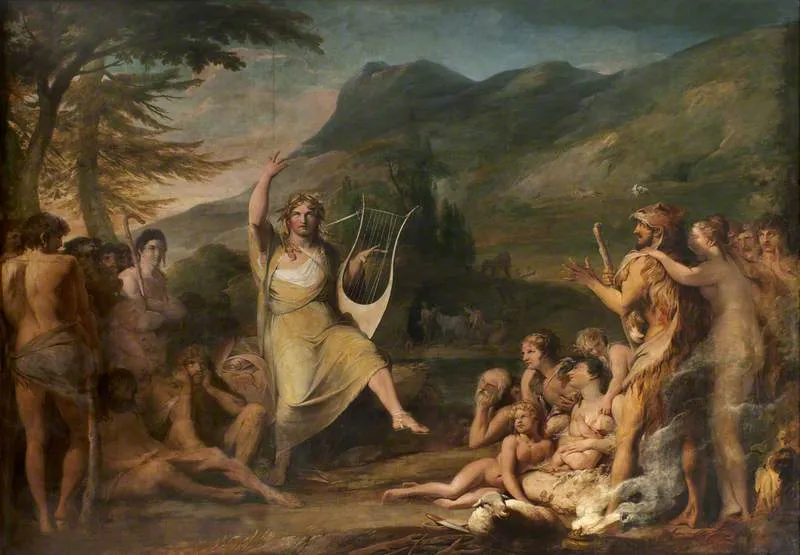
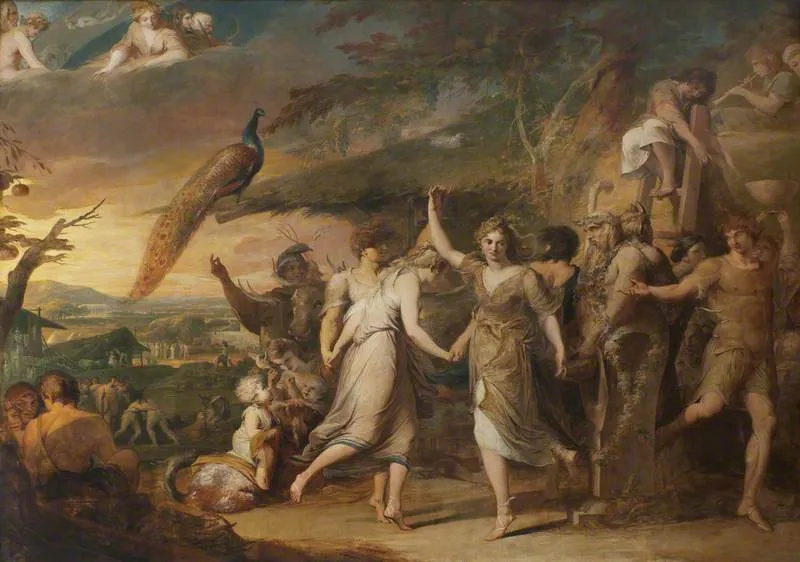
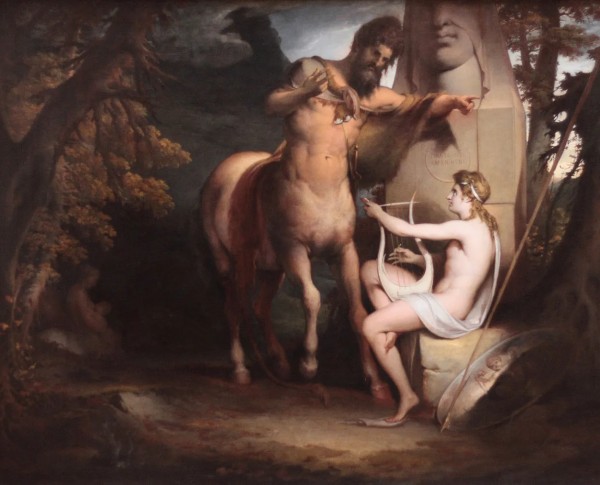
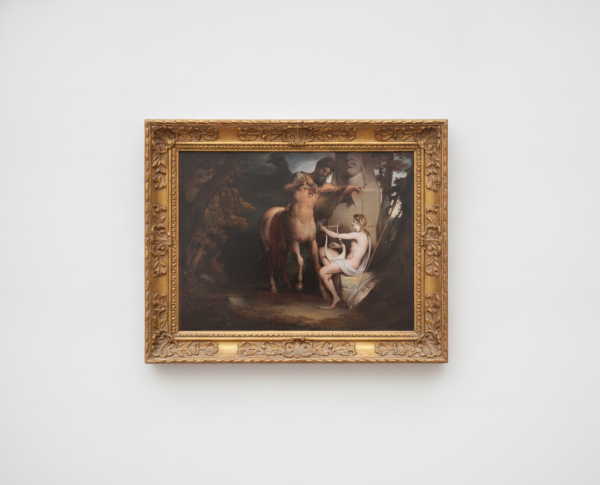
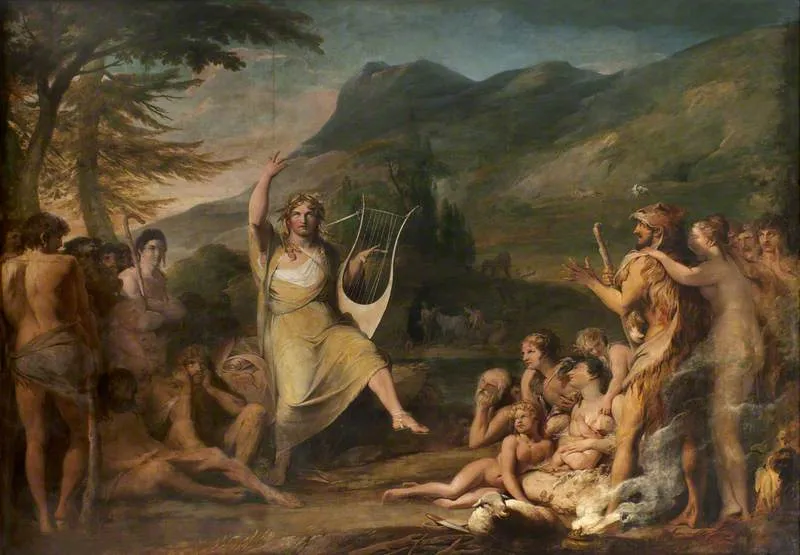
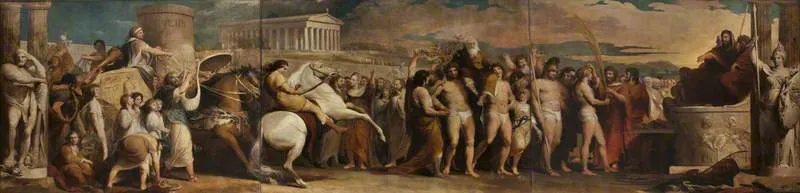
Rendered meticulously in oil on canvas, "Orpheus" demonstrates James Barry’s technical prowess and his ability to convey intense feeling through expressive brushwork. The Romanticism movement prized emotion and imagination, both of which are evident in Barry’s dynamic composition. Those who appreciate Barry’s technique may also be drawn to related masterpieces like "William Hunter" and "The Distribution of Premiums in the Society of Arts," each showcasing the artist’s unique style.
"Orpheus" by James Barry is rich with allegorical meaning, using mythological themes to explore human passion and tragedy. This fine art painting for sale invites viewers to interpret its layered symbolism, emblematic of the Romanticism movement’s fascination with storytelling. Collectors interested in myth and narrative may also enjoy works such as "Christopher Nugent" or "Hendrickje Stoffels in a White Cloak," which similarly weave symbolic tales through visual art.
Owning a hand-painted oil painting like "Orpheus" by James Barry is to possess a piece of Romanticism’s enduring spirit. Its historical significance and artistic mastery make it a prized addition to any collection. Art lovers seeking to expand their galleries can explore related products, including "Crowning the Victors at Olympia" and "The Distribution of Premiums in the Society of Arts," each offering their own unique narrative and aesthetic appeal.
When Art Meets History
"Orpheus" by James Barry is a remarkable hand-painted oil painting that stands as a testament to the Romanticism movement. Created during a period of intense artistic innovation, this work draws upon mythological themes to connect viewers with the deep emotional currents of its era. Barry, also known for masterpieces like "Self-Portrait in the Studio" and "Sappho at Leucate," uses Orpheus to bridge ancient legend with the Romantic fascination for individual expression and historical resonance.
Techniques That Speak
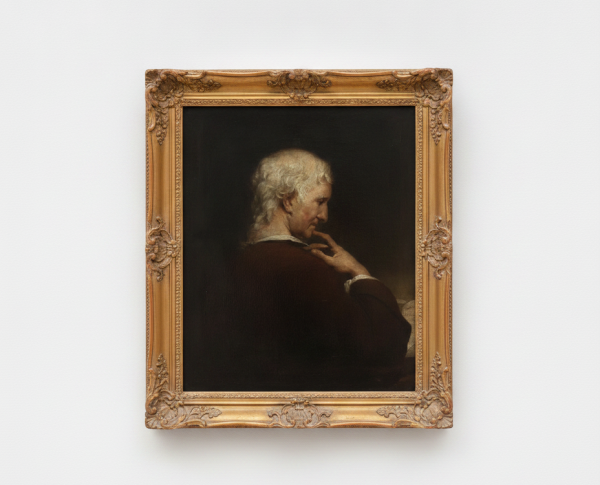
James Barry's mastery of oil on canvas is evident in "Orpheus," where his brushwork and dramatic use of light evoke the ethereal qualities of Romanticism. The painting’s textured layers and vibrant hues mirror the techniques seen in related works such as "Two men contemplating the Moon" and "Portrait of a Gentleman." Barry’s technical prowess in oil on canvas allows viewers to appreciate the delicate interplay between light and shadow, emphasizing the poignant narrative at the heart of this composition.
Emotions on Display
In "Orpheus," Barry channels the Romantic spirit by infusing the scene with profound emotion and longing. The figure of Orpheus, rendered with expressive detail, captures the sorrow and hope that define the myth. This fine art painting for sale resonates with viewers much like "First Consul Bonaparte," drawing them into the emotional landscape of the story. Barry’s ability to depict human vulnerability and passion is a hallmark of his contributions to the Romanticism movement.
Coveted by Collectors
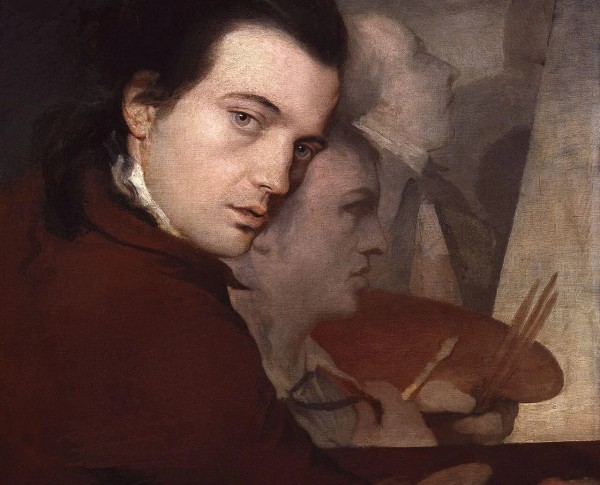
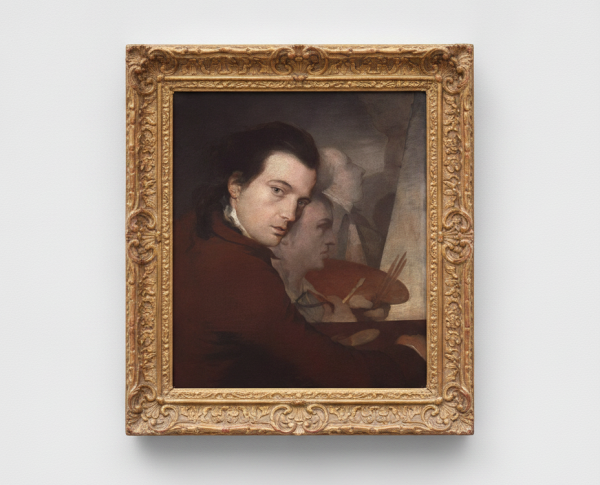
"Orpheus" remains a prized piece among collectors seeking a hand-painted oil painting from the Romanticism era. Its historical significance and aesthetic appeal place it alongside other sought-after works by James Barry, such as "Self-Portrait in the Studio" and "Sappho at Leucate." The allure of owning a fine art painting for sale from this period continues to grow, making "Orpheus" a coveted addition to any serious art collection devoted to Romanticism.
Related Romanticism Hand-Painted Oil Paintings by Other Artists
Other Famous Romanticism Artists:
Frequently Asked Questions About Orpheus
What is the historical context of James Barry's painting "Orpheus"?
"Orpheus" was painted during the late 18th century, a time when neoclassicism was prominent in Europe. This period emphasized the revival of classical themes and styles, reflecting the values of reason and order in art.
What mythological story does "Orpheus" depict?
The painting illustrates the myth of Orpheus, a legendary musician in Greek mythology who ventured into the Underworld to retrieve his wife, Eurydice. His enchanting music moved both gods and mortals, showcasing the power of art and love.
What artistic techniques did James Barry employ in "Orpheus"?
Barry utilized chiaroscuro to create dramatic contrasts between light and shadow, enhancing the emotional intensity of the scene. His use of dynamic composition and expressive figures reflects the neoclassical style while infusing it with a sense of movement.
What symbols are present in "Orpheus" and what do they represent?
Key symbols in the painting include the lyre, representing Orpheus's musical talent, and the presence of shadowy figures, symbolizing the souls of the dead. These elements highlight the themes of love, loss, and the transcendence of art.
How does "Orpheus" reflect the values of the Enlightenment?
The painting embodies Enlightenment ideals by emphasizing reason, human emotion, and the pursuit of knowledge through art. Orpheus's journey represents the quest for understanding and the power of human creativity to overcome despair.
What influences can be seen in Barry's portrayal of Orpheus?
Barry's portrayal is influenced by classical antiquity, particularly the works of ancient Greek and Roman artists. His attention to anatomical accuracy and idealized forms reflects the neoclassical admiration for the art of the past.
What role does color play in "Orpheus"?
Color in "Orpheus" is used to evoke emotion and highlight the narrative. The warm tones associated with Orpheus contrast with the cooler shades of the Underworld, symbolizing the tension between life and death, hope and despair.
How has "Orpheus" been received by art critics and historians?
Critics have praised "Orpheus" for its emotional depth and technical skill. Art historians often cite it as a significant work that bridges the neoclassical and romantic movements, showcasing Barry's innovative approach to classical themes.
What is the significance of the figures surrounding Orpheus in the painting?
The figures surrounding Orpheus represent various aspects of the human experience, including grief and longing. Their expressions and postures convey the emotional weight of Orpheus's journey, emphasizing the universal themes of love and loss.
In what ways does "Orpheus" exemplify the characteristics of neoclassical art?
"Orpheus" exemplifies neoclassical art through its adherence to classical themes, emphasis on harmony and proportion, and the moral lessons conveyed through mythological narratives. Barry's work reflects a commitment to clarity and idealism typical of the movement.























_GFM_Painting_(1).webp)


 100% Hand-Painted: Finished in 3-6 Weeks

.png)















_(1).webp)