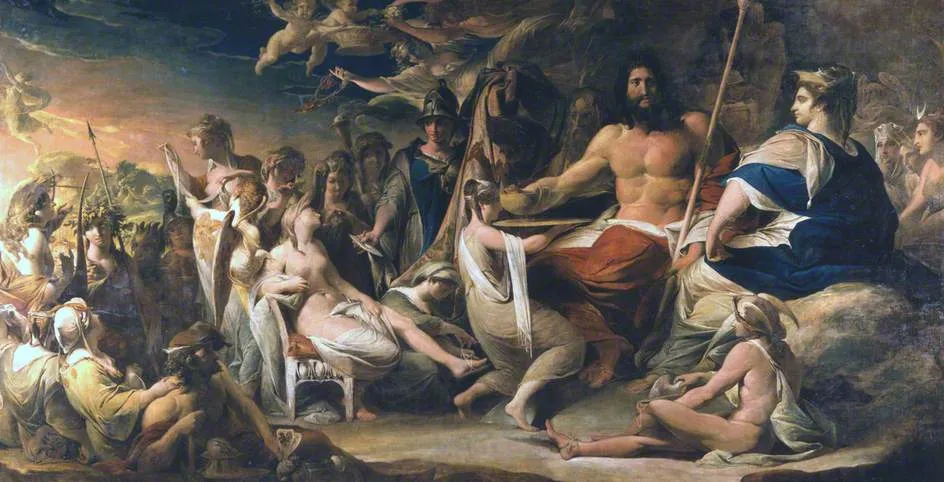
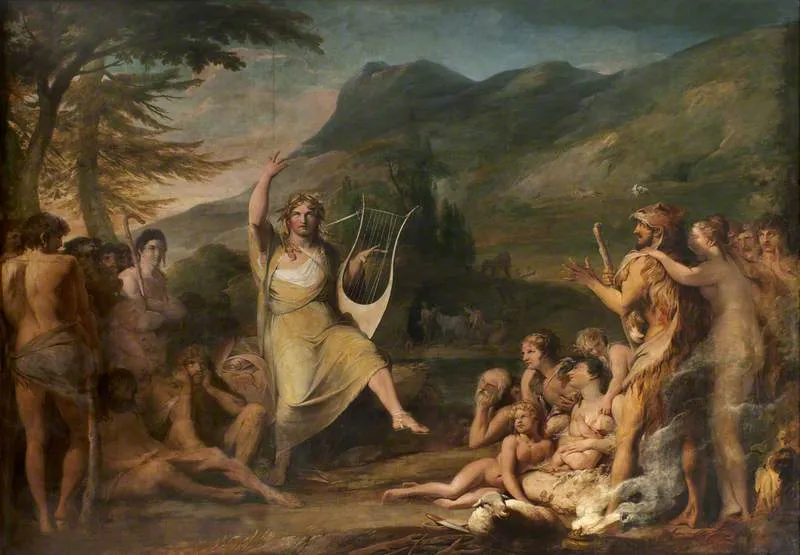
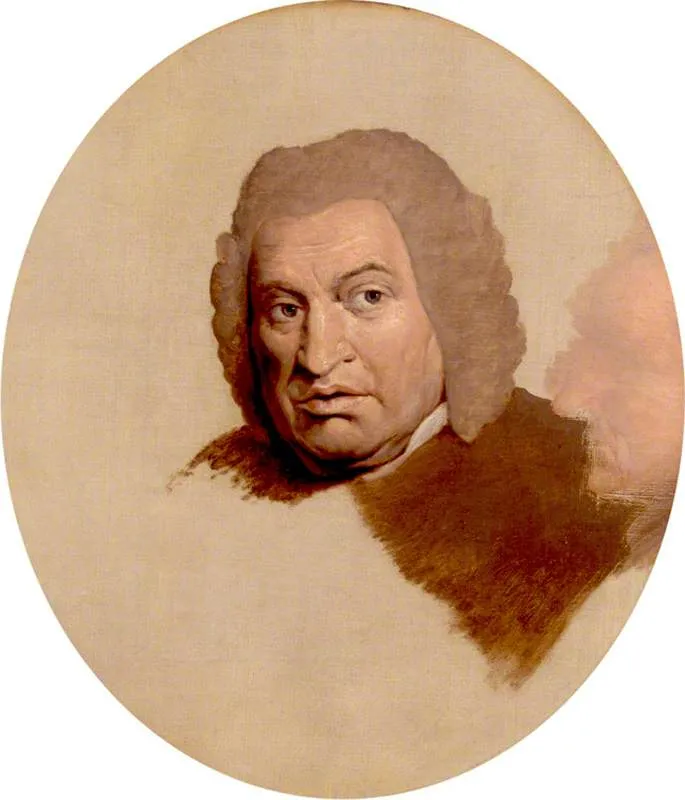
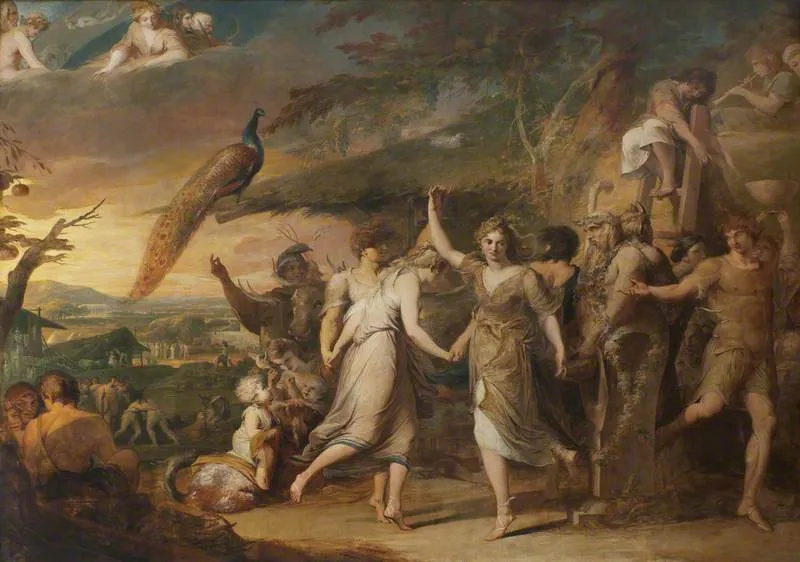
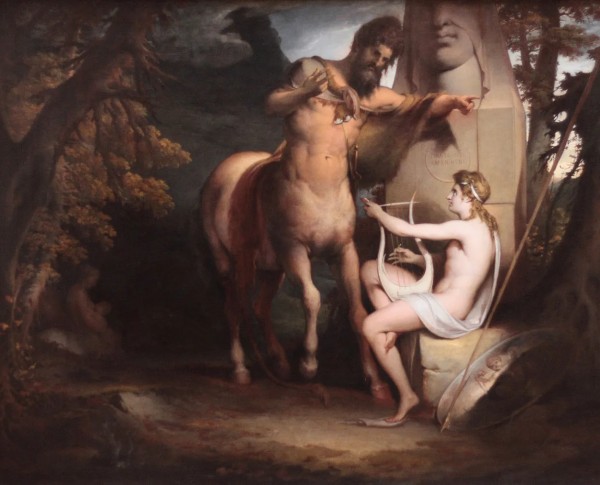
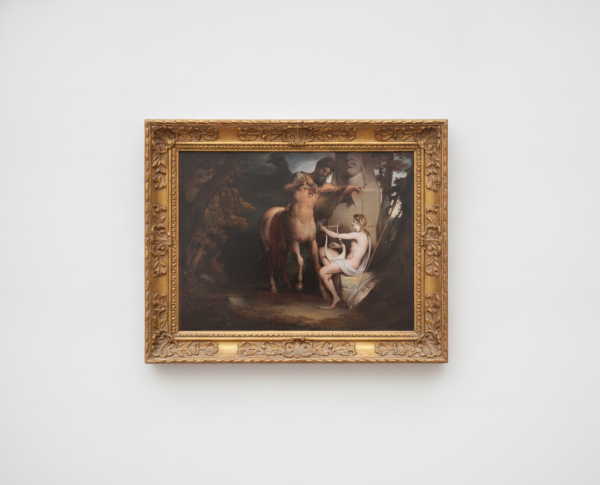
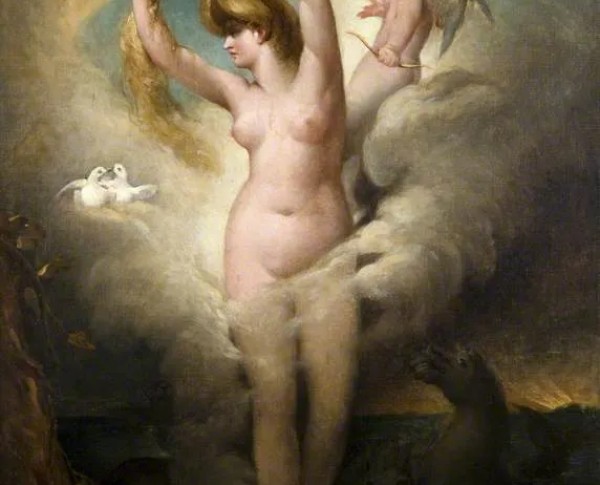
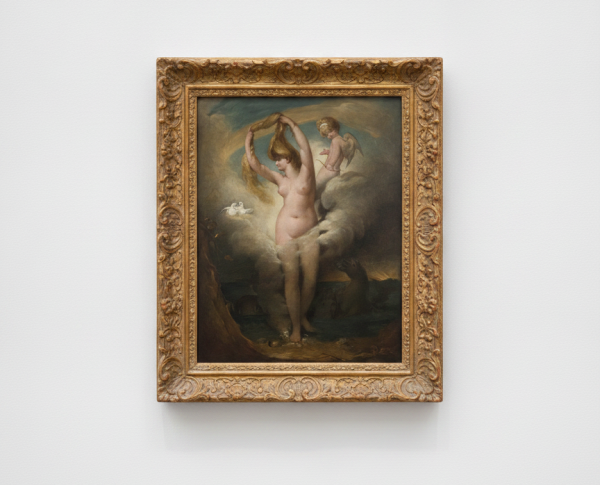
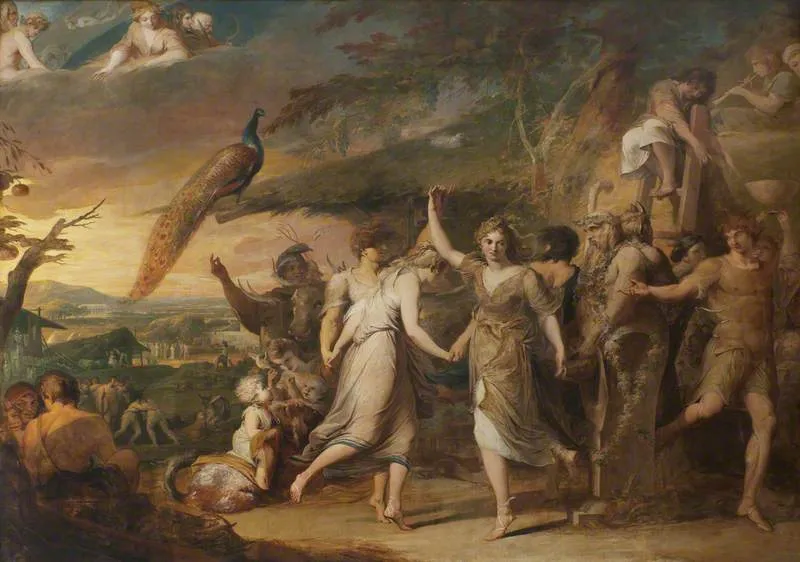
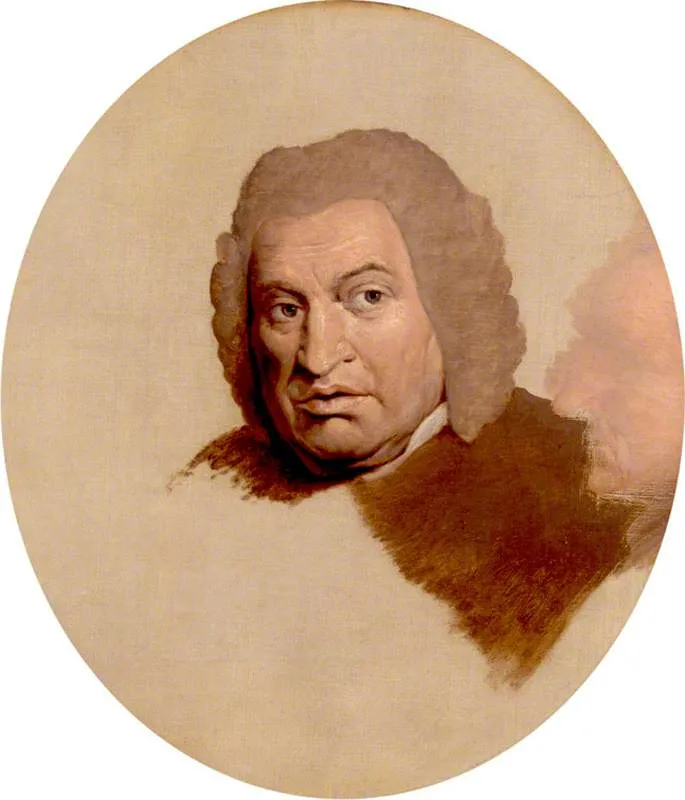
Executed with exquisite attention to detail, this oil on canvas demonstrates Barry’s technical brilliance and deep understanding of human form and composition. The vibrant hues and dynamic arrangement bring the ancient festival to life. Like his other celebrated works, such as "Samuel Johnson" and "Jupiter Beguiled by Juno on Mount Ida," Barry’s mastery in this painting showcases why his pieces are highly sought after in the Romanticism movement.
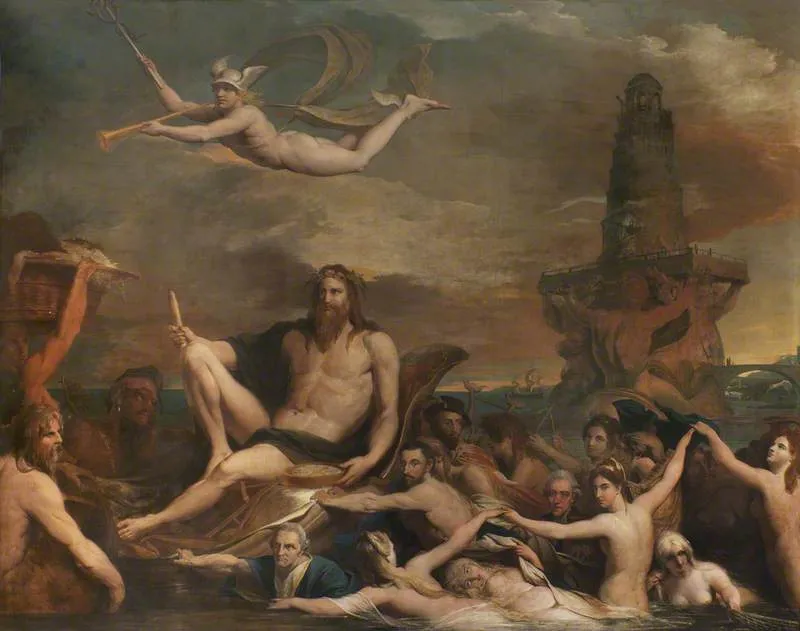
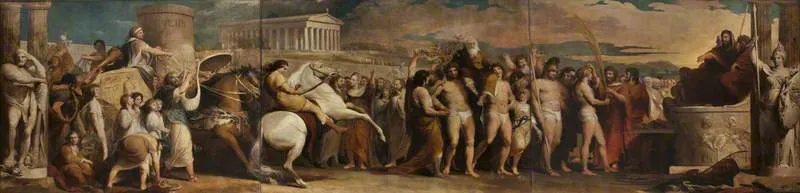
"A Grecian Harvest Home" weaves together allegory and mythology, featuring deities like Ceres and Bacchus as symbols of abundance and festivity. This fine art painting for sale is rich with narrative, much like Barry’s "Commerce, or the Triumph of the Thames." The figures and motifs invite viewers to explore the deeper meanings behind the celebration, offering a glimpse into the artist’s vision and the broader Romantic fascination with ancient myths.
Owning a hand-painted oil painting by James Barry, such as "A Grecian Harvest Home," is a testament to refined taste and appreciation for art history. Collectors of Romanticism treasures often seek out related works like "King Lear Weeping over the Dead Body of Cordelia." This masterpiece, with its compelling theme and stunning execution, remains a prized oil on canvas for any discerning fine art connoisseur or enthusiast.
When Art Meets History
"A Grecian Harvest Home, or Thanksgiving to the Rural Deities, Ceres, Bacchus" by James Barry stands as a testament to the Romanticism movement. Created as a hand-painted oil painting, this masterpiece captures the spirit of ancient Greek festivals, blending mythological reverence with historical narrative. James Barry, renowned for works like "Wall Decoration" and "Domestic Squabble," masterfully intertwines cultural heritage and artistic innovation, making this artwork a centerpiece in the evolution of oil painting during the Romantic era.
Techniques That Speak
James Barry’s use of oil on canvas in "A Grecian Harvest Home, or Thanksgiving to the Rural Deities, Ceres, Bacchus" showcases the technical brilliance characteristic of Romanticism. The painting’s rich textures and luminous colors reflect Barry’s attention to detail, similar to his approach in "Portrait of count Ninni." This fine art painting for sale reveals the artist’s ability to convey movement and emotion through brushwork, elevating the narrative with each carefully crafted stroke and harmonious composition.
Emotions on Display
In this captivating scene, emotions flow freely as figures celebrate the harvest, paying homage to Ceres and Bacchus. The hand-painted oil painting radiates the joy and gratitude of rural festivities, resonating with the Romanticism movement’s emphasis on feeling and nature. James Barry’s expressive style, also seen in "Domestic Squabble" and "Portrait of Dante Gabriel Rossetti," draws viewers into the moment, connecting them emotionally to the ancient past depicted on canvas.
Coveted by Collectors
"A Grecian Harvest Home, or Thanksgiving to the Rural Deities, Ceres, Bacchus" remains a highly sought-after fine art painting for sale among collectors. Its historical significance, coupled with Barry’s masterful oil on canvas technique, makes it a prized possession, much like his "First Consul Bonaparte." Collectors value this artwork for its unique blend of myth, history, and artistry, ensuring its place among the most desirable pieces from the Romanticism movement.
Related Romanticism Hand-Painted Oil Paintings by Other Artists
Other Famous Romanticism Artists:
Frequently Asked Questions About A Grecian Harvest Home, or Thanksgiving to the Rural Deities, Ceres, Bacchus
What is the historical context of "A Grecian Harvest Home"?
This painting was created during the late 18th century, a period marked by a renewed interest in classical themes and the celebration of rural life, reflecting the Enlightenment ideals of harmony with nature and the importance of agriculture.
Who are the deities represented in the painting?
The painting features Ceres, the Roman goddess of agriculture, and Bacchus, the Roman god of wine and festivity. Together, they symbolize the bounty of the harvest and the joy of communal celebration.
What artistic techniques are employed in this painting?
James Barry utilizes a combination of classical composition, vibrant color palettes, and dynamic figures to convey movement and emotion, characteristic of the neoclassical style prevalent during his time.
What themes are explored in "A Grecian Harvest Home"?
The painting explores themes of abundance, community, and the cyclical nature of life, emphasizing the relationship between humanity and the natural world through the celebration of harvest.
How does Barry's work reflect the neoclassical movement?
Barry's work reflects the neoclassical movement through its idealized forms, classical references, and moral undertones, aiming to inspire virtue and civic responsibility in the viewer.
What is the significance of the harvest festival depicted?
The harvest festival depicted signifies gratitude for the earth's bounty and the importance of agricultural practices in sustaining communities, mirroring ancient traditions still celebrated in various cultures today.
How does the composition of the painting enhance its meaning?
The composition, with its balanced arrangement of figures and use of light, guides the viewer's eye towards the central celebration, reinforcing the themes of unity and gratitude inherent in the harvest festival.
What role does symbolism play in this artwork?
Symbolism plays a crucial role, with elements such as the cornucopia representing abundance and fertility, while the presence of Ceres and Bacchus underscores the divine connection to agriculture and celebration.
What impact did James Barry have on future generations of artists?
James Barry's emphasis on narrative and moral themes influenced subsequent generations of artists, encouraging them to explore historical and mythological subjects with a focus on social commentary and emotional depth.
Where can I view "A Grecian Harvest Home" today?
"A Grecian Harvest Home" is part of the collection at the [insert gallery name], where it is displayed alongside other significant works from the neoclassical period, allowing visitors to appreciate its historical and artistic context.























_GFM_Painting_(1).webp)


 100% Hand-Painted: Finished in 3-6 Weeks

.png)















_(1).webp)