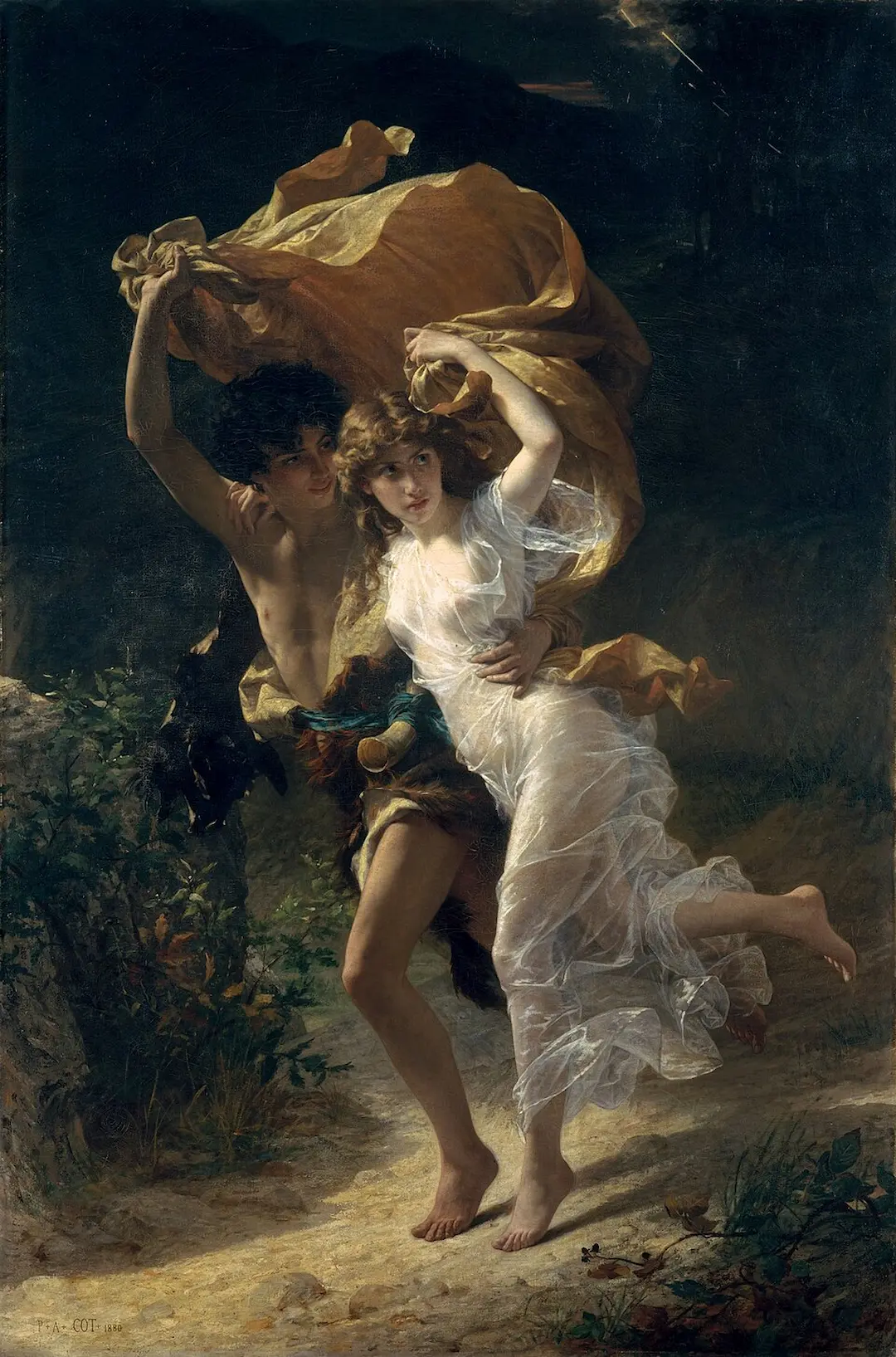
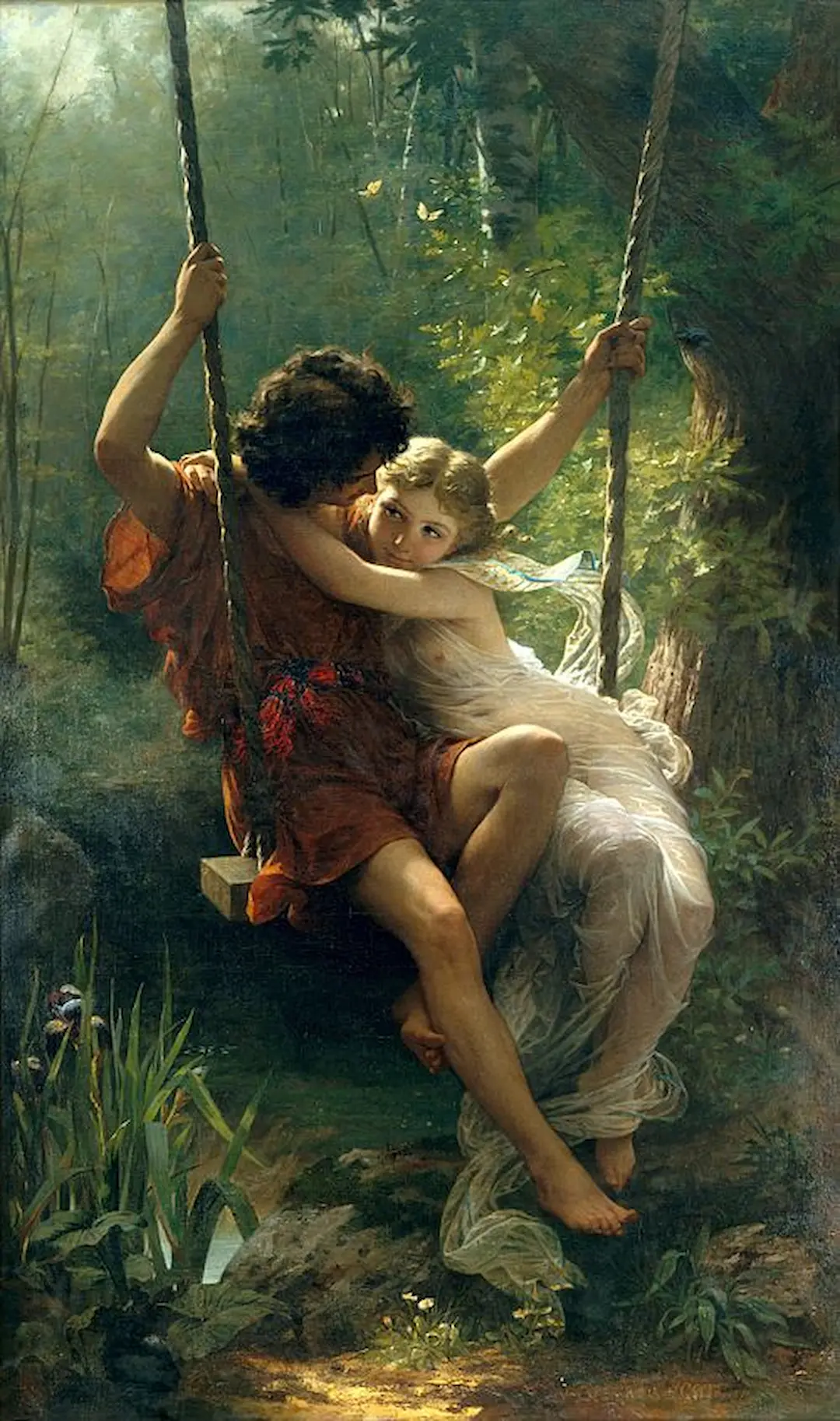
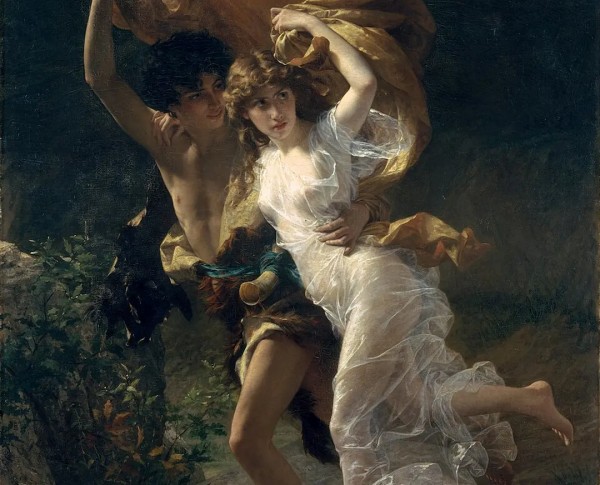
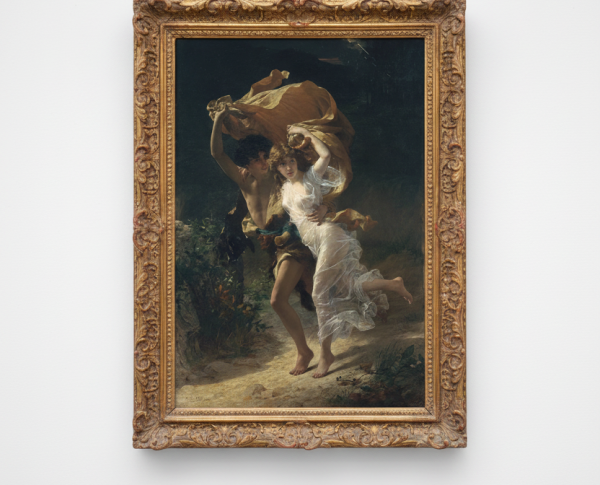
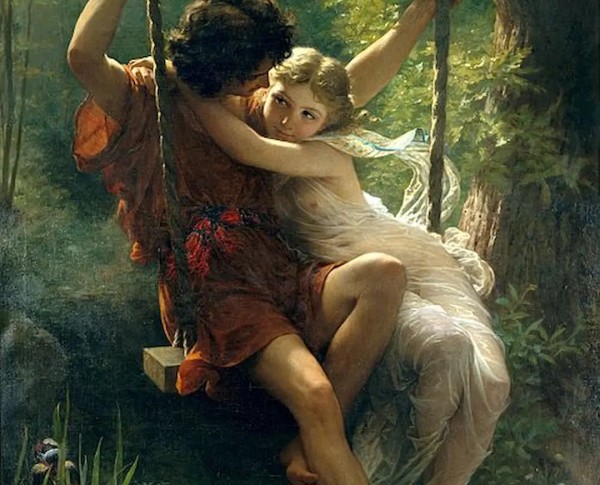
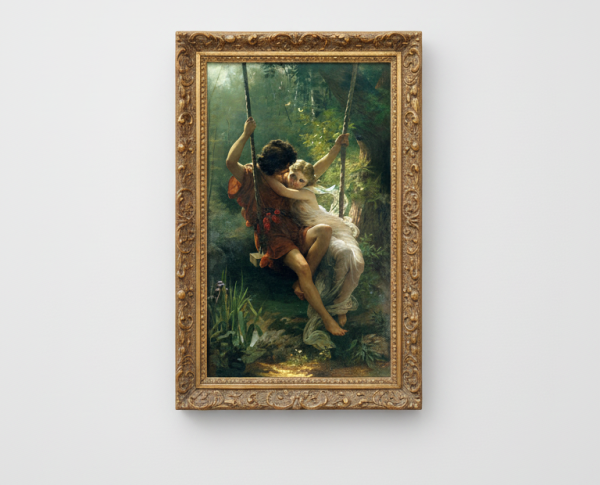
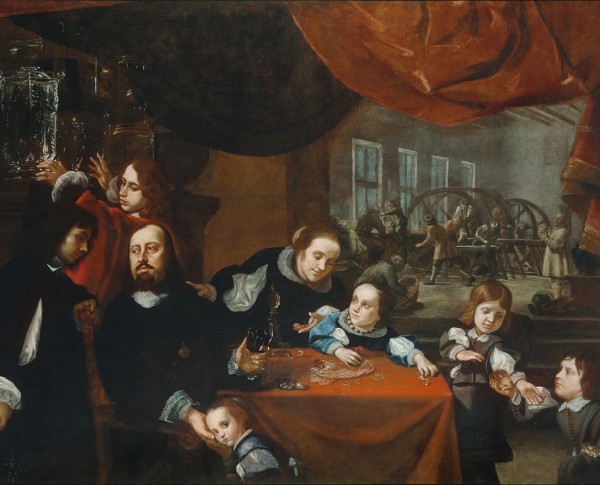
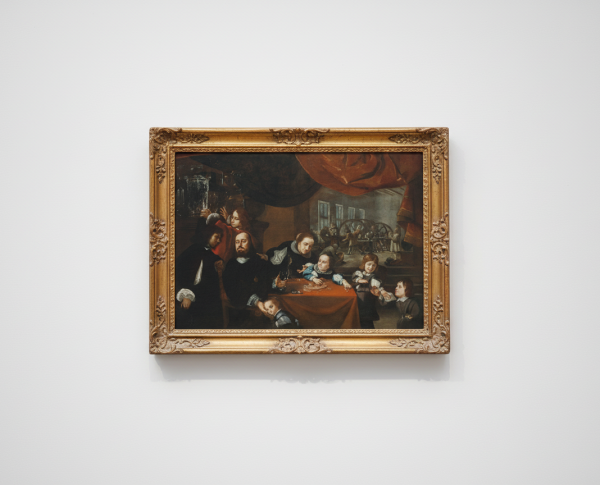
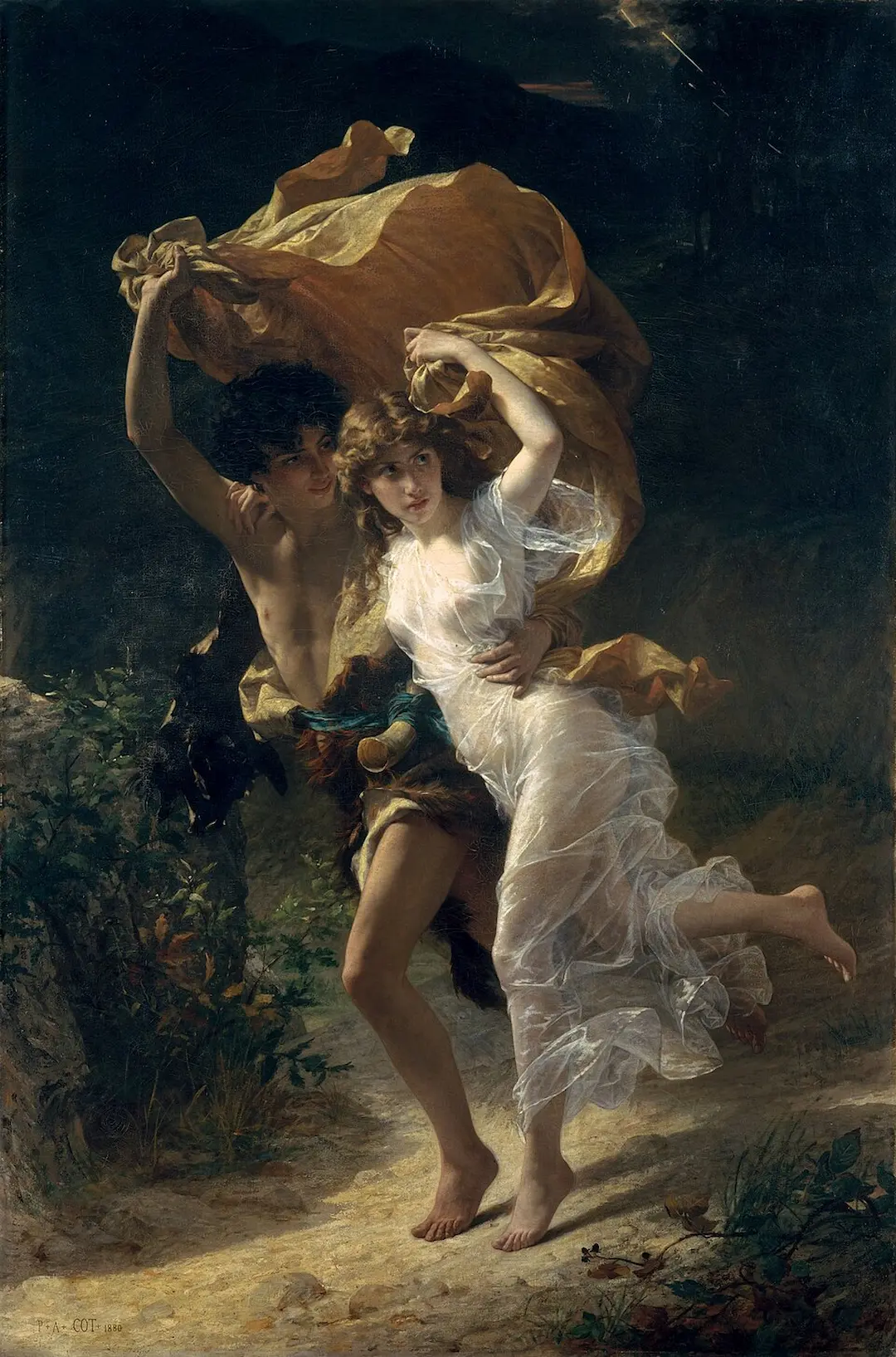
Pierre Auguste Cot’s meticulous approach to every detail in "Dionysia" reveals his mastery of oil on canvas. The painting’s refined brushwork and harmonious composition exemplify the standards of Academic Classicism. Each stroke demonstrates Cot’s dedication to realism and beauty, making this piece a benchmark in classical oil painting. Art lovers often compare "Dionysia" with his other works, such as "Springtime" and "The Storm".
"Dionysia" invites viewers to explore the rich stories and symbols embedded within its scene. Through Cot’s expert use of oil on canvas, the painting evokes a sense of mythological reverie, characteristic of Academic Classicism’s fascination with classical themes. This hand-painted oil painting is often discussed alongside related works, including "The Storm" for its intricate storytelling and symbolic depth, making it a centerpiece in any fine art collection.
For collectors, "Dionysia" by Pierre Auguste Cot represents more than just a fine art painting for sale—it is a cherished artifact from the Academic Classicism movement. Its timeless appeal and exquisite technique make it a valuable addition to any collection. Alongside other celebrated works like "Springtime," and "The Storm," "Dionysia" continues to inspire admiration and demand among enthusiasts of oil on canvas masterpieces.
When Art Meets History
"Dionysia" by Pierre Auguste Cot stands as a testament to the enduring allure of the Academic Classicism movement. This hand-painted oil painting captures the spirit of the era, reflecting the artist’s devotion to historical and mythological themes. Cot’s work, alongside related masterpieces like "Nymphes et Satyre (Nymphs and Satyr)" and "The Abduction of Psyche 1895," brings to life the classical ideals cherished by 19th-century artists and collectors alike.
Techniques That Speak
Pierre Auguste Cot’s mastery is evident in every stroke of "Dionysia," utilizing the traditional oil on canvas technique favored by Academic Classicism painters. The artist’s meticulous attention to detail, delicate play of light, and realistic rendering recall the finesse seen in works such as "Pieta" and "Bonaparte Before the Sphinx." Cot’s technique elevates the painting, ensuring that each element resonates with the vibrancy and depth characteristic of the movement.
Emotions on Display
"Dionysia" radiates an emotional intensity that draws viewers into its classical narrative. Pierre Auguste Cot’s ability to convey subtle expressions and dynamic movement mirrors the evocative power found in "La Vierge au Lys (The Virgin of the Lilies)" and other fine art painting for sale from the period. Through harmonious composition and expressive figures, Cot invites audiences to experience the joy, mystery, and passion that define Academic Classicism.
Coveted by Collectors
Collectors and art enthusiasts deeply value "Dionysia" for its exquisite interpretation of Academic Classicism by Pierre Auguste Cot. As with other sought-after works like "Nymphes et Satyre (Nymphs and Satyr)," this hand-painted oil painting exemplifies the timeless appeal of 19th-century fine art. Its historical significance and exceptional artistry ensure that "Dionysia" remains a prized addition to any collection, celebrated for both its beauty and cultural resonance.
Related Academic Classicism Hand-Painted Oil Paintings by Other Artists
Other Famous Academic Classicism Artists:
Frequently Asked Questions About Dionysia
What is the historical context of "Dionysia"?
"Dionysia" was painted by Pierre Auguste Cot in the late 19th century, a period characterized by the rise of Impressionism and the exploration of romantic themes in art. The painting reflects the cultural fascination with classical mythology during this time, particularly the figure of Dionysus, the Greek god of wine, fertility, and festivity.
Who is the artist behind "Dionysia"?
Pierre Auguste Cot was a French painter known for his romantic and idealized depictions of women and mythological subjects. His works often combine elements of realism with a dreamlike quality, making him a prominent figure in 19th-century French art.
What themes are explored in "Dionysia"?
The painting explores themes of ecstasy, nature, and the celebration of life, as embodied by the figure of Dionysus. It captures the spirit of revelry and the connection between humanity and the natural world, emphasizing the joy and freedom associated with the god of wine.
What artistic techniques did Cot use in "Dionysia"?
Cot employed a combination of soft brushwork and vibrant color palettes to create a sense of movement and emotion in "Dionysia." His use of light and shadow enhances the three-dimensionality of the figures, while the lush background contributes to the overall romantic atmosphere of the piece.
What is the significance of the figures in "Dionysia"?
The figures in "Dionysia" symbolize the duality of human experience—joy and sorrow, freedom and restraint. They represent the followers of Dionysus, embodying the themes of liberation and the celebration of life that are central to the mythology surrounding the god.
How does "Dionysia" reflect the Romantic movement?
"Dionysia" reflects the Romantic movement through its emphasis on emotion, nature, and the idealization of mythological themes. The painting captures a moment of ecstatic celebration, characteristic of Romantic art, which sought to evoke deep feelings and a connection to the sublime.
What symbolism is present in "Dionysia"?
The painting is rich in symbolism, with the grapevines and floral elements representing fertility and abundance, while the figures embody the spirit of revelry and liberation associated with Dionysus. The overall composition suggests a harmonious relationship between humanity and nature.
In what ways does "Dionysia" connect to classical mythology?
"Dionysia" directly connects to classical mythology through its depiction of Dionysus and his followers. The painting draws on ancient Greek traditions that celebrated the god's festivals, highlighting themes of ecstasy, transformation, and the celebration of life.
What influence did "Dionysia" have on later art movements?
"Dionysia" influenced later art movements by reinforcing the importance of emotion and nature in art. Its romantic portrayal of mythological subjects paved the way for Symbolism and later movements that sought to explore the inner emotional landscape of humanity.
Where can I view "Dionysia" today?
"Dionysia" is part of the collection at the [insert gallery/museum name], where it continues to be appreciated for its artistic merit and historical significance. Visitors can experience the painting in person and explore its rich narrative and symbolism.






















_GFM_Painting_(1).webp)

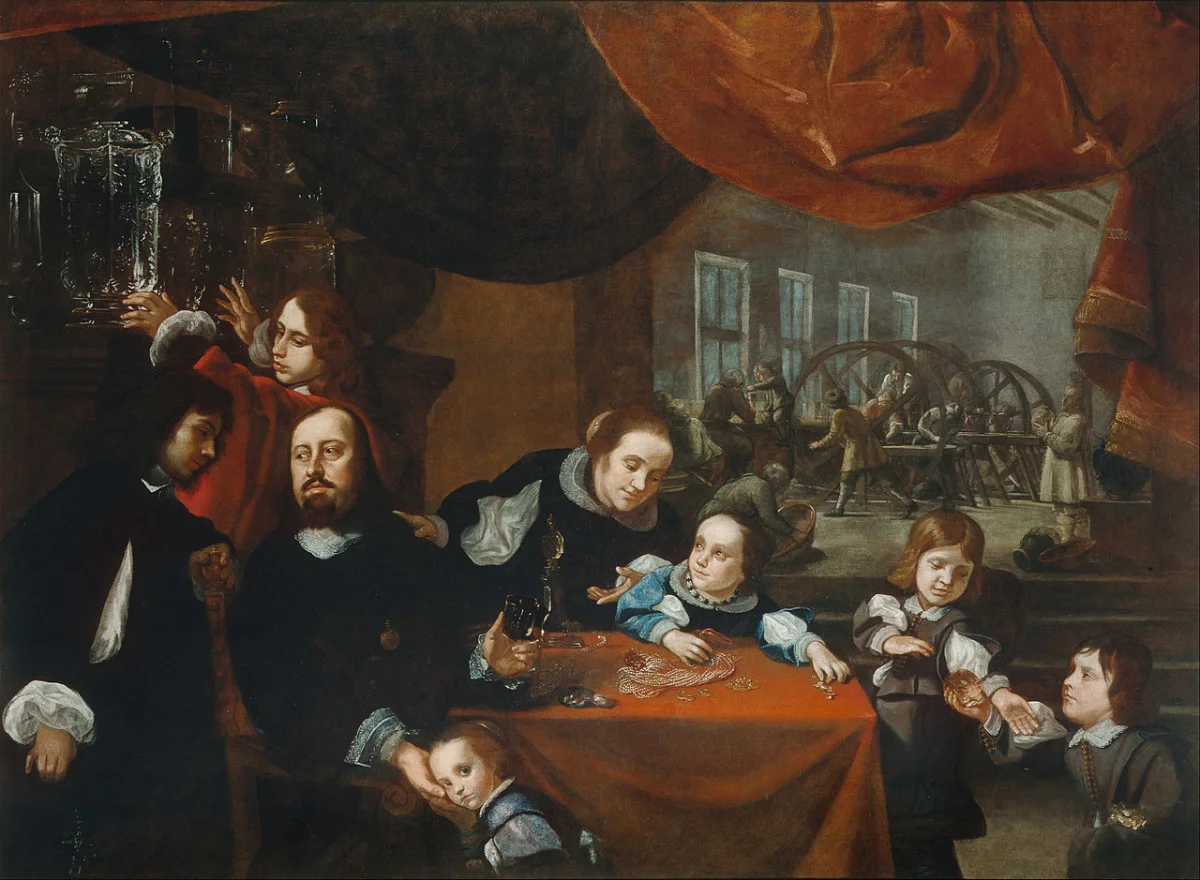

 100% Hand-Painted: Finished in 3-6 Weeks

.png)
















_(1).webp)