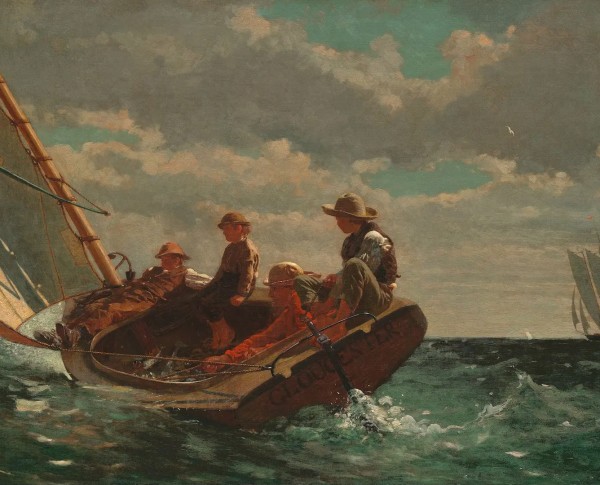
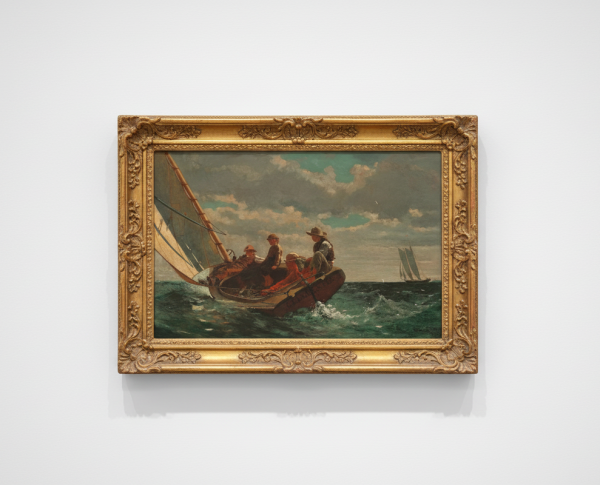
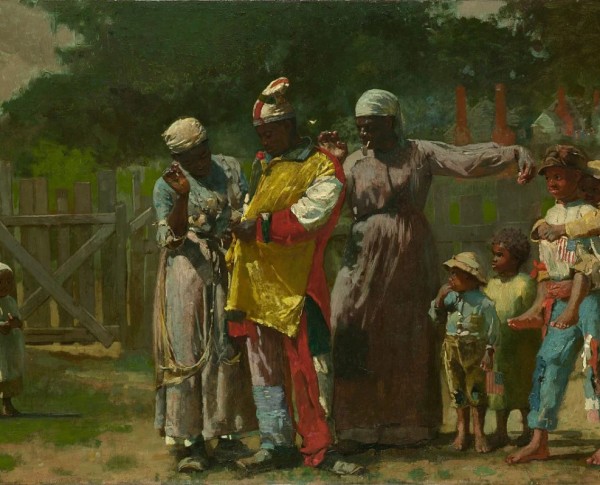
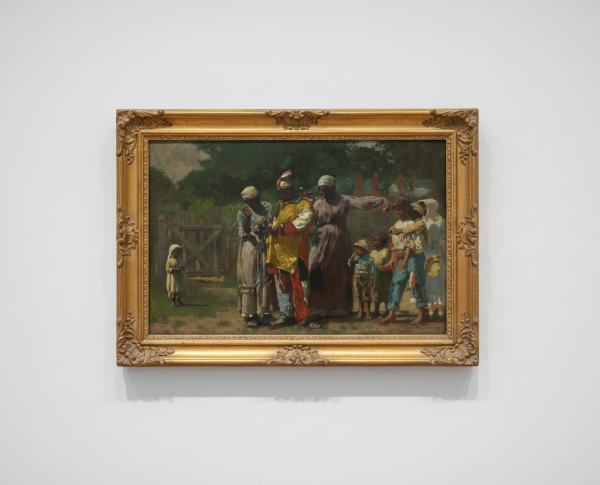
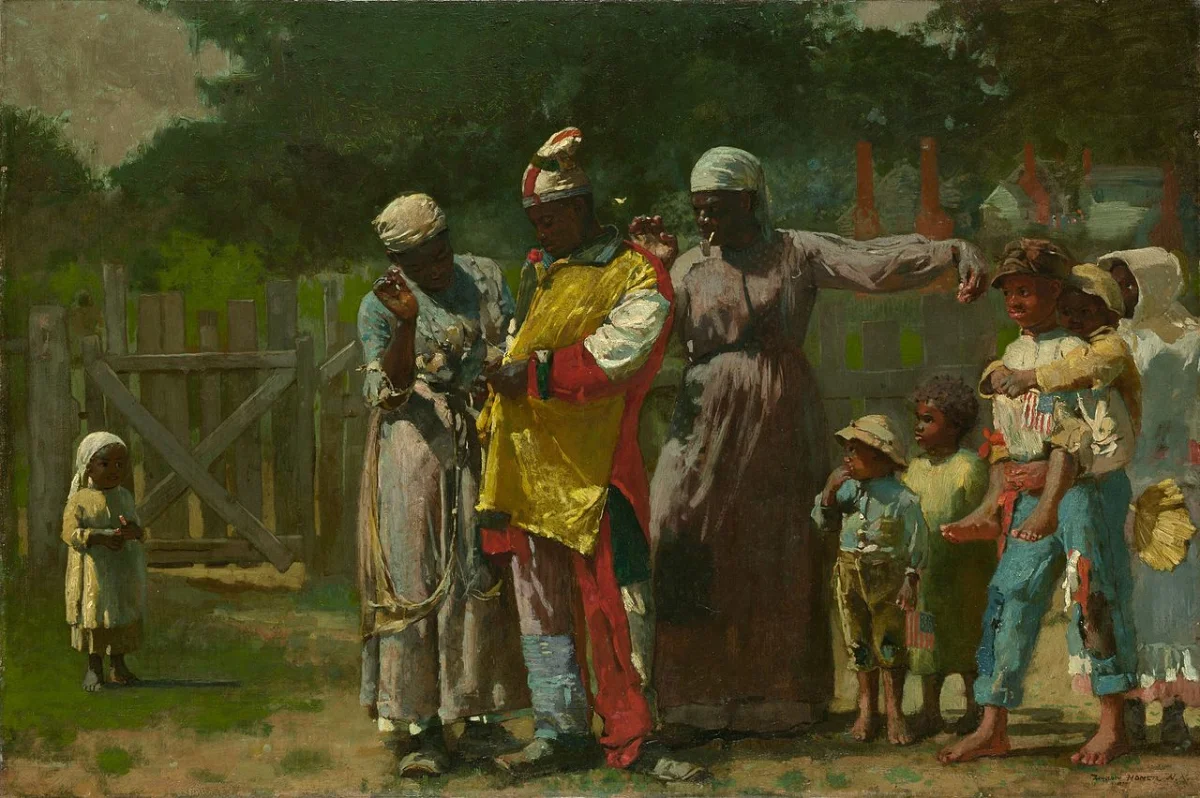
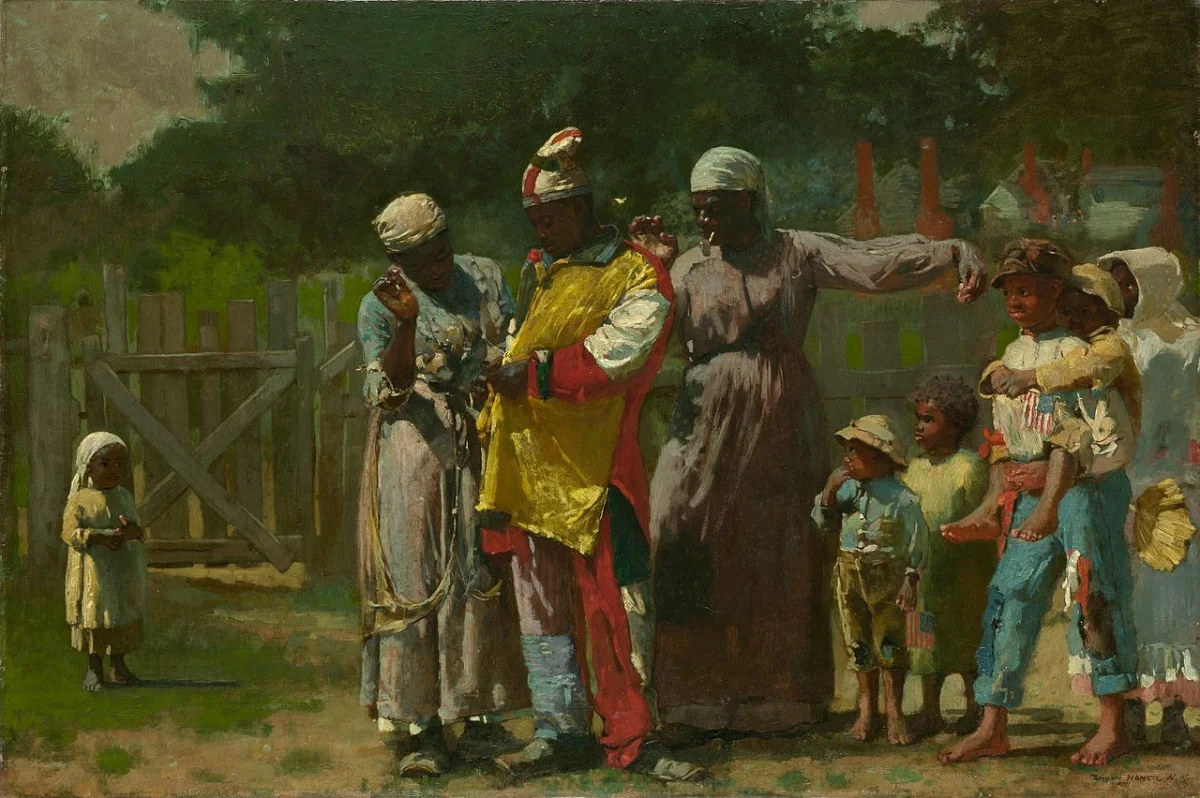
"Dressing for the Carnival" showcases Homer’s technical prowess with oil on canvas, revealing his meticulous attention to detail and lifelike representation. The brushwork and use of light bring out the textures of fabric and skin, exemplifying the Realism movement’s dedication to truthfulness. Winslow Homer’s skillful application in this oil on canvas makes it a coveted piece, akin to his other celebrated works like "Breezing Up (or A Fair Wind)."
Every element in "Dressing for the Carnival" tells a story, weaving together themes of community, tradition, and hope. Homer, a master of the Realism movement, infuses this hand-painted oil painting with symbols of transformation and cultural identity. The scene’s vibrant costumes and careful composition invite viewers to explore deeper meanings, making this artwork a compelling choice for anyone interested in narrative-rich fine art painting for sale.
Owning "Dressing for the Carnival" by Winslow Homer is a rare opportunity to possess a piece of art history from the Realism movement. This oil on canvas not only enhances the aesthetic of any space but also connects collectors to a legacy of American artistry. For those seeking related products, consider "Breezing Up (or A Fair Wind)"—another fine art painting for sale that exemplifies Homer’s enduring appeal and artistic mastery.
When Art Meets History
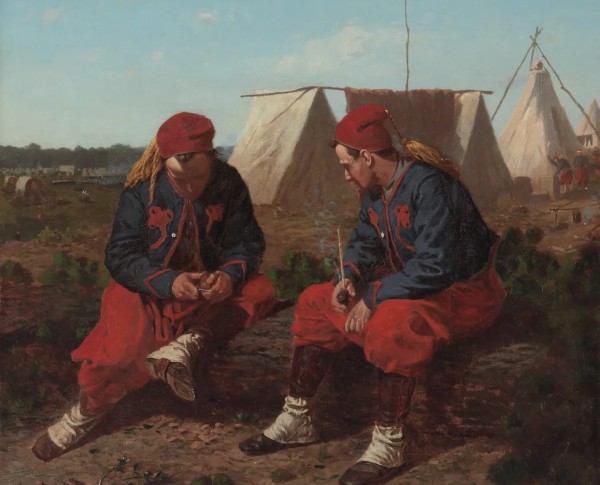
"Dressing for the Carnival" by Winslow Homer is a striking example of the Realism movement, capturing a pivotal moment in American history. This hand-painted oil painting immerses viewers in the post-Civil War era, highlighting the cultural transition of African Americans. Homer's attention to historical detail is evident, much like in his other works such as "The Walk to Work" and "Study for the Surrender of Santa Anna", offering a vivid window into the lives and stories of his subjects.
Techniques That Speak
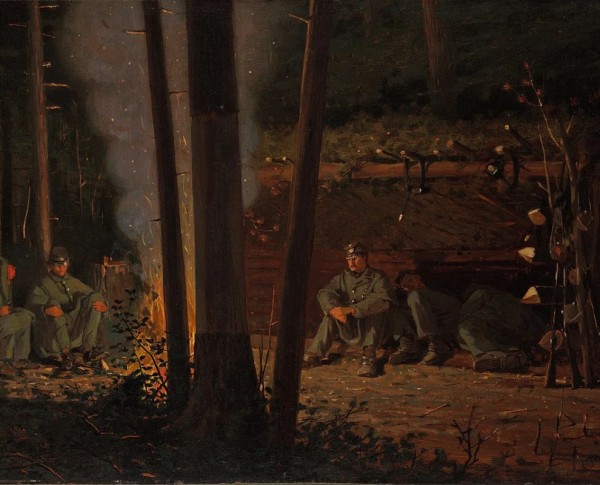
Winslow Homer’s masterful use of oil on canvas brings "Dressing for the Carnival" to life with rich textures and bold brushstrokes. He employs natural lighting and a muted palette, hallmarks of the Realism movement, to evoke authenticity in his subjects. Similar techniques are seen in related pieces like "Rye Fields" and "Morning in the Pine-tree Forest", where Homer's skillful manipulation of oil on canvas creates atmospheric depth and emotional resonance.
Emotions on Display
In "Dressing for the Carnival," Homer captures the anticipation and solemnity of his subjects, their expressions painted with profound empathy. This fine art painting for sale is renowned for its emotional intensity, drawing viewers into the lives of those depicted. Like his "Portrait of Brigadier General Joseph Lewis Hogg," Homer's Realist approach invites us to connect with the human experience, reflecting both hope and hardship through subtle gestures and gazes.
Coveted by Collectors
Winslow Homer’s "Dressing for the Carnival" is highly sought after by collectors who value authentic representations of American life. As a hand-painted oil painting rooted in the Realism movement, it stands alongside related works like "The Walk to Work" and "Rye Fields" as a testament to Homer’s enduring legacy. The demand for such fine art painting for sale underscores its significance and timeless appeal among art enthusiasts and historians alike.
Related Realism Hand-Painted Oil Paintings by Other Artists
Other Famous Realism Artists:
Frequently Asked Questions About Dressing for the Carnival
What is the historical context of "Dressing for the Carnival"?
"Dressing for the Carnival" was painted by Winslow Homer during the late 19th century, a period marked by significant social and cultural changes in America. This era saw the rise of leisure activities and public celebrations, reflecting a shift in societal values towards enjoyment and community engagement.
What artistic techniques did Winslow Homer employ in this painting?
Winslow Homer utilized a combination of watercolor and oil techniques to create vibrant colors and dynamic compositions. His use of light and shadow enhances the three-dimensionality of the figures, while his brushwork captures the movement and energy of the carnival atmosphere.
What themes are explored in "Dressing for the Carnival"?
The painting explores themes of celebration, identity, and community. It captures the spirit of festivity and the joy of self-expression, as individuals don elaborate costumes to participate in a collective cultural experience.
How does "Dressing for the Carnival" reflect Winslow Homer's artistic style?
This work exemplifies Homer's characteristic focus on human figures within natural settings. His ability to convey emotion and narrative through composition and color is evident, showcasing his evolution as an artist who captured American life.
What is the significance of the costumes depicted in the painting?
The costumes in "Dressing for the Carnival" symbolize individuality and cultural heritage. They reflect the diverse influences of immigrant communities in America, showcasing how carnival traditions were embraced and adapted in the context of American society.
In what ways does the painting convey a sense of movement?
Homer's use of flowing lines and dynamic poses of the figures creates a sense of movement, suggesting the lively atmosphere of the carnival. The arrangement of the figures and their interactions further enhance this feeling of action and celebration.
What role does color play in "Dressing for the Carnival"?
Color plays a crucial role in conveying the festive mood of the painting. The vibrant hues used for the costumes and background evoke a sense of joy and excitement, drawing the viewer into the celebratory scene.
How does "Dressing for the Carnival" compare to other works by Winslow Homer?
Compared to other works by Homer, "Dressing for the Carnival" stands out for its focus on social interaction and communal celebration. While many of his paintings depict solitary figures or landscapes, this piece highlights the vibrancy of collective experiences in American culture.
What impact did "Dressing for the Carnival" have on American art?
The painting contributed to the broader narrative of American art by emphasizing the importance of cultural identity and community. It paved the way for future artists to explore themes of social gatherings and the celebration of diverse traditions within American society.
What can we learn about society from "Dressing for the Carnival"?
The painting offers insight into the social dynamics of the time, highlighting the importance of community and celebration in American life. It reflects a society that values cultural expression and the joy of coming together, which remains relevant today.






















_GFM_Painting_(1).webp)


 100% Hand-Painted: Finished in 3-6 Weeks

.png)












.webp)



_(1).webp)