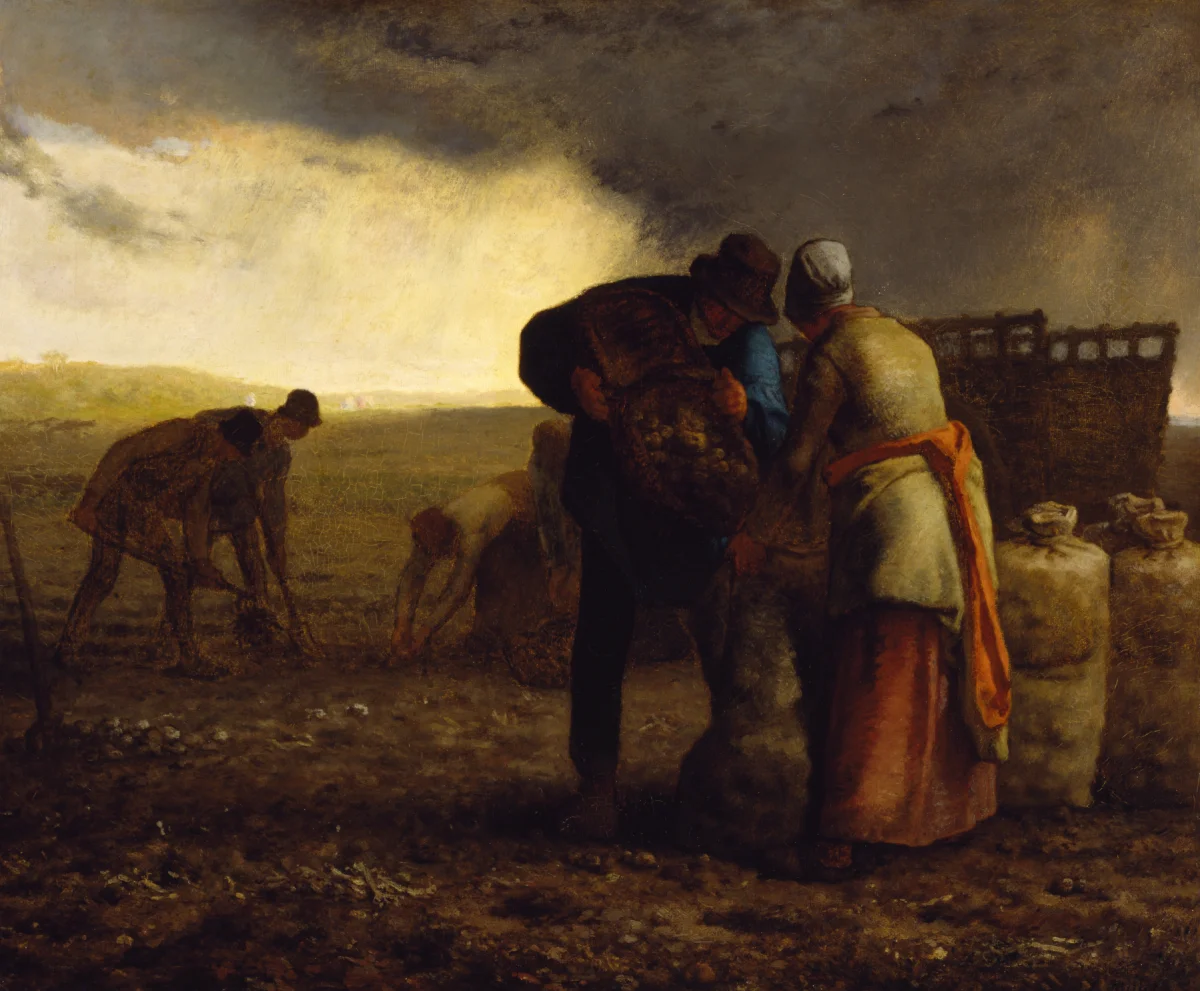
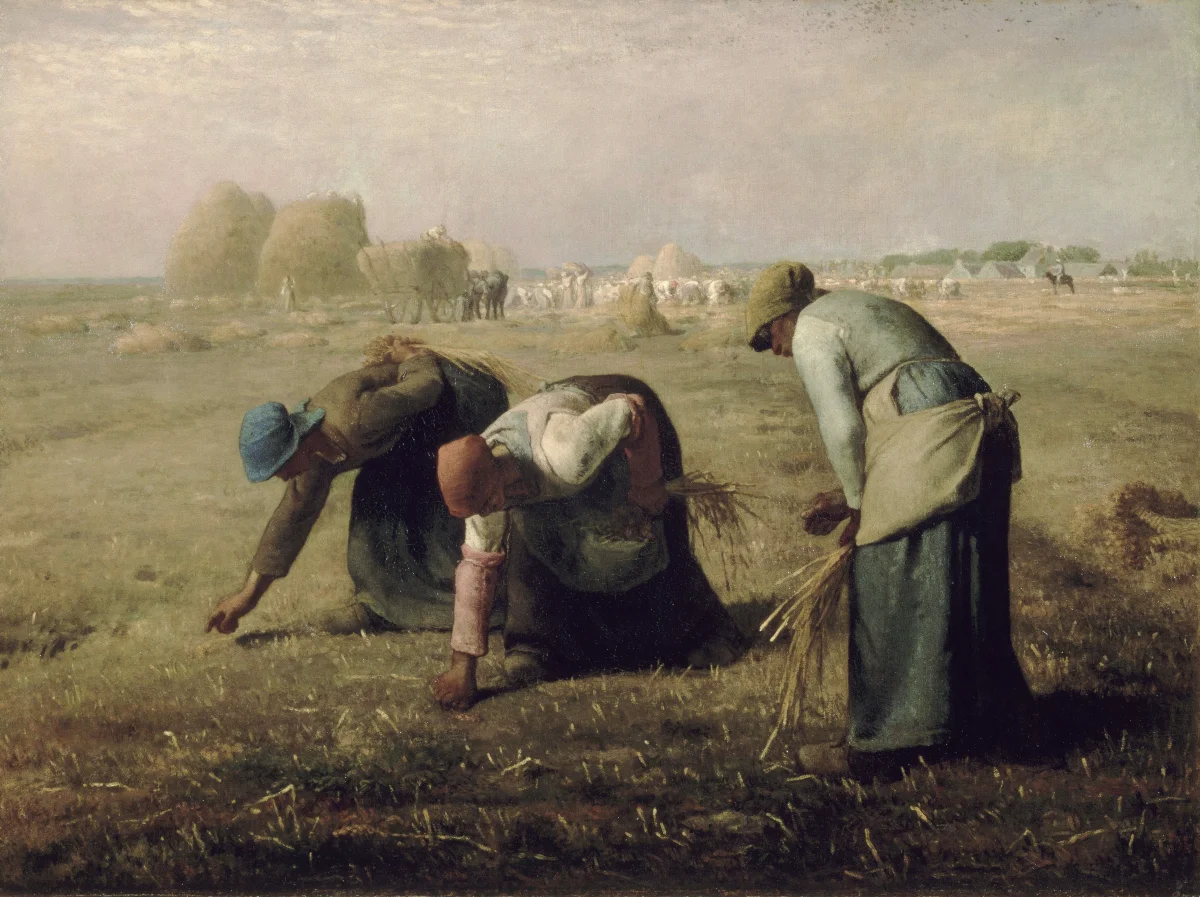
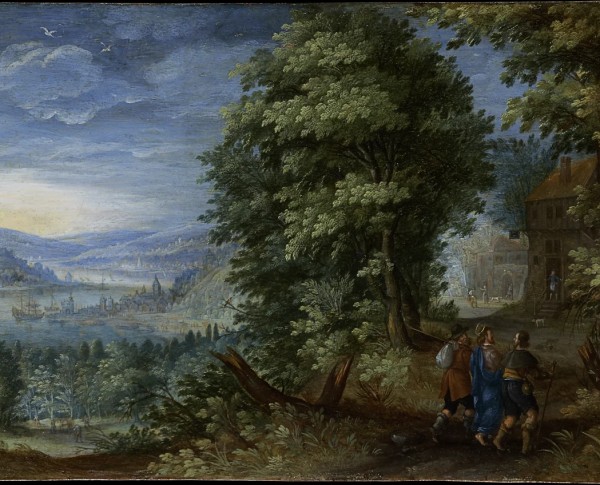
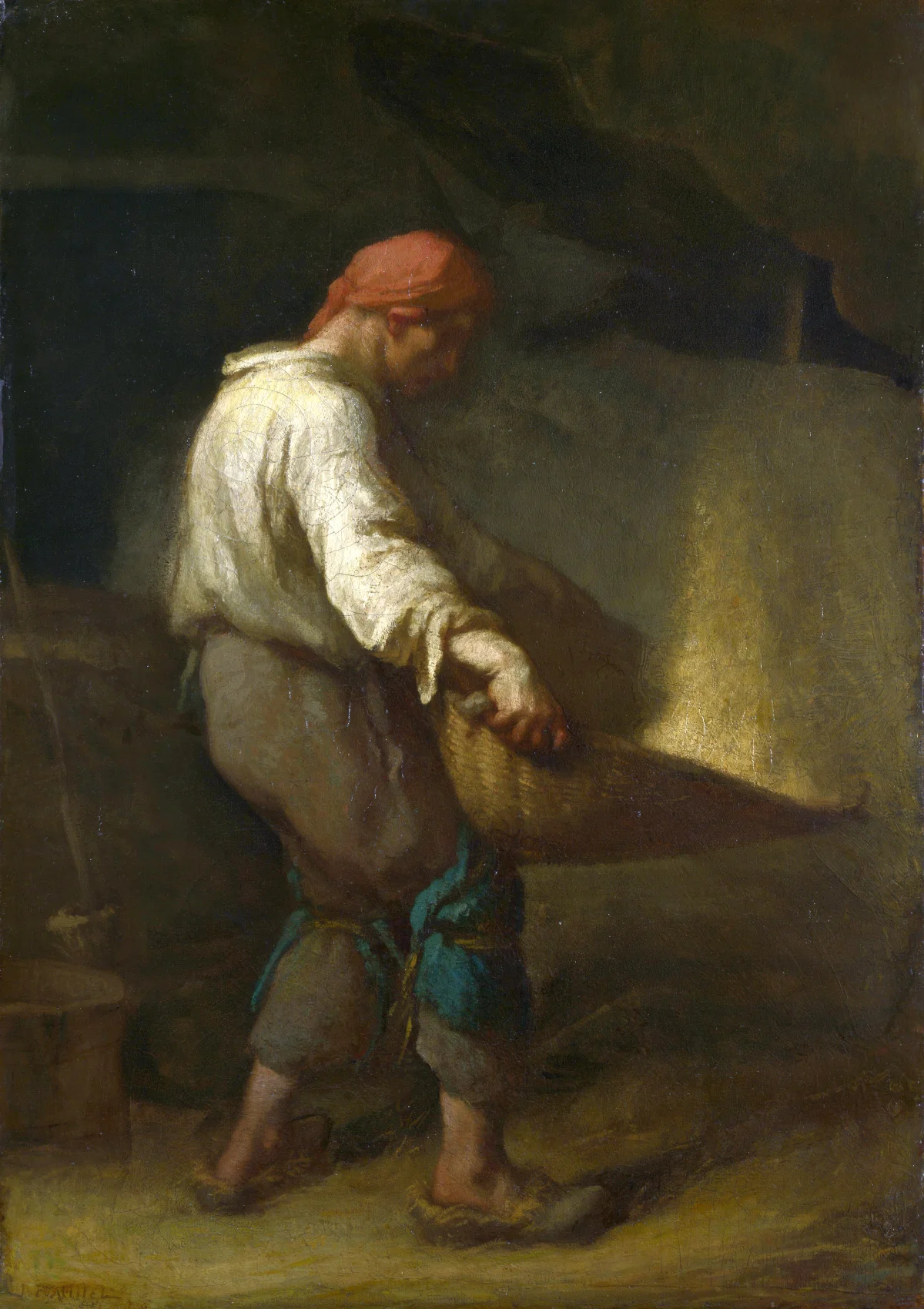
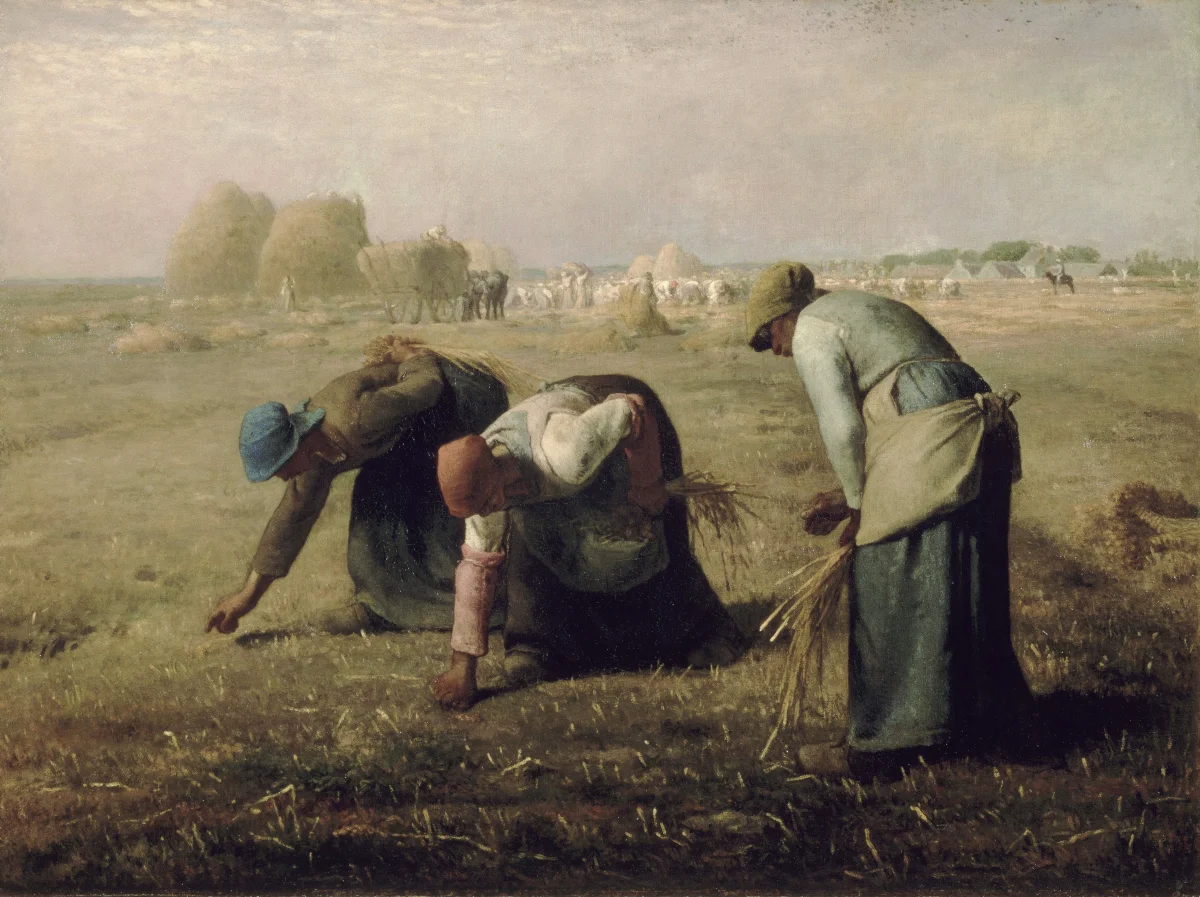
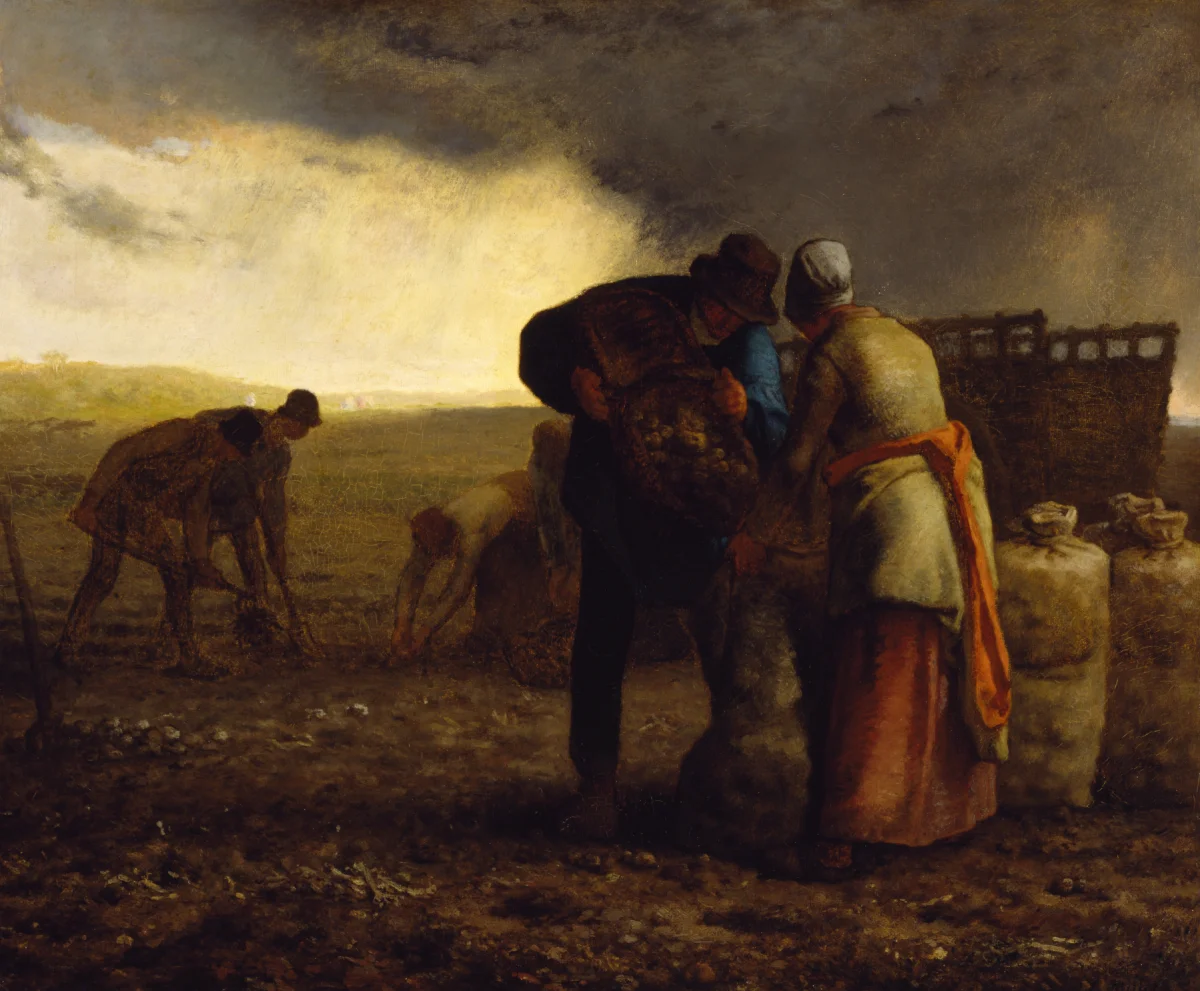
Jean-Francois Millet’s "The Walk to Work" demonstrates his exceptional skill in oil on canvas, a medium that lends depth and richness to his evocative scenes. Each brushstroke reveals his mastery of light and shadow, drawing viewers into the early morning journey of his subjects. As with his other Realism works, such as "The Gleaners" and "The Winnower," Millet’s technique elevates the everyday, making this painting a remarkable example of 19th-century artistry.
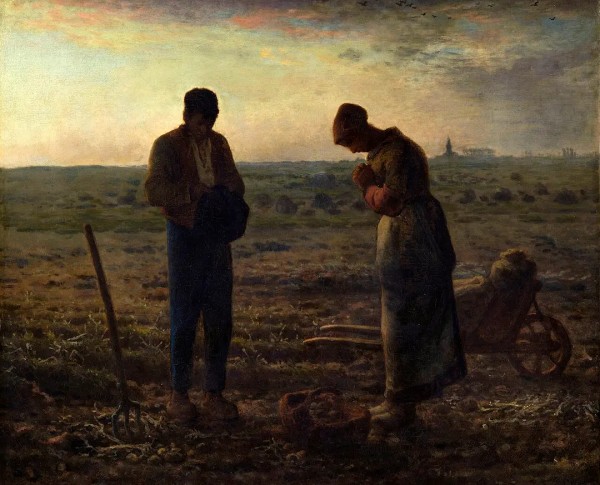
Within "The Walk to Work," Millet weaves a narrative of perseverance and hope, emblematic of the Realism movement’s focus on authentic human experience. The painting’s composition and symbolism echo those found in related products like "The Angelus, 1857-59." Through subtle gestures and atmospheric detail, this fine art painting for sale invites viewers to reflect on the values of work, community, and resilience that defined rural France in Millet’s era.
For art enthusiasts seeking a timeless addition to their collection, "The Walk to Work" by Jean-Francois Millet is a prized find. This hand-painted oil painting not only showcases the essence of the Realism movement but also complements other notable works like "The Winnower" and "The Gleaners." Owning such a piece offers a unique opportunity to experience the profound artistry and historical significance that define Millet’s enduring legacy.
When Art Meets History
Jean-Francois Millet’s “The Walk to Work” stands as a powerful testament to the Realism movement, capturing the everyday struggles and dignity of rural laborers. This hand-painted oil painting reflects the 19th-century shift toward depicting ordinary life, much like Millet’s contemporaries. Related masterpieces such as “Morning in the Pine-tree Forest” and “Breezing Up (or A Fair Wind)” also emphasize the era’s focus on authenticity, making “The Walk to Work” a cornerstone in both art and historical documentation.
Techniques That Speak
Employing masterful oil on canvas techniques, Jean-Francois Millet infuses “The Walk to Work” with texture and depth. The brushwork, lighting, and earthy palette typify Realism, immersing viewers in the humble morning ritual of workers. Similar to works like “A Dash for the Timber” and “Lady Godiva,” Millet’s approach ensures each subject is rendered with honesty and respect, demonstrating why his oil on canvas paintings remain influential in art history.
Emotions on Display
“The Walk to Work” by Jean-Francois Millet radiates empathy and resilience, hallmarks of the Realism movement. The figures’ postures and expressions evoke a quiet strength, drawing parallels to dramatic scenes in “Surrender At Santa Anna” and “Breezing Up (or A Fair Wind).” This fine art painting for sale continues to move audiences, inviting them to contemplate the emotional lives of its subjects and the broader human experience captured by Millet’s skilled hand.
Coveted by Collectors
Collectors value “The Walk to Work” for its authentic portrayal and historical significance within Realism. Jean-Francois Millet’s reputation, bolstered by related works like “Morning in the Pine-tree Forest” and “Lady Godiva,” ensures enduring demand for this hand-painted oil painting. As a fine art painting for sale, it appeals to those seeking a profound connection to the past and a tangible piece of art history, making it a prized addition to any collection.
Related Realism Hand-Painted Oil Paintings by Other Artists
Other Famous Realism Artists:
Frequently Asked Questions About The Walk to Work
What is the historical context of "The Walk to Work"?
"The Walk to Work" was created during the mid-19th century, a period marked by significant social and economic changes in France. The painting reflects the realities of rural life and the emerging industrial society, capturing the transition from agrarian to urban living.
What artistic movement is Jean-Francois Millet associated with?
Jean-Francois Millet is primarily associated with the Barbizon School, a group of painters who focused on naturalism and the depiction of rural life. This movement emphasized a return to nature and the importance of everyday subjects in art.
What themes are explored in "The Walk to Work"?
The painting explores themes of labor, perseverance, and the dignity of the working class. It highlights the connection between humans and their environment, emphasizing the importance of hard work in rural communities.
How does Millet's use of color contribute to the painting's mood?
Millet employs a muted color palette, primarily earth tones, which evokes a sense of realism and connection to the land. This choice of colors enhances the somber yet hopeful mood of the painting, reflecting the daily struggles and resilience of the figures depicted.
What is the significance of the figures in "The Walk to Work"?
The figures in the painting represent the working class, embodying the themes of labor and community. Their posture and expressions convey a sense of determination and purpose, symbolizing the everyday heroism of rural workers.
How does "The Walk to Work" reflect Millet's artistic philosophy?
Millet believed in portraying the dignity of peasant life and the beauty of nature. "The Walk to Work" exemplifies this philosophy by focusing on the simplicity and nobility of daily labor, elevating ordinary subjects to the status of fine art.
What techniques did Millet use to create depth in the painting?
Millet utilized techniques such as chiaroscuro, which contrasts light and shadow, to create depth and dimension. This technique helps to draw the viewer's eye towards the figures while also enhancing the three-dimensionality of the landscape.
In what ways does "The Walk to Work" reflect the socio-economic conditions of its time?
The painting reflects the socio-economic conditions of the mid-19th century, particularly the struggles faced by rural workers as industrialization began to alter traditional ways of life. It serves as a commentary on the value of agrarian labor amidst changing societal norms.
What role does nature play in "The Walk to Work"?
Nature plays a pivotal role in "The Walk to Work," serving as both a backdrop and a character in the narrative. The landscape not only frames the figures but also symbolizes the connection between humanity and the earth, reinforcing the theme of labor as a natural and essential part of life.
How has "The Walk to Work" influenced modern perceptions of rural life in art?
"The Walk to Work" has influenced modern perceptions by highlighting the importance of rural life and labor in art. It paved the way for future artists to explore themes of social realism and the everyday experiences of working individuals, fostering a greater appreciation for the rural landscape and its inhabitants.






















_GFM_Painting_(1).webp)


 100% Hand-Painted: Finished in 3-6 Weeks

.png)
















_(1).webp)