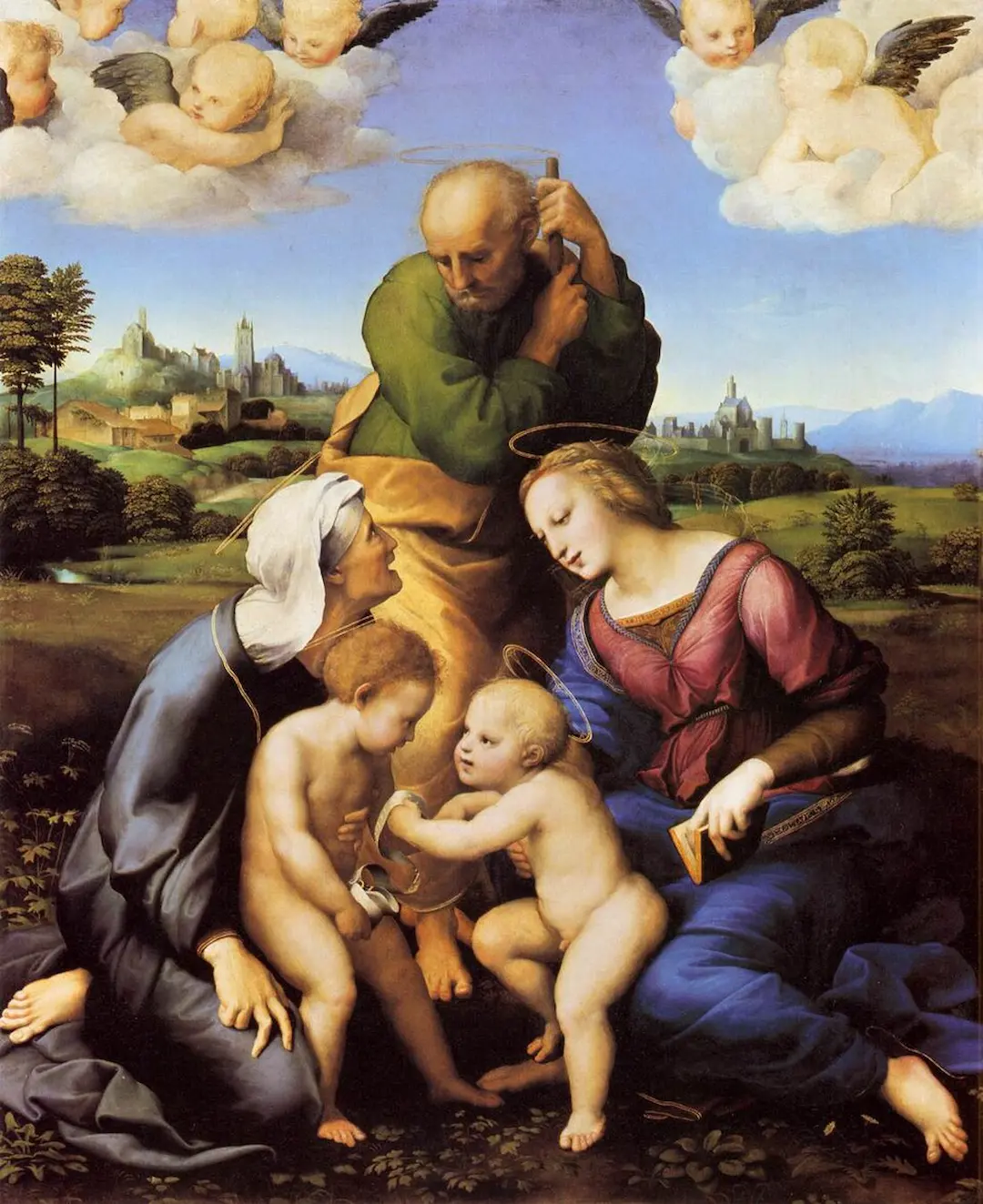
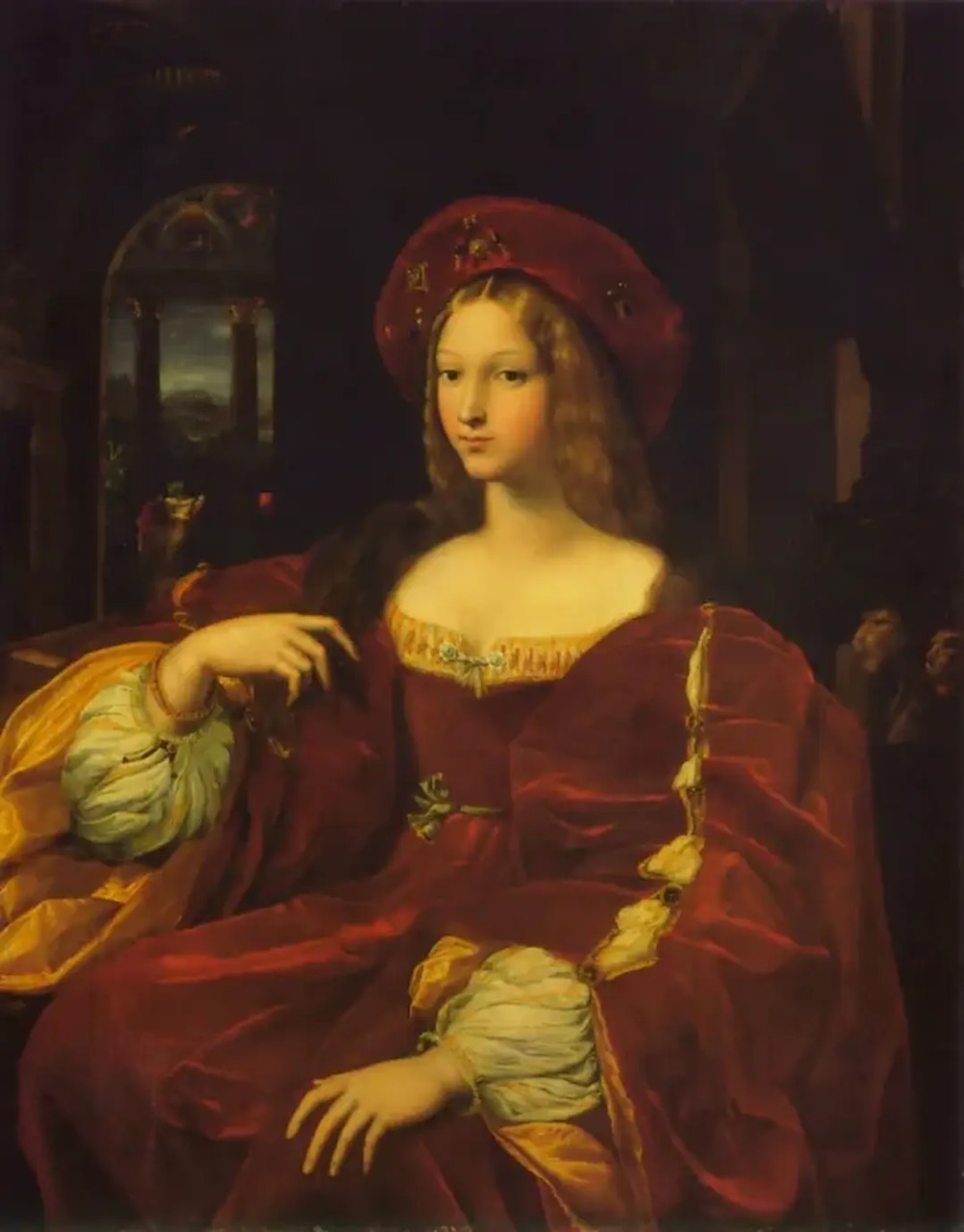
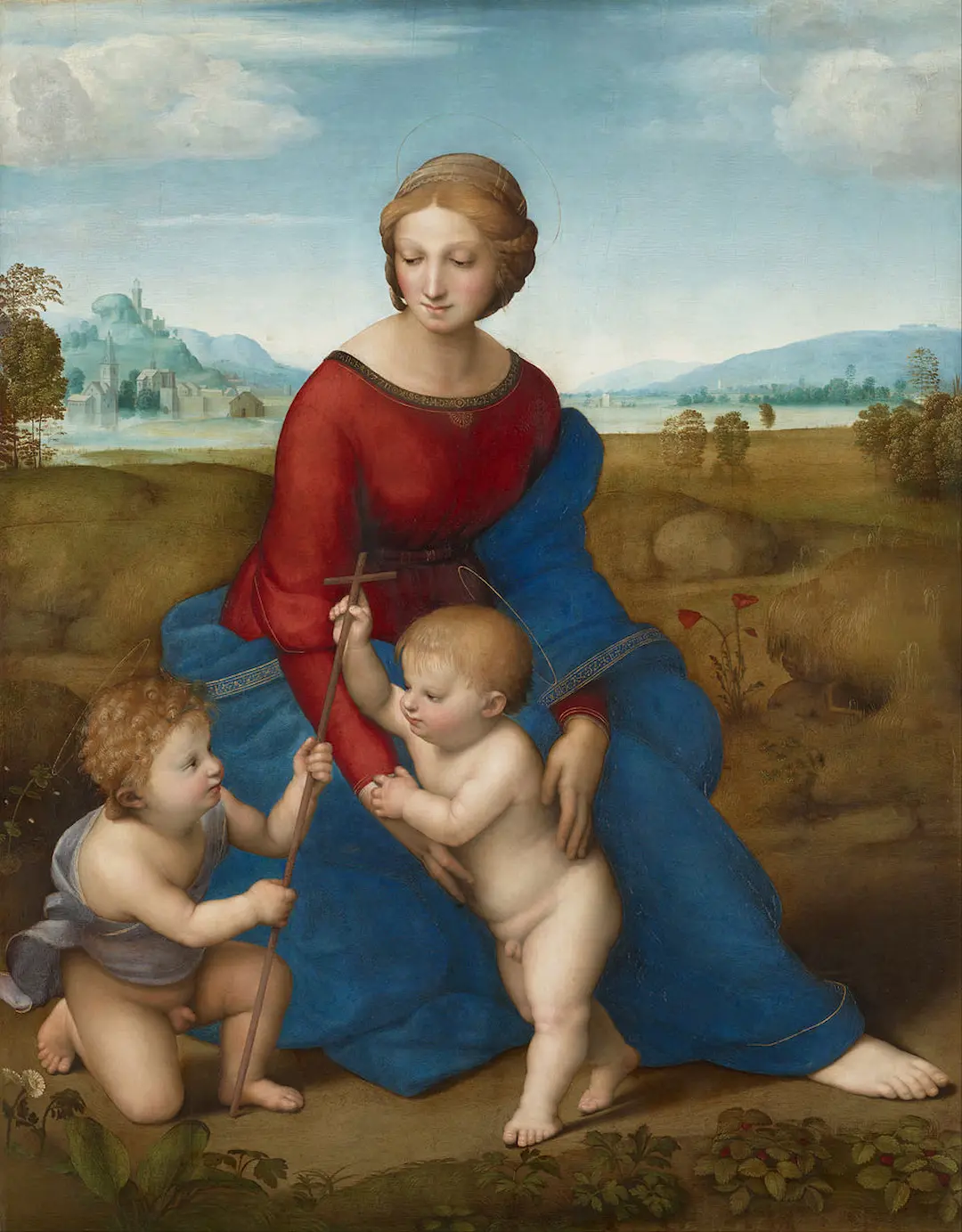
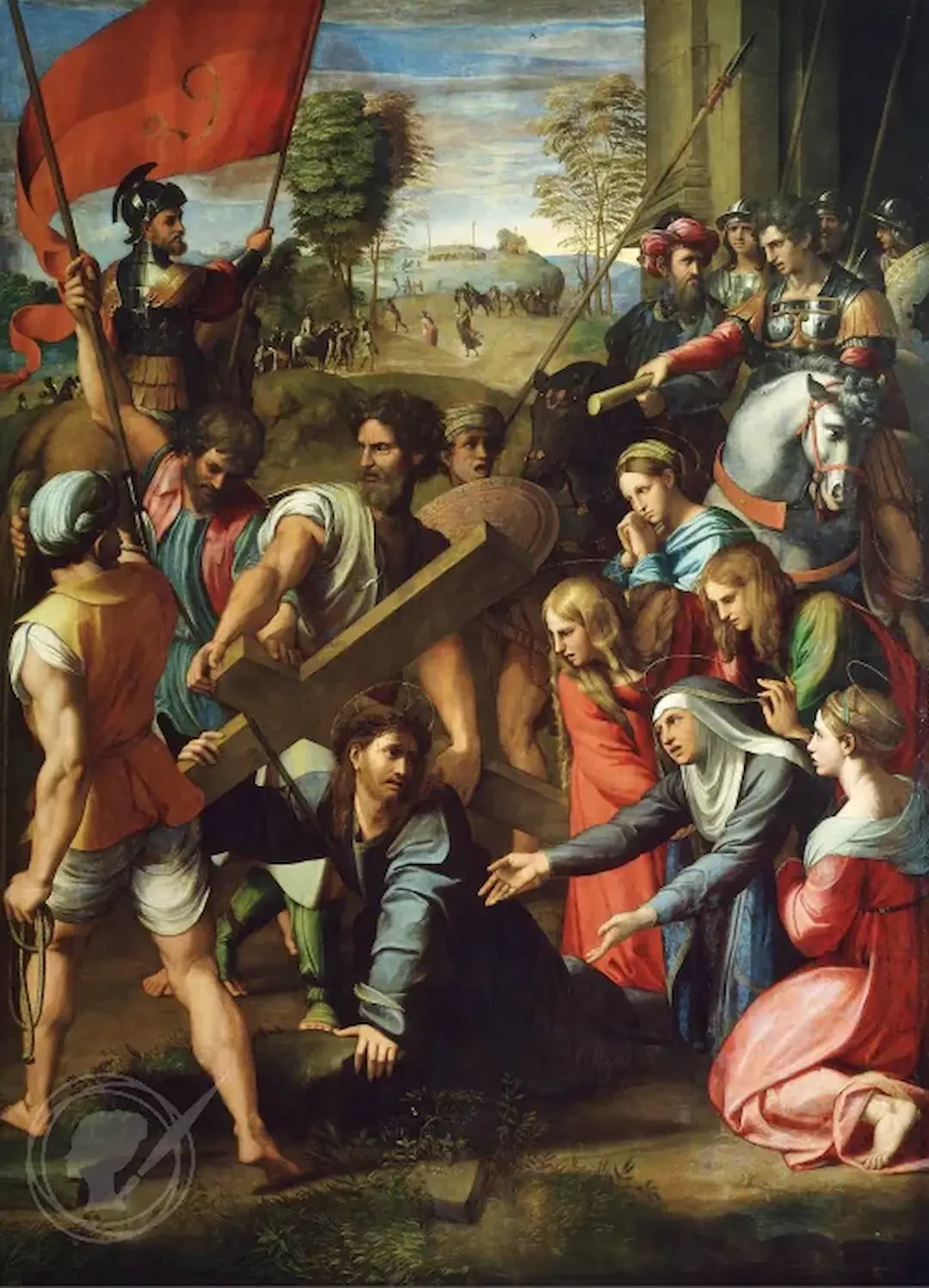
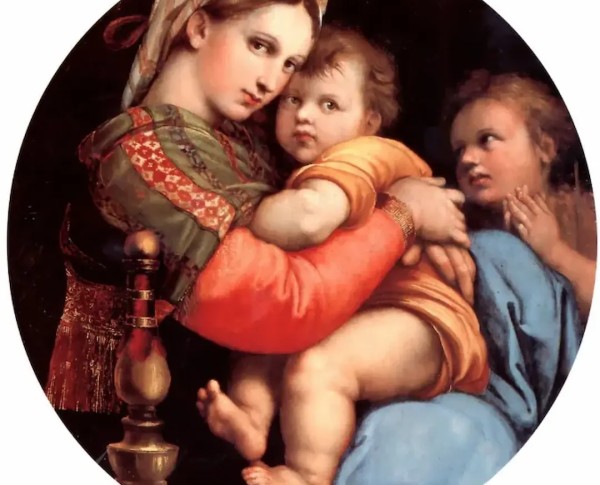
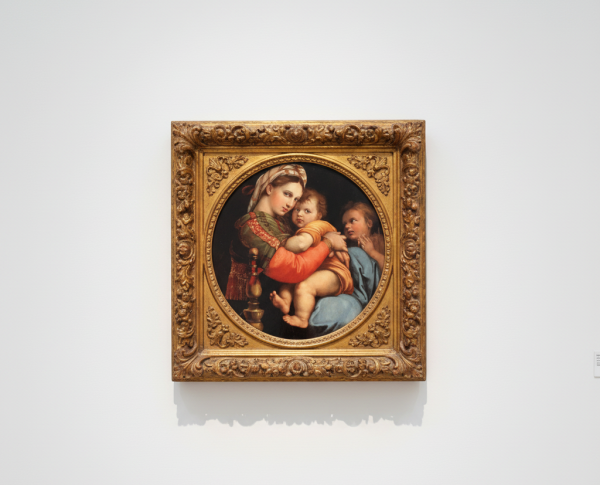
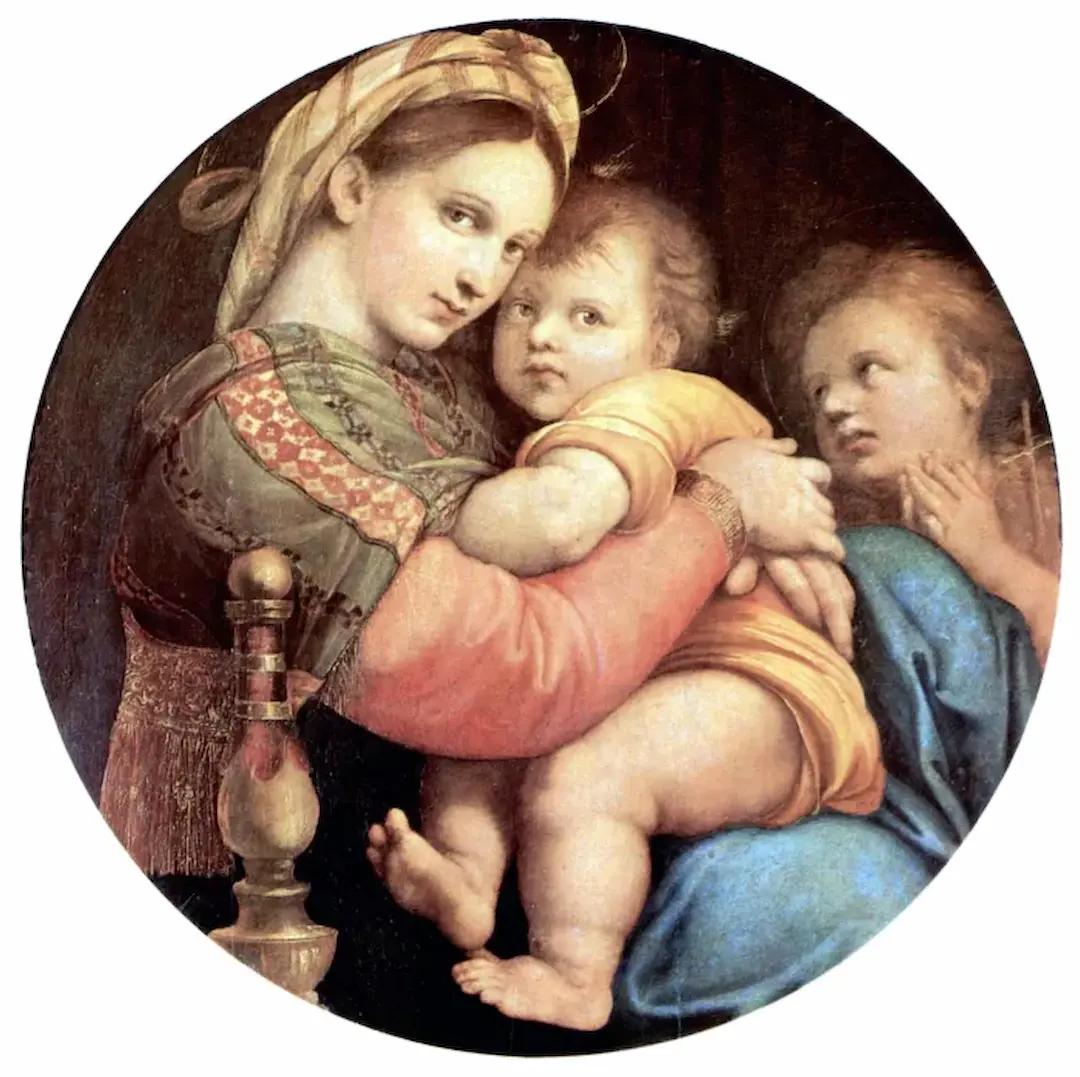
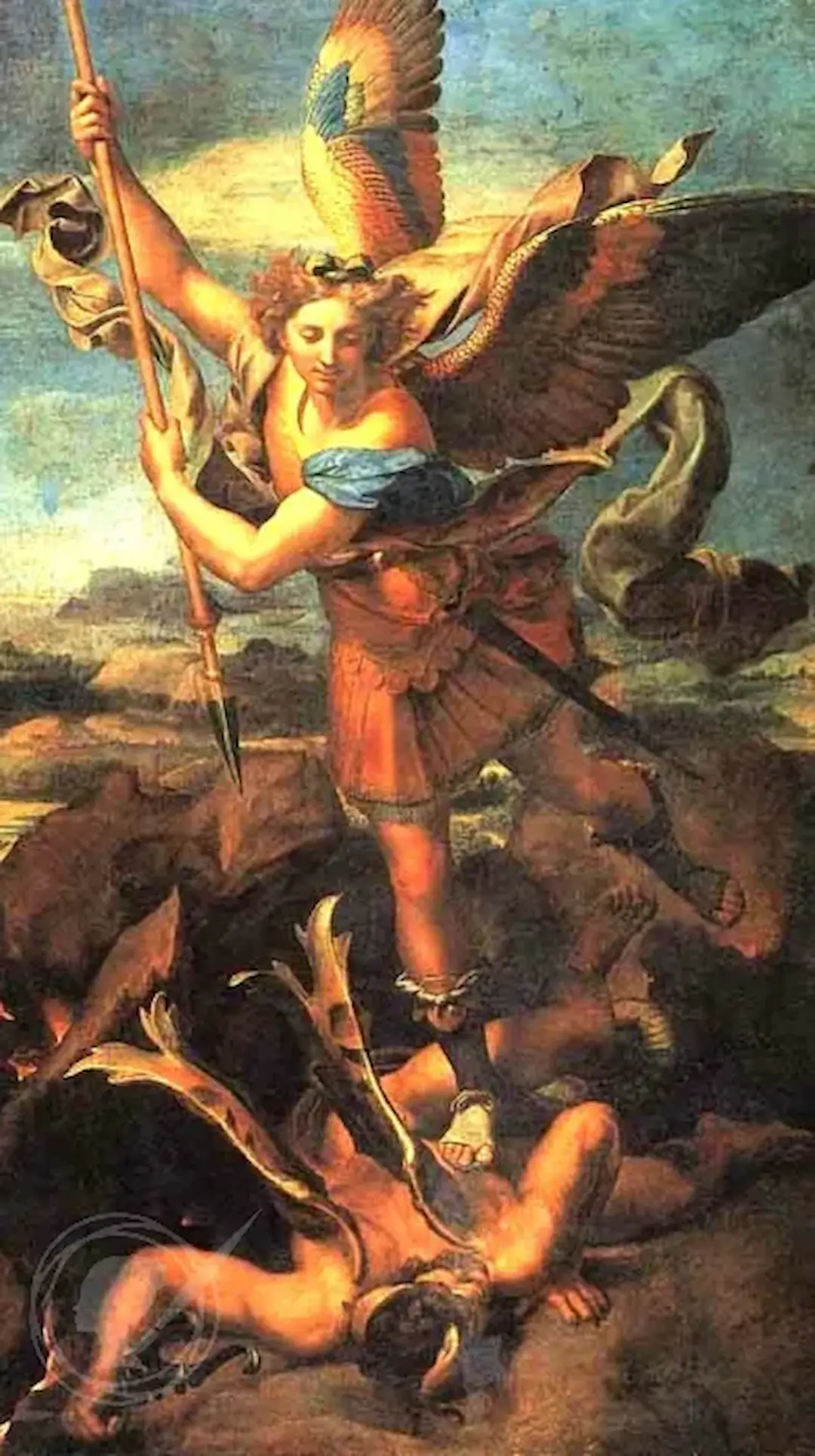
Raffaello Sanzio’s "Madonna of Belvedere" showcases his extraordinary skill with oil on canvas, a medium that brings depth and brilliance to the High Renaissance movement. Every brushstroke reveals his devotion to detail and composition, reflecting the era’s pursuit of ideal beauty. Collectors and enthusiasts searching for oil on canvas masterpieces will appreciate related works like "Saint Michael And The Dragon" and "La Donna Velata," which echo the same artistic mastery.
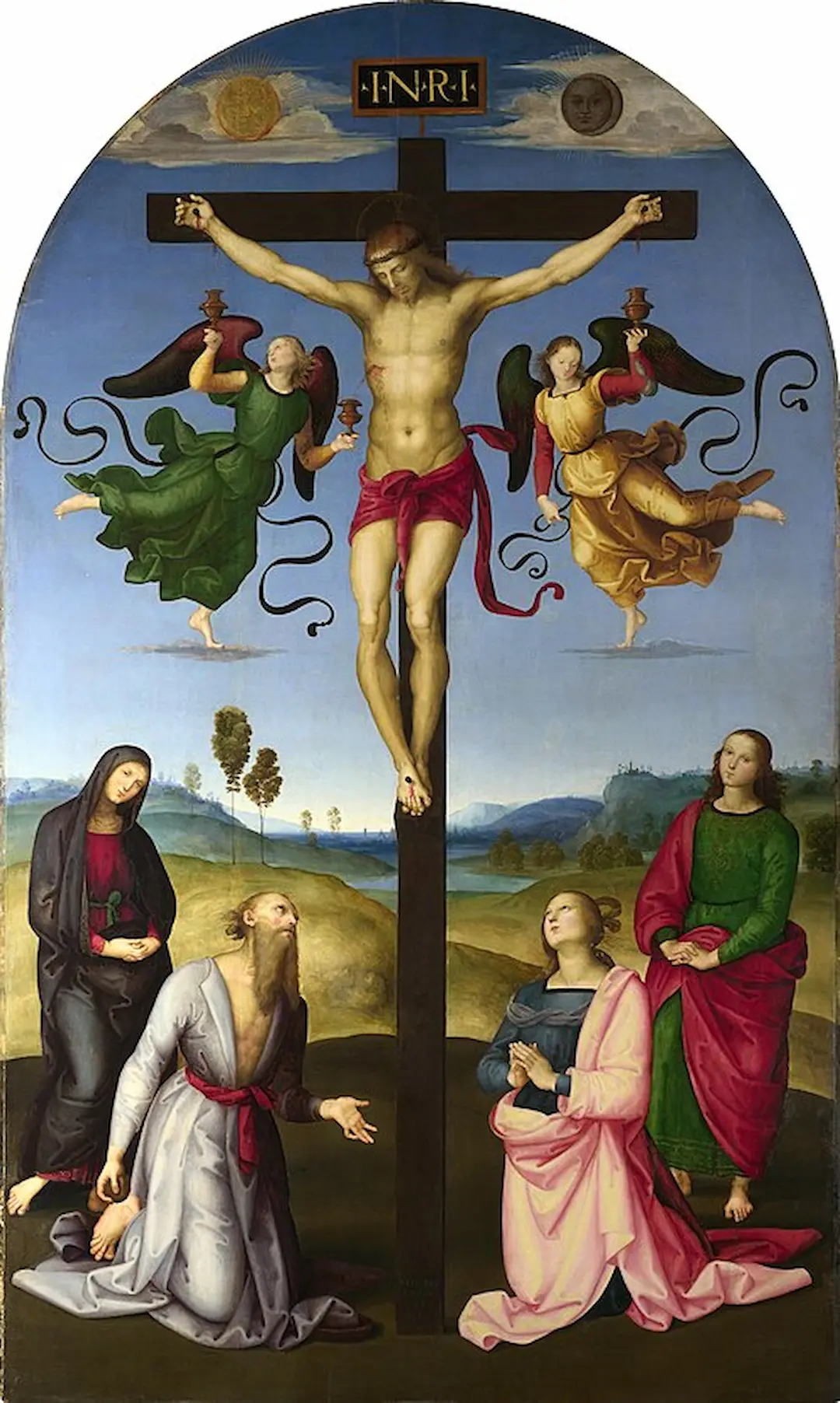
The "Madonna of Belvedere" is rich in symbolism, with each element woven thoughtfully by Raffaello Sanzio to convey spiritual serenity and maternal affection. This fine art painting for sale invites viewers to explore deeper meanings, much like his other celebrated pieces such as "Christ on the Cross with the Virgin, Saint Jerome, Mary Magdalene, and John the Baptist (Citta di Castello Altarpiece)." The painting remains a testament to the storytelling power of the High Renaissance.
Owning a reproduction of "Madonna of Belvedere" connects collectors to the enduring legacy of Raffaello Sanzio and the High Renaissance. As a hand-painted oil painting, it holds immense value for those seeking fine art painting for sale. Complement your collection with related masterpieces like "The Hill of Calvary" or "La Donna Velata," each offering a unique glimpse into Raffaello’s world and the rich tradition of Renaissance art.
When Art Meets History
"Madonna of Belvedere (or Madonna del Prato)" by Raffaello Sanzio stands as a hallmark of the High Renaissance movement, created around 1506. This iconic hand-painted oil painting captures the spiritual and artistic transformation of its era. Alongside masterpieces like "Creation of Adam 1510" and "The Last Supper 1498," it reflects the era's devotion to harmony and balance in art. Raffaello’s work continues to inspire, bridging the gap between past and present artistic achievements.
Techniques That Speak
Raffaello Sanzio employed masterful oil on canvas techniques in "Madonna of Belvedere," showcasing delicate brushwork and sublime color blending. The artist’s skillful use of chiaroscuro and perspective creates a lifelike composition, reminiscent of contemporaries such as Leonardo da Vinci’s "Mona Lisa (La Gioconda)" and "Female head (La Scapigliata)." This painting exemplifies the technical brilliance associated with the High Renaissance, making it a benchmark for artists who followed.
Emotions on Display
The tender interaction between Madonna and Child in "Madonna of Belvedere" evokes profound emotion, a signature of Raffaello Sanzio’s artistry. The serene expressions and gentle gestures mirror the emotional depth found in works like "Portrait of Cecilia Gallerani (Lady with an Ermine)." This fine art painting for sale draws viewers into a moment of intimate connection, embodying the spiritual tranquility and human warmth that define the High Renaissance movement.
Coveted by Collectors
As a celebrated masterpiece, "Madonna of Belvedere" remains highly sought after by art collectors worldwide. Its historical significance and exquisite execution place it alongside revered works such as "Creation of Adam 1510" and "Mona Lisa (La Gioconda)." Raffaello Sanzio's oil on canvas paintings continue to be prized treasures, and owning such a fine art painting for sale is a testament to one’s appreciation for the enduring legacy of the High Renaissance.
Related High Renaissance Hand-Painted Oil Paintings by Other Artists
Other Famous High Renaissance Artists:
Frequently Asked Questions About Madonna of Belvedere (or Madonna del Prato)
What is the historical significance of the Madonna of Belvedere?
The Madonna of Belvedere, painted by Raffaello Sanzio in the early 16th century, is significant for its embodiment of the High Renaissance ideals of beauty, harmony, and grace. It reflects the cultural and artistic advancements of the period, showcasing Raphael's mastery in portraying human emotion and divine presence.
What artistic techniques did Raphael employ in this painting?
Raphael utilized techniques such as chiaroscuro to create depth and volume, and sfumato to achieve soft transitions between colors. The composition is characterized by balanced proportions and a triangular arrangement, which enhances the stability and harmony of the figures.
What are the main themes represented in the Madonna of Belvedere?
The primary themes include maternal love, divinity, and the relationship between the sacred and the human. The painting emphasizes the bond between Mary and the Christ child, symbolizing the nurturing aspect of motherhood while also highlighting the divine nature of Christ.
How does the composition of the painting contribute to its meaning?
The composition features a triangular arrangement with the figures of Mary and Jesus forming the apex, which symbolizes stability and unity. This structure guides the viewer's eye and reinforces the centrality of the divine relationship depicted in the artwork.
What symbolism can be found in the Madonna of Belvedere?
The painting is rich in symbolism; for instance, the presence of the flowers in Mary's hand often represents purity and the Virgin's role as the mother of Christ. The serene expression on Mary's face conveys her acceptance of her divine role, while the child Jesus is depicted with an expression of innocence and grace.
In what ways does this painting reflect the influence of earlier artists?
Raphael was influenced by earlier masters such as Leonardo da Vinci and Michelangelo. The use of soft modeling and the portrayal of emotional depth can be traced back to Leonardo, while the anatomical precision and grandeur of the figures echo Michelangelo's style, showcasing Raphael's ability to synthesize these influences into his own unique vision.
What role did the Madonna of Belvedere play in Raphael's career?
The Madonna of Belvedere is considered one of Raphael's masterpieces and played a crucial role in establishing his reputation as a leading artist of the High Renaissance. It exemplifies his skill in combining classical ideals with emotional depth, setting a standard for future generations of artists.
Where is the Madonna of Belvedere currently housed?
The Madonna of Belvedere is currently part of the collection at the Kunsthistorisches Museum in Vienna, Austria. It is prominently displayed, allowing visitors to appreciate its artistic and historical significance.
How has the interpretation of the Madonna of Belvedere evolved over time?
Over the centuries, interpretations of the Madonna of Belvedere have evolved, reflecting changing cultural and religious contexts. Initially celebrated for its devotional qualities, it has also been analyzed through modern lenses, focusing on themes of gender, motherhood, and the role of the Virgin Mary in art and society.
What impact did the Madonna of Belvedere have on later artists?
The Madonna of Belvedere has had a profound impact on subsequent artists, inspiring countless interpretations of the Madonna and child theme. Its composition and emotional resonance have influenced Baroque and Neoclassical artists, who sought to emulate Raphael's mastery of form and expression.






















_GFM_Painting_(1).webp)

.webp)

 100% Hand-Painted: Finished in 3-6 Weeks
.webp)

.png)
















_(1).webp)