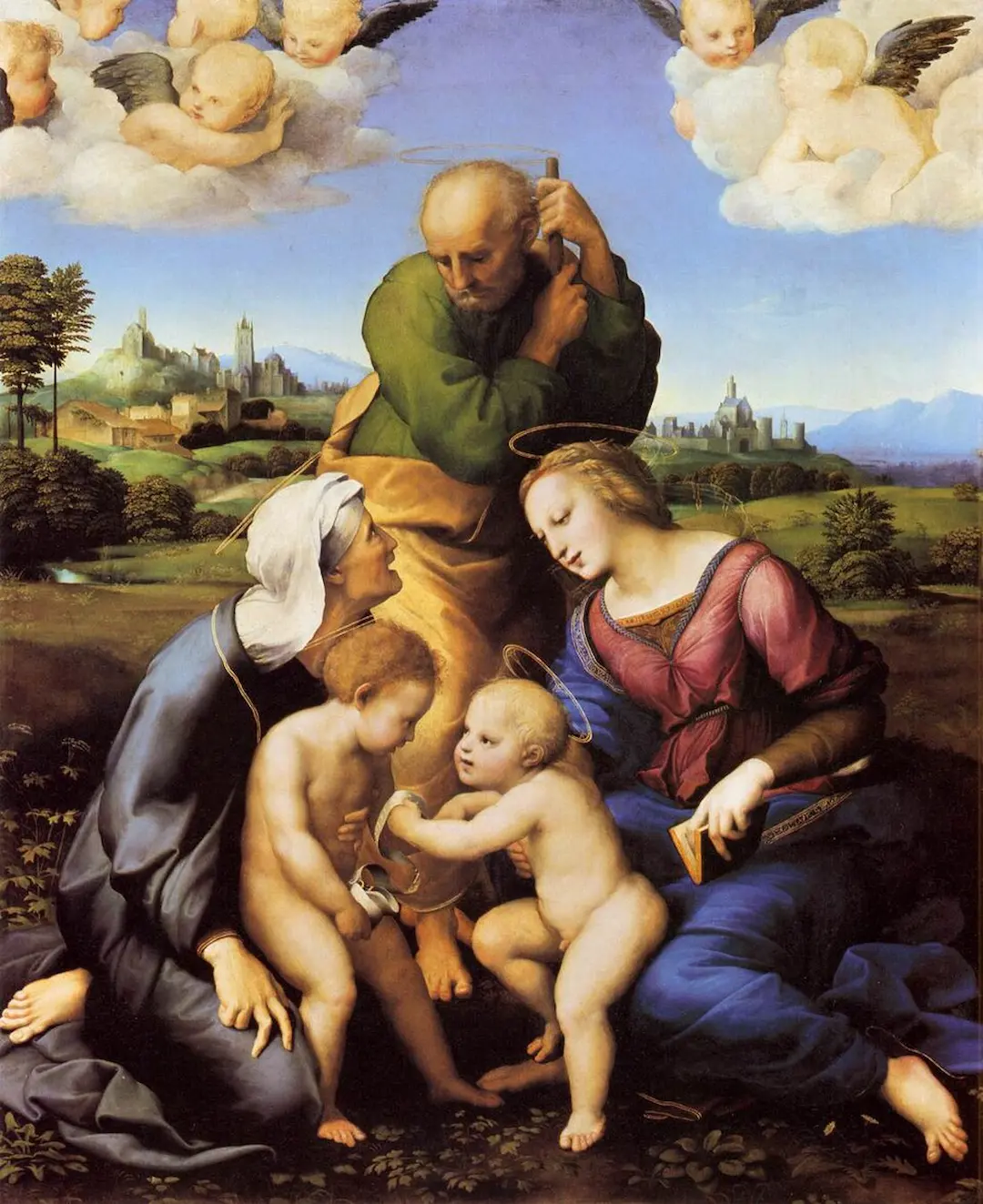
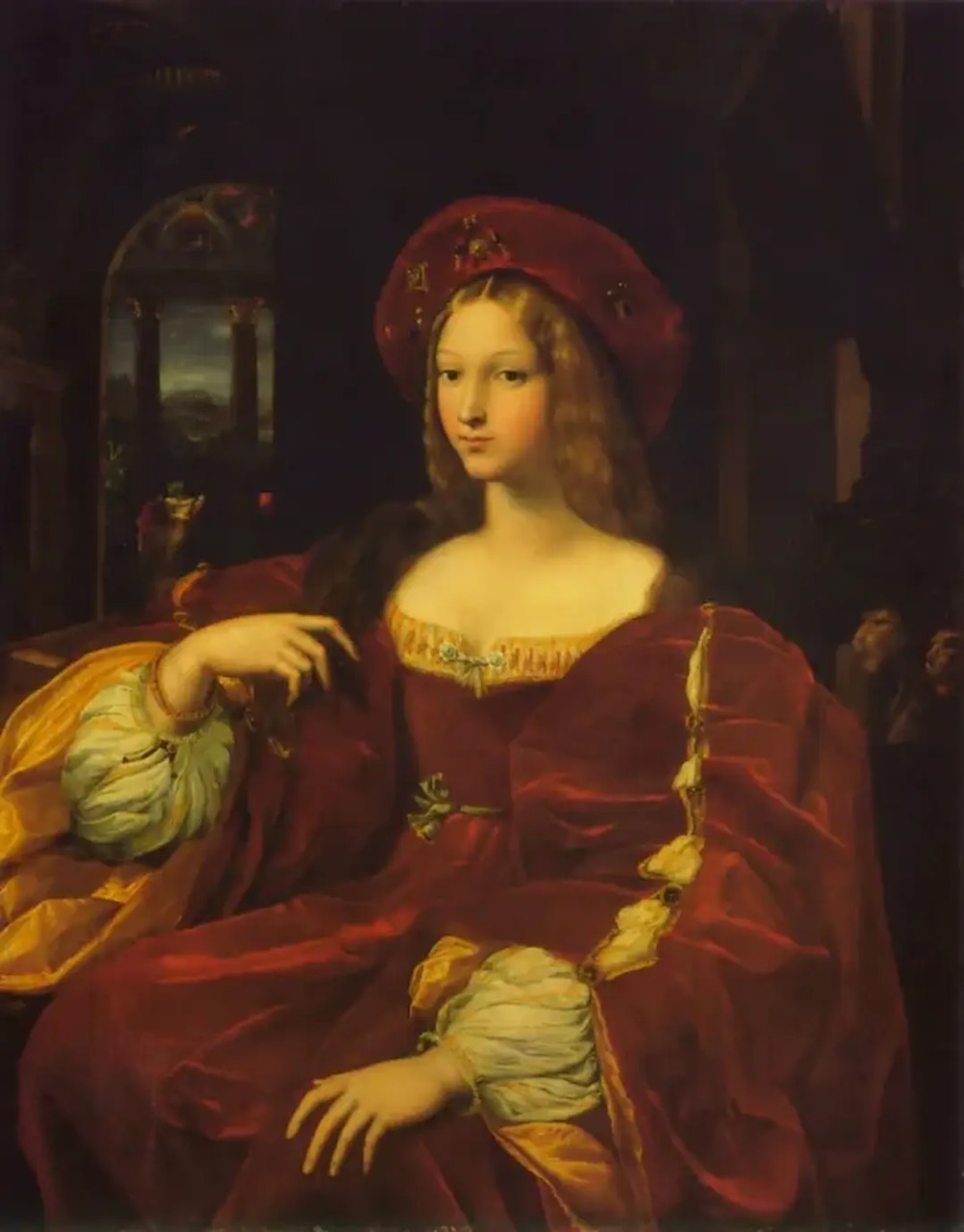
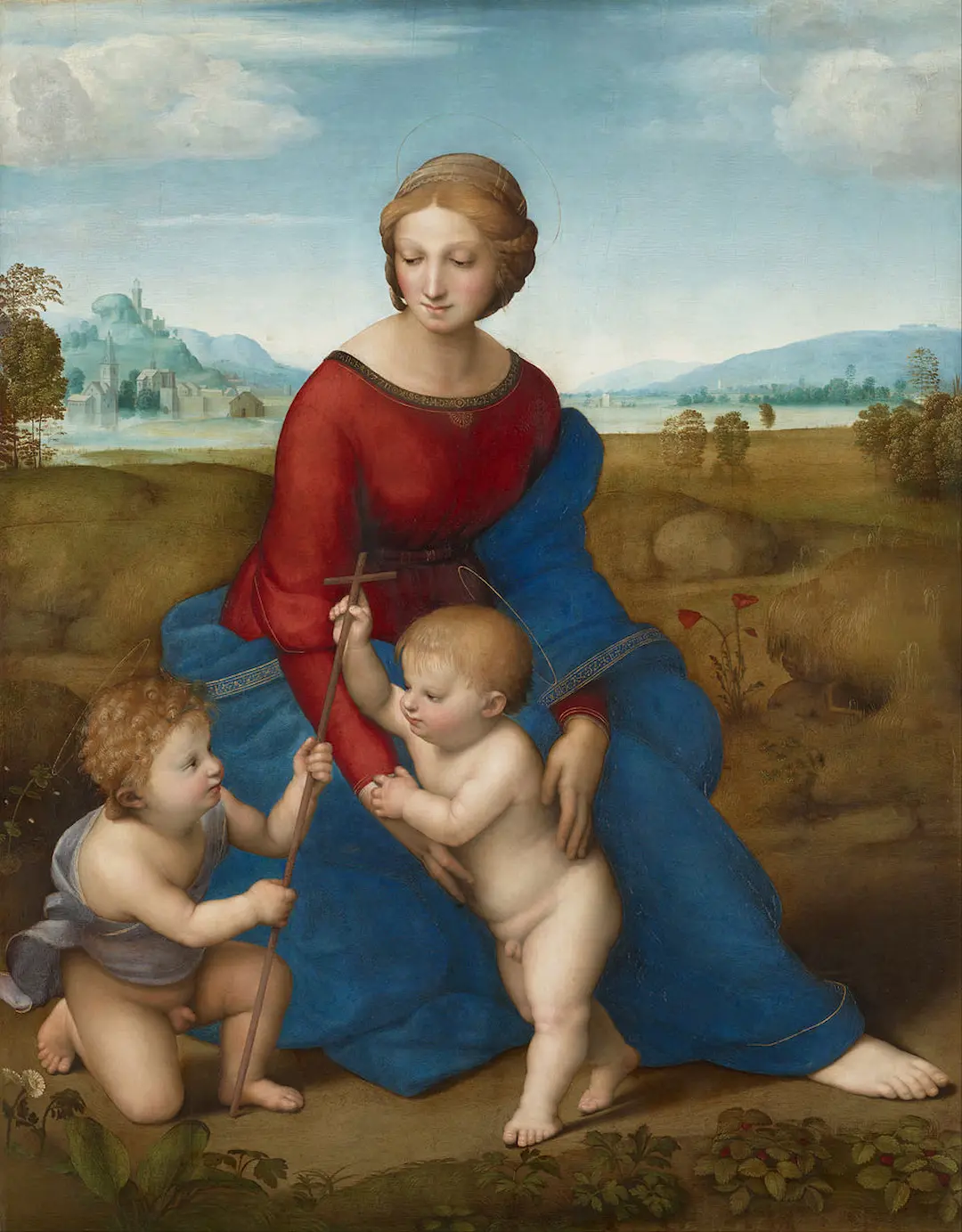
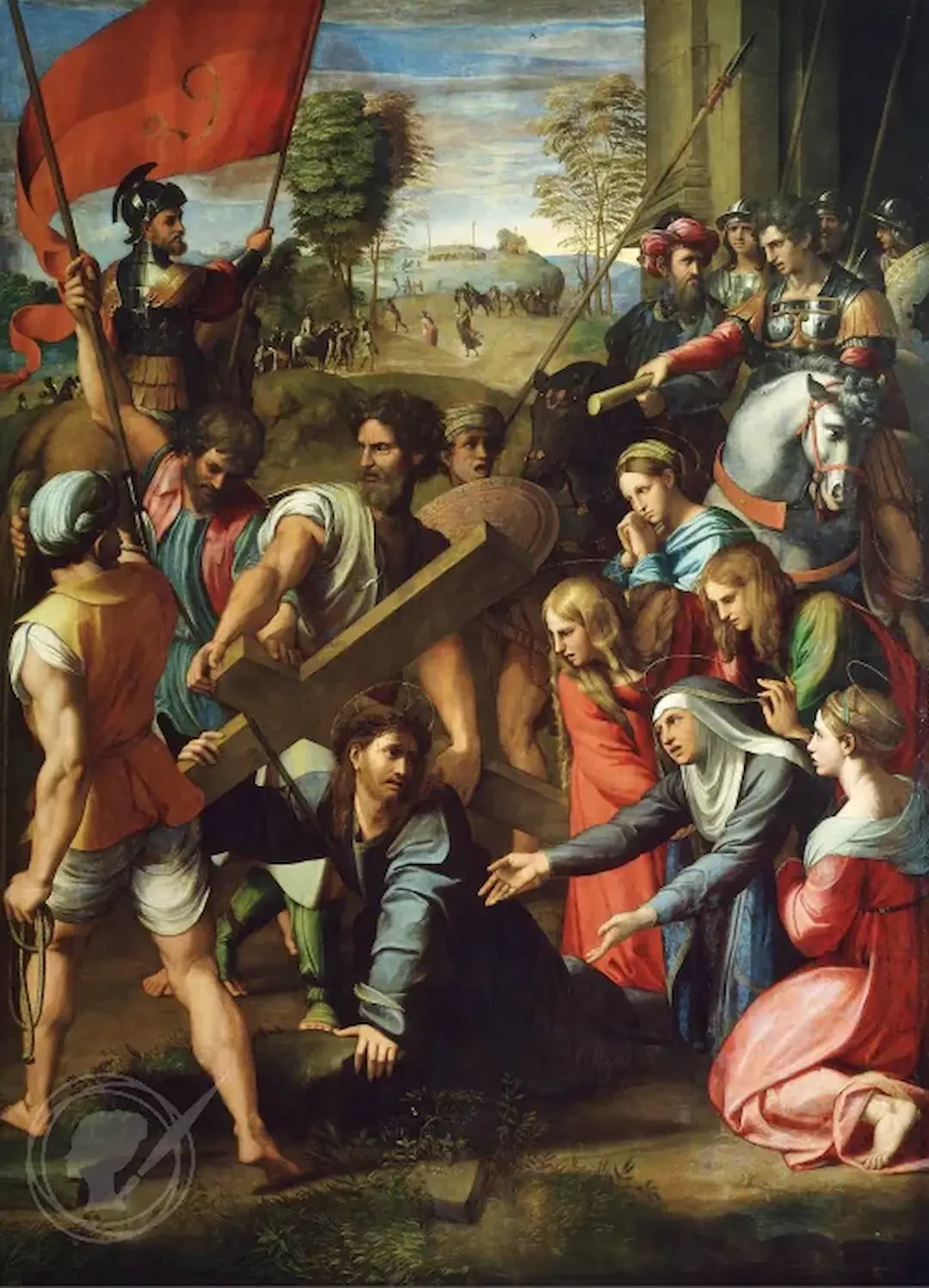
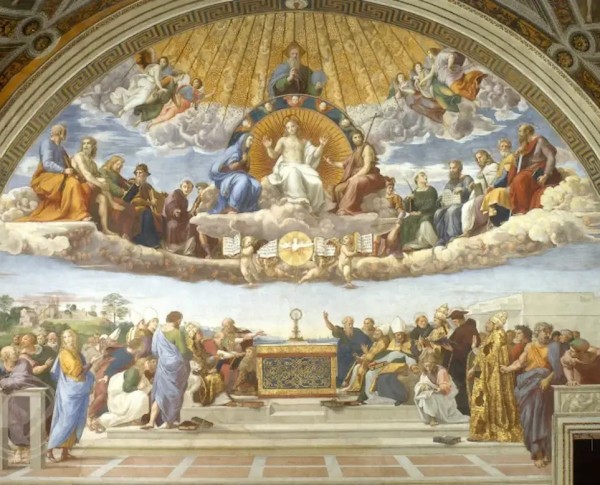
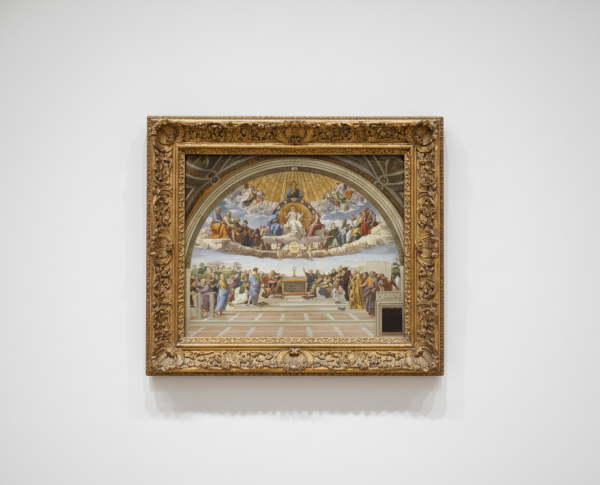
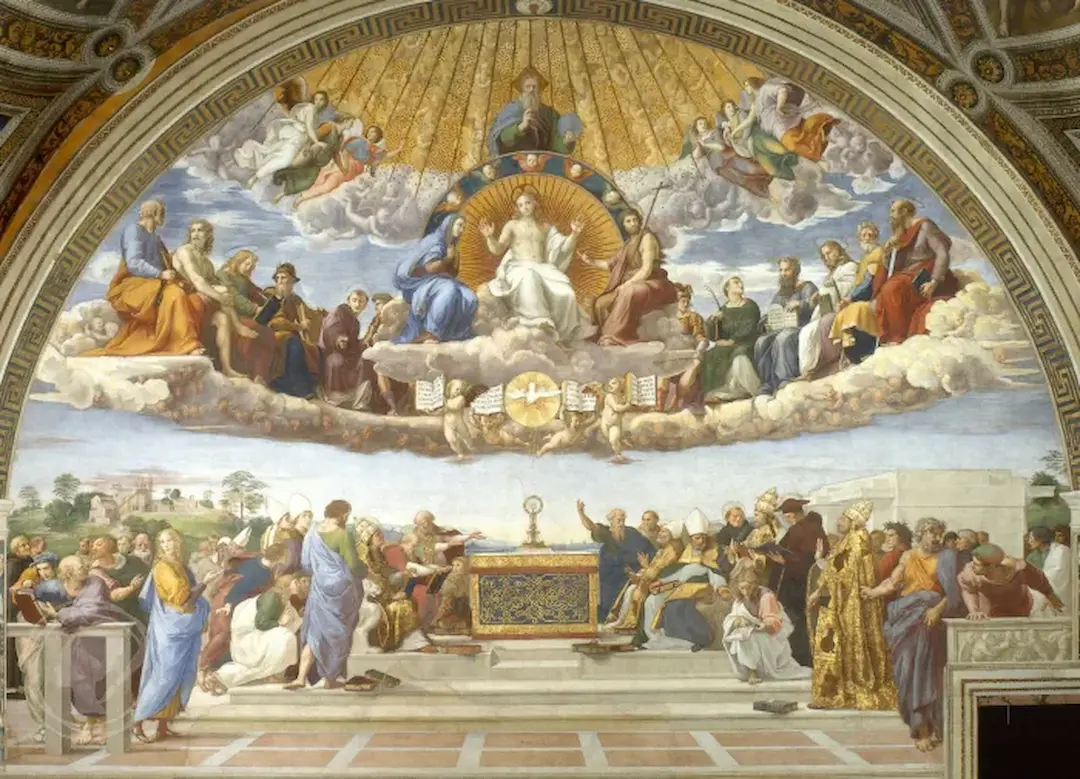
Raffaello Sanzio’s "Disputation of the Holy Sacrament (La Disputa)" showcases the exquisite technique of oil on canvas, with each brushstroke revealing the artist’s dedication to detail and harmony. This High Renaissance masterpiece demonstrates Raphael’s ability to blend vibrant color, light, and perspective seamlessly. Collectors looking for similar works may also consider "The Stanza Della Segnatura Ceiling Justice" or "Madonna & Child (Madonna del Granduca) 1505" to complement their appreciation for fine art.
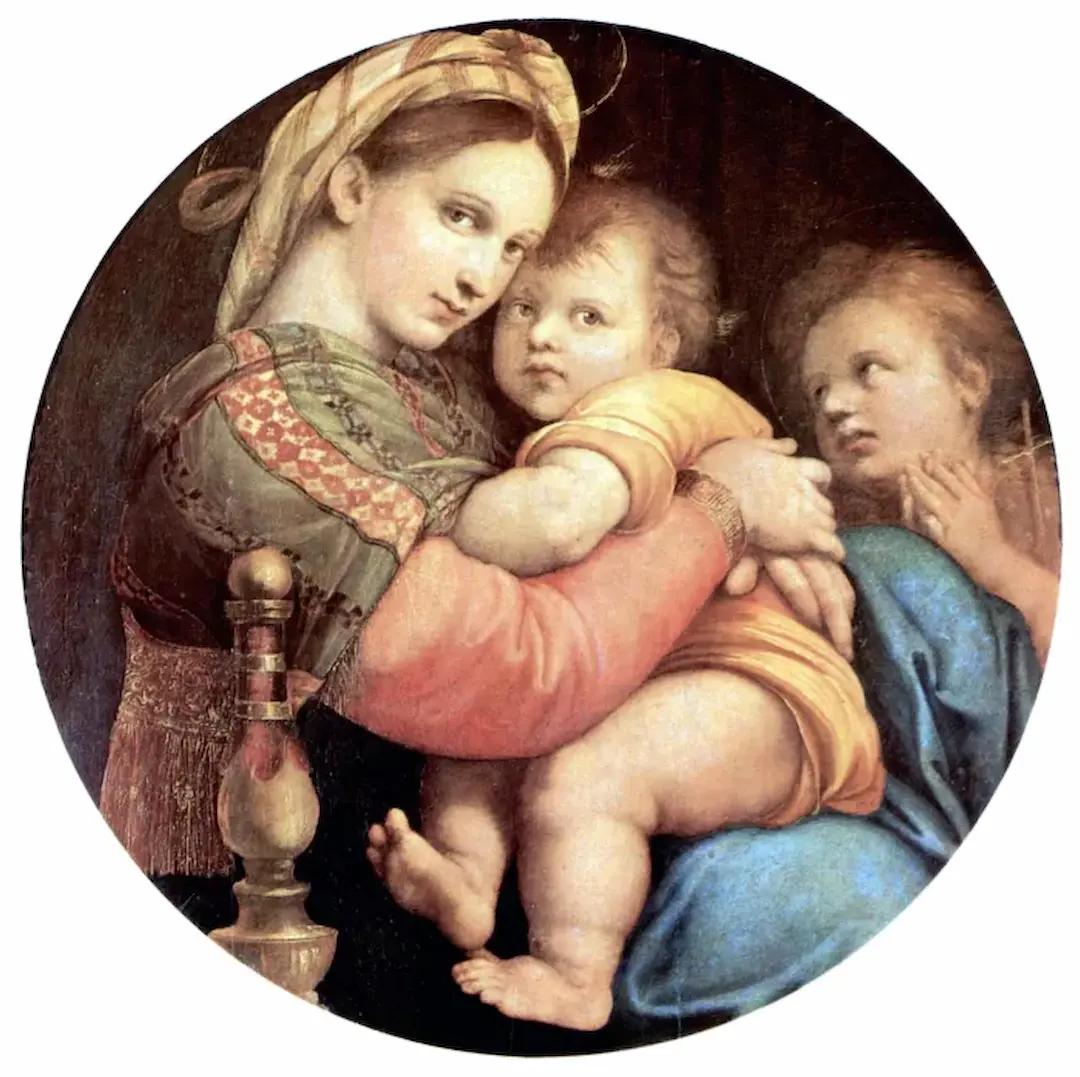
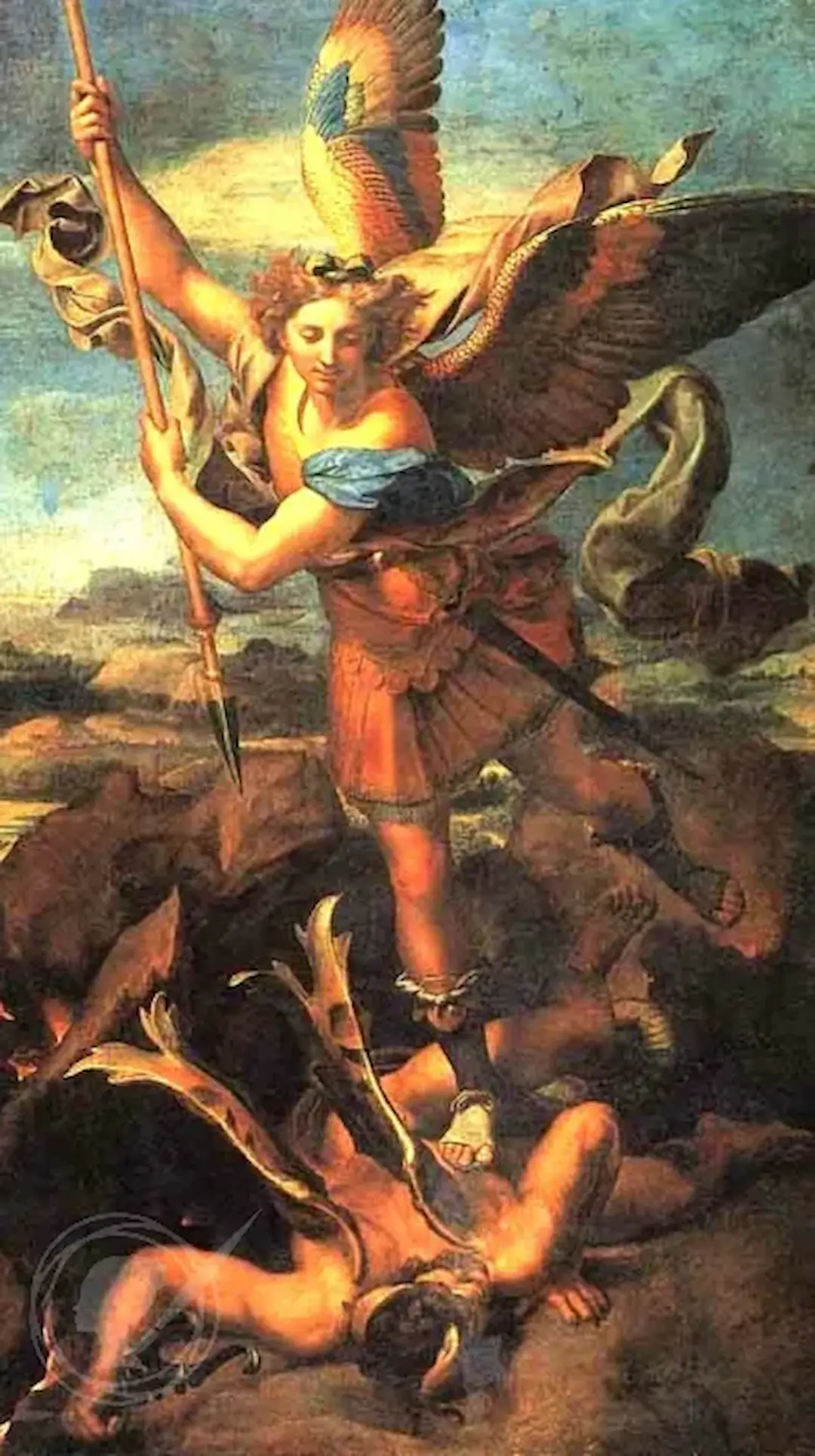
Every element in "Disputation of the Holy Sacrament (La Disputa)" is rich with symbolism, telling stories of faith and divine presence. Raphael, a luminary of the High Renaissance, infused the scene with theological depth, making this fine art painting for sale a conversation piece for any collection. Those drawn to symbolic art may also find interest in related works like "Saint Michael And The Dragon" or "The Madonna Of The Chair", both echoing Raphael’s signature style.
For collectors, owning a hand-painted oil painting such as "Disputation of the Holy Sacrament (La Disputa)" by Raffaello Sanzio is a testament to refined taste and appreciation for the High Renaissance. This iconic piece, along with related products like "The Hill of Calvary" or "Madonna & Child (Madonna del Granduca) 1505", elevates any gallery or living space. Discover the timeless beauty and value that only Raphael’s masterpieces can bring to your fine art collection.
When Art Meets History
Raffaello Sanzio’s “Disputation of the Holy Sacrament (La Disputa)” stands as a testament to the intellectual vigor of the High Renaissance. Painted between 1509 and 1510, this masterpiece captures a pivotal moment in religious discourse. Like Leonardo’s “The Last Supper 1498” and Michelangelo’s “Creation of Adam 1510,” this hand-painted oil painting weaves theology and artistry, elevating the genre to new heights and inviting viewers to reflect on the era’s rich cultural context.
Techniques That Speak
Raffaello’s command of oil on canvas is showcased in every intricate detail of “La Disputa.” The artist’s deft use of perspective, light, and color brings the celestial and earthly realms together seamlessly. This approach, shared by masterpieces like “Mona Lisa (La Gioconda) c. 1503-05” and “La Scapigliata,” highlights the technical brilliance of the High Renaissance. The painting’s layered composition and harmonious palette make it a prime example of oil on canvas excellence.
Emotions on Display
In “Disputation of the Holy Sacrament,” Raffaello Sanzio masterfully conveys a spectrum of human emotions, from awe to contemplation. Figures are depicted in dynamic poses, their expressions revealing the fervor of theological debate. This emotional depth mirrors the intensity found in “Portrait of Cecilia Gallerani (Lady with an Ermine) 1483-90.” The High Renaissance movement’s focus on humanism is palpable, making this fine art painting for sale a profound study in spiritual and emotional resonance.
Coveted by Collectors
Collectors worldwide seek masterpieces like “Disputation of the Holy Sacrament” for their historical and artistic significance. Raffaello Sanzio’s works, along with related paintings such as “The Last Supper 1498” and “Creation of Adam 1510,” are highly prized in the art market. As a hand-painted oil painting from the High Renaissance, “La Disputa” represents the pinnacle of artistic achievement and remains a coveted treasure for connoisseurs of fine art painting for sale.
Related High Renaissance Hand-Painted Oil Paintings by Other Artists
Other Famous High Renaissance Artists:
Frequently Asked Questions About Disputation of the Holy Sacrament (La Disputa)
What is the historical context of "Disputation of the Holy Sacrament"?
"Disputation of the Holy Sacrament" was created by Raffaello Sanzio between 1509 and 1510, during the High Renaissance, a period characterized by a renewed interest in classical philosophy, art, and humanism. The painting reflects the theological debates of the time, particularly concerning the nature of the Eucharist.
What are the main themes depicted in the painting?
The painting illustrates the theological dispute regarding the presence of Christ in the Eucharist, showcasing the tension between faith and reason. It presents a visual dialogue among various religious figures, emphasizing the importance of the Holy Sacrament in Catholic doctrine.
Who are the key figures represented in the artwork?
The composition features prominent figures such as Christ, the Virgin Mary, and various saints and theologians, including St. Augustine and St. Thomas Aquinas. Each figure represents different aspects of Christian belief and doctrine, contributing to the overall discourse of the painting.
What artistic techniques did Raffaello employ in this painting?
Raffaello utilized linear perspective to create depth and dimension, drawing the viewer's eye toward the central figures. His mastery of chiaroscuro enhances the three-dimensionality of the characters, while the harmonious arrangement of figures reflects the balance and order characteristic of High Renaissance art.
How does the composition of the painting contribute to its meaning?
The circular arrangement of figures around the central Eucharist emphasizes the communal nature of faith and the importance of the sacrament. The upward gaze of the figures towards Christ signifies divine revelation and the centrality of the Holy Sacrament in Christian belief.
What role does color play in "Disputation of the Holy Sacrament"?
Raffaello's use of color serves to highlight the spiritual significance of the scene. The vibrant hues of the robes worn by the figures contrast with the serene tones of the background, drawing attention to the central theme of the Eucharist and enhancing the overall emotional impact of the painting.
What is the significance of the architecture depicted in the painting?
The architectural elements in "Disputation of the Holy Sacrament" symbolize the Church's authority and the divine order of the universe. The grand, classical architecture serves as a backdrop that reinforces the theological discussions taking place, linking the earthly realm with the divine.
How does "Disputation of the Holy Sacrament" reflect Raffaello's artistic style?
The painting exemplifies Raffaello's signature style, characterized by clarity, balance, and idealized forms. His ability to convey complex theological ideas through a harmonious composition and expressive figures showcases his mastery of narrative and emotional depth in art.
What influence did "Disputation of the Holy Sacrament" have on later artists?
This work had a profound impact on subsequent generations of artists, particularly in its approach to religious themes and the use of composition to convey complex ideas. Raffaello's integration of classical elements with Christian themes inspired many artists of the Baroque period and beyond.
Where can "Disputation of the Holy Sacrament" be viewed today?
The painting is part of the Vatican Museums' collection, located in the Stanza della Segnatura, where it continues to be a focal point for visitors interested in Renaissance art and theology.






















_GFM_Painting_(1).webp)


 100% Hand-Painted: Finished in 3-6 Weeks

.png)
















_(1).webp)