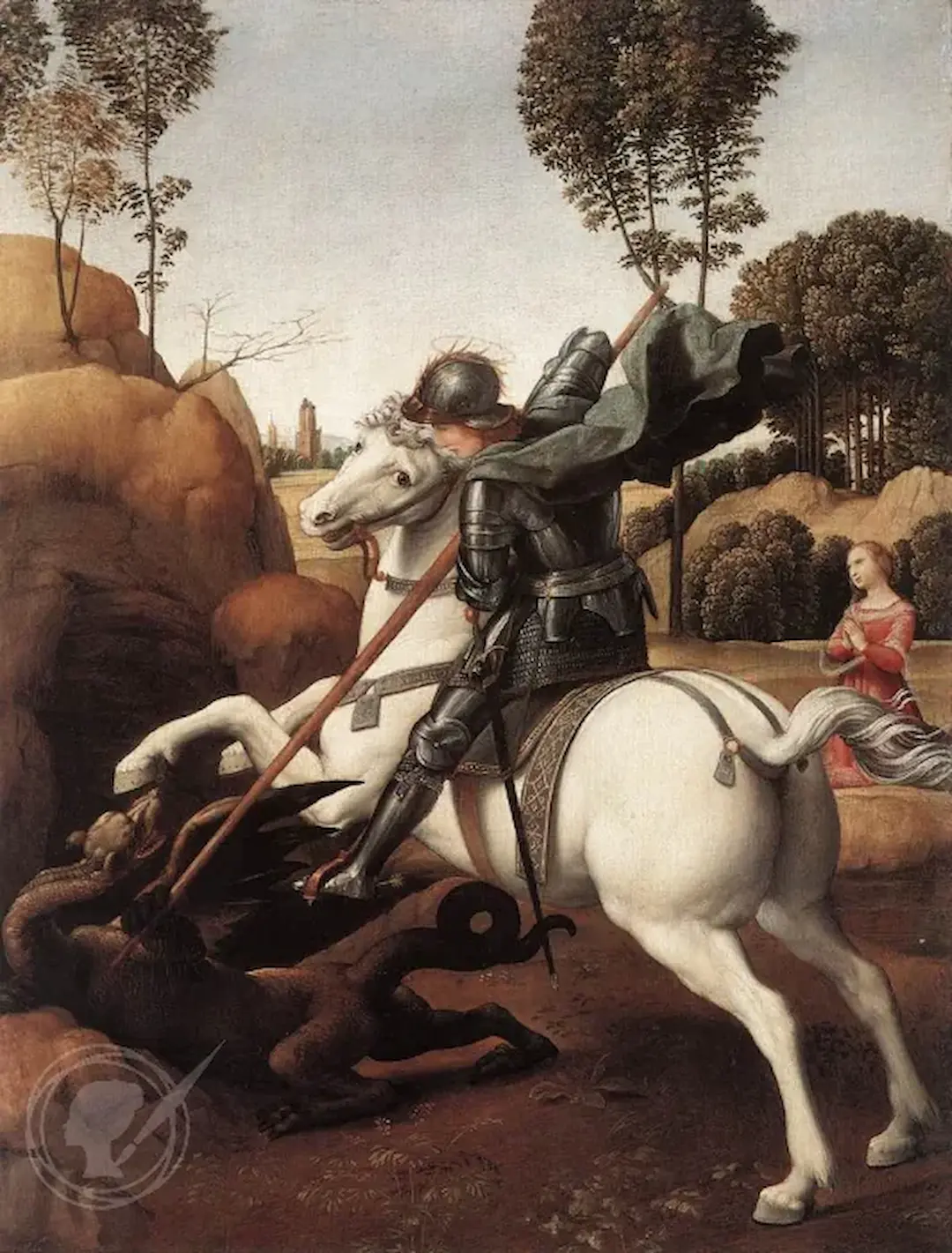
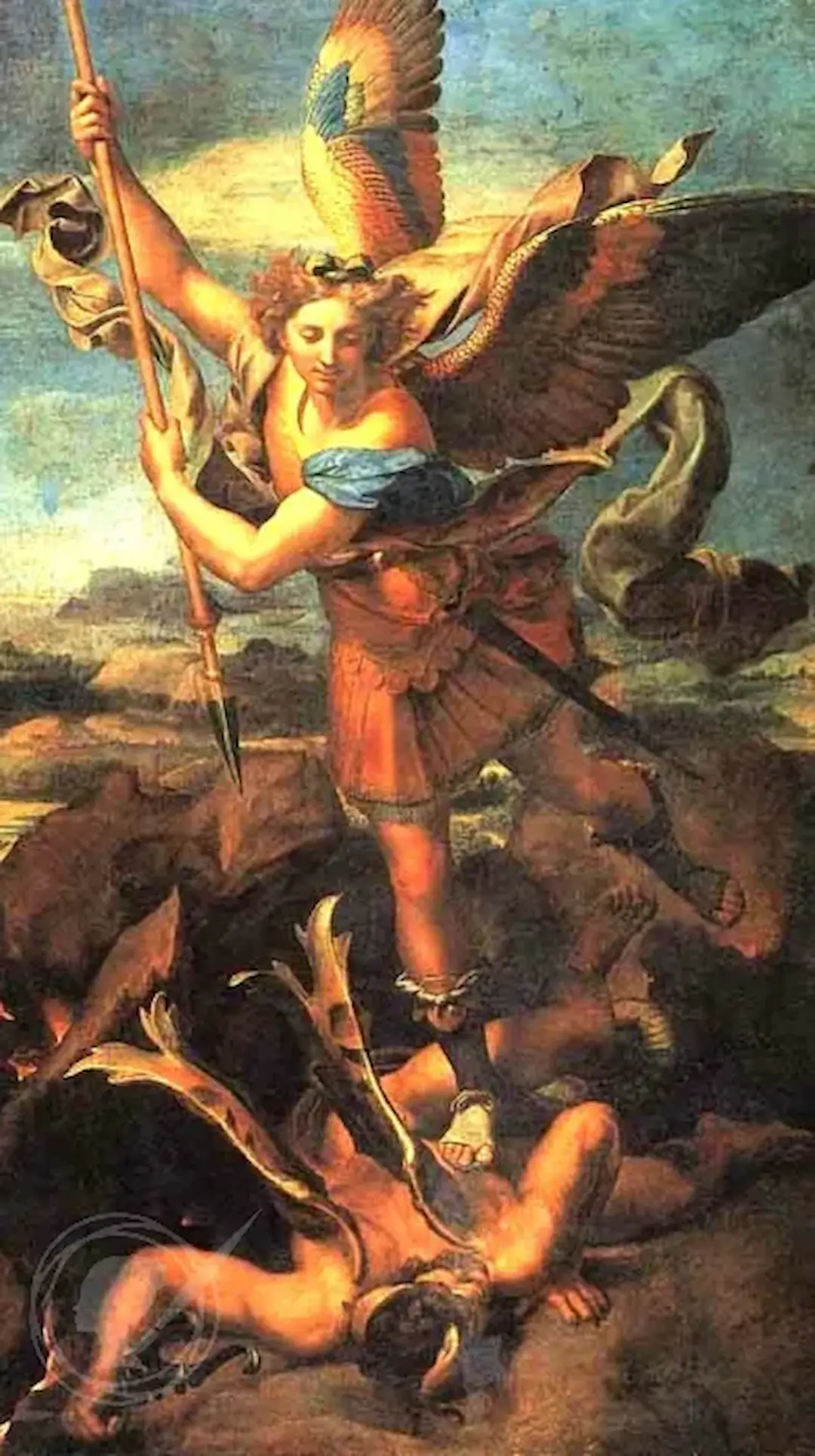
Raffaello Sanzio’s "St George and the Dragon" exemplifies the exquisite skill and attention to detail characteristic of High Renaissance art. Executed in oil on canvas, the painting demonstrates Raphael’s ability to create lifelike figures and dynamic compositions. The brushwork and use of color are evident in every stroke, aligning this work with other masterpieces like "The Vision of Ezekiel" and "La Donna Velata," ensuring its place among the finest oil on canvas paintings available today.
The narrative of "St George and the Dragon" is brought to life through Raphael’s remarkable talent, making this hand-painted oil painting a visual tale of courage and virtue. The artwork is rich with symbolism, from the valiant knight to the menacing dragon, echoing themes found in related works such as "Madonna & Child (Madonna del Granduca) 1505." Collectors seeking a fine art painting for sale will appreciate the depth and storytelling woven into every detail.
For art enthusiasts, owning "St George and the Dragon" by Raffaello Sanzio is a unique opportunity to possess a piece of High Renaissance history. This oil on canvas masterpiece is highly sought after, much like "The Holy Family with Saints Elizabeth and John (or The Canigiani Holy Family)." As a fine art painting for sale, it stands as a testament to Raphael’s genius and the enduring allure of hand-painted oil paintings from this transformative artistic era.
When Art Meets History
"St George and the Dragon" by Raffaello Sanzio, a masterwork of the High Renaissance movement, beautifully encapsulates the era's spirit where myth intertwines with history. This hand-painted oil painting not only depicts the legendary tale of St George's heroic triumph but also reflects the intellectual and artistic advancements of its time. Like "Mona Lisa (La Gioconda)" and "The Last Supper," Raphael's work continues to inspire awe, cementing its legacy in the annals of art history.
Techniques That Speak
Raffaello Sanzio's "St George and the Dragon" exemplifies refined techniques characteristic of High Renaissance masterpieces. Through his expert use of oil on canvas, Raphael achieves remarkable depth, vibrant color, and lifelike detail. His delicate brushwork brings each element to life, mirroring the technical prowess found in "Creation of Adam" and "Portrait of Cecilia Gallerani (Lady with an Ermine)." Collectors and connoisseurs alike admire such works for their enduring technical brilliance.
Emotions on Display
In "St George and the Dragon," Raphael masterfully conveys a sense of tension, valor, and hope, hallmarks of a fine art painting for sale from the High Renaissance. The expressions of both the valiant knight and the fearful dragon evoke a powerful emotional response, drawing viewers into the unfolding drama. Much like "Female head (The Lady of the Dishevelled Hair) (or La Scapigliata)," this painting resonates with audiences through its stirring emotional depth.
Coveted by Collectors
As a testament to its significance, "St George and the Dragon" remains highly sought after among art enthusiasts and collectors worldwide. This hand-painted oil painting by Raffaello Sanzio stands alongside other celebrated works from the High Renaissance, such as "The Last Supper." Its enduring appeal, historical importance, and exquisite artistry make it a staple in collections where the world's most treasured masterpieces are displayed and appreciated for generations.
Related High Renaissance Hand-Painted Oil Paintings by Other Artists
Other Famous High Renaissance Artists:
Frequently Asked Questions About St George and the Dragon
What is the historical context of "St George and the Dragon"?
"St George and the Dragon" was painted during the High Renaissance, a period characterized by a renewed interest in classical antiquity and humanism. Raffaello Sanzio, known as Raphael, created this work in the early 16th century, reflecting the artistic innovations and cultural values of the time.
Who is depicted in the painting and what do they symbolize?
The painting depicts Saint George, a Christian martyr and soldier, who symbolizes bravery and the triumph of good over evil. The dragon represents chaos and paganism, making the scene a powerful allegory for the struggle between faith and sin.
What artistic techniques did Raphael employ in "St George and the Dragon"?
Raphael utilized chiaroscuro to create depth and volume, as well as dynamic composition to convey movement. The use of vibrant colors and careful attention to detail enhances the emotional intensity of the scene.
How does "St George and the Dragon" reflect Renaissance ideals?
The painting reflects Renaissance ideals through its emphasis on human emotion, naturalism, and classical themes. Raphael's portrayal of Saint George embodies the heroic virtues celebrated during this period, showcasing the balance between humanity and divinity.
What is the significance of the dragon in the painting?
The dragon serves as a symbol of evil and the trials faced by the faithful. Its defeat by Saint George represents the victory of Christian values over malevolence, reinforcing the moral narrative central to the painting.
What influences can be seen in Raphael's style in this painting?
Raphael's style in "St George and the Dragon" shows influences from both Leonardo da Vinci and Michelangelo. His mastery of form and composition, combined with a softer approach to figures, reflects a synthesis of these great masters' techniques.
Where can we find "St George and the Dragon" today?
"St George and the Dragon" is housed in the collection of the National Gallery in London. It is one of Raphael's notable works that continues to attract art enthusiasts and scholars alike.
What role did patronage play in the creation of this painting?
Patronage was crucial during the Renaissance, and Raphael was often commissioned by influential figures. "St George and the Dragon" was likely created for a specific patron, reflecting their values and the importance of Saint George in Christian iconography.
How has "St George and the Dragon" influenced later art?
The painting has had a lasting impact on the depiction of heroic and religious themes in art. Its composition and narrative style have inspired numerous artists in various movements, emphasizing the enduring legacy of Raphael's work.
What are some common interpretations of the painting's themes?
Common interpretations of "St George and the Dragon" include the themes of valor, faith, and the moral struggle against evil. The painting serves as a reminder of the virtues of courage and righteousness in the face of adversity.






















_GFM_Painting_(1).webp)


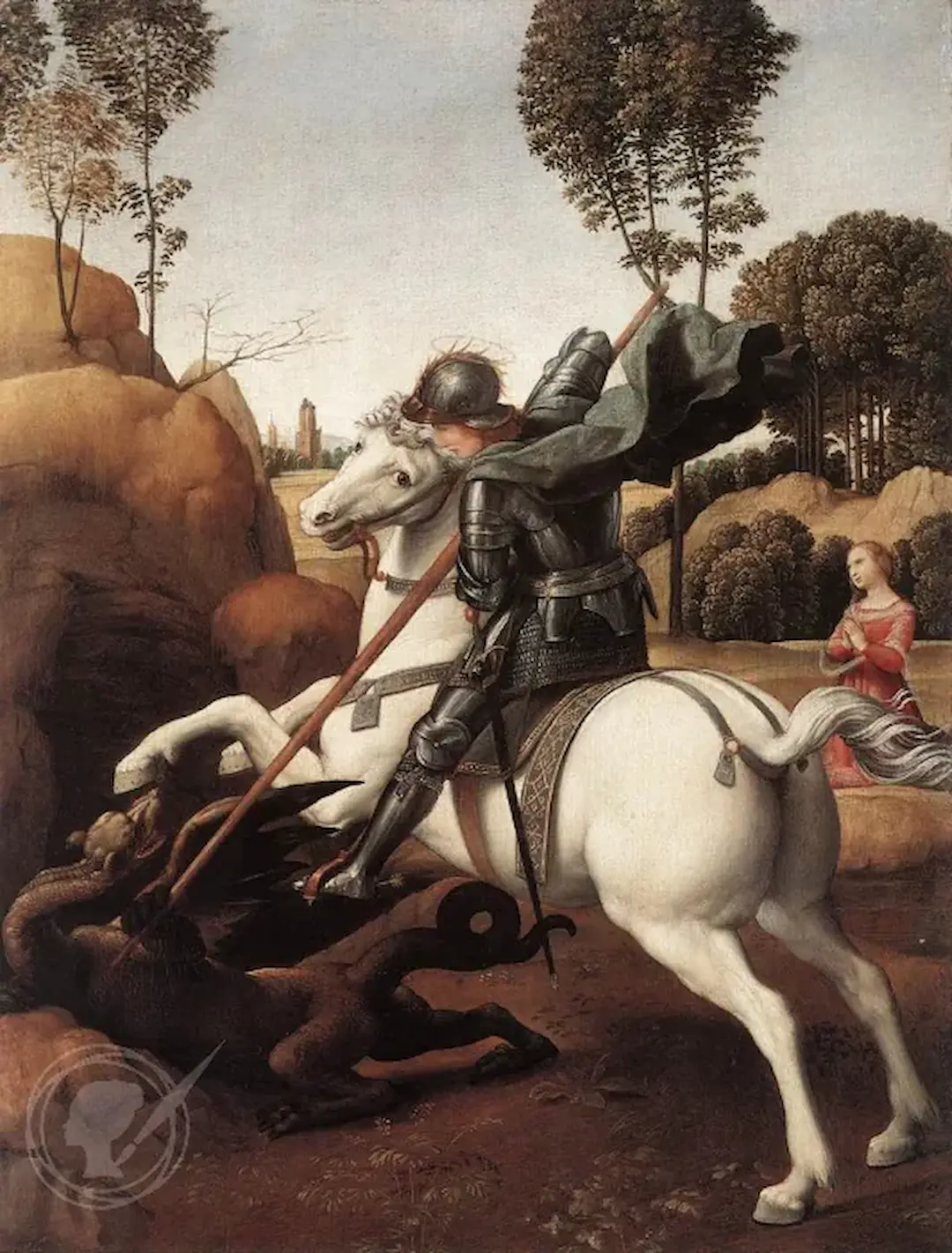
 100% Hand-Painted: Finished in 3-6 Weeks

.png)
















_(1).webp)