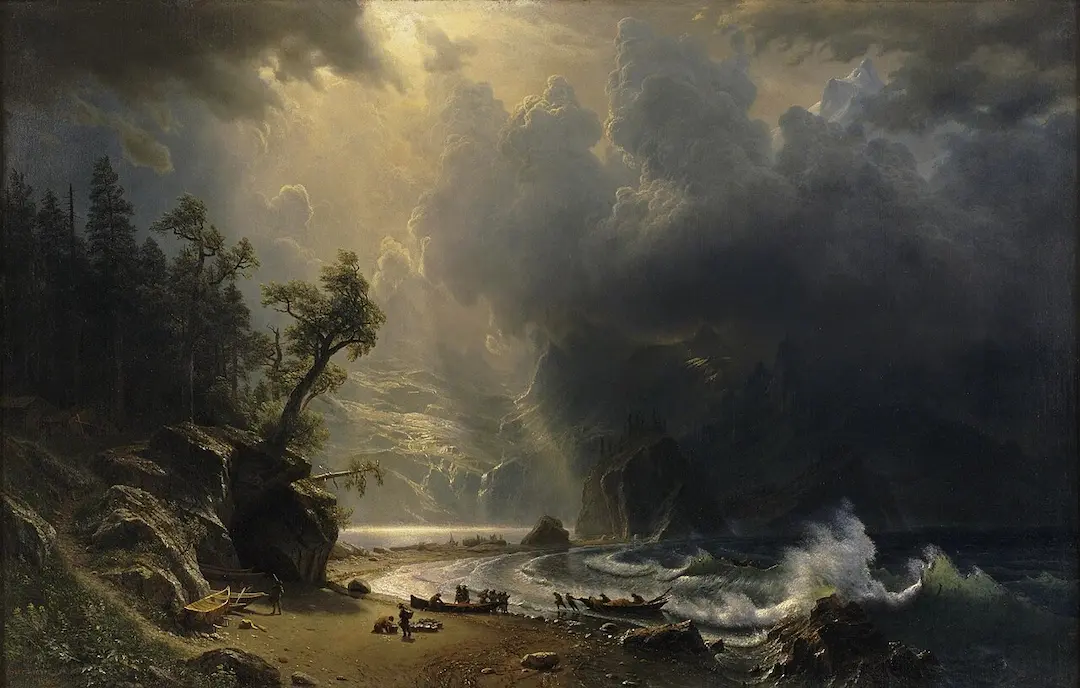
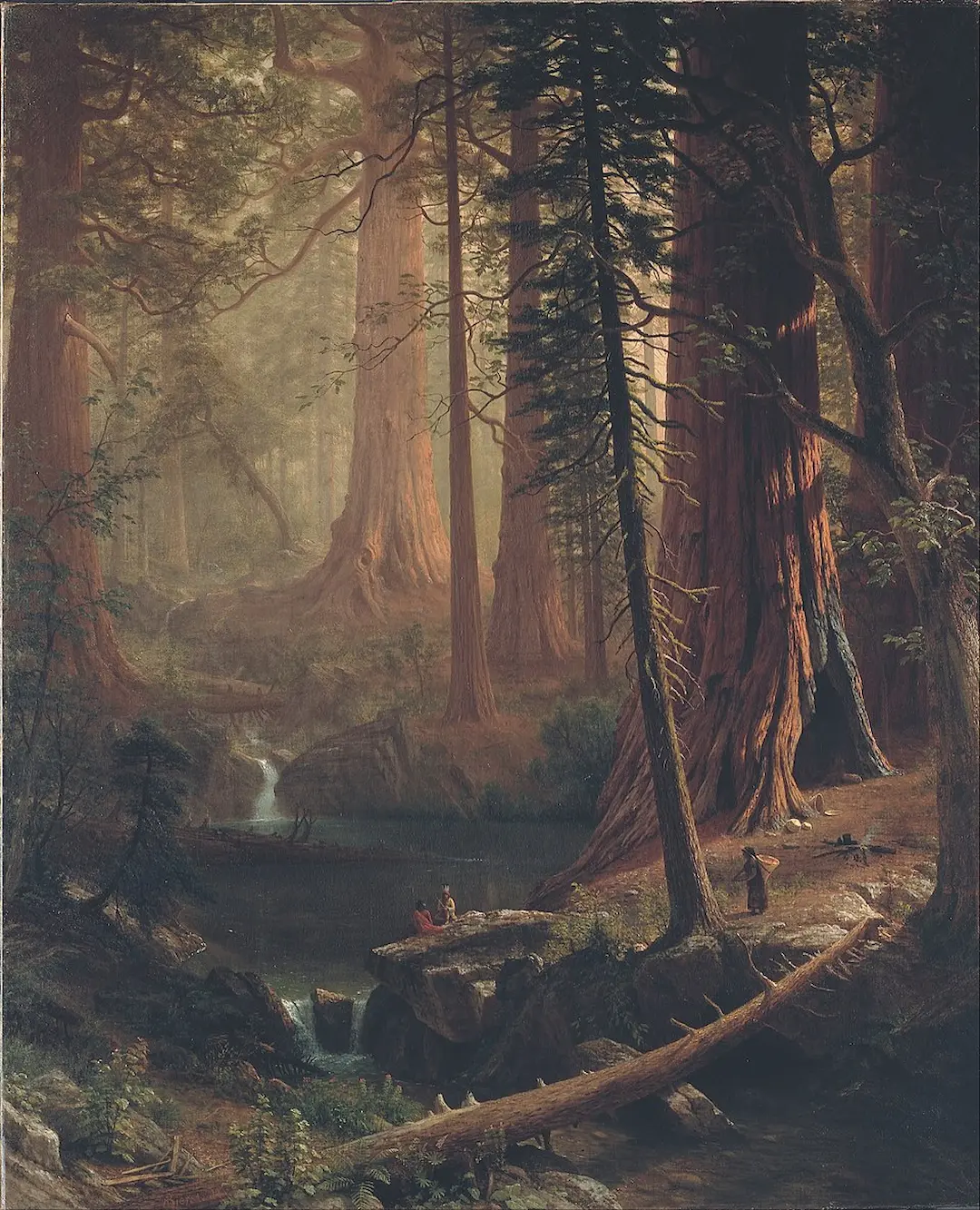
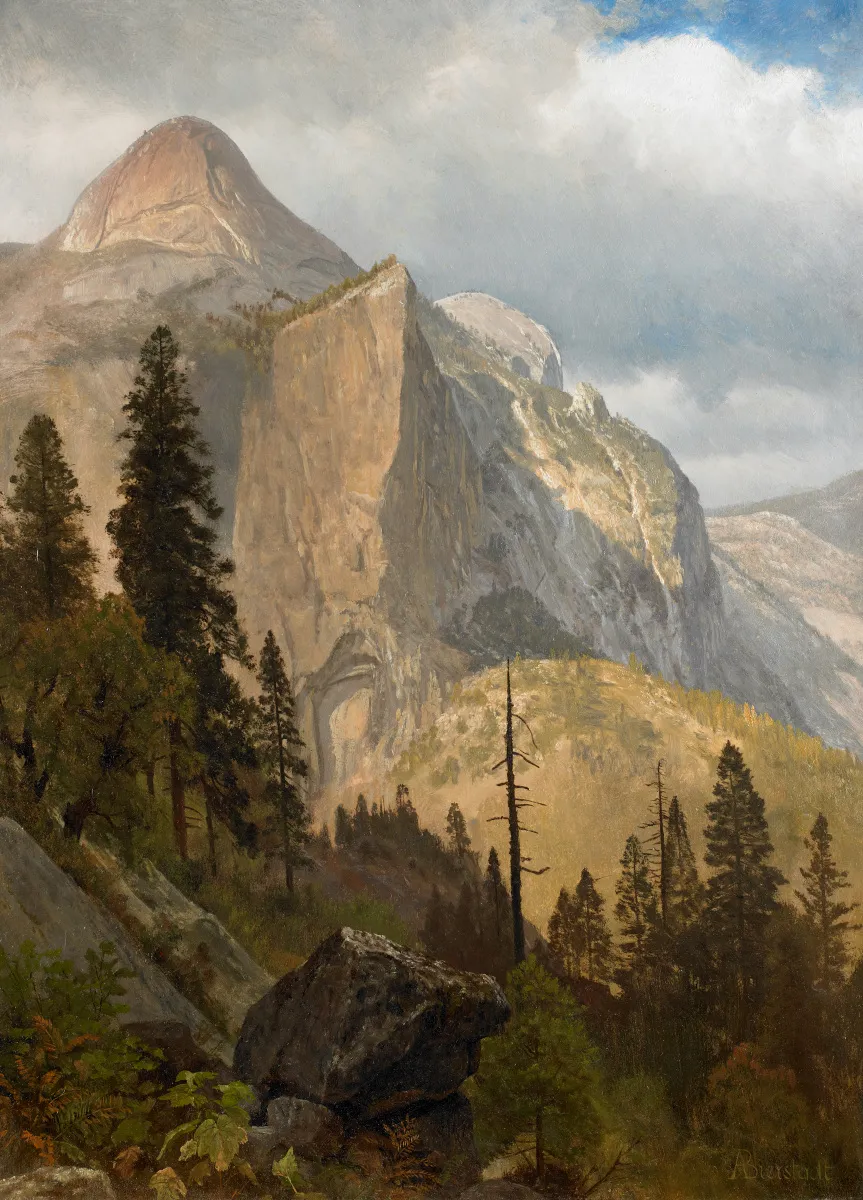
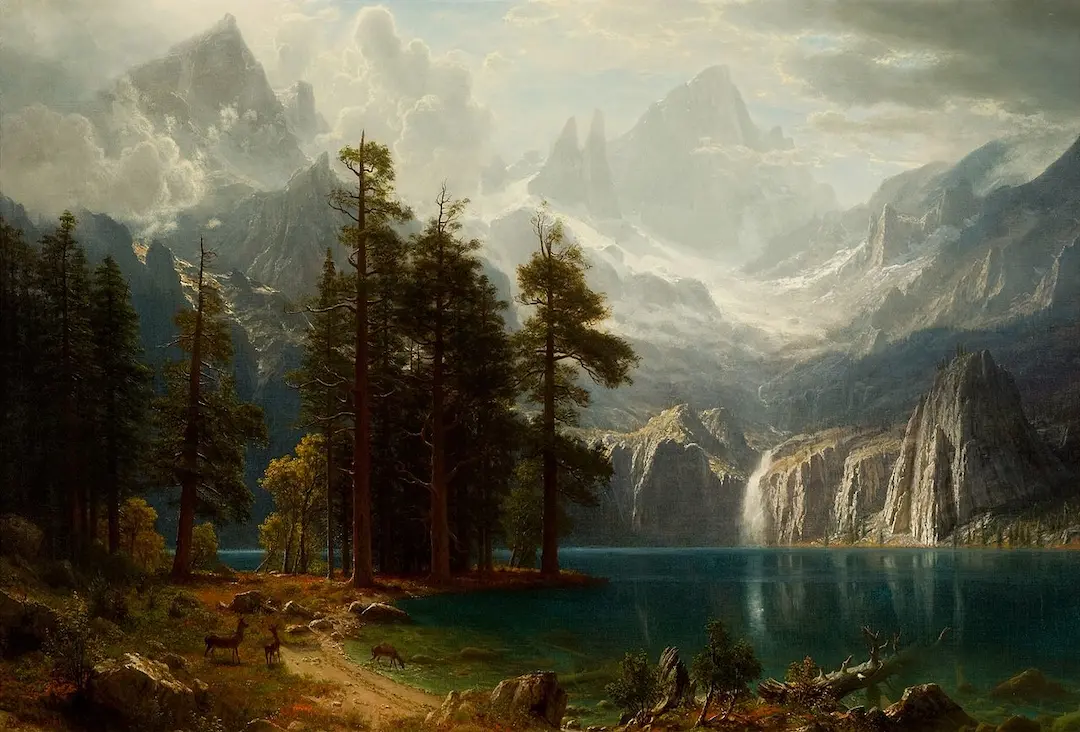
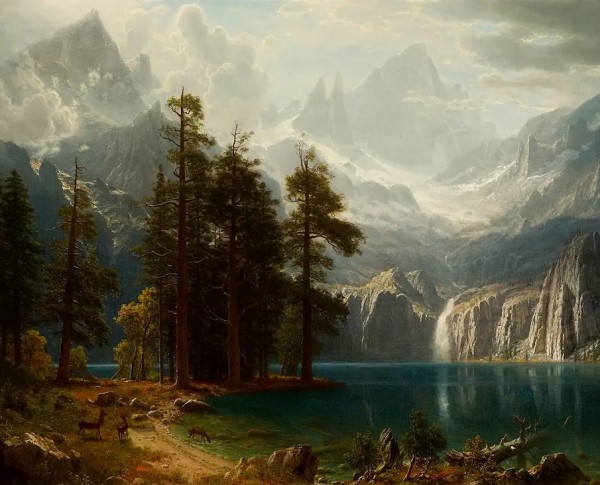
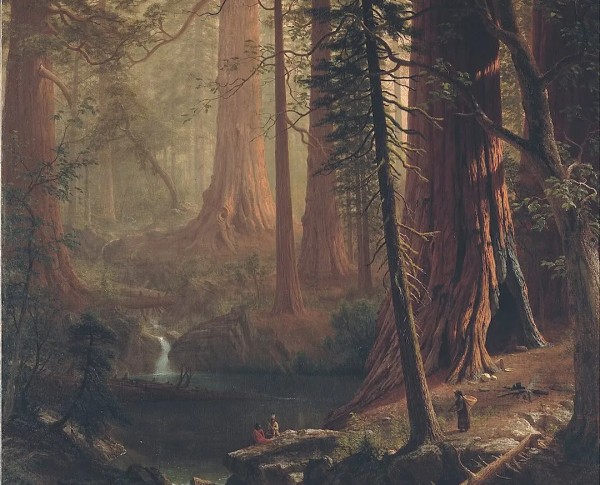
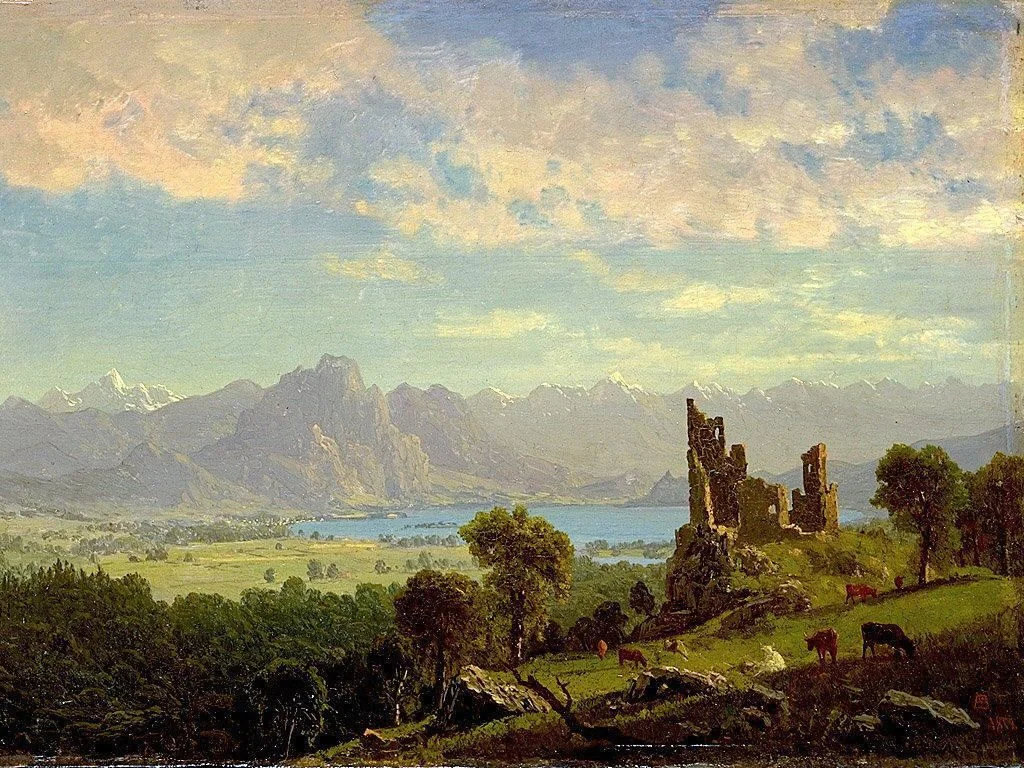
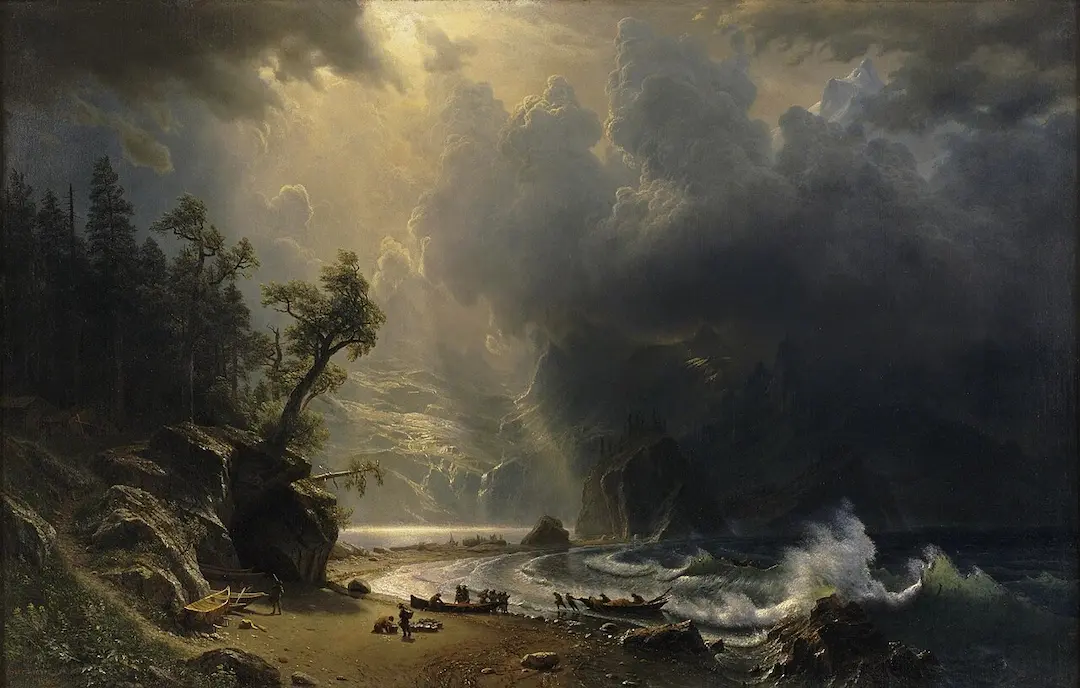
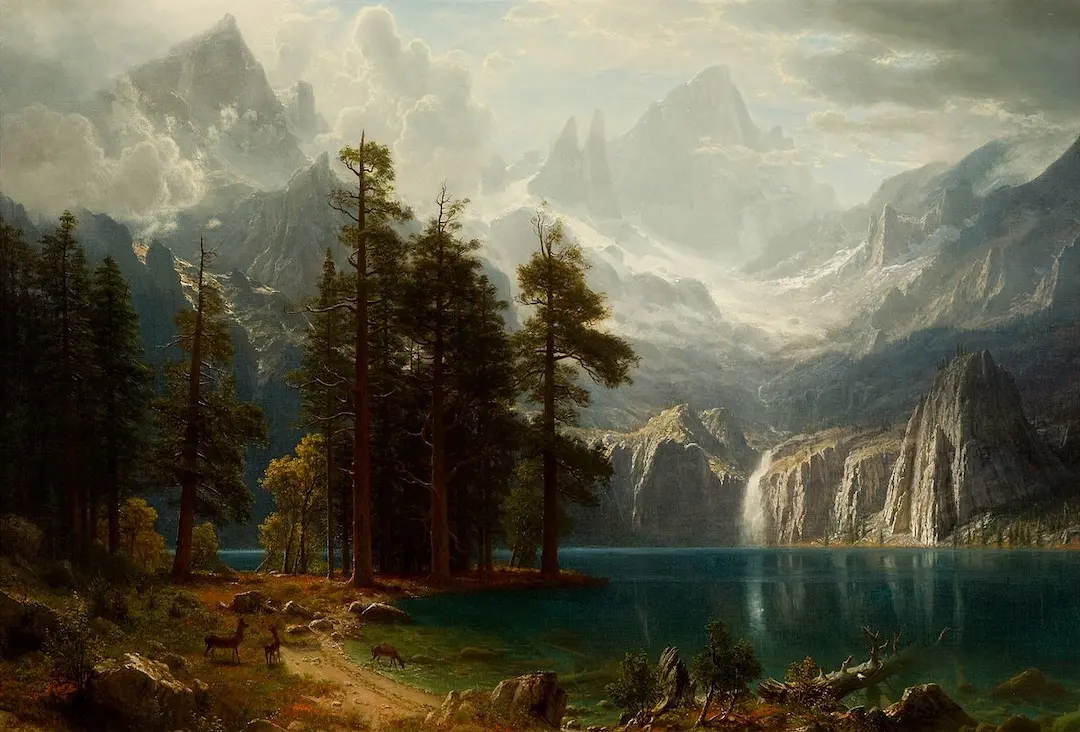
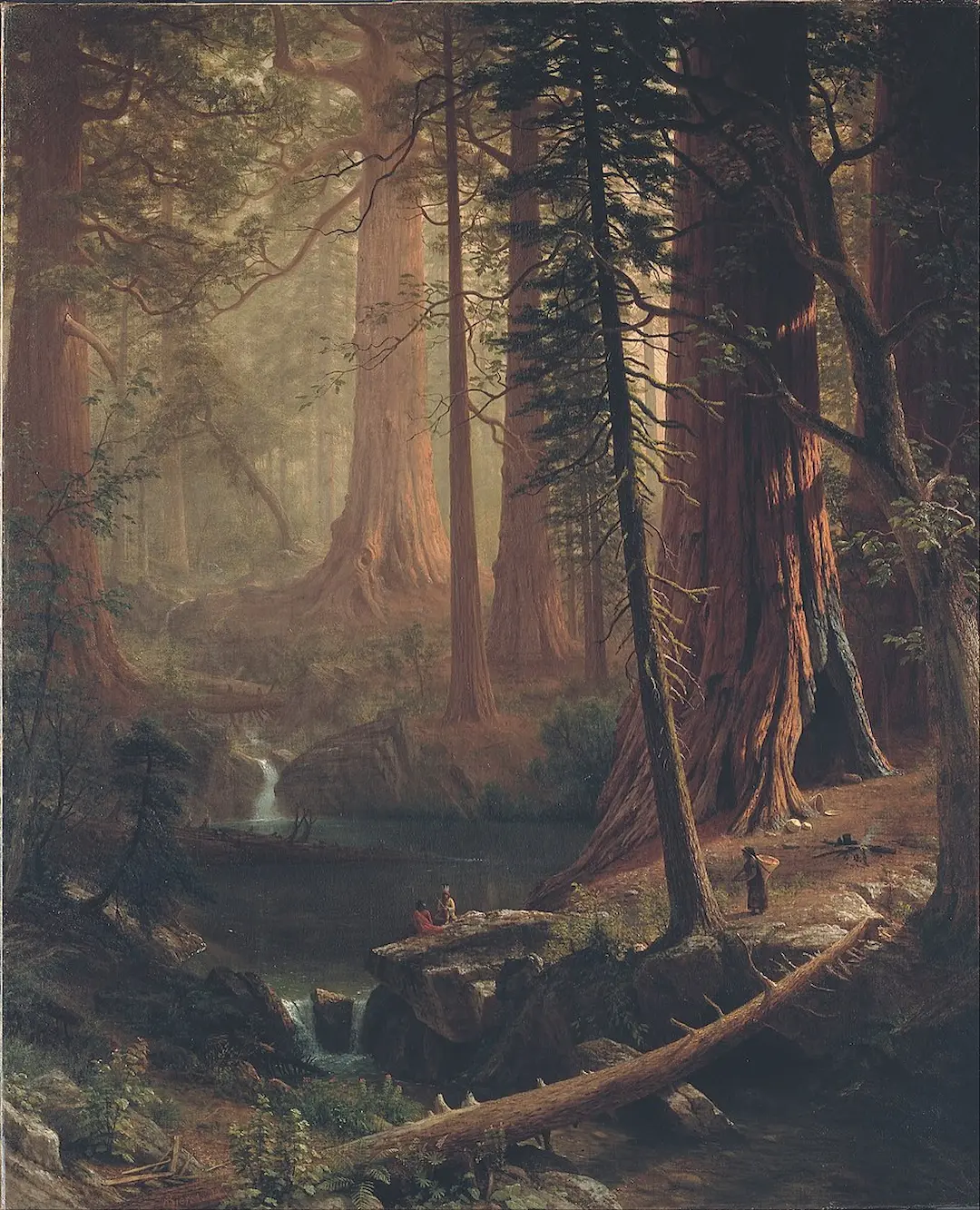
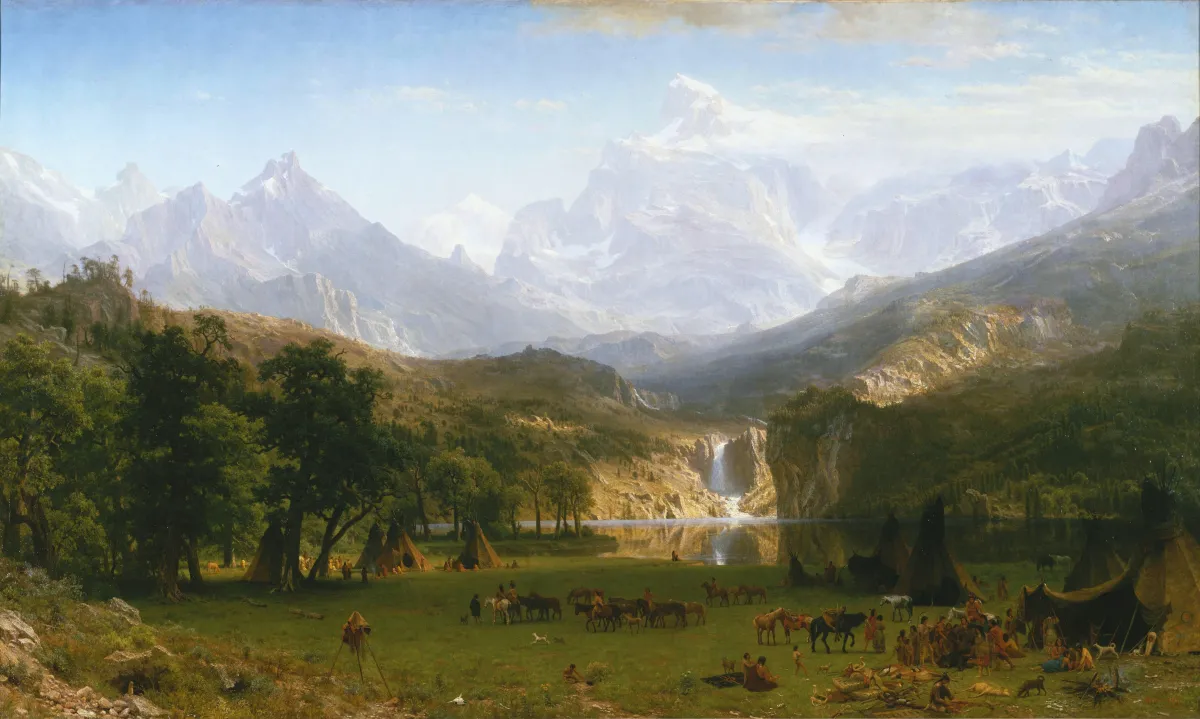
Albert Bierstadt’s technique in "Scene in the Tyrol" showcases the meticulous skill and rich textures characteristic of oil on canvas. His brushwork brings to life the interplay of light and shadow, echoing the grandeur of the Hudson River School movement. Each detail, from the towering peaks to the tranquil valleys, demonstrates Bierstadt’s dedication to realism and romanticism. Similar masterpieces, such as "Giant Redwood Trees of California" and "North Dome, Yosemite Valley," reflect this same artistry and technique.
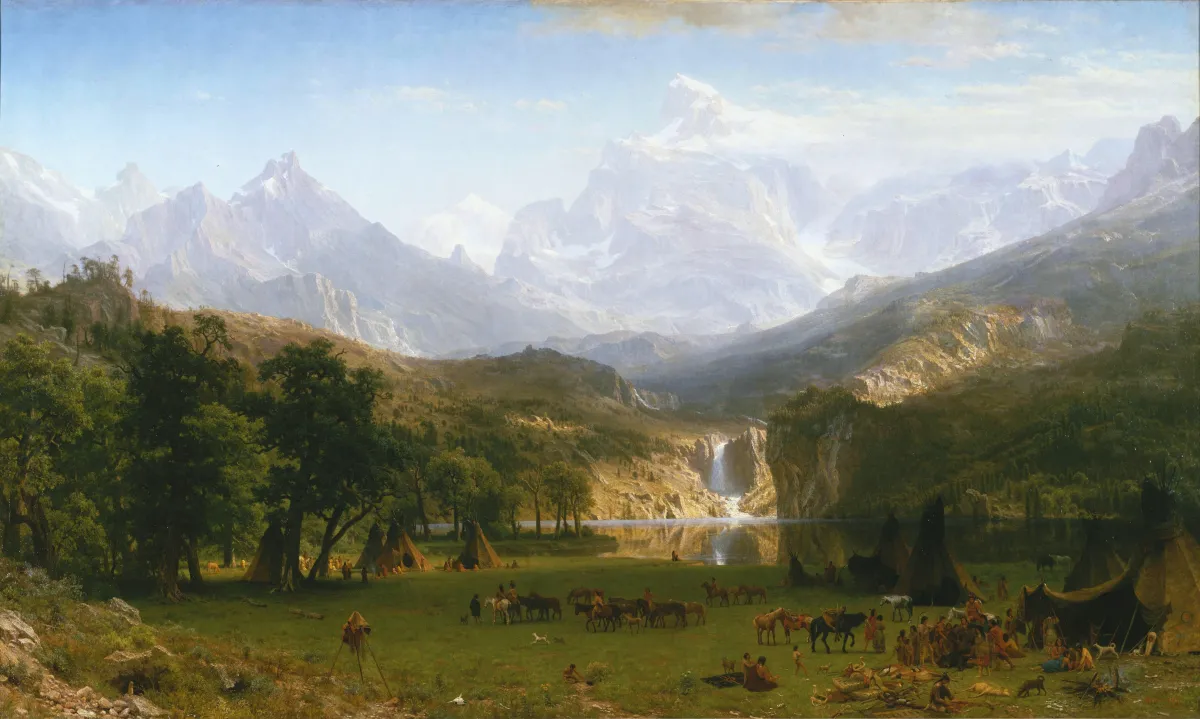
Within "Scene in the Tyrol," Bierstadt weaves narratives of exploration and the sublime beauty of untouched nature, themes central to the Hudson River School. The painting’s dramatic landscapes and atmospheric effects invite viewers to contemplate nature’s vastness and humanity’s place within it. For collectors searching for a fine art painting for sale that tells a compelling story, this work, along with related pieces like "Bavarian Landscape" and "The Rocky Mountains, Lander's Peak," is a meaningful choice.
"Scene in the Tyrol" by Albert Bierstadt is more than just a visual delight; it is a prized addition to any collection of Hudson River School art. This hand-painted oil painting represents both artistic excellence and historical value, making it highly sought after by connoisseurs. Whether displayed alongside works like "Falls of Niagara from Below" or "North Dome, Yosemite Valley," this painting elevates any fine art collection and serves as a testament to Bierstadt’s enduring legacy.
When Art Meets History
"Scene in the Tyrol" by Albert Bierstadt stands as a testament to 19th-century landscape artistry, capturing the majestic beauty of the European Alps. Bierstadt, a prominent figure in the Hudson River School movement, masterfully transports viewers to a serene alpine setting. This hand-painted oil painting not only reflects the artist's fascination with nature but also highlights a historical moment when American artists turned their gaze to European vistas, much like Bierstadt’s contemporaries in related paintings.
Techniques That Speak
Bierstadt’s use of oil on canvas in "Scene in the Tyrol" showcases his extraordinary technique, characterized by luminous lighting and meticulous detail. The painting’s rich textures and vibrant colors are hallmarks of the Hudson River School style, emphasizing natural grandeur. With smooth brushwork and careful layering, Bierstadt brings the Tyrolean landscape to life, inviting viewers to appreciate the technical mastery that distinguishes this and other oil on canvas works from the era.
Emotions on Display
In "Scene in the Tyrol," Albert Bierstadt evokes awe and tranquility through sweeping vistas and dramatic skies. The painting’s serene atmosphere captures the emotional depth often found in the Hudson River School movement. Bierstadt’s attention to light and shadow immerses viewers in a world of wonder, making this fine art painting for sale a compelling choice for those seeking to experience the profound emotions inspired by nature, just as seen in his related masterpieces.
Coveted by Collectors
Collectors worldwide admire "Scene in the Tyrol" for its blend of artistry and history, making it a highly sought-after hand-painted oil painting. Albert Bierstadt’s legacy within the Hudson River School is reflected in the painting’s enduring popularity. As with other celebrated works, this piece’s value is enhanced by its expert technique and evocative subject matter, ensuring it remains a prized addition to any collection of fine art painting for sale.
Frequently Asked Questions About Scene in the Tyrol
What is the historical context of "Scene in the Tyrol"?
"Scene in the Tyrol" was painted during the mid-19th century, a time when the American West was being explored and romanticized. Albert Bierstadt, a key figure in the Hudson River School, sought to capture the grandeur of nature and the spirit of exploration prevalent in that era.
What artistic techniques did Albert Bierstadt use in this painting?
Bierstadt employed a technique known as luminism, characterized by the meticulous rendering of light and atmosphere. He used a rich color palette and dramatic contrasts to enhance the natural beauty of the Tyrolean landscape, creating a sense of depth and realism.
What themes are explored in "Scene in the Tyrol"?
The painting explores themes of nature's majesty, the sublime, and the relationship between humanity and the natural world. Bierstadt's work often reflects the idea of the American frontier as a place of beauty and opportunity, inviting viewers to appreciate the untouched wilderness.
How does "Scene in the Tyrol" reflect the Romantic movement?
This painting embodies the Romantic movement's emphasis on emotion, nature, and individual experience. Bierstadt's dramatic landscapes evoke feelings of awe and reverence, aligning with the Romantic ideal of nature as a source of inspiration and spiritual renewal.
What symbolism can be found in the landscape depicted in the painting?
The majestic mountains and serene waters symbolize the grandeur and tranquility of nature. They also represent the idea of the sublime, where the beauty of the landscape inspires both admiration and a sense of the divine, reflecting humanity's smallness in the face of nature's vastness.
What influence did Bierstadt have on American landscape painting?
Albert Bierstadt significantly influenced American landscape painting by popularizing the depiction of the West and its natural beauty. His works inspired a sense of national pride and contributed to the American identity during a time of westward expansion.
In what ways does "Scene in the Tyrol" differ from Bierstadt's other works?
While Bierstadt often focused on American landscapes, "Scene in the Tyrol" showcases his ability to capture European scenery. This painting reflects a different cultural context, emphasizing the romanticized view of the Alps and their picturesque qualities, distinct from his American subjects.
How does the composition of "Scene in the Tyrol" enhance its impact?
The composition features a balanced arrangement of elements, with the mountains dominating the background and the foreground inviting viewers into the scene. This strategic placement draws the eye and creates a sense of depth, enhancing the overall impact of the landscape.
What role did Bierstadt's travels play in the creation of "Scene in the Tyrol"?
Bierstadt's travels across Europe, including his time in the Tyrol region, greatly influenced his artistic vision. His firsthand experiences allowed him to capture the unique characteristics of the landscape, infusing his work with authenticity and a deep appreciation for the scenery.
What is the significance of the title "Scene in the Tyrol"?
The title refers to the Tyrol region in the Alps, known for its stunning landscapes. By naming the painting after this specific location, Bierstadt emphasizes the beauty and cultural significance of the area, inviting viewers to explore and appreciate its natural wonders.






















_GFM_Painting_(1).webp)


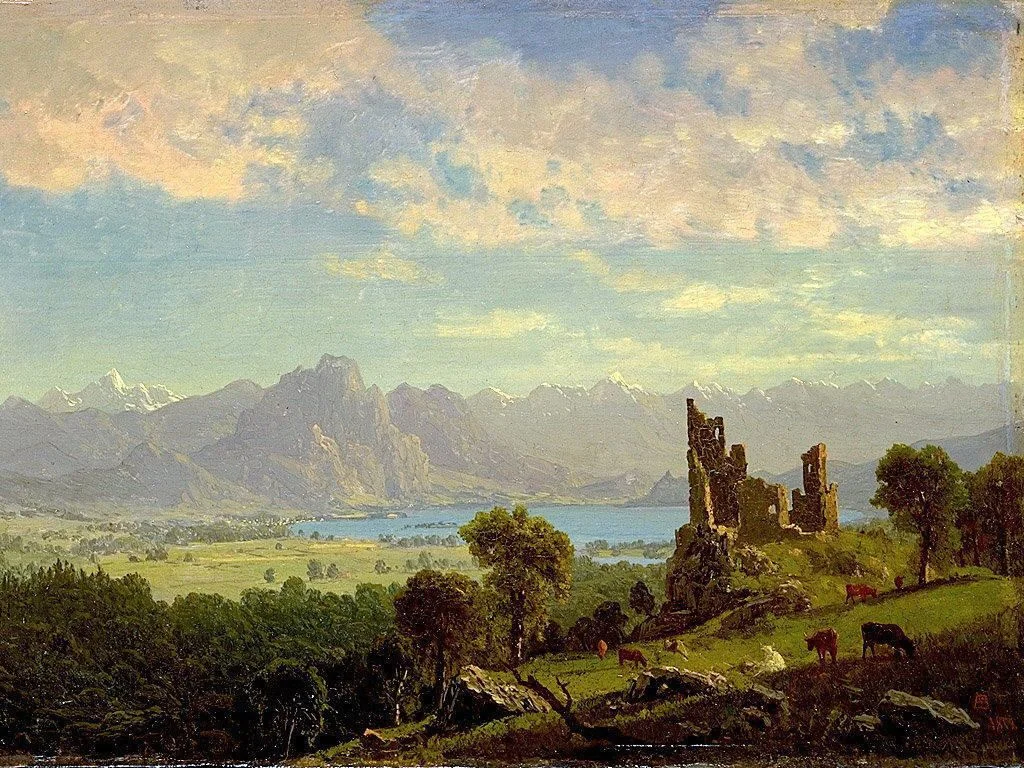
 100% Hand-Painted: Finished in 3-6 Weeks

.png)
















_(1).webp)