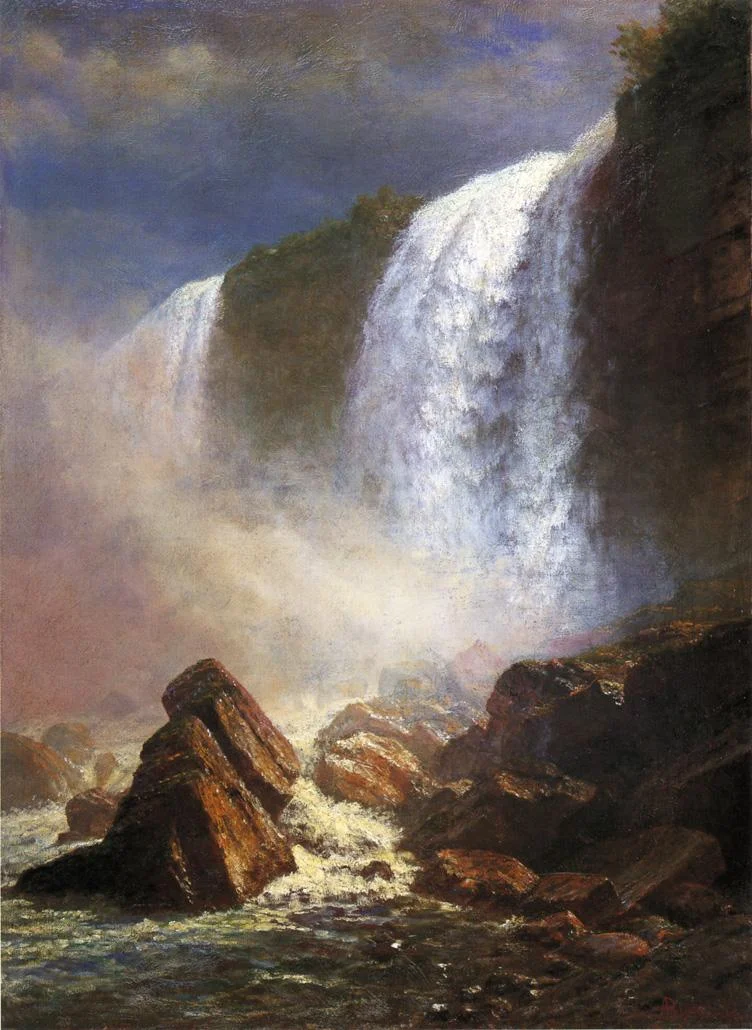
Albert Bierstadt’s meticulous attention to detail in "Falls of Niagara from Below" showcases his remarkable ability to bring landscapes to life with oil on canvas. The artist’s delicate brushwork and dramatic use of light exemplify the hallmark techniques of the Hudson River School. Collectors and enthusiasts often compare this masterpiece to related works such as "Among The Sierra Nevada Mountains California" and "Giant Redwood Trees of California" for their breathtaking realism and emotional depth.
The "Falls of Niagara from Below" is more than just a fine art painting for sale; it is a visual narrative that symbolizes the untamed spirit of American nature. Albert Bierstadt’s composition reflects the ideals of exploration and discovery central to the Hudson River School. This painting, like "North Dome, Yosemite Valley" and "A Storm in the Rocky Mountains, Mt. Rosalie," invites viewers to contemplate humanity’s relationship with the sublime forces of the natural world.
For art collectors, owning "Falls of Niagara from Below" by Albert Bierstadt is a rare opportunity to possess a masterwork from the Hudson River School. This hand-painted oil painting is highly valued, along with other celebrated works like "Among The Sierra Nevada Mountains California" and "Giant Redwood Trees of California." Such pieces are not only exceptional investments but also enduring symbols of America’s artistic and natural heritage, making them prized additions to any fine art collection.
When Art Meets History
"Falls of Niagara from Below" by Albert Bierstadt stands as a testament to the grandeur of the Hudson River School movement. Painted during an era when American landscapes gained recognition, this hand-painted oil painting captures the awe-inspiring power of Niagara Falls. Bierstadt, renowned for his meticulous attention to detail, immortalized the natural wonder just as the nation celebrated its untamed beauty. This masterpiece continues to enchant viewers as both a historical record and a triumph of landscape artistry.
Techniques That Speak
Albert Bierstadt’s approach in "Falls of Niagara from Below" showcases his exceptional mastery of oil on canvas. His skillful layering and manipulation of light and shadow create a lifelike sense of movement in the cascading water and mist. Bierstadt, a leading figure in the Hudson River School, used these techniques to heighten the drama and realism in his scenes, making this painting a stunning example of 19th-century American landscape art.
Emotions on Display
The emotional impact of "Falls of Niagara from Below" is undeniable. Bierstadt’s careful rendering of tumultuous waters and mist-laden air evokes feelings of wonder and reverence for nature’s power. As with other works from the Hudson River School, this fine art painting for sale invites viewers to reflect on humanity’s relationship with the natural world, stirring a sense of awe that resonates long after the first viewing.
Coveted by Collectors
Collectors and art enthusiasts alike seek out works like "Falls of Niagara from Below" by Albert Bierstadt for their historical significance and breathtaking beauty. As a sought-after hand-painted oil painting from the Hudson River School, it exemplifies the era’s artistic achievements. The painting’s enduring appeal ensures it remains a prized addition to any collection, alongside other celebrated landscapes by Bierstadt and his contemporaries.
Frequently Asked Questions About Falls of Niagara from Below
What is the historical context of "Falls of Niagara from Below"?
"Falls of Niagara from Below" was painted by Albert Bierstadt during the mid-19th century, a time when the American landscape was being celebrated as a symbol of national identity and natural beauty. This period was marked by the westward expansion and a growing appreciation for the American wilderness.
What artistic techniques did Bierstadt use in this painting?
Bierstadt employed techniques characteristic of the Hudson River School, including dramatic lighting, meticulous detail, and a focus on the grandeur of nature. His use of chiaroscuro enhances the three-dimensionality of the falls and surrounding landscape.
What does the painting symbolize in terms of American identity?
The painting symbolizes the awe-inspiring beauty of the American landscape and reflects the national pride associated with natural wonders like Niagara Falls. It embodies the Romantic ideal of nature as a source of inspiration and a representation of the sublime.
How does Bierstadt's portrayal of Niagara Falls differ from other artists?
Bierstadt's portrayal is notable for its dramatic scale and emotional intensity, focusing on the power and majesty of the falls. Unlike other artists who may have depicted the falls from a distance, Bierstadt presents an intimate view that immerses the viewer in the scene.
What role did the Romantic movement play in Bierstadt's work?
The Romantic movement emphasized emotion, nature, and individualism, all of which are evident in Bierstadt's work. His paintings evoke a sense of wonder and reverence for the natural world, aligning with Romantic ideals of beauty and the sublime.
What is the significance of the composition in "Falls of Niagara from Below"?
The composition draws the viewer's eye toward the cascading water, creating a dynamic sense of movement. The foreground features lush vegetation, leading to the powerful falls, which enhances the sense of depth and invites the viewer into the scene.
How did Bierstadt's travels influence this painting?
Bierstadt's extensive travels throughout the American West allowed him to capture the grandeur of the landscape. His firsthand experiences of natural wonders, such as Niagara Falls, informed his artistic vision and contributed to the authenticity of his depictions.
What materials and techniques did Bierstadt use for this painting?
Bierstadt typically used oil on canvas for his large-scale works, allowing for rich color and texture. His layering technique enabled him to create luminous effects, particularly in the water and sky, enhancing the overall impact of the scene.
In what ways does this painting reflect the environmental concerns of its time?
While "Falls of Niagara from Below" primarily celebrates natural beauty, it also serves as a reminder of the vulnerability of such landscapes amid industrialization. Bierstadt's work encourages viewers to appreciate and protect these natural wonders, foreshadowing later environmental movements.
How has "Falls of Niagara from Below" been received by critics and the public over time?
Since its creation, the painting has been praised for its breathtaking representation of nature and its emotional resonance. Critics have lauded Bierstadt's ability to convey the power of the falls, solidifying his reputation as a leading figure in American landscape painting.






















_GFM_Painting_(1).webp)


 100% Hand-Painted: Finished in 3-6 Weeks

.png)





















_(1).webp)