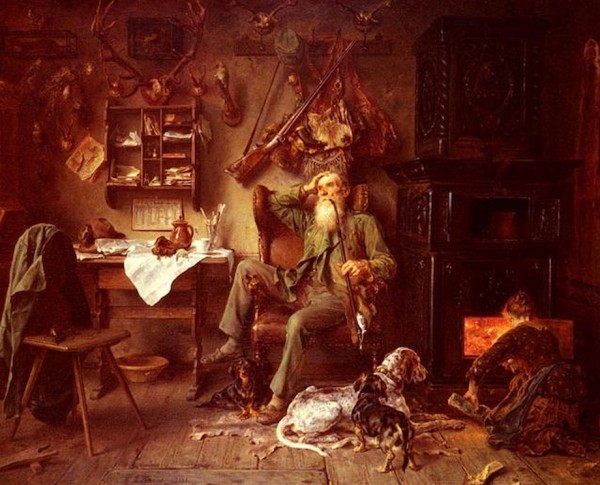
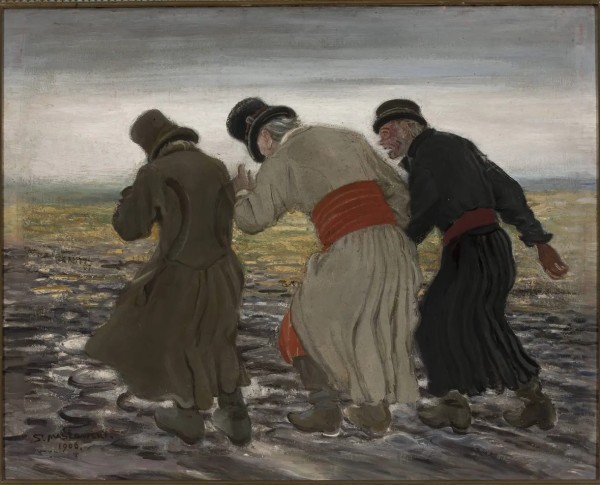
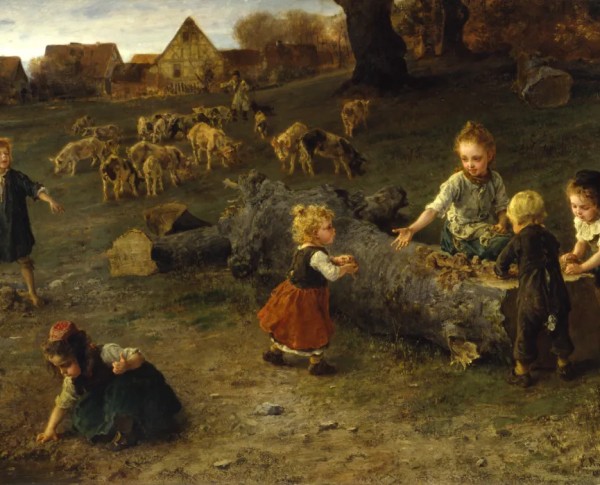
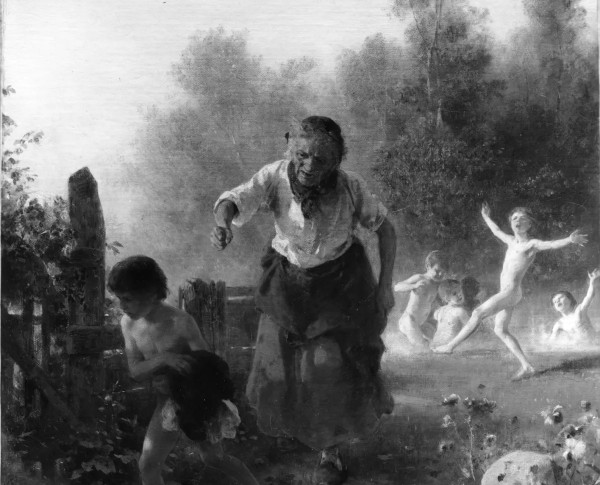
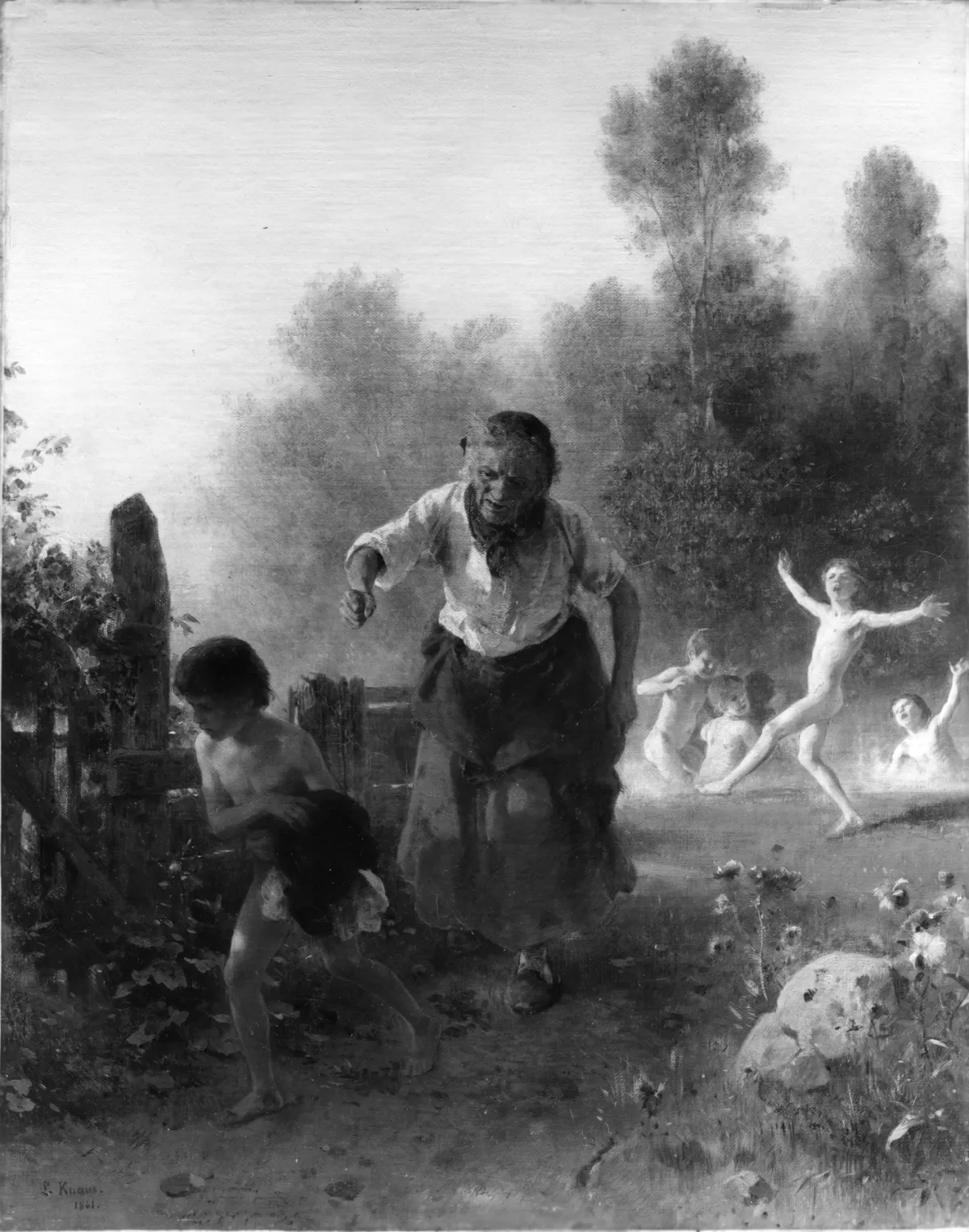
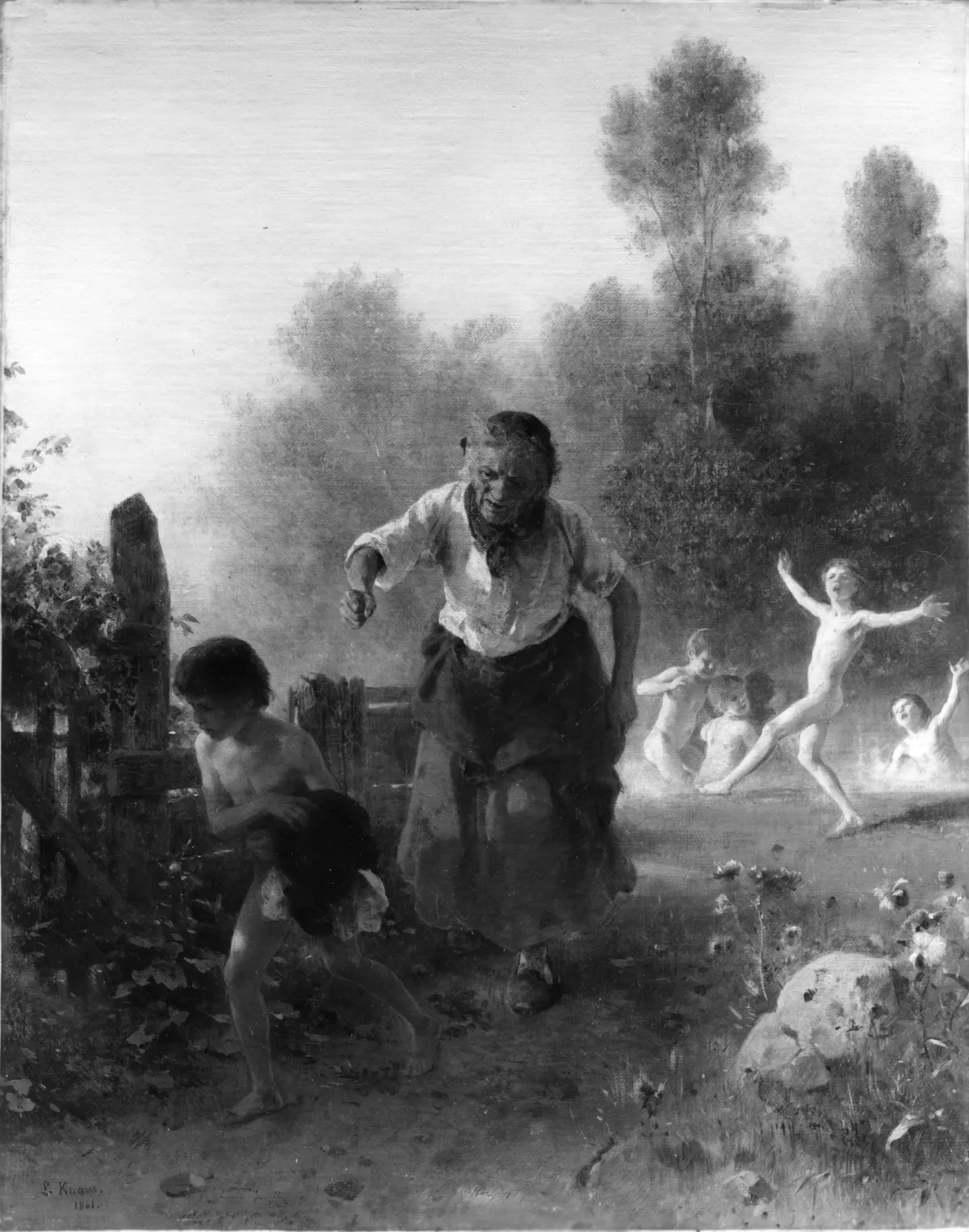
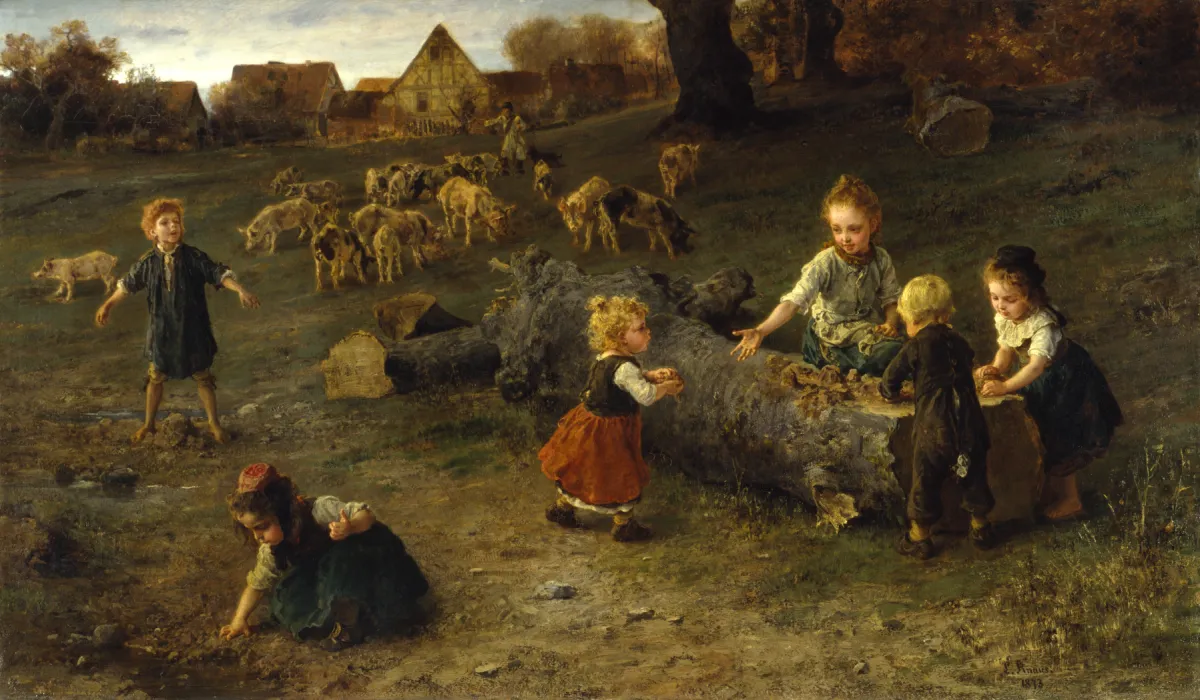
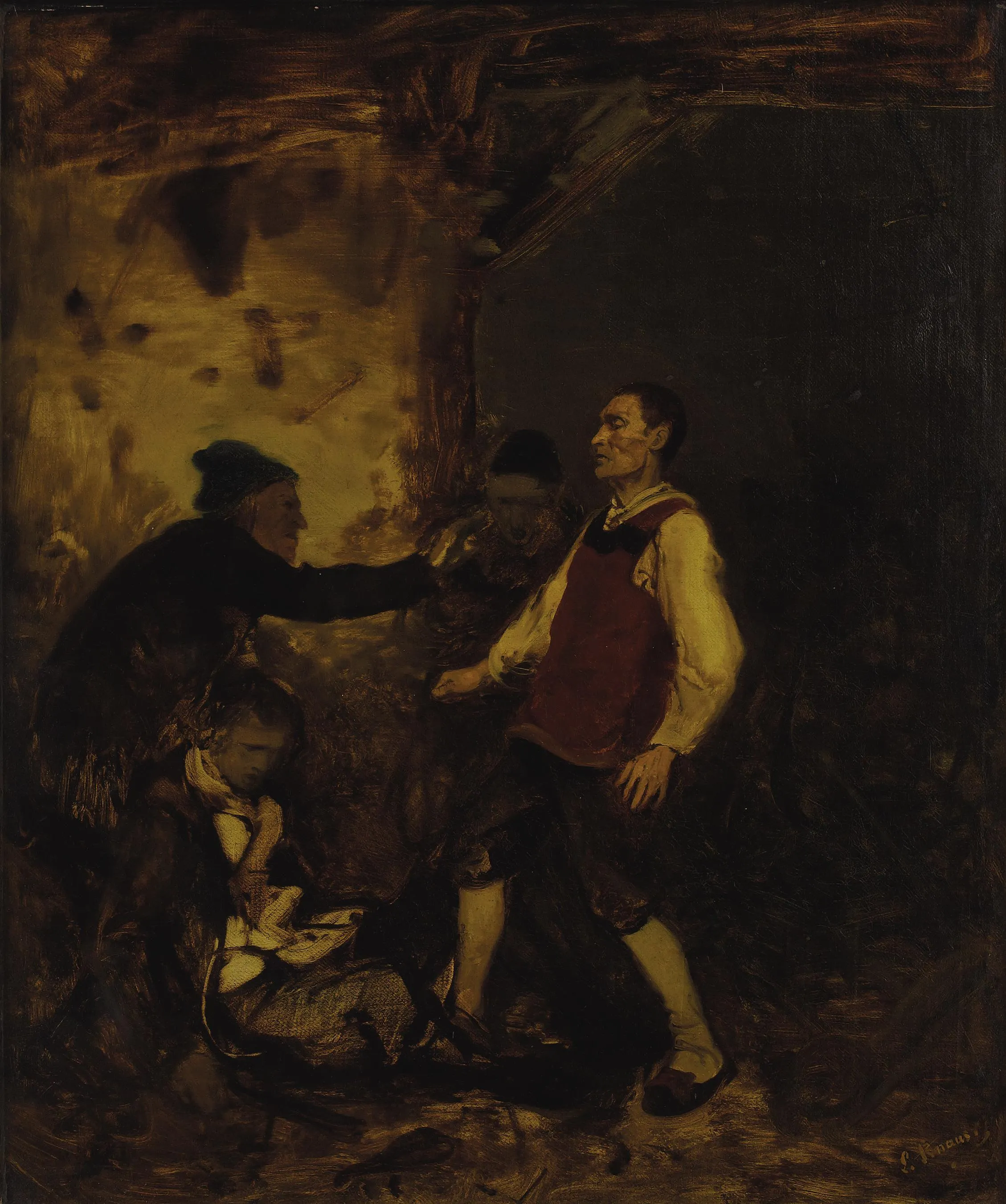
Ludwig Knaus’s "The Truant" showcases his technical prowess, with each brushstroke contributing to the lifelike detail characteristic of oil on canvas works in the Academic Art movement. The painting’s texture and depth invite viewers to appreciate the artist’s skill in rendering light, shadow, and emotion. Collectors seeking a museum-quality piece often consider "Q17494002" and "Mud Pies" alongside "The Truant" for their shared mastery and historical significance.
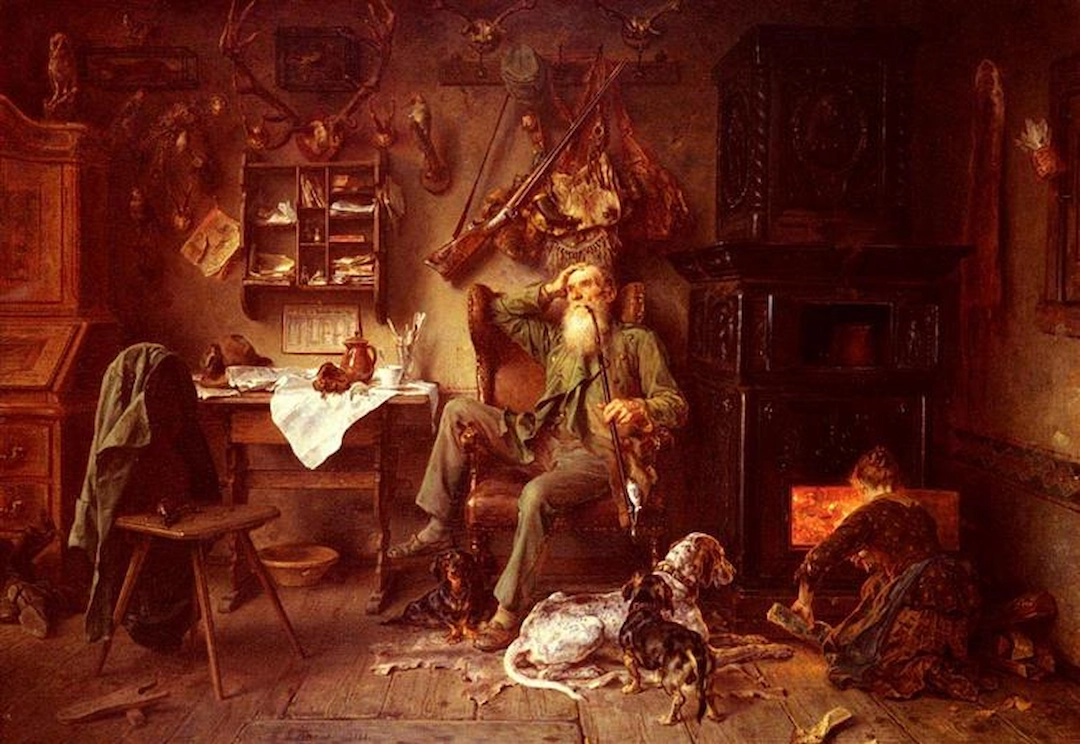
"The Truant" tells a captivating story, encapsulating themes of childhood rebellion and fleeting freedom within a fine art painting for sale. Ludwig Knaus imbues the scene with subtle symbolism, reflecting the values and concerns of his era. The Academic Art movement’s emphasis on narrative is evident, inviting viewers to interpret the deeper meanings. Pairing this artwork with "Drunken peasants" or "A Forester at Home" enhances any collection with rich, interconnected stories.
For collectors, "The Truant" by Ludwig Knaus is more than just a hand-painted oil painting; it is a testament to the enduring appeal of Academic Art. This fine art painting for sale stands out for its blend of technical excellence and narrative charm. Enthusiasts often seek related products such as "Mud Pies" and "Q17494002" to complement their collections, ensuring a diverse representation of Knaus’s influential body of work.
When Art Meets History
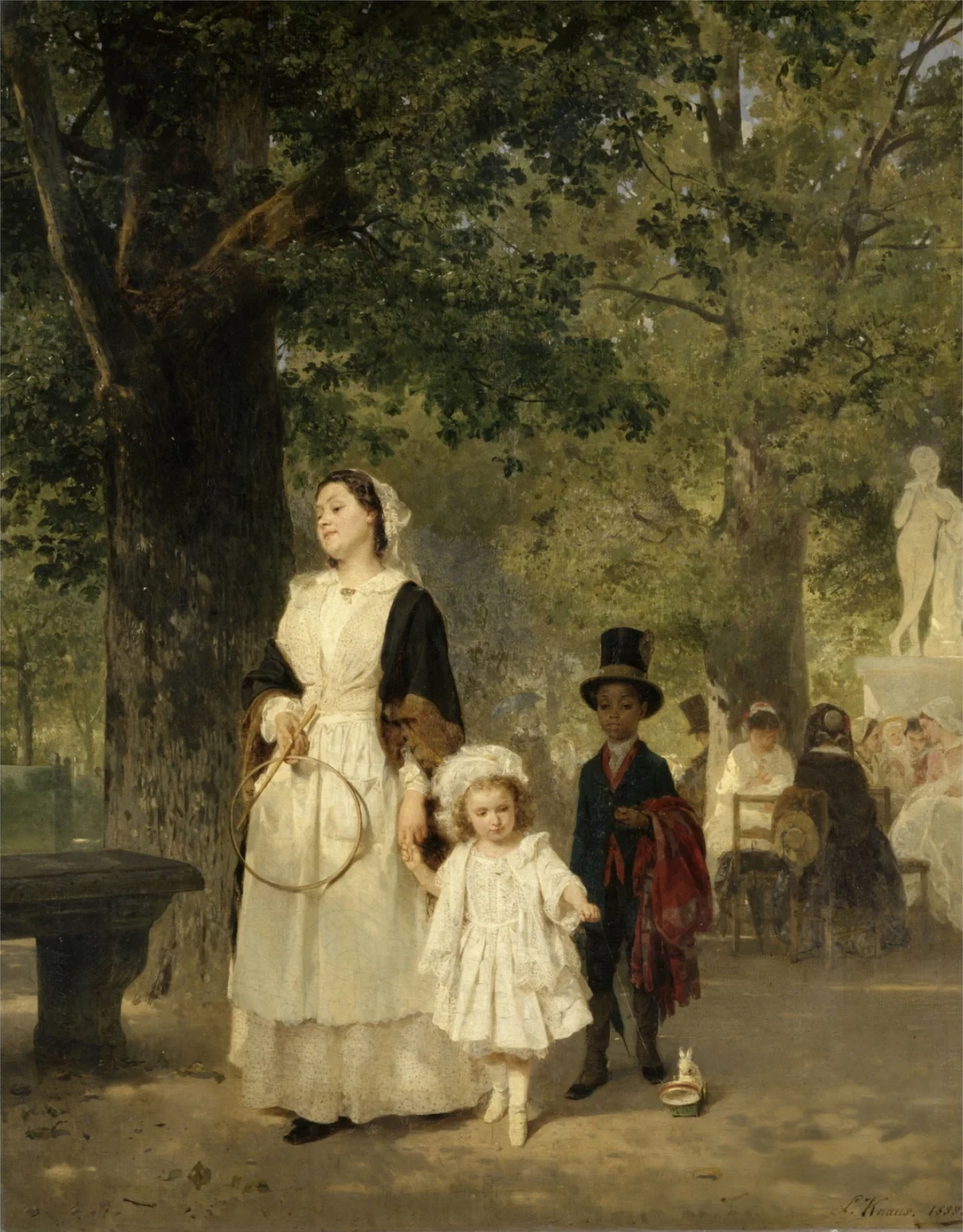
"The Truant" by Ludwig Knaus stands as a remarkable example of Academic Art, capturing a unique moment in 19th-century history. This hand-painted oil painting reflects the era's fascination with realism and narrative detail. Knaus, known for works like "Rest on the Flight into Egypt" and "Reunited," masterfully connects viewers to the past. "The Truant" not only showcases his artistic prowess but also serves as a window into the social dynamics of its time.
Techniques That Speak
Ludwig Knaus’s "The Truant" exemplifies the meticulous techniques of oil on canvas that define Academic Art. The artist’s skillful brushwork and attention to light create a lifelike atmosphere, drawing the viewer into the scene. Similar to his other works, such as "Odalisque with a Fan," Knaus uses layered paint and precise composition to evoke realism. The result is a visually stunning oil on canvas that celebrates the traditions of fine European art.
Emotions on Display
In "The Truant," Ludwig Knaus channels a sense of youthful mischief and vulnerability, hallmarks of his narrative style within Academic Art. The emotional depth in this fine art painting for sale is reminiscent of the poignant expressions seen in "Jeune femme denudée sur canape (Young woman naked on a settee)" and "Psyche with Putti." Knaus’s ability to convey complex feelings through subtle gestures and facial expressions makes "The Truant" a compelling and relatable masterpiece.
Coveted by Collectors
"The Truant" remains a prized piece among collectors seeking significant examples of Academic Art. Ludwig Knaus’s reputation, bolstered by related paintings like "Rest on the Flight into Egypt," ensures continued interest in his hand-painted oil paintings. Collectors value the authenticity and historical importance of "The Truant," making it a sought-after fine art painting for sale. Its enduring appeal lies in both its technical mastery and its evocative storytelling.
Related Academic Art Hand-Painted Oil Paintings by Other Artists
Other Famous Academic Art Artists:
Frequently Asked Questions About The Truant
What is the historical context of "The Truant"?
"The Truant," painted by Ludwig Knaus in the 19th century, reflects the societal changes of the time, particularly in relation to education and childhood. The painting captures a moment that resonates with the emerging values of individualism and the complexities of youth in a rapidly industrializing society.
What artistic techniques did Ludwig Knaus employ in "The Truant"?
Knaus utilized a realistic approach characterized by detailed brushwork and a keen observation of light and shadow. His use of color enhances the emotional depth of the scene, inviting viewers to connect with the subject's inner world.
What are the main themes depicted in "The Truant"?
The primary themes of "The Truant" include childhood innocence, rebellion against authority, and the tension between societal expectations and personal freedom. The painting encapsulates the universal struggle of youth seeking autonomy.
How does "The Truant" reflect the artist's style?
Knaus is known for his ability to portray human emotions and interactions with sensitivity. "The Truant" exemplifies his style through its expressive figures and the narrative quality that invites viewers to ponder the story behind the image.
What symbolism can be found in "The Truant"?
The figure of the truant boy symbolizes youthful defiance and the quest for freedom. The setting and the boy's posture may also represent the conflict between the constraints of societal norms and the desire for personal exploration.
In what ways does "The Truant" connect to the Romantic movement?
"The Truant" aligns with the Romantic movement's emphasis on emotion, nature, and the individual. Knaus captures the spirit of the Romantic ideal by portraying the boy in a moment of introspection, highlighting the beauty of personal experience over societal conformity.
What is the significance of the setting in "The Truant"?
The setting serves as a backdrop that enhances the narrative of the painting. It reflects the natural world, symbolizing freedom and the allure of the outdoors, contrasting with the constraints of formal education and societal expectations.
How has "The Truant" been received by art critics over the years?
Art critics have praised "The Truant" for its emotional resonance and technical skill. The painting is often discussed in the context of Knaus's contributions to 19th-century realism and its commentary on the nature of childhood.
What influence did Ludwig Knaus have on later artists?
Knaus's focus on realism and the psychological depth of his subjects influenced subsequent generations of artists, particularly those interested in capturing the nuances of human emotion and the complexities of everyday life.
Where can I view "The Truant" today?
"The Truant" is part of the collection at [Gallery Name], where it is displayed alongside other significant works from the 19th century. Visitors are encouraged to explore the painting in person to fully appreciate its details and historical context.






















_GFM_Painting_(1).webp)


 100% Hand-Painted: Finished in 3-6 Weeks

.png)















_(1).webp)