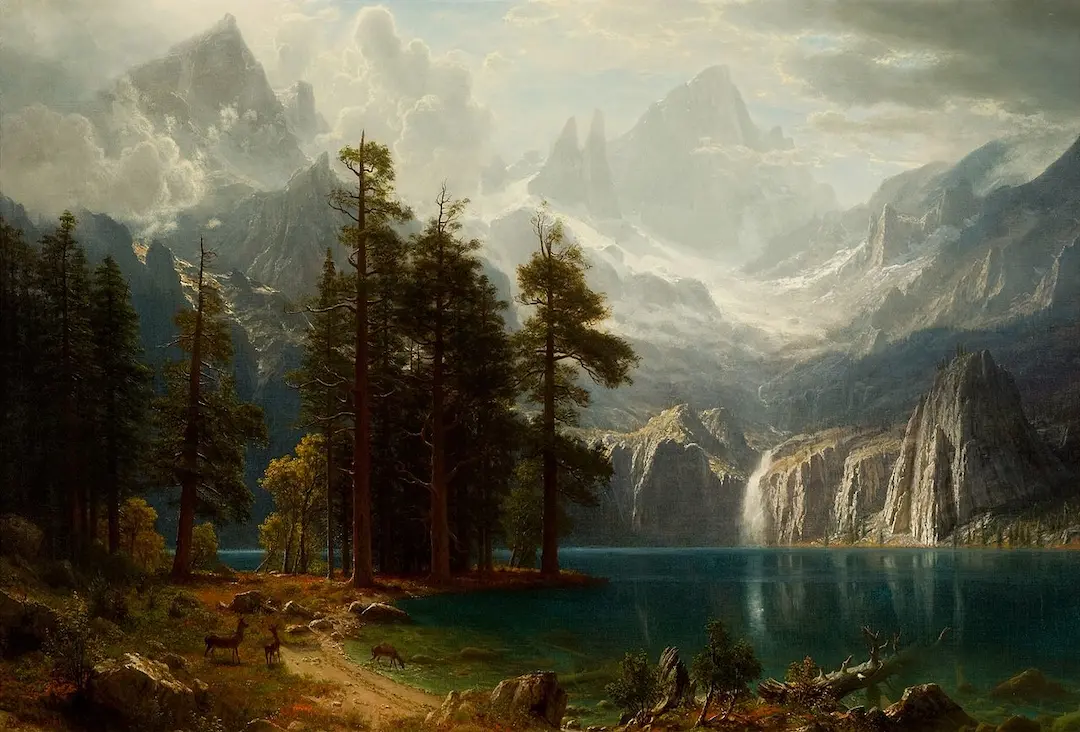
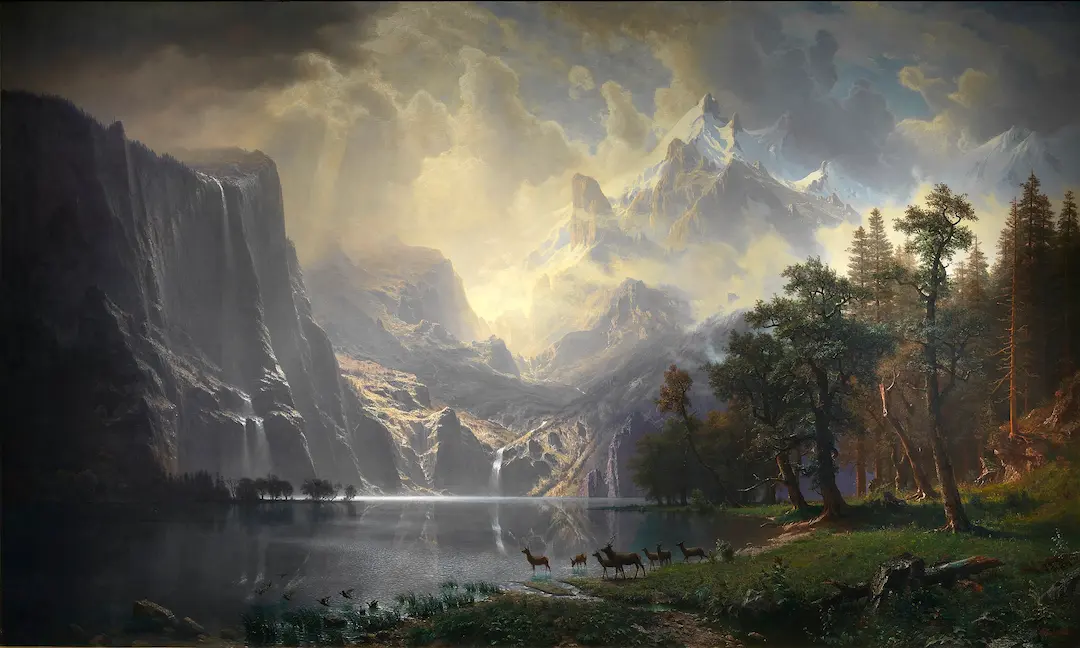
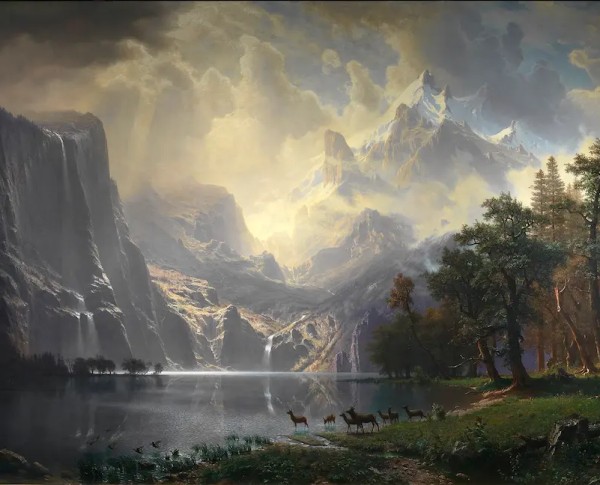
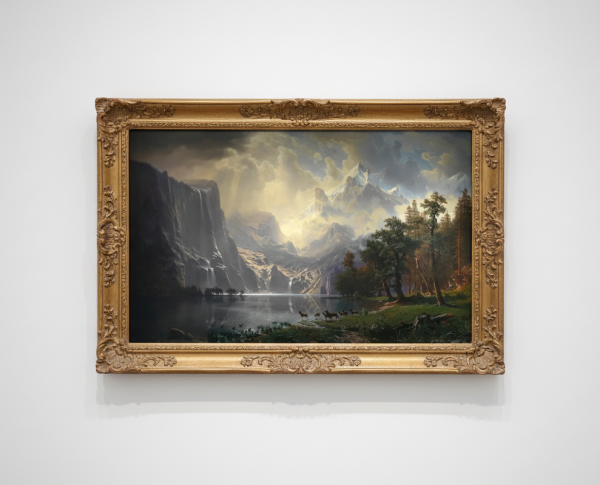
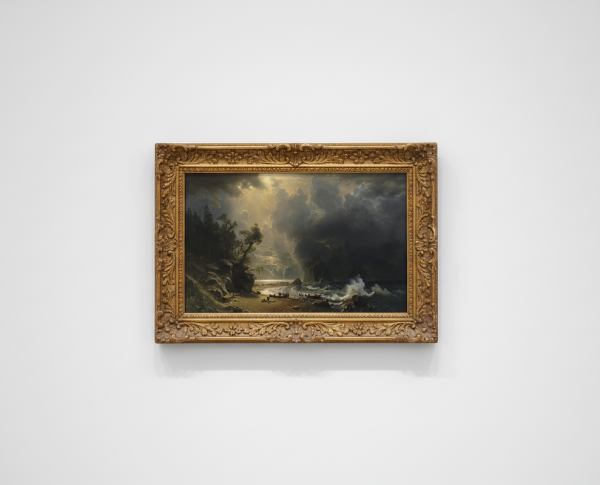
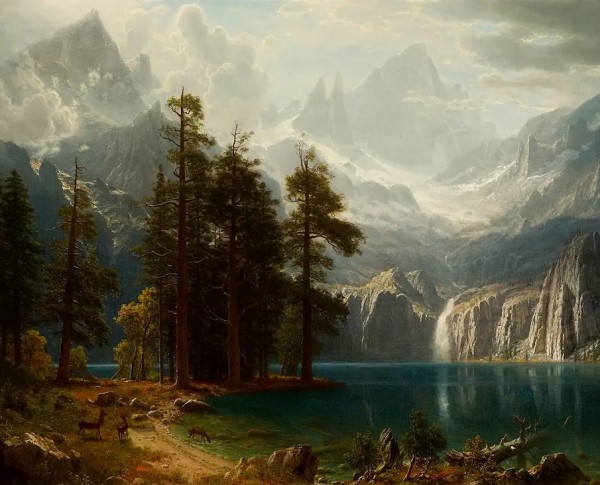
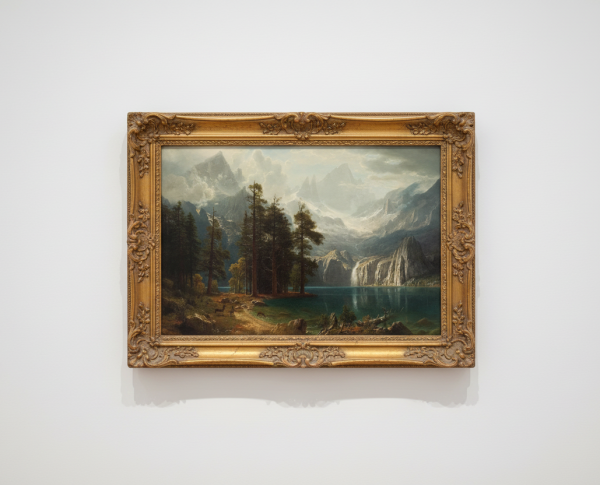
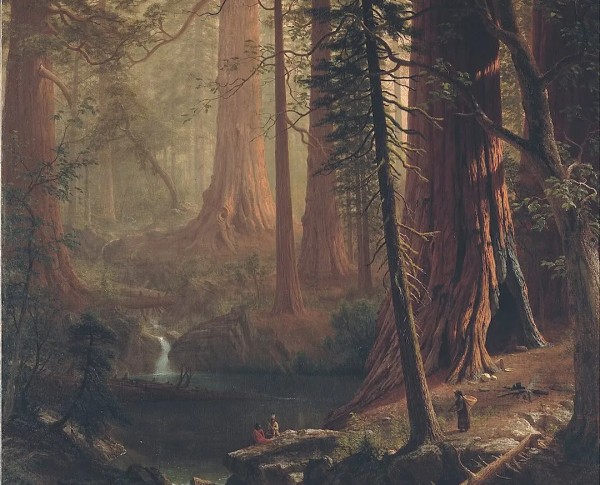
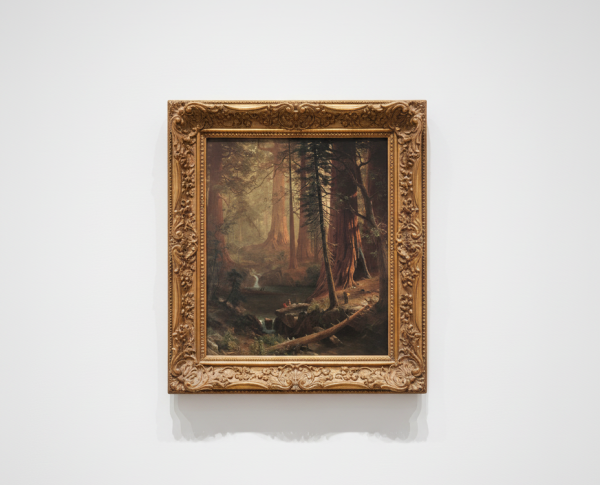
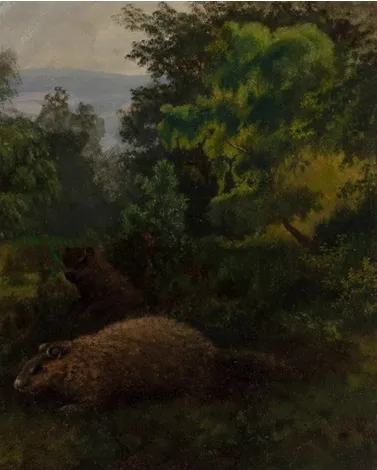
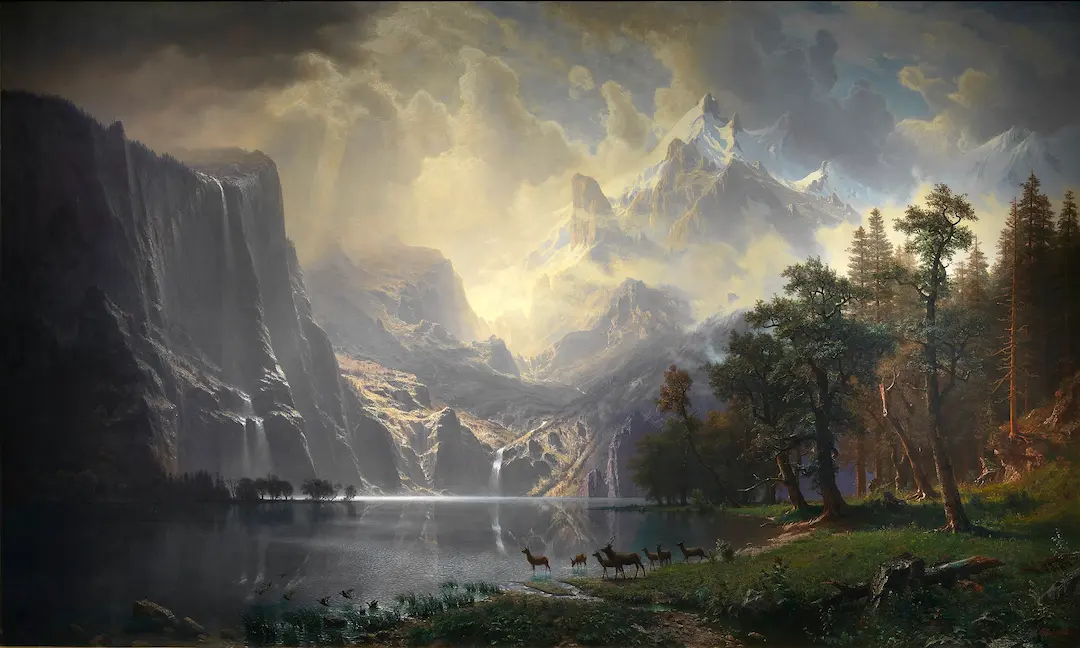
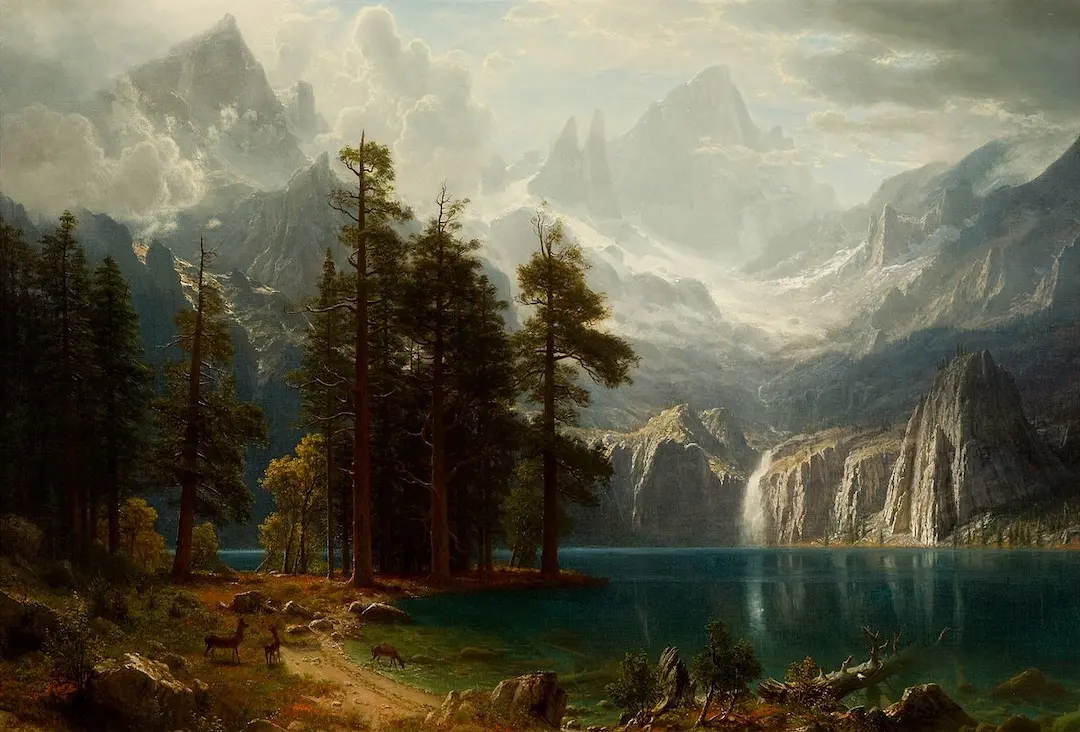
Bierstadt’s exceptional skill is evident in every inch of "Two Woodchucks in Westphalian Forest," an exquisite oil on canvas creation. The lush Westphalian scenery and the lifelike depiction of the woodchucks highlight the artist’s technical prowess and keen observation. As an icon of the Hudson River School, Bierstadt’s works, including "Among The Sierra Nevada Mountains California," are celebrated for their atmospheric light and realistic textures, making them coveted additions to any fine art collection.
"Two Woodchucks in Westphalian Forest" tells a subtle story of harmony between wildlife and landscape, a recurring theme in Bierstadt’s fine art painting for sale. The woodchucks symbolize the quiet resilience of nature, while the expansive forest background evokes a sense of wonder. Like "Bavarian Landscape" and "Sierra Nevada I," this artwork invites viewers to reflect on the delicate balance within the natural world, underscoring the Hudson River School’s reverence for the environment.
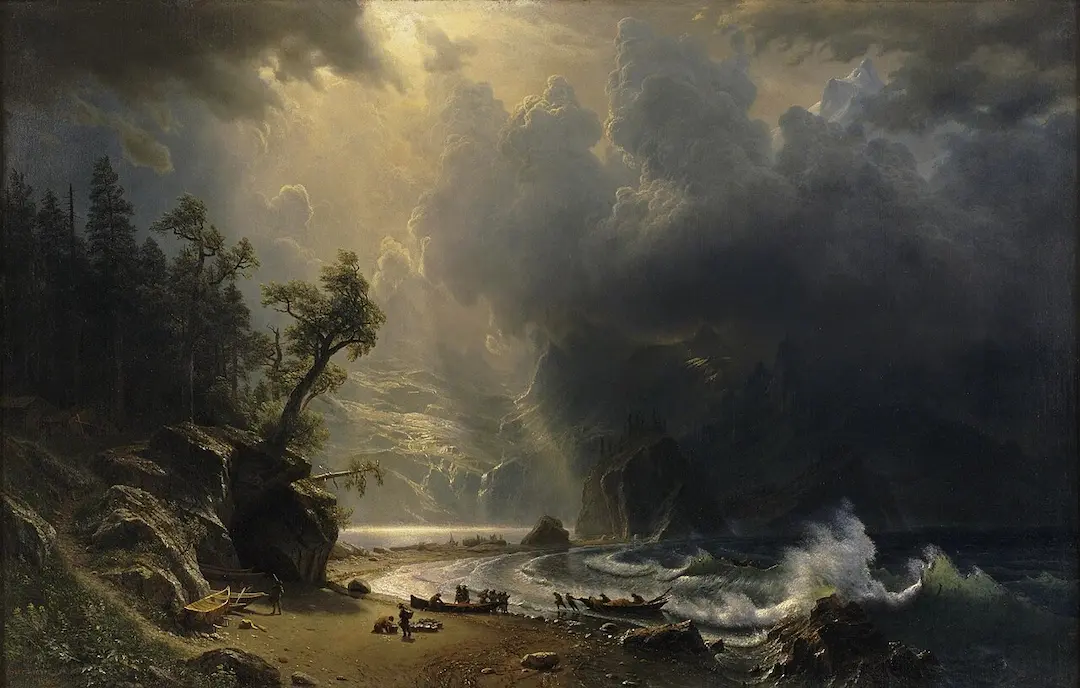
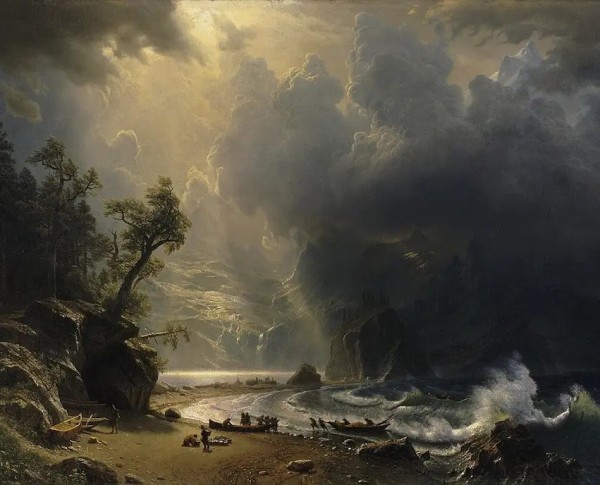
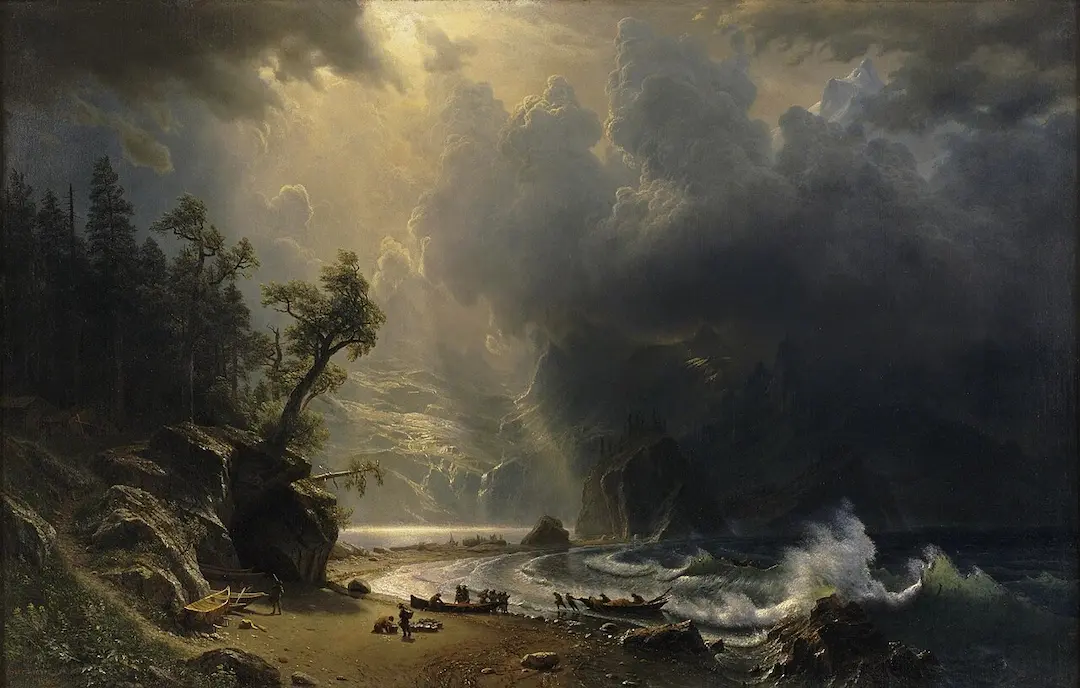
Owning "Two Woodchucks in Westphalian Forest" by Albert Bierstadt is more than acquiring a painting; it is investing in a piece of art history. This hand-painted oil painting, like "Puget Sound On The Pacific Coast," appeals to discerning collectors seeking original works from the Hudson River School movement. With its timeless beauty and meticulous detail, this masterpiece remains a sought-after fine art painting for sale, perfect for enhancing any sophisticated art collection.
When Art Meets History
"Two Woodchucks in Westphalian Forest" by Albert Bierstadt stands as a testament to the legacy of the Hudson River School movement. This hand-painted oil painting captures a serene moment in the lush Westphalian woods, reflecting Bierstadt’s fascination with the interplay of wildlife and landscape. The painting’s historical significance lies in its detailed portrayal of nature, drawing connections to other works by Bierstadt and his contemporaries who celebrated American and European wilderness scenes.
Techniques That Speak
Albert Bierstadt’s mastery is evident in every brushstroke of this oil on canvas. His use of light and shadow brings depth to the forest setting, while the delicate rendering of the woodchucks adds life to the composition. As a prominent figure in the Hudson River School, Bierstadt employed layering and glazing techniques, similar to those found in his other celebrated landscapes, to achieve a remarkable sense of realism and atmospheric perspective in this unique piece.
Emotions on Display
There’s a palpable tranquility in "Two Woodchucks in Westphalian Forest," inviting viewers to pause and reflect. Bierstadt’s fine art painting for sale evokes a sense of peace and harmony with nature, characteristic of the Hudson River School’s ethos. The gentle interaction between the two woodchucks amidst towering trees elicits feelings of innocence and wonder, much like the emotional resonance found in Bierstadt’s other works depicting unspoiled natural beauty.
Coveted by Collectors
Collectors highly prize "Two Woodchucks in Westphalian Forest" for its blend of technical brilliance and evocative subject matter. As a hand-painted oil painting by Albert Bierstadt, it represents a sought-after example of Hudson River School artistry. The painting’s rarity and connection to Bierstadt’s broader oeuvre make it a desirable acquisition, appealing to those who appreciate the timeless allure of 19th-century landscape art and the enduring value of authentic fine art painting for sale.
Frequently Asked Questions About Two Woodchucks in Westphalian Forest
What is the historical context of "Two Woodchucks in Westphalian Forest"?
This painting was created during the mid-19th century, a time when the Romantic movement was influencing artists to depict nature with emotional intensity and grandeur. Albert Bierstadt was known for his ability to capture the beauty of the American landscape, and this work reflects the fascination with nature prevalent during that era.
What artistic techniques did Albert Bierstadt employ in this painting?
Bierstadt utilized a technique known as luminism, characterized by the depiction of light and its effects on the landscape. He meticulously painted the textures of the woodchucks and the foliage, creating a vivid sense of realism and depth in the forest setting.
What is the significance of the woodchucks in the painting?
The woodchucks symbolize the harmony of nature and the interconnectedness of wildlife within their habitat. Their presence serves as a reminder of the delicate balance of ecosystems, which was a growing concern during Bierstadt's time.
How does this painting reflect Bierstadt's style?
What themes are explored in "Two Woodchucks in Westphalian Forest"?
The painting explores themes of nature, tranquility, and the beauty of wildlife. It invites viewers to appreciate the serenity of the forest and the importance of preserving such environments, reflecting the broader environmental consciousness of the time.
How does Bierstadt's work compare to other artists of his time?
Bierstadt's work is often compared to that of other Hudson River School artists, who shared a similar focus on American landscapes. However, his unique emphasis on the dramatic interplay of light and shadow, as well as his detailed representation of flora and fauna, sets his work apart.
What materials did Bierstadt likely use for this painting?
Albert Bierstadt typically used oil paints on canvas, which allowed him to achieve the rich colors and textures evident in "Two Woodchucks in Westphalian Forest." The use of oil paint also facilitated the layering techniques he employed to create depth and luminosity.
What impact did "Two Woodchucks in Westphalian Forest" have on viewers at the time of its exhibition?
Upon its exhibition, the painting likely evoked a sense of awe and appreciation for nature among viewers. It contributed to the growing movement of environmental awareness and the desire to preserve natural landscapes, resonating deeply with the public's fascination with America's wilderness.
What is the current significance of "Two Woodchucks in Westphalian Forest" in today's art world?
Today, the painting is significant as it continues to inspire discussions about environmental conservation and the role of art in reflecting societal values. It serves as a historical document of 19th-century attitudes towards nature and the ongoing relevance of these themes in contemporary art.
Where can I view "Two Woodchucks in Westphalian Forest"?
The painting is currently housed in [insert gallery or museum name], where it is part of the permanent collection. Visitors can view it alongside other works by Bierstadt and his contemporaries, providing a comprehensive understanding of the period's artistic movements.






















_GFM_Painting_(1).webp)


 100% Hand-Painted: Finished in 3-6 Weeks

.png)















_(1).webp)