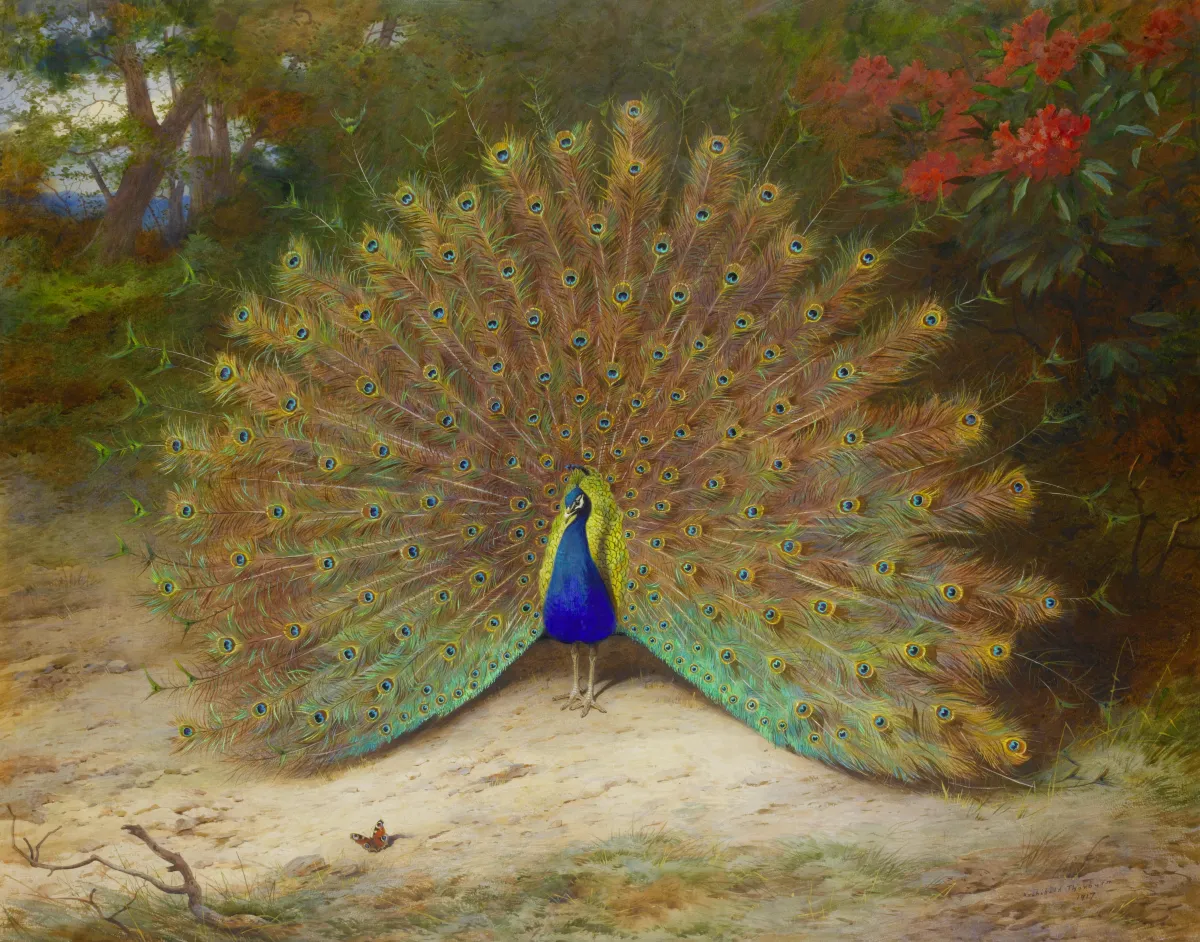
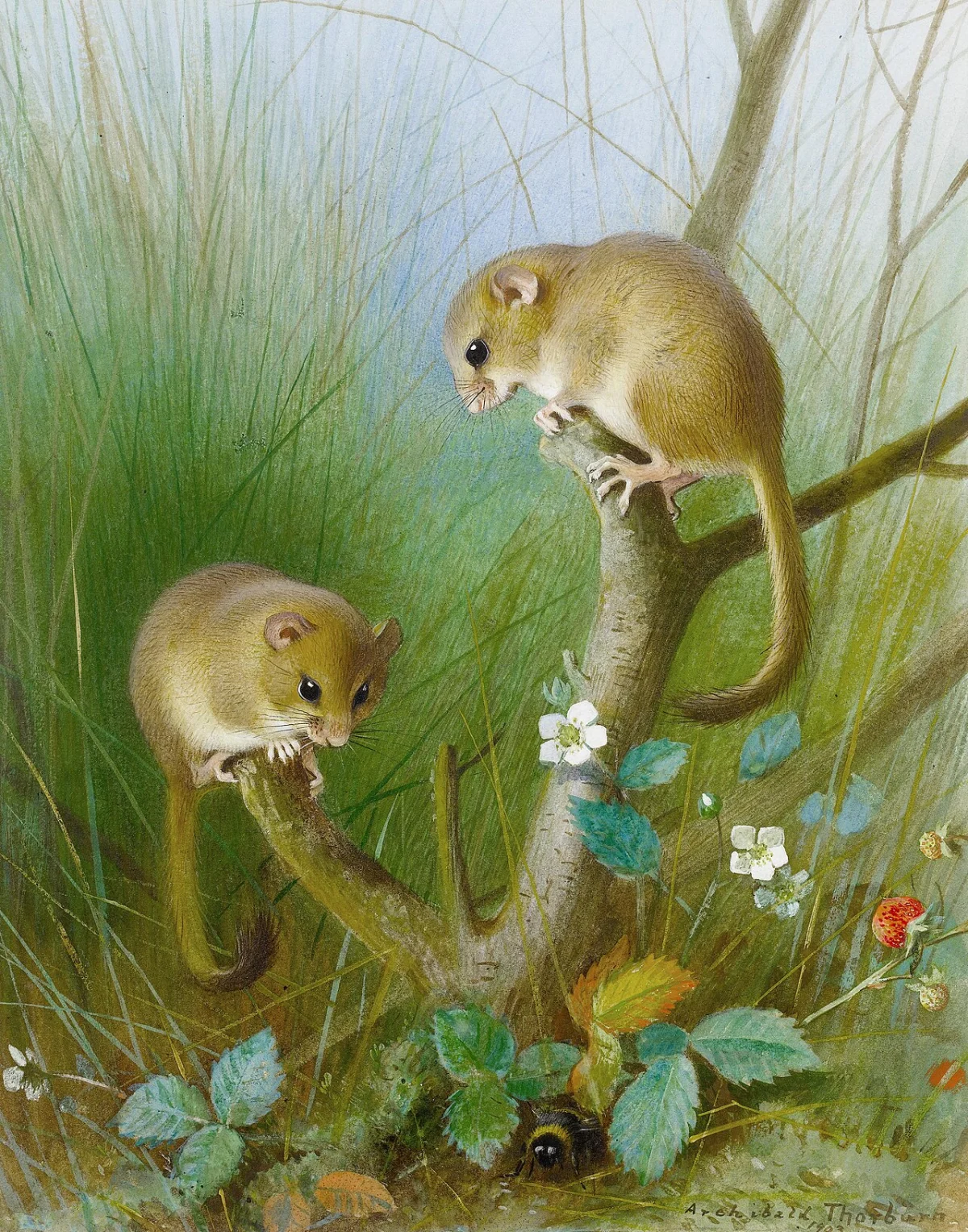
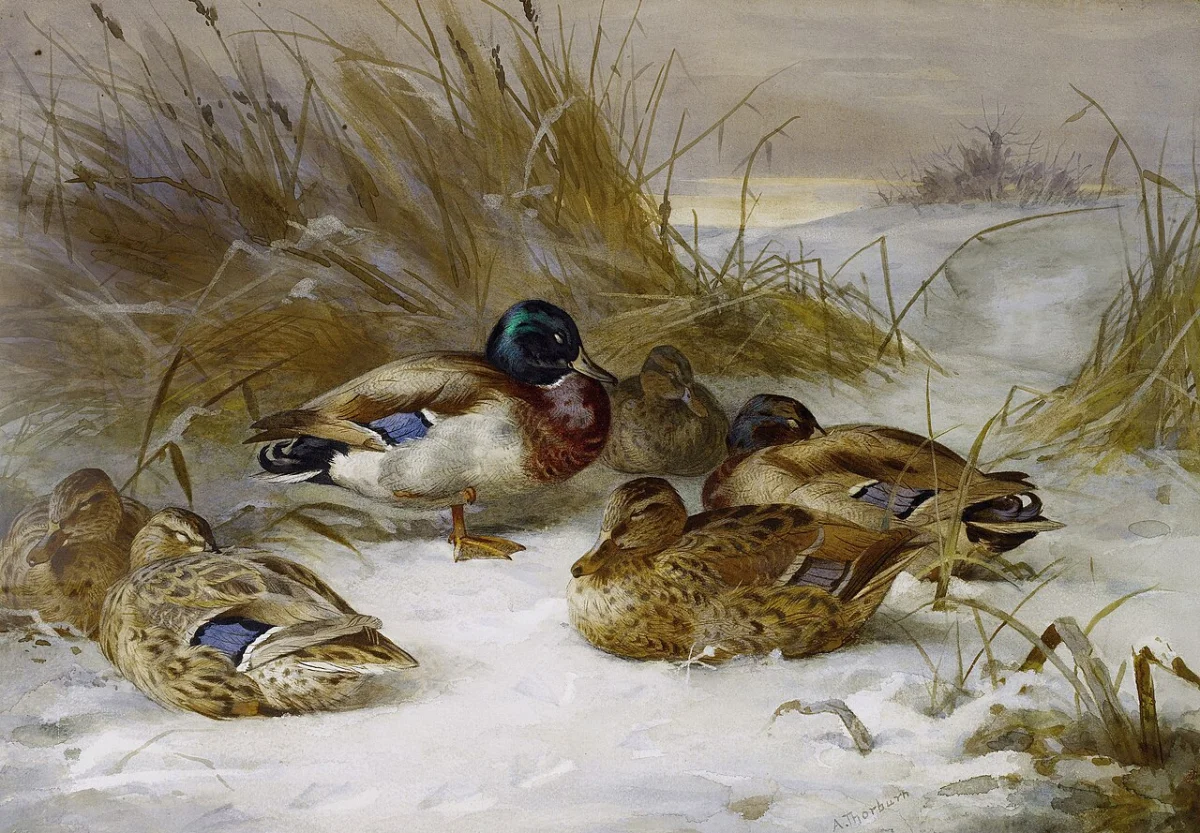
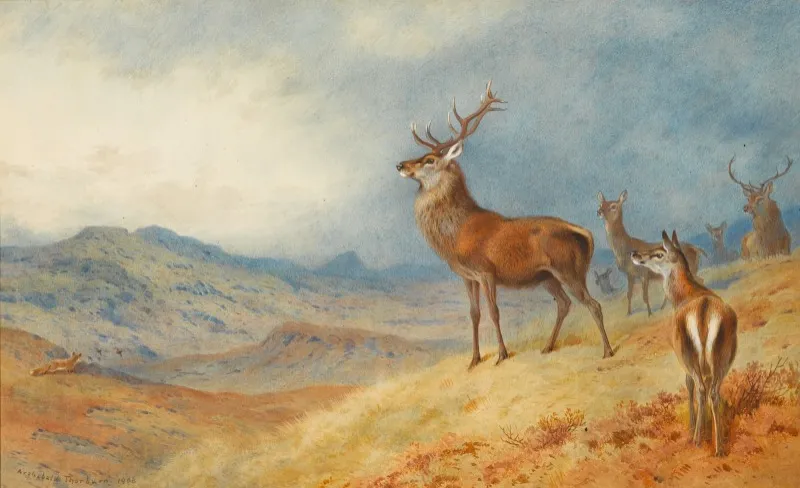
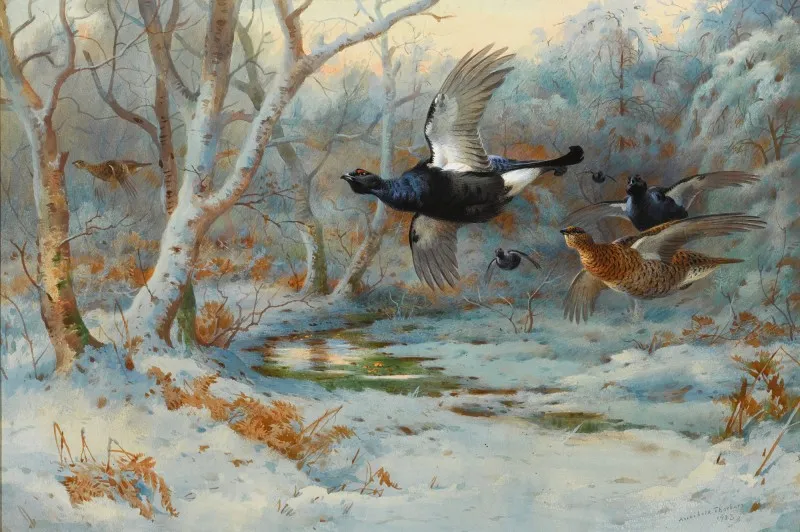
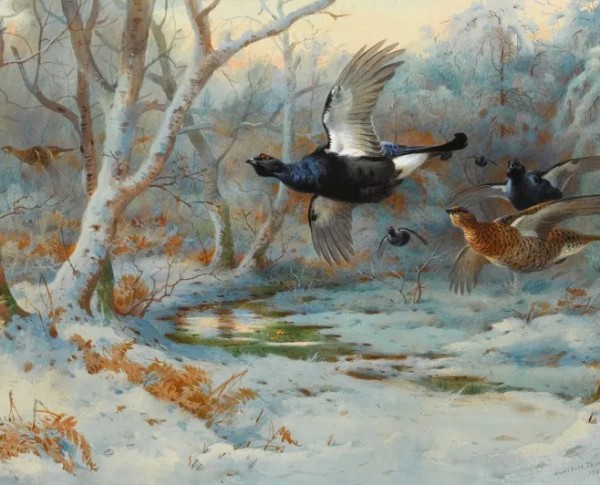
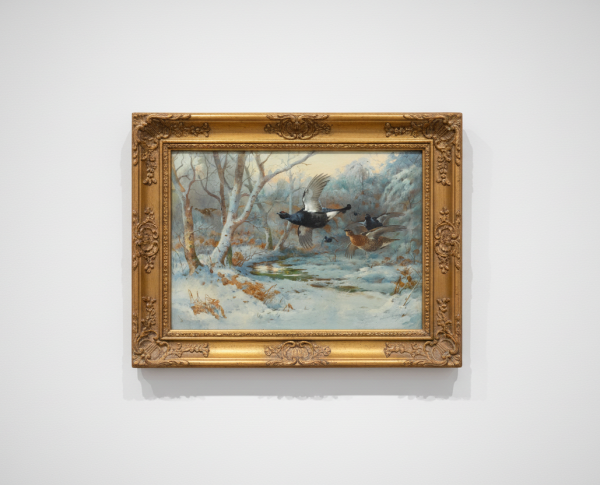
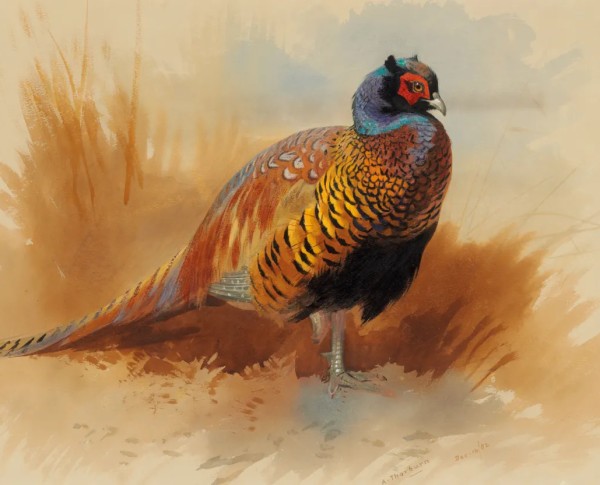
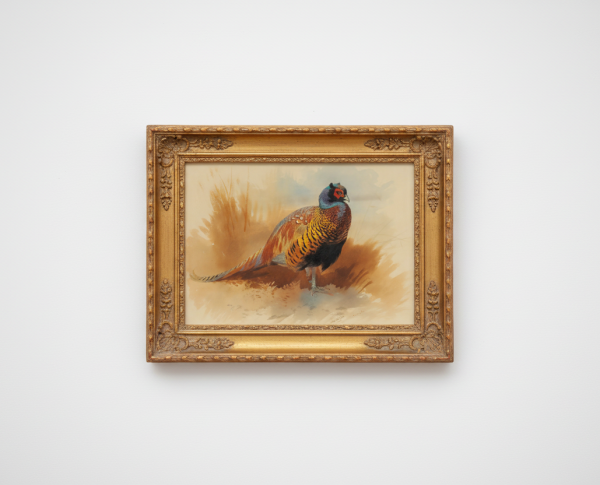
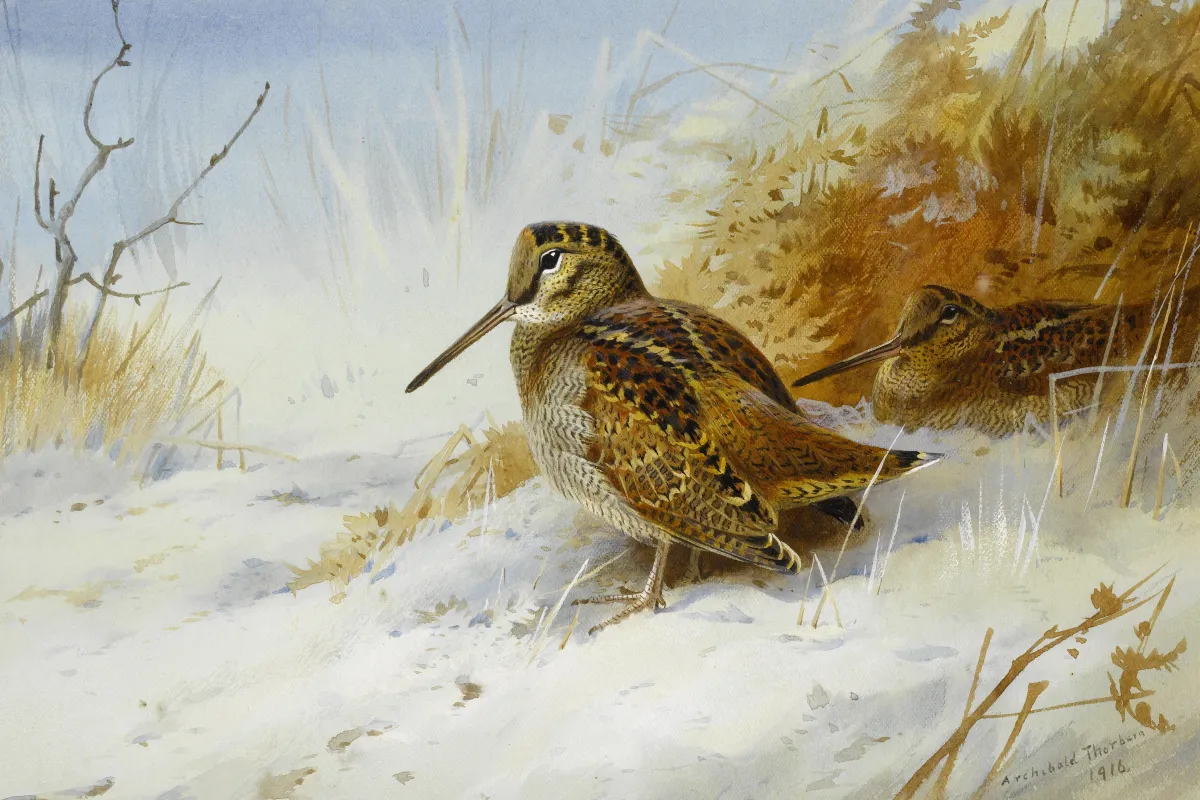
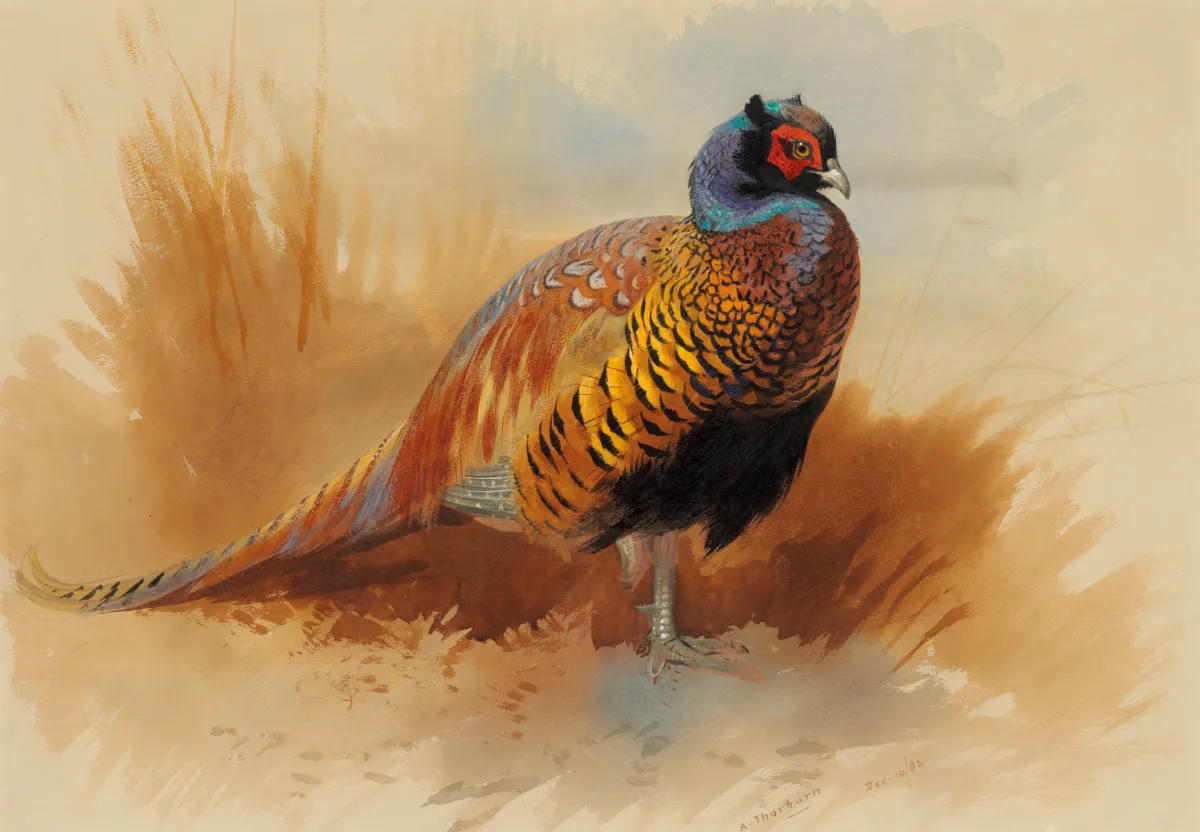
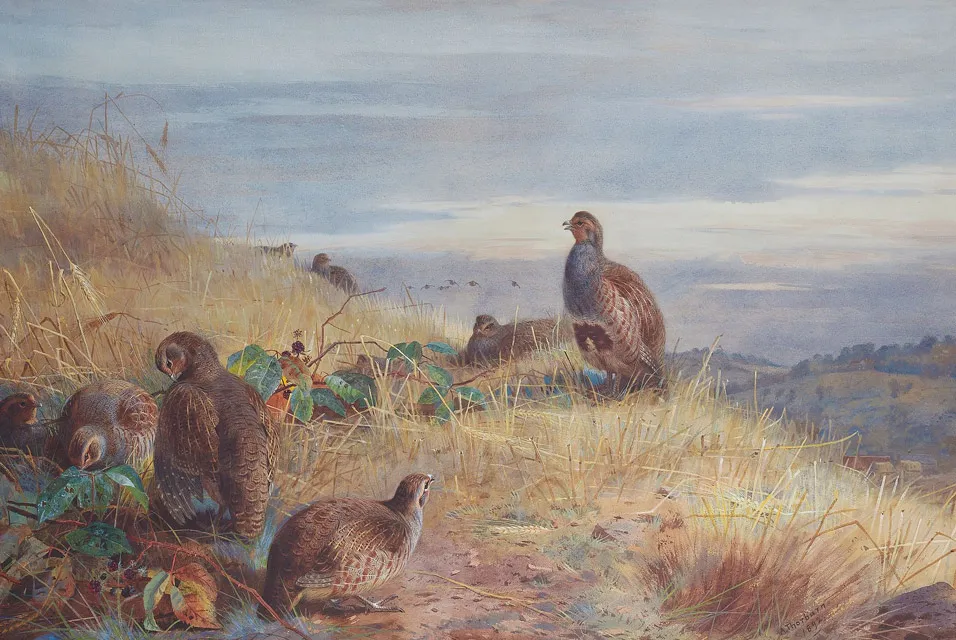
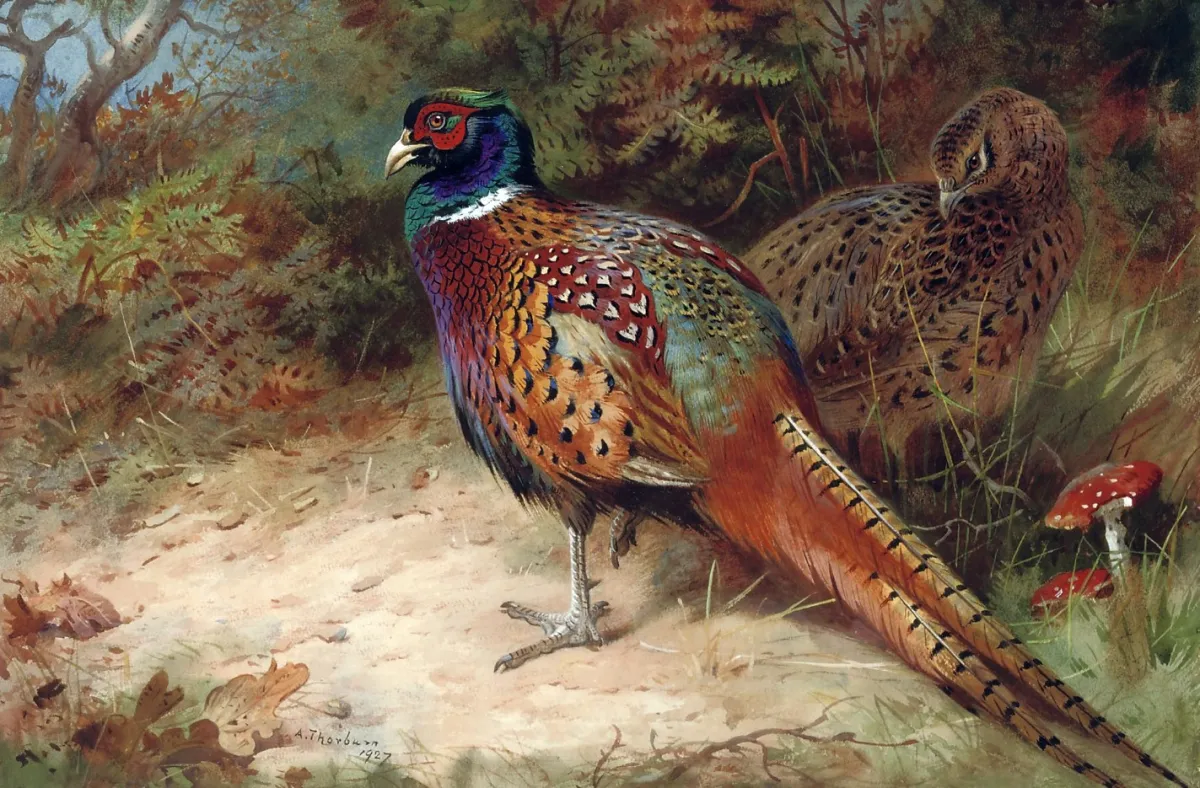
With “Winter Woodcock,” Thorburn demonstrates exceptional skill through his use of oil on canvas, bringing depth and texture to every feather and frost-laden branch. The painting’s subtle color palette and intricate brushwork highlight the artist’s keen observation and technical prowess. This piece, alongside related products like “Cock and hen pheasant in the undergrowth,” exemplifies the Naturalism movement’s emphasis on truthful representation and Thorburn’s enduring influence in fine art.
Every detail in “Winter Woodcock” tells a story—of survival, adaptation, and the quiet drama of nature. As a fine art painting for sale, it appeals to those who value the symbolic connection between wildlife and the changing seasons. Thorburn’s work, reminiscent of pieces like “Study of a cock pheasant,” invites viewers to reflect on the delicate balance of life depicted in the Naturalism tradition, making each viewing a new discovery.
For art aficionados and collectors, “Winter Woodcock” by Archibald Thorburn represents more than just a painting; it is a prized example of a hand-painted oil painting from the Naturalism movement. This work, often displayed alongside “Cock and hen pheasant in the undergrowth,” embodies the enduring appeal of wildlife art. Its meticulous detail and historical significance ensure it remains a sought-after addition to any fine art collection.
When Art Meets History
"Winter Woodcock" by Archibald Thorburn stands as a testament to the "Naturalism" movement, capturing a pivotal era when artists sought to depict nature in its purest form. This hand-painted oil painting reflects Thorburn’s dedication to lifelike detail and historical accuracy, bringing to life the serene winter landscape and the elusive woodcock. As with his other works, Thorburn’s commitment to realism ensures that each stroke adds to our understanding of both art history and ornithological illustration.
Techniques That Speak
Archibald Thorburn’s mastery in "Winter Woodcock" is evident through his exquisite use of oil on canvas. The carefully layered textures and subtle gradations of color create a sense of depth and movement, hallmark traits of the Naturalism movement. Thorburn’s technique allows viewers to almost feel the crisp winter air and the softness of snow, a testament to his skills. Similar approaches can be observed in his other naturalist works, further solidifying his reputation as a leading wildlife artist.
Emotions on Display
"Winter Woodcock" evokes a quiet, contemplative mood, inviting viewers to experience the tranquil solitude of a winter woodland scene. Through his fine art painting for sale, Thorburn masterfully conveys the delicate balance between vulnerability and resilience embodied by the woodcock. The emotional resonance found in this piece is a signature of the Naturalism movement, where artists like Thorburn strive to connect deeply with nature and its inhabitants, inspiring awe and reflection in their audience.
Coveted by Collectors
Collectors highly prize "Winter Woodcock" both for its artistic merit and its place in the evolution of the Naturalism movement. As a hand-painted oil painting by Archibald Thorburn, it represents a fusion of technical mastery and natural beauty, making it a sought-after addition to any collection. The painting’s enduring popularity speaks to Thorburn’s influence and the timeless appeal of finely executed wildlife art, a quality shared by his other remarkable works in the genre.
Frequently Asked Questions About Winter Woodcock
What is the historical significance of "Winter Woodcock"?
"Winter Woodcock," painted by Archibald Thorburn, reflects the artist's deep connection to British wildlife and his dedication to capturing the essence of nature during the early 20th century, a period marked by growing interest in natural history and conservation.
Who was Archibald Thorburn?
Archibald Thorburn (1860-1935) was a renowned Scottish painter and illustrator, celebrated for his detailed and lifelike depictions of birds and wildlife. His work contributed significantly to the field of natural history art.
What artistic techniques did Thorburn employ in "Winter Woodcock"?
Thorburn utilized meticulous brushwork and a keen eye for detail to depict the woodcock in its natural habitat. His use of light and shadow enhances the three-dimensionality of the bird, making it appear lifelike and dynamic.
What symbolism is present in "Winter Woodcock"?
The woodcock is often seen as a symbol of resilience and adaptability, reflecting the harsh conditions of winter. Thorburn's portrayal emphasizes the beauty and struggle of wildlife in seasonal transitions.
How does "Winter Woodcock" fit into the broader context of wildlife art?
This painting exemplifies the genre of wildlife art, which seeks to celebrate and document the natural world. Thorburn's work is notable for its scientific accuracy and artistic merit, bridging the gap between art and natural history.
What influences can be seen in Thorburn's style in this painting?
Thorburn's style is influenced by the Pre-Raphaelite movement, characterized by vibrant colors and intricate detail. His love for nature and keen observation of wildlife are evident in the realistic portrayal of the woodcock.
In what ways did "Winter Woodcock" contribute to conservation efforts?
By highlighting the beauty of the woodcock and its habitat, "Winter Woodcock" raises awareness about the importance of wildlife conservation. Thorburn's art often inspired viewers to appreciate and protect natural environments.
What can be inferred about the environment depicted in "Winter Woodcock"?
The painting captures a winter landscape, suggesting themes of survival and adaptation. The choice of season emphasizes the challenges faced by wildlife and the beauty found in their struggle against the elements.
How has "Winter Woodcock" been received by critics and the public?
The painting has been praised for its exquisite detail and emotional depth, establishing Thorburn as a master of wildlife art. It continues to resonate with audiences who appreciate both its artistic and ecological messages.
What legacy did Archibald Thorburn leave in the art world?
Thorburn's legacy lies in his ability to blend art with a passion for nature, influencing future generations of wildlife artists. His works, including "Winter Woodcock," remain significant in the study of natural history and conservation art.






















_GFM_Painting_(1).webp)


 100% Hand-Painted: Finished in 3-6 Weeks

.png)















_(1).webp)