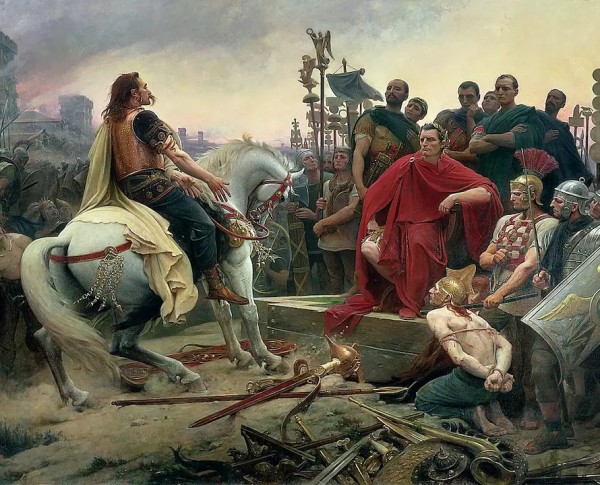
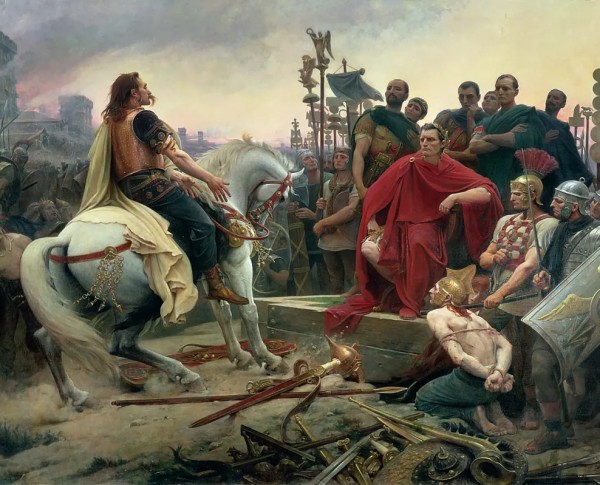
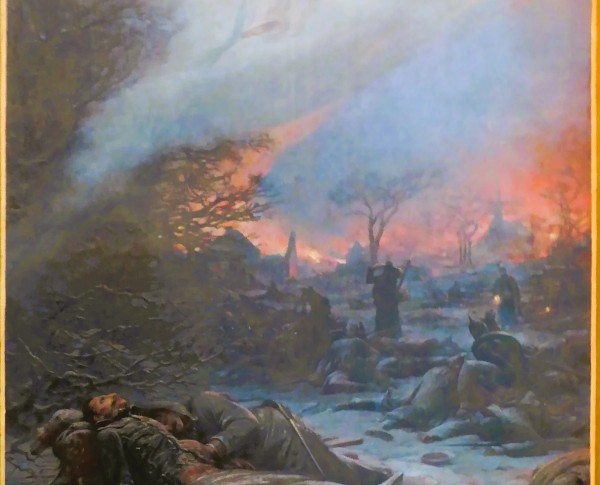
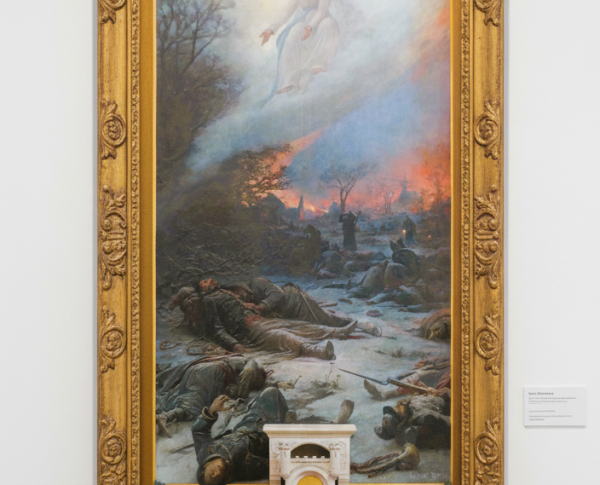
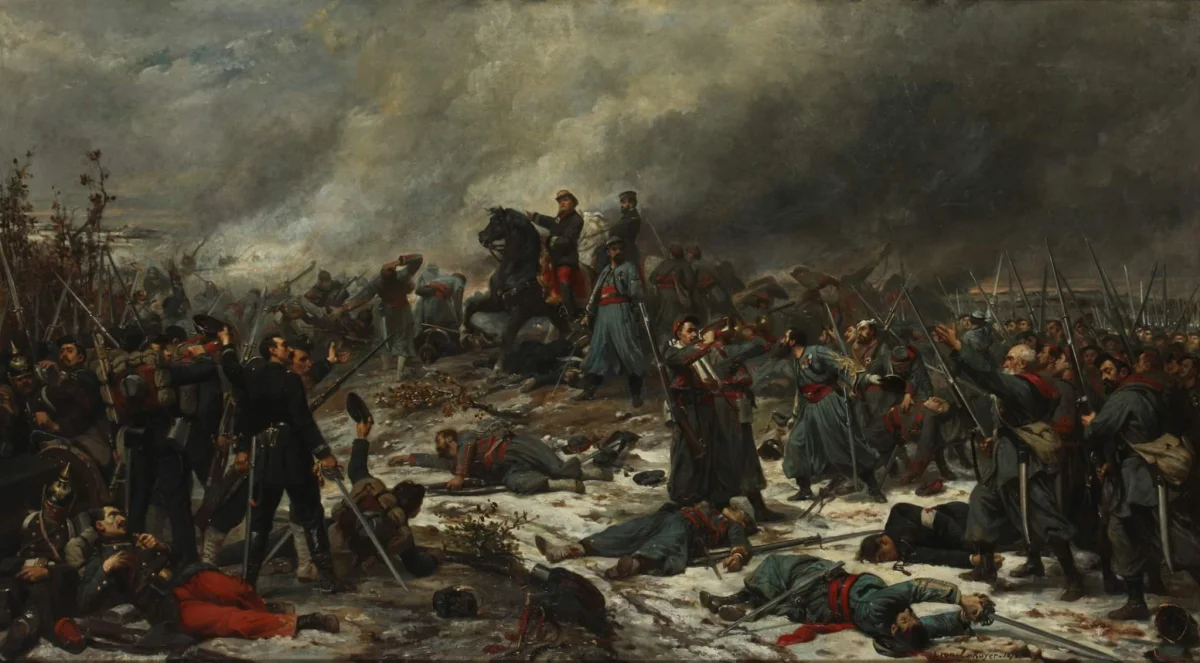
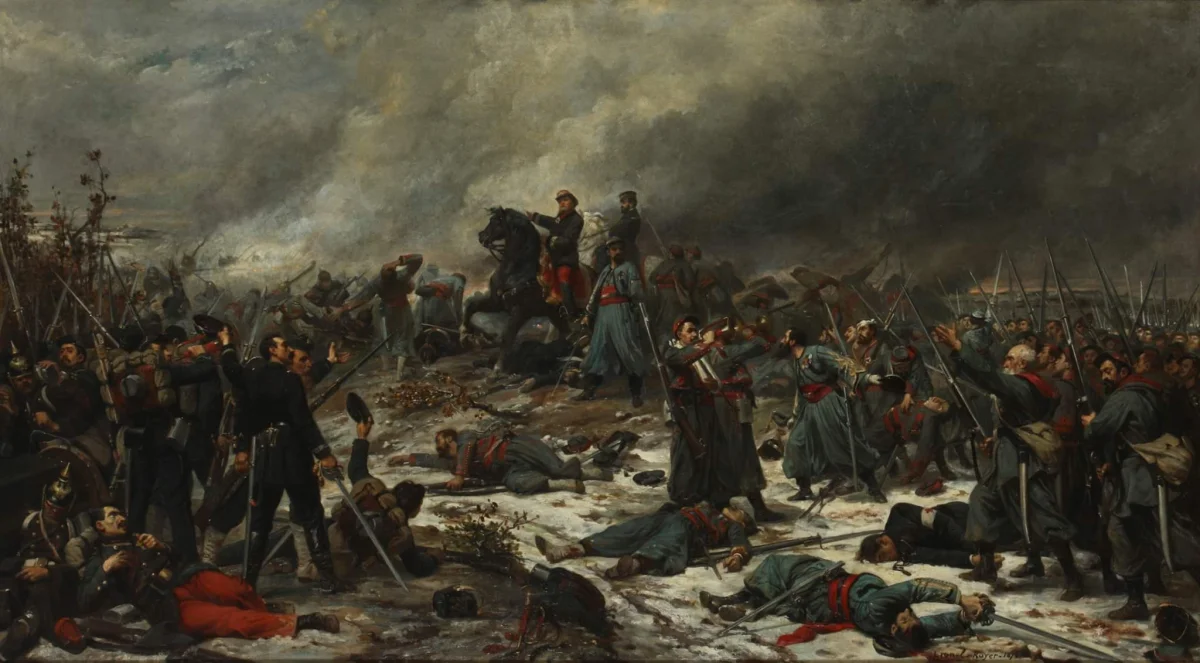
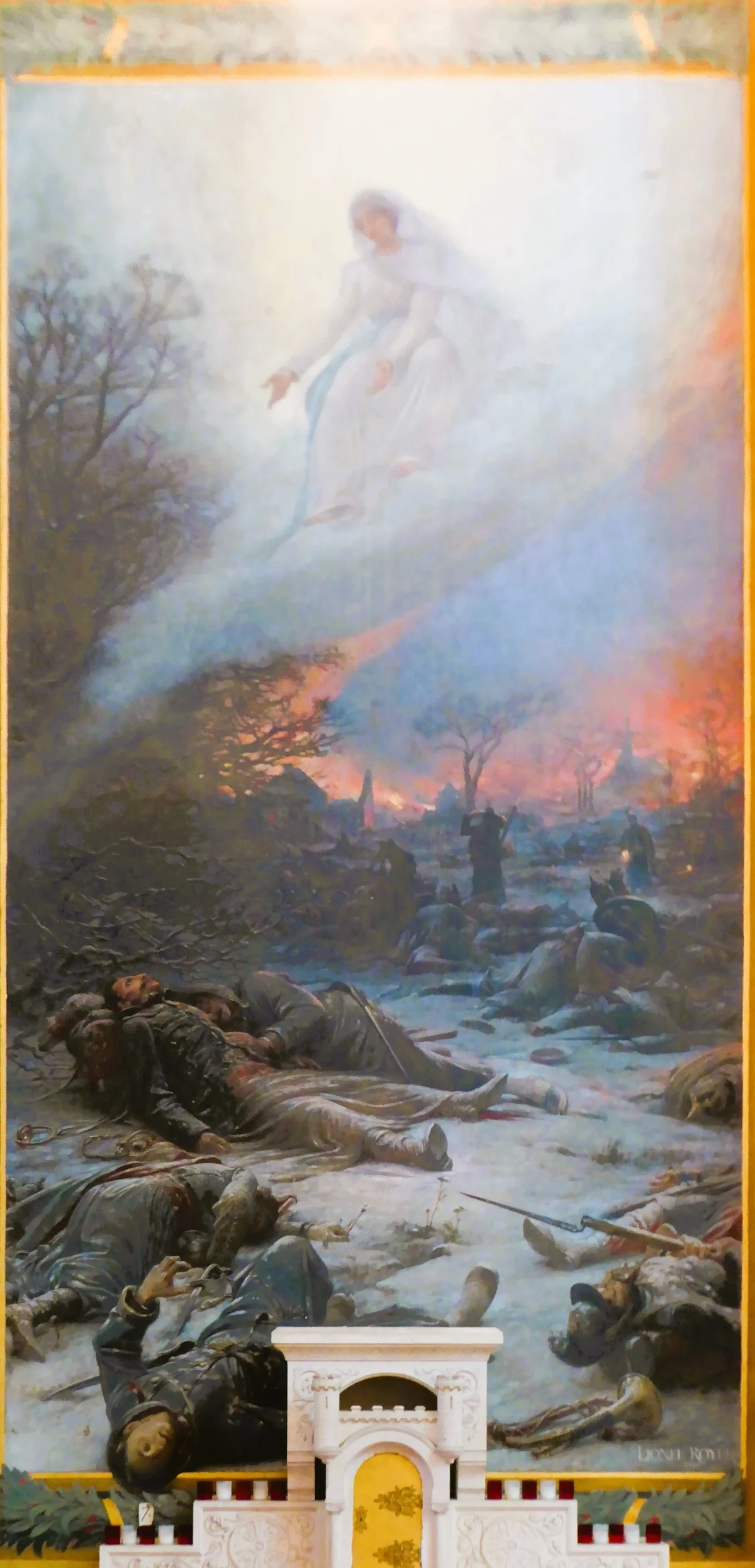
The “Battle of Auvours, 10 January 1871” demonstrates Royer’s exceptional skill in oil on canvas, characteristic of the Academic Art movement. His meticulous attention to detail and dramatic use of light bring the battlefield to life. If you admire works like “Le Goût” or “The Communion of Zouaves,” you’ll recognize Royer’s profound technique, elevating this painting to the ranks of masterful oil on canvas artworks sought after by discerning collectors.
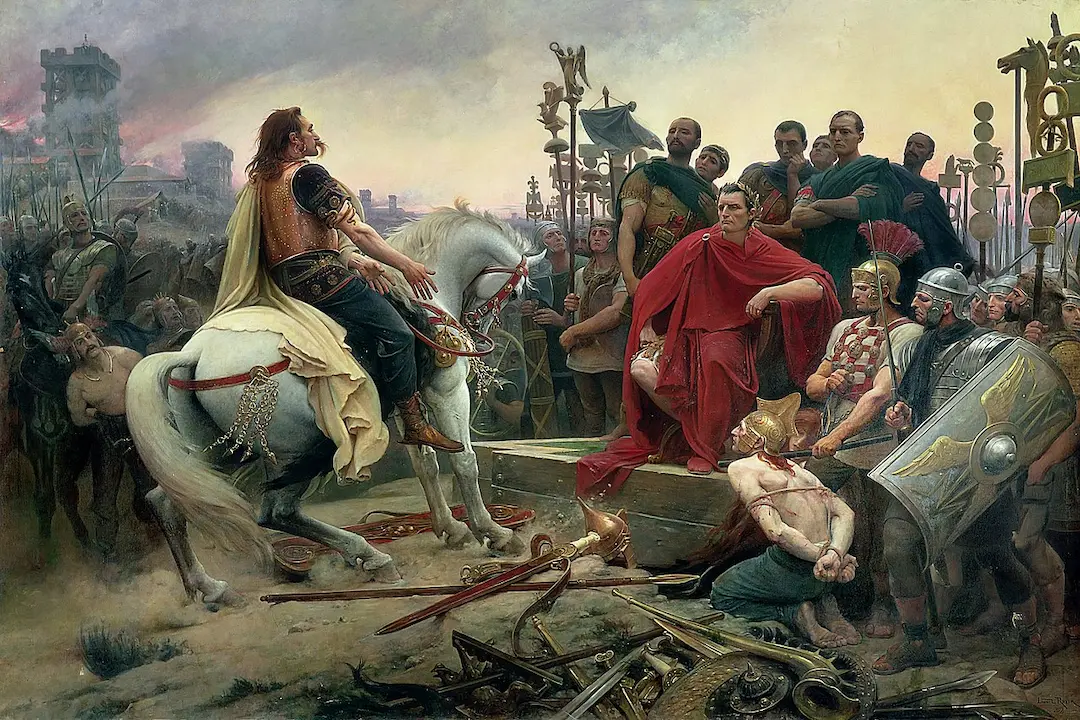
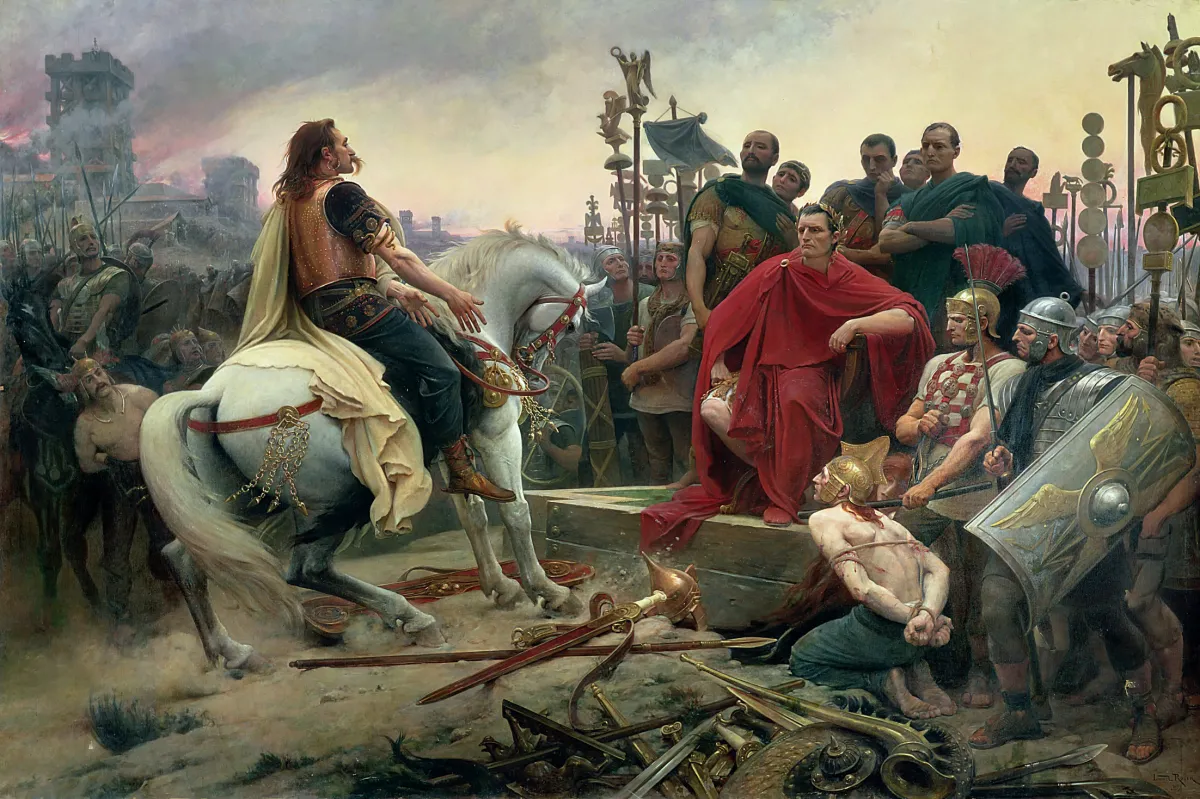
Within this hand-painted oil painting, Royer weaves narratives of courage and sacrifice, using symbolism to convey the turmoil of war. The “Battle of Auvours, 10 January 1871” stands alongside masterpieces like “Vercingetorix Throwing down His Weapons at the feet of Julius Caesar,” each capturing defining moments in French history. This fine art painting for sale is not just a visual record but a tribute to resilience, making it a meaningful acquisition for any collection.
Owning Lionel Noel Royer’s “Battle of Auvours, 10 January 1871” means acquiring a distinguished oil on canvas from the Academic Art tradition. This piece, related to celebrated works such as “General Gaston de Sonis” and “Le Goût,” offers both historical significance and artistic excellence. For those seeking a fine art painting for sale, Royer’s masterpiece promises enduring value and a profound connection to the storied legacy of nineteenth-century French art.
When Art Meets History
"Battle of Auvours, 10 January 1871" is a remarkable hand-painted oil painting by Lionel Noel Royer, a distinguished figure in the Academic Art movement. This work captures a pivotal moment from the Franco-Prussian War, blending meticulous historical detail with artistic grandeur. Royer's style, also seen in related paintings like "Promenade" and "Rest on the Flight into Egypt," brings history to life, making this masterpiece a must-see for those who appreciate art that narrates heroic events.
Techniques That Speak
Utilizing oil on canvas, Lionel Noel Royer masterfully renders the chaos and valor of battle in "Battle of Auvours, 10 January 1871." His technique, characteristic of Academic Art, employs precise brushwork and dramatic lighting to enhance realism. This approach is shared with his other works, such as "Mud Pies" and "Psyche with Putti," demonstrating his command over form and detail. The use of oil on canvas ensures longevity and depth in each stroke and color.
Emotions on Display
In this fine art painting for sale, Royer channels the raw emotions of soldiers and commanders amid conflict. "Battle of Auvours, 10 January 1871" is not just a visual chronicle but an emotional journey, echoing the intensity found in pieces like "Love's Offering." Through expressive faces and dynamic compositions, the artist immerses viewers in the tension and bravery of war, a hallmark of the Academic Art movement and Royer's evocative storytelling.
Coveted by Collectors
Collectors worldwide seek Lionel Noel Royer's "Battle of Auvours, 10 January 1871" for its historical significance and artistry. As a hand-painted oil painting from the Academic Art movement, it stands alongside masterpieces like "Rest on the Flight into Egypt" and "Love's Offering." The painting's authenticity, attention to detail, and narrative depth make it a prized acquisition, ensuring its place in prestigious collections and as a highlight among fine art painting for sale.
Related Academic Art Hand-Painted Oil Paintings by Other Artists
Other Famous Academic Art Artists:
Frequently Asked Questions About Battle of Auvours, 10 January 1871
What historical event does the painting "Battle of Auvours, 10 January 1871" depict?
The painting captures the Battle of Auvours, a significant military engagement during the Franco-Prussian War, which took place on January 10, 1871. This battle was part of the larger conflict that ultimately led to the unification of Germany.
Who was the artist Lionel Noel Royer, and what is his significance?
Lionel Noel Royer was a French painter known for his historical and military scenes. His works often reflect a deep understanding of the events he portrays, and he is recognized for his ability to convey the drama and emotion of historical moments through his art.
What artistic techniques did Royer employ in this painting?
Royer utilized a combination of realism and dramatic lighting to enhance the emotional intensity of the scene. His attention to detail in the depiction of uniforms, weapons, and the chaotic atmosphere of battle exemplifies his skill in historical representation.
What is the significance of the color palette used in the painting?
The color palette features earthy tones and muted colors, which serve to evoke the somber mood of battle. The use of darker shades contrasts with the brighter highlights, emphasizing the chaos and violence of the conflict while also grounding the viewer in the historical context.
How does "Battle of Auvours" reflect the themes of nationalism and conflict?
This painting embodies the themes of nationalism prevalent during the Franco-Prussian War. It illustrates the fervor and valor associated with military engagement, reflecting the sentiments of pride and sacrifice that characterized the era.
What role does composition play in the impact of this artwork?
The composition is dynamic, with a diagonal arrangement that guides the viewer's eye through the chaos of battle. This technique enhances the sense of movement and urgency, effectively immersing the viewer in the tumultuous scene.
What symbols can be identified in the painting, and what do they represent?
Key symbols in the painting include the flags and uniforms of the soldiers, which represent national identity and allegiance. The depiction of wounded soldiers also serves as a poignant reminder of the human cost of war.
How does this painting compare to other historical battle depictions of its time?
Compared to other historical battle paintings of the period, Royer's work stands out for its emotional depth and realism. While many artists focused on glorifying battle, Royer captures both the heroism and the tragedy inherent in warfare, offering a more nuanced perspective.
What can viewers learn about the Franco-Prussian War from this painting?
Viewers can gain insight into the complexities of the Franco-Prussian War, including the strategies employed and the human experiences of soldiers. The painting serves as a visual narrative that encapsulates the conflict's intensity and its lasting impact on European history.
In what ways has "Battle of Auvours" influenced modern perceptions of war in art?
This painting has contributed to a broader understanding of how war is represented in art, emphasizing the emotional and psychological effects of conflict rather than merely the glorification of military success. It has influenced contemporary artists to explore similar themes of loss and sacrifice in their work.






















_GFM_Painting_(1).webp)


 100% Hand-Painted: Finished in 3-6 Weeks

.png)















_(1).webp)