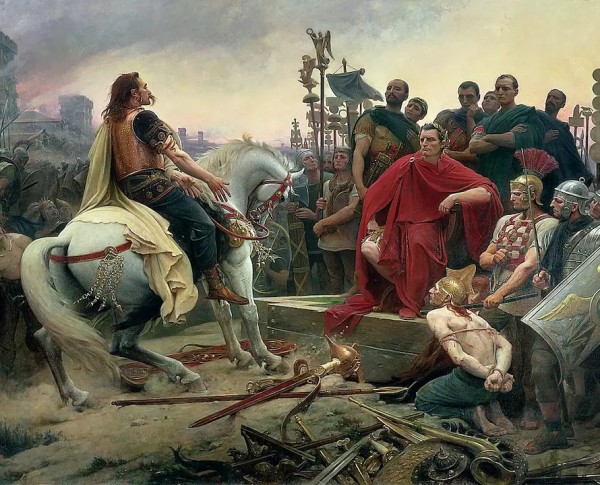
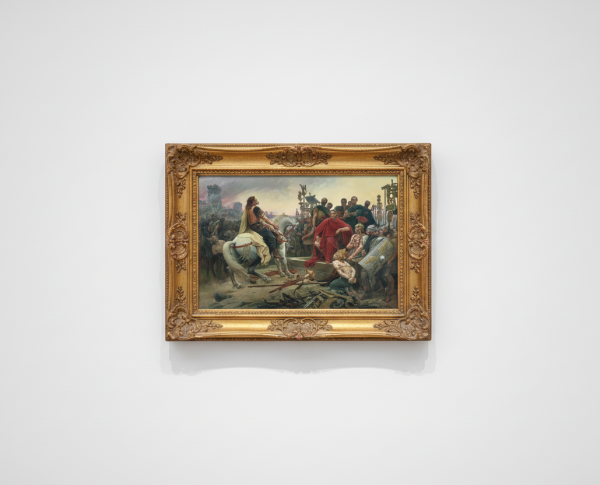
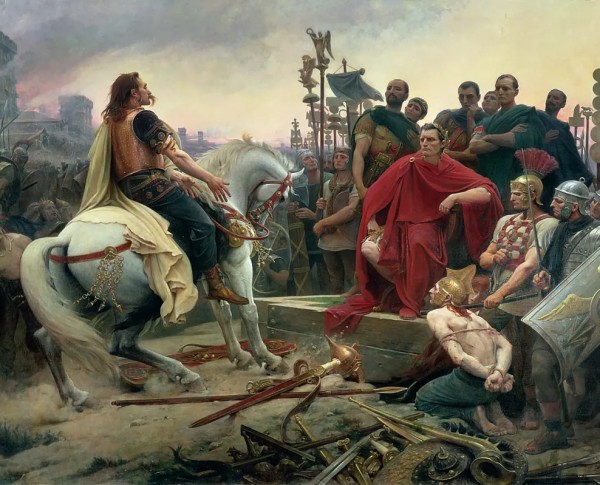
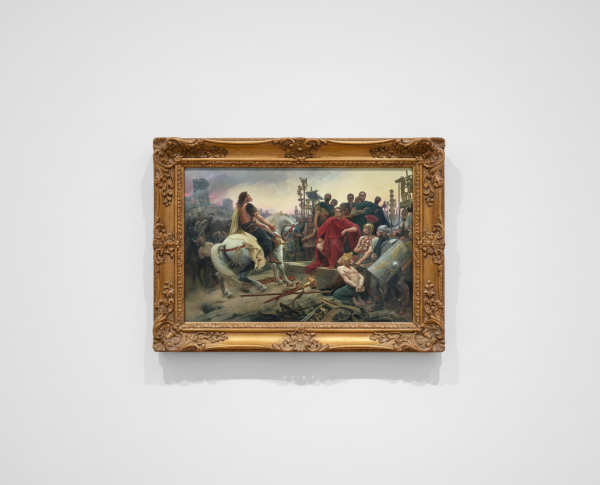
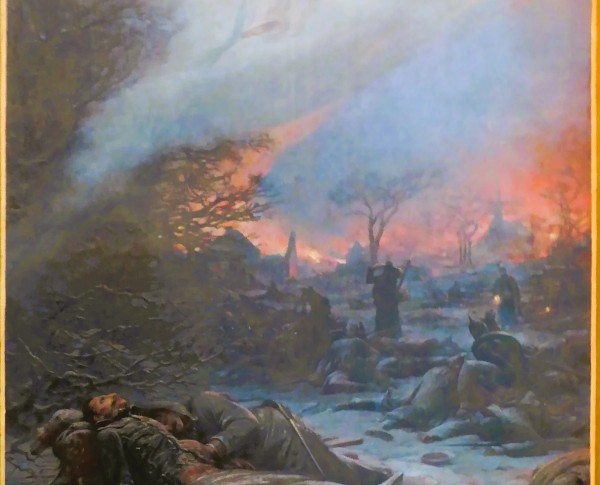
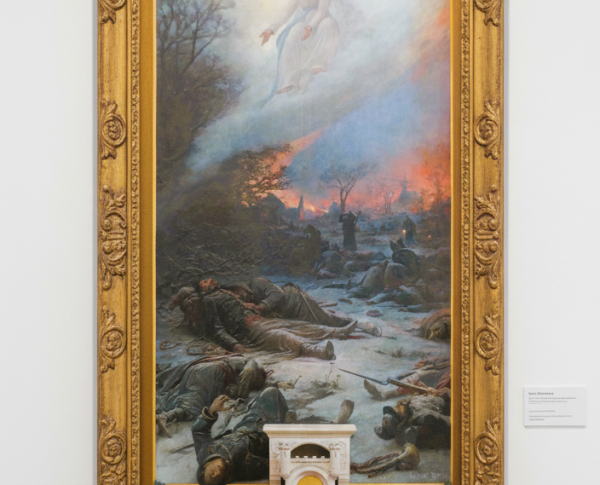
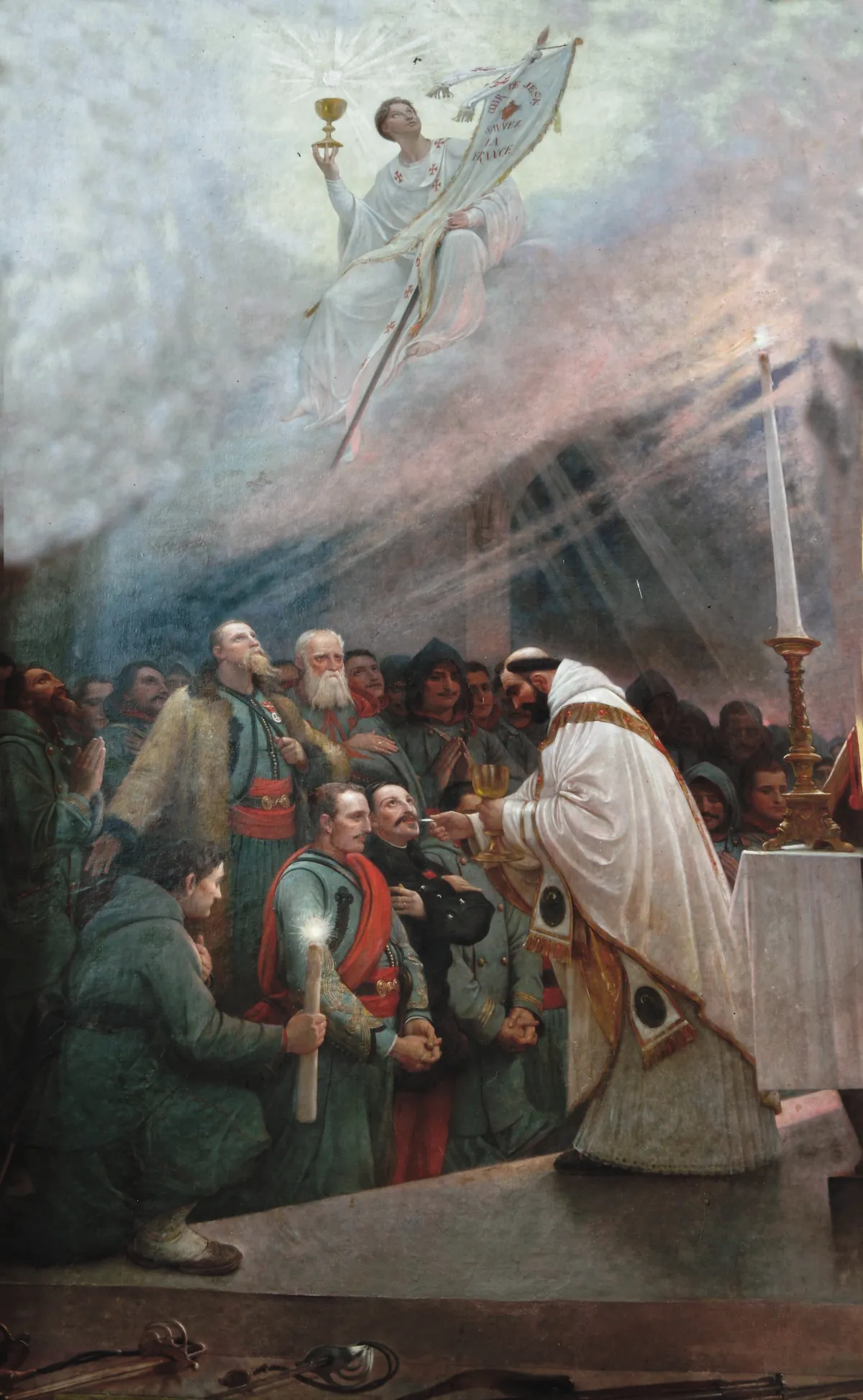
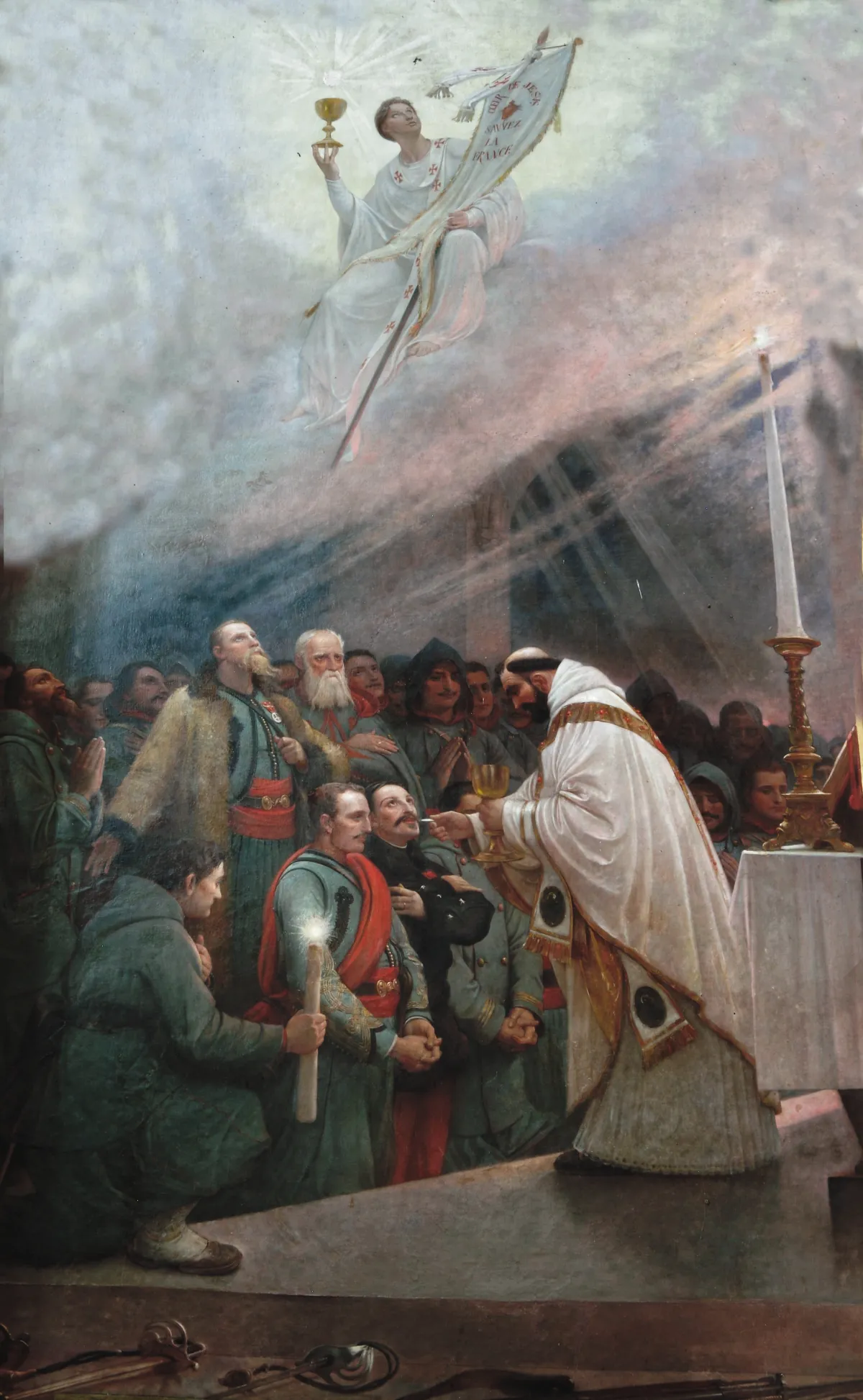
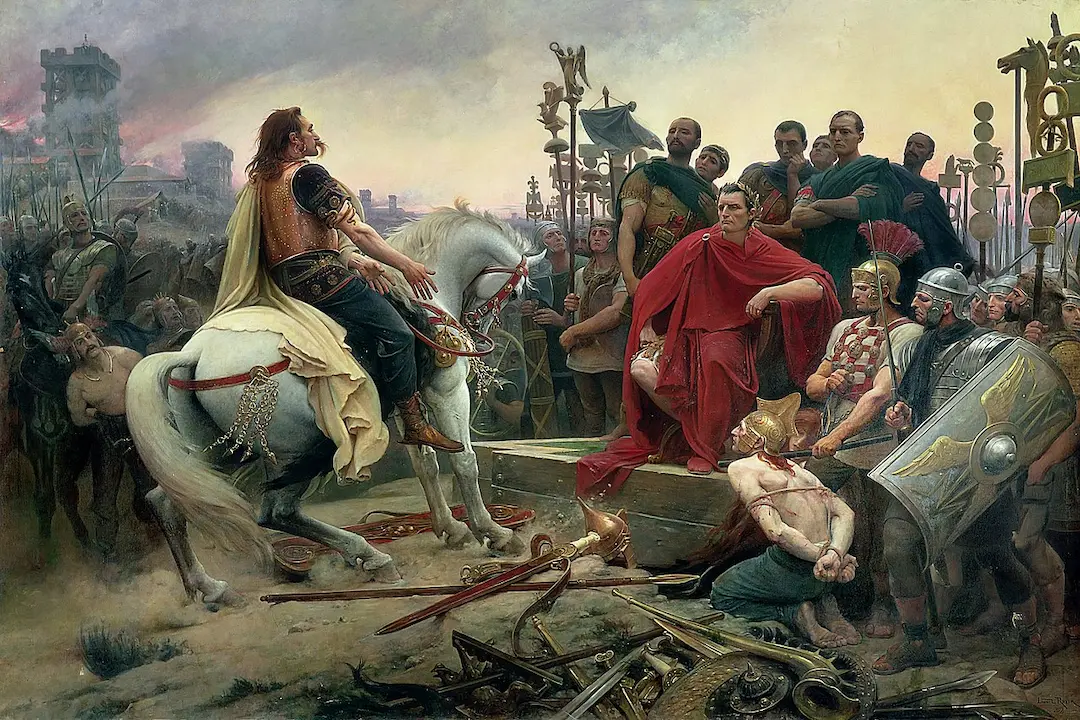
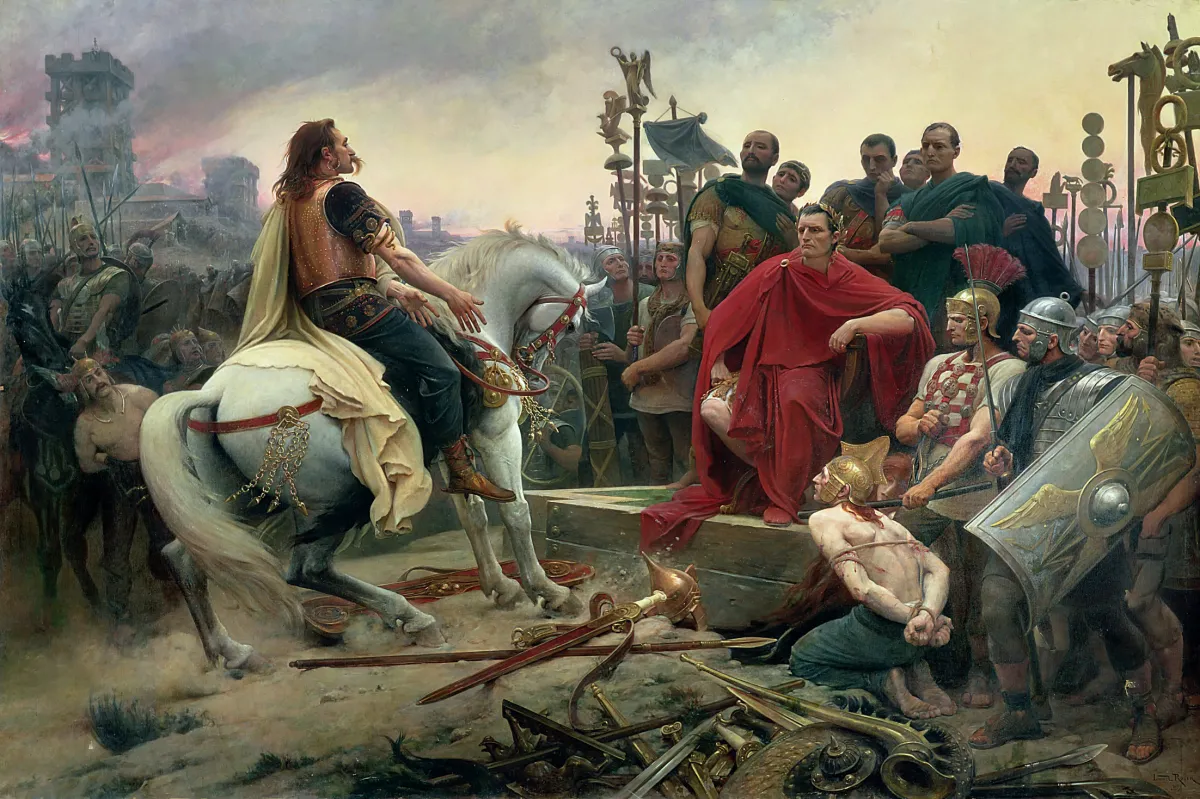
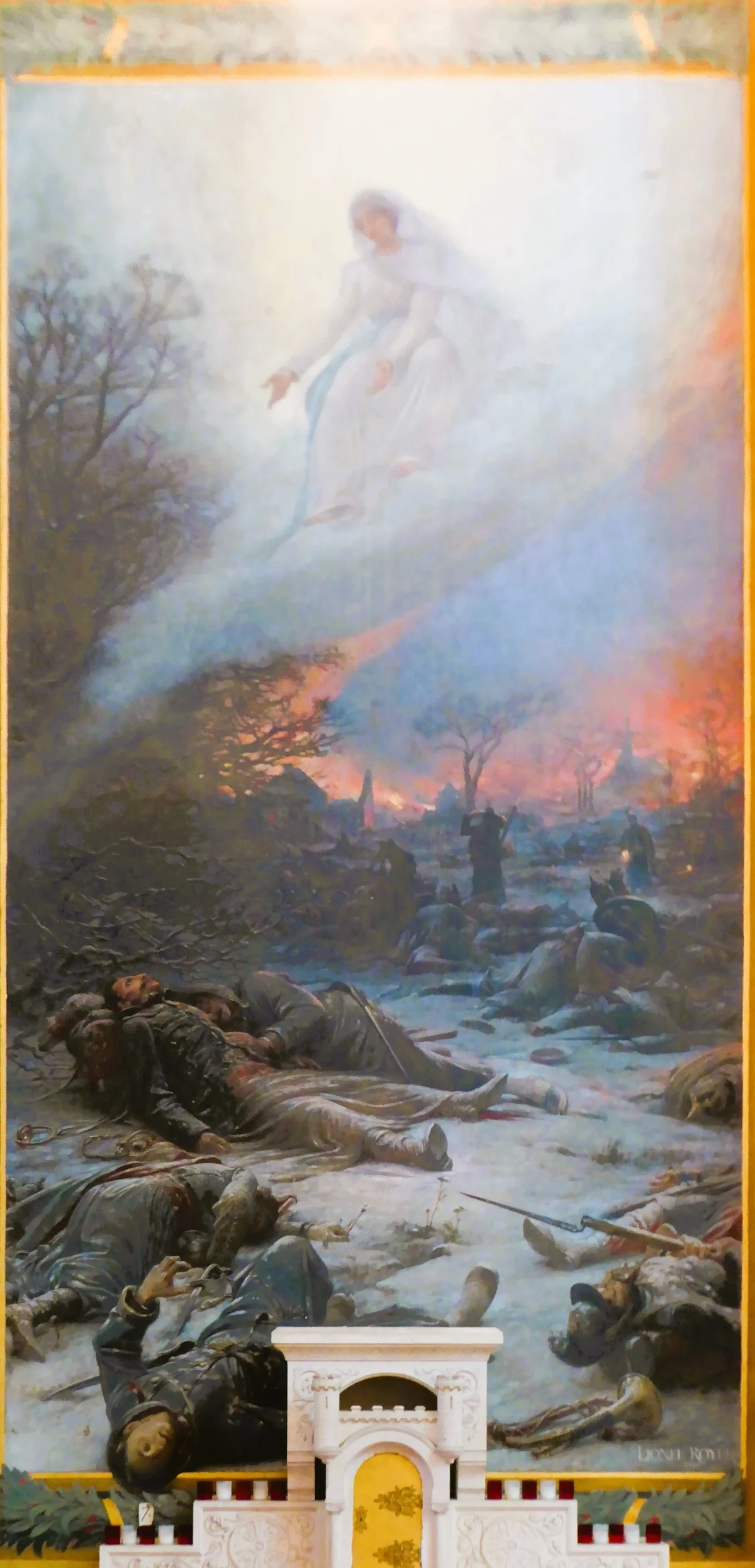
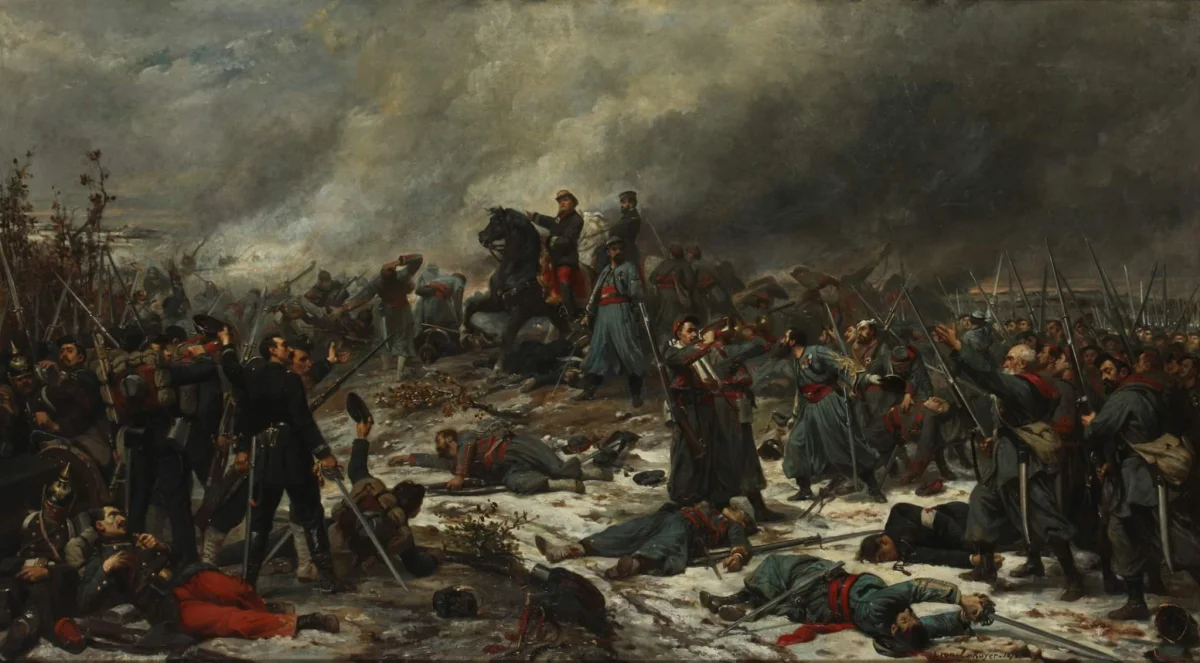
Lionel Noel Royer’s "The Communion of Zouaves" exemplifies the technical brilliance characteristic of Academic Art. Executed as an oil on canvas, the painting demonstrates Royer's expert layering and meticulous attention to detail, bringing the scene to vivid life. The artist’s skill is also evident in related masterpieces like "Vercingetorix throws down his arms at the feet of Julius Caesar, 1899," reinforcing Royer’s status as a master of his craft and a key figure in nineteenth-century fine art.
Within "The Communion of Zouaves," Royer weaves a tapestry of meaning, using every element to tell a poignant story. The painting’s composition and lighting evoke themes of faith, camaraderie, and sacrifice, hallmarks of the Academic Art movement. Enthusiasts searching for a hand-painted oil painting with historical resonance will find this work compelling, as well as other Royer pieces like "Vercingetorix Throwing down His Weapons at the feet of Julius Caesar," both rich in narrative and symbolism.
For art collectors, "The Communion of Zouaves" by Lionel Noel Royer is a rare find, embodying the grandeur of Academic Art and the timeless appeal of a fine art painting for sale. Royer’s evocative oil on canvas works, including "General Gaston de Sonis" and "Le Goût," are highly sought after for their combination of technical excellence and historical significance, making them prized additions to any serious art collection.
When Art Meets History
"The Communion of Zouaves" by Lionel Noel Royer is a striking example of Academic Art, blending historical narrative with artistic mastery. This hand-painted oil painting captures a solemn moment among French soldiers, reflecting Royer’s dedication to depicting significant historical events. Like his other works—such as "Psyche with Putti" and "Promenade"—this painting invites viewers to explore the past through detailed and evocative imagery, making it a compelling addition to the tradition of fine art painting for sale.
Techniques That Speak
Lionel Noel Royer’s "The Communion of Zouaves" showcases the refined techniques emblematic of the Academic Art movement. Executed as an oil on canvas, the painting features meticulous brushwork and a sophisticated palette. Royer’s attention to detail is comparable to his approach in "The Truant" and "Mud Pies," where composition and lighting elevate narrative depth. The artist’s technical prowess ensures each figure is lifelike, offering viewers a truly immersive experience of this historic moment.
Emotions on Display
With "The Communion of Zouaves," Royer masterfully conveys the emotional weight of the scene, using expressive gestures and nuanced facial expressions. This hand-painted oil painting resonates with viewers, much like "A Forester at Home" and other works in the Academic Art style. The painting’s somber mood and spiritual undertones invite reflection, making it a compelling example of how fine art painting for sale can evoke deep and lasting emotional responses in its audience.
Coveted by Collectors
As a standout oil on canvas, "The Communion of Zouaves" by Lionel Noel Royer is highly coveted by collectors of Academic Art. Its historical significance and artistic excellence align it with notable works like "Psyche with Putti" and "Promenade." Collectors seeking a fine art painting for sale appreciate Royer’s ability to blend realism and narrative, making this piece a prized addition to any collection focused on 19th-century European art.
Related Academic Art Hand-Painted Oil Paintings by Other Artists
Other Famous Academic Art Artists:
Frequently Asked Questions About The Communion of Zouaves
What historical context influenced "The Communion of Zouaves"?
"The Communion of Zouaves" was created during a period marked by the Franco-Prussian War and the subsequent rise of nationalism in France. The painting reflects the valor and spiritual commitment of the Zouaves, a regiment known for its distinctive dress and bravery in battle.
Who were the Zouaves and why are they significant in this painting?
The Zouaves were originally a group of infantry regiments in the French Army, known for their unique North African-inspired uniforms and fierce fighting spirit. Their significance in the painting lies in their representation of patriotism and sacrifice during a tumultuous time in French history.
What artistic techniques did Lionel Noel Royer employ in this painting?
Royer utilized a combination of realism and romanticism in "The Communion of Zouaves," employing dramatic lighting and rich colors to evoke emotion. His attention to detail in the uniforms and expressions of the soldiers enhances the painting's narrative depth.
What is the central theme of "The Communion of Zouaves"?
The central theme of the painting is the intersection of faith and duty. It portrays the Zouaves in a moment of spiritual communion before battle, highlighting their devotion and the moral imperative they felt in serving their country.
How does the composition of the painting contribute to its message?
The composition is carefully arranged to draw the viewer's eye towards the central act of communion, with the soldiers forming a semi-circle around the altar. This arrangement emphasizes unity and collective purpose, reinforcing the theme of camaraderie and shared faith.
What symbolism can be found in the elements of the painting?
The elements of the painting, such as the altar, the crucifix, and the soldiers' uniforms, symbolize the intertwining of faith and military service. The act of communion signifies spiritual preparation for the sacrifices they were about to make, embodying the duality of their roles as both soldiers and believers.
In what way does "The Communion of Zouaves" reflect the cultural values of 19th-century France?
The painting reflects the 19th-century French values of nationalism, honor, and religious faith. It encapsulates the era's glorification of military service and the belief in a divine mission, resonating with the public sentiment during a time of conflict.
What impact did "The Communion of Zouaves" have on contemporary audiences?
Upon its release, "The Communion of Zouaves" resonated deeply with contemporary audiences, evoking feelings of pride and nostalgia for the sacrifices made by soldiers. It served as a visual rallying point for nationalistic sentiments during a period of military strife.
How has "The Communion of Zouaves" been interpreted by art historians?
Art historians have interpreted "The Communion of Zouaves" as a significant work that bridges the gap between military art and religious iconography. It is seen as a commentary on the moral complexities faced by soldiers and the societal expectations of heroism and faith.
What legacy has "The Communion of Zouaves" left in the art world?
The legacy of "The Communion of Zouaves" lies in its ability to capture the emotional and spiritual dimensions of military life. It continues to be studied for its artistic merit and historical significance, influencing how subsequent generations view the relationship between art, war, and faith.






















_GFM_Painting_(1).webp)


 100% Hand-Painted: Finished in 3-6 Weeks

.png)















_(1).webp)