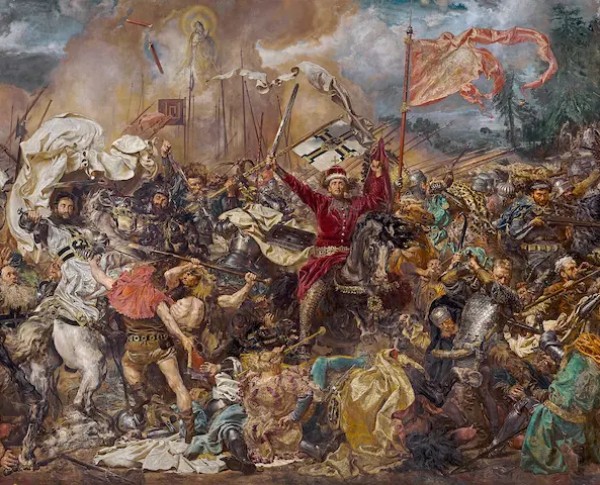
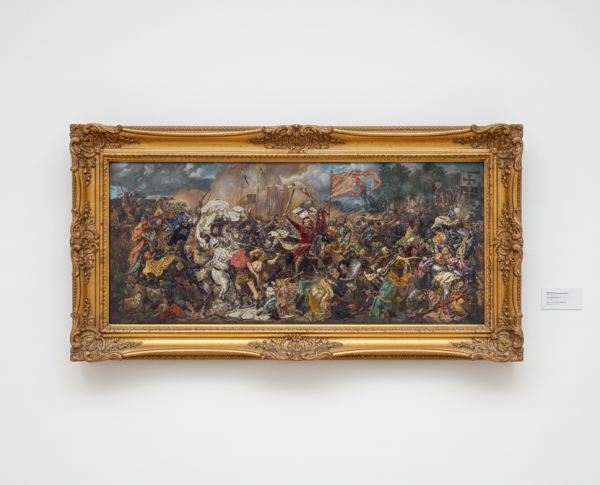
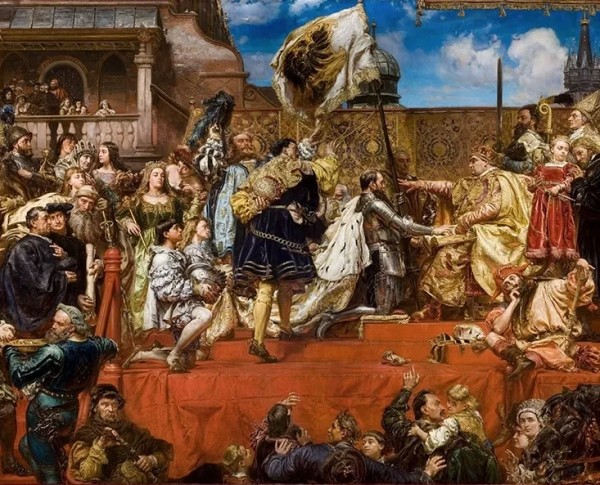
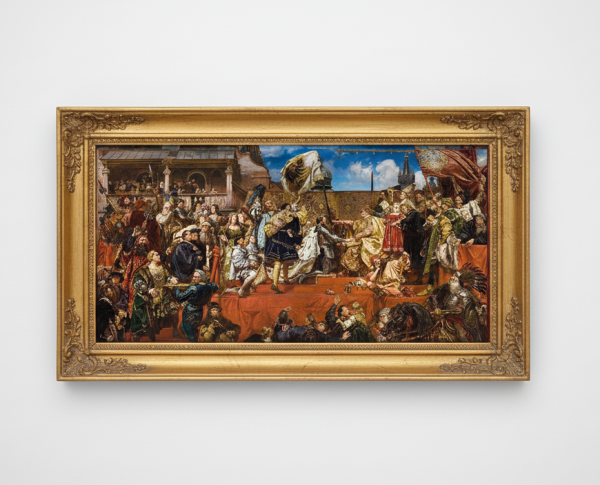
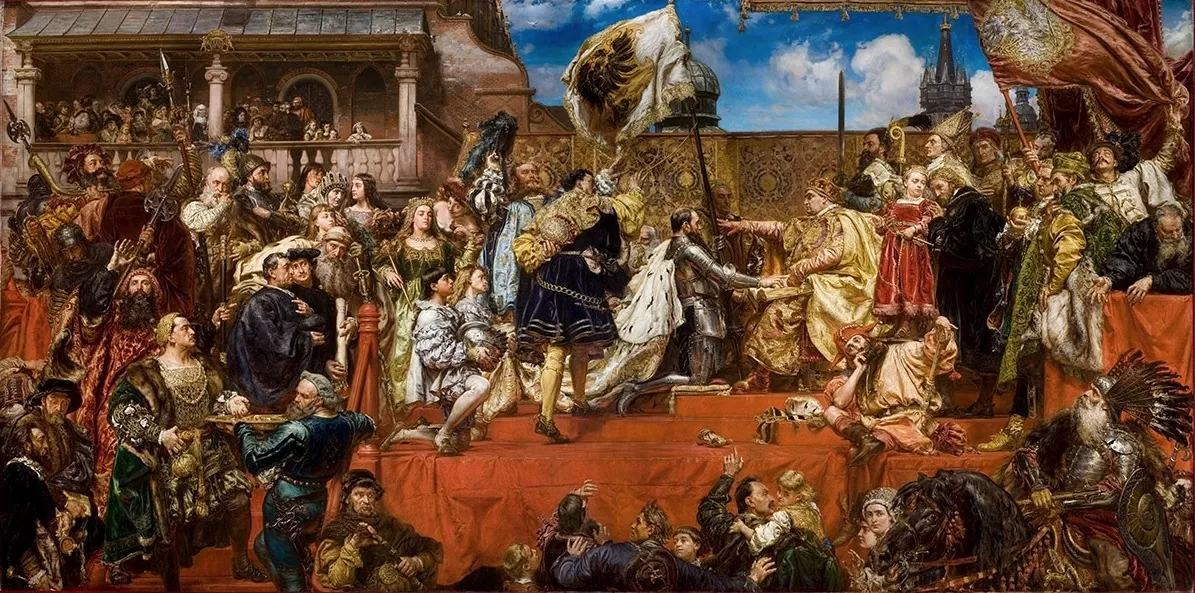
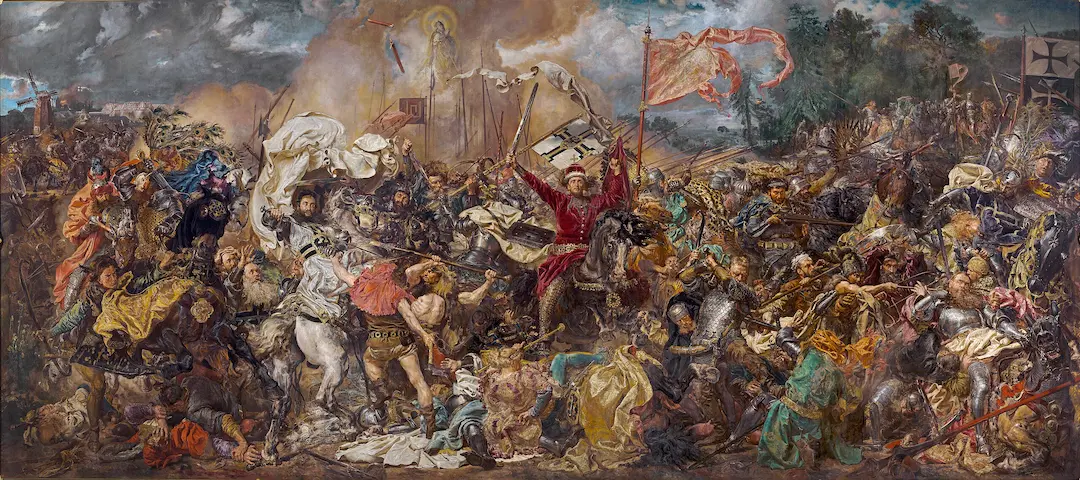
Jan Matejko’s "Prussian Homage" showcases exceptional skill in oil on canvas, characteristic of the artist’s meticulous technique within the Historicism movement. The intricate detailing and vibrant palette breathe life into the historical figures and setting. This masterpiece, like "Battle of Grunwald," demonstrates Matejko’s ability to convey drama and emotion, making his works highly sought-after. Collectors and museums worldwide prize such oil on canvas paintings for their craftsmanship and historical resonance.
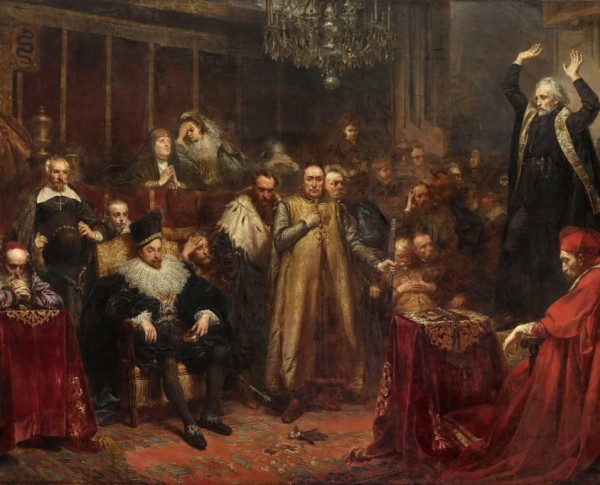
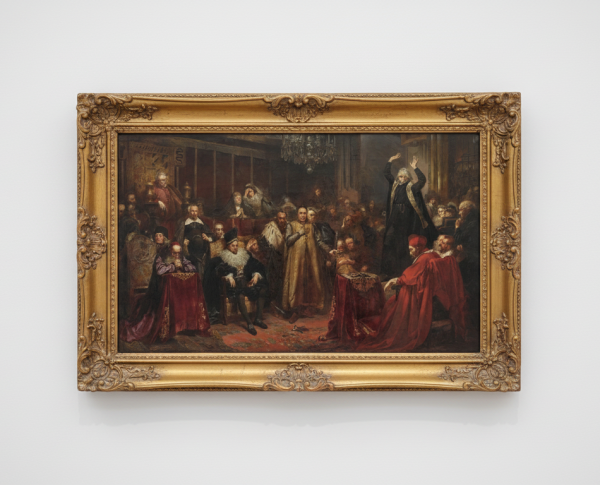
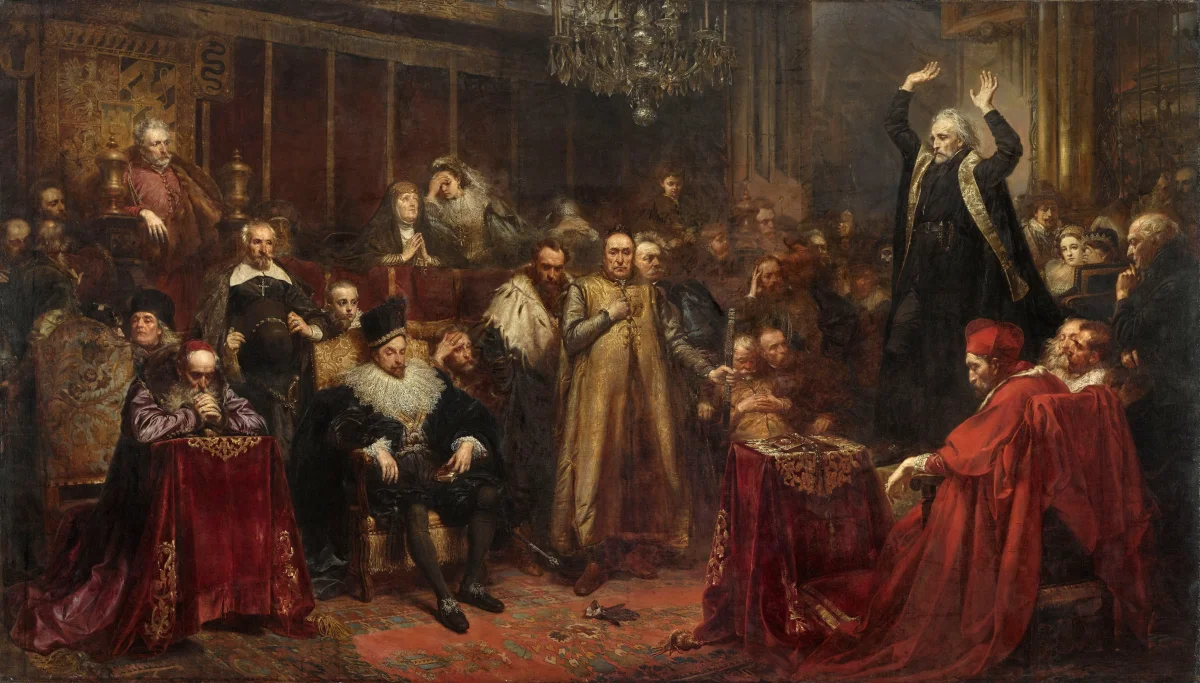
Every element in Matejko’s "Prussian Homage" is laden with meaning, making it more than a mere fine art painting for sale. The artist weaves symbolism throughout the composition, from the postures of the assembled nobles to the subtle gestures of the monarch. This narrative approach, a hallmark of the Historicism movement, is also evident in Matejko’s "Skarga's Sermon." Each character and detail invites viewers to explore the deeper layers of Poland’s storied past.
For art enthusiasts seeking a distinguished addition, "Prussian Homage" by Jan Matejko is a quintessential fine art painting for sale. Its historical significance, exquisite execution, and association with the Historicism movement make it a prized piece. Collectors often pair it with related masterpieces like "Battle of Grunwald" and "Skarga's Sermon" to create a comprehensive collection of Matejko’s iconic works, ensuring the legacy of Polish history endures through art.
When Art Meets History
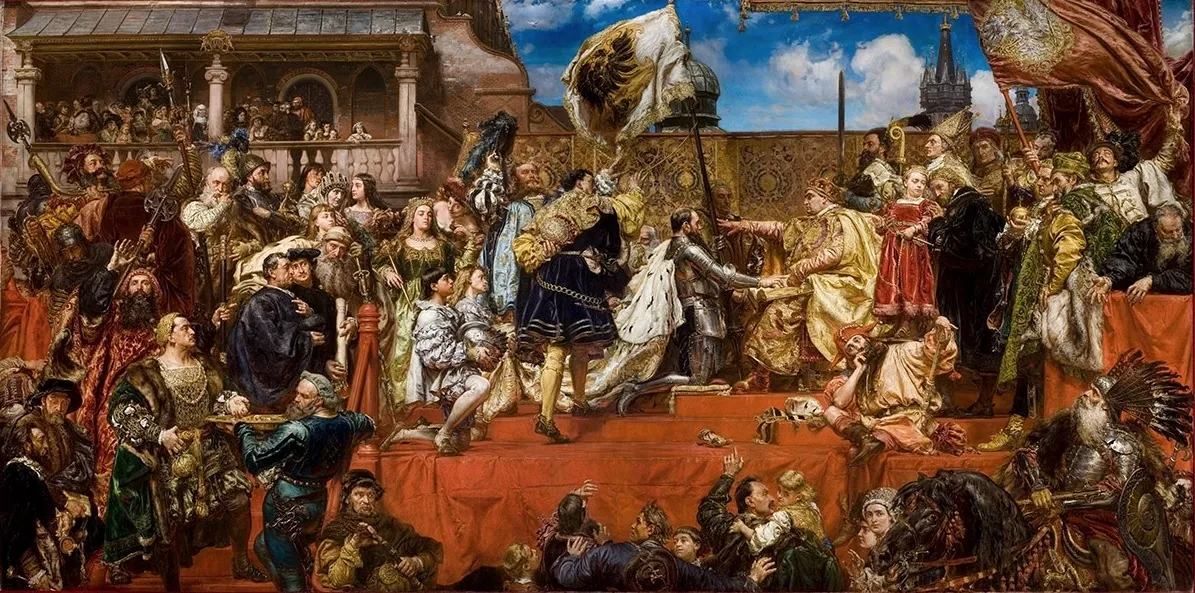
"Prussian Homage" by Jan Matejko stands as a monumental hand-painted oil painting that captures a pivotal moment in Polish history. As a masterpiece of the Historicism movement, this artwork illustrates the 1525 tribute of Albrecht Hohenzollern to King Sigismund I. Matejko, renowned for his historical scenes, weaves intricate narratives that transport viewers into Poland's rich past. This painting, like many of Matejko's works, bridges art and history, offering a visual chronicle for generations to admire.
Techniques That Speak
Jan Matejko’s "Prussian Homage" showcases his mastery of oil on canvas technique, with meticulous attention to detail and vibrant color palettes. His brushwork brings historical figures to life, creating a dynamic composition that immerses the viewer. As a leading artist of the Historicism movement, Matejko employs perspective and lighting to highlight the significance of the event. This oil on canvas masterpiece is a testament to his ability to blend technical skill with storytelling.
Emotions on Display
In "Prussian Homage," Matejko conveys a spectrum of emotions, from pride and solemnity to tension and humility. The expressions and gestures of the figures reveal the gravity of the moment, making this fine art painting for sale a powerful emotional experience. Through the Historicism lens, Matejko invites viewers to reflect on national identity and historical legacy. His work, including this painting, resonates with collectors and art lovers seeking depth and meaning.
Coveted by Collectors
Jan Matejko’s "Prussian Homage" is highly sought after among enthusiasts of hand-painted oil paintings and historical art. As a defining piece of the Historicism movement, its grandeur and historical importance make it a prized acquisition. Collectors value Matejko’s ability to immortalize critical events on canvas, and "Prussian Homage" is often highlighted alongside his other celebrated works. Its enduring appeal ensures it remains a cornerstone of any distinguished art collection.
Frequently Asked Questions About Prussian Homage
What historical event does "Prussian Homage" depict?
"Prussian Homage" illustrates the event of 1525 when the Grand Master of the Teutonic Knights, Albert of Hohenzollern, paid homage to King Sigismund I of Poland, marking the transition of the Teutonic Order into a duchy under Polish sovereignty.
Who is the artist behind "Prussian Homage"?
The painting was created by Jan Matejko, a prominent Polish painter known for his historical and nationalistic themes, which often reflect Poland's complex history.
What artistic style is employed in "Prussian Homage"?
The painting is characterized by the Academic style, which emphasizes realism, meticulous detail, and a strong narrative quality, typical of Matejko's works.
What is the significance of the figures depicted in the painting?
The figures in "Prussian Homage" represent key historical figures, including King Sigismund I and Albert of Hohenzollern, symbolizing the political dynamics and power shifts in 16th-century Europe.
How does "Prussian Homage" reflect Polish national identity?
The painting serves as a reminder of Poland's historical struggles and triumphs, reinforcing a sense of national pride and identity during a time when Poland faced partitions and foreign domination.
What symbolic elements are present in "Prussian Homage"?
Symbolic elements include the presence of the Polish crown, which signifies sovereignty, and the kneeling figure of Albert, representing submission and the acknowledgment of Polish authority.
When was "Prussian Homage" painted?
"Prussian Homage" was completed in 1878, during a period when Poland was partitioned and its national identity was a critical concern for artists and intellectuals.
What techniques did Jan Matejko use in "Prussian Homage"?
Matejko employed techniques such as chiaroscuro to create depth, along with vibrant colors and intricate details to enhance the dramatic effect and historical authenticity of the scene.
Where can "Prussian Homage" be viewed today?
The painting is housed in the Warsaw National Museum, where it continues to be a significant piece of Polish cultural heritage and history.
What impact did "Prussian Homage" have on Polish art and culture?
The painting had a profound impact on Polish art by inspiring a wave of historical painting that emphasized national themes, influencing future generations of artists to explore Poland's rich history.






















_GFM_Painting_(1).webp)


 100% Hand-Painted: Finished in 3-6 Weeks

.png)















_(1).webp)