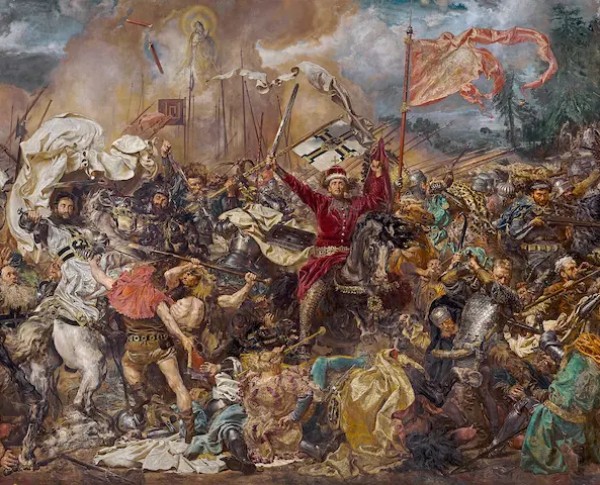
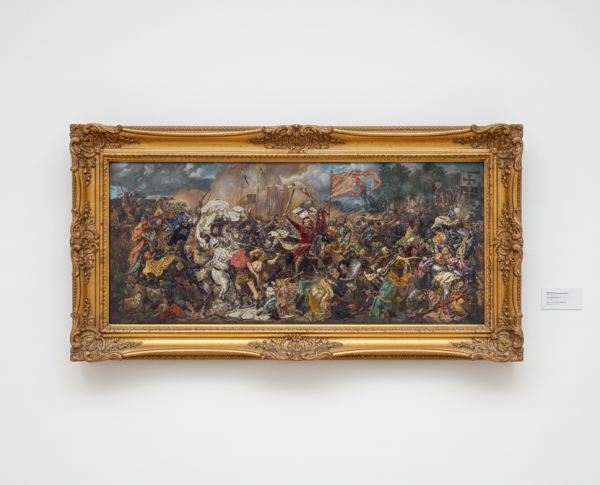
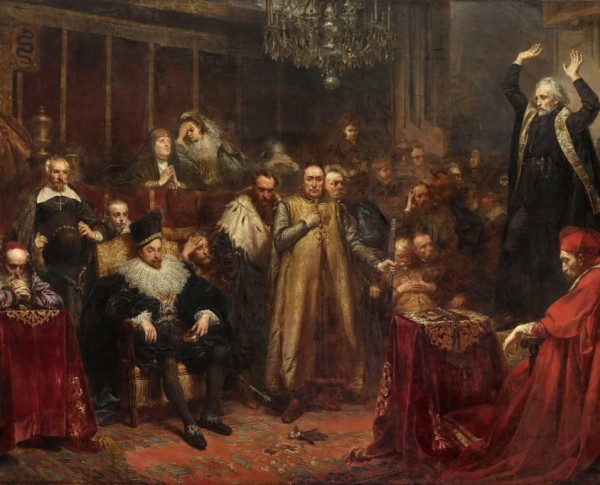
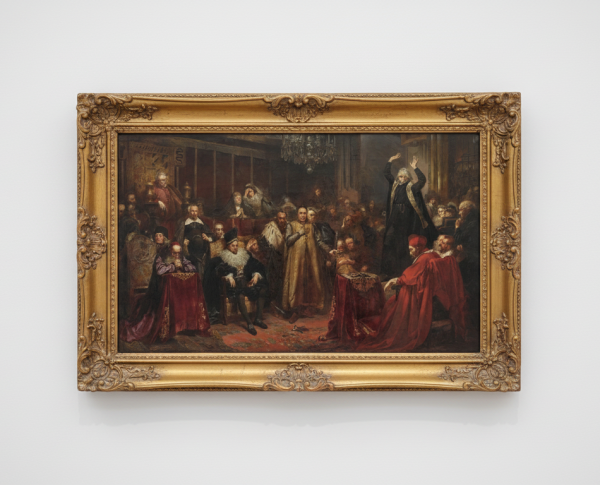
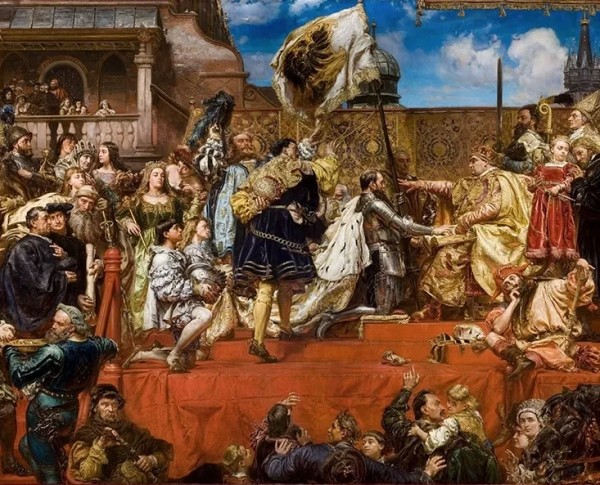
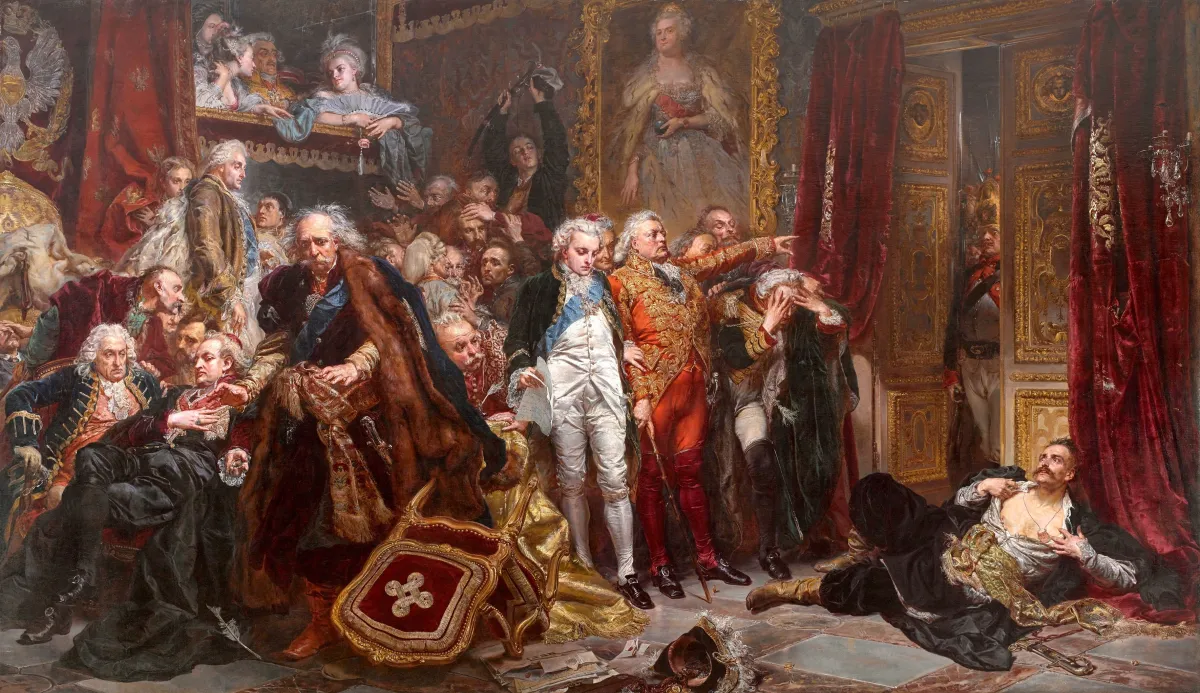
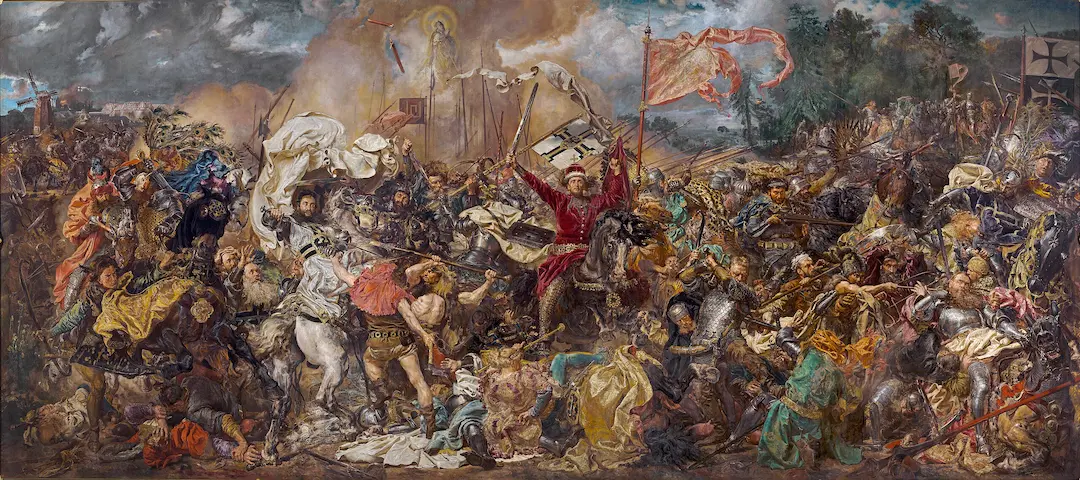
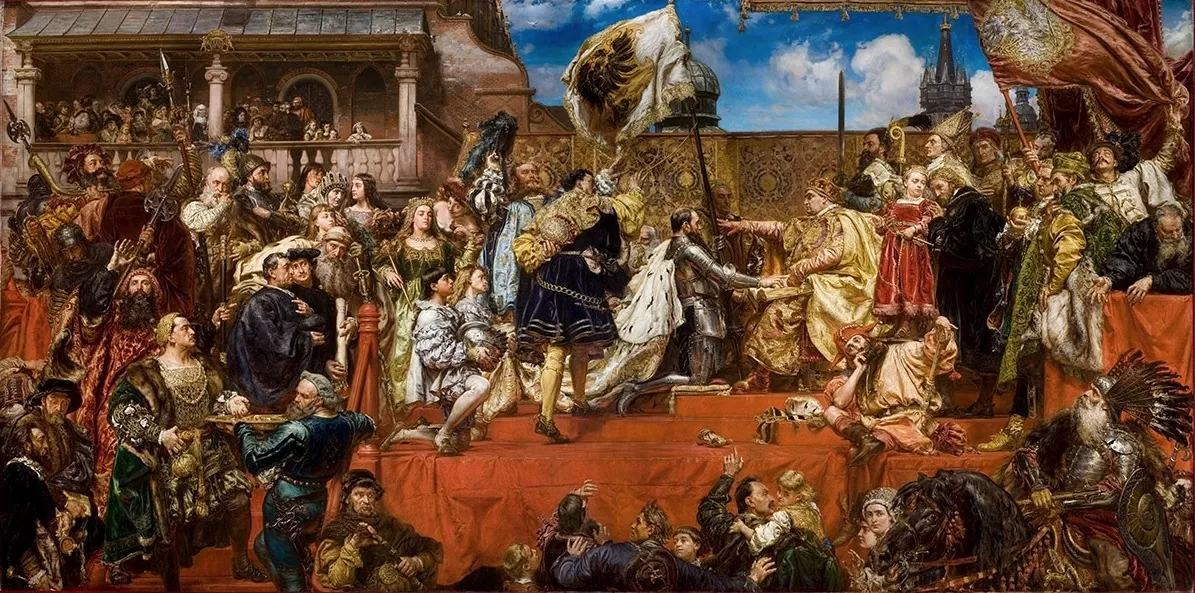
Jan Matejko’s "Rejtan" showcases his exceptional skill in oil on canvas, bringing historical figures and emotions vividly to life. The intricate details, from the expressions of the characters to the sumptuous textiles, exemplify the Historicism movement’s emphasis on realism and grandeur. Collectors and art enthusiasts seeking similar masterpieces may also appreciate Matejko’s other historic scenes, such as "Prussian Homage" and "Battle of Grunwald," which highlight his technical prowess.
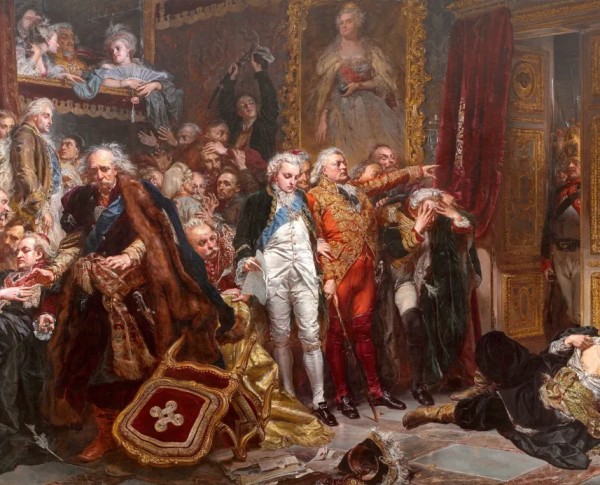
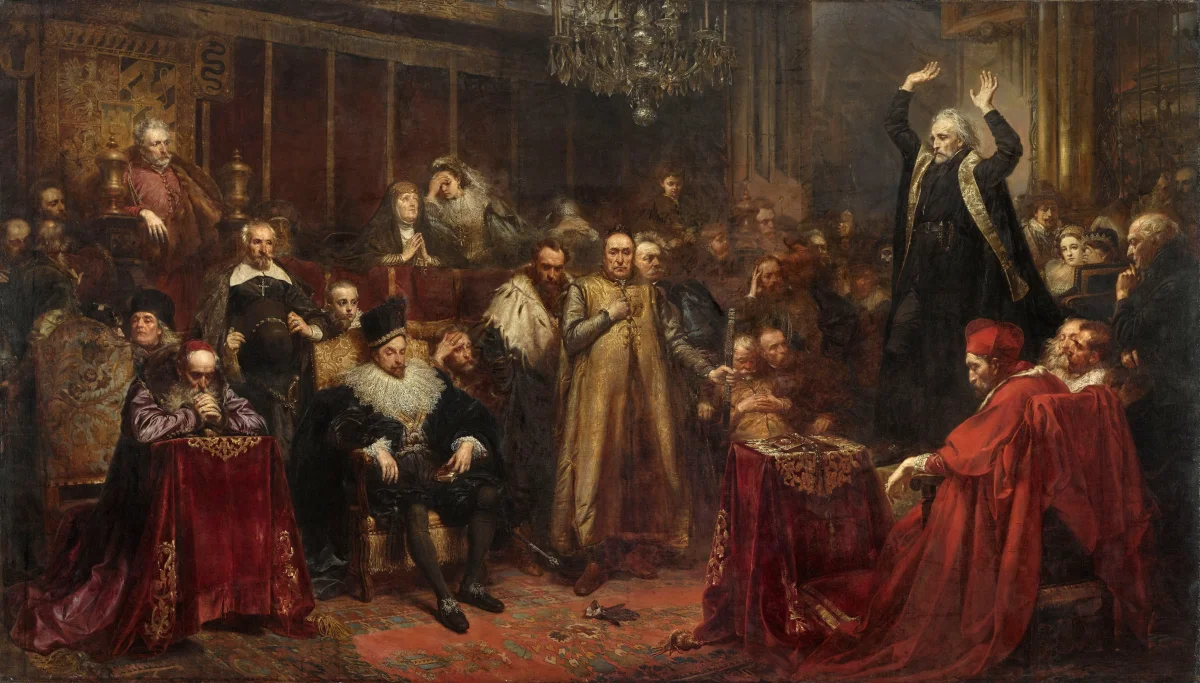
Every element in Matejko’s "Rejtan" serves a purpose, weaving a complex narrative through symbolism and composition. The painting immortalizes the sorrow and outrage of Rejtan, symbolizing national resistance within the Historicism movement. As a fine art painting for sale, "Rejtan" appeals to collectors who value works rich in meaning. For those interested in exploring further, complementary pieces like "Skarga's Sermon" and "Prussian Homage" delve into other critical moments in Polish history.
Owning a hand-painted oil painting like "Rejtan" by Jan Matejko is a testament to one’s appreciation for fine art and history. This Historicism masterpiece not only enhances any collection but also serves as a conversation piece, reflecting the depth of Polish cultural heritage. Collectors seeking to expand their galleries may find "Battle of Grunwald" and "Prussian Homage" equally captivating, each offering a unique glimpse into Matejko’s artistic legacy and the era he so masterfully depicted.
When Art Meets History
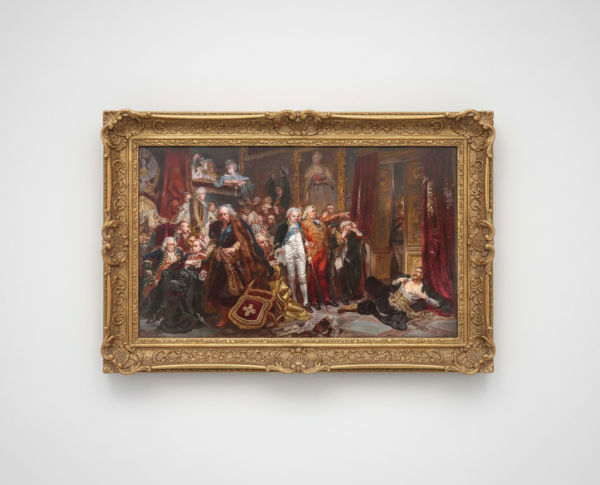
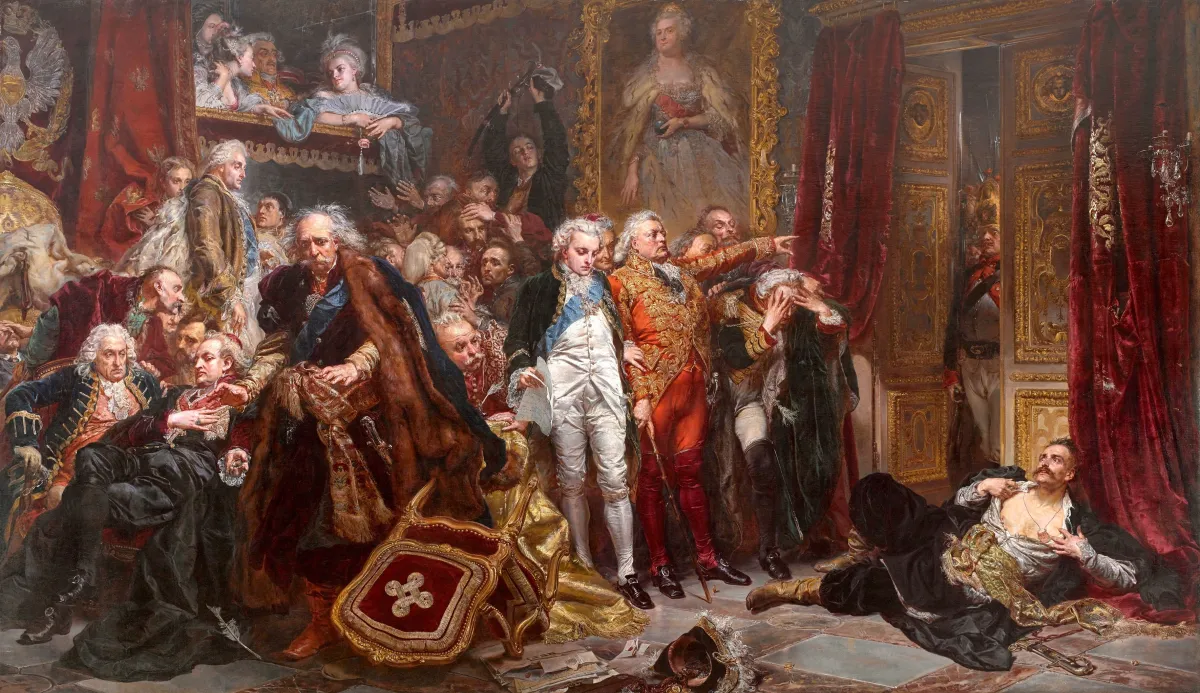
"Rejtan" by Jan Matejko stands as a testament to the Historicism movement, capturing a pivotal moment in Polish history with striking realism. This hand-painted oil painting immortalizes Tadeusz Rejtan's dramatic protest at the Partition Sejm of 1773. Matejko, renowned for works like "The Battle of Grunwald," masterfully blends narrative and artistry, making "Rejtan" a significant cultural artifact. Collectors and art enthusiasts alike admire such detailed representations of national heritage in fine art.
Techniques That Speak
Jan Matejko's "Rejtan" showcases exceptional oil on canvas technique, a hallmark of the Historicism movement. The artist employs meticulous brushwork and rich color palettes to bring historical figures and settings to life. Matejko's attention to detail and dramatic lighting emphasize the emotional gravity of the event. His skills in oil on canvas are evident not only in "Rejtan" but also in his other masterpieces, ensuring his legacy within the world of historical fine art.
Emotions on Display
The emotional intensity in "Rejtan" by Jan Matejko is palpable, with each character's expression contributing to the narrative. This fine art painting for sale captures the despair and determination of Tadeusz Rejtan as he protests against the partition of Poland. Matejko, a leader in the Historicism movement, invites viewers to empathize with the scene, much like in his other evocative works, making "Rejtan" a profound exploration of collective memory and national identity.
Coveted by Collectors
"Rejtan" by Jan Matejko remains highly sought after among collectors of historical artworks. This hand-painted oil painting exemplifies the finest aspects of the Historicism movement, making it a prized addition to any collection. Matejko’s ability to capture both historical accuracy and emotional depth rivals his other famous works. Art lovers cherish "Rejtan" not only for its artistic merit but also for its representation of national spirit, making it a distinguished fine art painting for sale.
Frequently Asked Questions About Rejtan
What is the historical context of the painting "Rejtan"?
"Rejtan," painted by Jan Matejko in 1866, depicts the dramatic moment during the partition of Poland in the late 18th century. The painting captures the emotional turmoil and resistance of Polish nobility against the loss of their homeland.
Who is the central figure in "Rejtan" and what does he represent?
The central figure in "Rejtan" is Tadeusz Rejtan, a Polish nobleman. He symbolizes the struggle and despair of the Polish people during a time of national crisis, embodying the fight against foreign domination and the loss of sovereignty.
What artistic techniques did Jan Matejko use in "Rejtan"?
Jan Matejko employed a dramatic use of color and light to enhance the emotional intensity of the scene. His meticulous attention to detail in the costumes and expressions of the figures adds depth to the historical narrative being portrayed.
How does "Rejtan" reflect the Romantic movement in art?
"Rejtan" reflects the Romantic movement through its emphasis on emotion, individualism, and national identity. The painting evokes a sense of tragedy and heroism, characteristic of Romantic art, as it highlights the personal sacrifice for the greater good of the nation.
What symbolic elements are present in "Rejtan"?
The painting is rich in symbolism, including the fallen documents representing the loss of Polish sovereignty and the figures in the background who appear indifferent to Rejtan's plight, symbolizing betrayal and apathy among the nobility.
What was the public reception of "Rejtan" upon its unveiling?
Upon its unveiling, "Rejtan" received significant acclaim for its emotional depth and historical significance. It resonated with the Polish public, who were experiencing a national revival and sought to reclaim their identity through art.
How does "Rejtan" compare to other works by Jan Matejko?
What role does the setting play in "Rejtan"?
The setting of "Rejtan" is crucial as it takes place in the Polish Sejm (parliament), symbolizing the political arena where the fate of the nation was being decided. The grandeur of the architecture contrasts with the despair of the central figure, enhancing the painting's dramatic impact.
What influence did "Rejtan" have on Polish national identity?
"Rejtan" has had a lasting impact on Polish national identity, serving as a visual representation of resistance and patriotism. It has inspired generations to reflect on the importance of sovereignty and the sacrifices made for national unity.
What can viewers learn from "Rejtan" today?
Viewers can learn about the complexities of national identity, the importance of historical memory, and the emotional weight of political decisions. "Rejtan" serves as a reminder of the struggles faced by nations in their pursuit of freedom and self-determination.






















_GFM_Painting_(1).webp)


 100% Hand-Painted: Finished in 3-6 Weeks

.png)















_(1).webp)