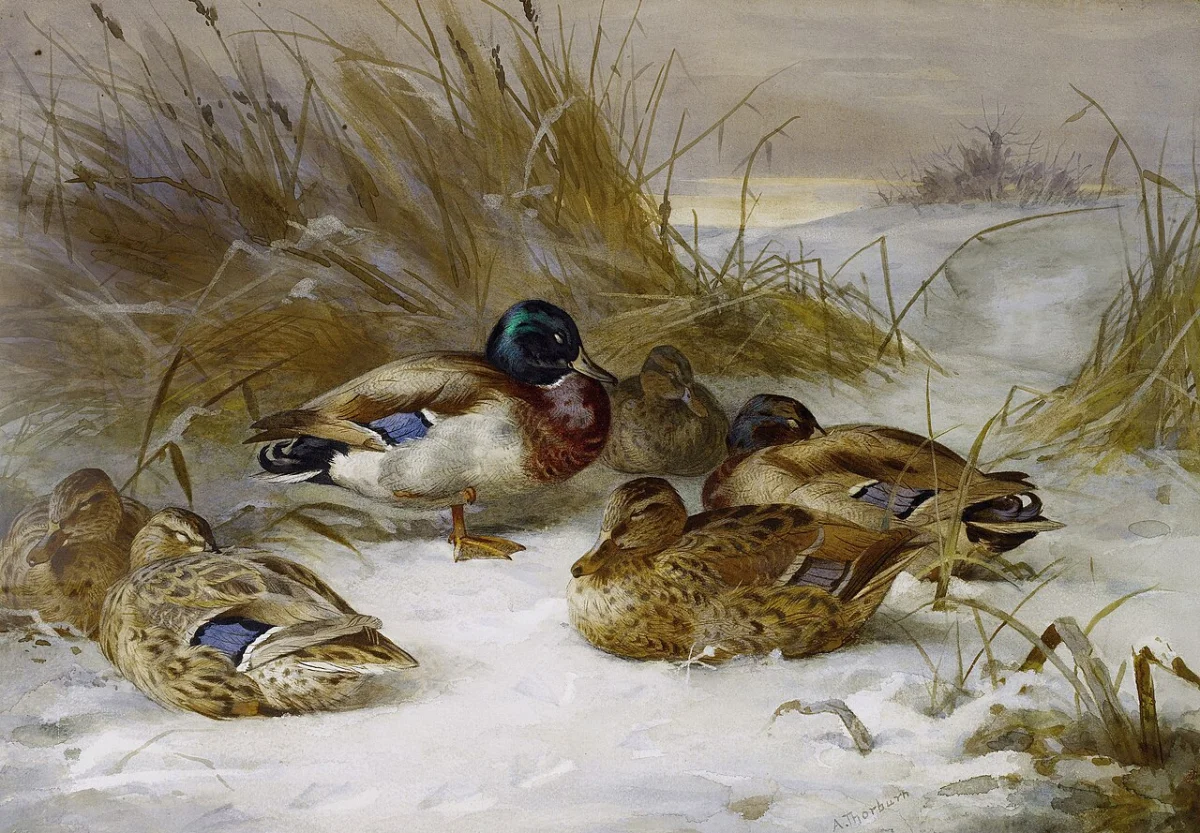
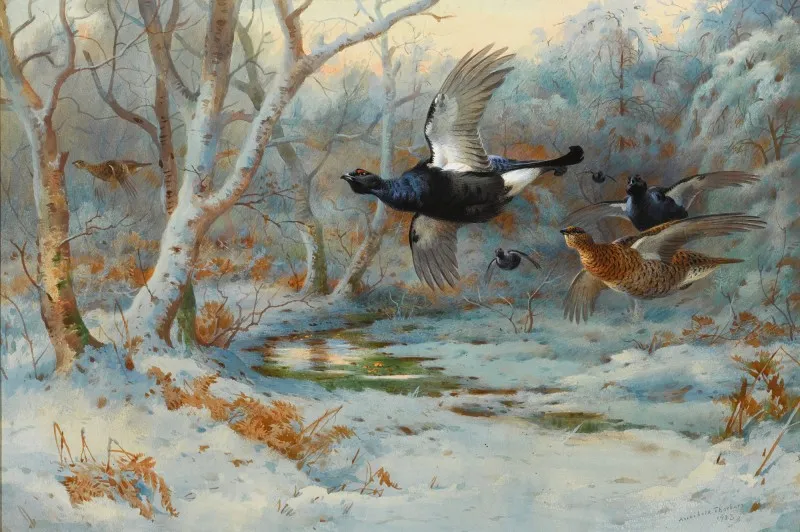
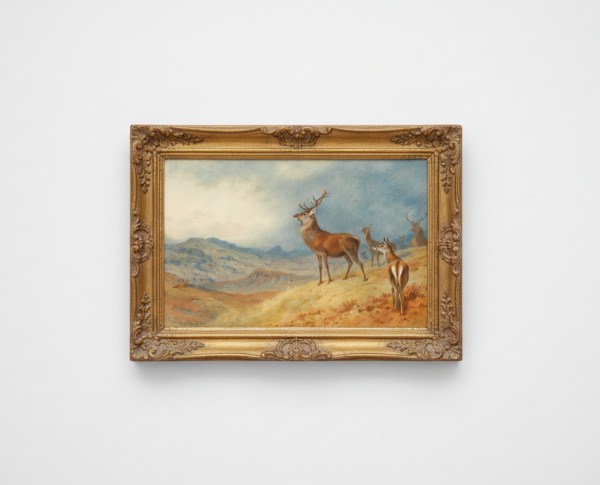
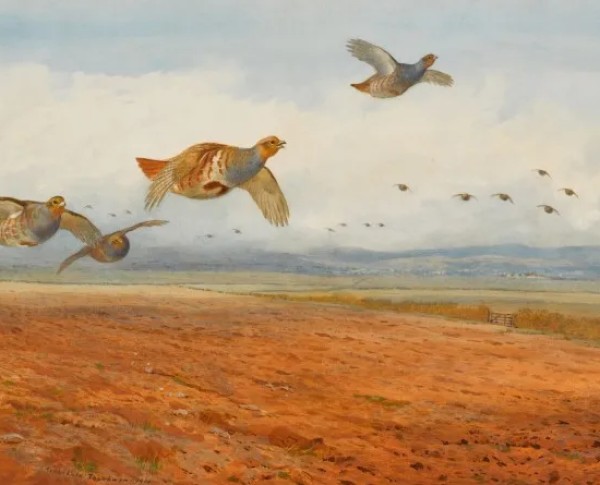
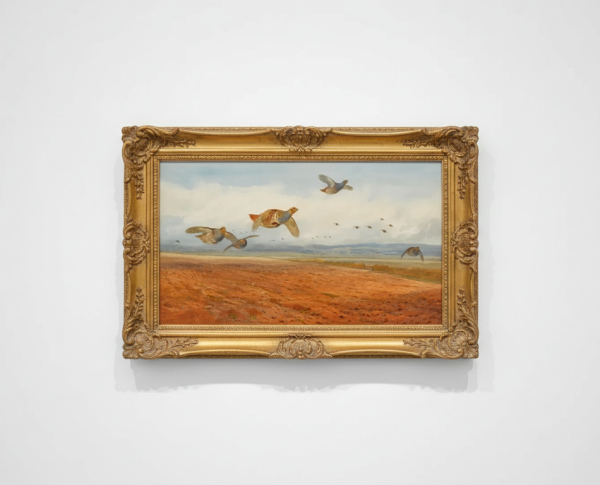
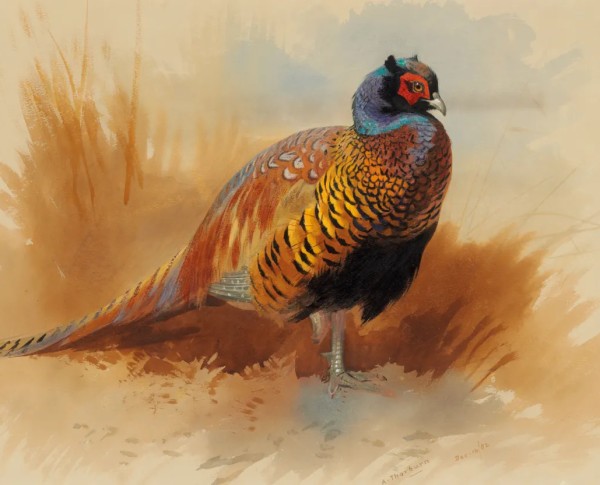
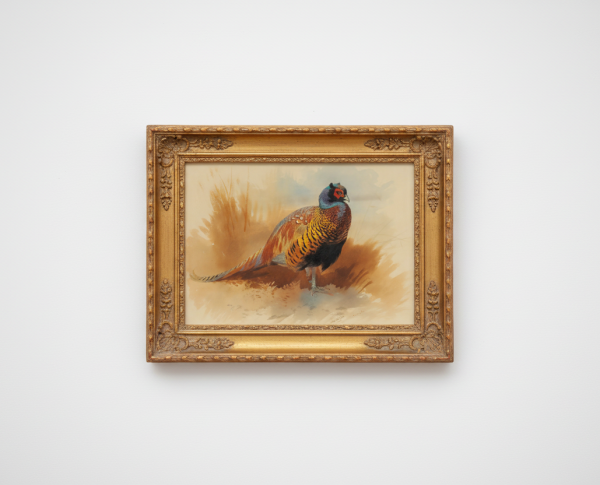
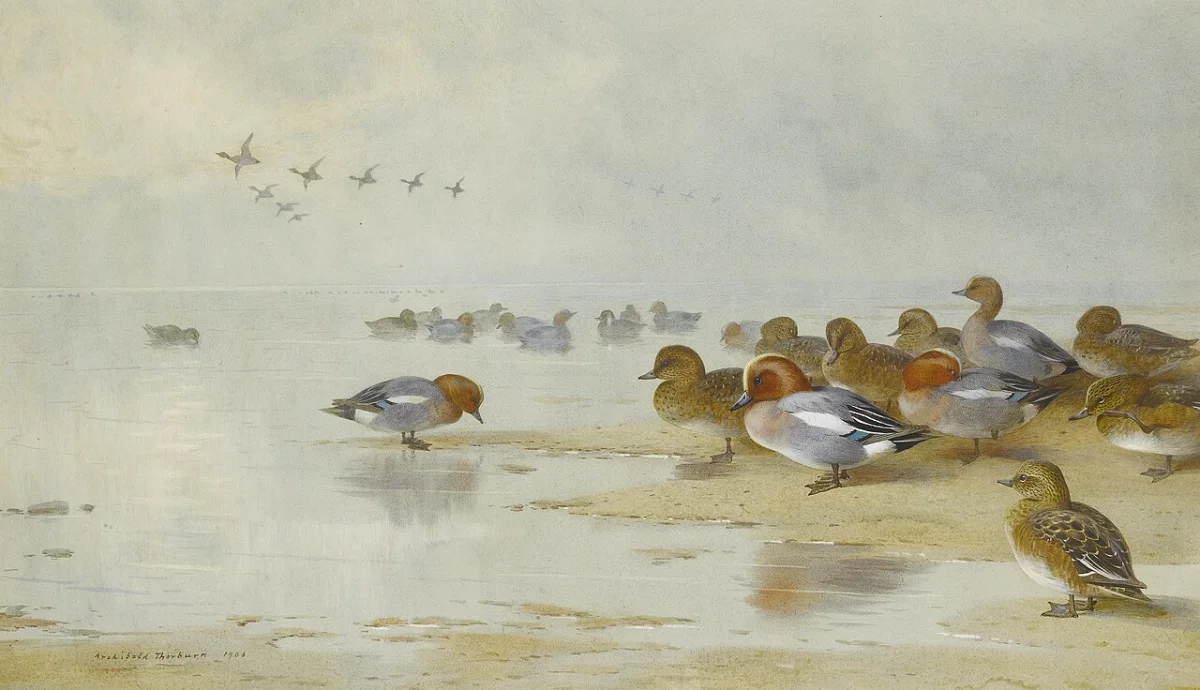
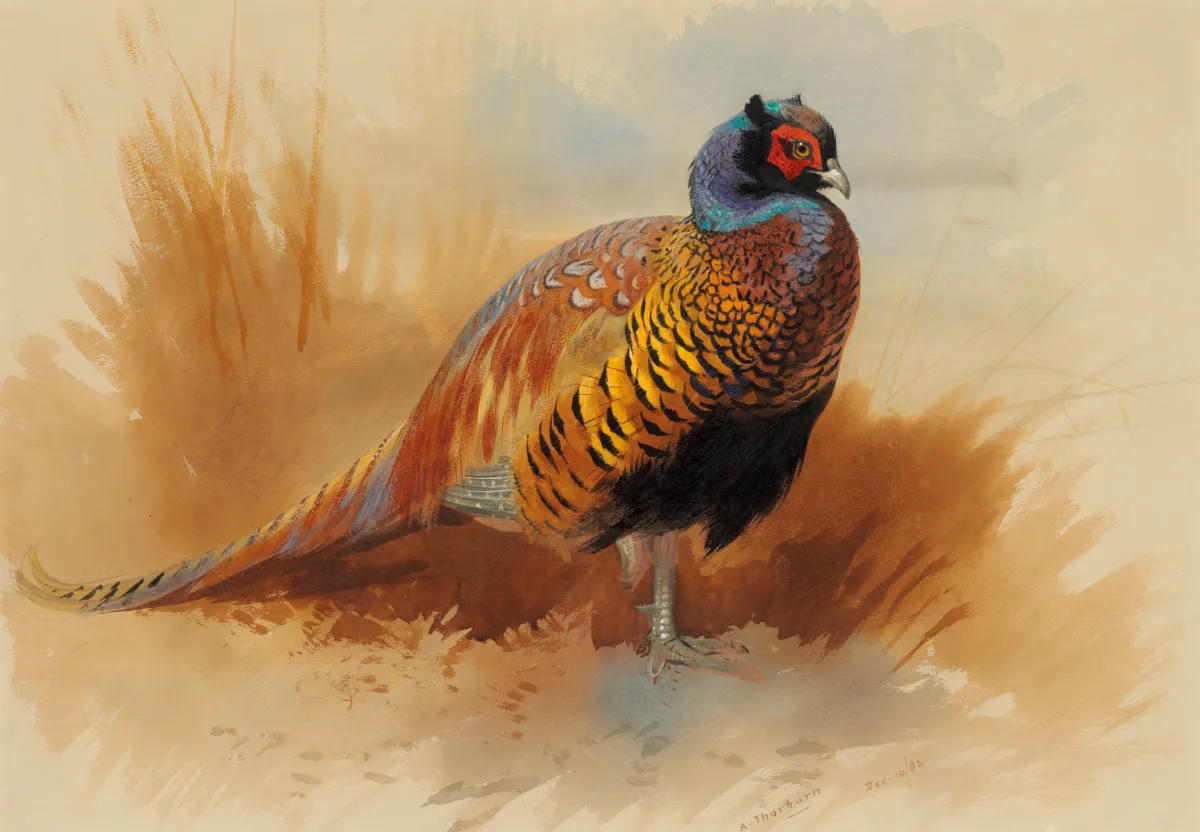
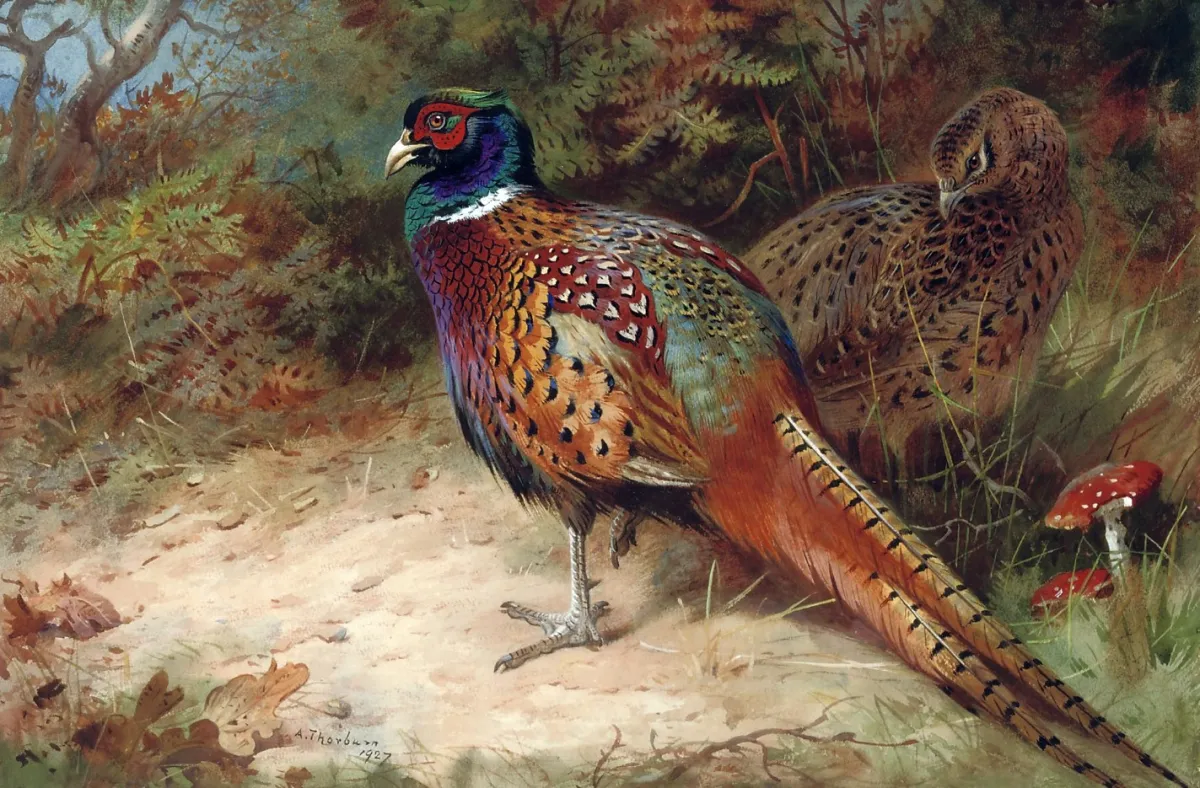
Archibald Thorburn’s expertise is evident in every detail of "Wigeon and Teal by the water's edge." The meticulous brushwork and nuanced color palette highlight his mastery with oil on canvas, bringing the vibrant scene to life. As an exemplary work within the Naturalism movement, this painting stands alongside other fine pieces like "Pheasants." and "Cock and hen pheasant in the undergrowth," all of which showcase Thorburn’s devotion to realism and artistry.
In "Wigeon and Teal by the water's edge.", Thorburn weaves a narrative of tranquility and coexistence in nature. The careful arrangement of birds and the lush landscape evoke themes of harmony, central to the Naturalism movement. This fine art painting for sale not only appeals to bird enthusiasts but also resonates with collectors of nature-inspired art, much like the related works "Pheasants." and "Cock and hen pheasant in the undergrowth".
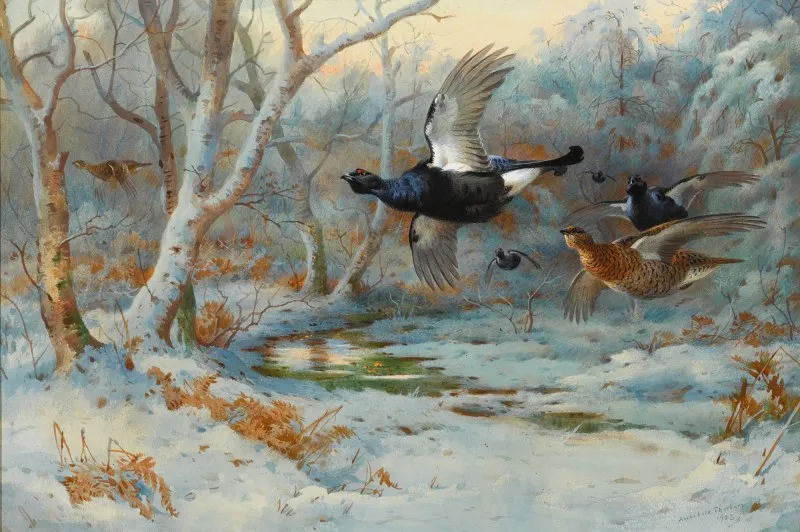
Owning "Wigeon and Teal by the water's edge." by Archibald Thorburn is a privilege for any art lover seeking a hand-painted oil painting rooted in the Naturalism movement. Its enduring appeal is complemented by related products such as "Winter Woodcock" and "Black Grouse In Flight In A Winter Woodland," making it a prized addition to any fine art collection and a lasting investment in the world of wildlife artistry.
When Art Meets History
"Wigeon and Teal by the water's edge" by Archibald Thorburn is a stunning hand-painted oil painting that captures a moment in the rich tradition of the Naturalism movement. Created during a period when artists sought to depict nature faithfully, Thorburn’s masterpiece stands as a testament to historical artistry. This painting, like other works by Thorburn, showcases his dedication to wildlife, echoing the essence of Naturalism and the artist’s renowned attention to authentic detail.
Techniques That Speak
Archibald Thorburn’s use of oil on canvas in "Wigeon and Teal by the water's edge" demonstrates his mastery in rendering lifelike birds and tranquil landscapes. The brushwork and layering techniques highlight the subtle interplay of light, water, and feather textures. Within the Naturalism movement, Thorburn’s paintings are celebrated for their technical prowess, setting a benchmark for realistic wildlife art. This approach connects his works to other fine examples of oil on canvas from the era.
Emotions on Display
The serene setting of "Wigeon and Teal by the water's edge" evokes a sense of peace and admiration for nature’s beauty, a hallmark of the Naturalism movement. Thorburn’s ability to capture the gentle interaction between birds and their environment instills both wonder and tranquility. This emotional resonance is part of what makes this fine art painting for sale so desirable, drawing viewers into the calm world Thorburn meticulously created, much like his other celebrated wildlife scenes.
Coveted by Collectors
As a fine art painting for sale, "Wigeon and Teal by the water's edge" holds significant appeal for collectors of Naturalism. Archibald Thorburn’s reputation for lifelike wildlife compositions ensures enduring interest in his works. The painting’s exquisite detail and historical relevance make it a prized addition to any collection. Collectors often seek out Thorburn’s pieces for their authenticity and artistic value, as seen in this and related paintings from his prolific career.
Frequently Asked Questions About Wigeon and Teal by the water's edge.
Who is the artist of "Wigeon and Teal by the water's edge"?
The painting is created by Archibald Thorburn, a renowned Scottish artist known for his detailed and vibrant depictions of wildlife.
What is the historical significance of Archibald Thorburn's work?
Archibald Thorburn's work is significant for its contribution to wildlife art in the early 20th century, showcasing the beauty of nature and raising awareness about conservation.
What species are depicted in "Wigeon and Teal by the water's edge"?
The painting features Wigeon and Teal, two species of ducks that are often found in wetland habitats, highlighting Thorburn's focus on avian subjects.
What artistic techniques did Archibald Thorburn employ in this painting?
Thorburn utilized detailed brushwork and a keen eye for color to capture the textures of the birds' feathers and the surrounding environment, creating a lifelike representation.
What symbolism can be found in "Wigeon and Teal by the water's edge"?
The painting symbolizes harmony between wildlife and their natural habitat, reflecting the importance of preserving such environments for future generations.
In what period was "Wigeon and Teal by the water's edge" created?
This artwork was created during the early 20th century, a time when naturalism in art was gaining prominence, particularly in wildlife and landscape painting.
How does "Wigeon and Teal by the water's edge" reflect the themes of nature in Thorburn's work?
The painting exemplifies Thorburn's deep appreciation for nature, showcasing the delicate balance of ecosystems and the beauty of avian life in their natural settings.
What influences can be seen in Thorburn's artistic style in this painting?
Thorburn's style is influenced by the Pre-Raphaelite movement, emphasizing detail, vibrant colors, and a romanticized view of nature, which is evident in this work.
What role did Archibald Thorburn play in the conservation movement?
Thorburn was an advocate for wildlife conservation, and his art played a crucial role in raising public awareness about the importance of protecting natural habitats.
How does this painting compare to other works by Archibald Thorburn?
This painting is representative of Thorburn's overall oeuvre, which often features detailed depictions of birds and their environments, yet it stands out for its serene composition and vibrant colors.






















_GFM_Painting_(1).webp)


 100% Hand-Painted: Finished in 3-6 Weeks

.png)















_(1).webp)