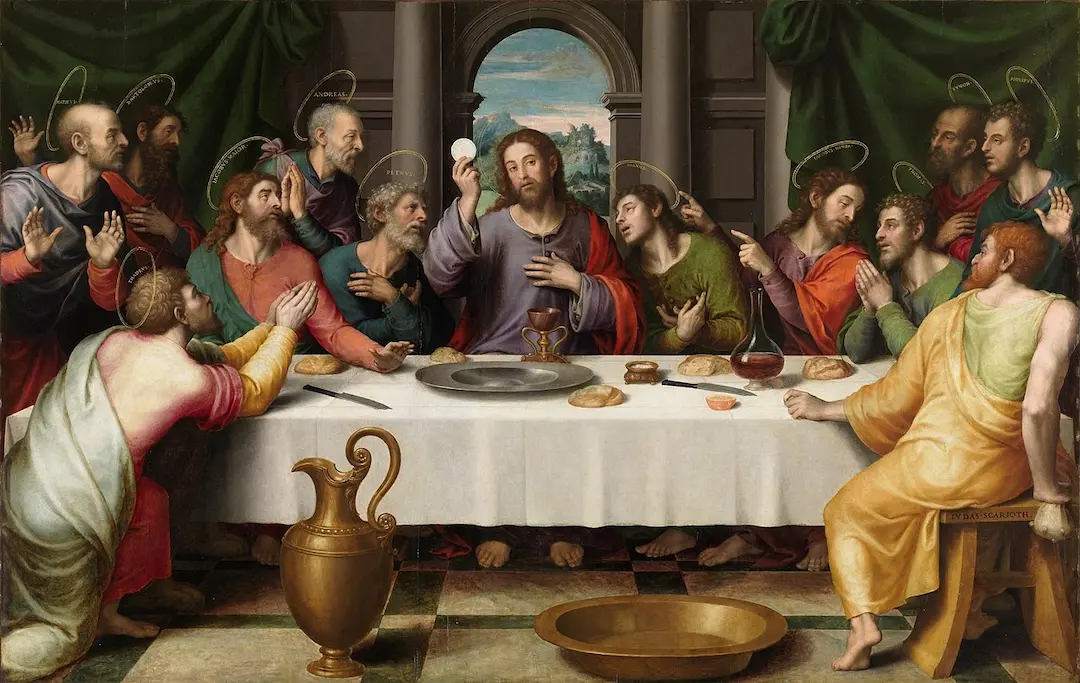
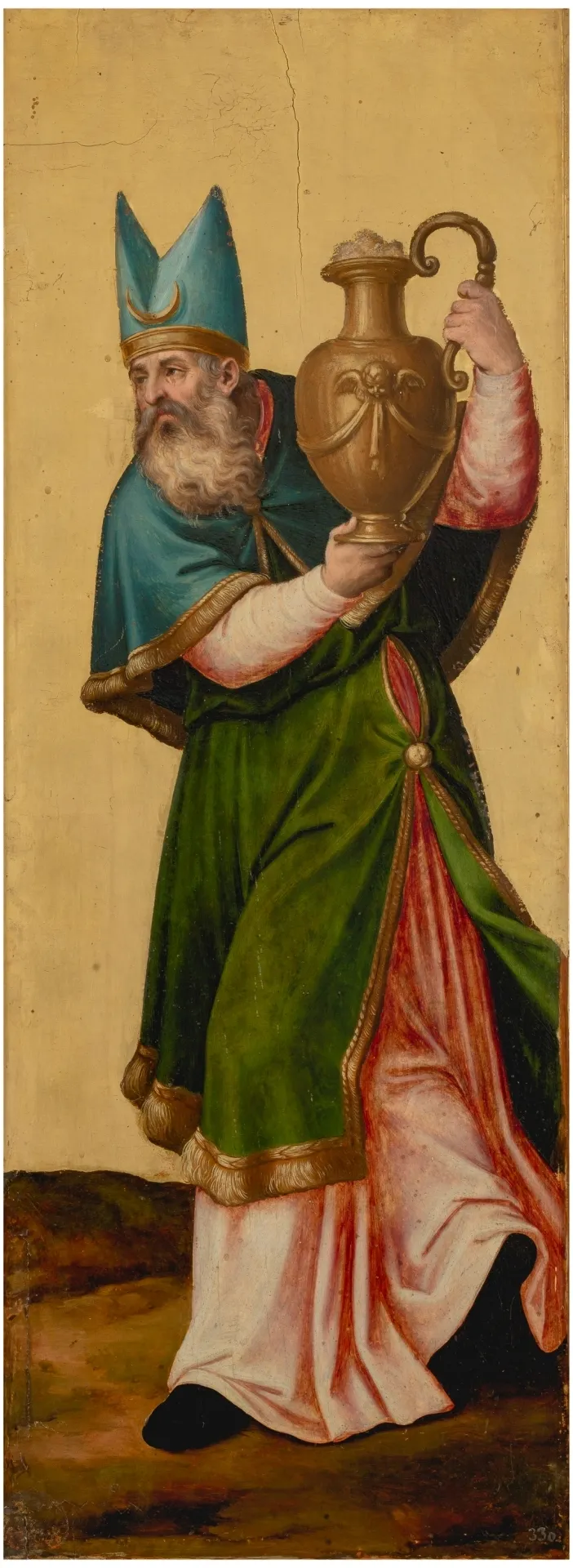
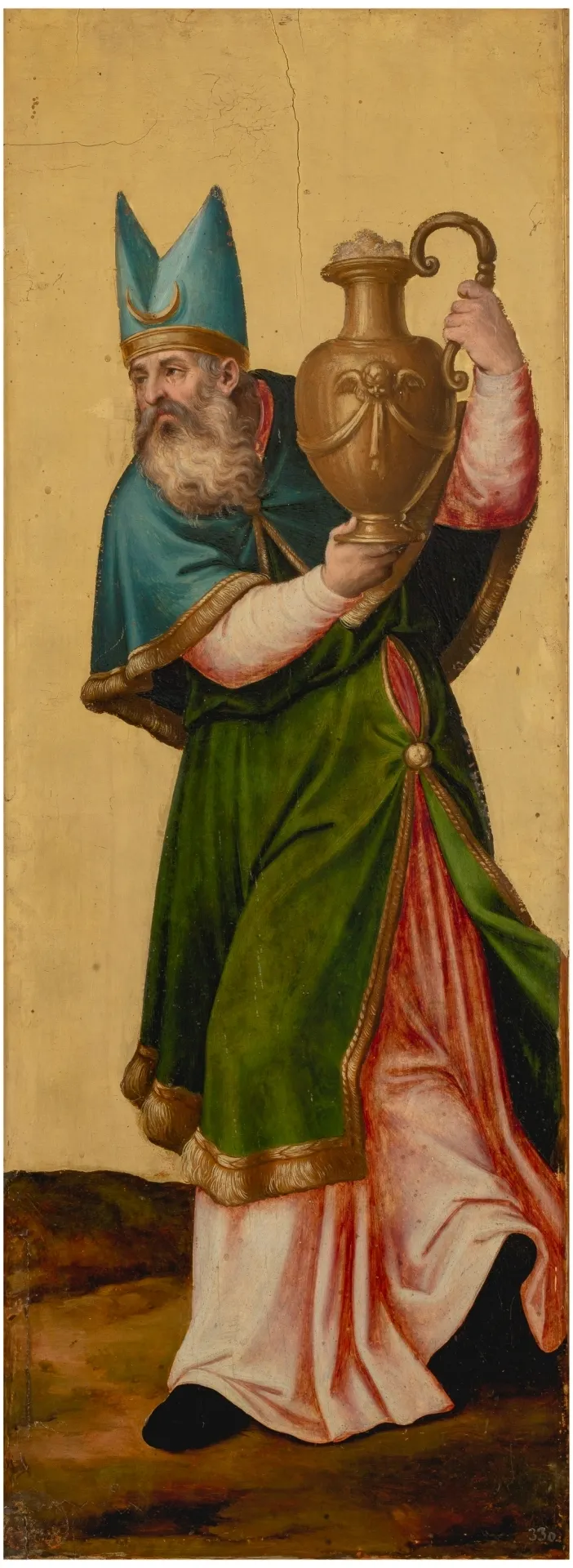
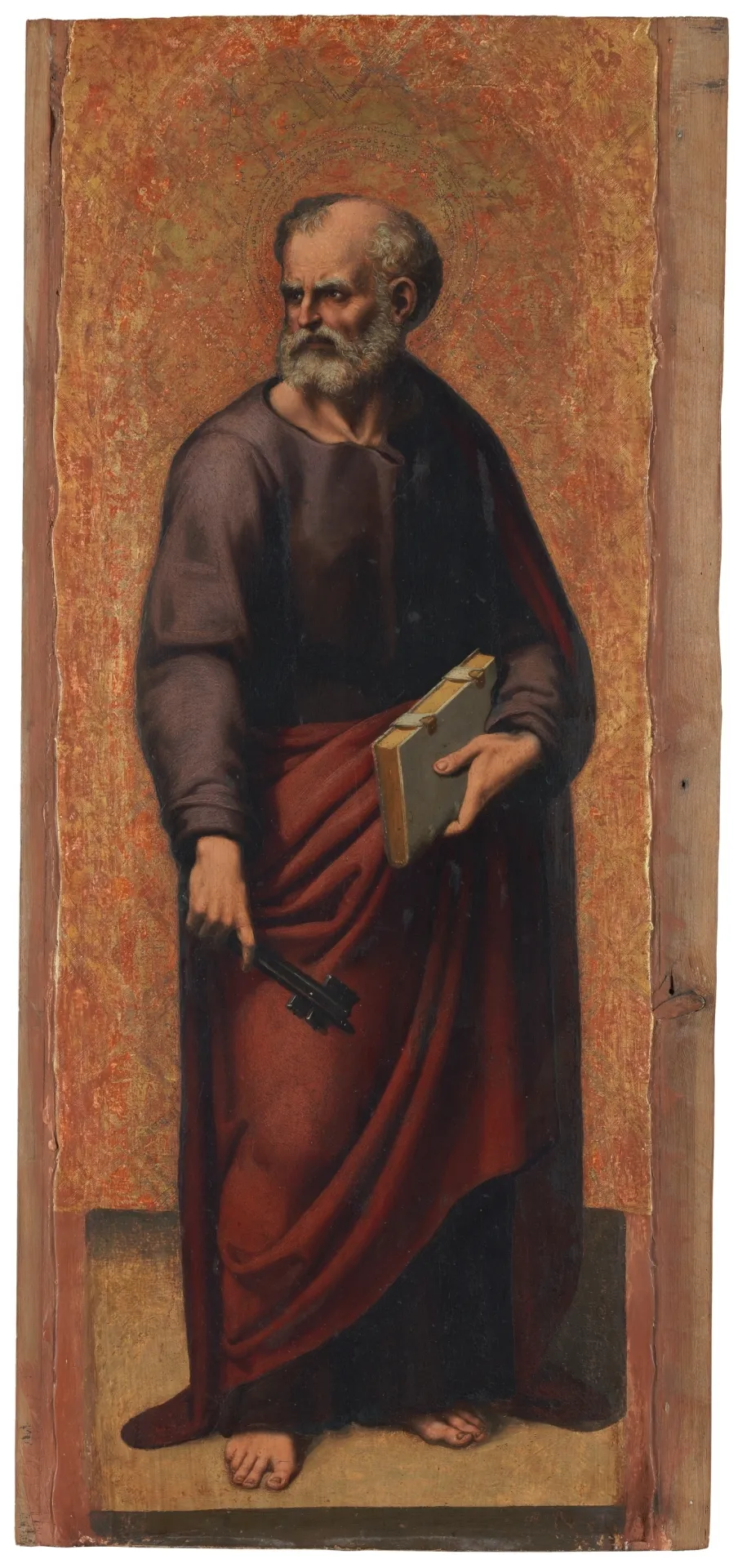
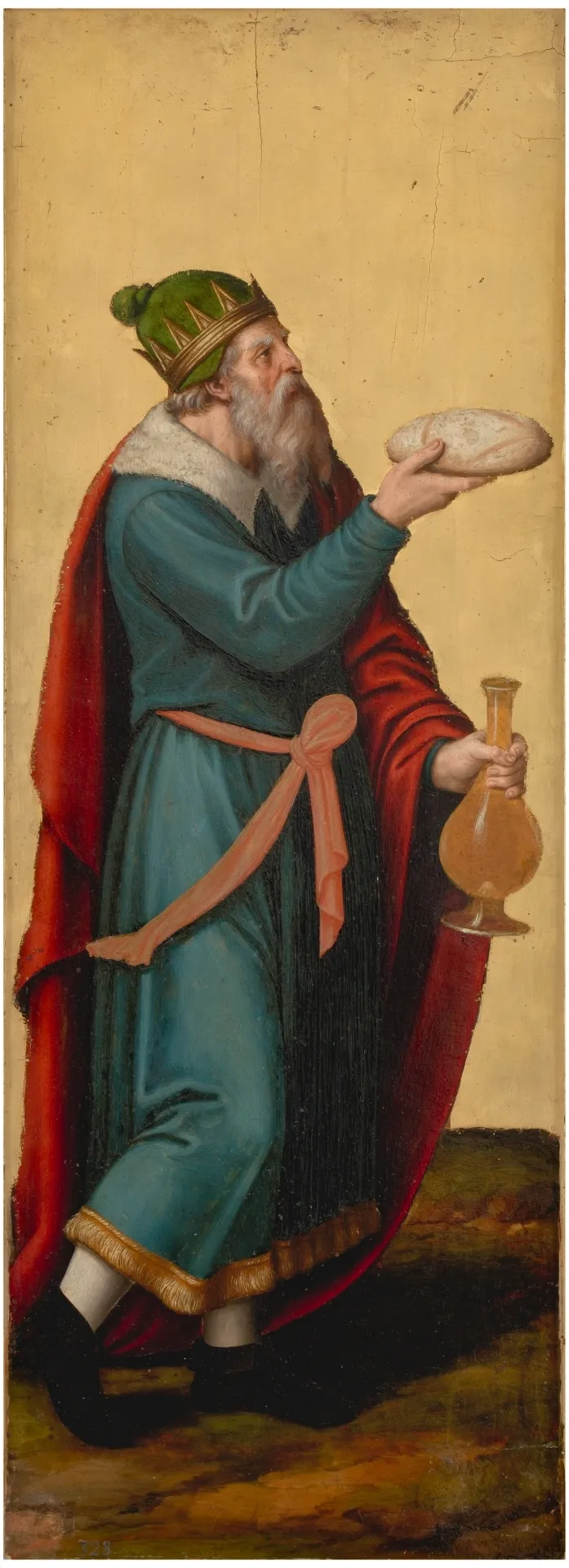
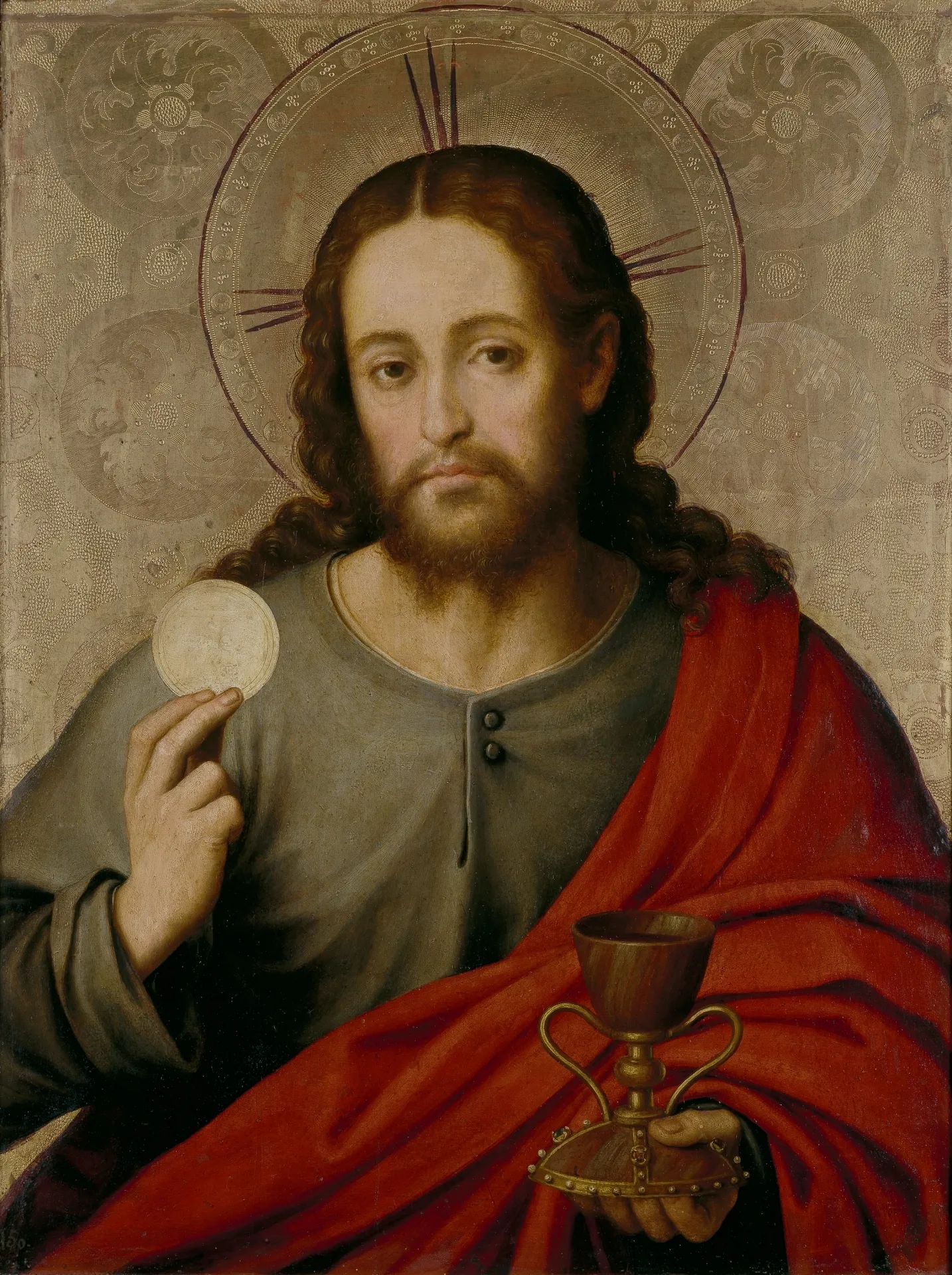
"El Sumo Sacerdote Aaron" by Vicente Juan Juan de Juanes, also known as Juan de Juanes or Masip (Macip), stands as a testament to the Spanish Renaissance. This hand-painted oil painting exemplifies the rich religious tradition of its era. The work is revered not just for its spiritual subject, but for its enduring legacy among collectors and art historians. Related products such as "Melquisedec, Rey De Salem" and "San Pedro" further showcase the artist’s lasting influence.
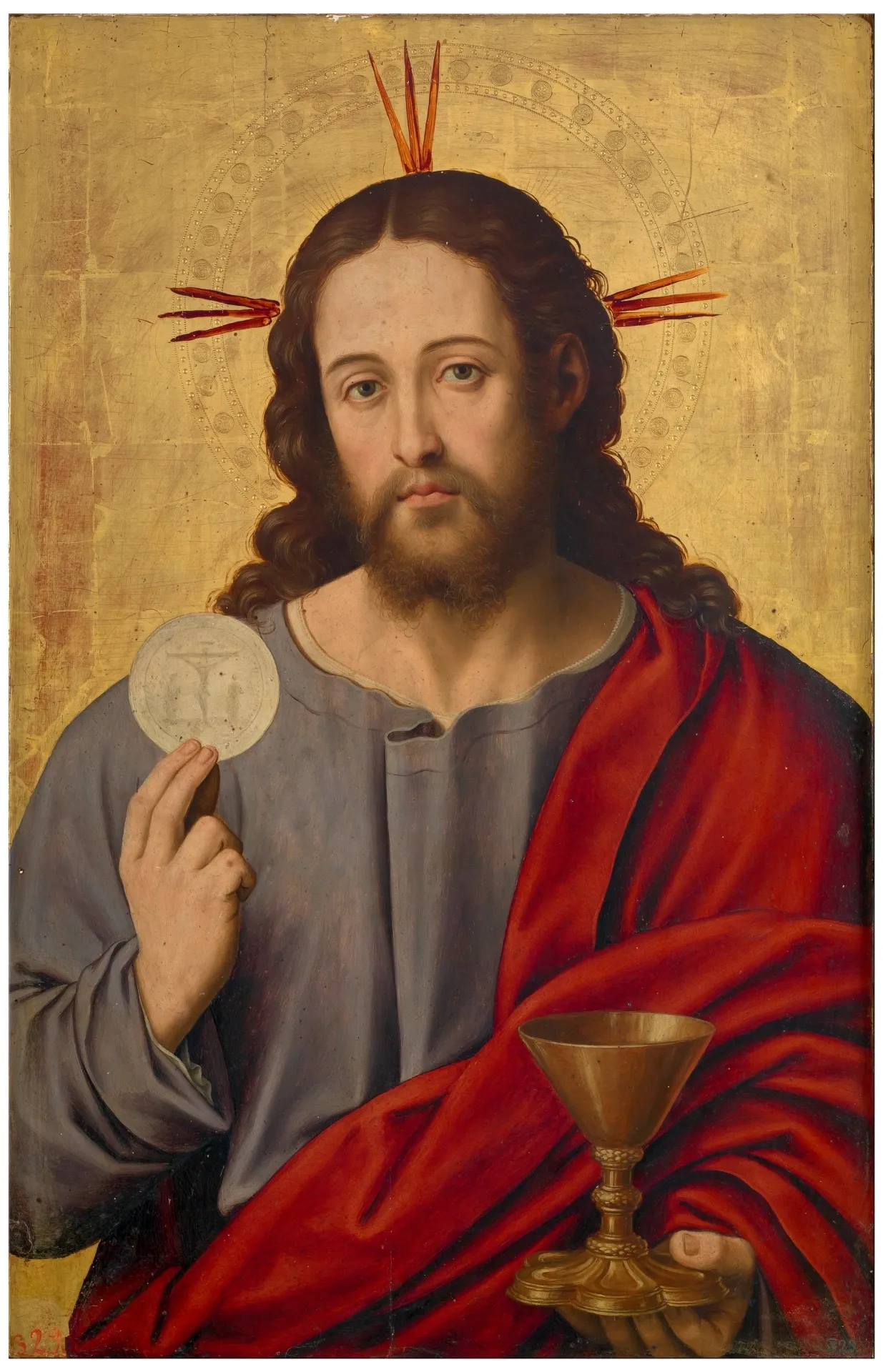
Vicente Juan Juan de Juanes’ technical skill is evident in every detail of "El Sumo Sacerdote Aaron". The oil on canvas technique allows for luminous colors and intricate textures, bringing the high priest’s garments to life. As a Spanish Renaissance masterpiece, the painting demonstrates the artist’s mastery of light and form. Collectors often seek similar works, including "The Last Supper (2) 1560s", for their exceptional application of oil on canvas and historic value.
Every element in "El Sumo Sacerdote Aaron" tells a story, from the ornate vestments to the dignified expression of the high priest. This fine art painting for sale invites viewers to explore the rich symbolism characteristic of the Spanish Renaissance. Vicente Juan Juan de Juanes infused his works, such as "San Pedro" and "Melquisedec, Rey De Salem", with spiritual and cultural meaning, making each piece a window into the beliefs of his time.
Owning "El Sumo Sacerdote Aaron" by Vicente Juan Juan de Juanes means possessing a piece of Spanish Renaissance history. This hand-painted oil painting is highly sought after by collectors who appreciate its artistry and significance. Complement your collection with related products like "The Last Supper (2) 1560s" and "San Pedro", each offering a glimpse into the masterful world of Juan de Juanes and the enduring appeal of fine art painting for sale from this era.
When Art Meets History
El Sumo Sacerdote Aaron, created by Vicente Juan Juan de Juanes / Masip (Macip), stands as a testament to the Spanish Renaissance’s enduring legacy. This hand-painted oil painting not only showcases the religious fervor of its era but also reflects the artist’s deep connection to biblical themes. Alongside other masterpieces from the Spanish Renaissance movement, this work captures the pivotal moments when faith and artistry merged, leaving a lasting impression on generations of viewers.
Techniques That Speak
Vicente Juan Juan de Juanes / Masip (Macip) employed remarkable oil on canvas techniques in El Sumo Sacerdote Aaron, showcasing his mastery of light, color, and composition. The detailed brushwork and rich palette exemplify the Spanish Renaissance’s dedication to realism and spiritual depth. The artist’s skillful layering and attention to detail can also be seen in his related paintings, further solidifying his place among the greats of this historical art movement.
Emotions on Display
In El Sumo Sacerdote Aaron, the emotional intensity is palpable, a hallmark of Spanish Renaissance artistry. The solemn expression and dignified posture of the high priest convey both reverence and authority, inviting viewers to reflect on the story behind the fine art painting for sale. Vicente Juan Juan de Juanes / Masip (Macip) masterfully captures these emotions, as seen in his other religious works, making his paintings deeply moving and spiritually resonant.
Coveted by Collectors
El Sumo Sacerdote Aaron by Vicente Juan Juan de Juanes / Masip (Macip) is highly sought after by art enthusiasts and collectors of Spanish Renaissance art. Its status as a hand-painted oil painting, combined with the artist’s esteemed reputation, makes it a prized addition to any collection. Collectors often seek out related paintings from this period, recognizing the enduring value and historical significance of these masterful works in the world of fine art.
Frequently Asked Questions About El Sumo Sacerdote Aaron
What is the historical significance of "El Sumo Sacerdote Aaron"?
"El Sumo Sacerdote Aaron" is significant as it represents the biblical figure Aaron, the first High Priest of Israel, symbolizing the connection between the divine and the priestly duties in Jewish tradition.
Who was Vicente Juan Juan de Juanes / Masip?
Vicente Juan Juan de Juanes, also known as Masip, was a prominent Spanish painter of the Renaissance period, renowned for his religious works that often reflect deep spiritual themes and meticulous attention to detail.
What artistic techniques are evident in this painting?
The painting showcases the use of chiaroscuro, which enhances the three-dimensionality of the figures, as well as a rich color palette that emphasizes the solemnity of the subject matter.
What symbols are present in "El Sumo Sacerdote Aaron"?
The painting features various symbols, including the priestly garments, which signify holiness and authority, and the menorah, representing divine light and guidance.
How does the composition of the painting contribute to its meaning?
The composition is carefully arranged to draw attention to Aaron, placing him centrally and using surrounding elements to enhance his importance as a spiritual leader, thereby reinforcing the theme of divine authority.
What influence did the Counter-Reformation have on this artwork?
The Counter-Reformation influenced this artwork by emphasizing clarity, emotional engagement, and the importance of religious figures, which can be seen in the detailed portrayal of Aaron's expression and attire.
In what ways does this painting reflect Renaissance ideals?
This painting reflects Renaissance ideals through its focus on humanism, the importance of individual figures, and the integration of classical themes with religious narratives, showcasing both artistic skill and theological depth.
What role does light play in "El Sumo Sacerdote Aaron"?
Light in this painting serves to highlight Aaron's figure, symbolizing divine illumination and the sacred nature of his role as High Priest, while also creating a dramatic contrast with the darker background.
How does "El Sumo Sacerdote Aaron" compare to other works by Juanes?
Compared to other works by Juanes, "El Sumo Sacerdote Aaron" exhibits a heightened sense of emotional depth and complexity, showcasing his evolution as an artist in portraying religious figures with greater realism and expressiveness.
What can be inferred about the audience for this painting?
The intended audience for "El Sumo Sacerdote Aaron" likely included religious patrons and the faithful, as the painting serves to inspire devotion and reflect the spiritual authority of the priesthood within the context of the Catholic Church.























_GFM_Painting_(1).webp)


 100% Hand-Painted: Finished in 3-6 Weeks

.png)












_1560s.webp)



_(1).webp)