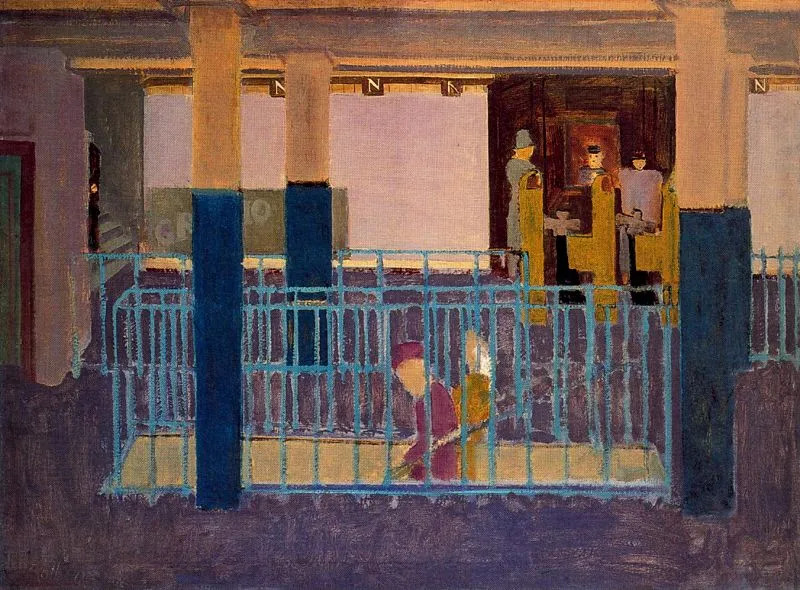
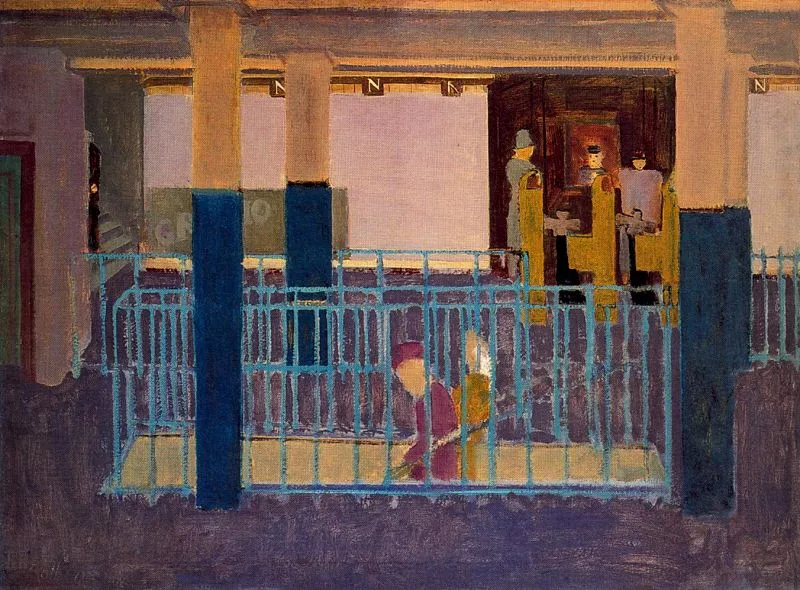
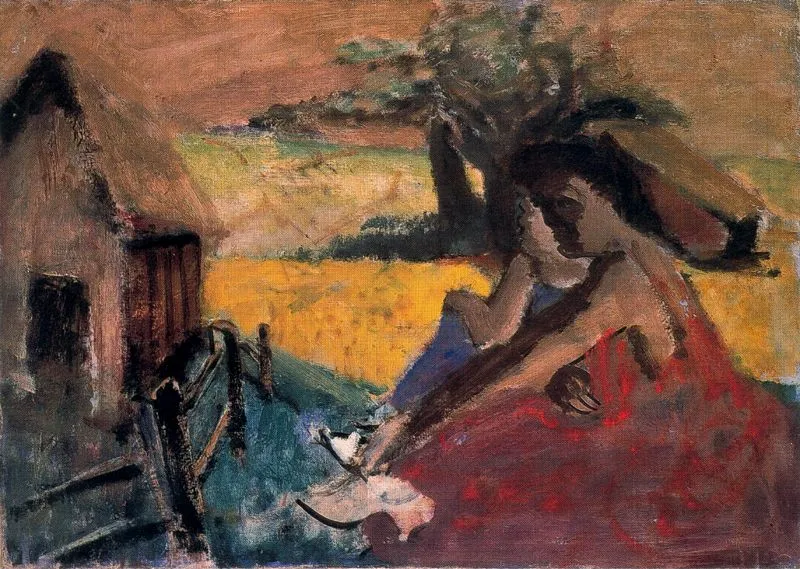
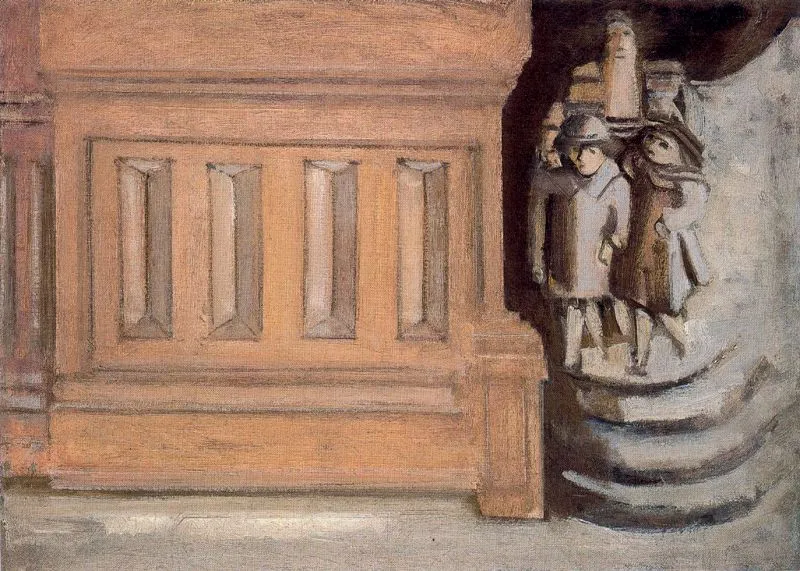
Mark Rothko's technique in "Entrance to Subway" highlights his expertise with oil on canvas, a medium that allowed him to explore depth and atmosphere. Each brushstroke in this fine art painting for sale is carefully considered, revealing Rothko's dedication to expressing complex emotions. Fans of Abstract Expressionism will find similar mastery in related works such as "Interior," "Rural Scene," and "Composition I," making this piece a valuable addition to any collection.
Within "Entrance to Subway," Rothko invites viewers to interpret the abstract forms and subtle hues that define this hand-painted oil painting. The ambiguous setting and evocative shapes offer insight into the human experience, a hallmark of Abstract Expressionism. Collectors seeking meaning in their art will find this piece, along with related products like "Street Scene" and "Composition I," to be compelling choices for their fine art painting for sale collections.
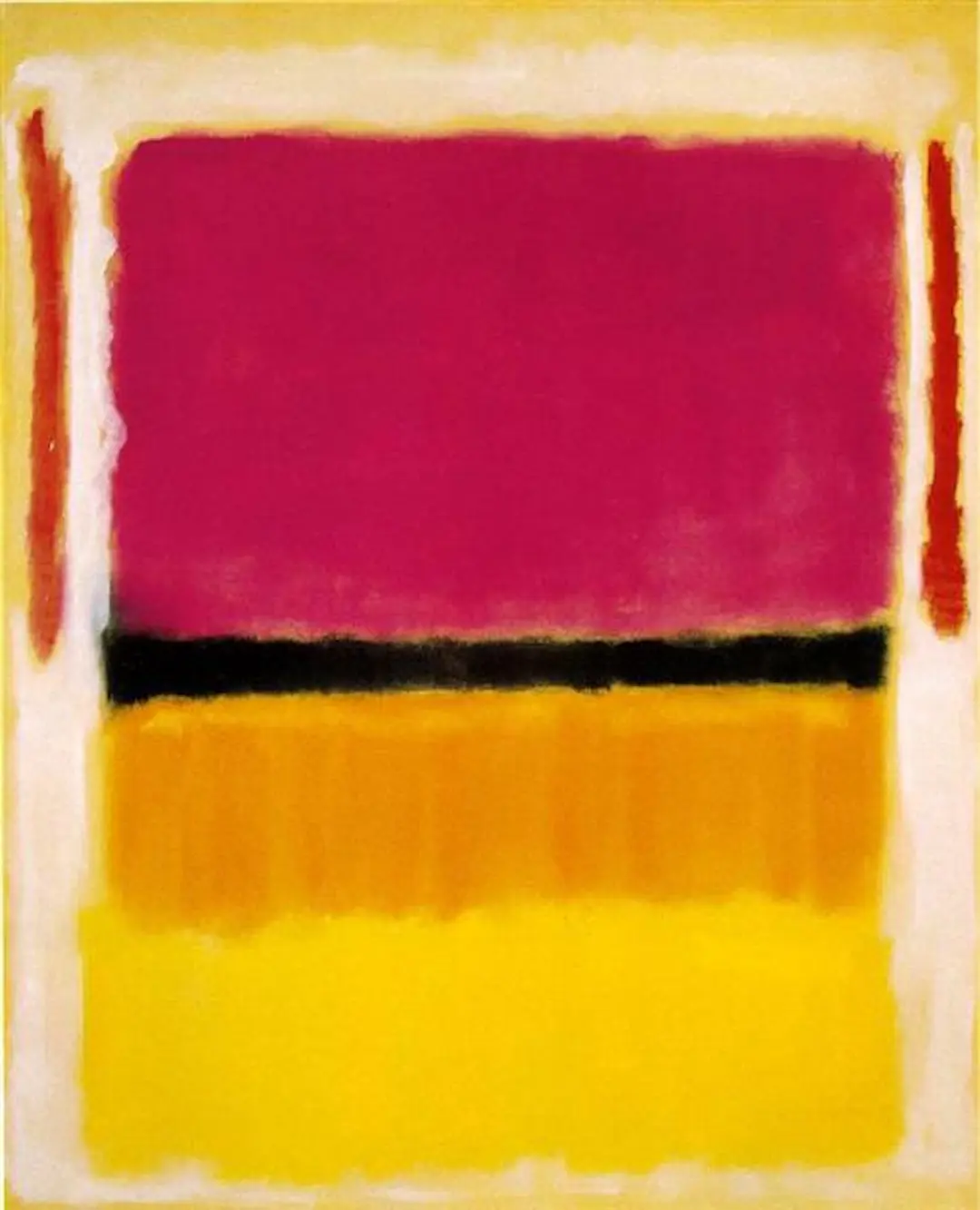
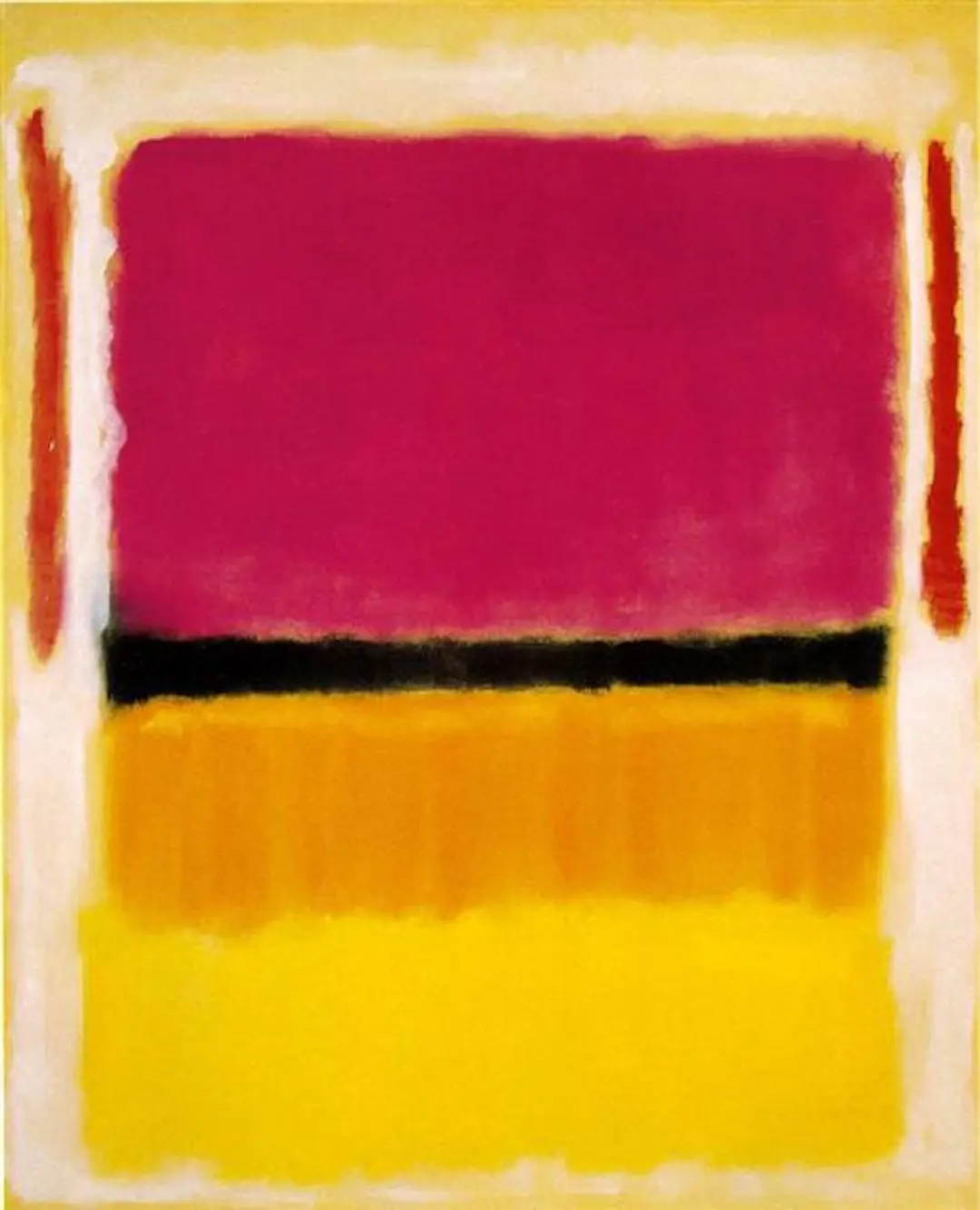
As an exemplary oil on canvas by Mark Rothko, "Entrance to Subway" holds a special place among fine art painting for sale offerings. Its striking composition and emotional depth make it a prized possession for admirers of Abstract Expressionism. Pairing this masterpiece with related works such as "Untitled (Violet, Black, Orange, Yellow on White and Red), 1949" and "Rural Scene" enhances any discerning collector’s portfolio, celebrating the enduring legacy of Rothko's vision.
When Art Meets History
"Entrance to Subway" by Mark Rothko stands as a powerful example of Abstract Expressionism, a movement that reshaped 20th-century art. Created during a period of immense change, this hand-painted oil painting captures the tension and dynamism of urban life. Rothko’s contemporaries, such as Kandinsky with "Improvisation 26" and "Painting with a Red Stain," also explored the emotional resonance of abstraction, making these works pivotal in the history of modern art.
Techniques That Speak
Mark Rothko’s mastery is evident in his unique approach to oil on canvas. In "Entrance to Subway," he employs layered washes and soft-edged forms to evoke a sense of depth and movement, hallmarks of Abstract Expressionism. Similar techniques can be observed in related paintings like "Akhtyrka" and "Framework for a Pile of Hay and Farm," where artists experimented with color and composition to push the boundaries of traditional painting.
Emotions on Display
Through "Entrance to Subway," Rothko channels profound emotions, inviting viewers to immerse themselves in the painting’s atmospheric intensity. The fine art painting for sale is more than a visual experience—it’s an emotional journey, much like Kandinsky’s "Impression lll (Concert)" or "Squares with Concentric Rings." Each brushstroke in Rothko’s work conveys a sense of contemplation, making it a cornerstone of the Abstract Expressionism movement.
Coveted by Collectors
Collectors and enthusiasts highly prize "Entrance to Subway" for its historical significance and emotional depth. As a hand-painted oil painting, it holds a distinguished place among modern masterpieces. Alongside Rothko’s other works and related paintings from the era, such as "Painting with a Red Stain," this piece remains in high demand. Its enduring appeal makes it a sought-after addition for anyone seeking a remarkable fine art painting for sale.
Related Abstract Expressionism Hand-Painted Oil Paintings by Other Artists
Other Famous Abstract Expressionism Artists:
Frequently Asked Questions About Entrance to Subway
What is the historical context of "Entrance to Subway"?
"Entrance to Subway" was created during a time when urbanization was rapidly transforming American cities. The painting reflects the complexities and emotional landscapes associated with urban life in the mid-20th century.
What artistic movement does Mark Rothko belong to?
Mark Rothko is primarily associated with Abstract Expressionism, a movement that emphasizes spontaneous, automatic, or subconscious creation, focusing on the emotional resonance of color and form.
What are the main themes explored in "Entrance to Subway"?
The painting explores themes of isolation, the human experience in urban environments, and the juxtaposition of chaos and tranquility found within city life.
How does Rothko use color in "Entrance to Subway"?
Rothko employs a limited palette to evoke emotional responses, using contrasting colors to symbolize the tension and vibrancy of city life, while also inviting contemplation and introspection.
What symbolism is present in "Entrance to Subway"?
The subway entrance symbolizes transition and movement, representing the journey of individuals navigating the complexities of urban existence and the search for connection amidst anonymity.
How does "Entrance to Subway" reflect Rothko's artistic philosophy?
Rothko believed in the power of color to convey deep emotional experiences. "Entrance to Subway" exemplifies his philosophy by using color to create an immersive experience that transcends the physical representation of the subject.
What techniques did Rothko employ in creating this painting?
Rothko utilized a technique of layering color washes, allowing for a luminous quality that enhances the emotional depth of the work. His application of color is both deliberate and intuitive, contributing to the overall impact of the piece.
In what ways does "Entrance to Subway" differ from Rothko's earlier works?
This painting marks a shift towards a more structured composition, moving away from the purely organic forms of his earlier works. It reflects a more defined exploration of space and urban themes.
How has "Entrance to Subway" been received by critics and art historians?
The painting has been praised for its emotional depth and innovative use of color, with critics noting its ability to evoke a sense of place and experience that resonates with viewers on a personal level.
What impact did "Entrance to Subway" have on contemporary art?
"Entrance to Subway" has influenced contemporary artists by demonstrating the power of abstraction to convey complex human emotions and experiences, encouraging a movement towards introspective and emotive art forms.























_GFM_Painting_(1).webp)


 100% Hand-Painted: Finished in 3-6 Weeks

.png)















_(1).webp)