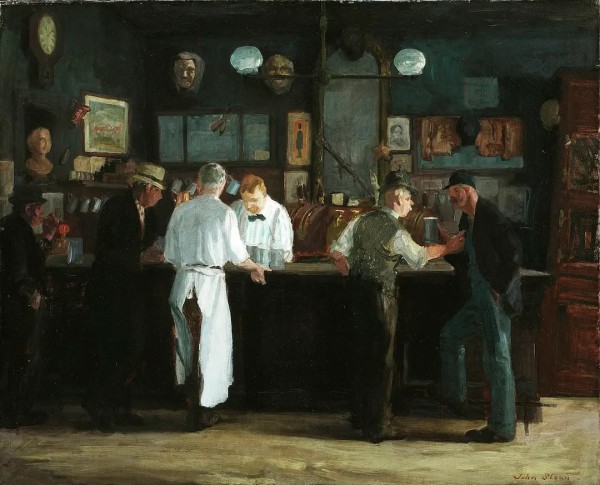
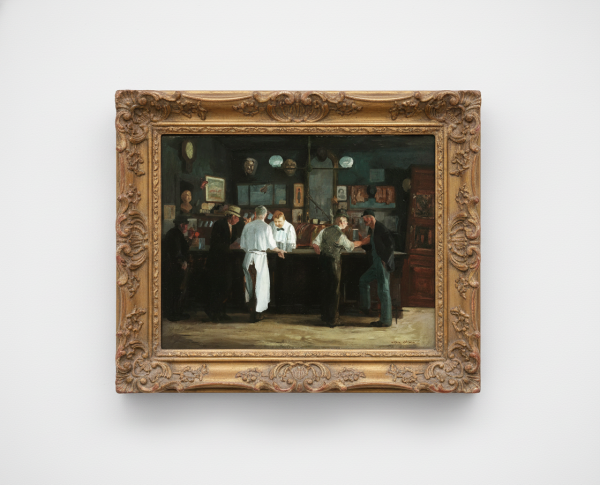
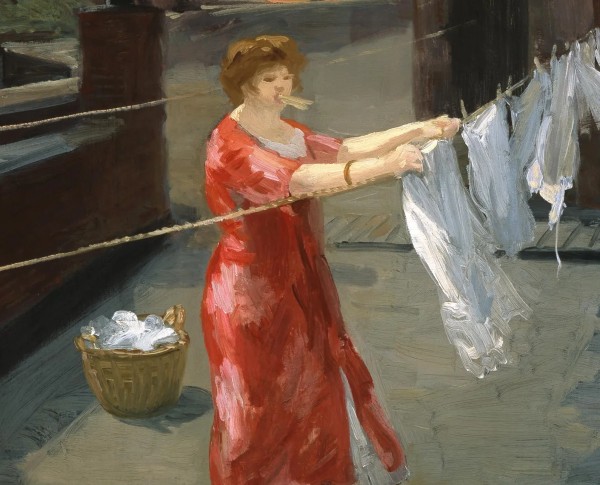
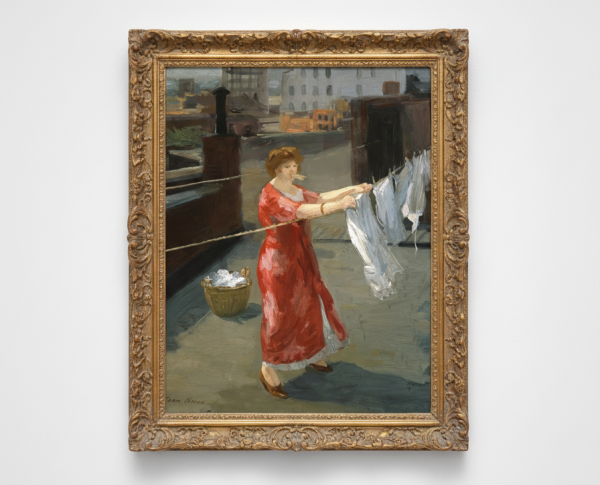
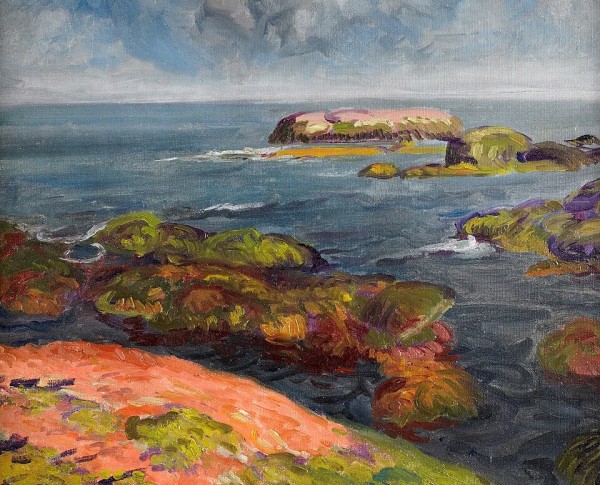
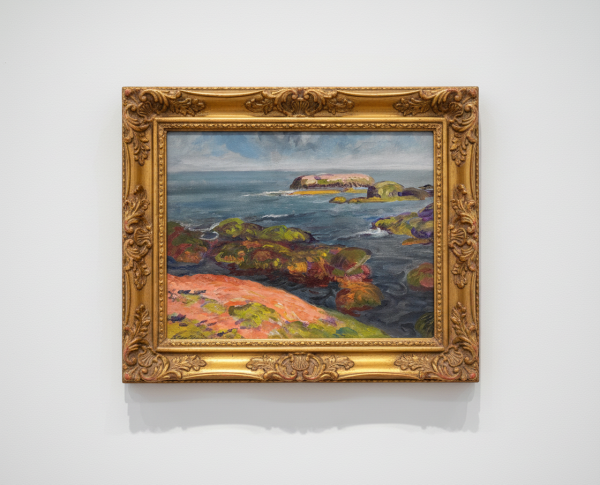
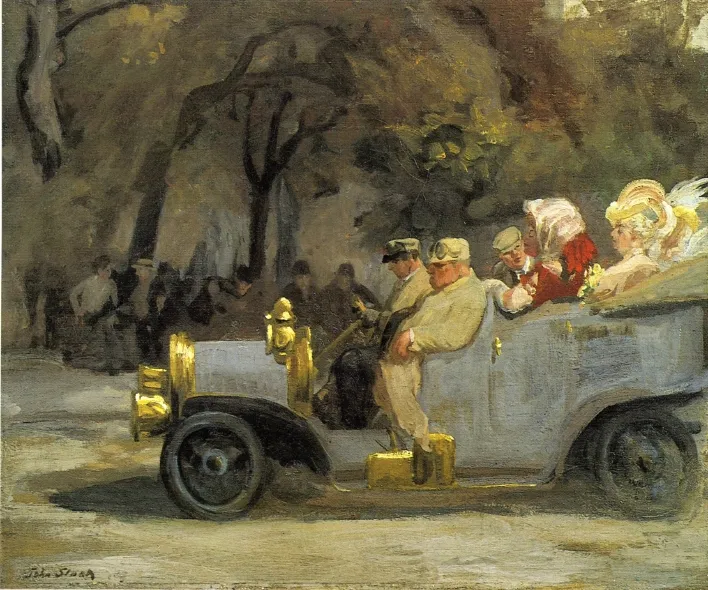
The meticulous technique in John Sloan's "Gray and Brass" exemplifies the Ashcan School’s commitment to authenticity. Rendered in oil on canvas, the artwork’s textured brushwork and subtle color palette showcase Sloan's mastery. His skillful use of light and shadow brings the cityscape to life, much like in "Dust Storm, Fifth Avenue" and "Election Night." Each stroke contributes to the painting’s dynamic atmosphere, making it a standout piece for collectors and admirers of American realism.
Within "Gray and Brass," John Sloan weaves narratives and symbols that reflect the social realities of his era. As a fine art painting for sale, it invites viewers to interpret the interplay between the muted grays and glowing brass elements. This work, alongside Sloan’s "Boy with Piccolo" and "Young Woman in Black and White," offers a window into everyday life, emphasizing the Ashcan School’s dedication to capturing the true spirit of the urban experience.
For collectors, "Gray and Brass" is a prized hand-painted oil painting that epitomizes John Sloan’s contribution to the Ashcan School movement. Its historical importance and artistic brilliance make it a sought-after addition to any collection. Related works like "Sunset, West Twenty-Third Street" and "Independence Square" further enhance its value. Owning this masterpiece connects collectors to an era when American art embraced realism and celebrated the vibrancy of city life.
When Art Meets History
"Gray and Brass" by John Sloan stands as a hallmark of the Ashcan School movement, capturing the energy and realism of early 20th-century urban life. This hand-painted oil painting reflects Sloan’s commitment to depicting everyday moments with honesty and grit. The piece is often discussed alongside other Ashcan School works, as it provides a vivid window into the social landscape of its era, making it a must-see for anyone interested in American art history.
Techniques That Speak
John Sloan’s mastery is evident in his use of oil on canvas, skillfully blending muted grays with striking brass tones to create depth and atmosphere. The brushwork in "Gray and Brass" is dynamic, echoing the raw, unfiltered approach characteristic of the Ashcan School. Sloan’s technique invites viewers to appreciate the texture and movement within the scene, setting this painting apart from more traditional, academic works of its time.
Emotions on Display
"Gray and Brass" evokes a sense of urban melancholy and resilience, emotions deeply rooted in the Ashcan School’s philosophy. John Sloan’s portrayal of city life is both intimate and universal, allowing viewers to connect with the subjects’ experiences. This fine art painting for sale not only captures a fleeting moment but also resonates with contemporary audiences, making it a powerful example of emotional storytelling through art.
Coveted by Collectors
Collectors prize "Gray and Brass" for its historical significance and authentic portrayal of urban America. As a celebrated piece by John Sloan within the Ashcan School movement, it represents a pinnacle of early modern American art. The demand for hand-painted oil paintings from this era remains strong, and works like this continue to command attention at auctions and galleries, appealing to both seasoned collectors and new enthusiasts alike.
Frequently Asked Questions About Gray and Brass
What is the historical context of "Gray and Brass"?
"Gray and Brass" was created during the early 20th century, a period marked by significant changes in American society and art. John Sloan, a prominent member of the Ashcan School, sought to capture the realities of urban life, reflecting the complexities of modernity.
What artistic movements influenced John Sloan in creating this artwork?
Sloan was influenced by the Ashcan School, which emphasized realism and the depiction of everyday life. Additionally, elements of Impressionism can be seen in his use of light and color, as well as a focus on urban scenes.
What techniques did John Sloan use in "Gray and Brass"?
Sloan employed a combination of oil painting techniques, utilizing broad brush strokes and a muted color palette to evoke a sense of atmosphere and mood. His approach reflects both spontaneity and careful composition.
What themes are explored in "Gray and Brass"?
The painting explores themes of urban life, industrialization, and the interplay between light and shadow. It captures the essence of a bustling city, highlighting both its vibrancy and its somber aspects.
What is the significance of the title "Gray and Brass"?
The title "Gray and Brass" suggests a juxtaposition of colors that may symbolize the industrial landscape of the time. Gray often represents urban environments, while brass may evoke notions of machinery and progress.
How does "Gray and Brass" reflect John Sloan's view of modernity?
Sloan's depiction of the urban scene in "Gray and Brass" reflects a nuanced view of modernity, recognizing both its beauty and its challenges. His work often celebrates the dynamism of city life while also critiquing its harsh realities.
What role does light play in "Gray and Brass"?
Light is a crucial element in "Gray and Brass," as it creates depth and dimension within the composition. Sloan's manipulation of light enhances the mood and emphasizes the contrasts between different elements in the painting.
How does "Gray and Brass" compare to other works by John Sloan?
What is the symbolic meaning of the objects depicted in "Gray and Brass"?
The objects in "Gray and Brass" can be seen as symbols of industrial progress and the complexities of urban existence. They represent the intersection of human life and the mechanized world, inviting viewers to reflect on their significance.
How has "Gray and Brass" been received by critics and art historians?
"Gray and Brass" has been well-received by critics and art historians, who appreciate its innovative approach to urban subject matter and its contribution to the Ashcan School's legacy. It is often cited as a significant example of Sloan's artistic vision.























_GFM_Painting_(1).webp)


 100% Hand-Painted: Finished in 3-6 Weeks

.png)















_(1).webp)