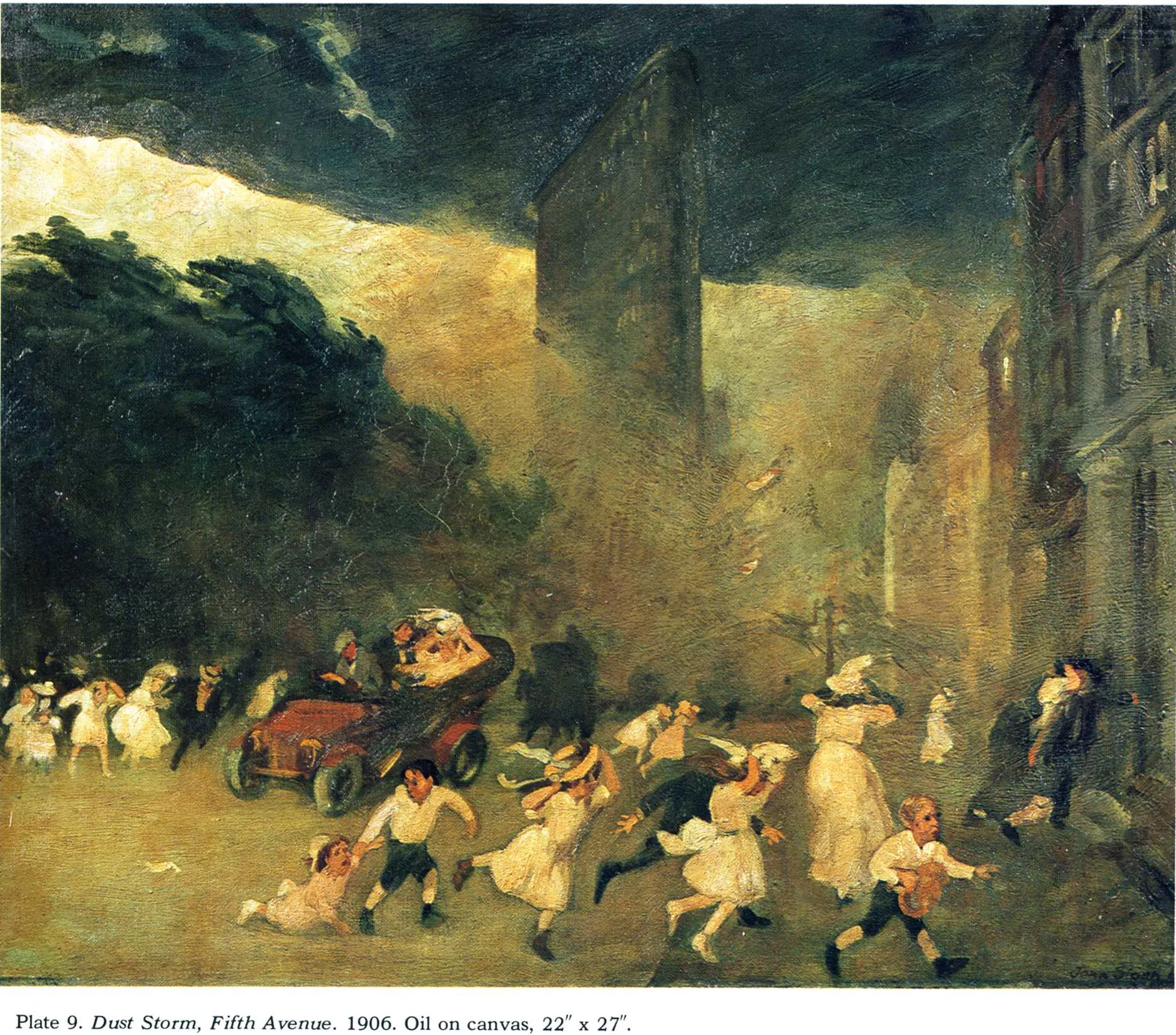
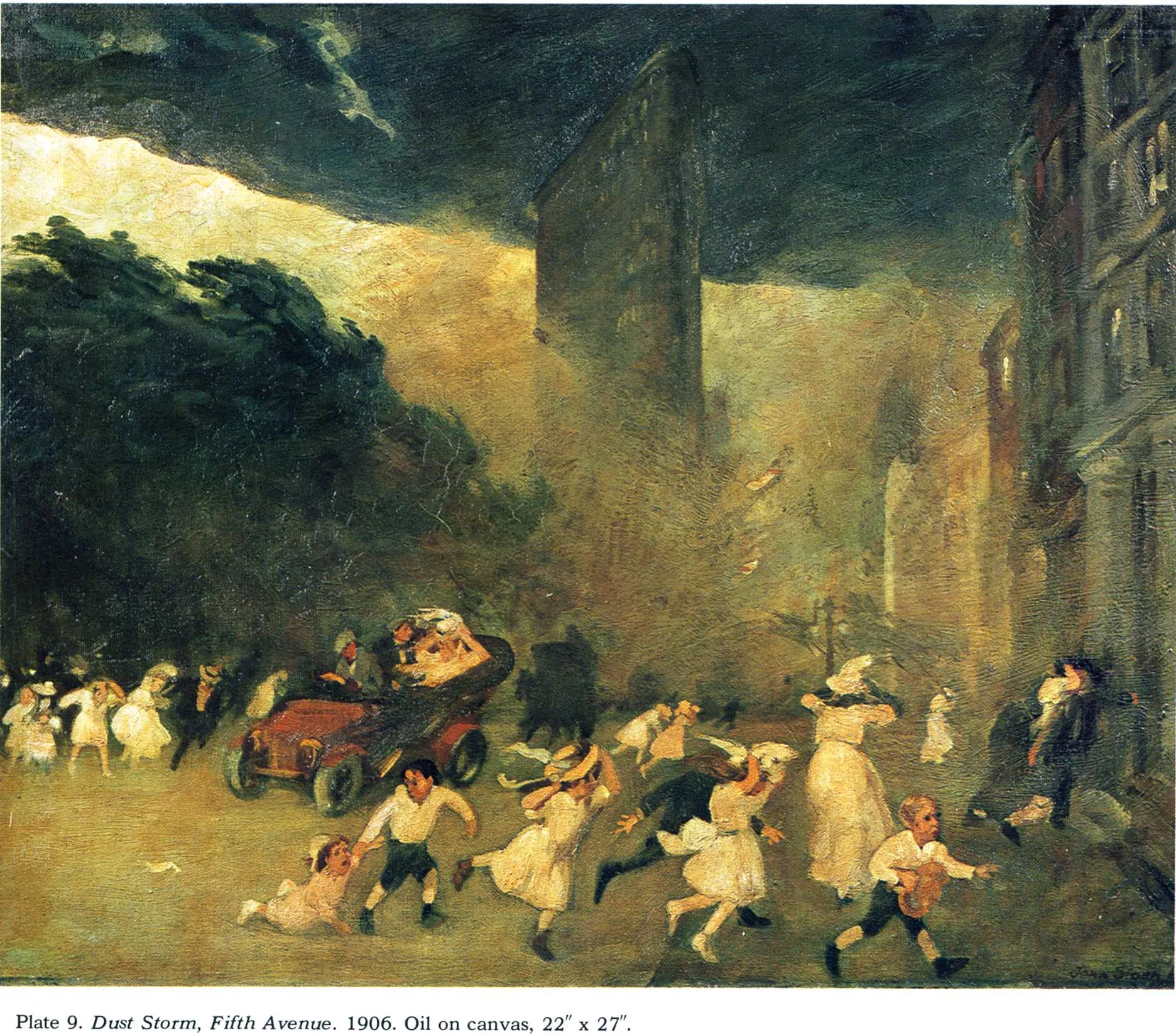
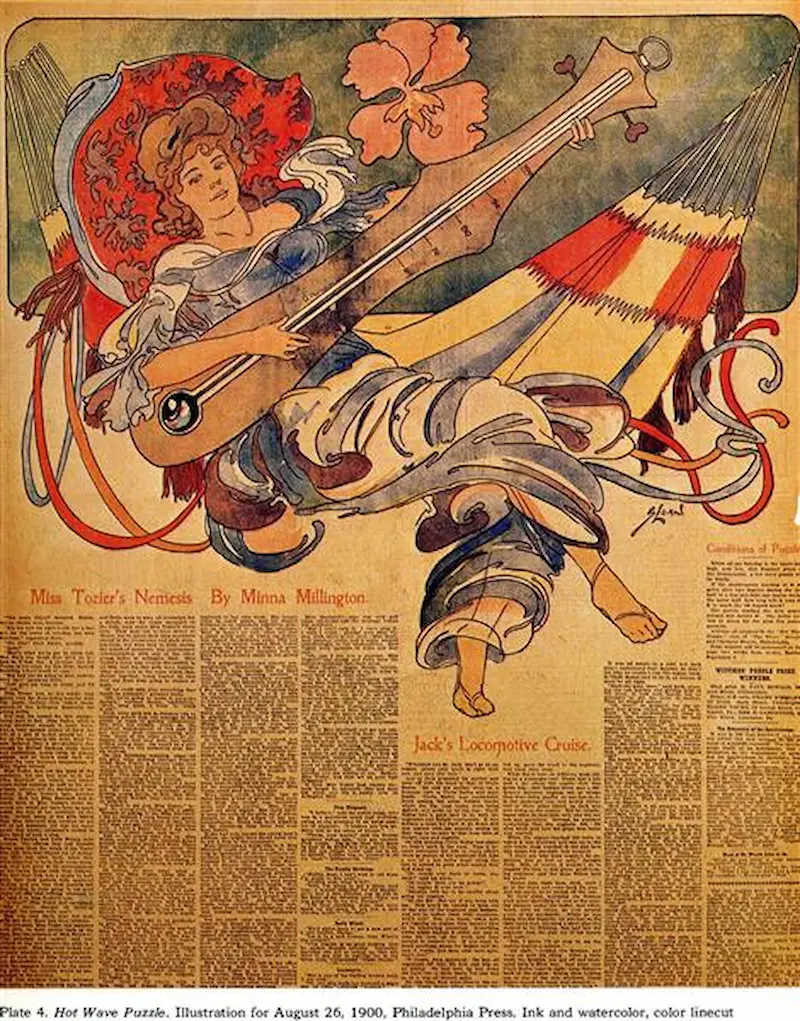
Every element of "Dust Storm, Fifth Avenue" showcases John Sloan's technical prowess in oil on canvas. His dynamic brushwork and nuanced palette bring the city’s chaos and vitality to life, reflecting the Ashcan School’s commitment to authenticity. This painting’s craft is echoed in other Sloan masterpieces like "Boy with Piccolo" and "Hot Wave Puzzle Illustration for Philadelphia Press," making it a centerpiece for anyone seeking fine examples of urban realism.
"Dust Storm, Fifth Avenue" tells a story beyond its vivid depiction of a city street. Through this fine art painting for sale, Sloan communicates themes of resilience and the everyday heroism found in urban experience, hallmarks of the Ashcan School. Collectors often seek out related works such as "East Entrance, City Hall, Philadelphia" or "George Sotter" to explore the broader narrative and symbolism that define Sloan’s powerful artistic voice.
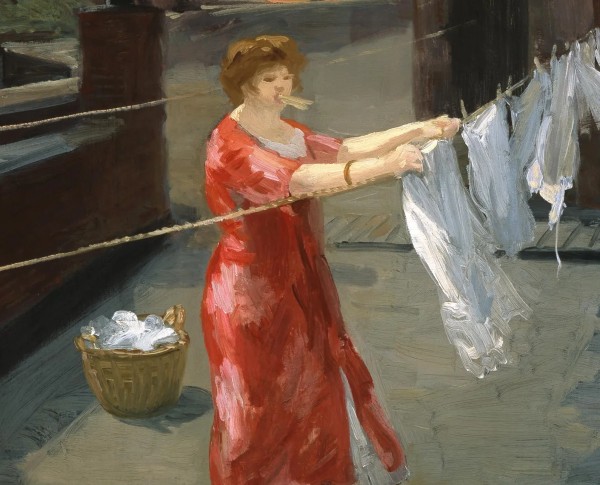
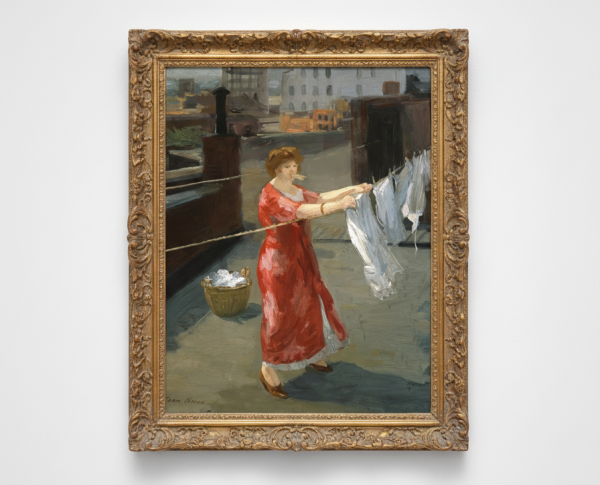
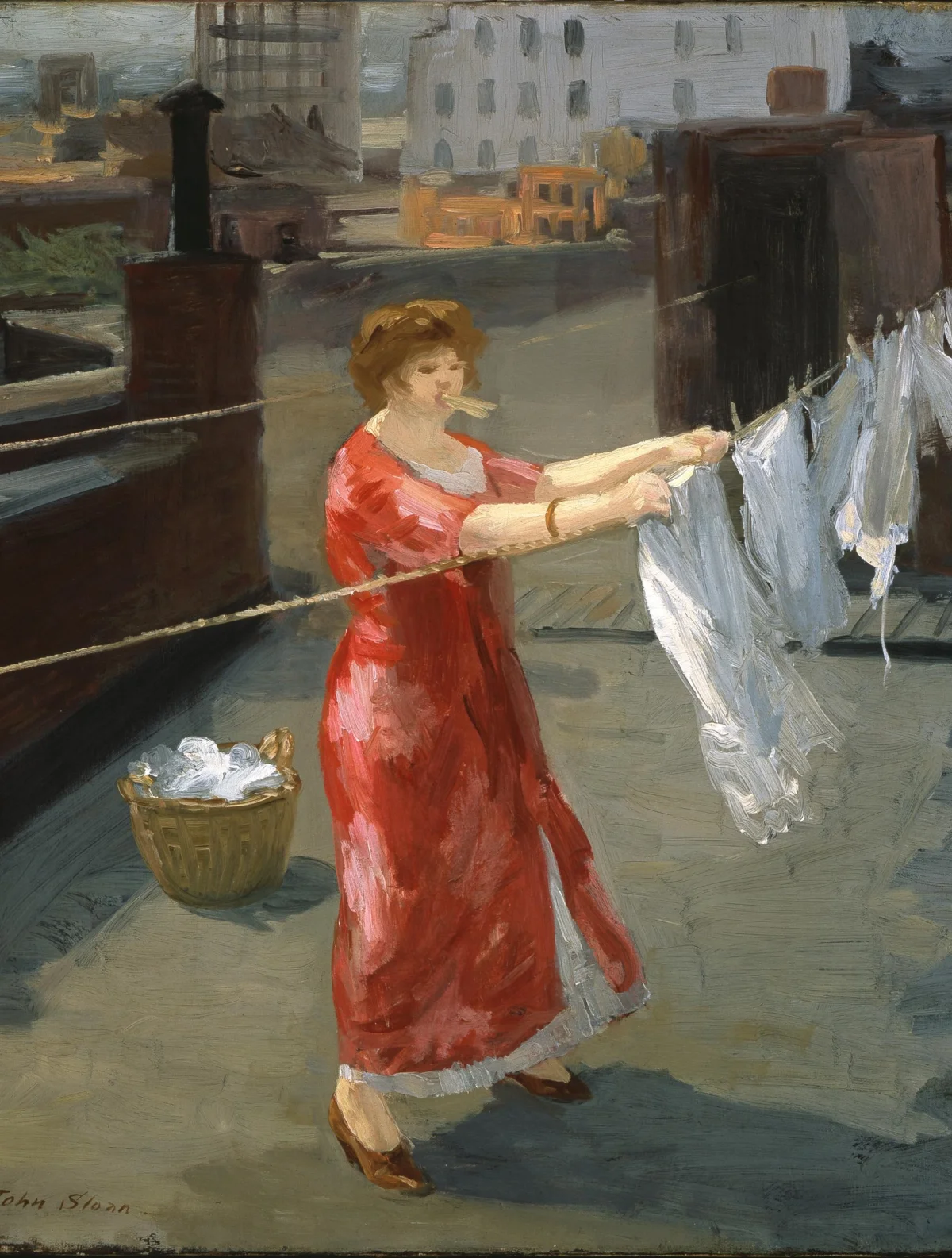
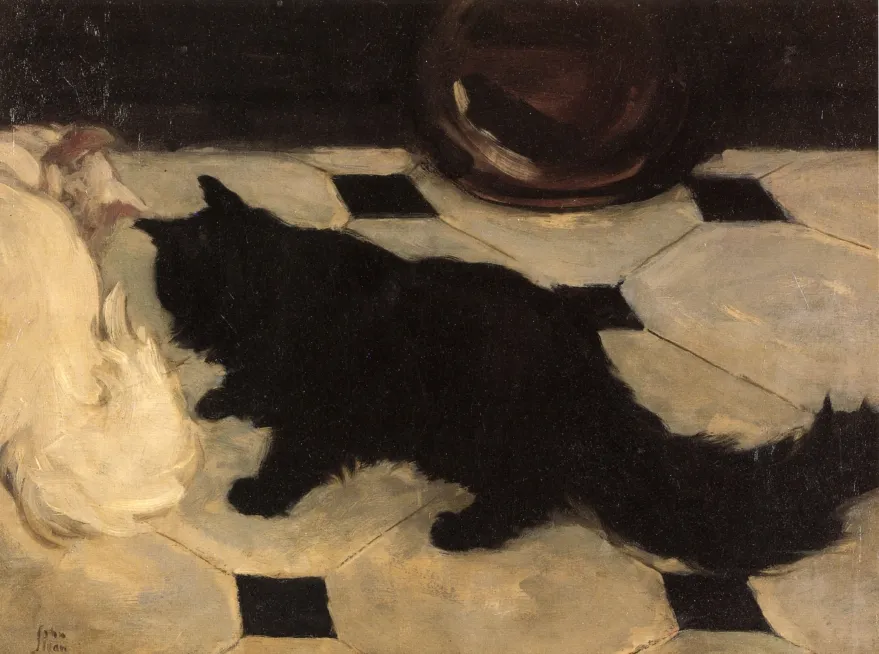
Owning "Dust Storm, Fifth Avenue" as a hand-painted oil painting means acquiring a tangible piece of American art history. John Sloan’s evocative vision and the Ashcan School’s legacy make this work highly sought after by discerning collectors. Enhance your collection with complementary pieces like "Red Kimono on the Roof" or "Green's Cat," each available as a fine art painting for sale, and celebrate the enduring impact of this influential movement.
When Art Meets History
"Dust Storm, Fifth Avenue" by John Sloan is a remarkable example of the Ashcan School movement, capturing the dynamic spirit of early twentieth-century New York. This hand-painted oil painting immerses viewers in a moment when urban life collided with nature’s unpredictability. John Sloan, a master observer, chronicled the city’s vibrancy in works like this, making each canvas a historical document. Like other Ashcan School pieces, it reflects the energy and grit of American city life.
Techniques That Speak
John Sloan’s "Dust Storm, Fifth Avenue" employs expressive brushwork and a muted palette, hallmarks of the Ashcan School style. The oil on canvas technique brings out the swirling dust and bustling figures with striking realism. Sloan’s approach, similar to his contemporaries, emphasizes movement and atmosphere, drawing the viewer into the scene. Each stroke in this artwork highlights his commitment to portraying the raw, unfiltered moments of urban existence through oil on canvas mastery.
Emotions on Display
In "Dust Storm, Fifth Avenue," John Sloan conveys the uncertainty and resilience of city dwellers facing unexpected adversity. The painting’s atmospheric tension immerses viewers in the emotions of those braving the storm. As a fine art painting for sale, it offers collectors a glimpse into the lived experience of a bygone era. Sloan’s ability to evoke empathy aligns with the Ashcan School’s mission to depict real human stories, making this work profoundly moving.
Coveted by Collectors
"Dust Storm, Fifth Avenue" stands as a sought-after masterpiece among collectors of John Sloan’s work and Ashcan School art. Its status as a hand-painted oil painting adds to its desirability, capturing a fleeting urban moment with authenticity. Collectors value such fine art not only for its aesthetic but also for its historical significance. As with other Ashcan School paintings, owning this piece means possessing a genuine artifact of American artistic heritage.
Frequently Asked Questions About Dust Storm, Fifth Avenue
What is the historical context of "Dust Storm, Fifth Avenue"?
"Dust Storm, Fifth Avenue" was painted by John Sloan in 1906, during a time when urbanization was rapidly transforming American cities. The painting reflects the social and environmental challenges of the era, particularly the impact of industrialization on urban life.
What artistic style is represented in "Dust Storm, Fifth Avenue"?
The painting exemplifies the Ashcan School movement, which focused on depicting the everyday life of urban America. Sloan's loose brushwork and focus on the gritty realities of city living are characteristic of this style.
What symbolism can be found in "Dust Storm, Fifth Avenue"?
The dust storm in the painting symbolizes the chaos and unpredictability of urban life. It serves as a metaphor for the challenges faced by city dwellers, highlighting themes of struggle and resilience amidst the hustle of city life.
How does Sloan's use of color contribute to the painting's mood?
Sloan employs a muted color palette dominated by browns and grays, which evokes a sense of desolation and urgency. This choice enhances the feeling of a tumultuous environment, drawing the viewer into the scene's intensity.
What techniques did Sloan use to capture movement in the painting?
Sloan's dynamic brushstrokes and the arrangement of figures convey a sense of movement and chaos. The swirling dust and the hurried pedestrians reflect the frenetic pace of urban life, creating an immersive experience for the viewer.
In what ways does "Dust Storm, Fifth Avenue" reflect the artist's perspective on modernity?
The painting illustrates Sloan's ambivalence towards modernity. While it captures the vibrancy of city life, it also critiques the environmental consequences and social dislocation brought about by rapid industrialization.
How does "Dust Storm, Fifth Avenue" compare to other works by John Sloan?
Compared to other works by Sloan, "Dust Storm, Fifth Avenue" is notable for its dramatic portrayal of environmental elements. While many of his pieces focus on social interactions, this painting emphasizes the external forces affecting urban life.
What role does perspective play in "Dust Storm, Fifth Avenue"?
The perspective in the painting is slightly elevated, allowing viewers to observe the scene from a vantage point that enhances the sense of chaos. This choice invites the audience to engage with the tumultuous environment actively.
What was the public's reaction to "Dust Storm, Fifth Avenue" when it was first exhibited?
Upon its exhibition, "Dust Storm, Fifth Avenue" garnered attention for its bold depiction of urban life. Critics praised Sloan for his ability to capture the essence of the city, though some were unsettled by the raw portrayal of its challenges.
How does "Dust Storm, Fifth Avenue" fit into the broader narrative of American art in the early 20th century?
The painting is a significant contribution to early 20th-century American art, reflecting the shift towards realism and social commentary. It embodies the spirit of the Ashcan School, which sought to portray the realities of contemporary life, setting the stage for future movements in American art.























_GFM_Painting_(1).webp)


 100% Hand-Painted: Finished in 3-6 Weeks

.png)
















_(1).webp)