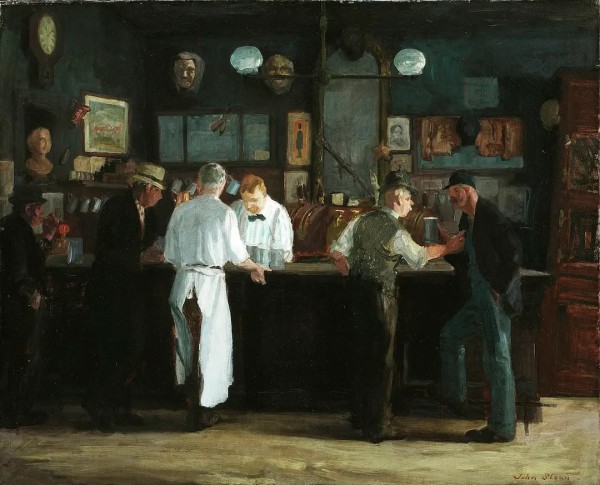
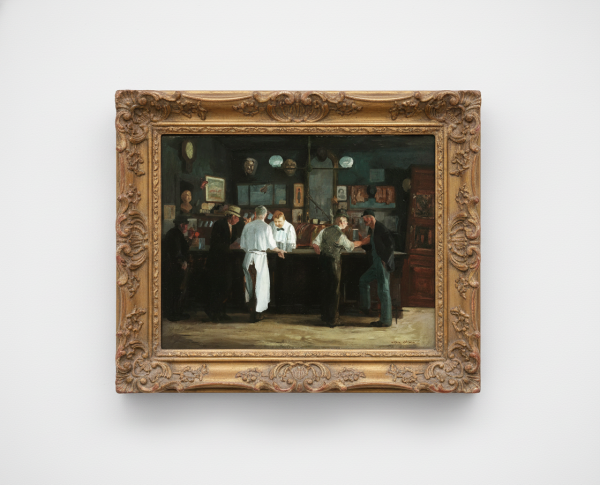
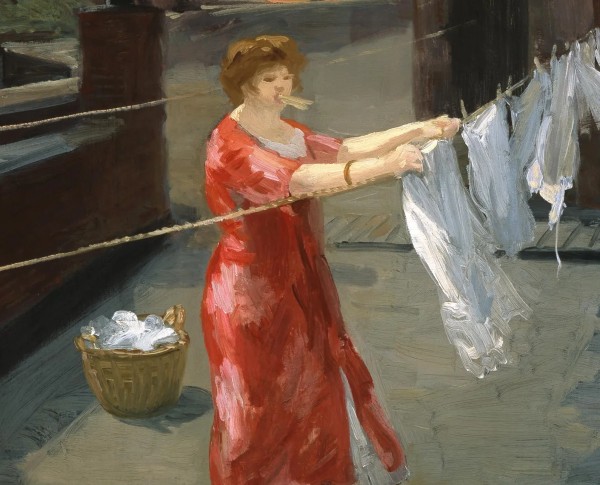
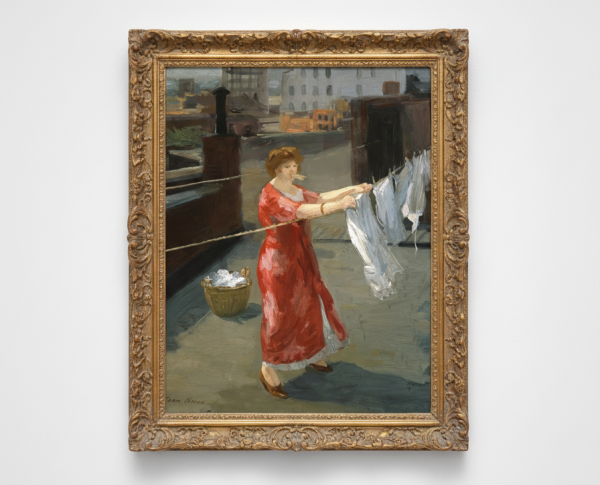
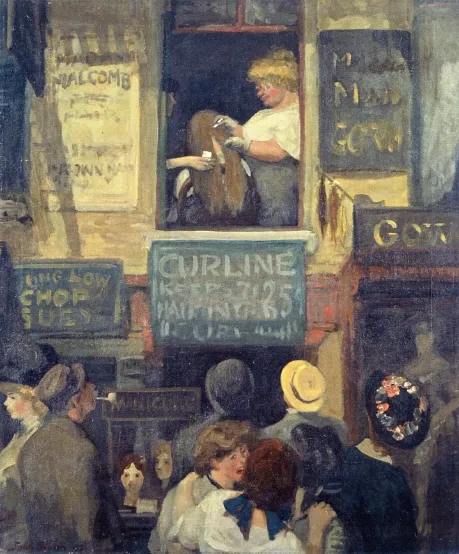
Rendered in exquisite oil on canvas, "Hairdresser's Window" demonstrates John Sloan's remarkable technical skill and keen observational eye. The brushwork brings to life the bustling city scene, a hallmark of the Ashcan School's commitment to realism. Collectors and admirers of Sloan's art may also be drawn to related works like "Sunset, West Twenty-Third Street" and "Independence Square, Philadelphia," each showcasing the artist's deft handling of texture and light.
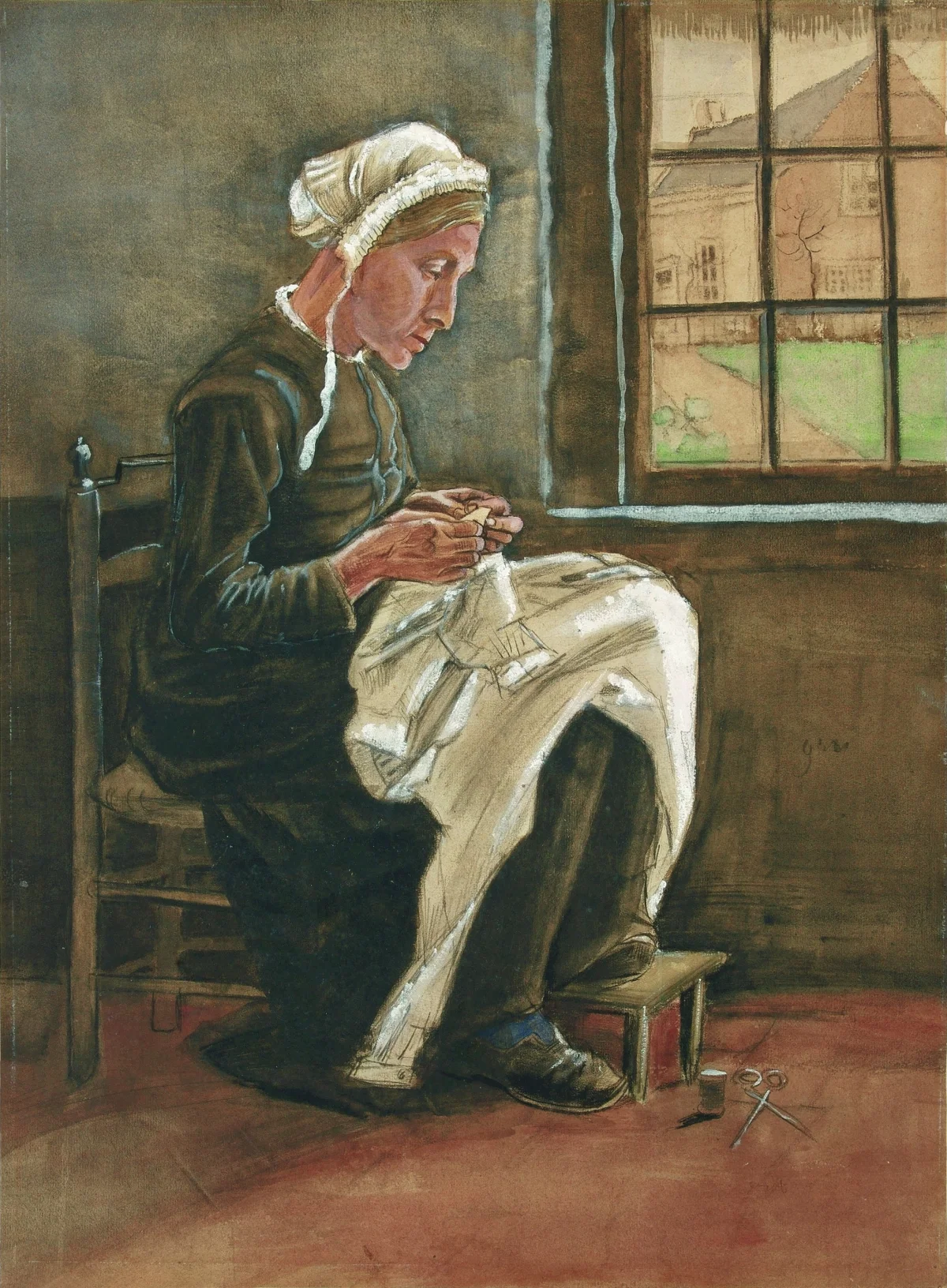
"Hairdresser's Window" is more than a fine art painting for sale; it's a window into the social dynamics of its era. John Sloan masterfully weaves narratives of city dwellers, using symbolic elements to reflect the evolving urban landscape championed by the Ashcan School. Those intrigued by narrative-rich pieces might also explore "The Sewing Woman" and "George Sotter," which similarly encapsulate poignant stories within their vibrant scenes.
For collectors, "Hairdresser's Window" by John Sloan is an exceptional hand-painted oil painting that embodies the essence of the Ashcan School. Its detailed depiction of daily life makes it a coveted addition to any collection. Alongside related works like "Boy with Piccolo" and "Sunset, West Twenty-Third Street," this piece stands as a tribute to American urban realism, offering both historical and aesthetic value to discerning art enthusiasts.
When Art Meets History
John Sloan's "Hairdresser's Window" captures the bustling spirit of early 20th-century New York, reflecting the Ashcan School’s dedication to urban realism. This hand-painted oil painting stands as a snapshot of city life, documenting everyday moments with authenticity. Sloan, a prominent member of the Ashcan School, used his art to chronicle the social and cultural changes of his era, much like his contemporaries. The painting remains a significant piece in the evolution of American urban art.
Techniques That Speak
Sloan’s mastery is evident in his use of oil on canvas, a medium favored by many Ashcan School artists for its texture and depth. In "Hairdresser's Window," his loose brushwork and dynamic composition bring the lively street scene to life. The artist’s technique allows for a vibrant interplay of color and light, echoing the innovative approaches of other Ashcan painters. This work exemplifies Sloan’s ability to turn ordinary moments into compelling visual narratives.
Emotions on Display
"Hairdresser's Window" radiates with the energy and emotion of city life, drawing viewers into its animated scene. Sloan’s fine art painting for sale invites us to experience the curiosity and excitement of passersby, reflecting the Ashcan School’s focus on genuine human experience. Through expressive faces and bustling activity, the painting communicates a sense of community, much like other seminal works in the movement. Sloan’s attention to detail makes this an emotionally resonant masterpiece.
Coveted by Collectors
Collectors and art enthusiasts prize "Hairdresser's Window" for its historical value and artistic merit, making it a sought-after hand-painted oil painting. John Sloan’s affiliation with the Ashcan School enhances the painting’s appeal, as does its authentic depiction of urban life. The artwork is frequently compared to other significant oil on canvas pieces from the era, and its presence in major collections attests to its enduring popularity and importance in American art history.
Frequently Asked Questions About Hairdresser's Window
What is the historical context of "Hairdresser's Window"?
"Hairdresser's Window," painted by John Sloan in 1907, reflects the urban life of early 20th-century America, particularly in New York City, where Sloan was a prominent figure in the Ashcan School movement, which focused on depicting everyday life and the working class.
What artistic techniques did John Sloan employ in this painting?
Sloan utilized loose brushwork and a vibrant color palette to convey the bustling atmosphere of the city. His use of light and shadow creates depth, while the composition draws the viewer's eye through the scene, emphasizing the interaction between the figures and their environment.
What themes are explored in "Hairdresser's Window"?
The painting explores themes of urban life, social interaction, and the role of women in society. It captures a moment of everyday life, highlighting the connection between public and private spaces and the dynamics of gender roles during the time period.
How does "Hairdresser's Window" reflect the Ashcan School movement?
The painting embodies the Ashcan School's focus on realism and the depiction of contemporary urban scenes. Sloan's choice of subject matter and his candid portrayal of life in the city align with the movement's goal to challenge traditional artistic norms and celebrate the vibrancy of modern life.
What symbols can be found in "Hairdresser's Window"?
The hairdresser's window itself serves as a symbol of the intersection between public and private life, while the figures within the painting represent the diverse social fabric of the city. The act of grooming can also symbolize transformation and identity, reflecting the changing roles of women in society.
What is the significance of the setting in "Hairdresser's Window"?
The setting, a hair salon, is significant as it represents a space where women gather, socialize, and engage in self-care. This choice of location highlights the importance of community and the social dynamics present in urban environments during the early 1900s.
How does "Hairdresser's Window" compare to other works by John Sloan?
What impact did "Hairdresser's Window" have on American art?
The painting contributed to the broader acceptance of modernist themes in American art, influencing future generations of artists to explore everyday subjects and the complexities of urban life. It helped pave the way for a more inclusive representation of society in art.
What is the current location of "Hairdresser's Window"?
"Hairdresser's Window" is part of the collection at the Delaware Art Museum, where it continues to be appreciated for its historical and artistic significance within the context of American art history.
How does the painting reflect the changing roles of women in the early 20th century?
The painting captures women in a space traditionally associated with femininity and personal care, reflecting the evolving roles of women as they began to assert their independence and participate more actively in public life during this transformative period in American history.























_GFM_Painting_(1).webp)


 100% Hand-Painted: Finished in 3-6 Weeks

.png)
















_(1).webp)