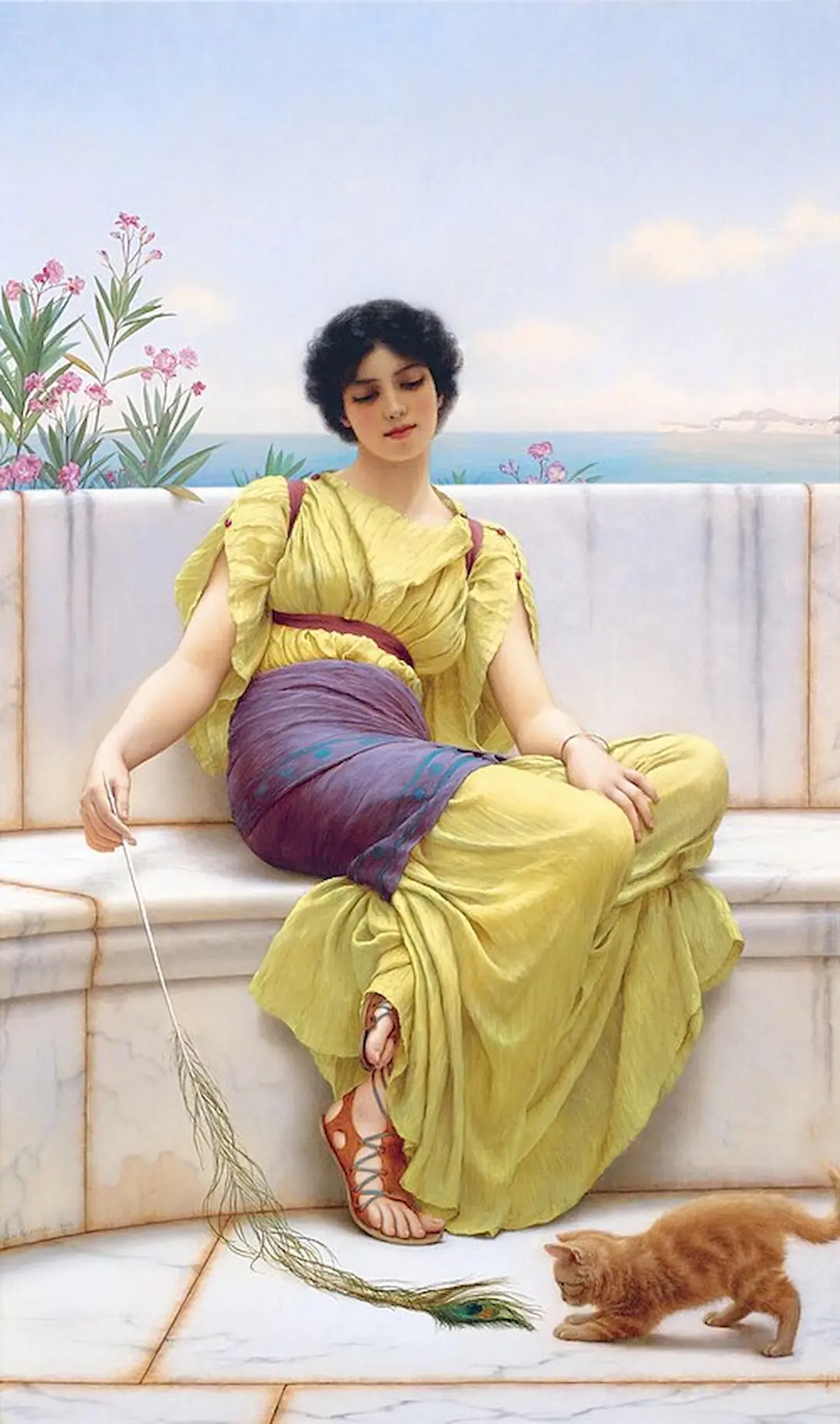
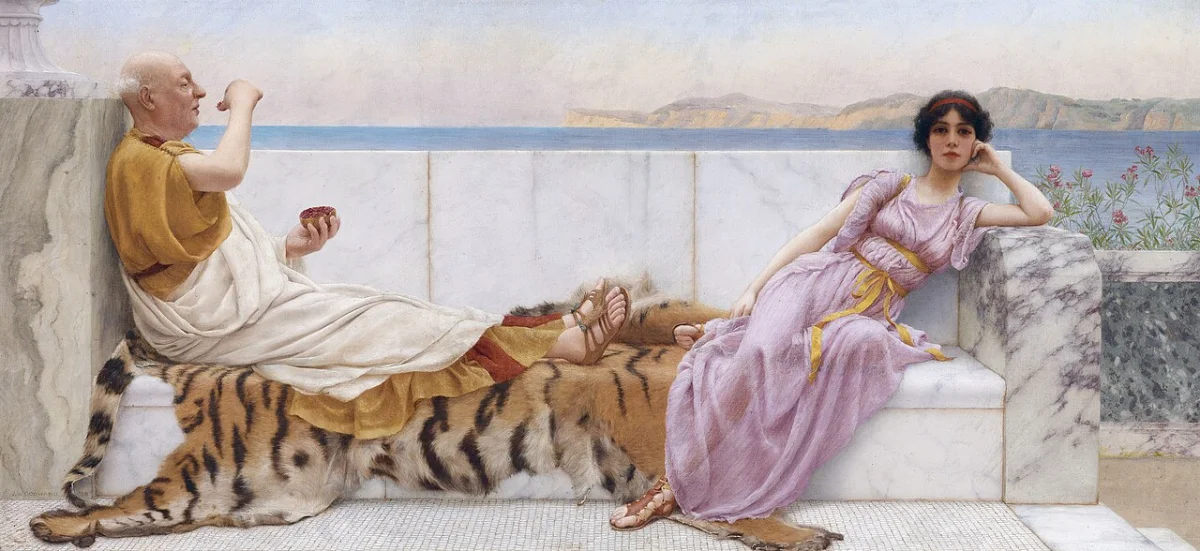
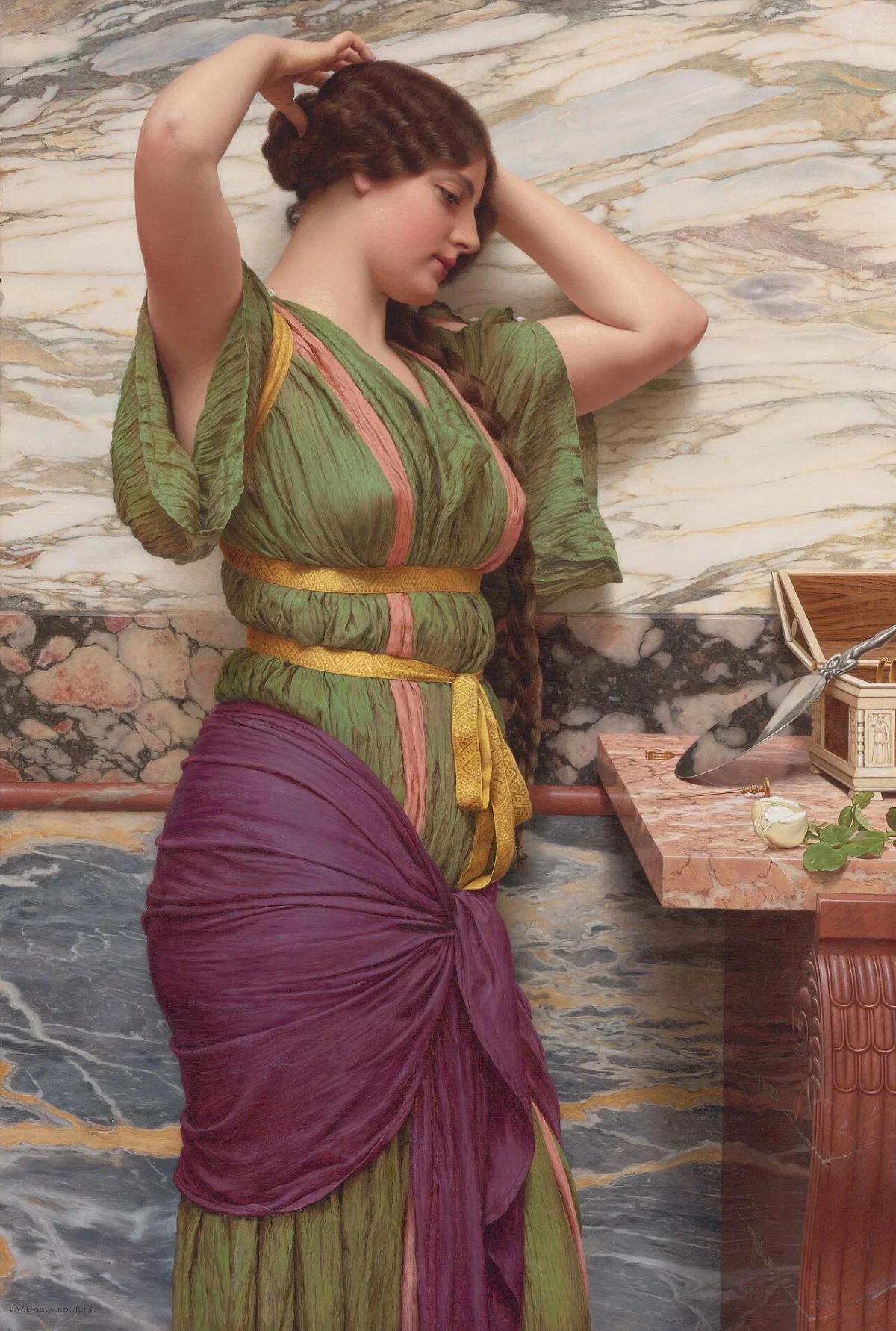
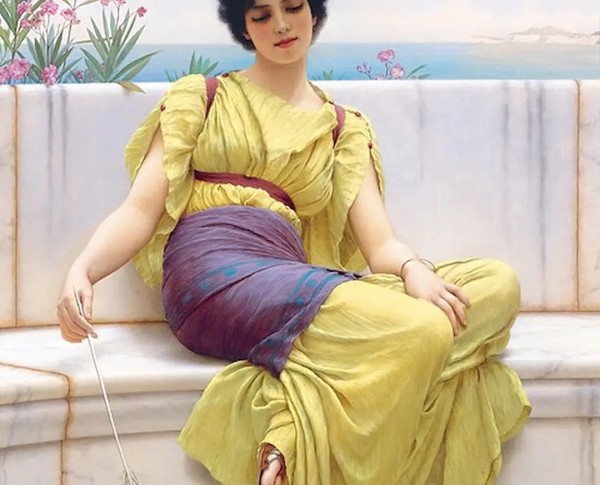
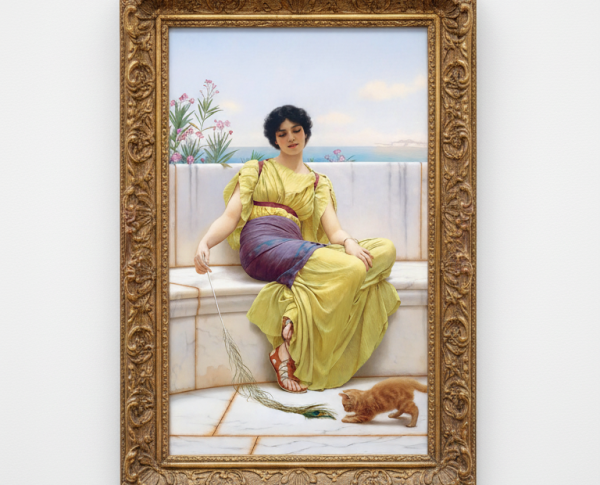
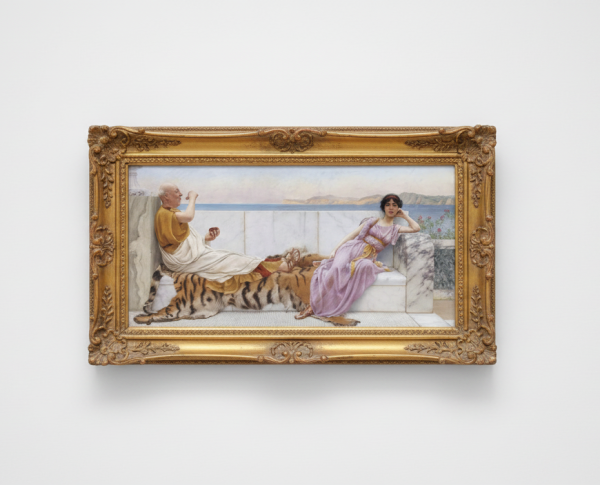
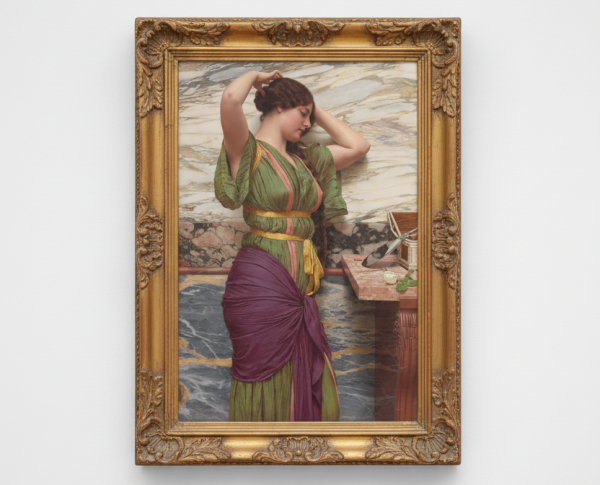
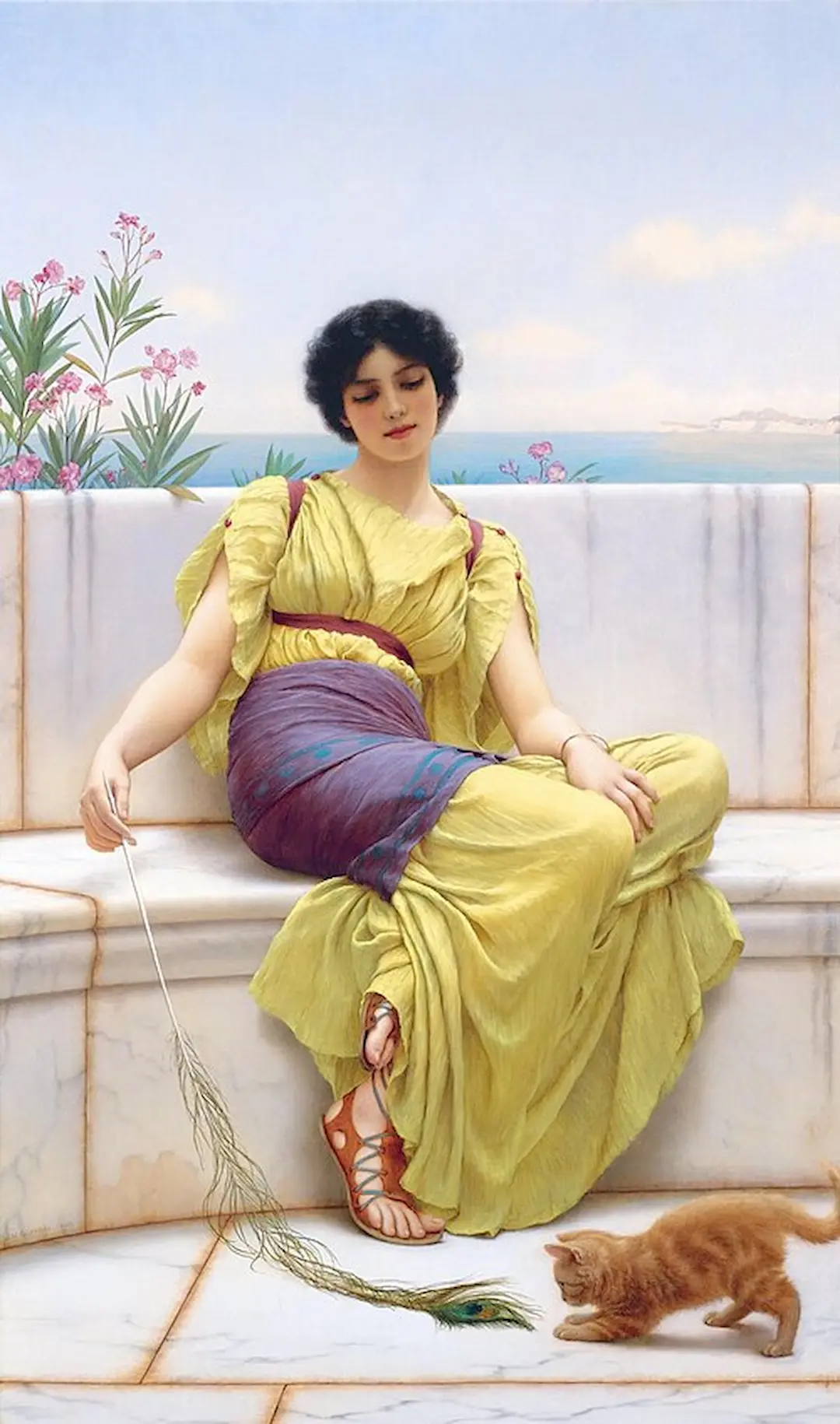
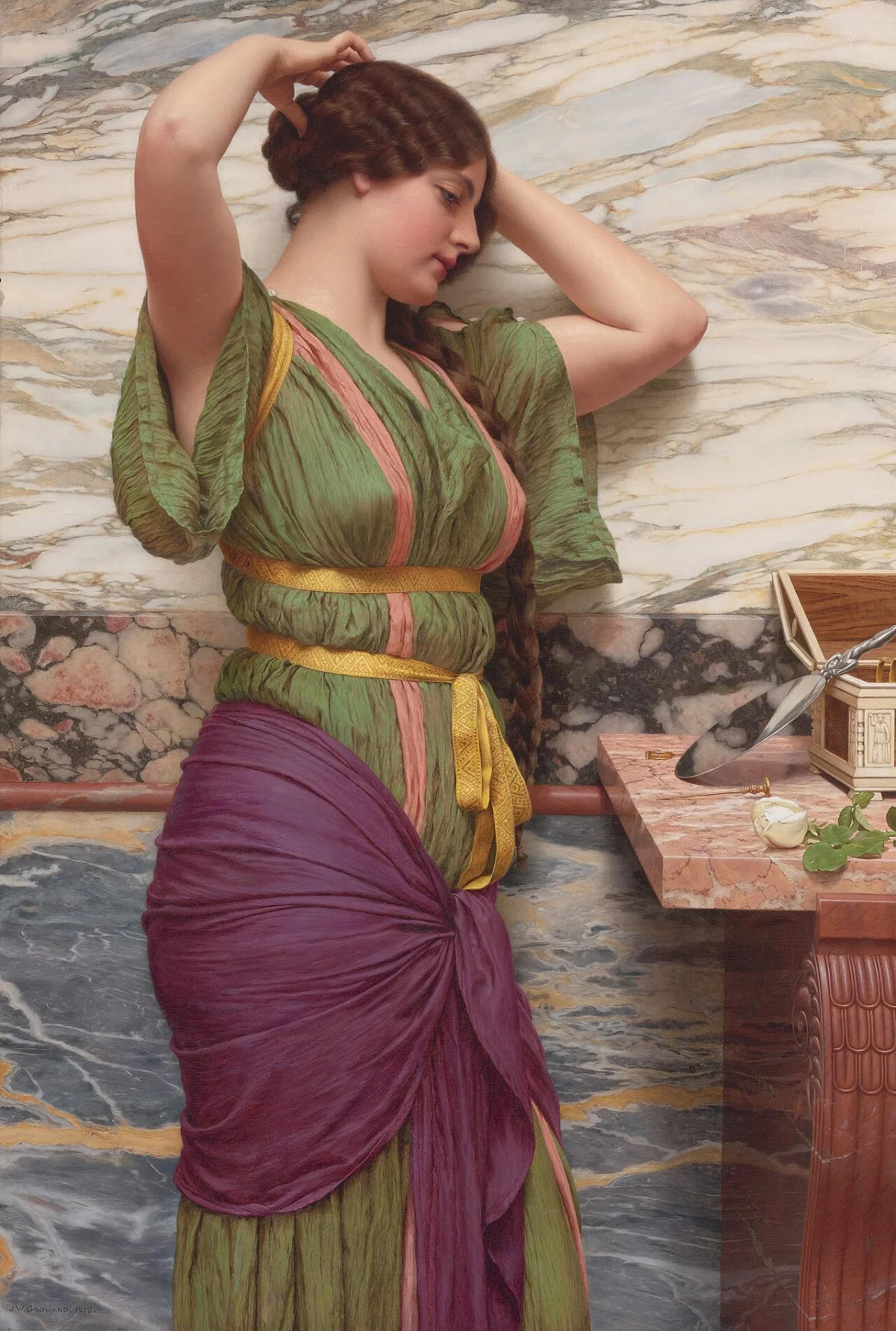
"The Mirror" exemplifies Godward’s technique with oil on canvas, showcasing his ability to render lifelike textures and luminous skin tones. Every brushstroke reflects his dedication to classical ideals and realistic representation, hallmarks of the Neoclassical Academic Realism movement. This painting, along with others like "Idleness II" and "Eighty and eighteen," demonstrates the artist’s devotion to capturing grace and serenity, making his works highly sought after by art lovers and collectors worldwide.
In "The Mirror," Godward weaves a narrative rich with symbolism, inviting viewers to ponder themes of beauty, reflection, and introspection. The subject’s contemplative pose and the delicate interplay of light evoke deeper meanings, characteristic of a fine art painting for sale from the Neoclassical Academic Realism era. Collectors often pair this evocative piece with related products such as "A Fair Reflection" to enhance their appreciation of Godward’s symbolic storytelling.
For those seeking a timeless addition to their collection, "The Mirror" is a remarkable fine art painting for sale. John William Godward’s attention to detail and adherence to Neoclassical Academic Realism make this work a prized possession. Its enduring appeal is matched by related masterpieces like "Reverie" and "Eighty and eighteen," which together form a cohesive tribute to the artist’s enduring influence and the movement’s lasting impact on art history.
When Art Meets History
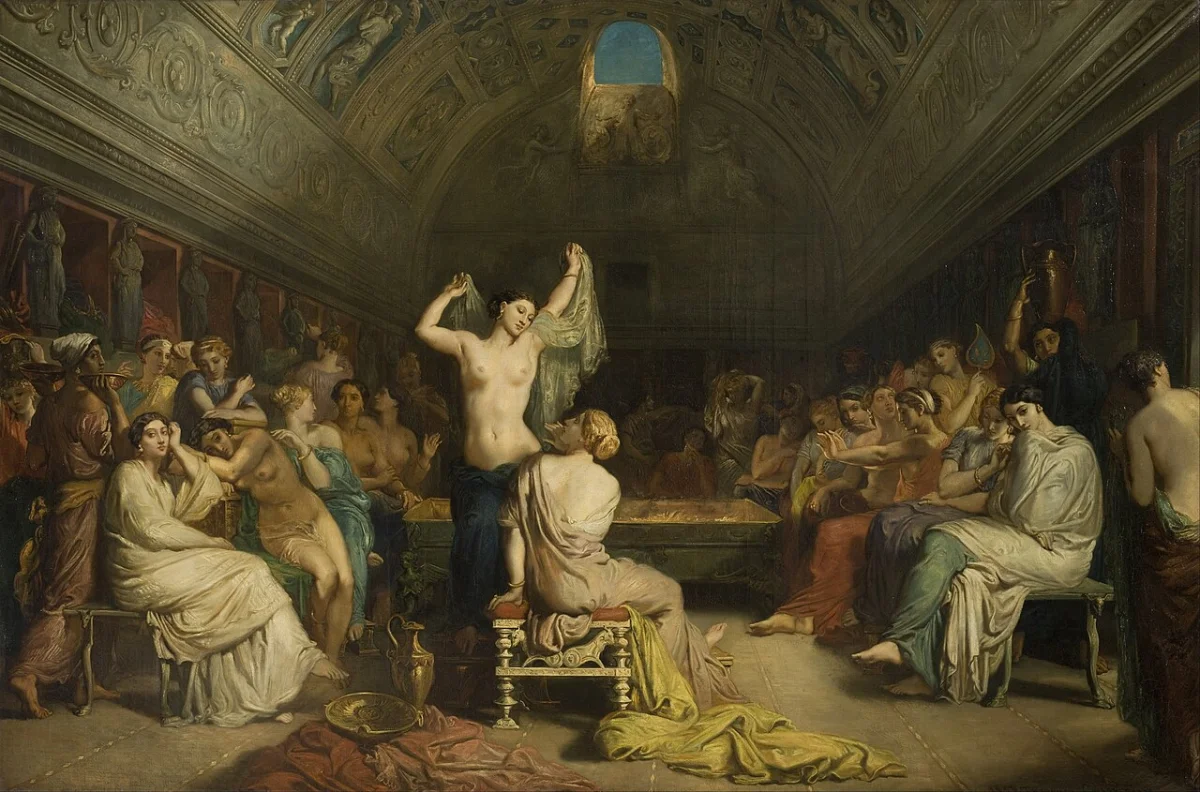
"The Mirror" by John William Godward stands as a remarkable example of Neoclassical Academic Realism, a movement celebrated for its revival of classical techniques. This hand-painted oil painting captures the essence of an era where precision and elegance reigned supreme. Godward's work aligns with masterpieces like "The Oath of the Horatii" and "Mars Being Disarmed by Venus," reflecting a shared dedication to classical ideals and meticulous craftsmanship that continue to inspire art lovers worldwide.
Techniques That Speak
In "The Mirror," John William Godward demonstrates his mastery of oil on canvas, a medium favored by many Neoclassical artists. The artist’s attention to detail, from the delicate rendering of fabric to the lifelike portrayal of skin tones, exemplifies the technical prowess of Academic Realism. Similar techniques can be observed in related paintings such as "Napoleon Crossing the Alps" and "Portrait of Antoine-Laurent Lavoisier and his wife," making Godward’s piece a testament to refined artistic skill.
Emotions on Display
John William Godward’s "The Mirror" goes beyond mere representation, inviting viewers to experience quiet introspection through the subject’s poised demeanor. The fine art painting for sale captures subtle emotions, reminiscent of works like "Bonaparte, Calm on a Fiery Steed" and "Crossing the Alps 1801." Godward’s Neoclassical approach emphasizes not only external beauty but also the nuanced emotional landscape, making this painting a moving example of Academic Realism’s expressive power.
Coveted by Collectors
Collectors of Neoclassical Academic Realism highly prize "The Mirror" by John William Godward for its historical significance and artistic excellence. As a hand-painted oil painting, it holds a significant place alongside related works such as "The Oath of the Horatii" and "Mars Being Disarmed by Venus." The enduring appeal of Godward’s art lies in its meticulous execution and timeless elegance, making it a sought-after masterpiece among enthusiasts of fine art painting for sale.
Related Neoclassical Academic Realism Hand-Painted Oil Paintings by Other Artists
Other Famous Neoclassical Academic Realism Artists:
Frequently Asked Questions About The Mirror
What is the historical context of "The Mirror"?
"The Mirror," painted by John William Godward in 1904, reflects the late Victorian and Edwardian eras, a time characterized by a fascination with classical themes and the idealization of beauty.
What artistic style does John William Godward employ in "The Mirror"?
Godward is known for his adherence to the Neoclassical style, which is evident in "The Mirror" through its emphasis on idealized forms, classical motifs, and a harmonious color palette.
What is the significance of the mirror in the painting?
The mirror serves as a symbol of self-reflection and vanity, inviting viewers to contemplate the nature of beauty and the ephemeral qualities of youth.
How does "The Mirror" exemplify Godward's technique?
Godward's meticulous attention to detail, particularly in the rendering of fabrics and textures, showcases his technical prowess and dedication to realism in "The Mirror."
What themes are explored in "The Mirror"?
The painting explores themes of beauty, femininity, and the passage of time, encapsulating the tension between the desire for eternal youth and the inevitability of aging.
Who are the figures depicted in "The Mirror"?
The central figure in "The Mirror" is a young woman, often interpreted as an archetype of beauty, embodying the ideals of femininity prevalent in Godward's time.
What influences can be seen in Godward's work, particularly in "The Mirror"?
Godward was influenced by the Pre-Raphaelite Brotherhood and classical art, which is evident in the lush colors and romanticized portrayal of the female figure in "The Mirror."
How does color play a role in "The Mirror"?
The color palette in "The Mirror" is rich and vibrant, with soft pastels and deep hues that enhance the ethereal quality of the scene and draw attention to the subject's beauty.
In what ways does "The Mirror" reflect societal views on women during its time?
The painting reflects societal views that idealized women as objects of beauty and grace, often relegating them to the roles of muses and symbols of aesthetic pleasure.
What is the legacy of "The Mirror" in art history?
"The Mirror" remains a significant work in art history, representing the culmination of Godward's artistic vision and the enduring fascination with beauty and classical themes in Western art.






















_GFM_Painting_(1).webp)



 100% Hand-Painted: Finished in 3-6 Weeks


.png)















_(1).webp)