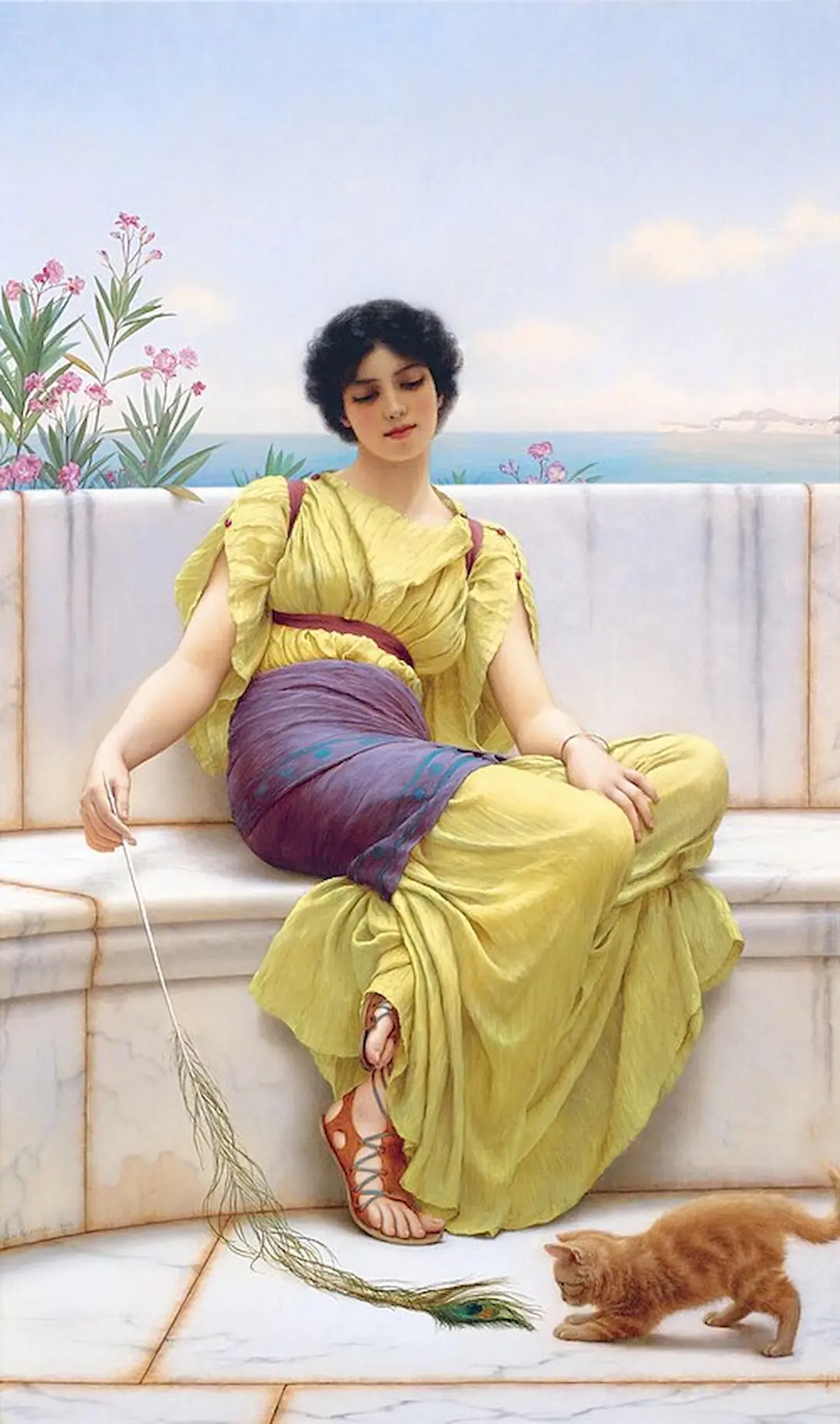
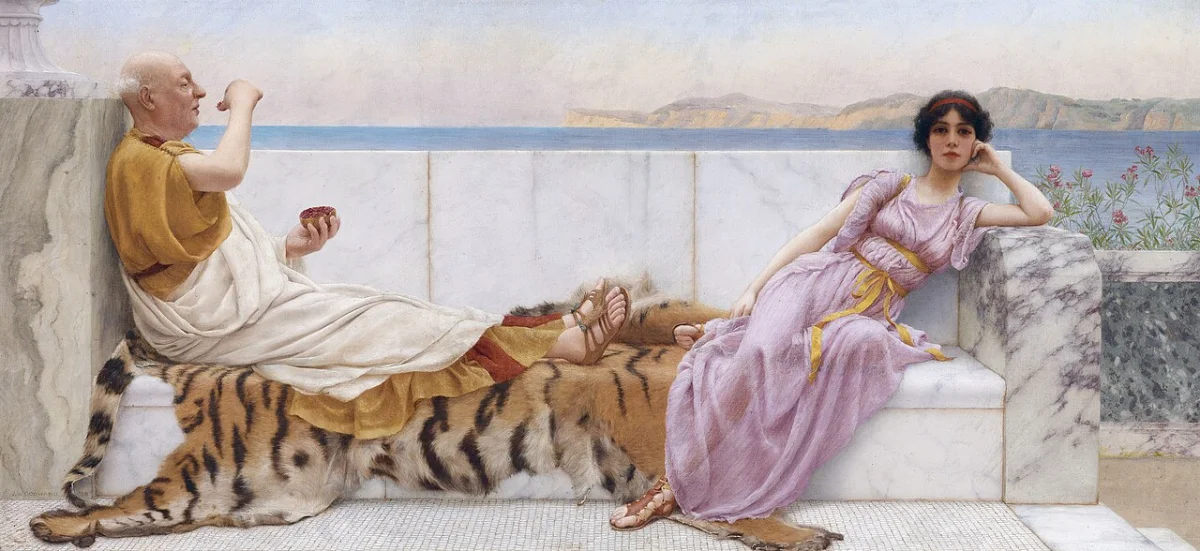
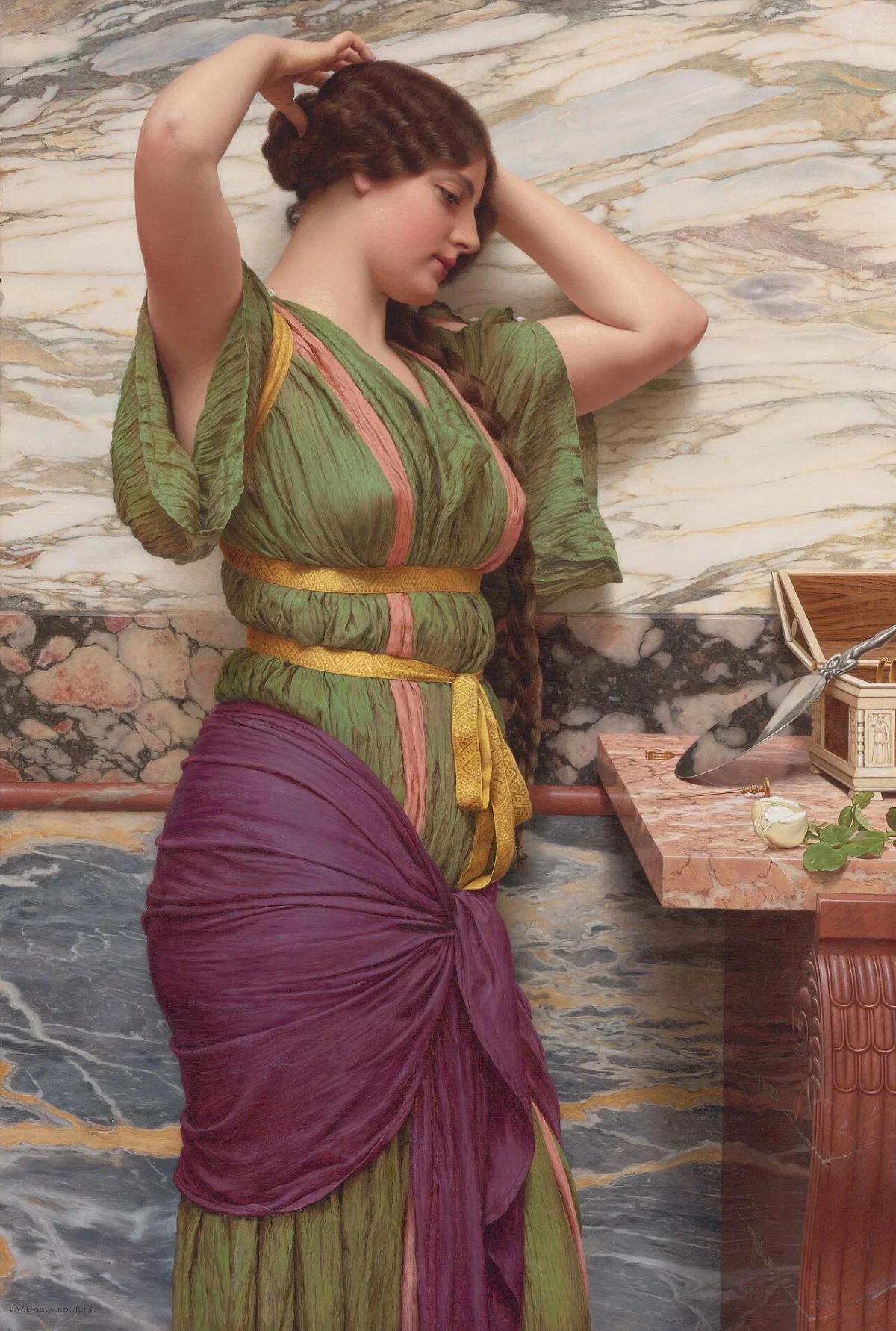
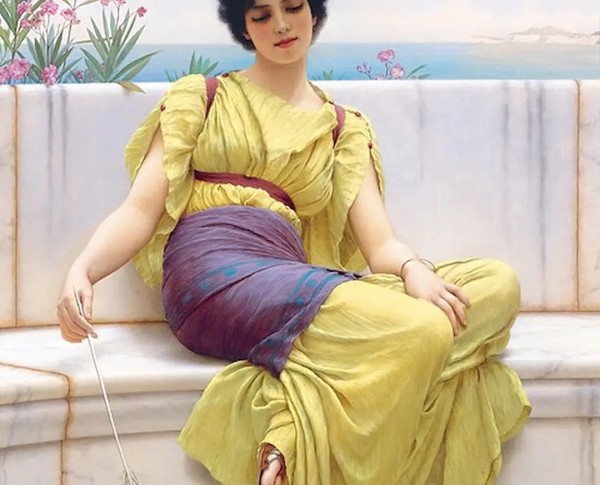
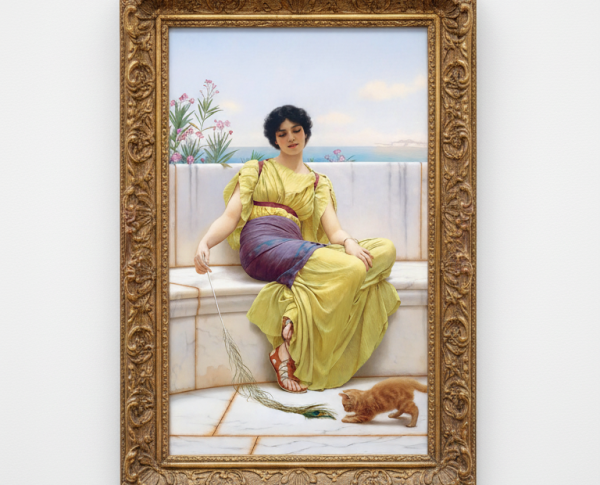
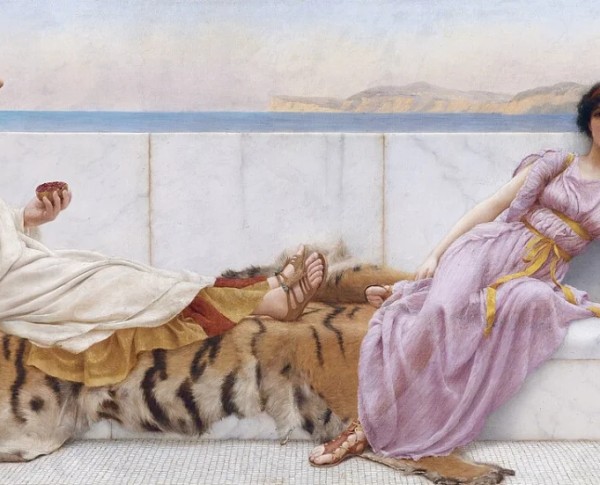
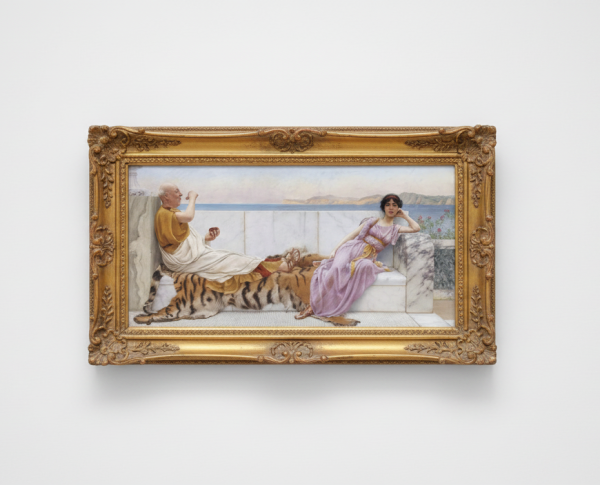
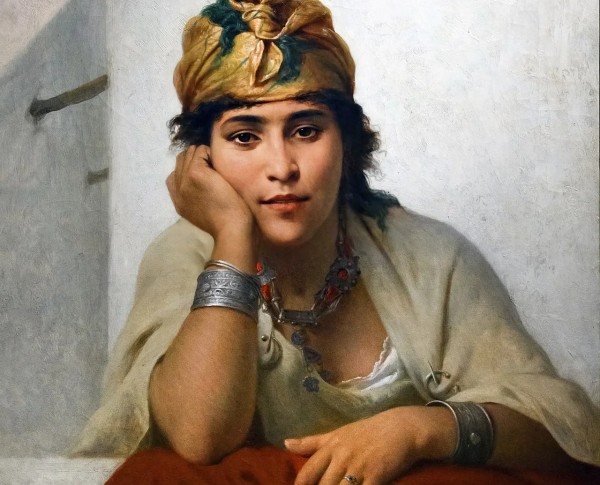
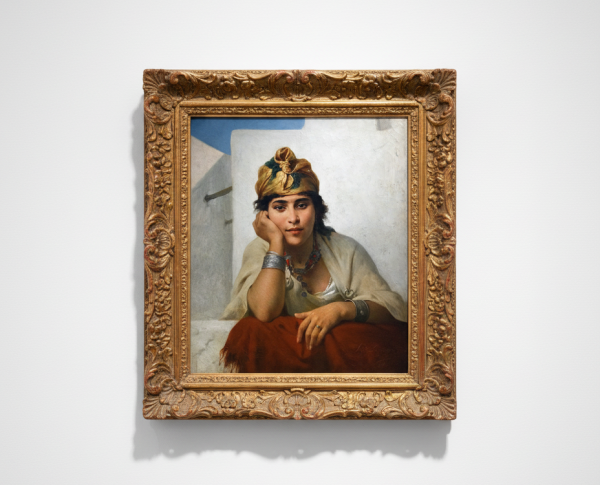
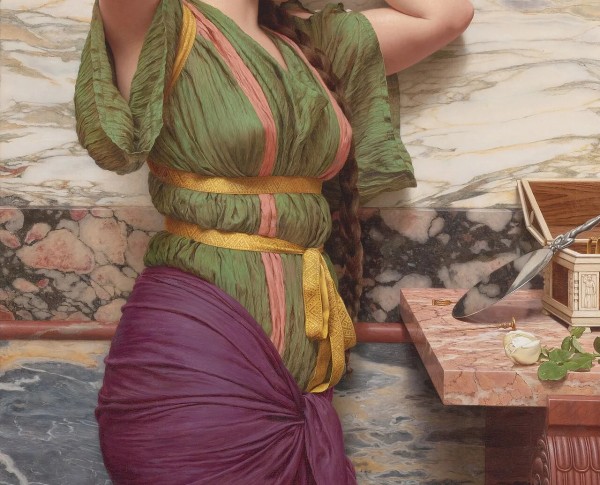
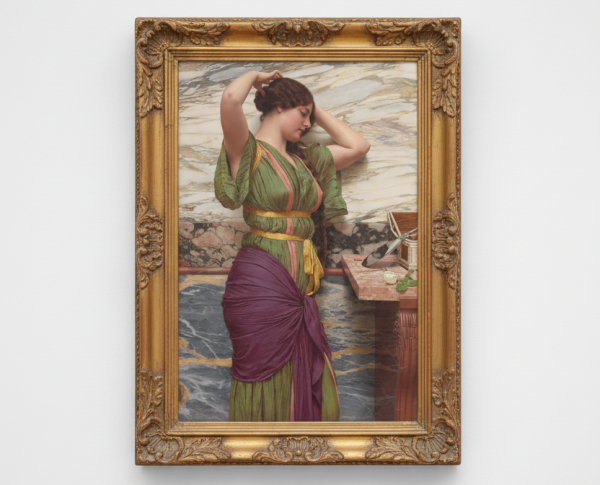
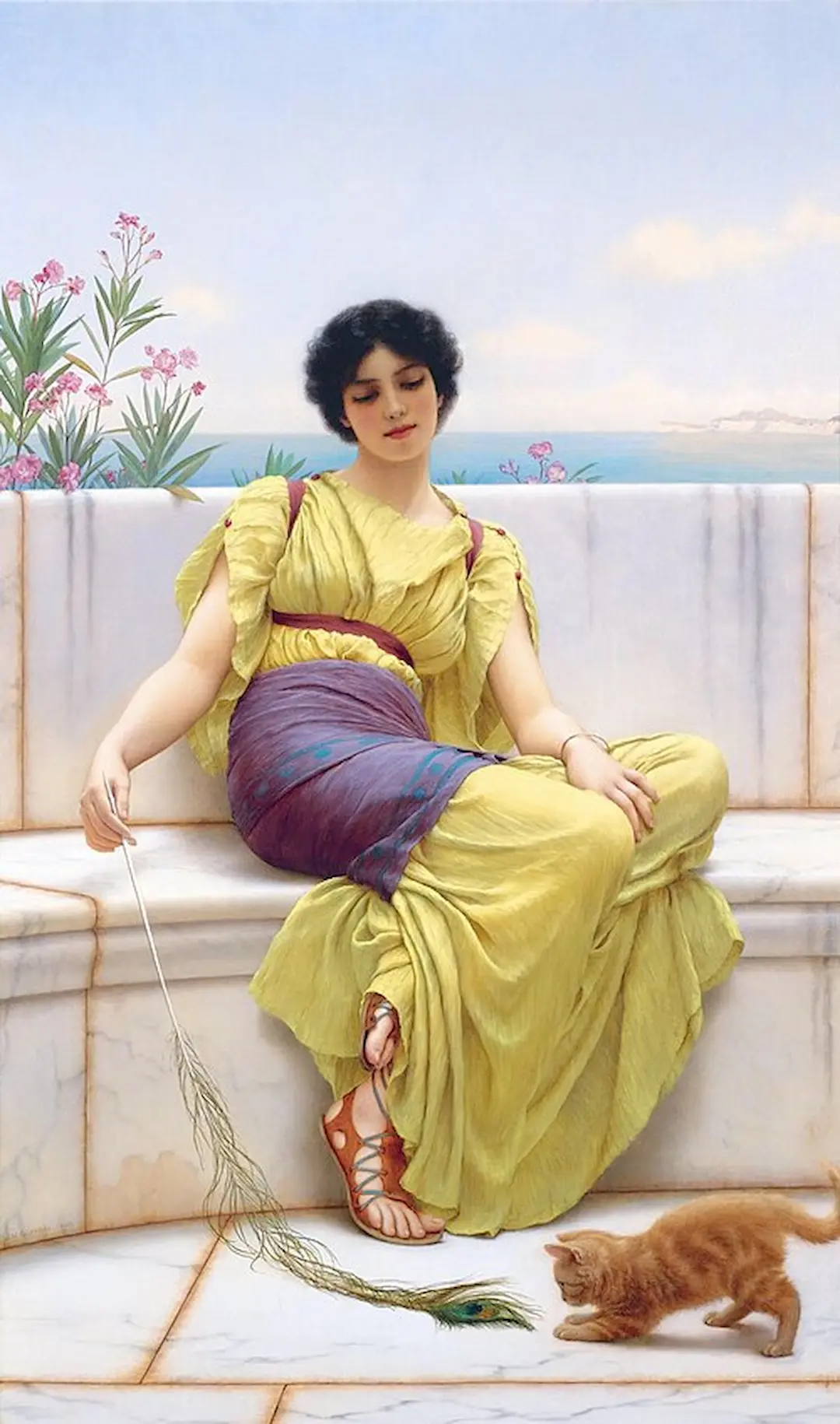
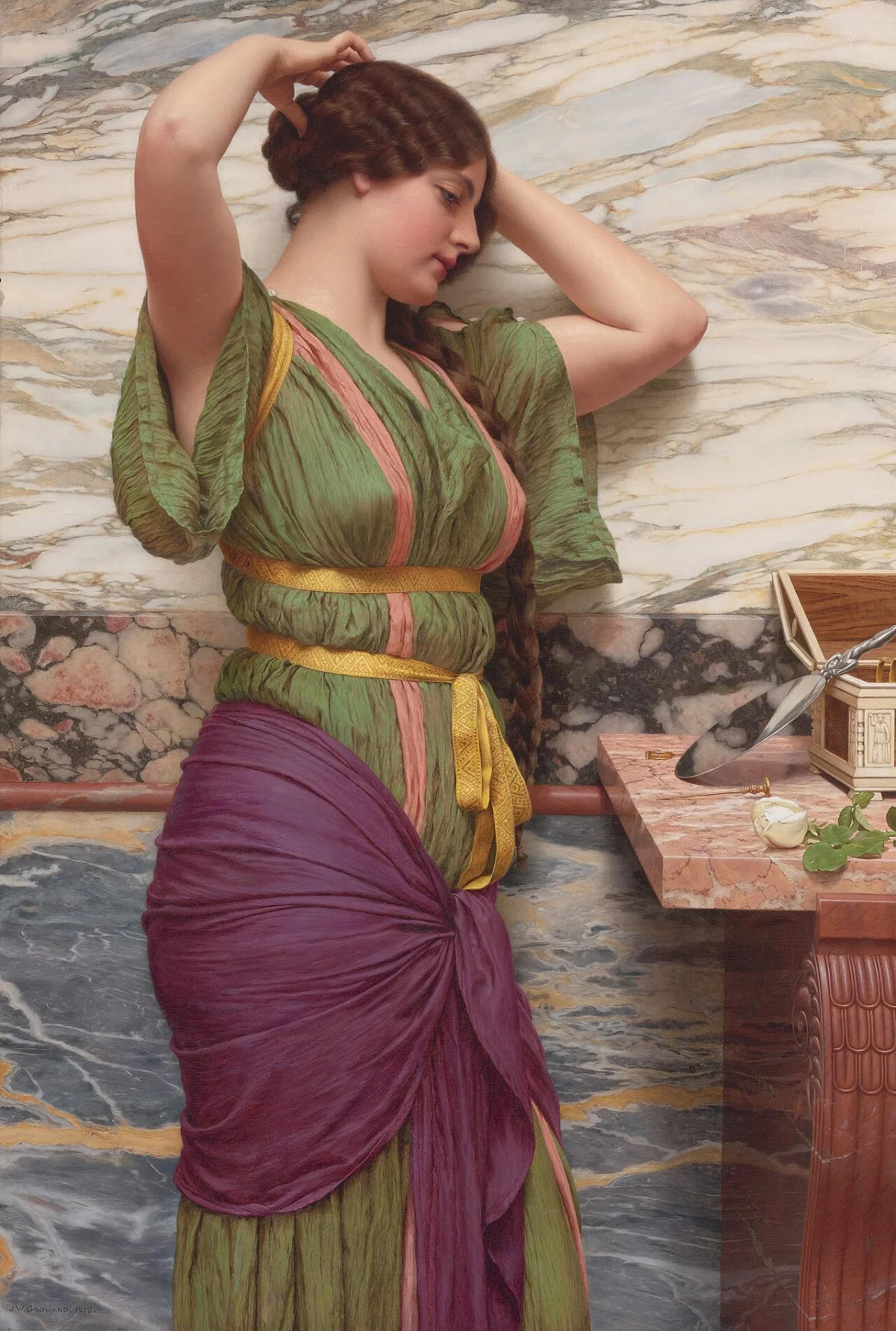
With "Reverie," Godward demonstrates remarkable skill in his use of oil on canvas, capturing delicate textures and subtle gradations of light. The artist’s precise brushwork and harmonious color palette are hallmarks of Neoclassical Academic Realism, inviting viewers to appreciate the technical brilliance behind each composition. Similar to his works "Eighty and eighteen" and "Idleness II," this painting exemplifies the refined beauty achievable through oil on canvas, making it a cherished masterpiece in the world of fine art.
"Reverie" by John William Godward is more than a fine art painting for sale; it is a portal into a world of contemplation and classical symbolism. The painting’s tranquil subject and carefully chosen setting evoke themes of introspection and idealized beauty, which are central to the Neoclassical Academic Realism movement. Godward’s attention to symbolic detail in this work, as well as in "Eighty and eighteen" and "Idleness II," offers viewers layers of meaning to discover and appreciate.
For collectors seeking a remarkable addition to their galleries, "Reverie" by John William Godward is a fine art painting for sale that embodies both historical significance and aesthetic excellence. Its connection to Neoclassical Academic Realism and its kinship with other Godward works like "Eighty and eighteen" and "Idleness II" enhance its desirability. Owning this painting means possessing a piece of art history, meticulously crafted with the dedication characteristic of Godward’s celebrated legacy.
When Art Meets History
"Reverie" by John William Godward stands as a defining piece within the Neoclassical Academic Realism movement. This hand-painted oil painting captures the grace and serenity typical of the era, echoing the classical influences also found in works like "The Oath of the Horatii" and "The Death of Socrates." Godward’s meticulous attention to detail places "Reverie" among the most admired compositions, reflecting a harmonious blend of history and artistic innovation.
Techniques That Speak
John William Godward’s "Reverie" exemplifies the masterful use of oil on canvas, a hallmark of Neoclassical Academic Realism. Through delicate brushwork and lifelike textures, Godward achieves a luminous effect that rivals contemporaries such as Jacques-Louis David. The artist’s refined technique can be compared to the precision seen in "Consecration of the Emperor Napoleon I and Coronation of the Empress Josephine 1805-07" and "Calm on a Fiery Steed," enhancing the painting’s timeless allure.
Emotions on Display
In "Reverie," Godward invites viewers into a world of tranquil introspection, a mood reminiscent of "Mars Being Disarmed by Venus." The subject’s serene pose and thoughtful expression evoke a sense of longing and peaceful solitude. This fine art painting for sale captures the delicate balance between emotion and restraint, a signature of the Neoclassical Academic Realism movement, making it a compelling companion to masterpieces like "The Death of Socrates" and "Crossing the Alps 1801."
Coveted by Collectors
"Reverie" by John William Godward is highly sought after by art collectors who appreciate the sophistication of Neoclassical Academic Realism. The painting’s historical significance and exquisite craftsmanship place it alongside revered works such as "Bonaparte," "Calm on a Fiery Steed," and "The Oath of the Horatii." As a hand-painted oil painting, it continues to inspire admiration and remains a prized fine art painting for sale in the world of classical art enthusiasts.
Related Neoclassical Academic Realism Hand-Painted Oil Paintings by Other Artists
Other Famous Neoclassical Academic Realism Artists:
Frequently Asked Questions About Reverie
What is the historical context of "Reverie"?
"Reverie," painted by John William Godward in 1910, reflects the late Victorian and Edwardian era's fascination with classical themes and beauty, showcasing the artist's commitment to the aesthetic movement and the revival of classical ideals in art.
What artistic techniques did Godward employ in "Reverie"?
Godward utilized a meticulous technique characterized by smooth brushwork, vibrant color palettes, and an emphasis on light and shadow, which are hallmarks of his neoclassical style. His attention to detail enhances the realism of the subject and the overall composition.
What is the significance of the subject in "Reverie"?
The subject of "Reverie" is a young woman in a contemplative pose, embodying the themes of beauty, tranquility, and introspection. This portrayal aligns with the ideals of femininity prevalent in the early 20th century, often idealizing women as muses and symbols of inspiration.
How does "Reverie" reflect the influence of classical art?
"Reverie" draws heavily from classical art traditions, particularly in its subject matter and composition. The use of drapery, the serene expression of the figure, and the harmonious arrangement echo the works of ancient Greek and Roman sculptures, reinforcing the timeless nature of beauty.
What symbols can be found in "Reverie" and what do they represent?
The painting features elements such as flowers and classical architecture, which symbolize beauty, transience, and the connection between nature and the divine. These symbols enhance the overall theme of contemplation and the fleeting nature of life.
In what ways does "Reverie" exemplify the Aesthetic Movement?
"Reverie" exemplifies the Aesthetic Movement through its focus on beauty for beauty's sake, prioritizing visual pleasure over narrative content. Godward's work embodies the movement's ideals by celebrating aesthetic experience and the pursuit of idealized forms.
What role does color play in "Reverie"?
Color in "Reverie" plays a crucial role in evoking emotion and setting the mood. Godward's use of soft, harmonious colors creates a serene atmosphere, inviting viewers to share in the subject's introspective moment and enhancing the painting's overall tranquility.
How does "Reverie" compare to other works by Godward?
Compared to other works by Godward, "Reverie" showcases his signature style of combining classical themes with a focus on beauty and femininity. While many of his paintings feature similar subjects, "Reverie" stands out for its intimate portrayal of the subject's inner world.
What impact did "Reverie" have on the art community at the time of its creation?
Upon its release, "Reverie" contributed to the ongoing dialogue about the role of beauty in art and the revival of classical themes. It solidified Godward's reputation as a leading figure in the neoclassical movement and influenced contemporary artists to explore similar aesthetic ideals.
What can modern viewers learn from "Reverie"?
Modern viewers can appreciate "Reverie" as a representation of the enduring quest for beauty and the exploration of human emotion. The painting invites reflection on the nature of art, the importance of aesthetics, and the timeless themes of contemplation and serenity.






















_GFM_Painting_(1).webp)


 100% Hand-Painted: Finished in 3-6 Weeks

.png)
















_(1).webp)