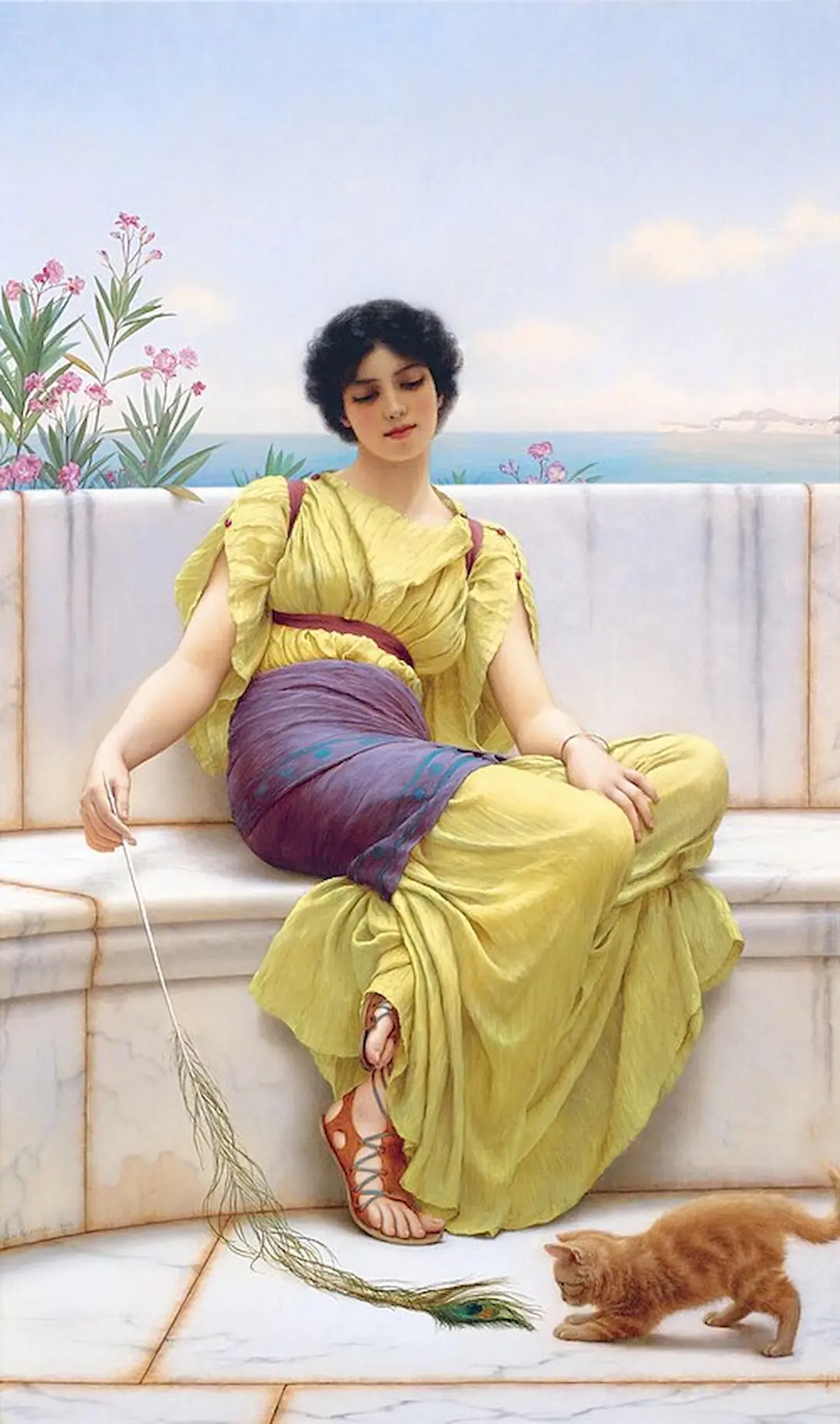
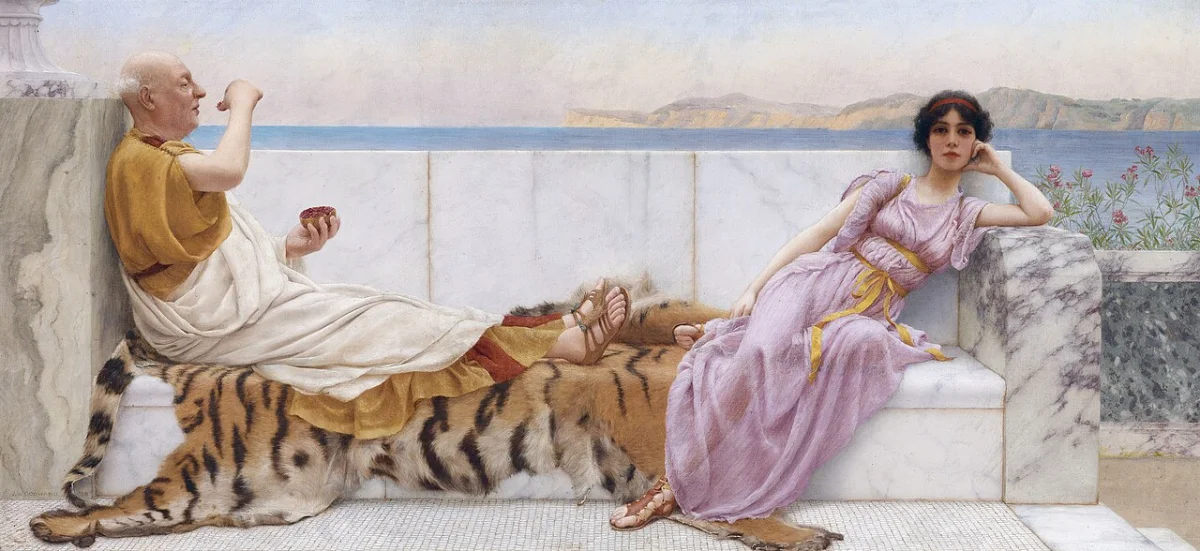
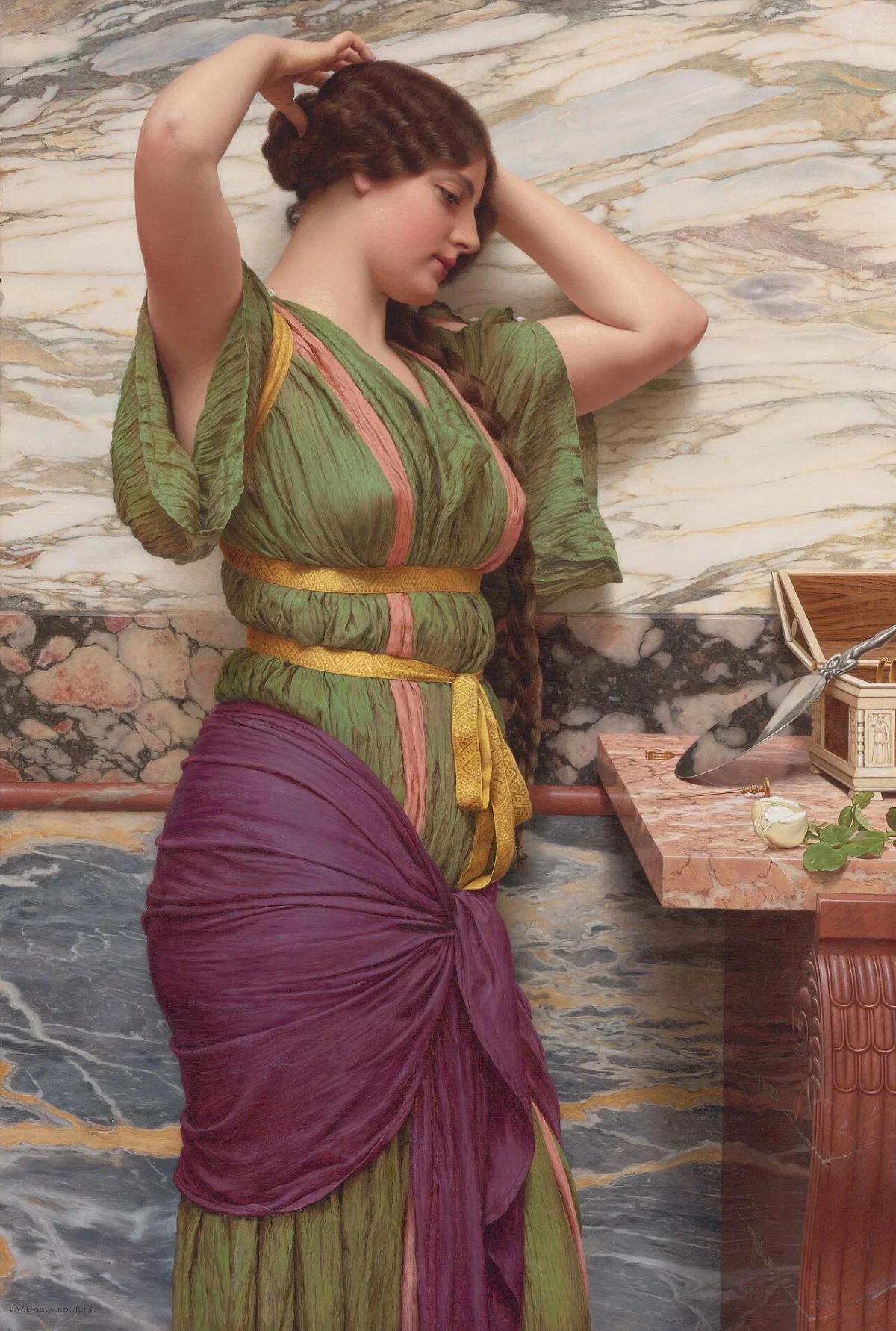
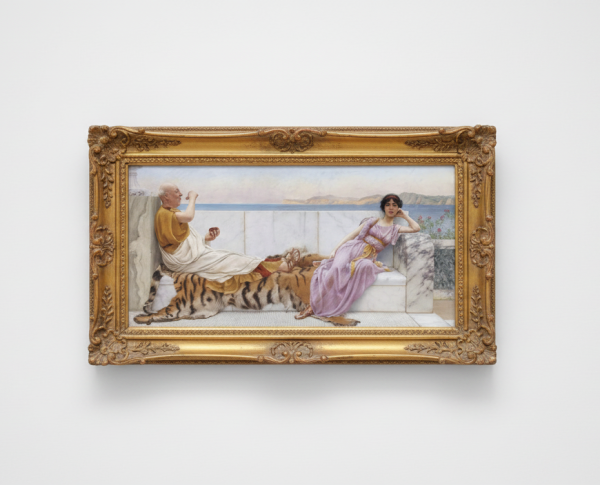
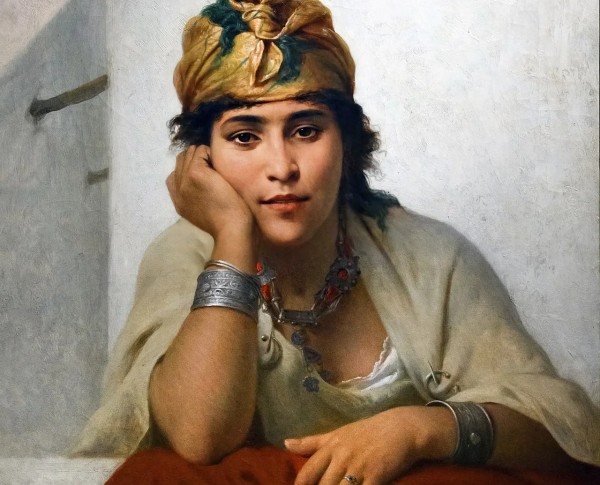
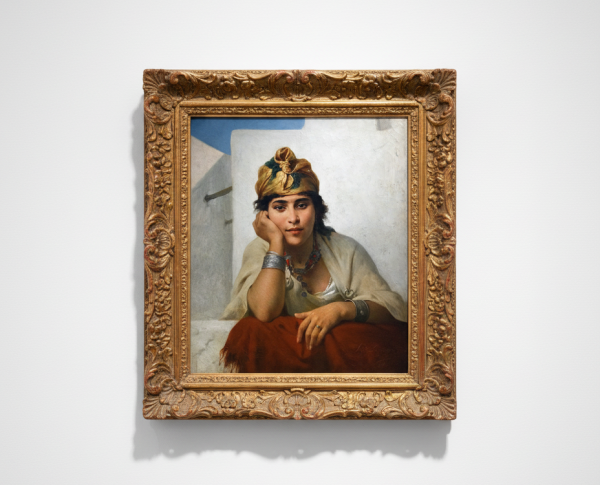
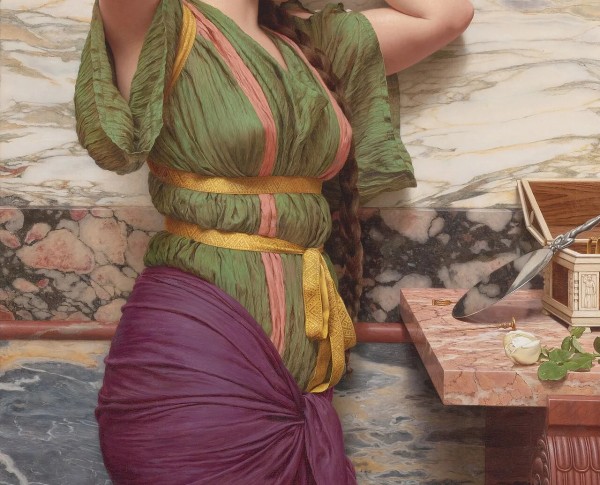
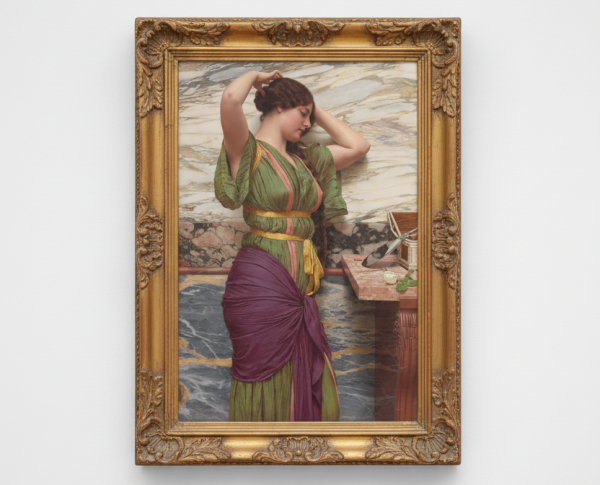
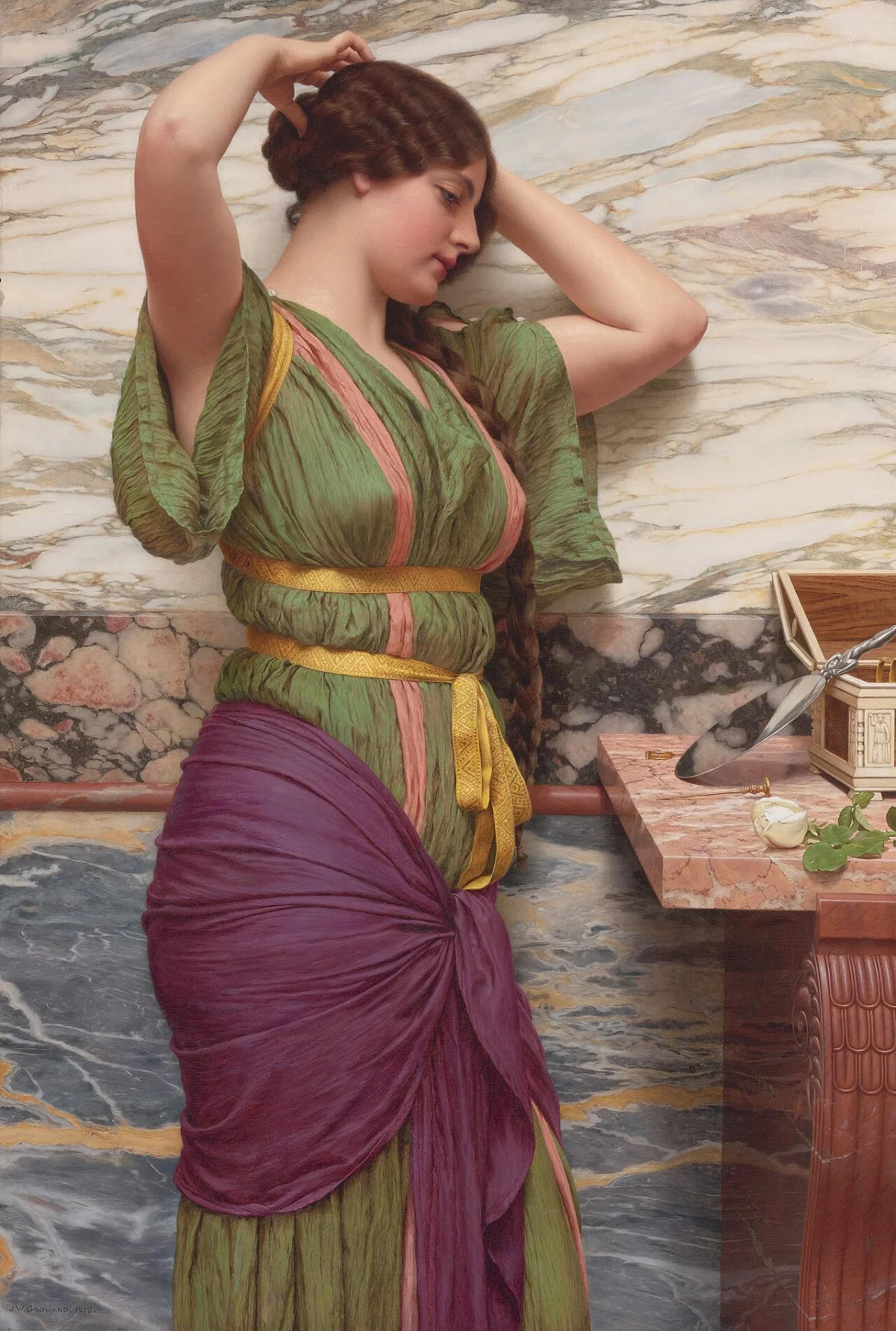
The meticulous technique evident in "A Fair Reflection" showcases Godward’s expertise with oil on canvas. Each brushstroke highlights his attention to detail, from the luxurious drapery to the luminous skin tones. This painting exemplifies the refined skill characteristic of Neoclassical Academic Realism, much like his celebrated works "Eighty and eighteen" and "The Mirror," making it a sought-after piece for enthusiasts of traditional artistry.
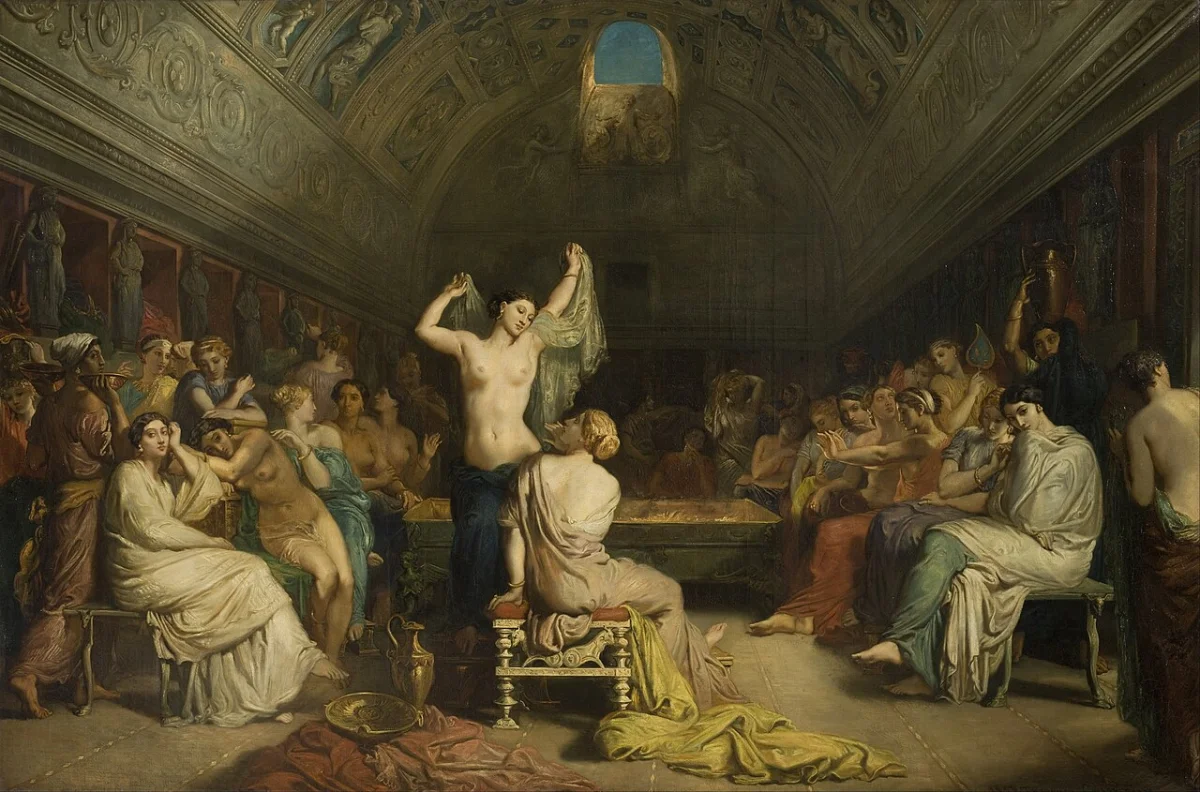
Within "A Fair Reflection," the viewer discovers layers of meaning and symbolism, a hallmark of Godward's approach in fine art painting for sale. The reflective surface in the composition not only represents physical beauty but also invites contemplation of inner self, a theme resonant in other works like "In the Tepidarium." Collectors appreciate these subtle narratives, which add depth and intrigue to any fine art collection.
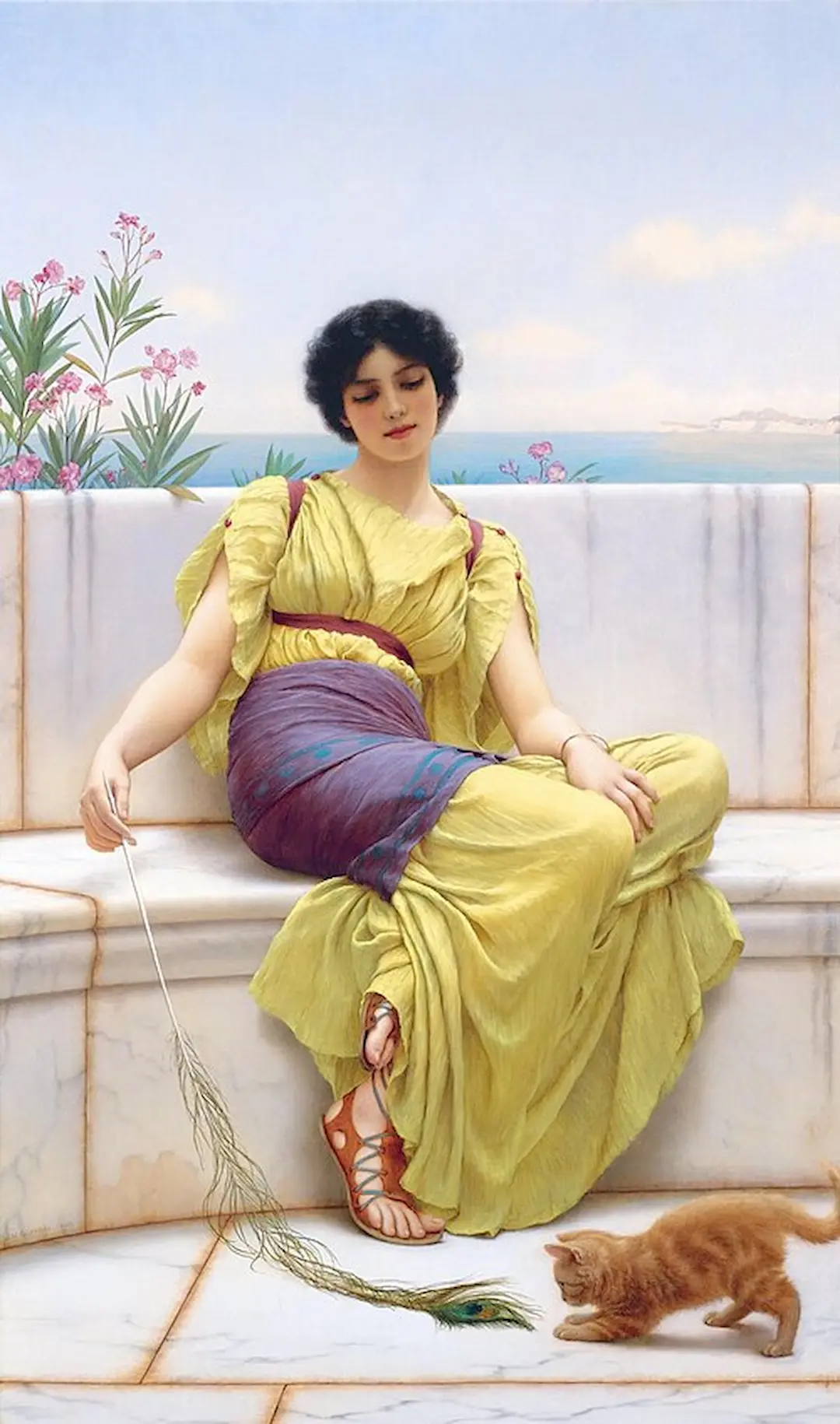
For discerning collectors, "A Fair Reflection" by John William Godward is more than just an exquisite oil on canvas; it is a piece of art history. Its connection to the Neoclassical Academic Realism movement and kinship with related products like "Idleness II" and "The Mirror" make it a prized acquisition. This hand-painted oil painting is a true gem for anyone seeking to elevate their collection with a work of enduring sophistication.
When Art Meets History
"A Fair Reflection" by John William Godward stands as a testament to the Neoclassical Academic Realism movement, blending historical ideals with artistic mastery. This hand-painted oil painting evokes the grace and poise found in ancient Roman and Greek cultures, drawing inspiration from the same classical sources as "The Death of Marat" and "Napoleon Crossing the Alps." Godward’s attention to detail and timeless elegance make this piece a coveted addition to any fine art collection.
Techniques That Speak
Employing the traditional medium of oil on canvas, John William Godward showcases his technical prowess in "A Fair Reflection." The smooth brushwork and meticulous rendering of textures echo the refined techniques seen in "The Death of Socrates" and "The Oath of the Horatii." Through masterful control of light and shadow, Godward breathes life into his subject, exemplifying the ideals of Neoclassical Academic Realism and elevating the painting’s visual impact.
Emotions on Display
In "A Fair Reflection," Godward captures a serene moment, inviting viewers to contemplate beauty, introspection, and tranquility. The composition’s calm demeanor rivals the emotional depth found in works like "Bonaparte, Calm on a Fiery Steed" and "Crossing the Alps 1801." This fine art painting for sale resonates deeply with audiences, as it channels the timeless human emotions celebrated by the Neoclassical Academic Realism movement and immortalized by Godward’s contemporaries.
Coveted by Collectors
As a remarkable example of Neoclassical Academic Realism, "A Fair Reflection" by John William Godward is highly sought after by art enthusiasts worldwide. Its exquisite craftsmanship and historical significance place it alongside masterpieces such as "The Death of Marat" and "Napoleon Crossing the Alps." Collectors who appreciate hand-painted oil paintings and the enduring allure of oil on canvas find this piece to be a valuable and cherished addition to their collections.
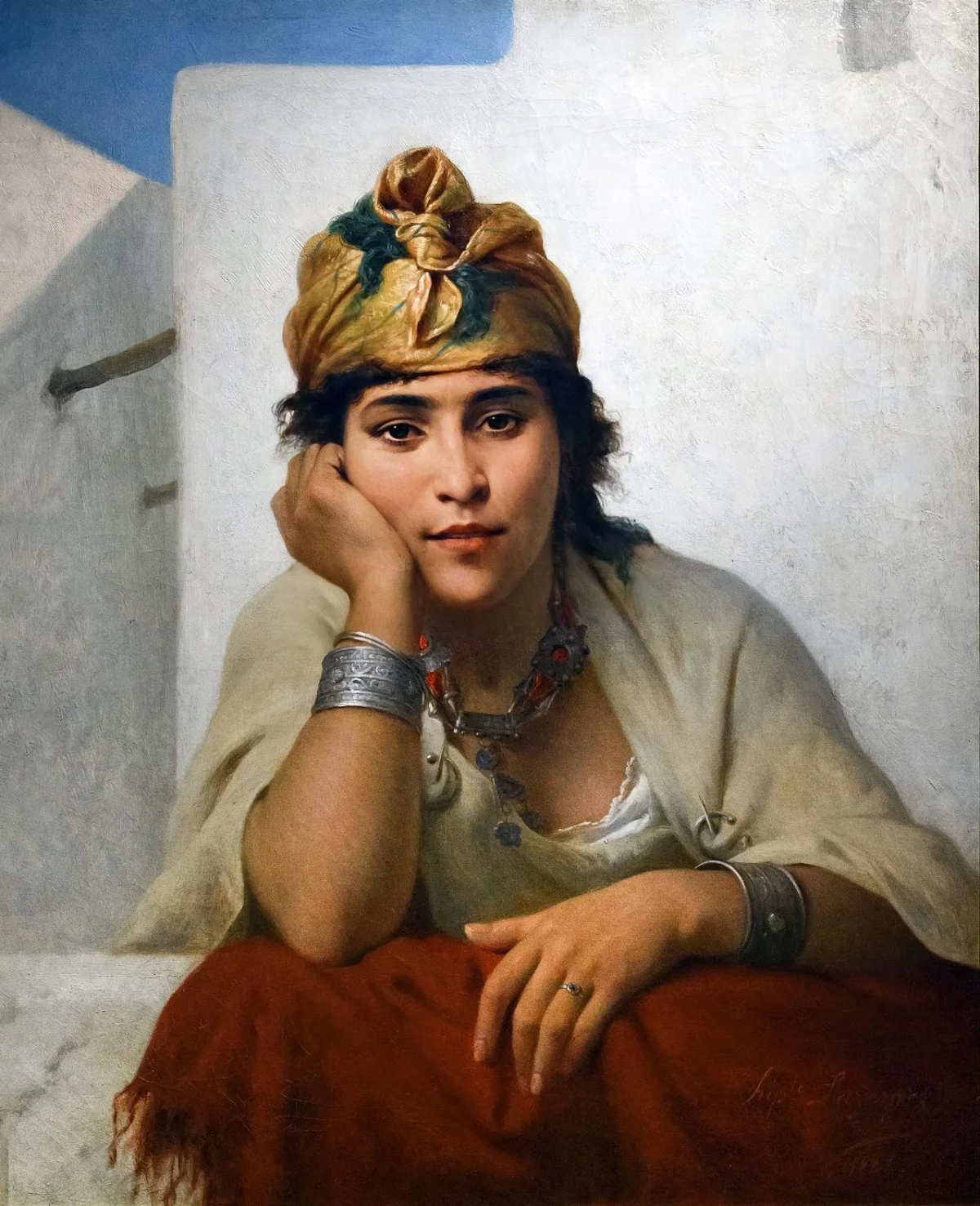
Related Neoclassical Academic Realism Hand-Painted Oil Paintings by Other Artists
Other Famous Neoclassical Academic Realism Artists:
Frequently Asked Questions About A Fair Reflection
What is the historical context of "A Fair Reflection"?
"A Fair Reflection," painted by John William Godward in 1913, reflects the late Victorian and Edwardian periods' fascination with classical themes and aesthetics. This era was marked by a revival of interest in ancient cultures, particularly Greco-Roman art and philosophy.
What artistic techniques did Godward employ in "A Fair Reflection"?
Godward is known for his meticulous attention to detail and use of vibrant colors. In "A Fair Reflection," he employs a smooth, almost photographic realism, particularly in the rendering of the figure's skin and the reflective surfaces, showcasing his skill in oil painting.
What themes are explored in "A Fair Reflection"?
The painting explores themes of beauty, introspection, and the passage of time. The figure gazing into the mirror symbolizes self-reflection and the duality of appearance versus reality, inviting viewers to contemplate their own perceptions of beauty.
How does "A Fair Reflection" exemplify the neoclassical style?
The neoclassical style is characterized by its emphasis on harmony, proportion, and simplicity, often drawing inspiration from classical antiquity. Godward's work embodies these principles through the serene composition and the graceful pose of the figure, reminiscent of classical sculptures.
What is the significance of the mirror in "A Fair Reflection"?
The mirror serves as a powerful symbol of self-examination and vanity. It reflects not only the physical beauty of the figure but also raises questions about identity and the nature of self-perception, a common theme in art history.
In what ways does "A Fair Reflection" reflect Godward's artistic influences?
Godward was influenced by the Pre-Raphaelite Brotherhood and the classical tradition. "A Fair Reflection" showcases these influences through its lush colors, intricate details, and the idealized portrayal of the female form, which are hallmarks of both movements.
What is the significance of the color palette used in "A Fair Reflection"?
The color palette of "A Fair Reflection" is dominated by soft pastels and rich jewel tones, which enhance the painting's ethereal quality. The use of light and shadow creates depth and dimension, emphasizing the figure's beauty and the reflective surface of the mirror.
How does "A Fair Reflection" fit into the broader context of Godward's body of work?
"A Fair Reflection" is representative of Godward's signature style, which often features solitary female figures in serene settings. This painting encapsulates his exploration of beauty and femininity, themes that recur throughout his oeuvre.
What role does the setting play in "A Fair Reflection"?
The setting in "A Fair Reflection" is carefully crafted to enhance the mood of tranquility and introspection. The ornate drapery and classical architecture in the background provide a timeless quality, reinforcing the painting's themes of beauty and reflection.
What impact did "A Fair Reflection" have on the art community at the time of its creation?






















_GFM_Painting_(1).webp)


 100% Hand-Painted: Finished in 3-6 Weeks

.png)















_(1).webp)