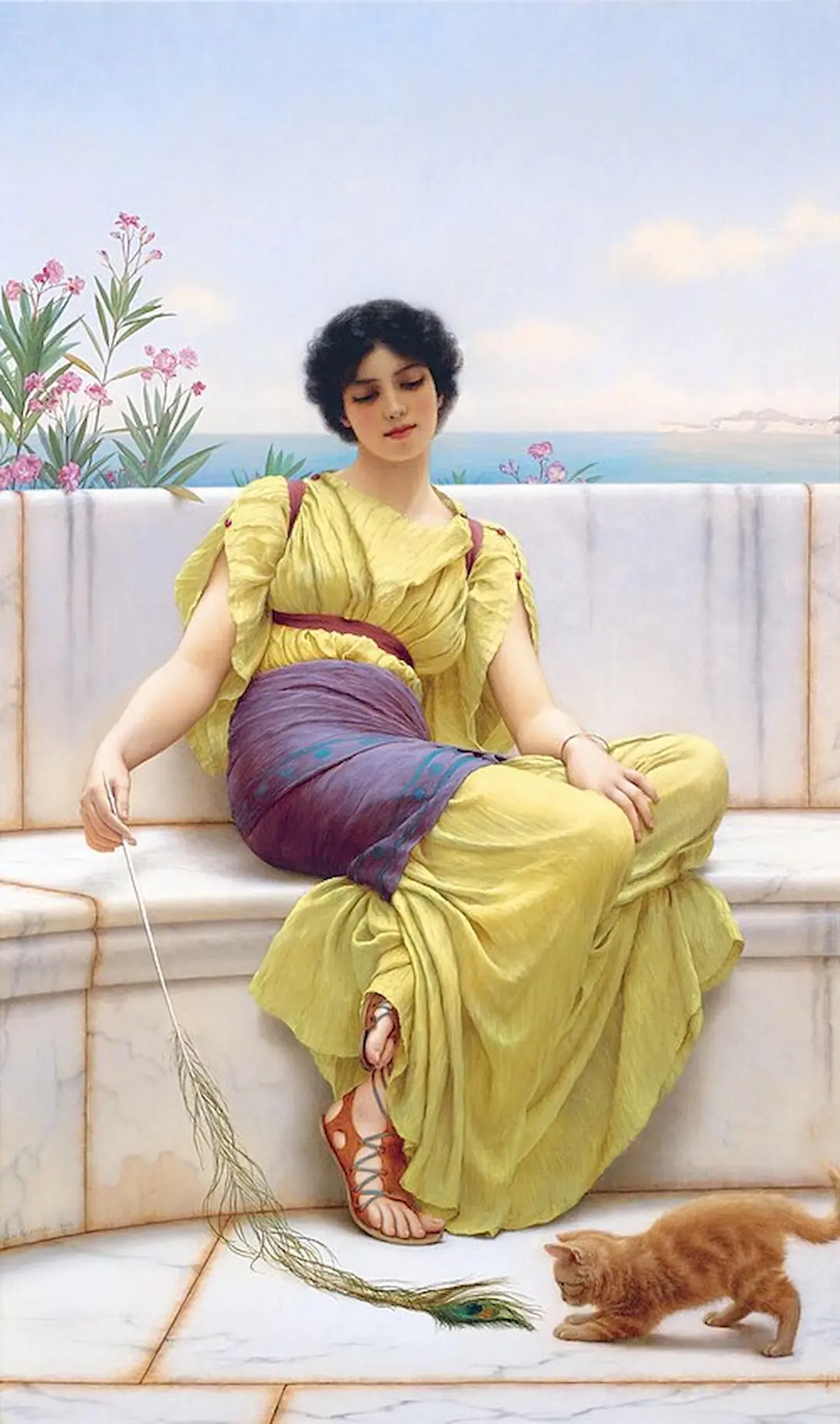
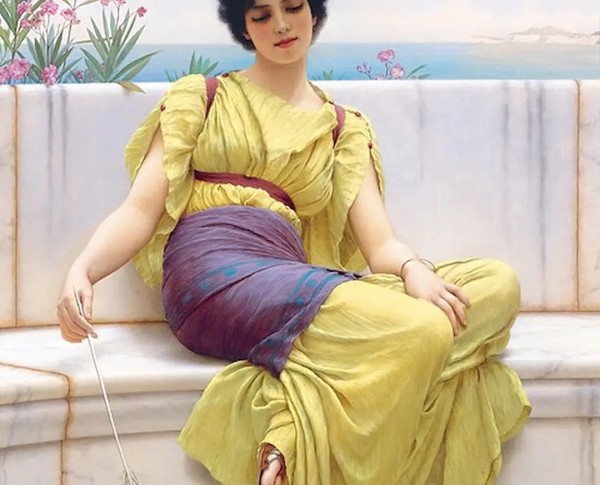
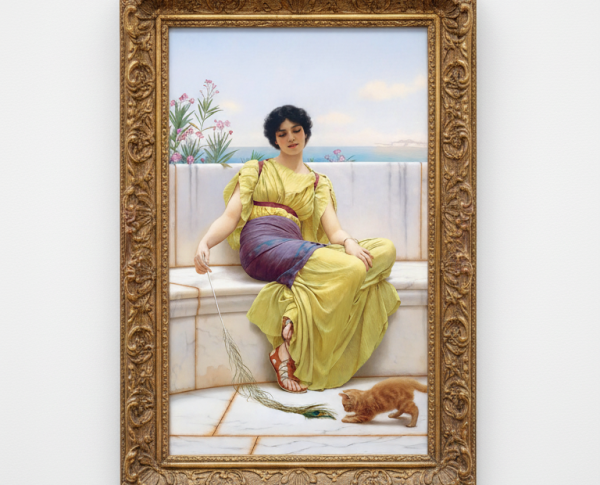
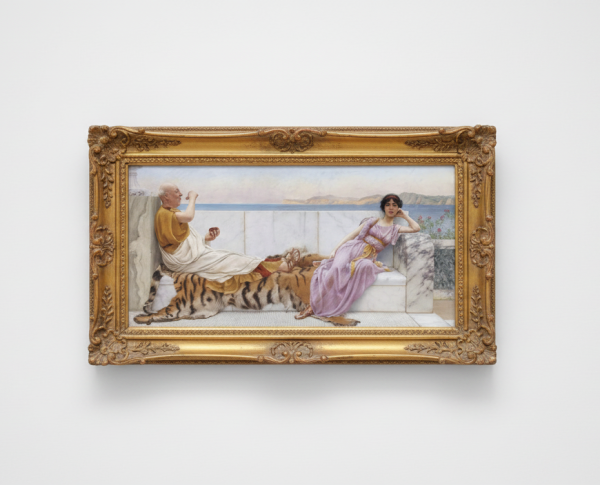
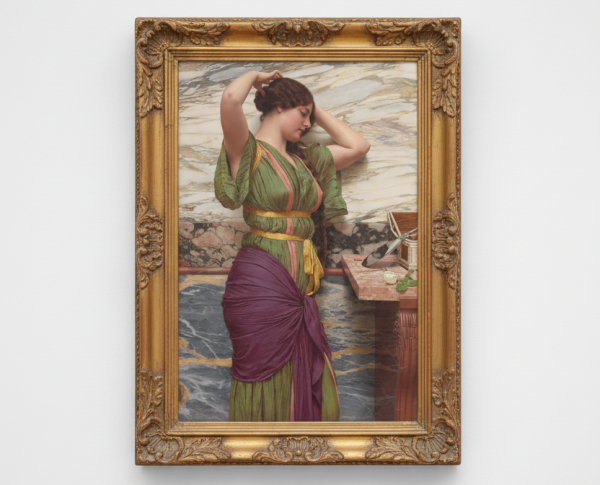
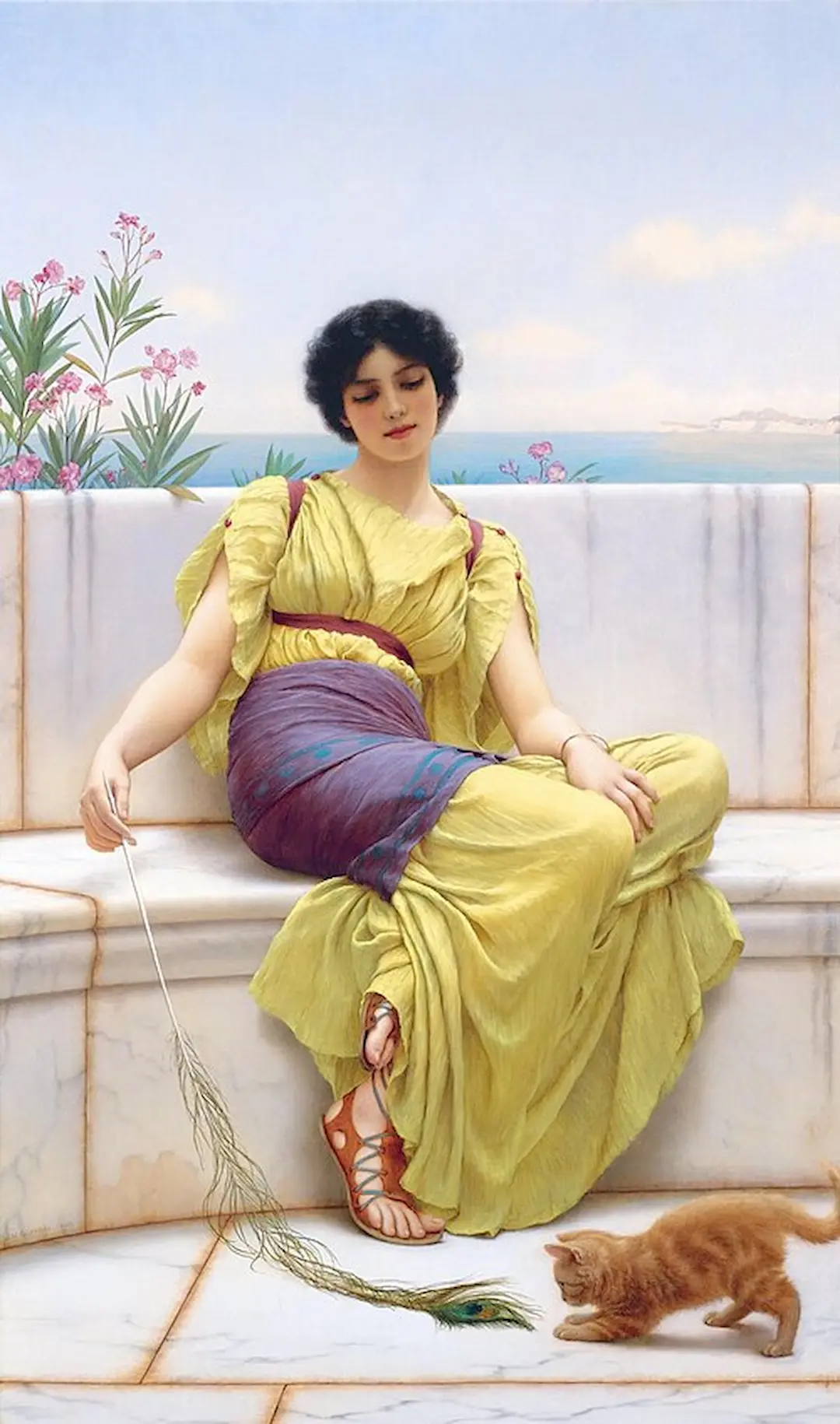
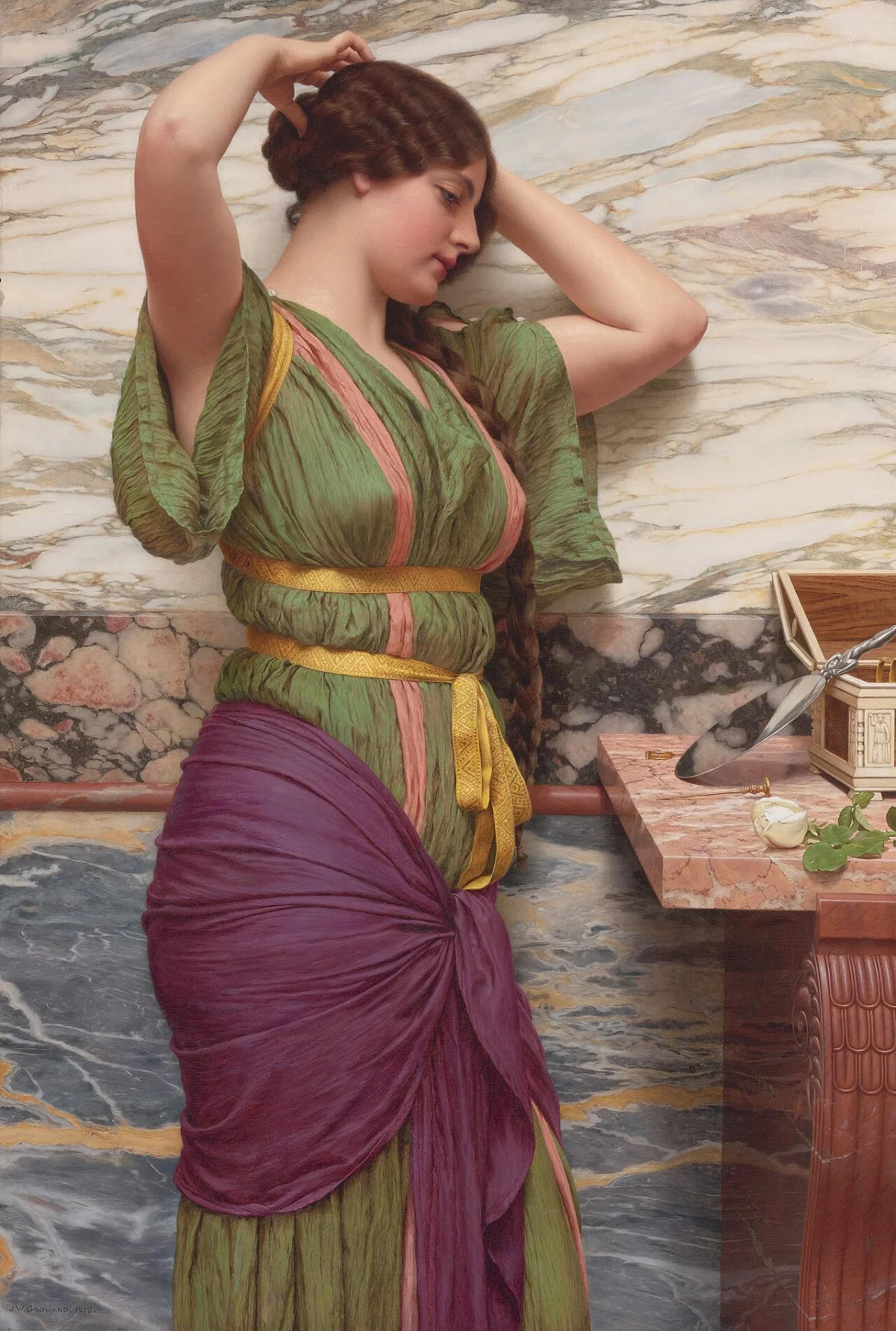
John William Godward’s "Idleness II" exemplifies his mastery of oil on canvas, showcasing precise detail and harmonious color palettes. As a leading figure in Neoclassical Academic Realism, Godward’s ability to render lifelike textures and graceful figures is unmatched. This oil on canvas painting invites viewers to appreciate the technical brilliance and artistic vision that make Godward’s works so enduring. Explore the beauty and refinement found in each brushstroke of this celebrated artwork.
In "Idleness II," Godward weaves subtle narratives and classical symbolism into a tranquil setting, characteristic of Neoclassical Academic Realism. The fine art painting for sale features a contemplative figure, inviting viewers to reflect on themes of leisure and introspection. Godward’s attention to historical detail and gentle composition imbue the painting with layers of meaning. Collectors value these symbolic elements, seeking related products that capture the spirit of this refined artistic movement.
For art lovers and collectors, "Idleness II" by John William Godward represents a pinnacle of hand-painted oil painting from the Neoclassical Academic Realism era. This exceptional artwork is more than just a visual delight; it is a testament to Godward’s legacy and the enduring appeal of classical art. Owning such a fine art painting for sale elevates any collection, connecting the present with the timeless beauty and sophistication of the past.
When Art Meets History
"Idleness II" by John William Godward stands as a remarkable example of Neoclassical Academic Realism, a movement that drew inspiration from classical antiquity. This hand-painted oil painting transports viewers to a serene, ancient world, much like the celebrated works "Napoleon Crossing the Alps" and "The Death of Socrates." Godward’s meticulous attention to historical detail and refined technique ensures that "Idleness II" remains a timeless masterpiece, seamlessly blending art, history, and culture in every brushstroke.
Techniques That Speak
John William Godward’s mastery is evident in the oil on canvas medium of "Idleness II," where delicate textures and luminous skin tones evoke the finest traditions of Neoclassical Academic Realism. His approach mirrors that of earlier masters in "Crossing the Alps 1801" and "Calm on a Fiery Steed," using vibrant colors and careful composition to create visual harmony. The painting’s smooth surfaces and naturalistic detail showcase Godward’s technical brilliance, making it a standout piece among his contemporaries.
Emotions on Display
In "Idleness II," Godward captures a moment of tranquil introspection, inviting viewers to reflect on the subject’s gentle repose. The painting’s serene mood, characteristic of Neoclassical Academic Realism, resonates deeply, much like the contemplative atmospheres found in works such as "Consecration of the Emperor Napoleon I and Coronation of the Empress Josephine 1805-07." This fine art painting for sale enchants collectors and art lovers alike, thanks to its emotional depth and timeless beauty.
Coveted by Collectors
Collectors prize "Idleness II" for its exquisite representation of Neoclassical Academic Realism and John William Godward’s signature style. Its popularity rivals that of related masterpieces, including "Napoleon Crossing the Alps" and "The Death of Socrates." As a hand-painted oil painting, "Idleness II" is highly sought after in the art market, appealing to those who appreciate both historical significance and visual splendor, making it a truly coveted work among fine art connoisseurs worldwide.
Related Neoclassical Academic Realism Hand-Painted Oil Paintings by Other Artists
Other Famous Neoclassical Academic Realism Artists:
Frequently Asked Questions About Idleness II
What is the historical context of "Idleness II"?
"Idleness II," painted by John William Godward in 1895, reflects the late Victorian era's fascination with classical themes and aesthetics, as well as the shift towards a more introspective and idealized representation of beauty.
What artistic techniques did Godward use in "Idleness II"?
Godward employed a meticulous technique characterized by smooth brushwork, vibrant color palettes, and a keen attention to detail, particularly in the depiction of fabric and skin tones, which enhances the painting's overall sense of realism.
What themes are explored in "Idleness II"?
The painting explores themes of leisure, beauty, and the idealization of femininity, encapsulating the notion of idleness as a state of grace and tranquility, often associated with the classical world.
Who are the figures depicted in "Idleness II"?
The central figure in "Idleness II" is a young woman, often interpreted as a representation of the idealized female form, embodying both beauty and serenity, which are central to Godward's artistic vision.
What symbolism can be found in "Idleness II"?
The painting is rich in symbolism; the relaxed pose of the figure and the lush, tranquil setting symbolize a retreat from the stresses of modern life, suggesting a longing for a more harmonious existence.
How does "Idleness II" reflect the influence of classical art?
"Idleness II" draws heavily from classical art traditions, particularly in its composition and subject matter, echoing the works of ancient Greek and Roman artists who celebrated the beauty of the human form and the ideals of leisure.
What role does color play in "Idleness II"?
Color plays a pivotal role in "Idleness II," with Godward utilizing a harmonious palette to evoke a sense of warmth and tranquility, enhancing the overall mood and emotional resonance of the piece.
In what ways does "Idleness II" reflect the artist's personal style?
The painting exemplifies Godward's signature style, characterized by a focus on classical themes, exquisite detail, and a celebration of beauty, which were hallmarks of his work throughout his career.
How was "Idleness II" received during its time?
Upon its exhibition, "Idleness II" was well-received, praised for its technical skill and aesthetic appeal, contributing to Godward's reputation as a leading figure in the genre of classical revival painting.
What impact did "Idleness II" have on later artists?
"Idleness II" influenced later artists by reinforcing the ideals of beauty and classical themes, inspiring a continued exploration of these concepts in the realms of both fine art and popular culture.






















_GFM_Painting_(1).webp)


 100% Hand-Painted: Finished in 3-6 Weeks

.png)















_(1).webp)