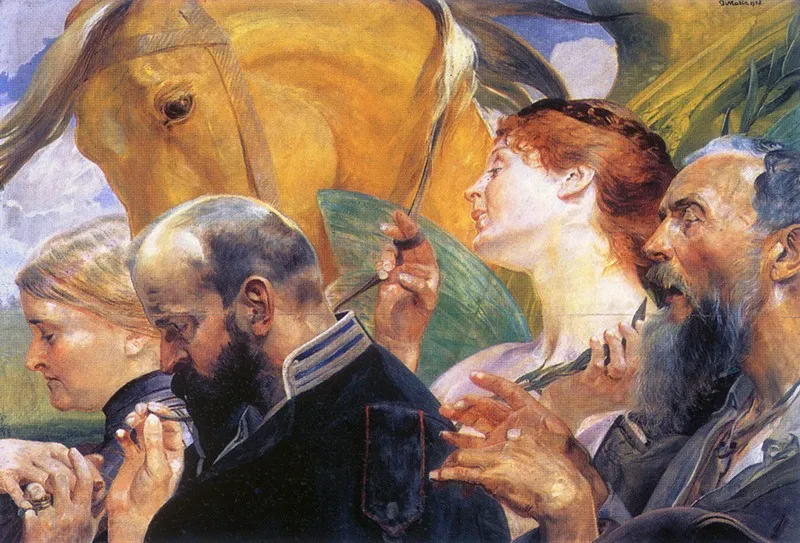
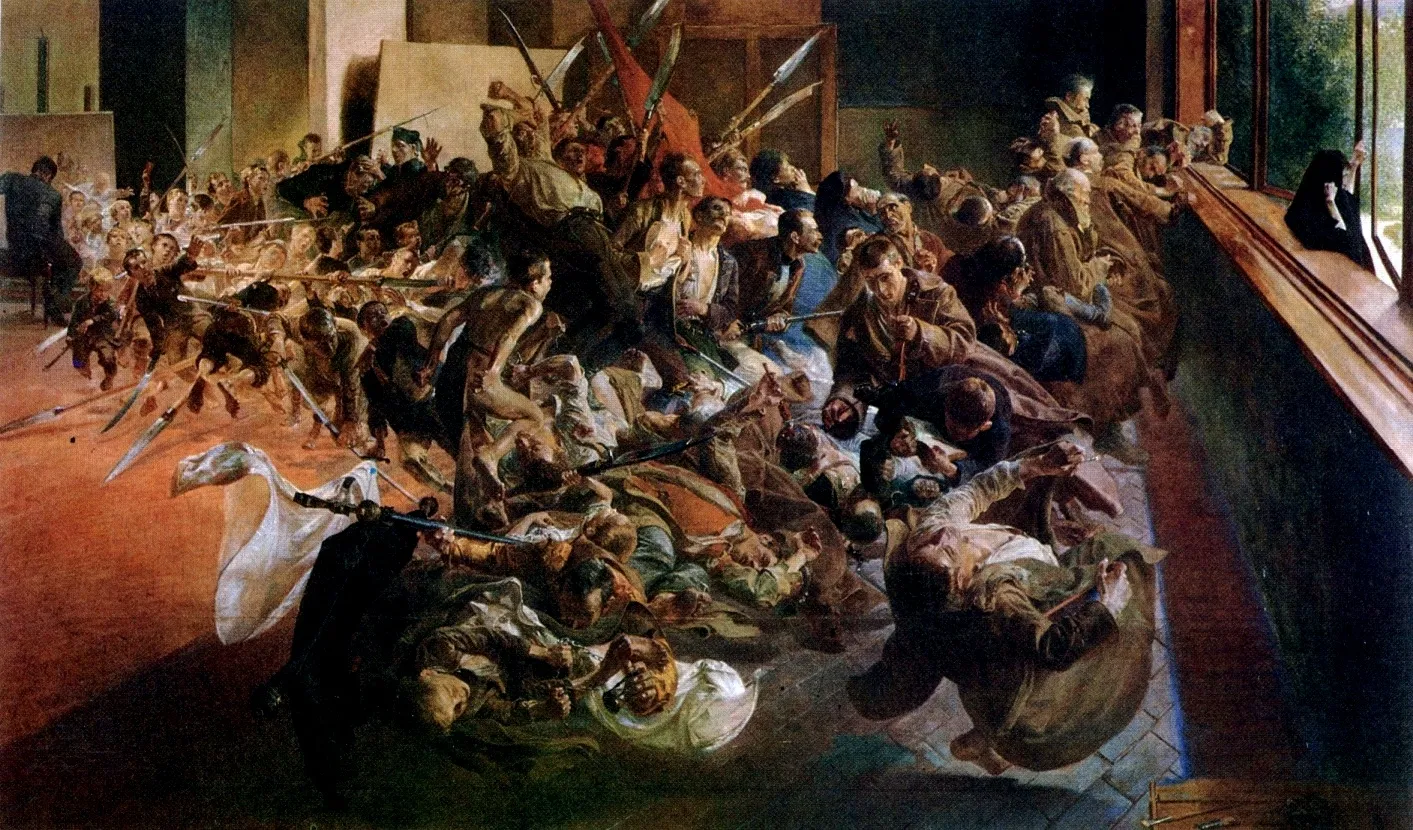
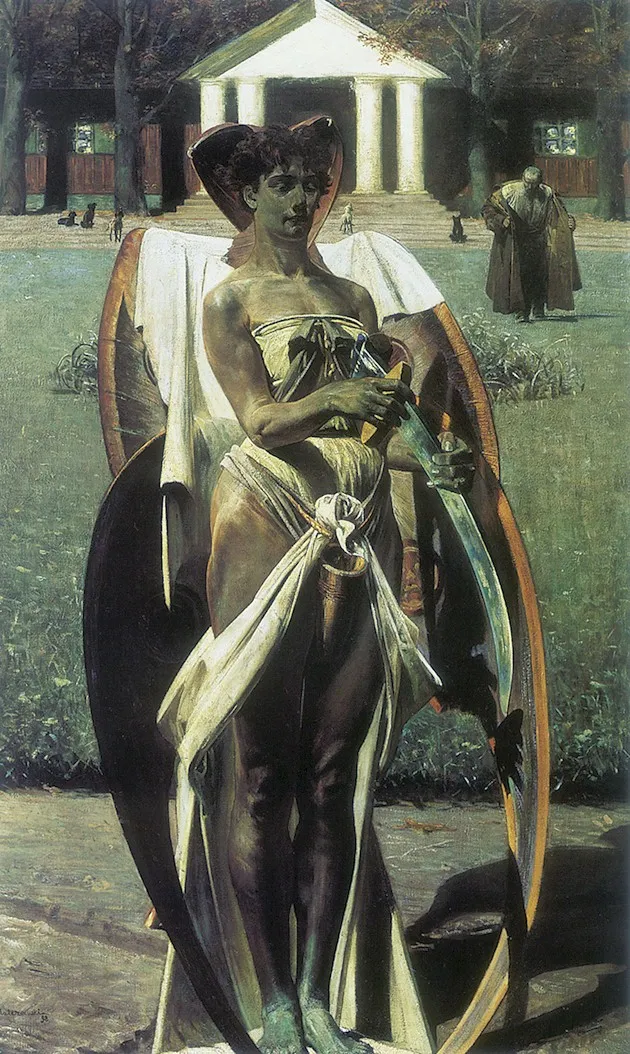
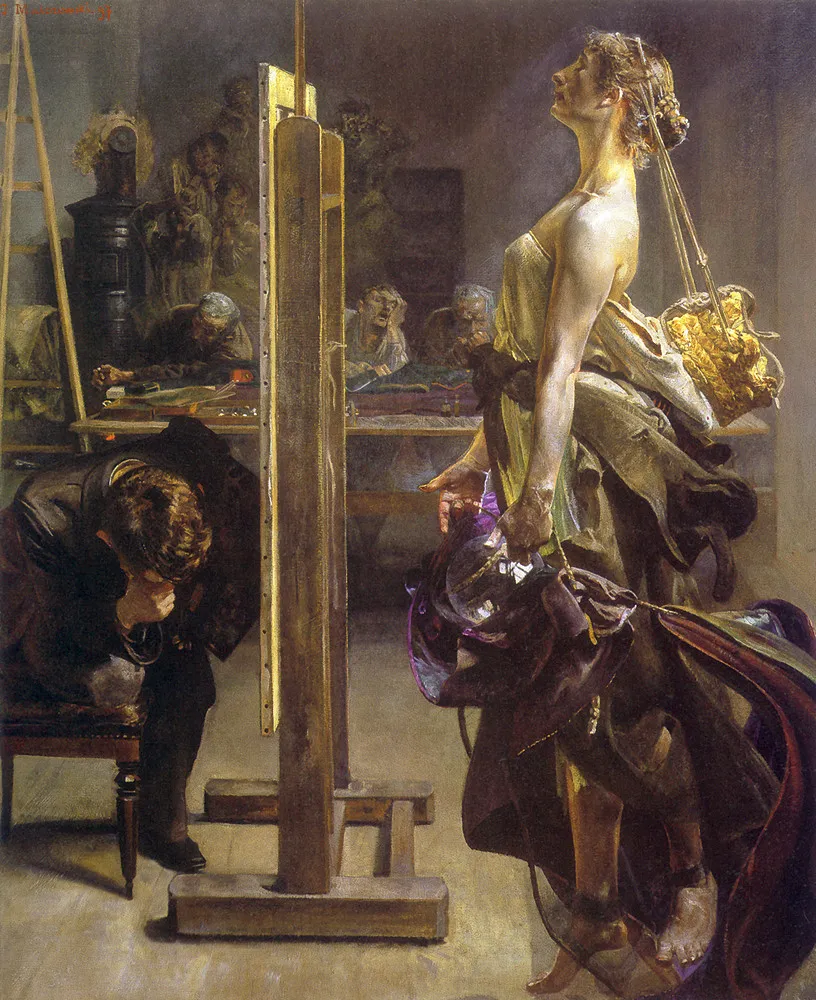
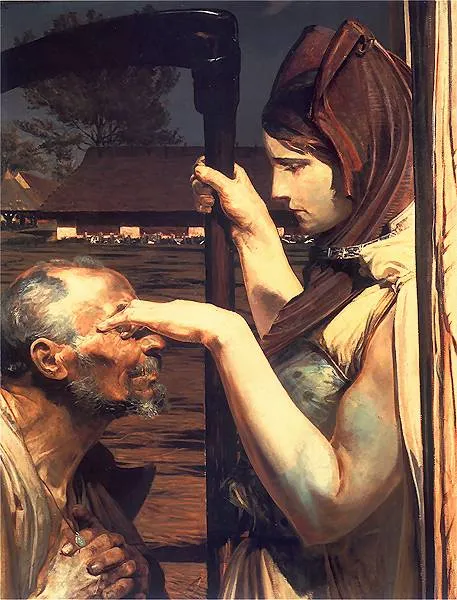
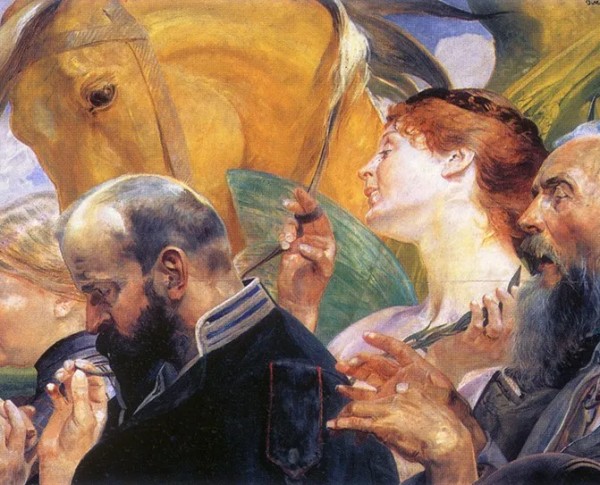
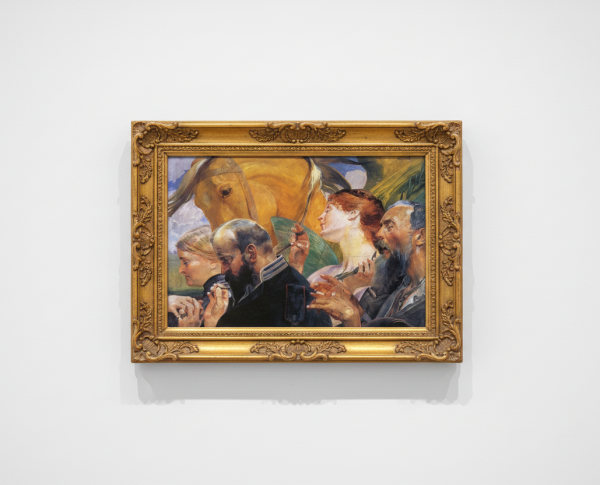
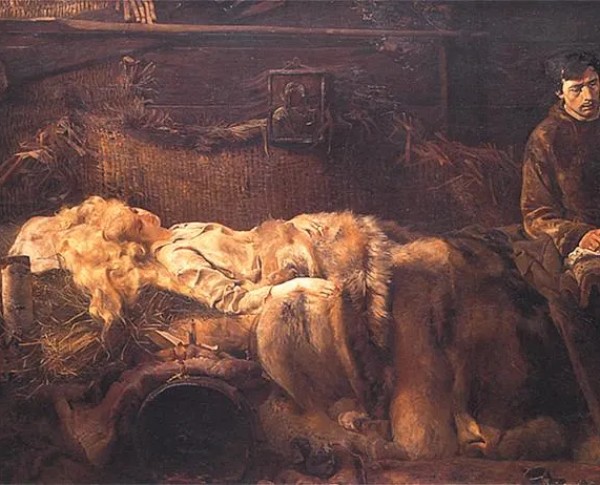
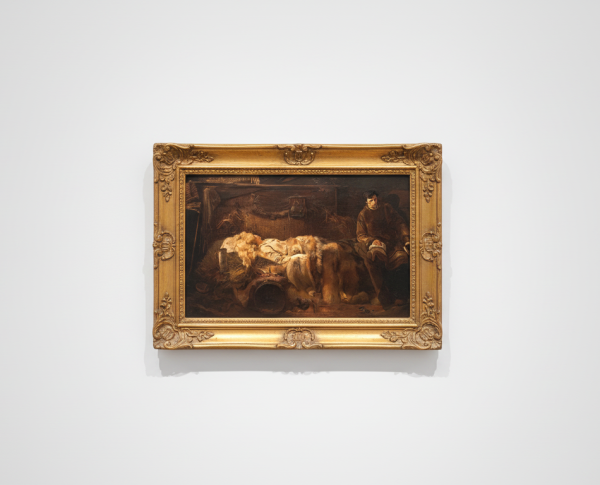
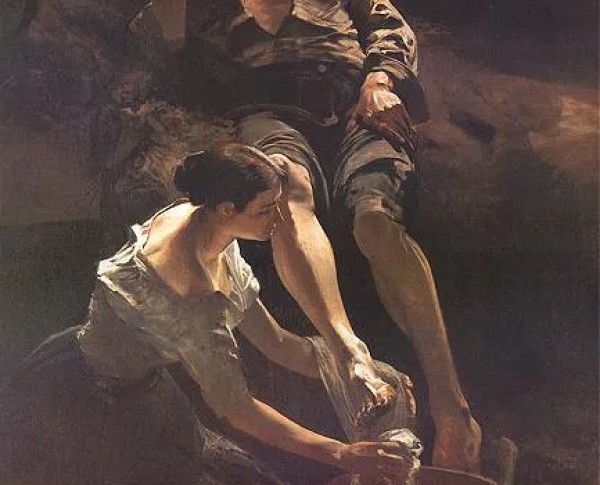
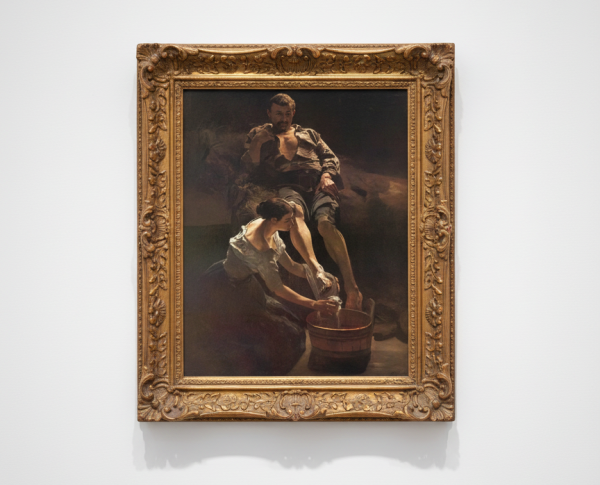
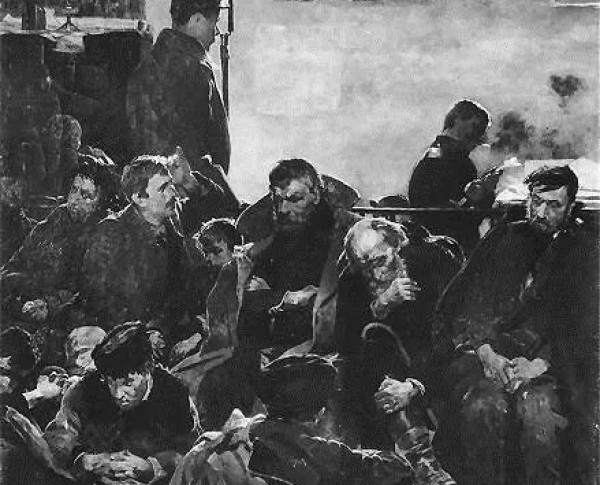
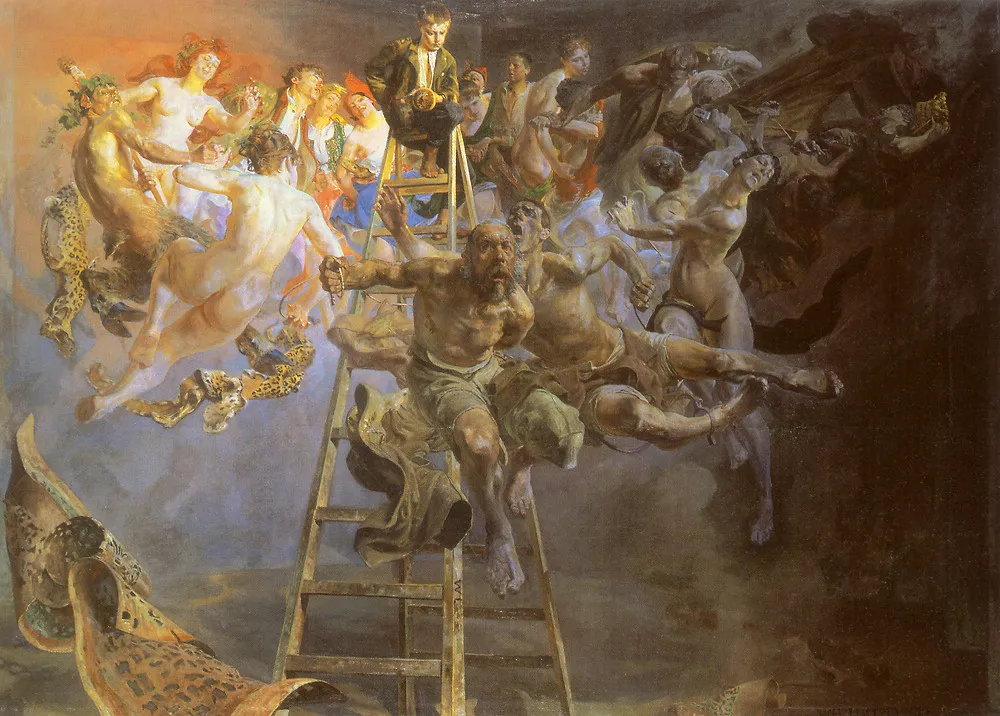
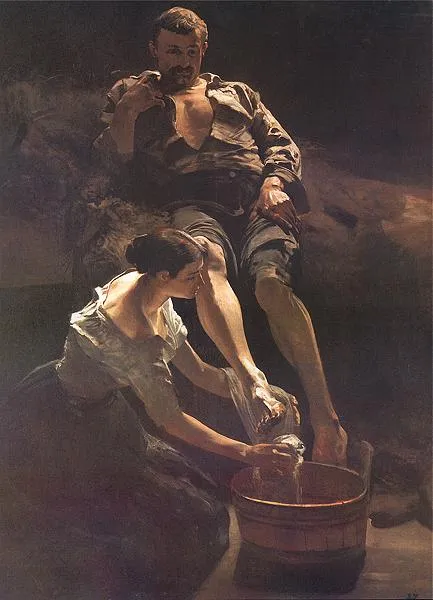
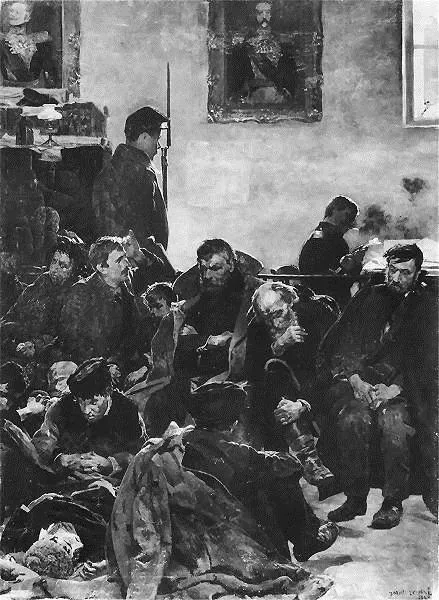
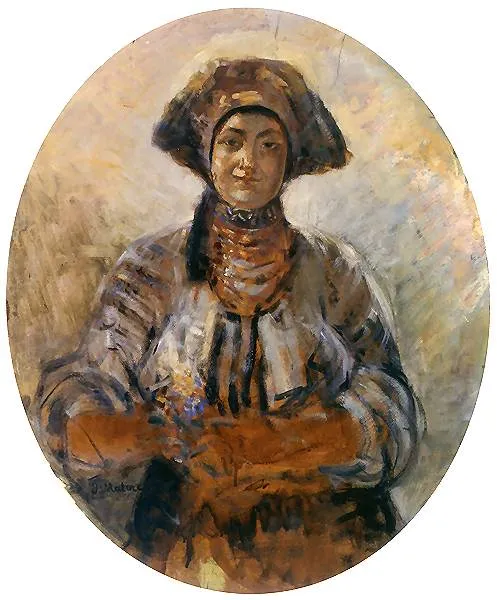
Jacek Malczewski’s "Vicious Circle" showcases his technical brilliance in oil on canvas. The intricate details and vibrant color palette reveal his masterful control over brushwork, making each element come alive. Malczewski’s ability to convey emotion through his Symbolist style distinguishes this piece as a cornerstone of 19th-century art. For enthusiasts, works like "Washing of feet" and "At the stage" offer further examples of his oil on canvas expertise and thematic depth.
Every inch of "Vicious Circle" is imbued with symbolism, reflecting Jacek Malczewski’s fascination with the human psyche. As a leading figure in the Symbolism movement, Malczewski filled his fine art painting for sale with allegories addressing life, fate, and the artist’s struggle. Explore similar narrative depth in related products like "Art" and "Melancholia," which also utilize rich symbolism to provoke thought and introspection in viewers.
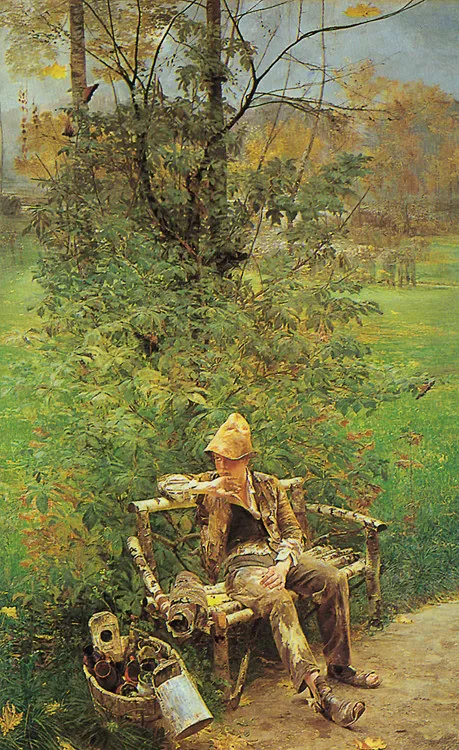
Owning "Vicious Circle" is more than acquiring a fine art painting for sale; it is embracing a piece of Symbolist history. Jacek Malczewski’s iconic oil on canvas masterpiece is highly sought after by collectors who appreciate art with profound meaning. Complement your collection with related works such as "Painter's Inspiration" or "The Painter Boy" to create a curated selection that reflects the enduring allure of Symbolist art and Malczewski’s genius.
When Art Meets History
"Vicious circle" by Jacek Malczewski is a remarkable work in the Symbolism movement, bridging the gap between Poland’s historical narrative and the artist’s inner world. Painted in 1895, this hand-painted oil painting reflects the turmoil and transformation of Polish society during Malczewski’s era. Alongside masterpieces like "Salome" and "Woman in Blue," "Vicious circle" stands as a testament to the artist’s commitment to exploring national identity through symbolic imagery and evocative scenes.
Techniques That Speak
Jacek Malczewski’s "Vicious circle" employs the classic medium of oil on canvas, allowing for rich textures and luminous color transitions. His masterful brushwork and layered symbolism are characteristic of the Symbolism movement, creating an immersive experience for viewers. The artist’s technique in this painting is comparable to his approach in related works such as "Maja Maldita" and "Casament D'irene Narezo I Federico Beltrán," where detail and atmosphere elevate the narrative quality.
Emotions on Display
"Vicious circle" evokes a profound sense of existential struggle, characteristic of both Jacek Malczewski’s style and the Symbolism movement. The painting’s haunting figures and swirling composition convey themes of fate, destiny, and the cyclical nature of life. Like "Manola With Mantilla And Fan" and "Woman in Blue," this fine art painting for sale draws viewers into a world of introspection, challenging them to decipher its emotional and philosophical depths through Malczewski’s distinctive visual language.
Coveted by Collectors
Collectors and art enthusiasts are continually captivated by "Vicious circle," a masterpiece by Jacek Malczewski within the Symbolism movement. Its unique blend of historical context and personal symbolism makes it a highly sought-after oil on canvas. Alongside works such as "Salome" and "Maja Maldita," it represents a pinnacle of Malczewski’s creative output. This hand-painted oil painting remains a prized possession for those seeking profound narrative and technical excellence in art collections worldwide.
Related Symbolism Hand-Painted Oil Paintings by Other Artists
Other Famous Symbolism Artists:
Frequently Asked Questions About Vicious circle
What is the historical context of "Vicious circle"?
"Vicious circle" was created during a time of significant social and political upheaval in Poland, reflecting the artist's response to the challenges faced by society in the late 19th and early 20th centuries.
What artistic movements influenced Jacek Malczewski in this painting?
Jacek Malczewski was influenced by Symbolism and the Polish Młoda Polska (Young Poland) movement, which emphasized emotional depth and the exploration of national identity through art.
What are the main themes depicted in "Vicious circle"?
The painting explores themes of despair, entrapment, and the cyclical nature of suffering, symbolizing the struggles of the human condition and the quest for freedom.
How does Malczewski use symbolism in "Vicious circle"?
Malczewski employs rich symbolism, using motifs such as the serpent to represent temptation and the cyclical nature of life, while the figures embody the emotional turmoil faced by individuals.
What is the significance of the color palette in "Vicious circle"?
The color palette features dark, muted tones that evoke a sense of melancholy and despair, contrasting with brighter elements that suggest fleeting moments of hope.
How does "Vicious circle" reflect the artist's personal experiences?
Malczewski's personal experiences of loss and societal challenges are reflected in the emotional intensity of the painting, illustrating his deep empathy for the human plight.
What role does the female figure play in "Vicious circle"?
The female figure in the painting represents both vulnerability and strength, embodying the duality of human experience and the struggle against societal constraints.
In what ways does "Vicious circle" connect to Polish national identity?
The painting can be seen as a commentary on the Polish national identity, reflecting the collective suffering and resilience of the Polish people during a time of foreign domination.
What artistic techniques did Malczewski use in "Vicious circle"?
Malczewski employed techniques such as chiaroscuro to create depth and drama, as well as intricate detailing to enhance the emotional impact of the scene.
How has "Vicious circle" been received by art critics and historians?
The painting has been widely acclaimed for its emotional depth and symbolic richness, establishing Jacek Malczewski as a pivotal figure in Polish art history.






















_GFM_Painting_(1).webp)


 100% Hand-Painted: Finished in 3-6 Weeks

.png)















_(1).webp)