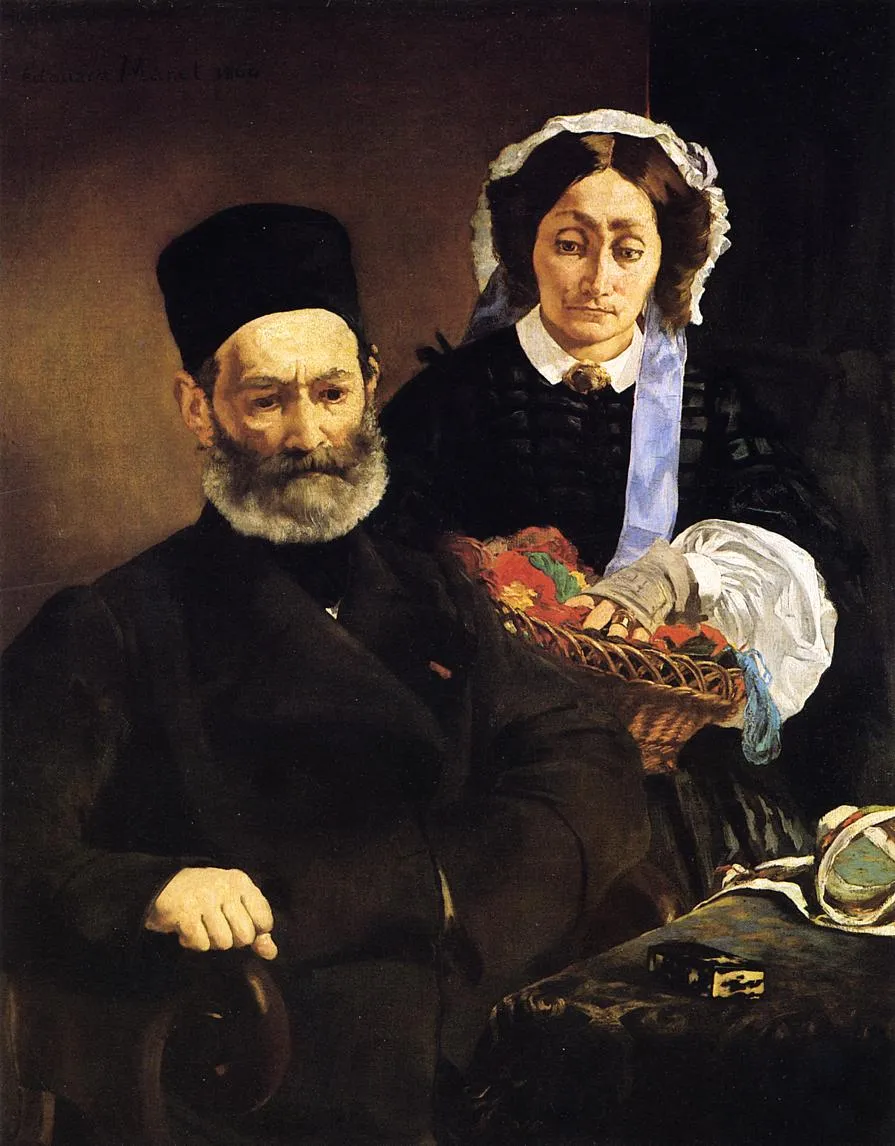
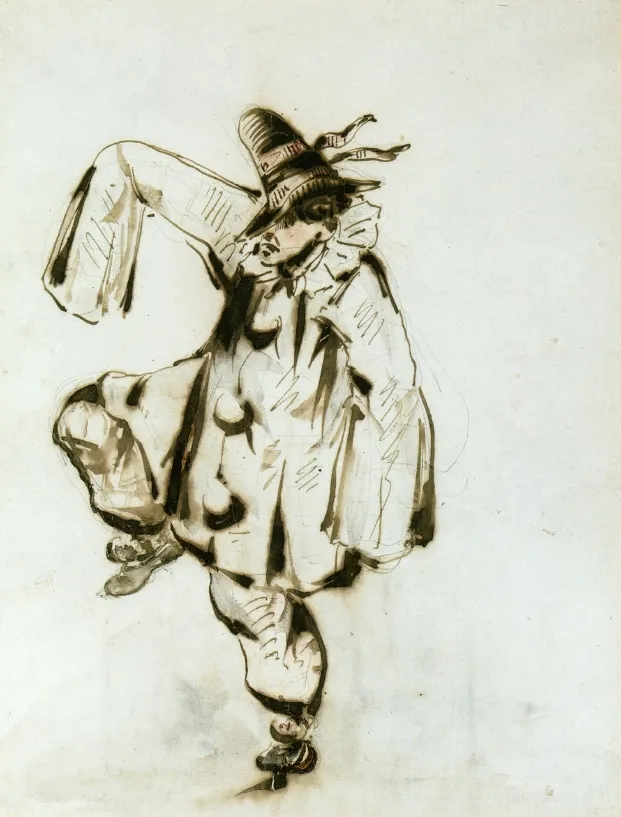
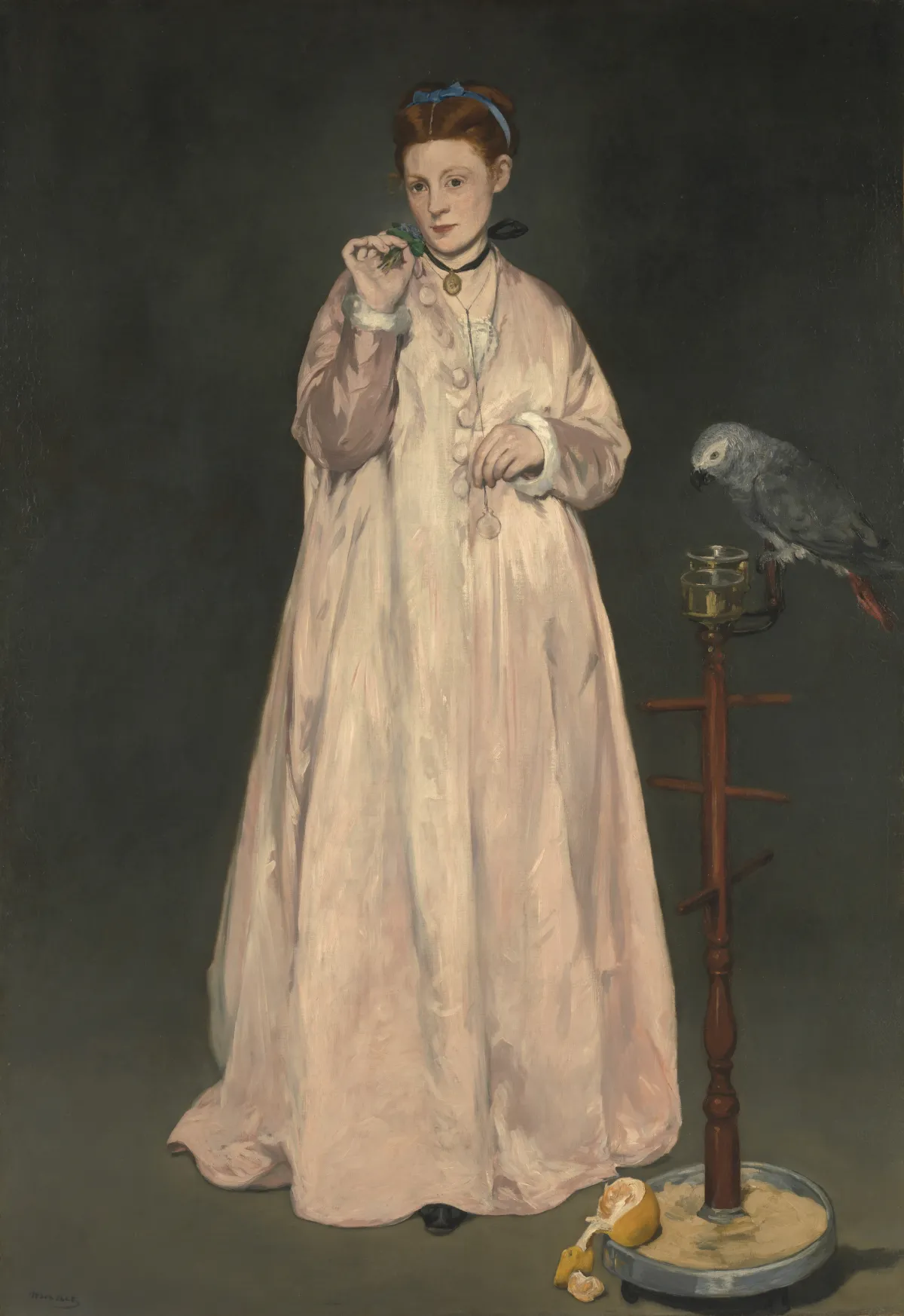
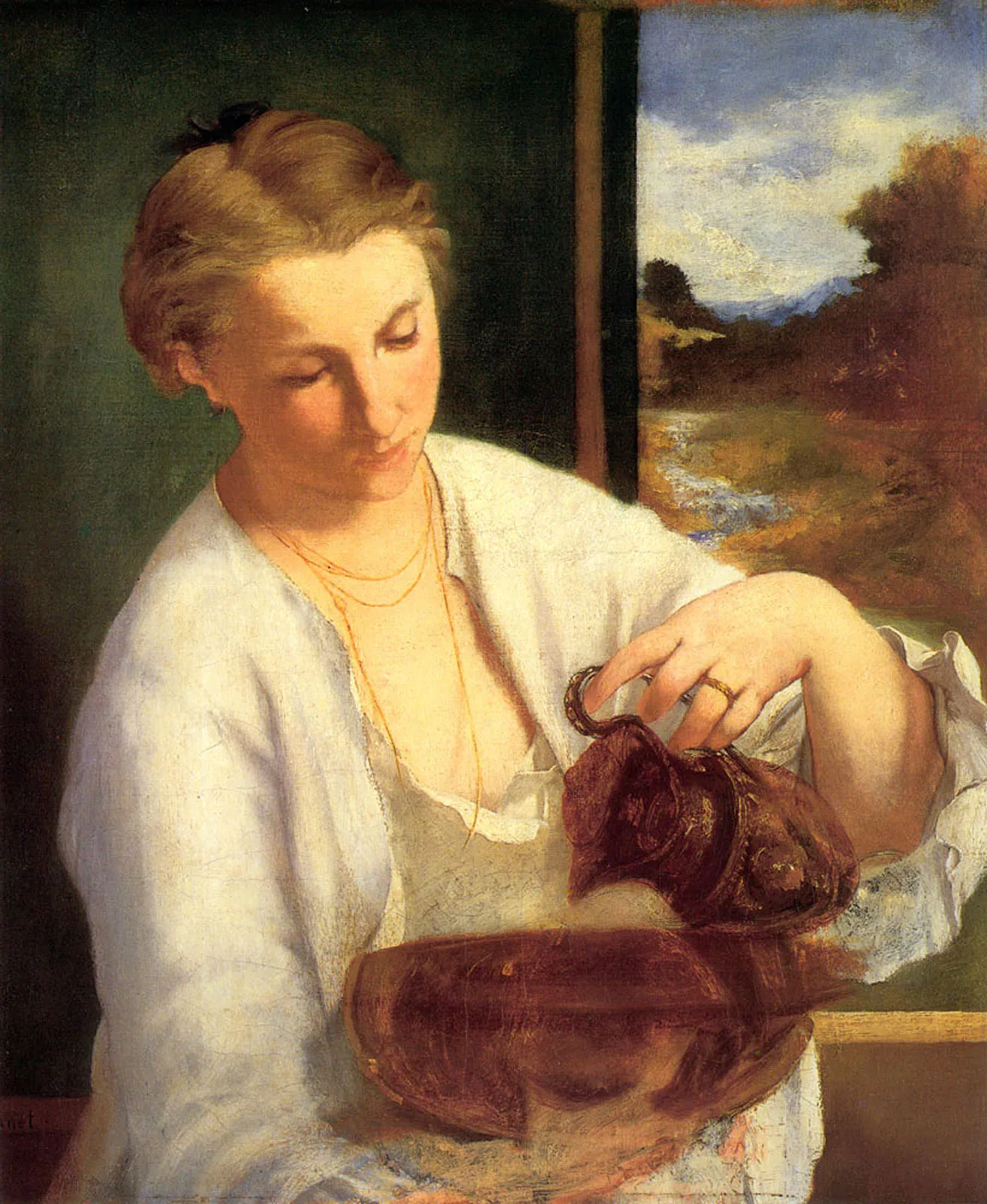
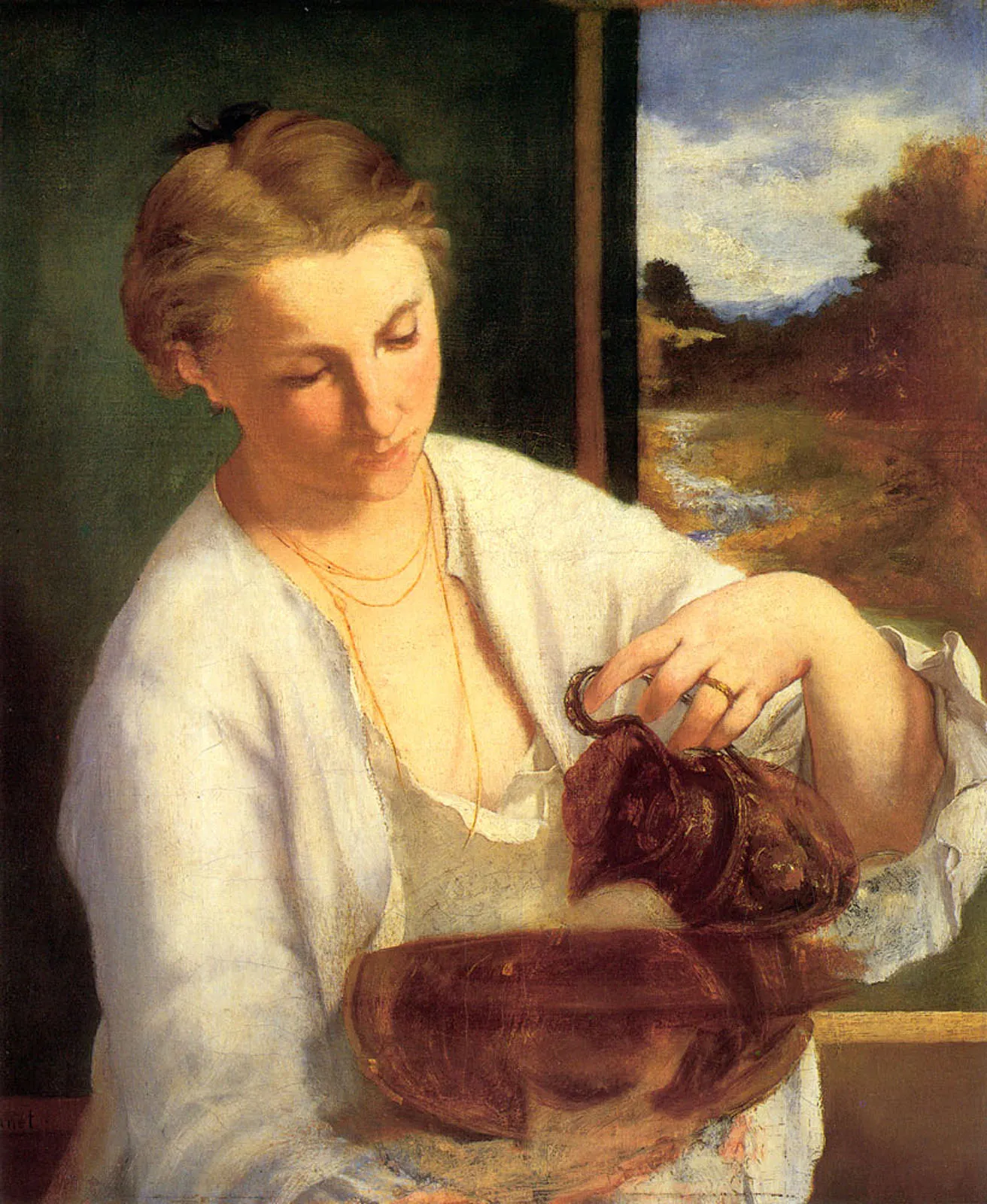
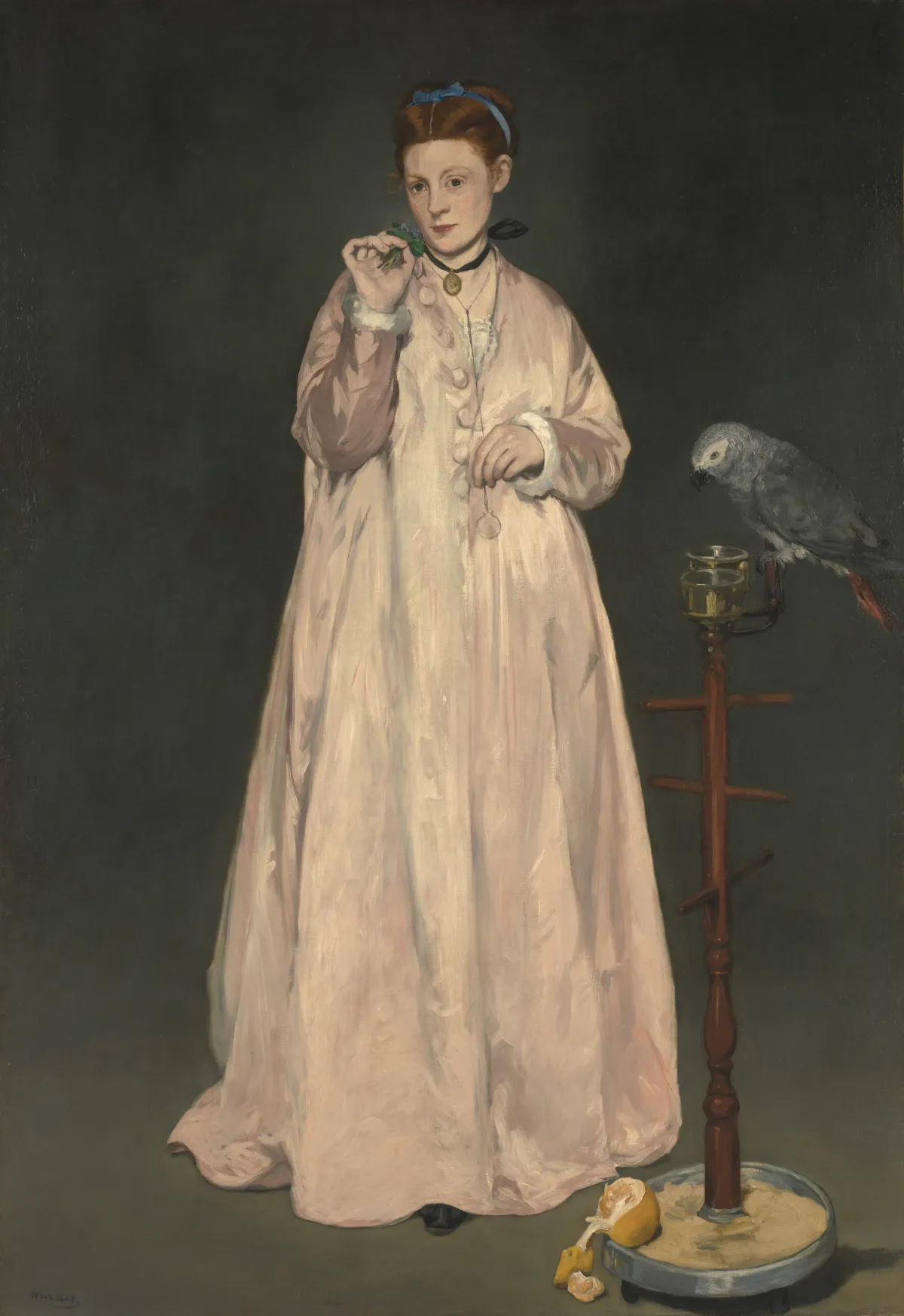
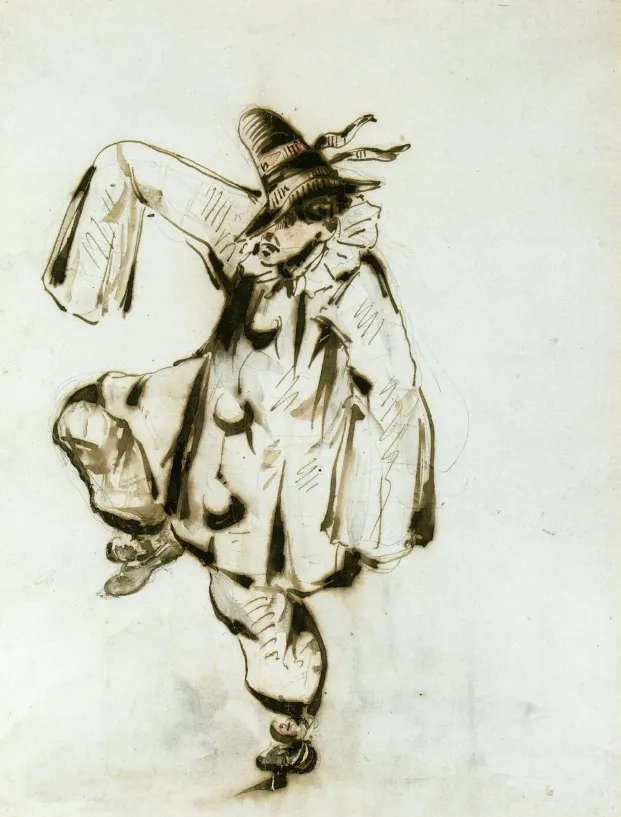
With his unique approach to oil on canvas, Edouard Manet’s technique in “A woman pouring water” reveals both skill and sensitivity. Each brushstroke breathes life into the quiet domestic scene, reflecting the core principles of the Realism movement. The painting’s exquisite details and subtle color palette make it a standout example of Manet’s artistry, much like his other celebrated works, including “A Young Lady in 1866” and “Pierrot dancing.”
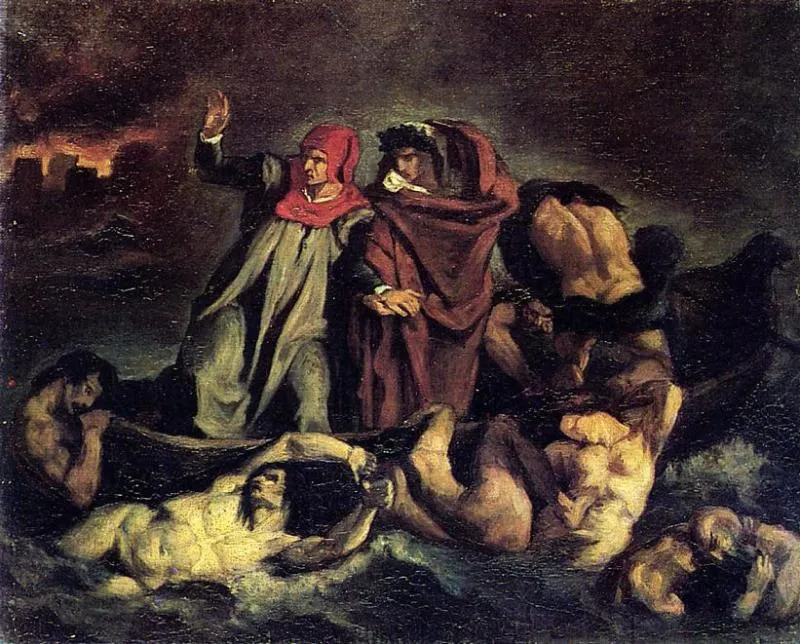
“A woman pouring water” is more than just a fine art painting for sale; it is a narrative woven in oil paint. Manet uses everyday moments to express deeper societal themes, a hallmark of the Realism movement. The gentle act of pouring water becomes symbolic of purity and routine, inviting viewers to reflect on the beauty in ordinary life. This approach connects the piece to related works such as “The barque of Dante” and “Pierrot dancing.”
For collectors, owning “A woman pouring water” by Edouard Manet is an opportunity to possess a remarkable hand-painted oil painting rooted in the Realism tradition. This work, along with related products like “A Young Lady in 1866, The barque of Dante, Pierrot dancing,” enriches any art collection with historical depth and visual sophistication. Manet’s mastery of oil on canvas ensures that each piece remains timeless and highly sought after in the world of fine art.
When Art Meets History
Edouard Manet’s “A Woman Pouring Water” embodies the Realism movement’s fascination with everyday life, capturing a simple yet profound domestic moment. This hand-painted oil painting stands as a testament to Manet’s ability to elevate the ordinary into fine art. Like his contemporaries, Manet drew inspiration from real people and daily activities, echoing themes seen in related works such as “Peasant and Peddler” and “View on the Island of Valaam.” His art bridges history and modernity in every brushstroke.
Techniques That Speak
Manet’s mastery is evident in the subtle textures and luminous palette of “A Woman Pouring Water,” skillfully rendered in oil on canvas. The artist’s loose yet controlled brushwork breathes life into the scene, reflecting the Realism movement’s dedication to truthful representation. Manet’s approach, also seen in paintings like “Marble Falls” and “Surrender At Santa Anna,” reveals his technical prowess and innovative use of light, making each fine art painting a visual narrative.
Emotions on Display
The quiet focus of the woman in Manet’s “A Woman Pouring Water” reveals a world of introspection and gentle labor. This fine art painting for sale captures the nuanced emotions of everyday existence, a hallmark of the Realism movement. Like “Morning in a Pine Forest” and other related works, Manet’s composition invites viewers to contemplate the dignity and serenity found in simple actions, making his art deeply relatable and emotionally engaging.
Coveted by Collectors
Manet’s “A Woman Pouring Water” remains a sought-after masterpiece among collectors who appreciate the authenticity and historical significance of a hand-painted oil painting. The piece’s enduring appeal stems from its connection to the Realism movement and its relation to works like “Peasant and Peddler” or “View on the Island of Valaam.” Collectors prize Manet’s ability to blend technique and emotion, ensuring his paintings remain treasures in the world of fine art.
Related Realism Hand-Painted Oil Paintings by Other Artists
Other Famous Realism Artists:
Frequently Asked Questions About A Woman Pouring Water
What is the historical context of "A Woman Pouring Water"?
"A Woman Pouring Water" was created by Edouard Manet in the late 19th century, a time marked by significant social and artistic changes in France. This period saw the rise of Impressionism, and Manet was a pivotal figure in transitioning from traditional to modern art.
What artistic techniques did Manet employ in this painting?
Manet utilized loose brushwork and a bold palette, characteristic of his style. He focused on the interplay of light and shadow, creating a sense of depth and realism while also embracing a more modern approach to composition.
What is the significance of the subject matter in "A Woman Pouring Water"?
The painting depicts a woman engaged in a domestic task, which reflects the traditional roles of women in society during Manet's time. It invites viewers to consider the dignity and artistry found in everyday life, challenging the notion of high art.
How does "A Woman Pouring Water" reflect Manet's artistic philosophy?
Manet believed in capturing the immediacy of life and the beauty of ordinary moments. This painting exemplifies his philosophy by portraying a simple act with elegance and grace, elevating the mundane to a subject worthy of artistic exploration.
What symbolism can be found in the act of pouring water?
The act of pouring water can symbolize nourishment and the flow of life. It may also represent the transition between different states, echoing themes of change and the cyclical nature of existence.
In what ways did "A Woman Pouring Water" influence later artists?
This painting influenced subsequent generations of artists by demonstrating the importance of everyday subjects in art. Manet's approach encouraged later Impressionists and modern artists to explore themes of domesticity and the human experience in their work.
What role does color play in "A Woman Pouring Water"?
Color in this painting plays a crucial role in conveying mood and emotion. Manet's use of contrasting colors helps to highlight the figure of the woman and the fluidity of water, creating a dynamic visual experience that draws the viewer's eye.
How does the composition of the painting contribute to its overall impact?
The composition is thoughtfully arranged, with the woman positioned centrally, drawing immediate attention. The balance between the figure and the background creates a harmonious scene, inviting viewers to engage with the subject matter more intimately.
What are the key themes explored in "A Woman Pouring Water"?
Key themes include the exploration of femininity, the beauty of daily life, and the intersection of art and reality. Manet's portrayal of the woman elevates her domestic role, prompting discussions about gender and societal expectations of the time.
How does this painting fit into Manet's broader body of work?
"A Woman Pouring Water" fits into Manet's broader oeuvre as it showcases his interest in modern life and the human condition. It reflects his ability to blend realism with an impressionistic style, marking a significant contribution to the evolution of modern art.






















_GFM_Painting_(1).webp)


 100% Hand-Painted: Finished in 3-6 Weeks

.png)















_(1).webp)