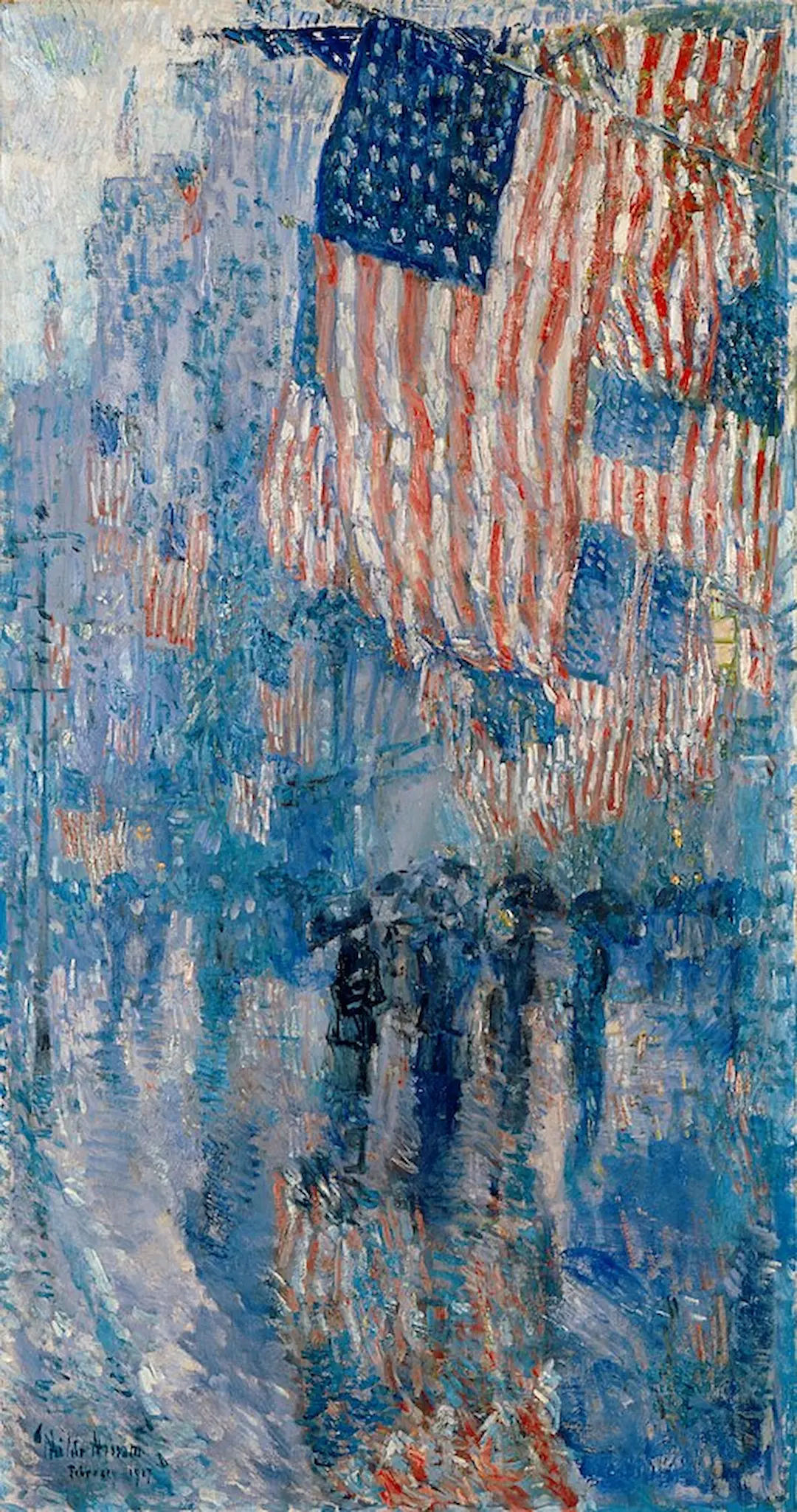
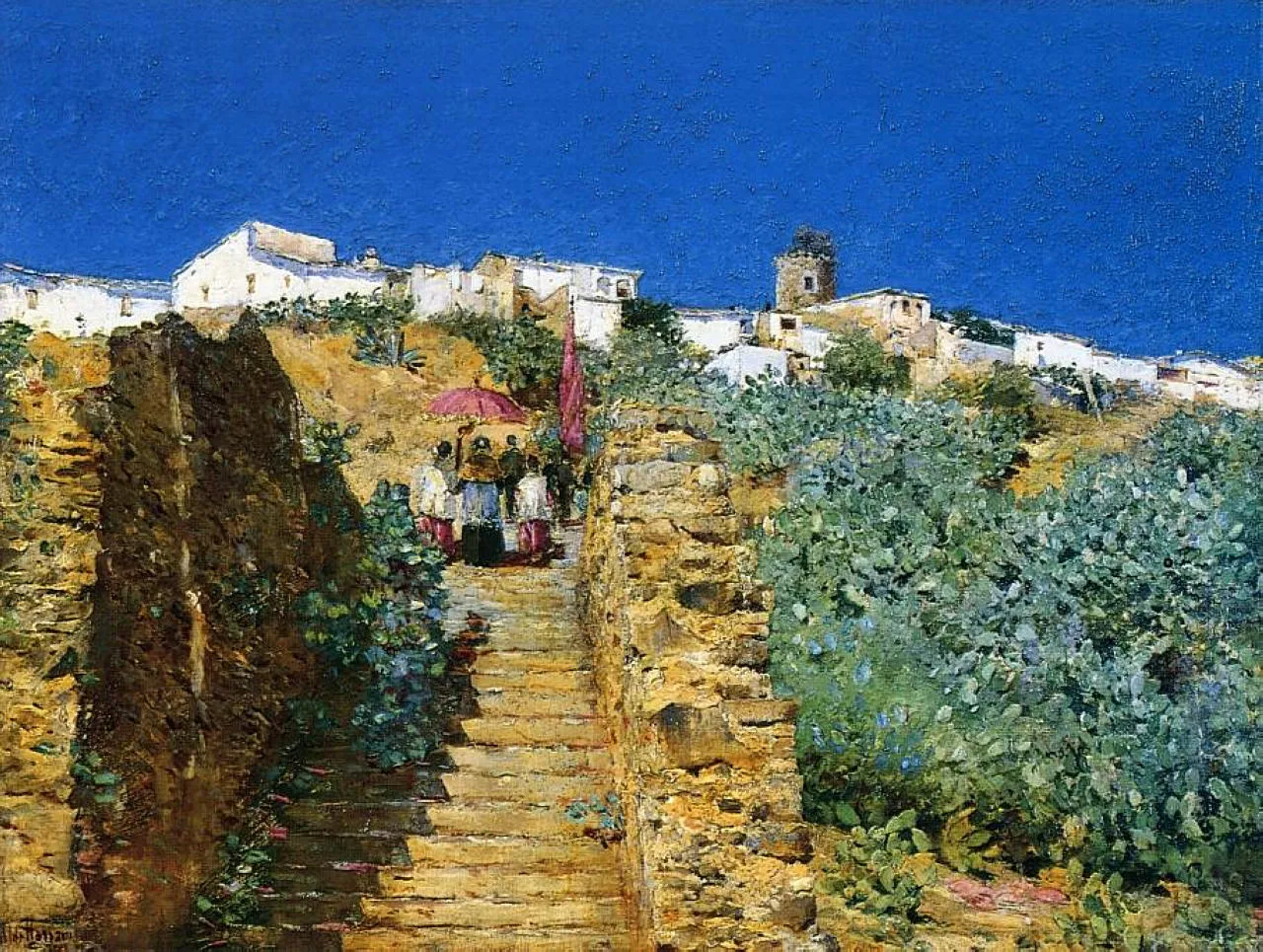
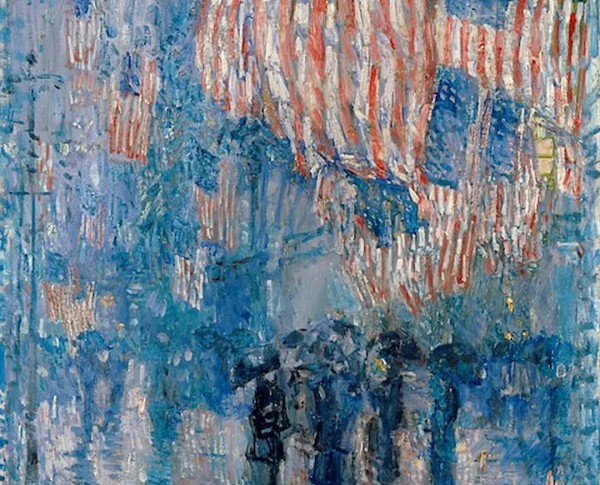
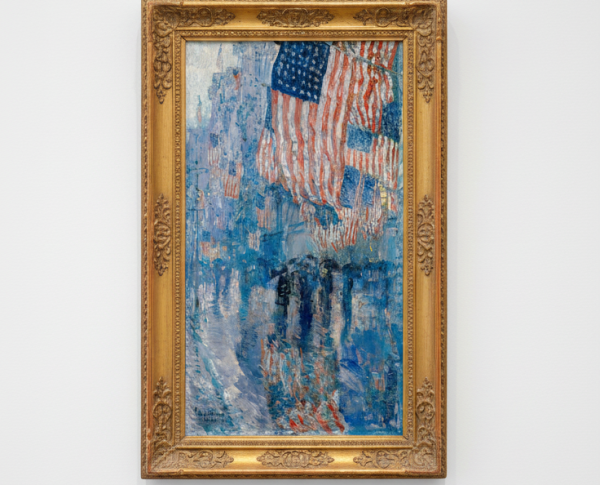
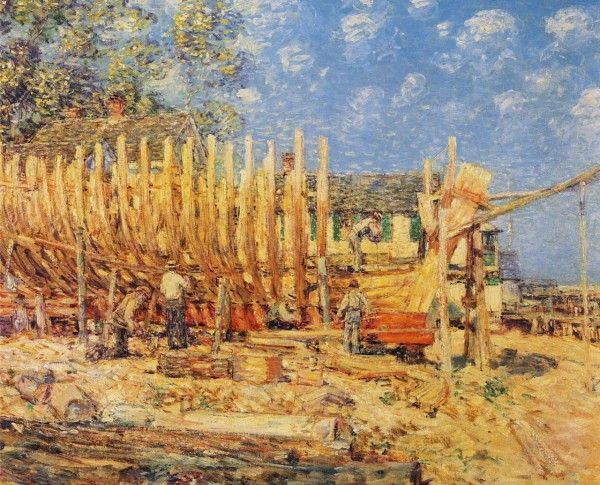
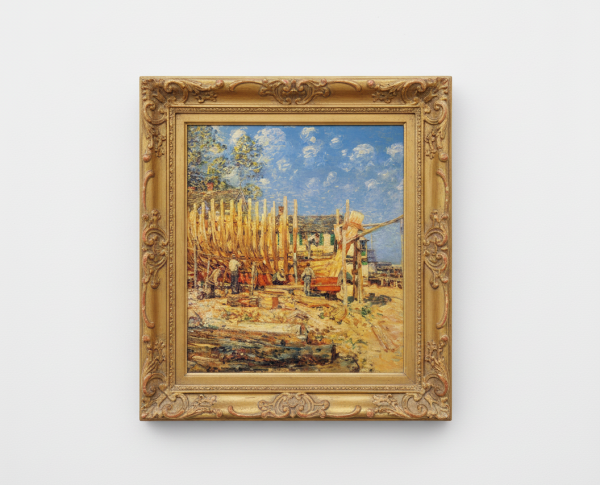
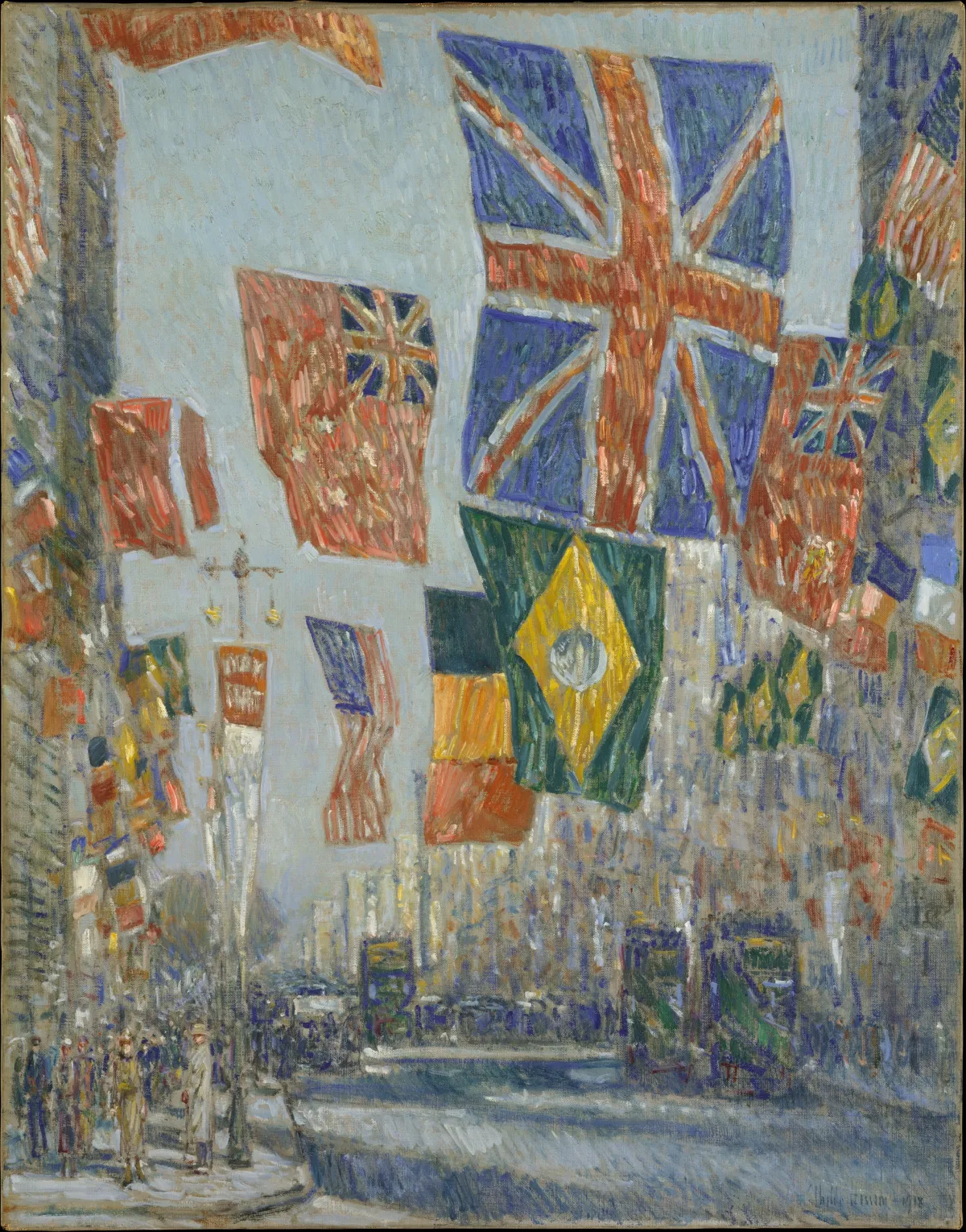
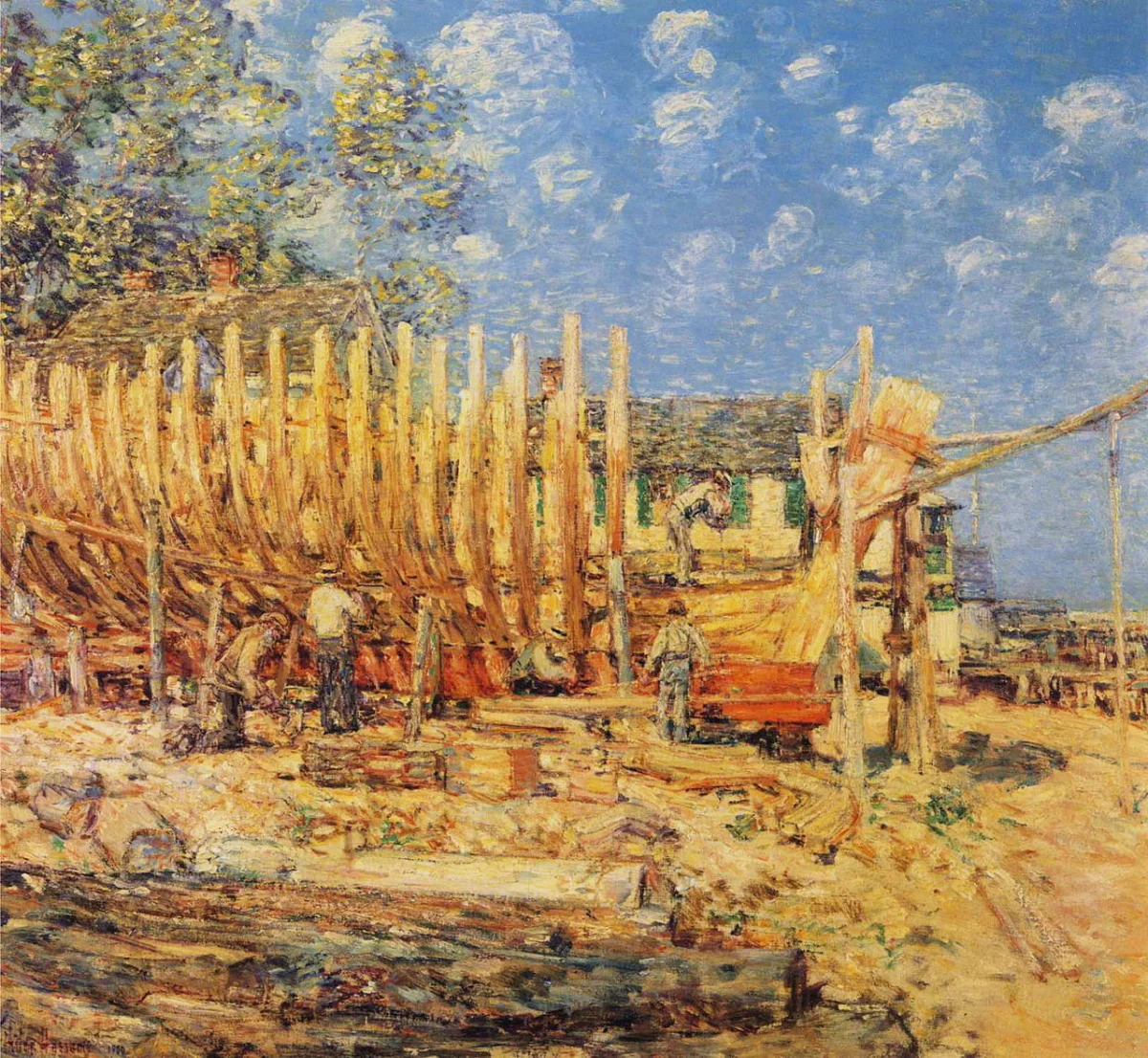
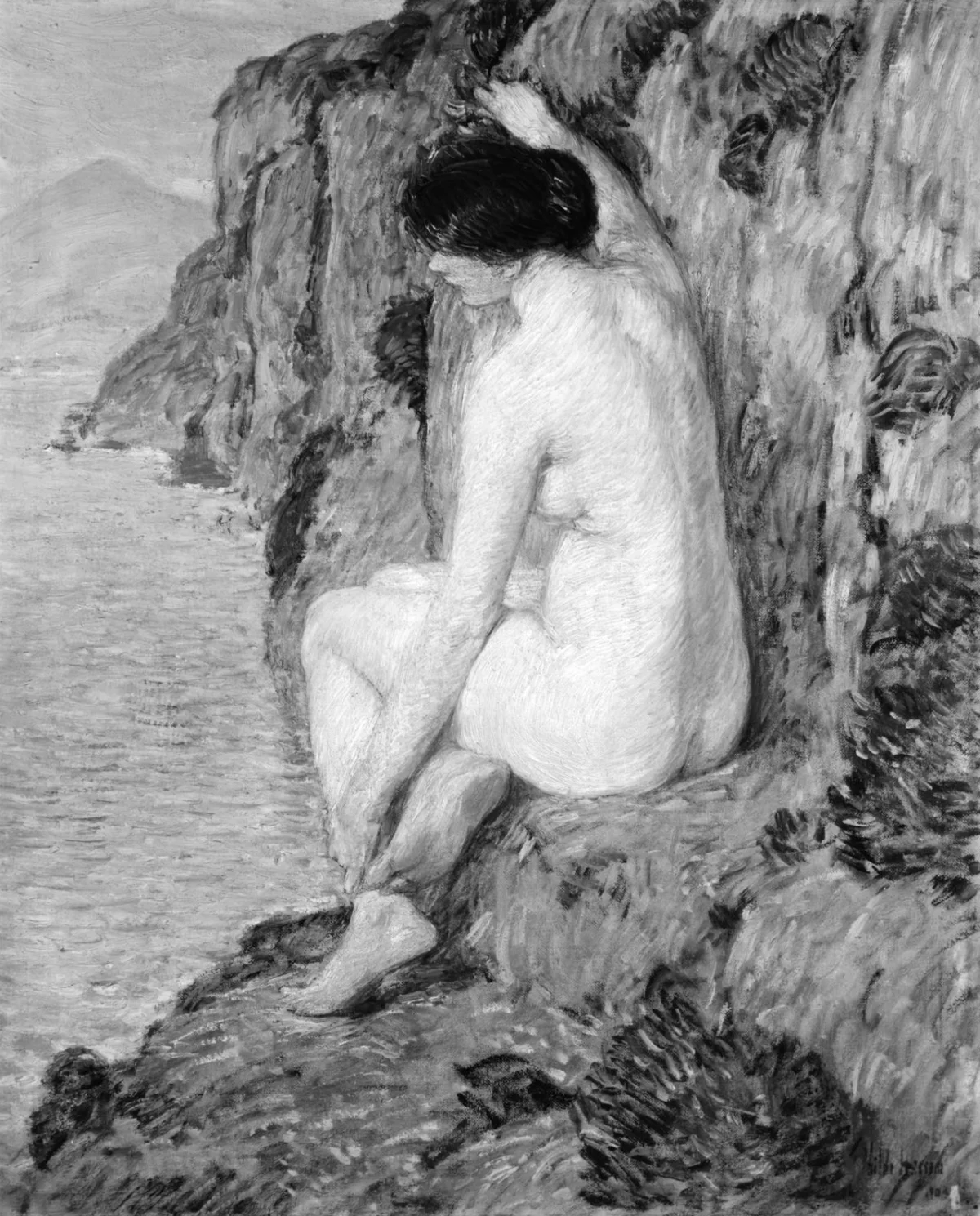
Hassam’s technique in "Avenue of the Allies, Great Britain" demonstrates his exceptional skill with oil on canvas. Each brushstroke brims with the dynamic interplay of color and light, hallmarks of American Impressionism. The artist’s meticulous attention to detail and composition brings the bustling avenue to life. For those enamored with fine art, works like "Spanish Steps" and "Building the Schooner" further illustrate Hassam’s mastery in transforming ordinary scenes into extraordinary visual experiences.
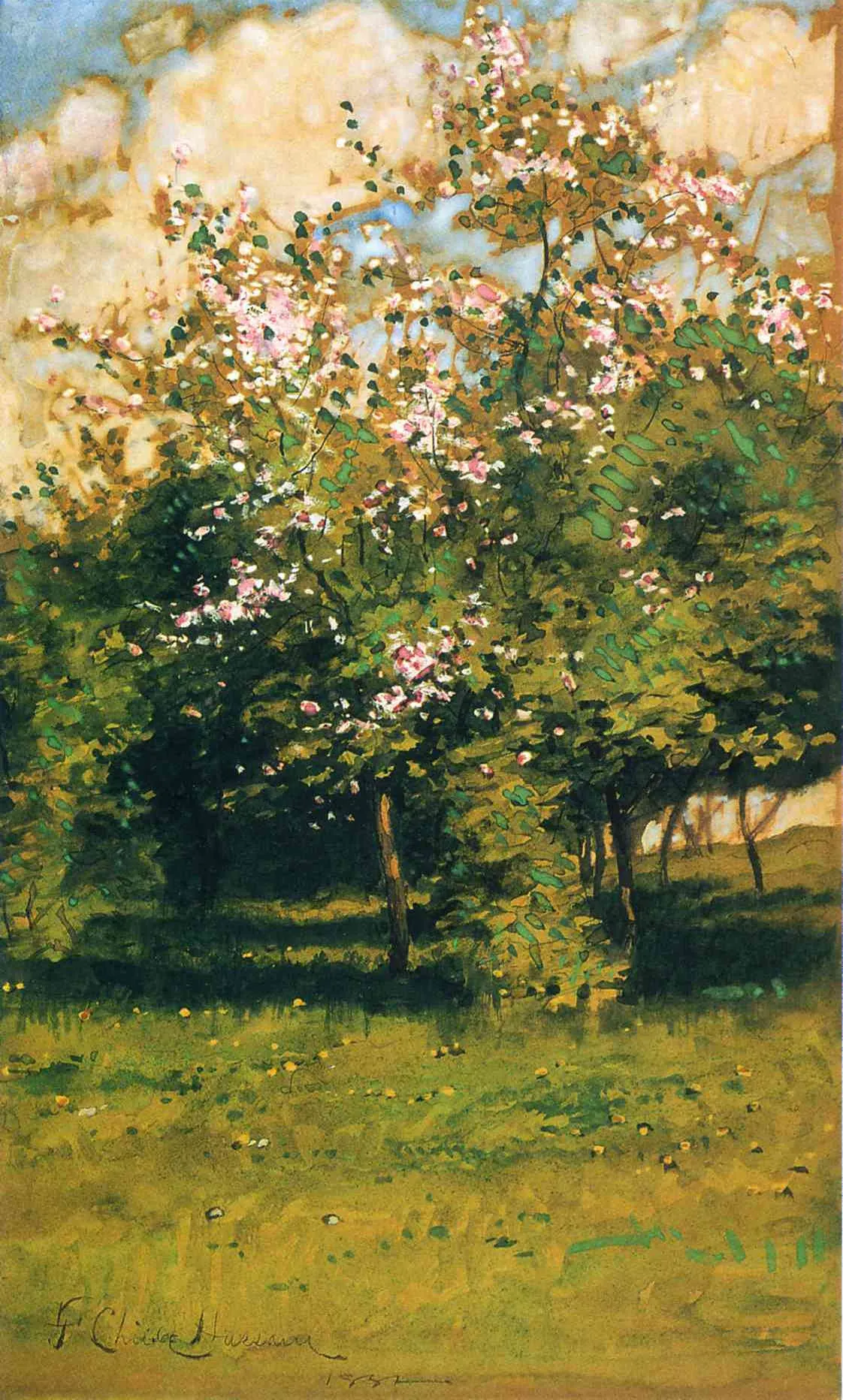
"Avenue of the Allies, Great Britain" is more than a fine art painting for sale; it is a narrative woven with national pride and unity. Hassam’s flags fluttering along the avenue symbolize hope and collaboration during challenging times. This iconic scene offers viewers a glimpse into the spirit of an era. Art lovers interested in symbolic storytelling may also explore "Provincetown" and "Blossoming Trees," which embody similar themes through Hassam’s impressionist lens.
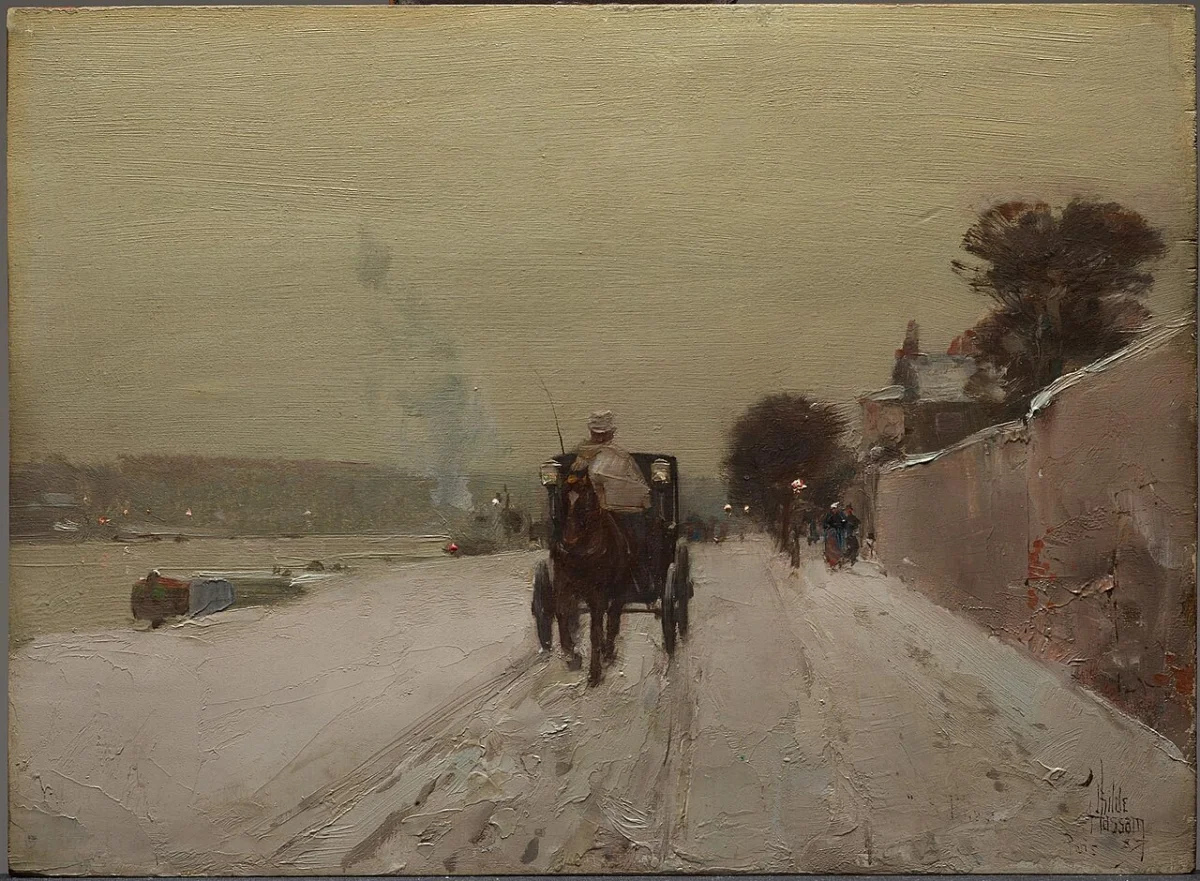
Owning "Avenue of the Allies, Great Britain" connects collectors directly to the vibrant world of American Impressionism. This hand-painted oil painting not only beautifies any space but also enriches it with historical and artistic significance. As a sought-after piece, it stands alongside related works such as "Canal Scene" and "The Brush House," making it an exceptional addition to any fine art collection. Discover the enduring allure of Hassam’s masterpieces in your own home.
When Art Meets History
"Avenue of the Allies, Great Britain" by Frederick Childe Hassam stands as a testament to the intersection of art and history during the American Impressionism movement. This hand-painted oil painting captures the patriotic fervor of World War I, with flags lining the bustling avenue. Hassam’s work is often compared to related paintings like "Engelsburg" and "The Death Song of Lone Wolf," each reflecting unique moments in time through the artist's masterful vision.
Techniques That Speak
Frederick Childe Hassam’s technique in "Avenue of the Allies, Great Britain" demonstrates the vibrant brushwork characteristic of American Impressionism. Utilizing oil on canvas, Hassam layered luminous colors and played with light to evoke energy and movement. His approach in this piece, as well as in works like "The Pink Dress," showcases a dedication to capturing fleeting urban scenes, making each fine art painting for sale a dynamic experience for the viewer.
Emotions on Display
The emotional resonance of "Avenue of the Allies, Great Britain" lies in its depiction of unity and hope during turbulent times. Hassam’s hand-painted oil painting radiates a sense of optimism, with flags waving and crowds gathering in solidarity. This evocative atmosphere is echoed in related paintings such as "Frank-O'Meara" and "When the Land Belonged to God," all masterpieces within the American Impressionism movement, further highlighting the artist’s emotional sensitivity.
Coveted by Collectors
"Avenue of the Allies, Great Britain" remains a sought-after fine art painting for sale among collectors who appreciate American Impressionism. Frederick Childe Hassam’s celebrated style, evident in this and related paintings, continues to command admiration in prestigious collections. The painting’s historical context, masterful oil on canvas technique, and emotional depth make it a prized acquisition for those seeking to own a piece of impactful art history.
Related American Impressionism Hand-Painted Oil Paintings by Other Artists
Other Famous American Impressionism Artists:
Frequently Asked Questions About Avenue of the Allies, Great Britain
What is the historical context of "Avenue of the Allies, Great Britain"?
"Avenue of the Allies, Great Britain" was created during World War I, a time when artists were exploring themes of patriotism and national identity. The painting reflects the unity and camaraderie among allied nations during the conflict.
Who was Frederick Childe Hassam and what is his significance in American art?
Frederick Childe Hassam was an influential American Impressionist painter known for his vibrant urban scenes and landscapes. His work played a crucial role in introducing Impressionism to the United States, and he is celebrated for his ability to capture light and atmosphere.
What artistic techniques did Hassam employ in this painting?
Hassam utilized Impressionist techniques, characterized by loose brushwork and a focus on light effects. His use of color and texture creates a dynamic sense of movement, which is particularly evident in the depiction of the flags and the bustling street scene.
What symbolism is present in "Avenue of the Allies, Great Britain"?
The painting prominently features flags, symbolizing patriotism and national pride. The flags of the Allied nations serve as a reminder of solidarity during wartime, representing hope and unity amidst the challenges of conflict.
How does the composition of the painting contribute to its meaning?
The composition draws the viewer's eye along the avenue, creating a sense of depth and perspective. This leads to an immersive experience, evoking feelings of participation in the celebration of unity among nations during a pivotal moment in history.
What role did Impressionism play in the depiction of urban life in Hassam's work?
Impressionism allowed Hassam to capture the ephemeral qualities of urban life, such as light, movement, and atmosphere. This approach enabled him to convey the vibrancy of city streets and the emotional resonance of public gatherings, particularly during significant historical events.
In what ways does "Avenue of the Allies, Great Britain" reflect the mood of its time?
The painting encapsulates a sense of optimism and resilience during World War I. The celebration of allied nations through vibrant colors and lively scenes reflects a collective hope for peace and victory, resonating with the sentiments of the era.
What influence did European art movements have on Hassam's style?
Hassam was significantly influenced by French Impressionism, particularly the works of Claude Monet and Camille Pissarro. This influence is evident in his use of color, light, and brushwork, which he adapted to express American themes and landscapes.
How does the painting fit into the broader narrative of American art history?
"Avenue of the Allies, Great Britain" represents a pivotal moment in American art history where artists began to embrace modernist techniques while addressing contemporary social and political themes. It highlights the transition from traditional to modern approaches in American painting.
What is the significance of the flags depicted in the painting?
The flags in "Avenue of the Allies, Great Britain" serve as powerful symbols of national identity and solidarity among the Allied nations. They evoke a sense of pride and collective purpose, reinforcing the themes of unity and cooperation during a time of global conflict.























_GFM_Painting_(1).webp)


 100% Hand-Painted: Finished in 3-6 Weeks

.png)















_(1).webp)