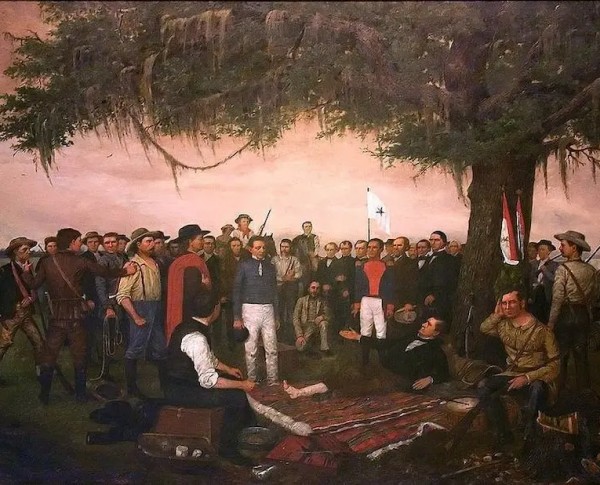
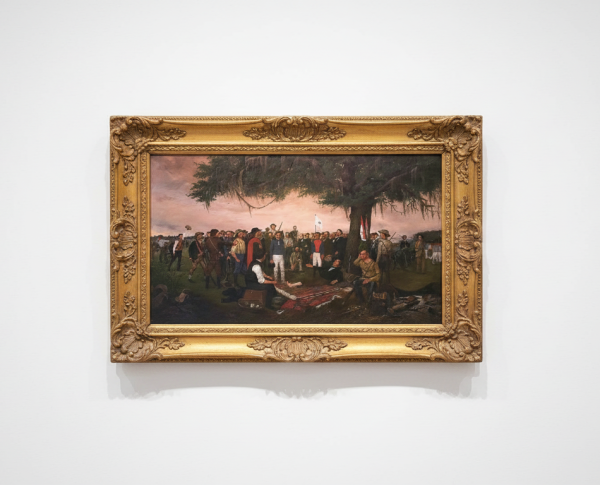
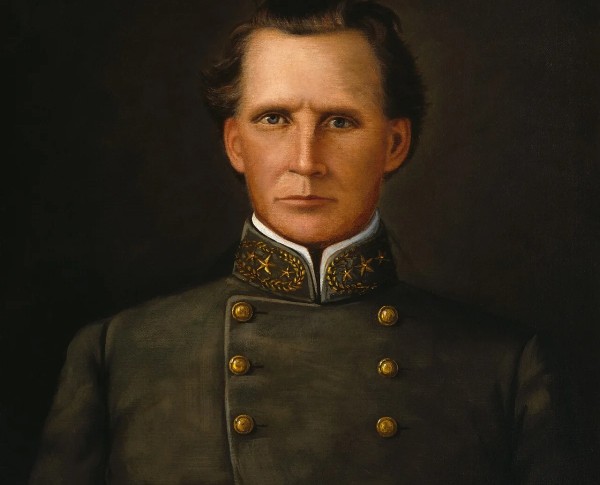
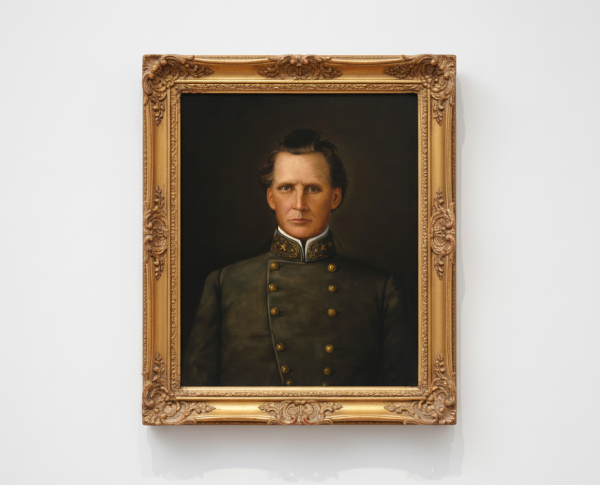
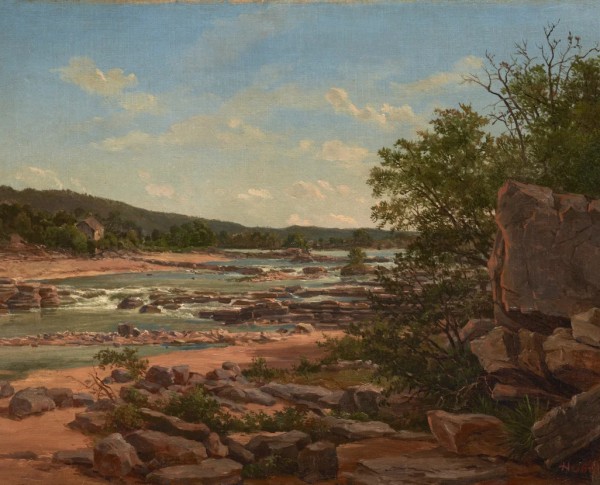
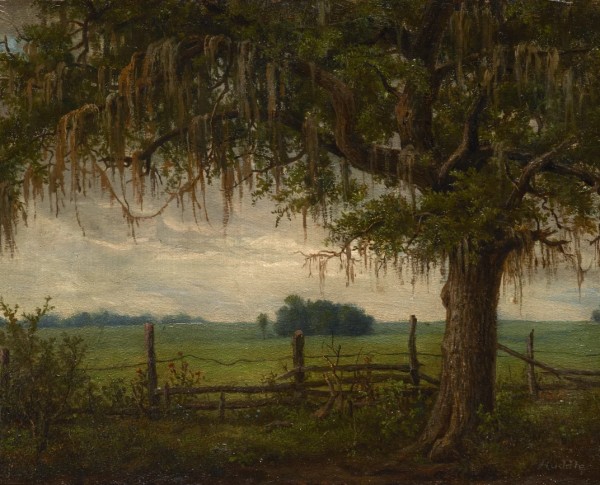
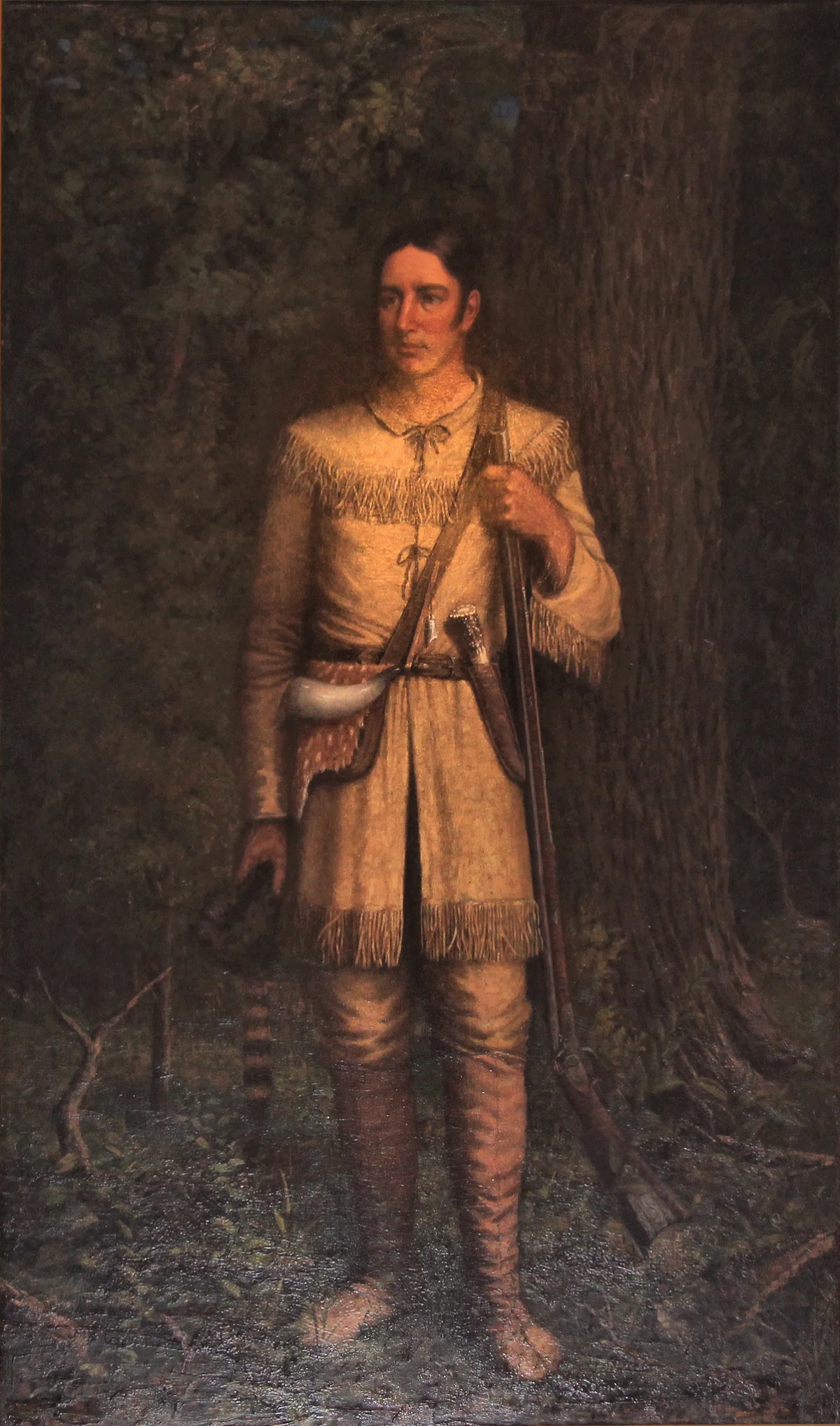
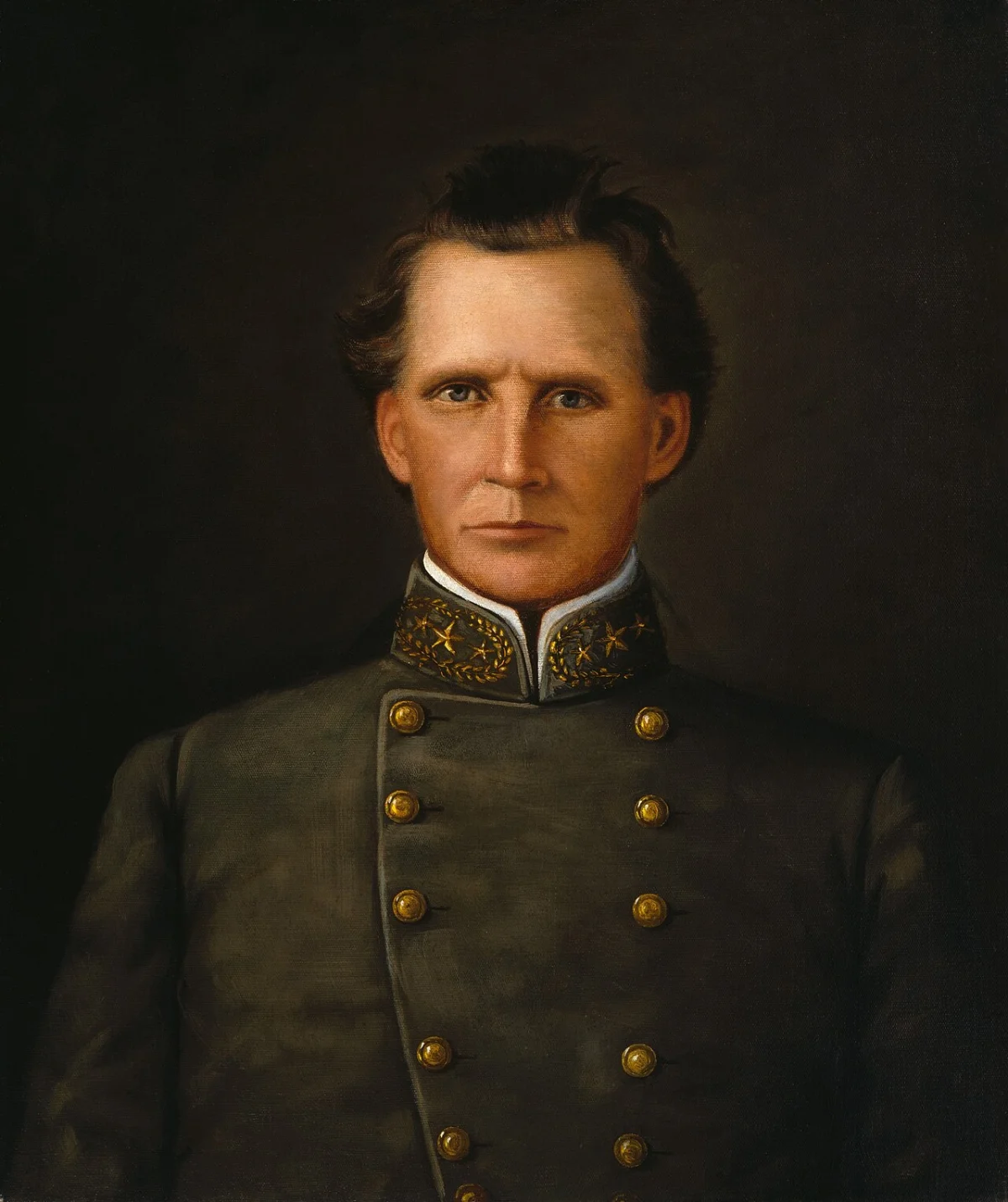
With meticulous attention to detail, William Henry Huddle employs the oil on canvas technique to bring "Davy Crockett" to life. Each brushstroke reveals his command of Realism, portraying textures and emotions with striking clarity. The painting’s lifelike representation highlights Huddle’s mastery, a quality that resonates throughout his collection, including "Portrait of Brigadier General Joseph Lewis Hogg." This oil on canvas work is a prime example of Huddle’s enduring influence in American art.
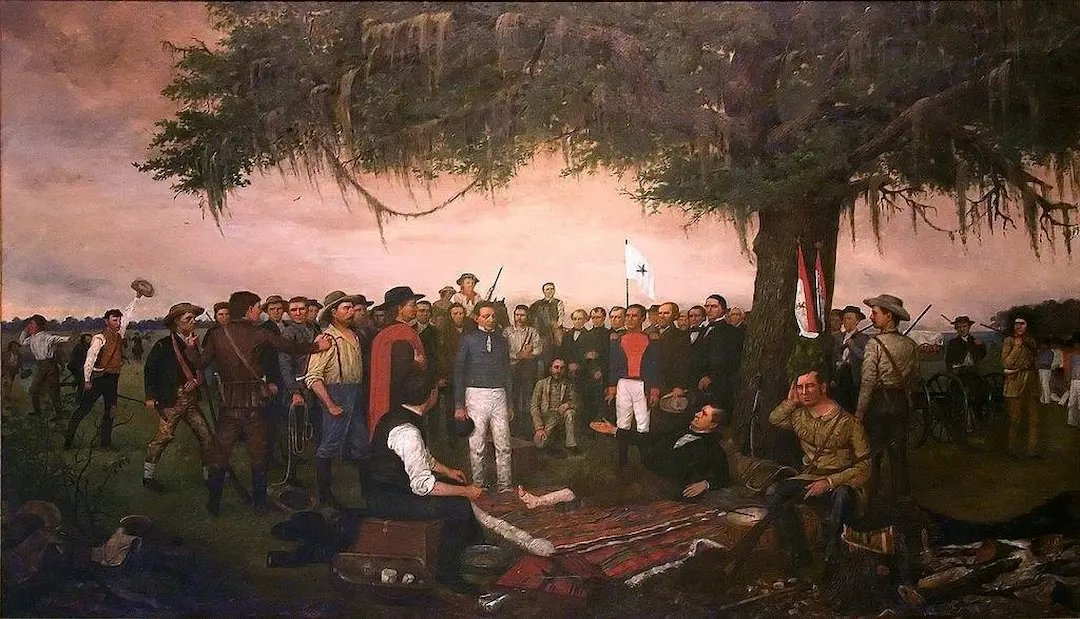
"Davy Crockett" by William Henry Huddle is more than a fine art painting for sale; it is a narrative woven with symbolism and historical resonance. The painting embodies the courage and resilience of its namesake, emblematic of the Realism movement’s dedication to truthful storytelling. Collectors often seek out Huddle’s related works, such as "Marble Falls" and "Surrender At Santa Anna," for their rich narrative content and artistic merit that echo through every frame.
Owning "Davy Crockett" by William Henry Huddle is an opportunity to acquire a piece of American history. This hand-painted oil painting appeals to collectors who appreciate the Realism movement and Huddle’s unique vision. As with his other works, including "Study for the Surrender of Santa Anna" and "Portrait of Brigadier General Joseph Lewis Hogg," this painting is a fine art painting for sale that promises enduring value and timeless appeal for any art collection.
When Art Meets History
"Davy Crockett" by William Henry Huddle is a remarkable hand-painted oil painting that captures a pivotal moment in American history. Created during the Realism movement, Huddle’s work brings legendary figures to life with striking authenticity. Like related paintings such as "A Dash for the Timber" and "The Gleaners," this masterpiece bridges the gap between art and historical storytelling, offering a visual narrative that immerses viewers in the drama and heroism of the past.
Techniques That Speak
William Henry Huddle’s mastery of oil on canvas is evident in every brushstroke of "Davy Crockett." His technique, characteristic of the Realism movement, uses meticulous detail and subtle gradations of color to evoke lifelike textures and forms. Similar to the approach seen in "Le Printemps" and "The Walk to Work," Huddle’s precision and attention to the play of light and shadow elevate this painting, making it a stunning representation of 19th-century artistic skill.
Emotions on Display
In "Davy Crockett," William Henry Huddle conveys deep emotion through expressive faces and dynamic composition, hallmarks of a fine art painting for sale. The viewer senses the tension and determination of Crockett, much like the emotional resonance found in "Lady Godiva." Through the Realism movement’s dedication to truth in depiction, Huddle invites us to connect with the courage and resolve embodied by his subjects, making the painting both historically significant and emotionally engaging.
Coveted by Collectors
As an outstanding example of the Realism movement, "Davy Crockett" by William Henry Huddle is highly sought after by art collectors. The hand-painted oil painting’s historical significance and artistic mastery place it alongside related works such as "A Dash for the Timber" and "The Gleaners." Collectors prize this piece not only for its beauty but also for its unique ability to capture a moment in time, making it a valuable addition to any art collection.
Related Realism Hand-Painted Oil Paintings by Other Artists
Other Famous Realism Artists:
Frequently Asked Questions About Davy Crockett
Who is the artist of "Davy Crockett"?
The painting "Davy Crockett" was created by the American artist William Henry Huddle.
What historical period does "Davy Crockett" represent?
"Davy Crockett" reflects the early 19th century, a time when American frontier mythology was being shaped and popularized through various forms of media.
What is the significance of Davy Crockett in American history?
Davy Crockett is often regarded as a folk hero and a symbol of American rugged individualism and frontier spirit, particularly known for his role in the Texas Revolution and his legendary status as a frontiersman.
What artistic techniques did William Henry Huddle employ in this painting?
Huddle utilized a combination of realistic portraiture and dramatic lighting to emphasize the heroic qualities of Davy Crockett, enhancing the emotional impact of the work.
What symbolism is present in "Davy Crockett"?
The painting embodies themes of bravery and adventure, with Davy Crockett often depicted with symbols of the frontier, such as his coonskin cap and rifle, representing his connection to nature and the wilderness.
How does "Davy Crockett" reflect the cultural attitudes of its time?
The painting reflects the 19th-century fascination with the American frontier and the idealization of figures like Crockett, who were seen as embodiments of American values such as courage, independence, and perseverance.
Where can "Davy Crockett" be viewed today?
"Davy Crockett" is part of the collection at the [insert gallery name], where it is displayed alongside other significant works from the same period.
What materials were used in the creation of "Davy Crockett"?
William Henry Huddle created "Davy Crockett" using oil paints on canvas, a common medium for portraiture during the 19th century.
Has "Davy Crockett" been exhibited in other galleries?
Yes, "Davy Crockett" has been exhibited in various art galleries and museums, showcasing its significance in American art history and its enduring popularity.
What influence did "Davy Crockett" have on later depictions of American heroes?
The painting influenced subsequent portrayals of American heroes by reinforcing the archetype of the rugged frontiersman, which has been echoed in literature, film, and other artistic expressions throughout American culture.






















_GFM_Painting_(1).webp)


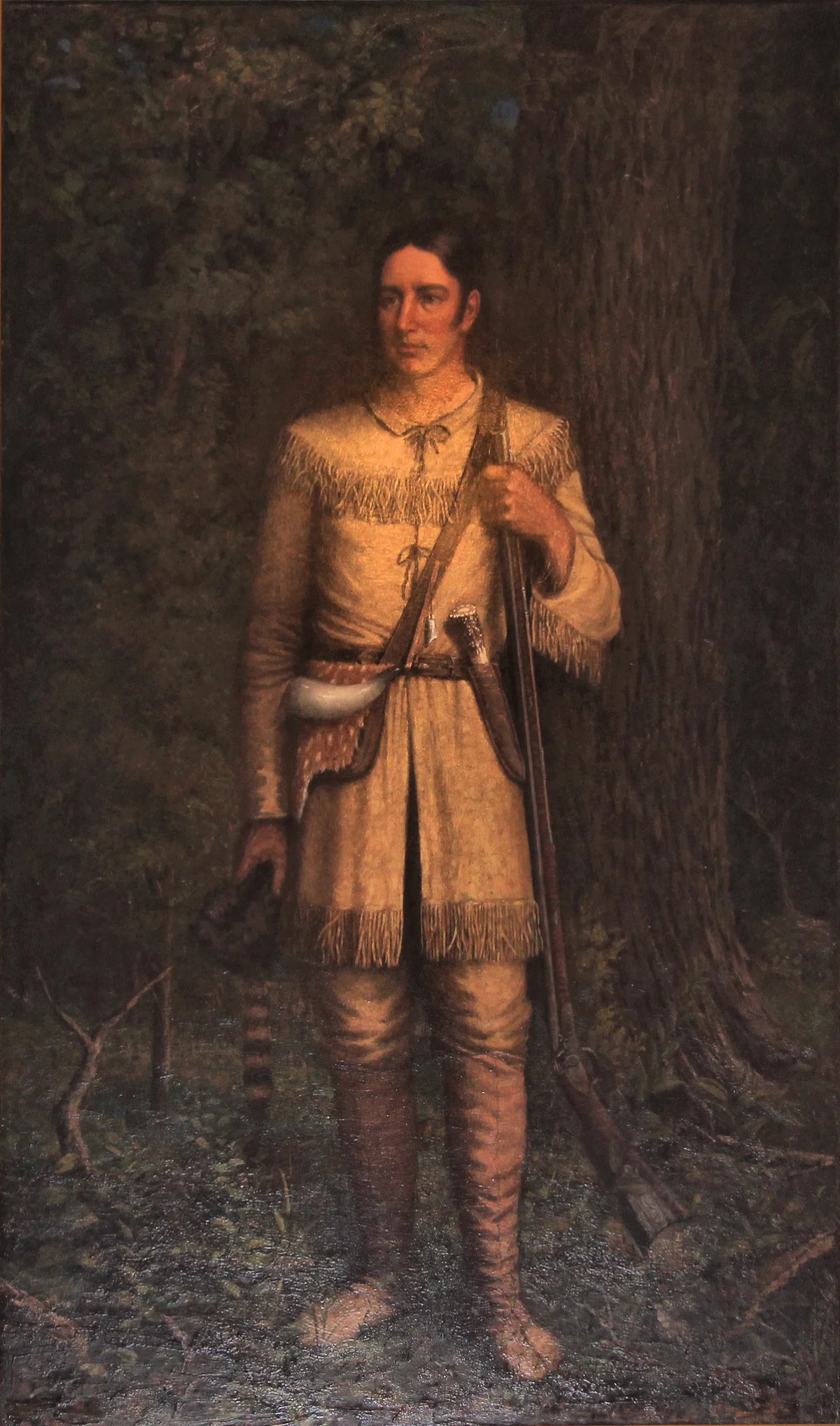
 100% Hand-Painted: Finished in 3-6 Weeks

.png)















_(1).webp)