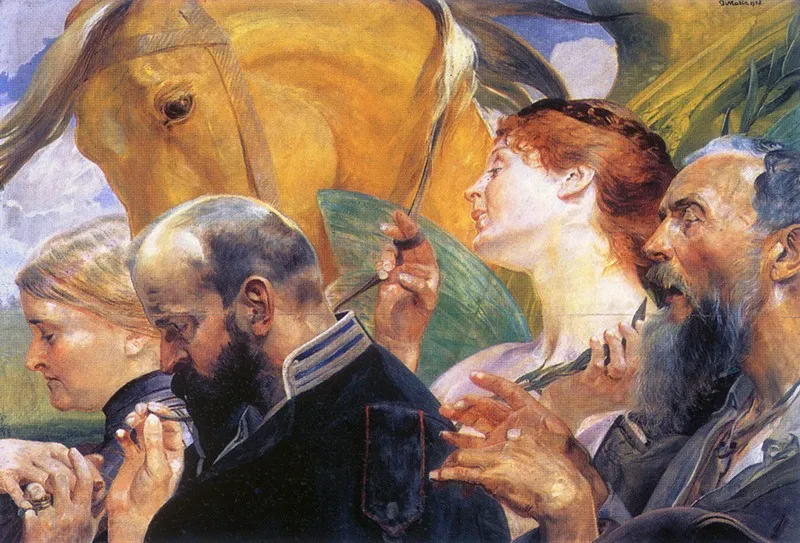
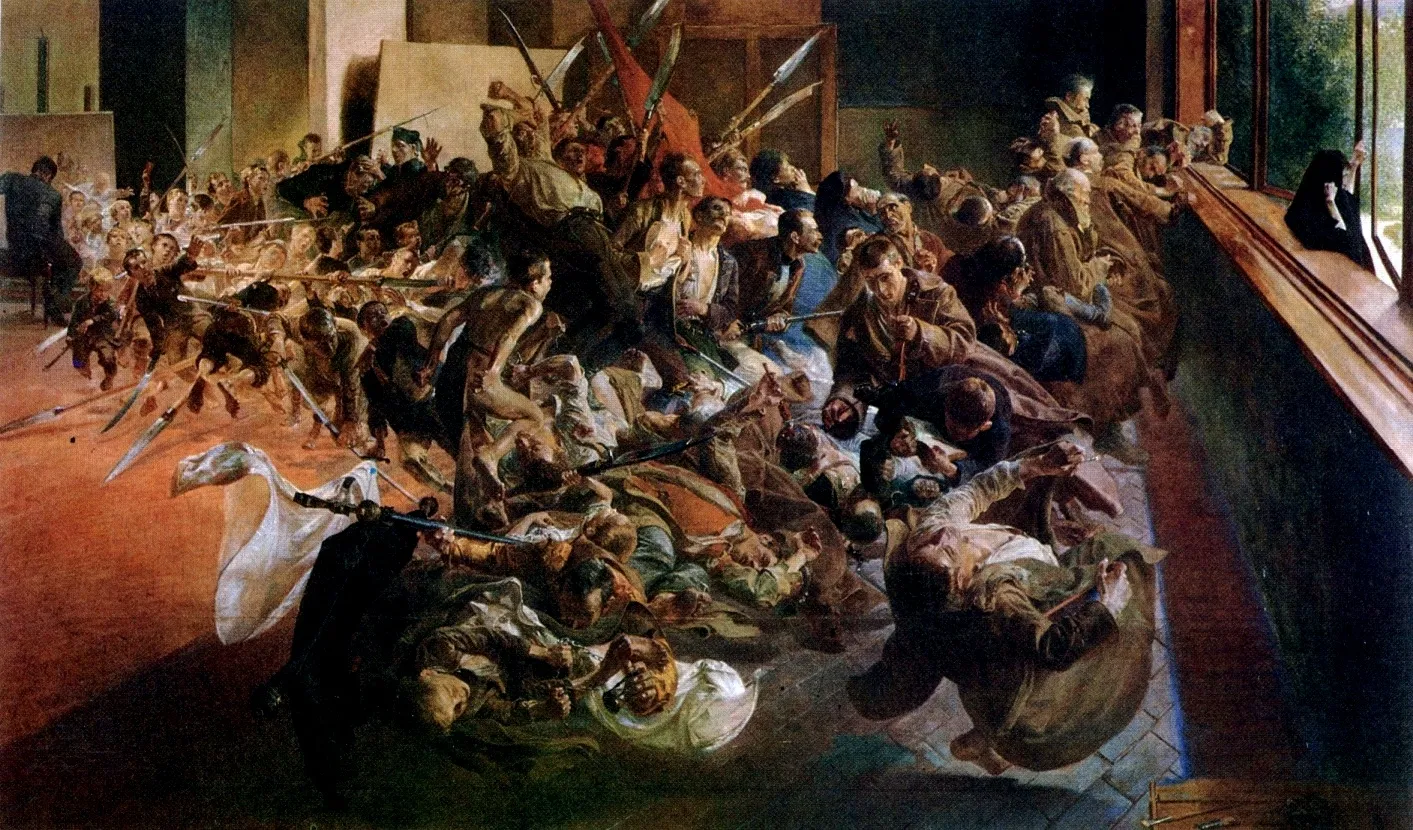
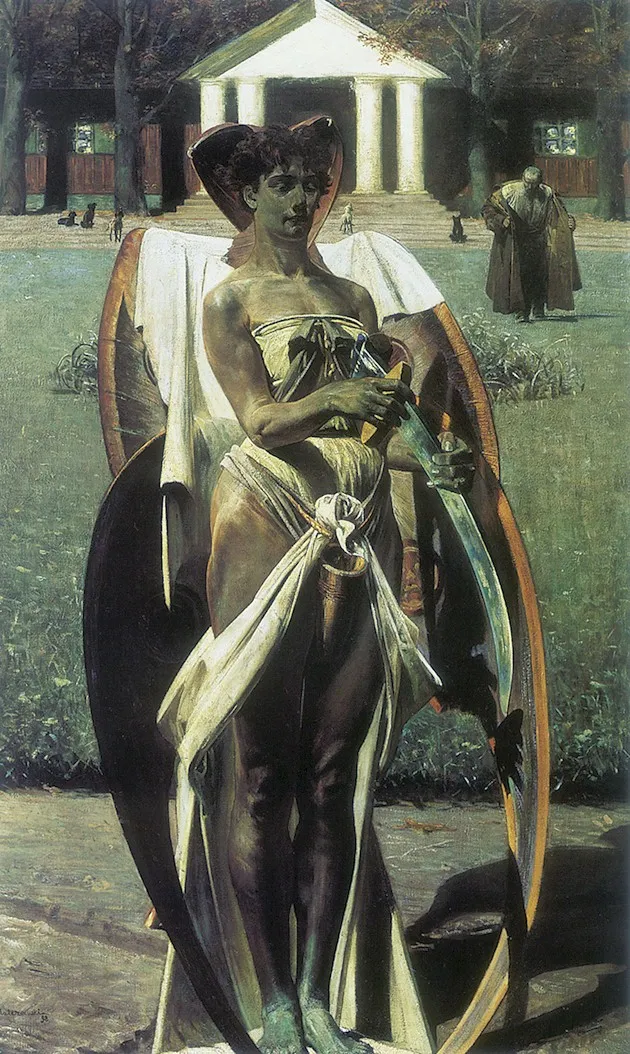
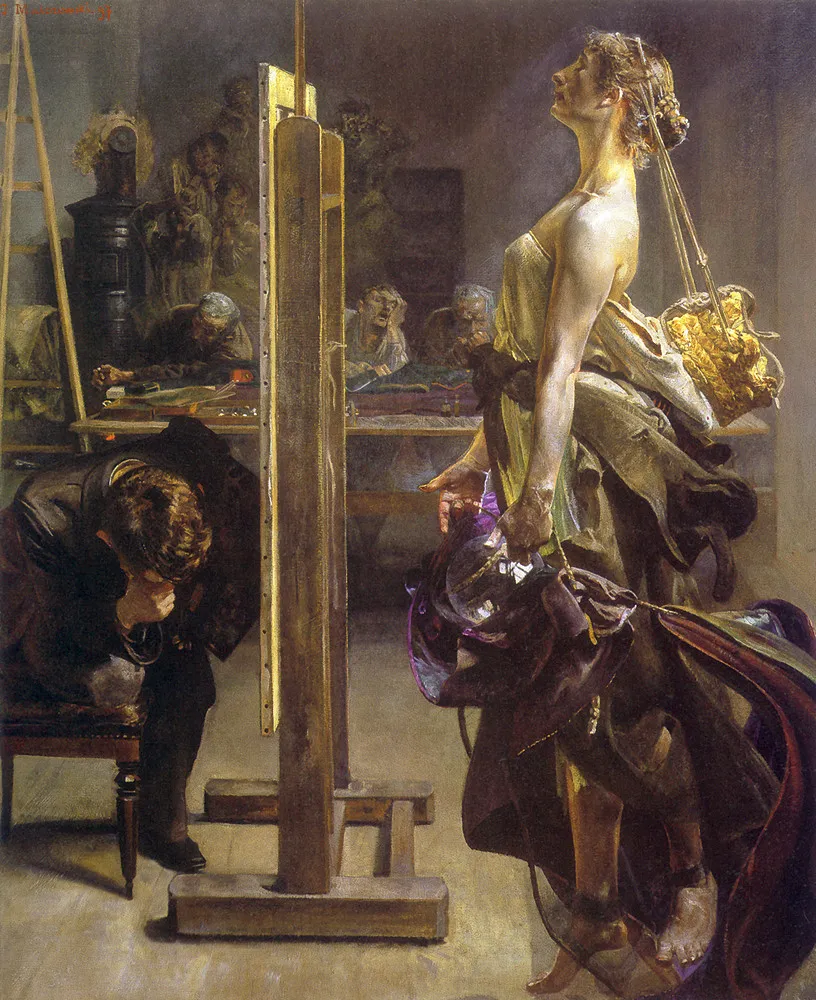
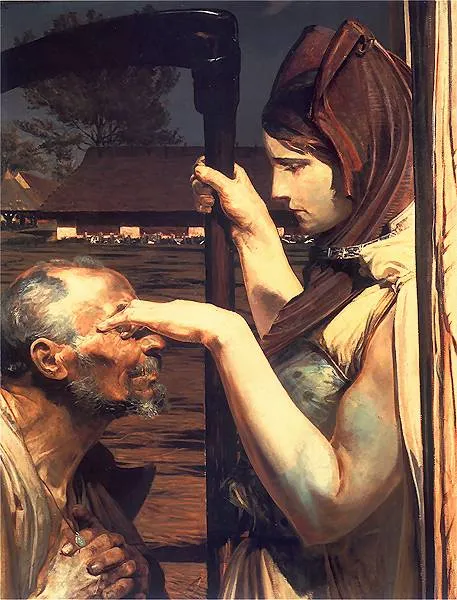
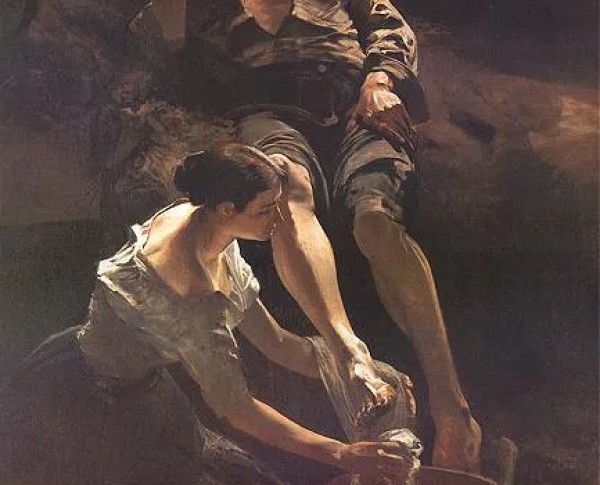
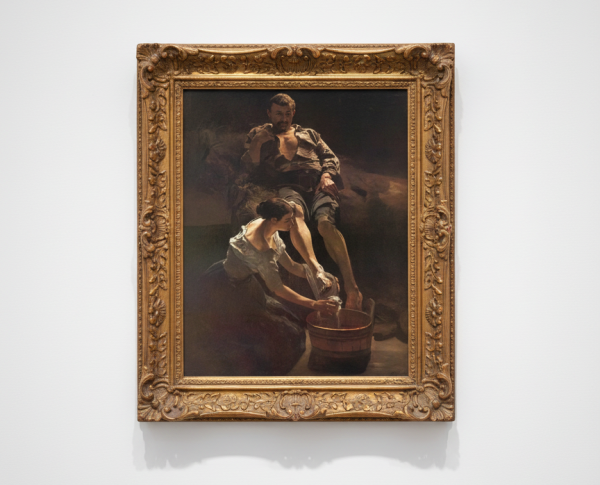
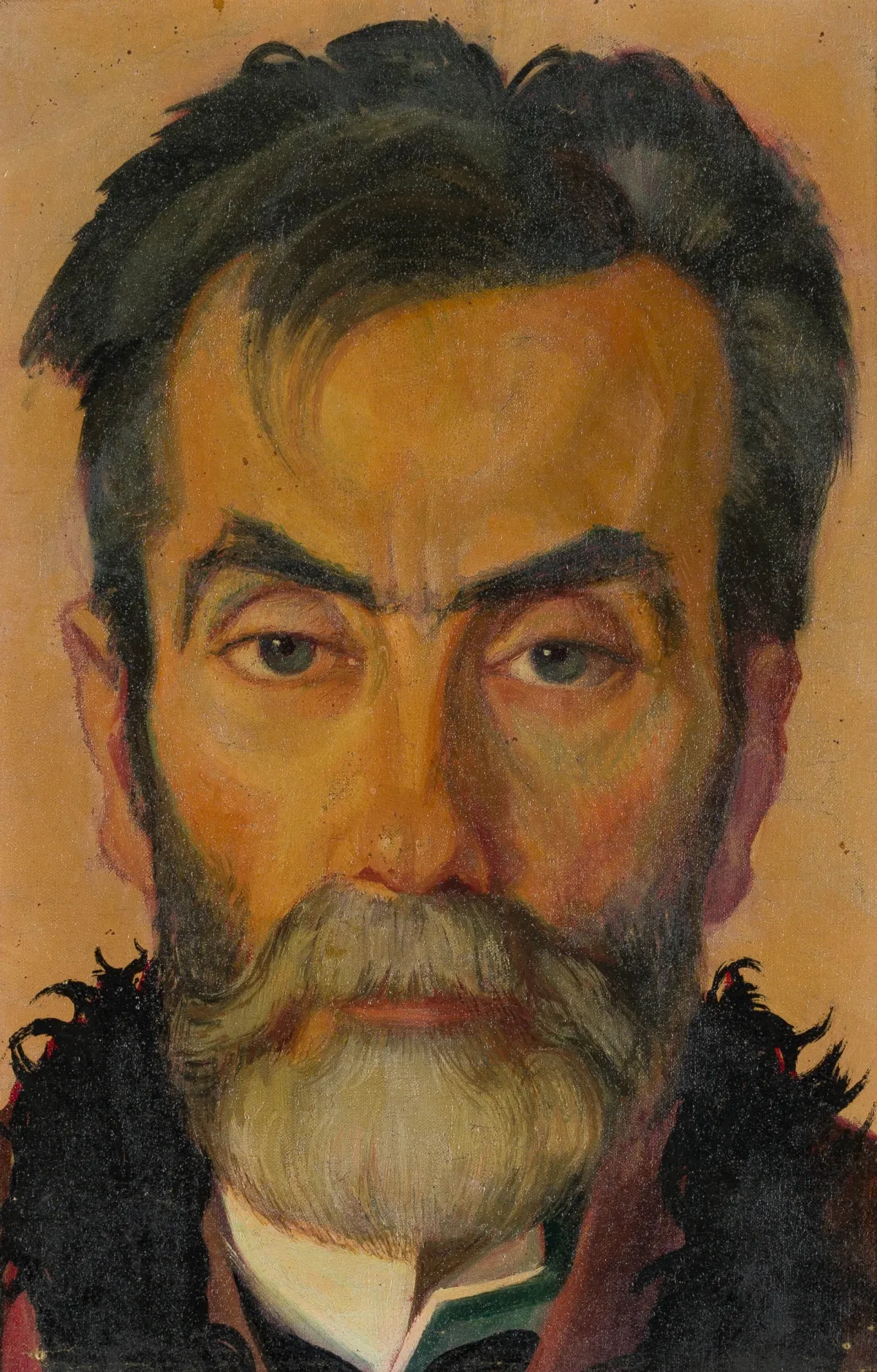
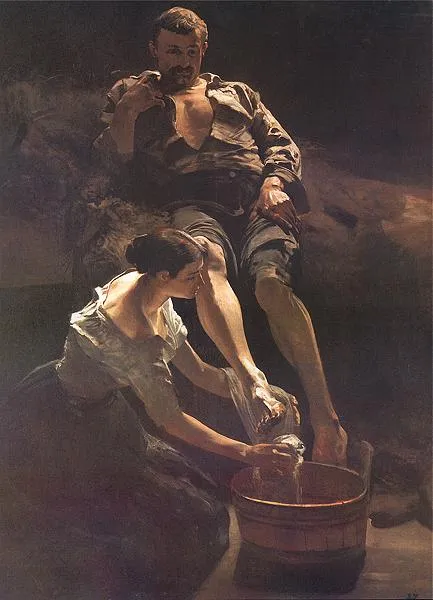
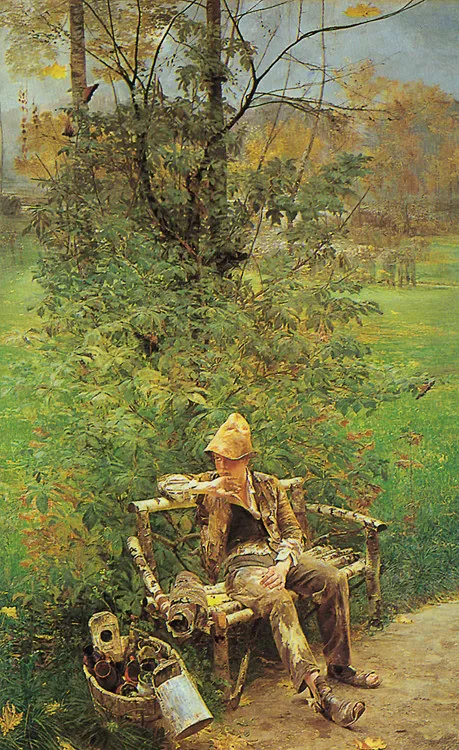
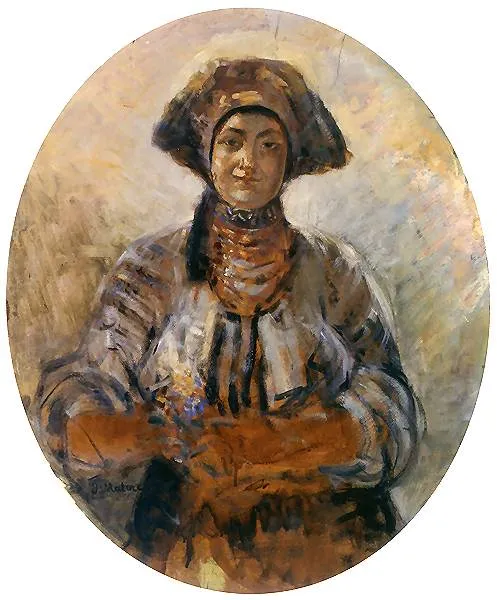
Jacek Malczewski’s "Portrait of Stanislaw Witkiewicz" exemplifies the technical brilliance found in oil on canvas works from the Symbolism era. His brushwork and use of color create a lifelike yet evocative representation, blending realism with symbolic undertones. Malczewski’s mastery is evident in every detail, making this painting a centerpiece among related products like "The Painter Boy" and "Washing of feet," both celebrated for their exquisite technique and emotional depth.
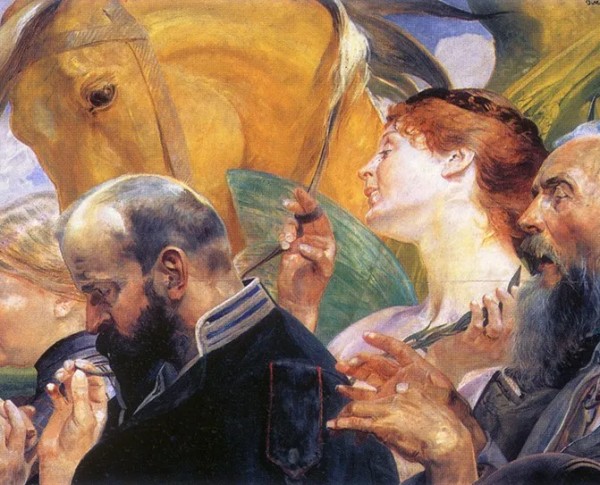
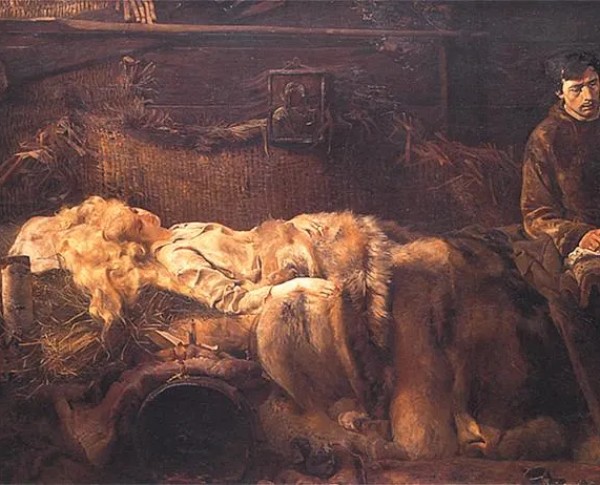
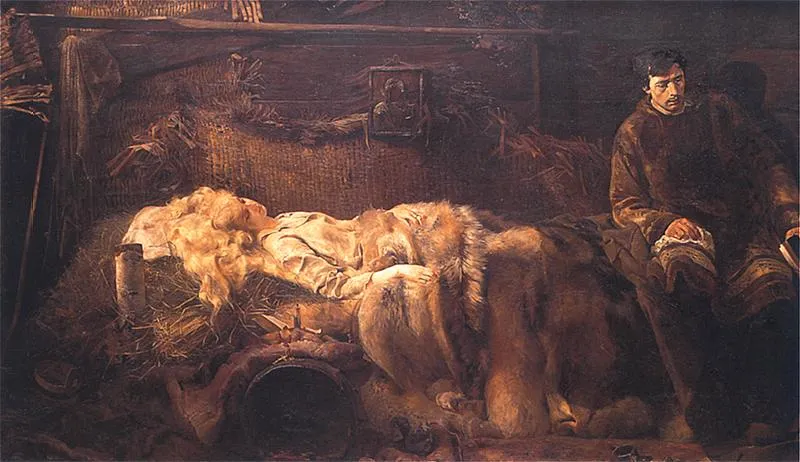
Every element in the "Portrait of Stanislaw Witkiewicz" reveals layers of meaning, a hallmark of Symbolism. Jacek Malczewski infuses the work with subtle references to Witkiewicz’s influence and the broader cultural context. Collectors interested in narrative-rich pieces often explore related products such as "Death of Ellenai" and "Painter's Inspiration." This fine art painting for sale invites viewers to interpret its symbolic motifs and appreciate the stories woven into its composition.
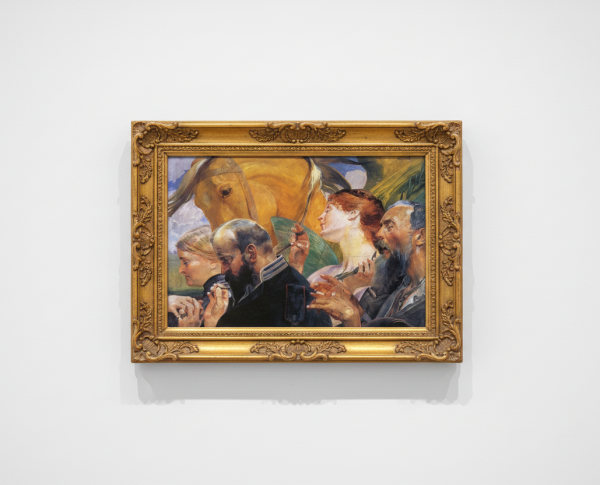
For art lovers seeking a distinguished addition to their collection, "Portrait of Stanislaw Witkiewicz" by Jacek Malczewski is a remarkable choice. As a hand-painted oil painting from the Symbolism movement, it offers both aesthetic beauty and historical value. Collectors often pair it with other Malczewski masterpieces, including "Vicious circle" and "At the stage," to create a curated selection of fine art painting for sale that reflects the artist’s unique vision and enduring legacy.
When Art Meets History
"Portrait of Stanislaw Witkiewicz" by Jacek Malczewski stands as a testament to the Symbolism movement, capturing both the spirit of its era and the personal connection between artist and subject. This hand-painted oil painting reflects Malczewski’s fascination with Polish culture and history, linking it with contemporary themes. Related works like "Maja Maldita" and "Woman in Blue" further illustrate the dynamic interplay between art and historical narrative, making this portrait a significant piece in Symbolist fine art.
Techniques That Speak
Jacek Malczewski’s mastery is evident in his use of oil on canvas, employing rich textures and symbolic details to bring "Portrait of Stanislaw Witkiewicz" to life. The brushwork and color palette evoke a sense of depth and emotional complexity, hallmarks of the Symbolism movement. Comparing this work to "Catalan Camacho" and "Alcalde De Cabezón" highlights Malczewski’s technical prowess and innovative approach to portraiture, setting his pieces apart in the world of fine art painting for sale.
Emotions on Display
"Portrait of Stanislaw Witkiewicz" by Jacek Malczewski is more than a simple likeness; it is a profound exploration of the sitter’s inner world. Through the Symbolism movement’s lens, Malczewski infuses the hand-painted oil painting with layers of emotion and psychological depth. Related artworks such as "Manola With Mantilla And Fan" and "Granada" also showcase this emotional intensity, inviting viewers to connect with the subjects on a deeply personal level.
Coveted by Collectors
Collectors highly prize "Portrait of Stanislaw Witkiewicz" for its exceptional representation of Symbolism and Malczewski’s distinctive style. The oil on canvas technique ensures lasting beauty, making it a sought-after fine art painting for sale. As with related masterpieces like "Maja Maldita" and "Woman in Blue," this portrait’s historical and artistic significance appeals to connoisseurs seeking unique additions to their collections, cementing its status in the art market.
Related Symbolism Hand-Painted Oil Paintings by Other Artists
Other Famous Symbolism Artists:
Frequently Asked Questions About Portrait of Stanislaw Witkiewicz
What is the historical significance of "Portrait of Stanislaw Witkiewicz"?
This painting is significant as it captures the essence of Polish cultural identity during the late 19th century, a period marked by national revival and artistic exploration.
Who was Stanislaw Witkiewicz and why is he important?
Stanislaw Witkiewicz was a prominent Polish painter and playwright, known for his contributions to the development of modern Polish art and theatre, making his portrayal a vital representation of the era.
What artistic style is employed in "Portrait of Stanislaw Witkiewicz"?
The painting reflects the Symbolist movement, characterized by its use of vivid colors, emotional depth, and symbolic imagery, which were hallmarks of Jacek Malczewski's work.
How does Jacek Malczewski's technique contribute to the painting's impact?
Malczewski's technique, which includes a blend of realism and symbolism, enhances the emotional resonance of the portrait, inviting viewers to engage with both the subject and the deeper themes of identity and existence.
What symbols are present in the painting and what do they represent?
The use of specific colors and objects in the portrait symbolizes the duality of human experience, reflecting both the artistic spirit and the struggles of Polish identity during a tumultuous historical period.
In what ways does this painting reflect the cultural context of its time?
The painting serves as a reflection of the cultural renaissance in Poland, showcasing the interplay between art and national identity amidst the backdrop of political challenges and societal change.
What emotions does Malczewski evoke through the portrayal of Witkiewicz?
Malczewski evokes a sense of introspection and melancholy, capturing the complexity of the artist's psyche and the broader existential questions faced by individuals in a changing society.
How does "Portrait of Stanislaw Witkiewicz" compare to other works by Jacek Malczewski?
This portrait is notable for its intimate portrayal of a fellow artist, contrasting with Malczewski's more allegorical works, yet it shares thematic elements of identity, memory, and the human condition.
What role does light play in the composition of the painting?
The use of light in the painting serves to highlight the subject's features and emotional state, creating a dynamic interplay between shadow and illumination that enhances the overall mood.
What legacy has "Portrait of Stanislaw Witkiewicz" left in the art world?
The painting remains a significant work in Polish art history, influencing future generations of artists and contributing to the discourse on national identity and the role of the artist in society.






















_GFM_Painting_(1).webp)


 100% Hand-Painted: Finished in 3-6 Weeks

.png)















_(1).webp)