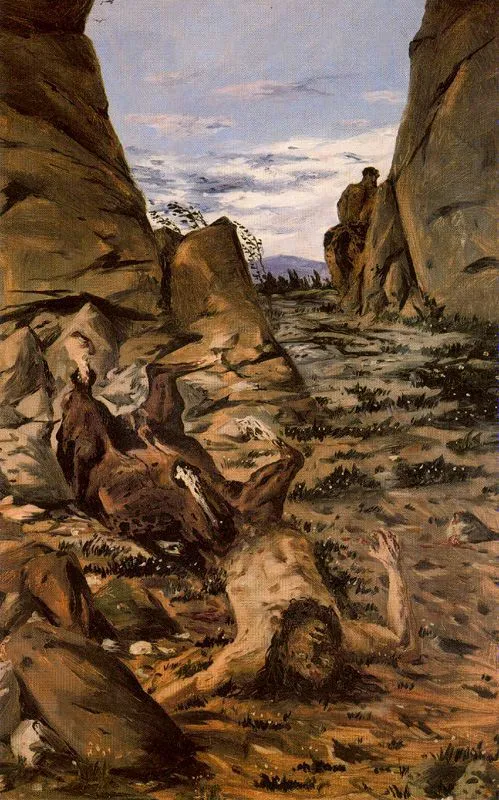
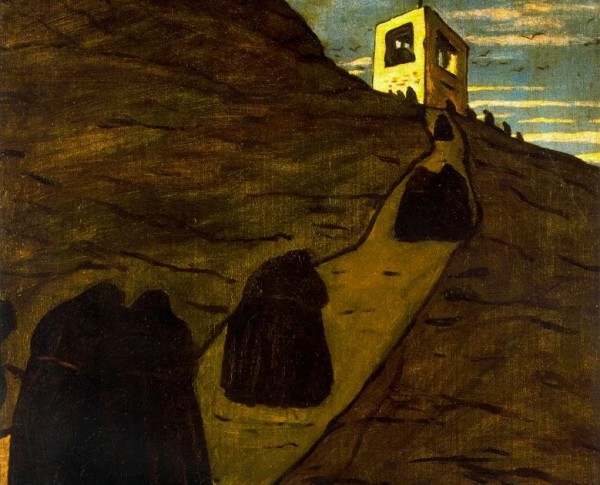
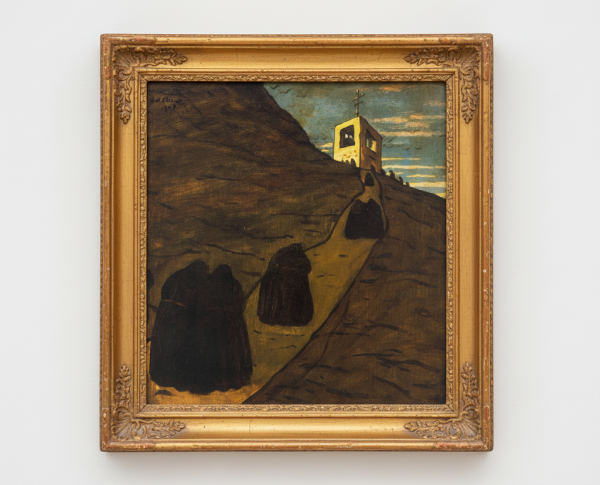
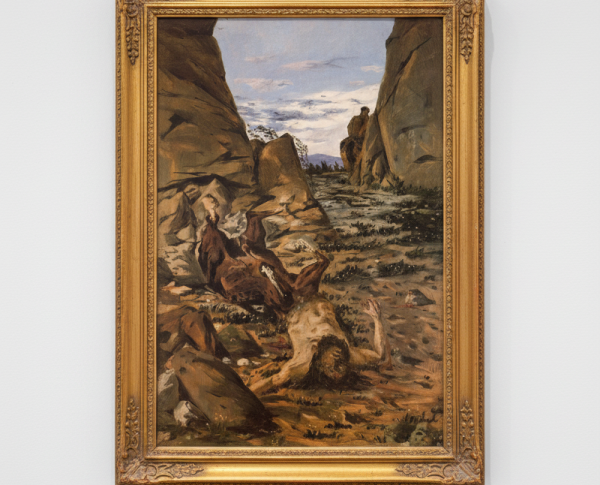
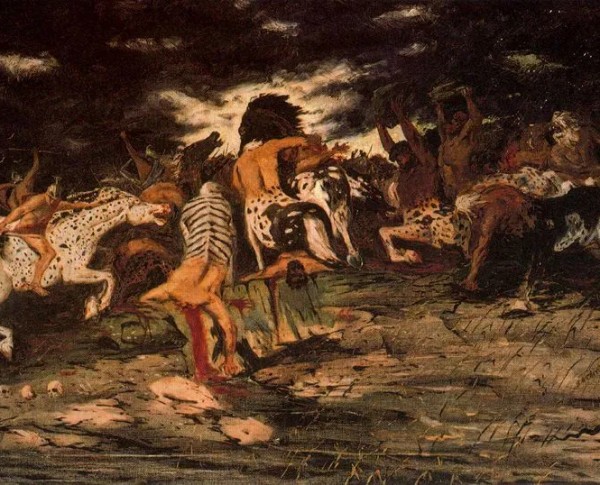
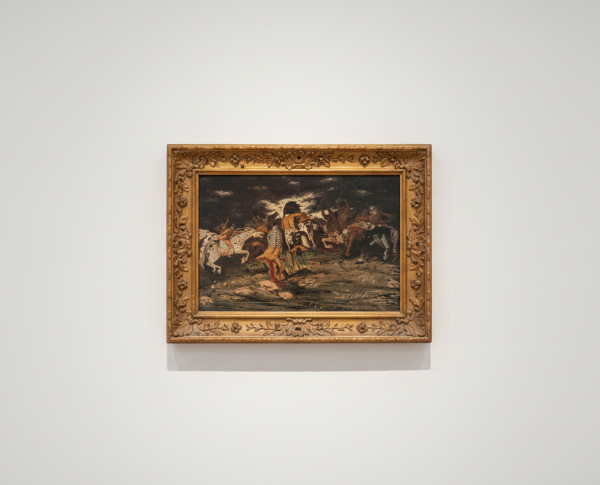
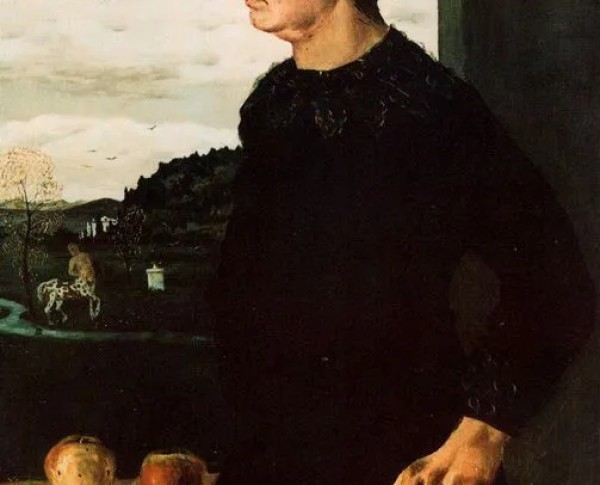
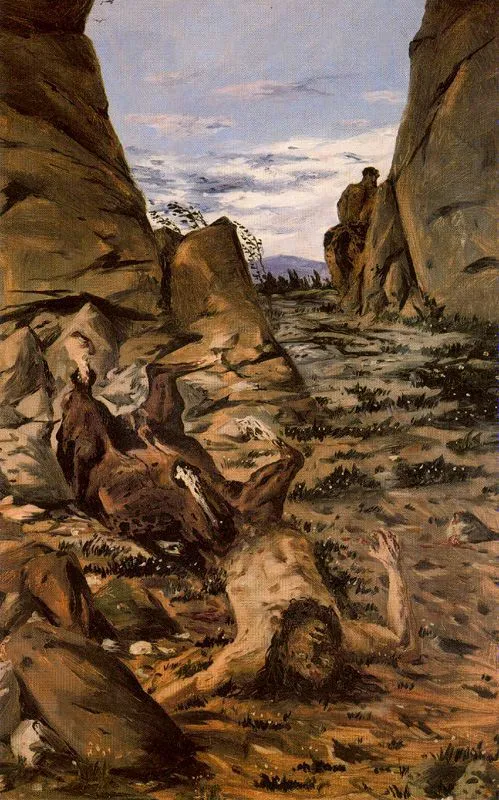
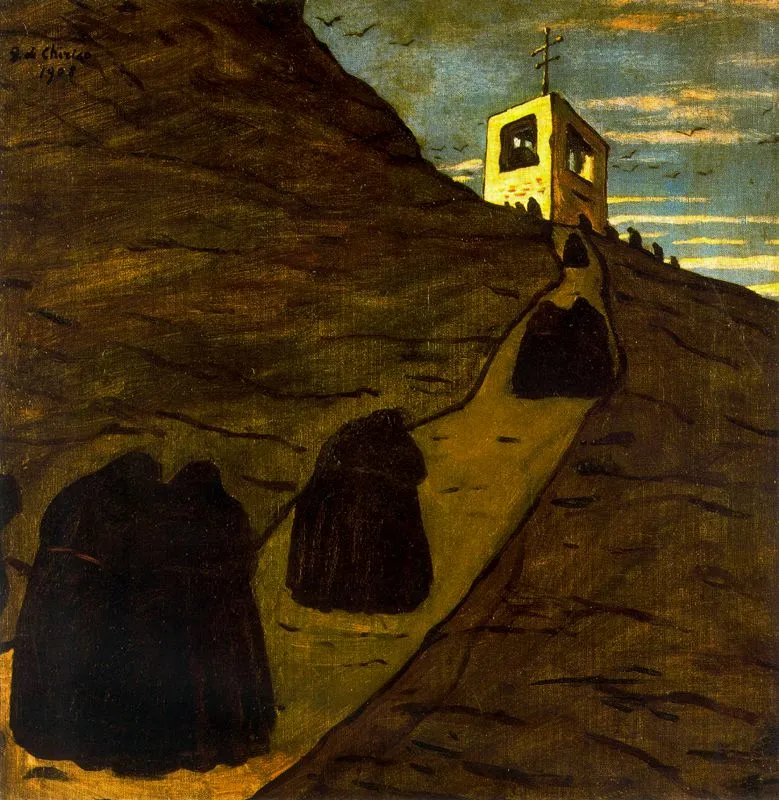
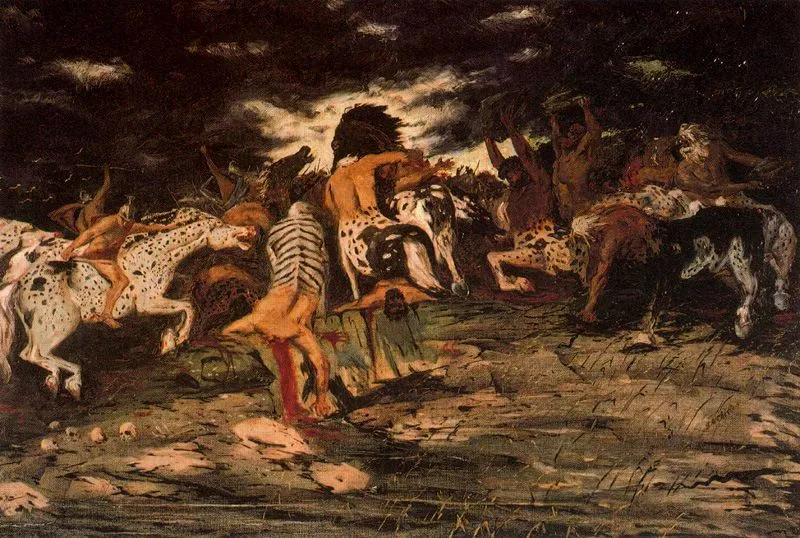
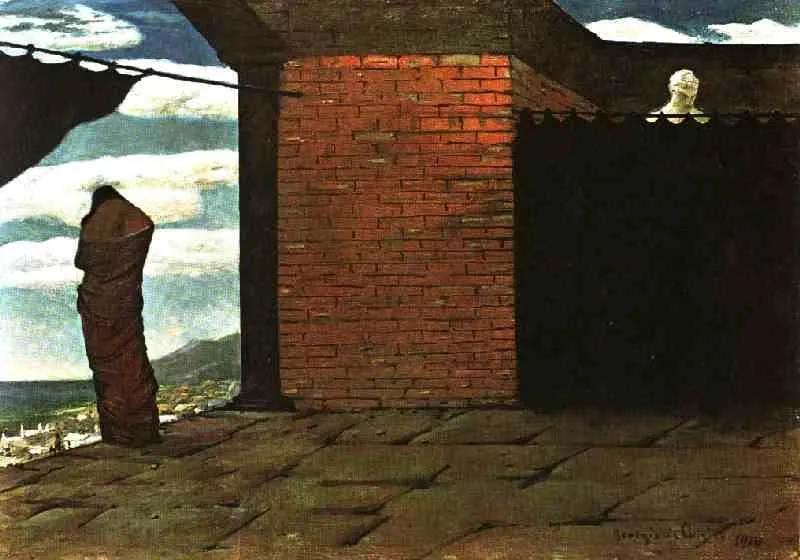
The "Dying Centaur" showcases Giorgio de Chirico’s technical prowess, where each brushstroke adds depth and emotion to the composition. Executed in oil on canvas, the painting’s rich textures and moody colors exemplify the Surrealist movement’s ability to evoke wonder and contemplation. The meticulous technique elevates de Chirico’s work, inviting viewers to appreciate the mastery behind every detail. Pairing this piece with "Climb to the monastery" enhances any collection’s sophistication.
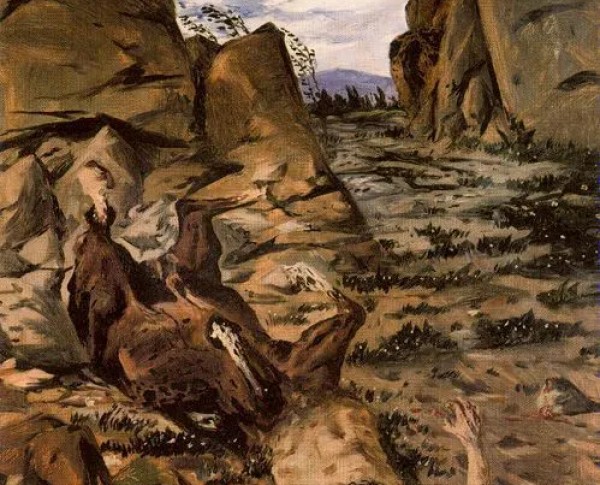
Giorgio de Chirico’s "Dying Centaur" weaves an intricate narrative, blending mythology and subconscious imagery within the Surrealist tradition. This fine art painting for sale invites interpretation, as the centaur’s poignant pose suggests themes of mortality, transformation, and inner turmoil. Each symbol in the painting is thoughtfully placed, offering depth for collectors and art enthusiasts alike. "Climb to the monastery" further complements this narrative richness, making both works highly desirable.
Owning "Dying Centaur" by Giorgio de Chirico means possessing a hand-painted oil painting that embodies the innovation of Surrealism. Its captivating imagery and artistic significance make it a standout choice for discerning collectors. As a fine art painting for sale, it represents not just an investment but a statement of taste and appreciation for modern masterpieces. Enhance your collection further with related works like "Climb to the monastery" for a truly distinguished display.
When Art Meets History
Giorgio de Chirico’s "Dying Centaur" is a remarkable hand-painted oil painting that bridges the gap between myth and modernity. Created during the Surrealism movement, this work draws from classical mythology while infusing it with dreamlike ambiguity. De Chirico’s unique vision places the centaur—a figure from ancient lore—within a surreal, enigmatic landscape. Like many of his works, "Dying Centaur" invites viewers to reconsider history through the lens of fine art, making it a timeless masterpiece.
Techniques That Speak
Employing oil on canvas, Giorgio de Chirico masterfully crafts the melancholic atmosphere of "Dying Centaur." His technique involves bold contours, muted colors, and strategic use of shadow, hallmark traits of the Surrealism movement. The artist’s brushwork gives the mythical figure an almost sculptural quality, blurring the boundary between reality and imagination. De Chirico’s approach in this and related paintings showcases his innovative contribution to early twentieth-century art.
Emotions on Display
"Dying Centaur" by Giorgio de Chirico is a fine art painting for sale that evokes profound emotion through its surreal composition. The centaur’s posture expresses vulnerability and existential pain, resonating with the viewer on a deeply human level. Surrealism’s influence is apparent in the dreamlike setting, which heightens the sense of isolation and introspection. De Chirico’s poignant portrayal encourages reflection on mortality, making this painting an emotional centerpiece in his body of work.
Coveted by Collectors
This hand-painted oil painting by Giorgio de Chirico is highly sought after by collectors who appreciate Surrealism’s enigmatic allure. "Dying Centaur" stands out for its historical references and psychological depth, making it a prized addition to any serious art collection. Those searching for a unique fine art painting for sale will find this masterpiece embodies the innovation and intrigue characteristic of de Chirico’s oeuvre, alongside his other renowned works from the same period.
Frequently Asked Questions About Dying Centaur
What is the historical context of "Dying Centaur"?
"Dying Centaur" was created by Giorgio de Chirico during the early 20th century, a time marked by significant shifts in artistic expression and the emergence of modernism. The painting reflects the artist's fascination with classical themes and the juxtaposition of myth and reality.
What artistic movement is "Dying Centaur" associated with?
The painting is associated with the Metaphysical painting movement, which Giorgio de Chirico co-founded. This movement emphasizes dreamlike imagery, enigmatic scenes, and a sense of timelessness, challenging viewers to explore deeper meanings.
What symbolism is present in "Dying Centaur"?
The centaur, a creature that is half human and half horse, symbolizes the duality of human nature—representing both the civilized and the primal. The dying aspect suggests themes of mortality, loss, and the inevitability of death, inviting contemplation on the human condition.
How does de Chirico's use of color influence the painting?
De Chirico employs a muted color palette in "Dying Centaur," which evokes a melancholic and introspective mood. The subdued tones enhance the sense of desolation and reinforce the themes of decay and existential reflection present in the work.
What role does architecture play in "Dying Centaur"?
Architecture in "Dying Centaur" serves as a backdrop that contrasts with the organic form of the centaur. The stark, classical structures evoke a sense of timelessness and permanence, highlighting the fleeting nature of life and the tension between the eternal and the ephemeral.
How does "Dying Centaur" reflect de Chirico's personal philosophy?
The painting reflects de Chirico's belief in the importance of exploring the subconscious and the metaphysical dimensions of existence. His works often delve into themes of isolation, nostalgia, and the search for meaning, which are all encapsulated in this poignant piece.
What is the significance of the centaur in classical mythology?
In classical mythology, centaurs are often depicted as wild and unruly beings, representing the struggle between civilization and barbarism. In "Dying Centaur," this duality is explored through the creature's vulnerability, suggesting a deeper commentary on the fragility of human nature.
How does "Dying Centaur" compare to other works by de Chirico?
What impact did "Dying Centaur" have on contemporary art?
"Dying Centaur" has had a significant influence on contemporary art, particularly in the realms of surrealism and symbolism. Its exploration of metaphysical themes and dreamlike imagery has inspired numerous artists to investigate the subconscious and the complexities of human existence.
Where can I view "Dying Centaur" today?
"Dying Centaur" is part of various private collections and exhibitions. For current display information, please check with major art galleries or museums that feature de Chirico's work, as it may be included in retrospectives or thematic exhibitions.






















_GFM_Painting_(1).webp)


 100% Hand-Painted: Finished in 3-6 Weeks

.png)















_(1).webp)