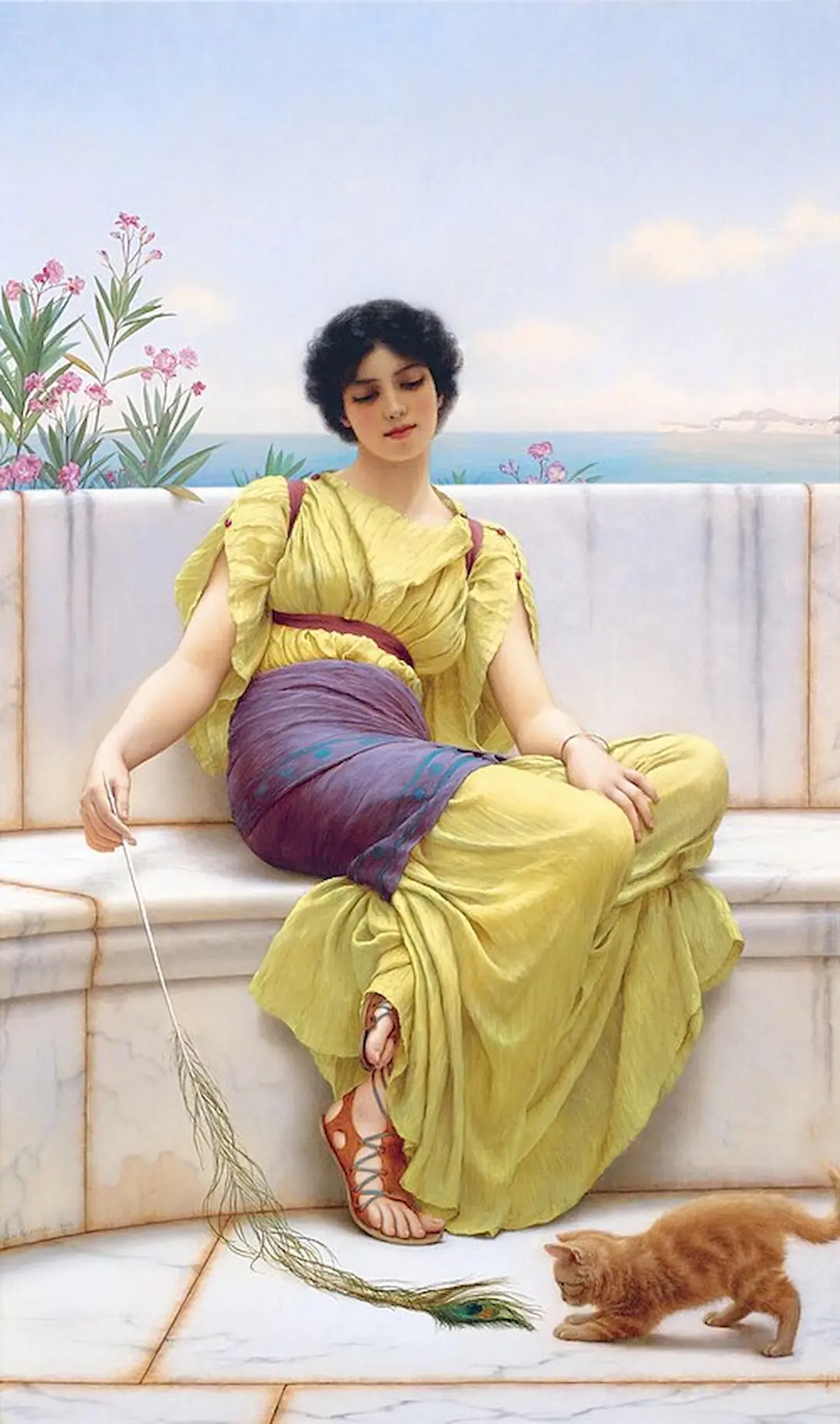
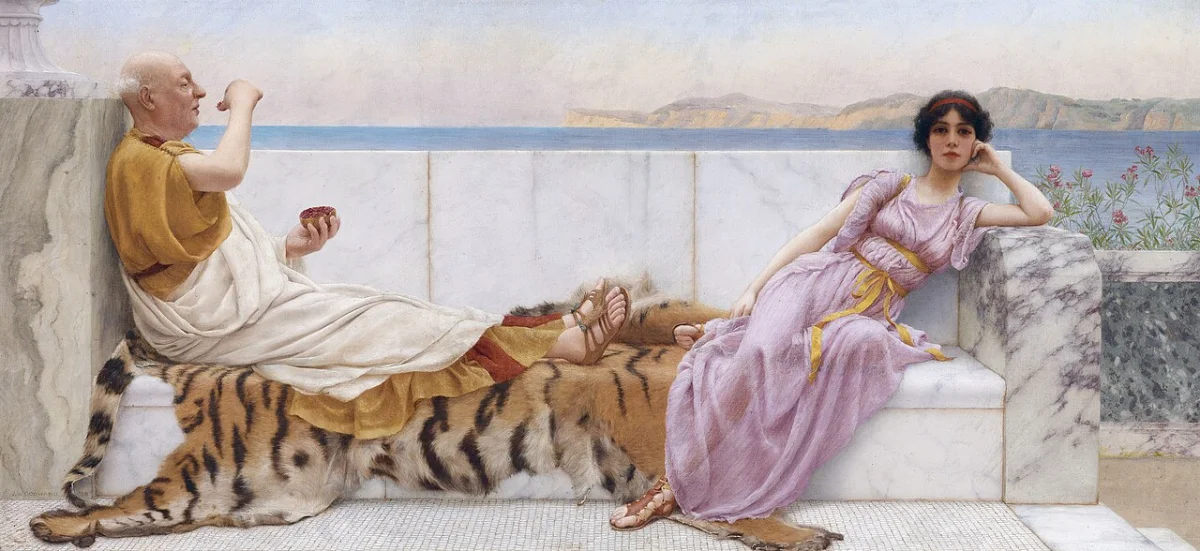
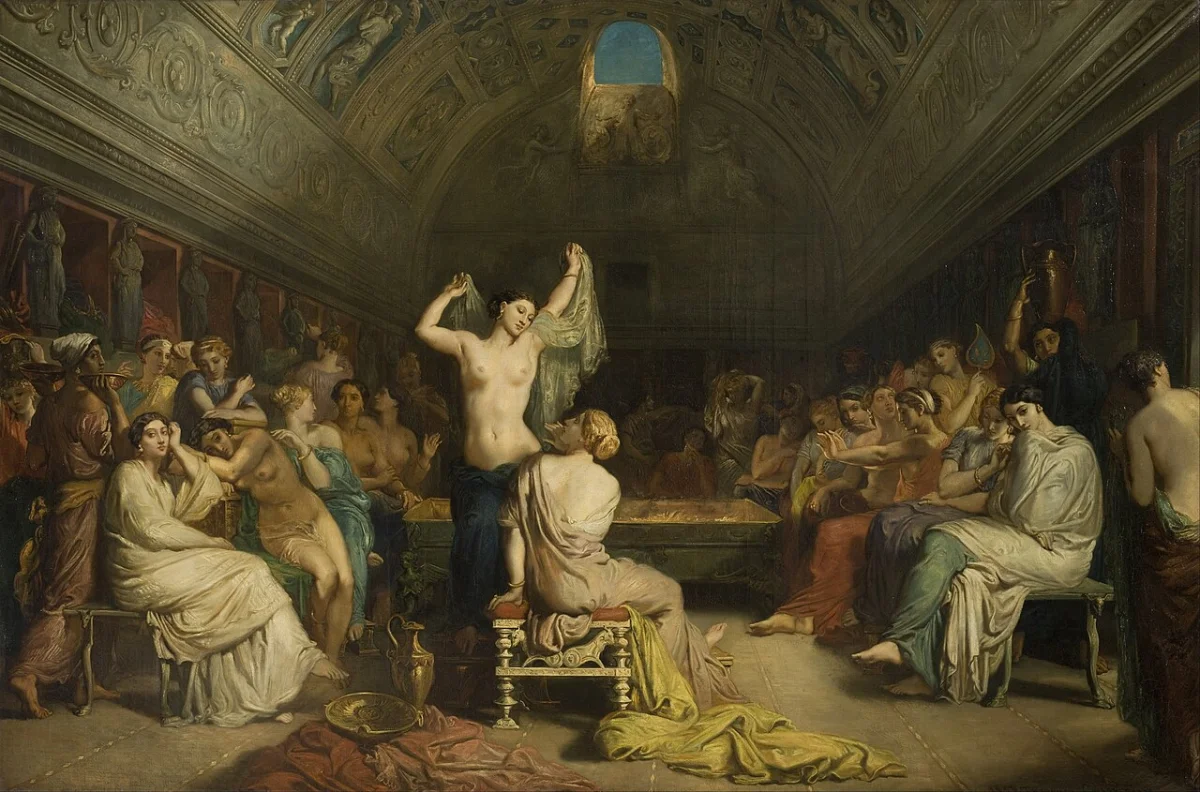
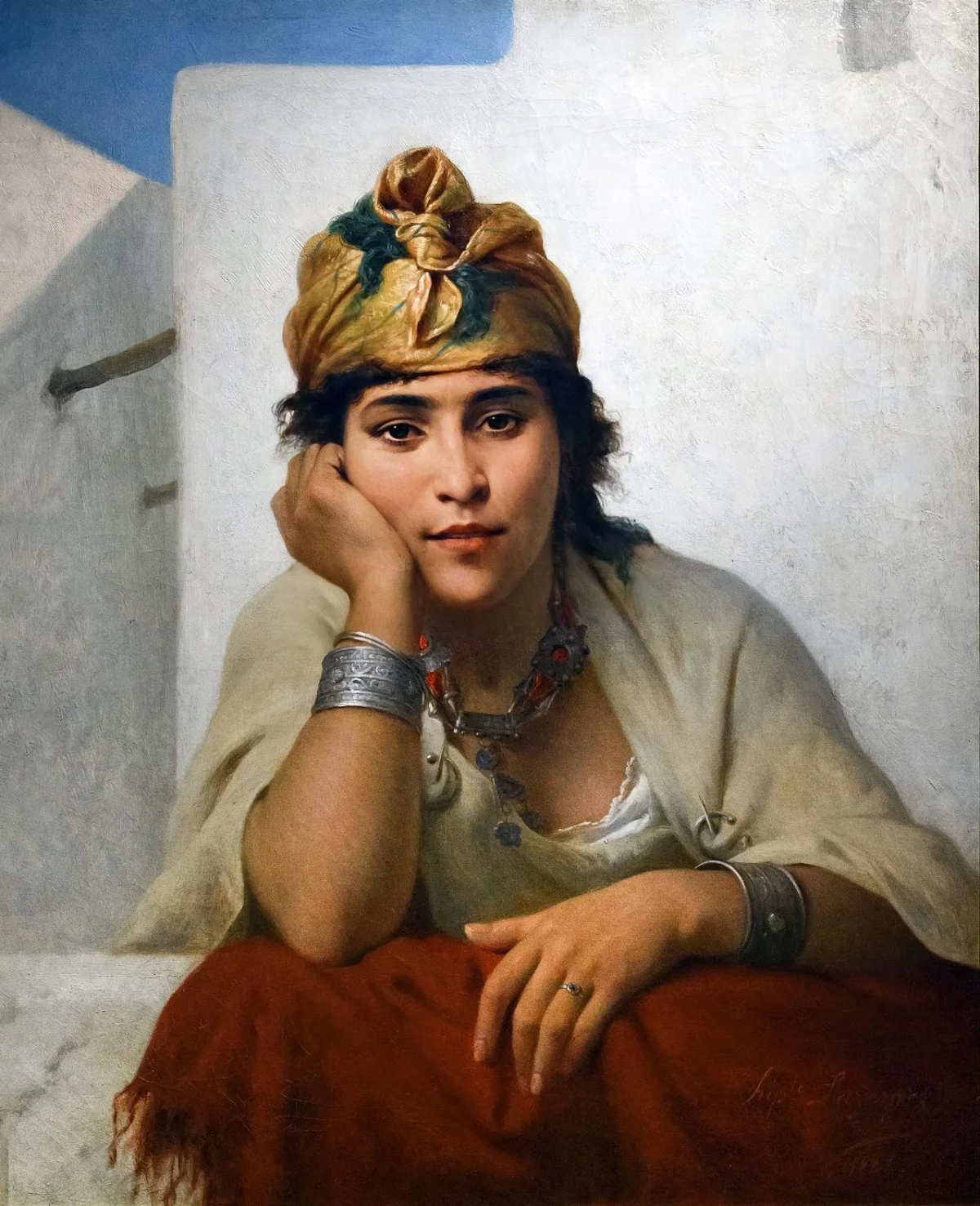
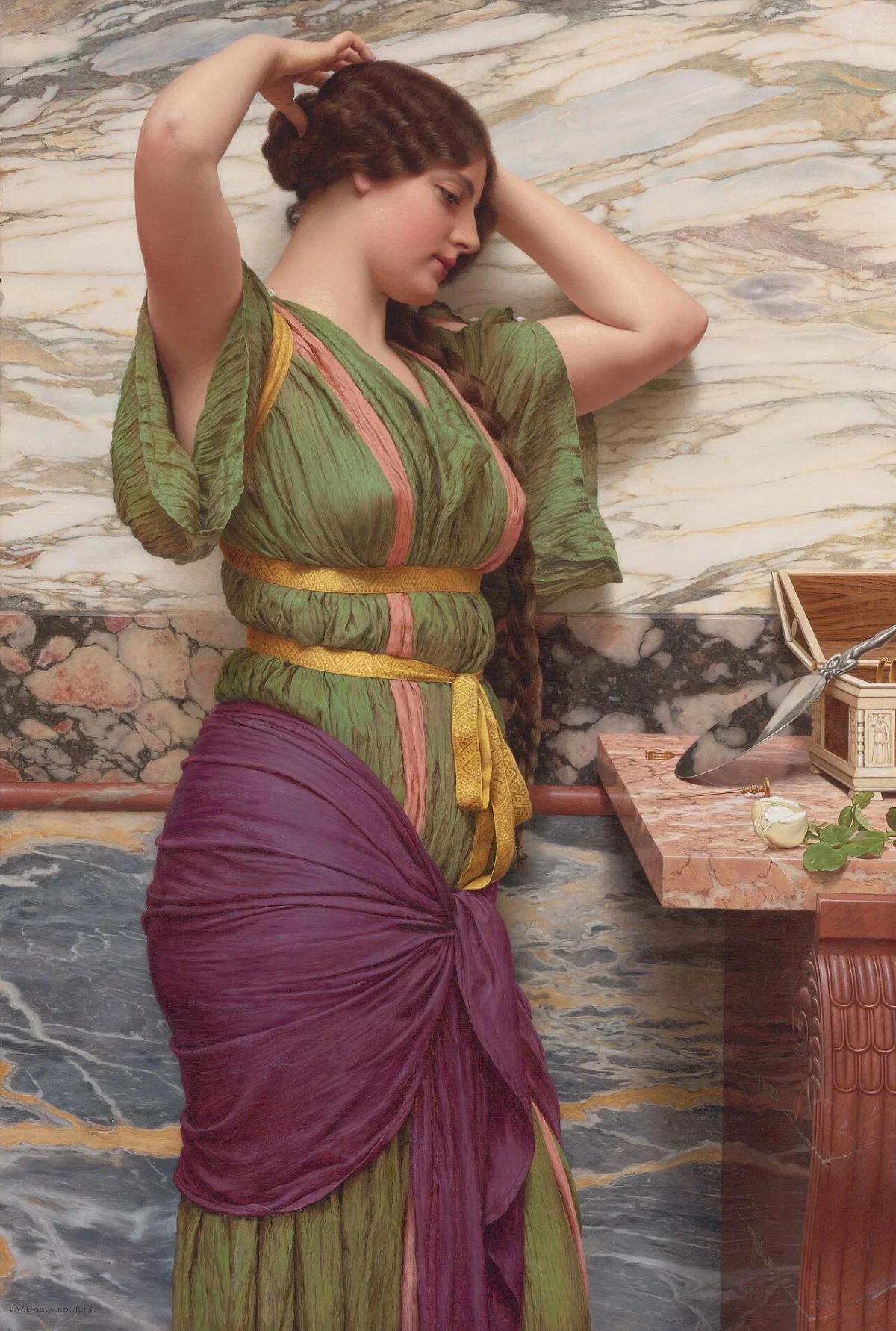
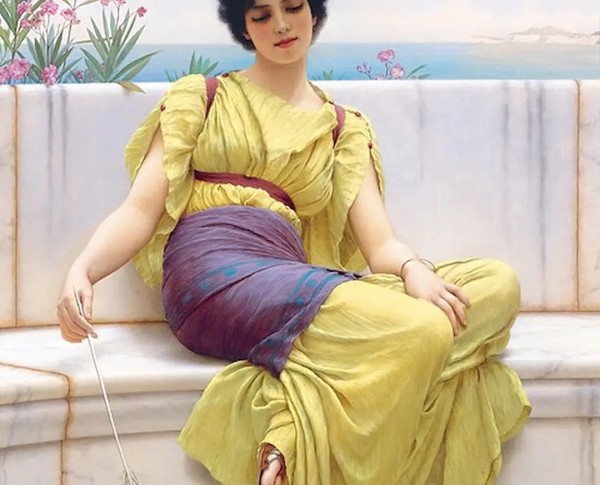
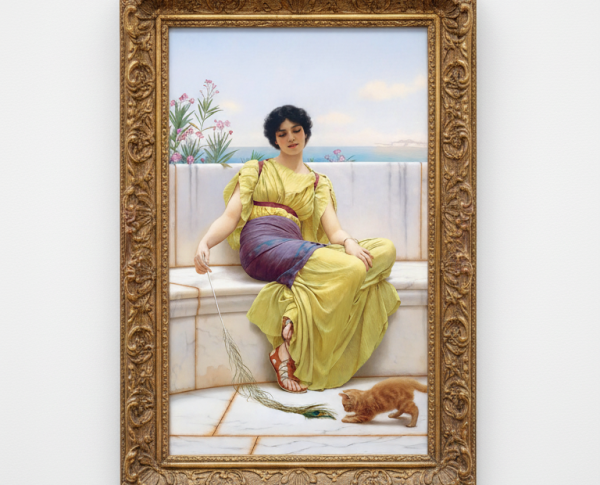
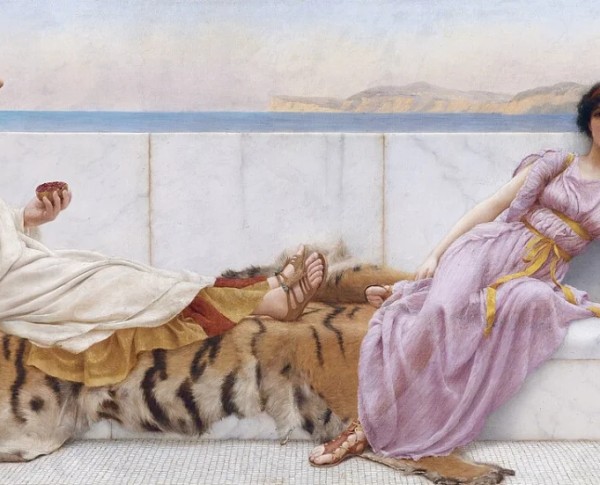
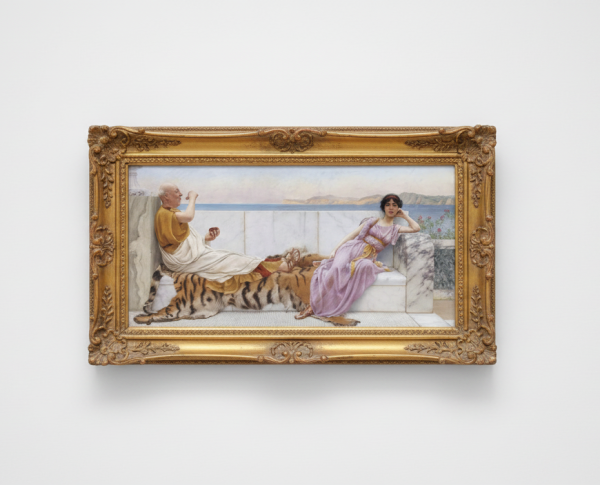
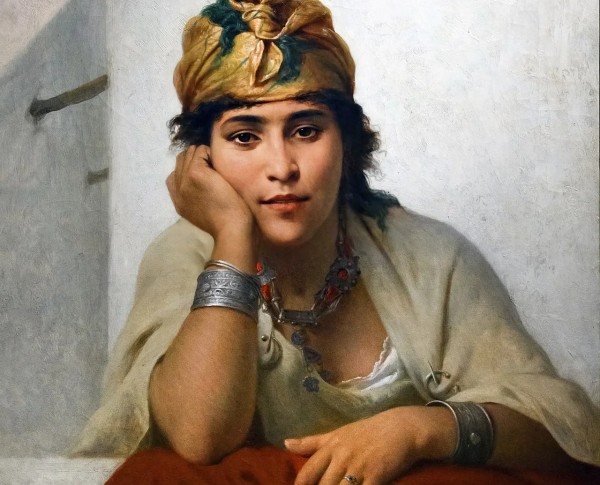
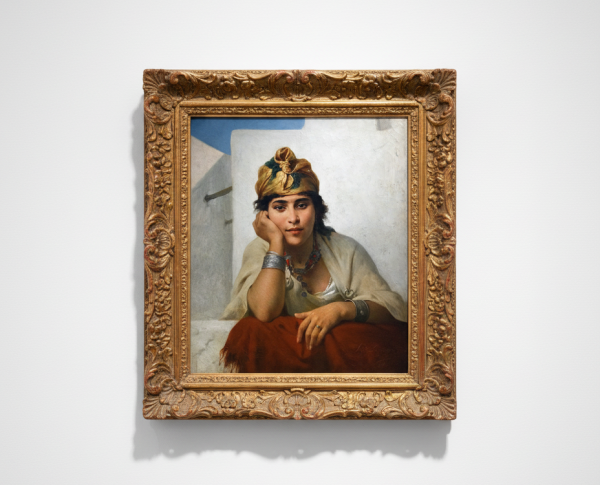
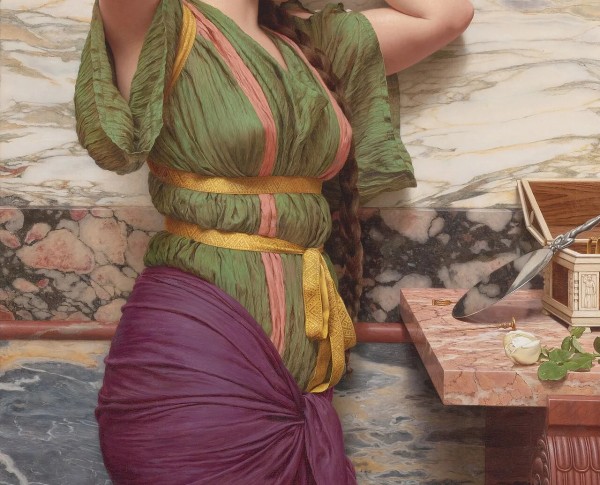
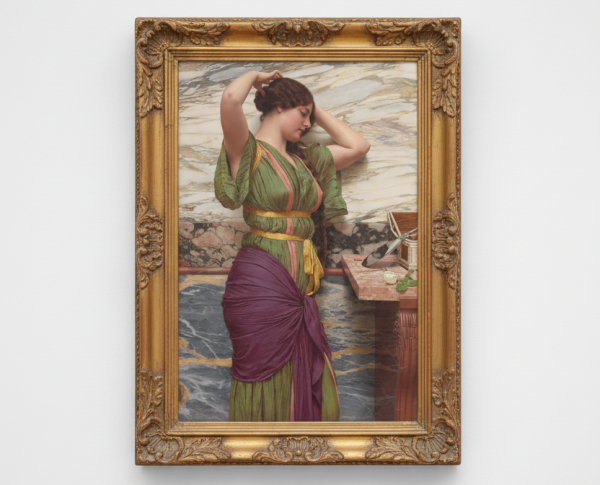
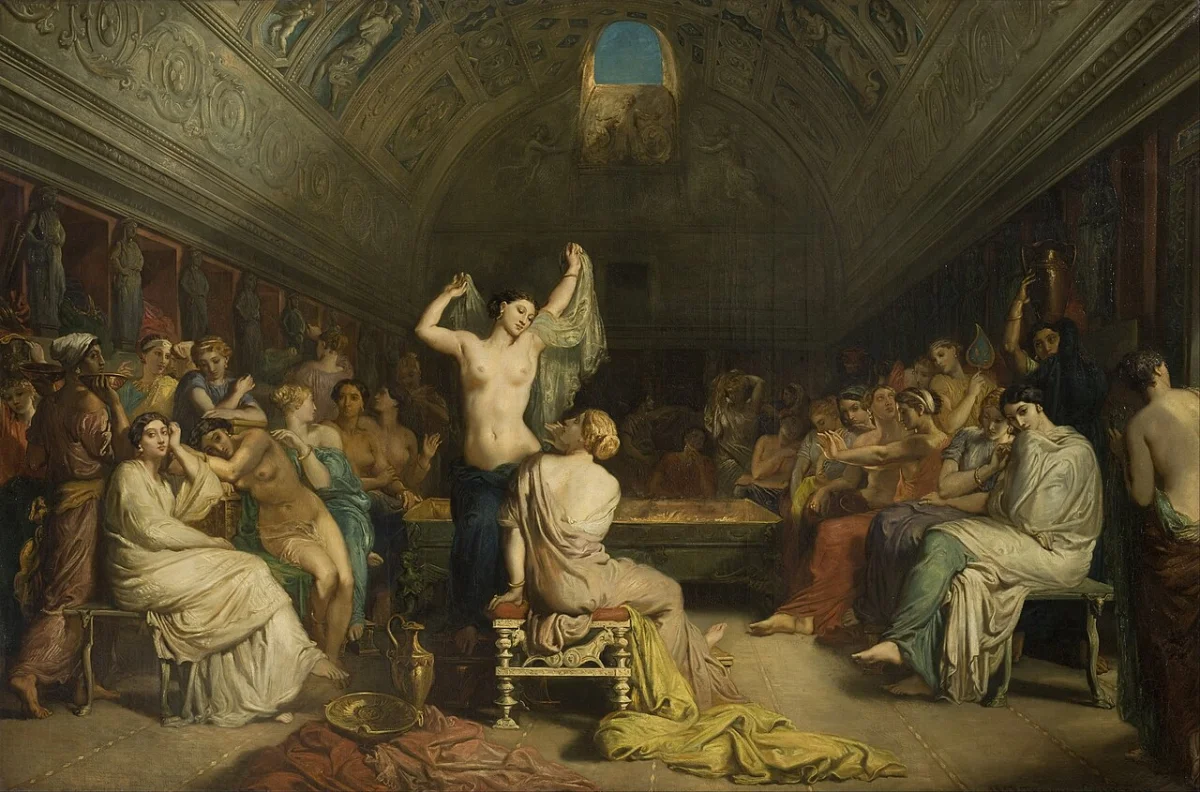
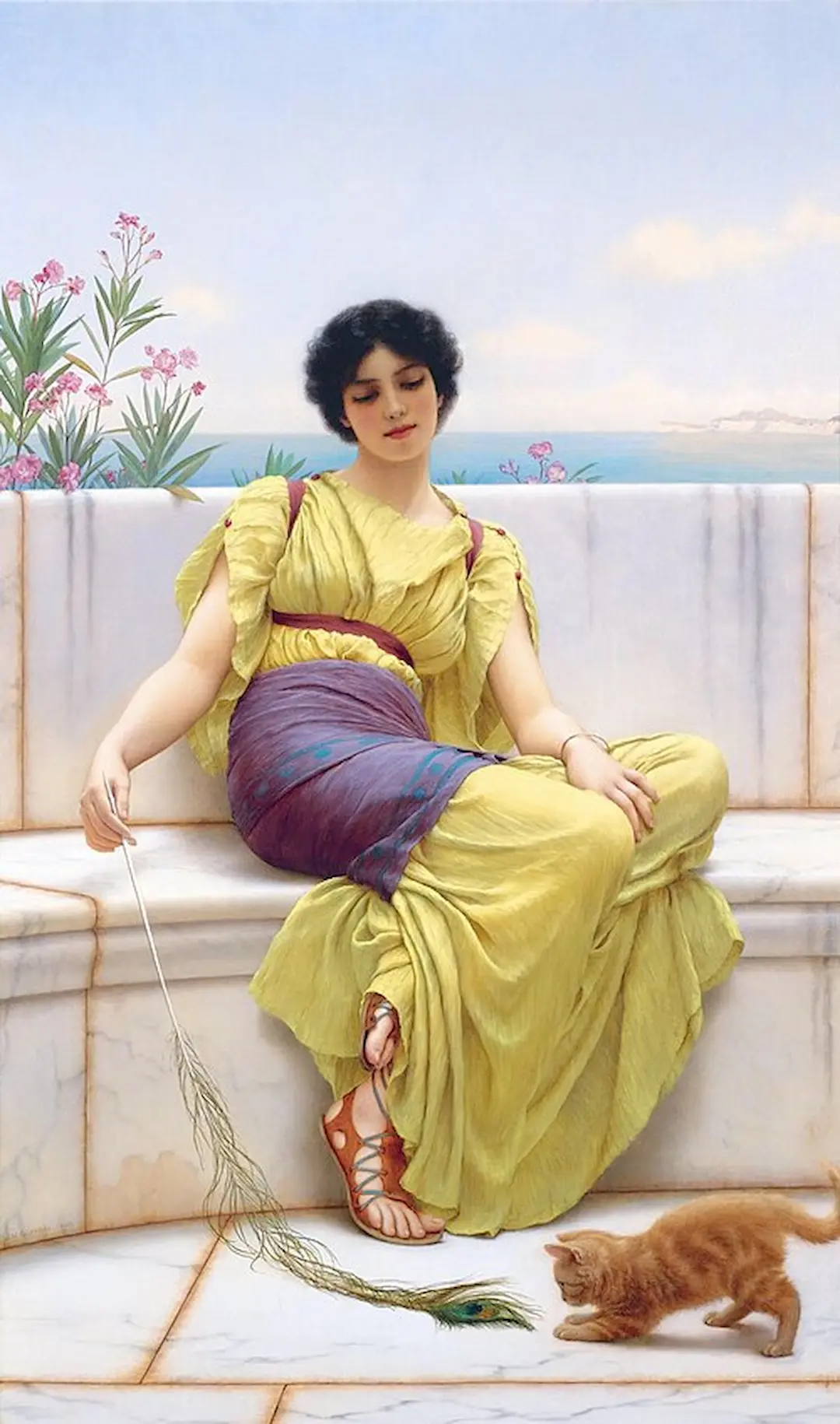
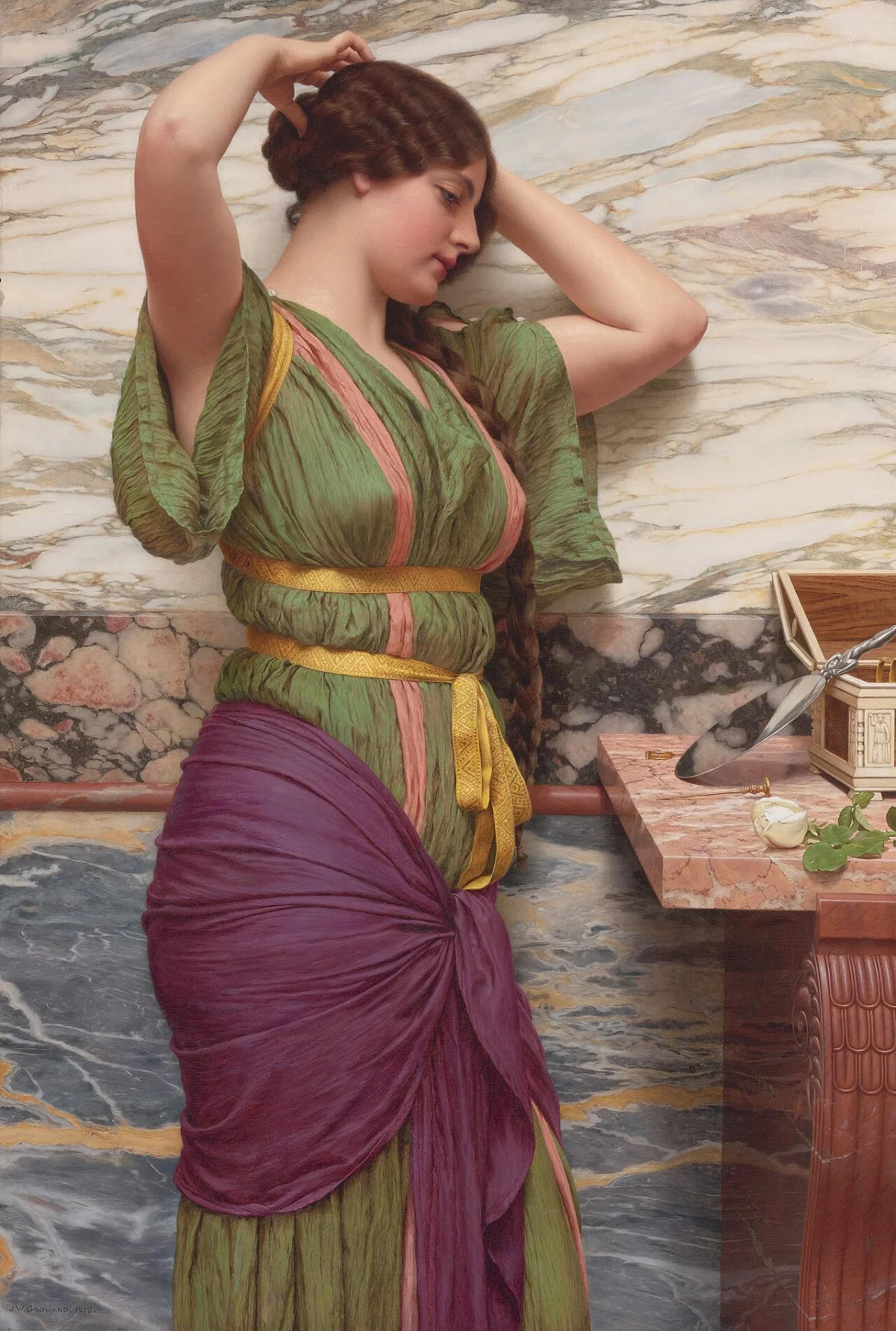
John William Godward's "In the Tepidarium" is a stunning oil on canvas that exemplifies his technical prowess and dedication to lifelike beauty. The artist's skillful brushwork and subtle color palette breathe life into the classical scene, making it a standout in the Neoclassical Academic Realism movement. Collectors seeking other exceptional works may find "The Mirror," "A Fair Reflection," and "Idleness II" to be equally captivating additions to their collections.
Every element within "In the Tepidarium" reveals a story, from the tranquil surroundings to the model's serene expression. Godward’s composition invites viewers to reflect on themes of beauty, leisure, and classical ideals, hallmarks of Neoclassical Academic Realism. This fine art painting for sale not only showcases the artist’s unique vision but also connects to related works like "Eighty and eighteen," "Reverie," and "The Mirror," each offering its own narrative depth.
Owning "In the Tepidarium" by John William Godward is more than acquiring a painting—it's investing in a piece of art history. This hand-painted oil painting is highly sought after by collectors who appreciate Neoclassical Academic Realism. Whether displayed alongside "A Fair Reflection," "Idleness II," or "Reverie," it elevates any fine art collection with timeless grace and sophistication, making it a true treasure for discerning enthusiasts.
When Art Meets History
"In the Tepidarium" by John William Godward beautifully captures the essence of the Neoclassical Academic Realism movement, blending historical ambiance with timeless artistry. This hand-painted oil painting transports viewers to the luxurious Roman baths, echoing the same reverence for antiquity seen in works like "The Oath of the Horatii" and "Consecration of the Emperor Napoleon I and Coronation of the Empress Josephine 1805-07." Godward’s meticulous attention to historical detail makes this piece a standout within its genre.
Techniques That Speak
Godward’s mastery of oil on canvas is evident in "In the Tepidarium," where every marble surface and delicate fabric is rendered with exquisite realism. His technique aligns with the precision seen in "Portrait of Antoine-Laurent Lavoisier and his wife" and "Napoleon Crossing the Alps." The artist’s skilled brushwork and layered glazing bring depth and luminosity, hallmarks of Neoclassical Academic Realism, making this oil on canvas a true testament to classical technique and timeless beauty.
Emotions on Display
"In the Tepidarium" invites viewers to linger in a serene moment, capturing the calm introspection of its subject. Godward’s sensitivity to emotion, similar to that in "Mars Being Disarmed by Venus," allows the painting to resonate on a personal level. The subtle gestures and tranquil setting evoke a sense of peace and contemplation, making this hand-painted oil painting not just visually stunning, but emotionally engaging for art lovers and collectors alike.
Coveted by Collectors
As a fine art painting for sale, "In the Tepidarium" is highly sought after by collectors of Neoclassical Academic Realism. John William Godward’s works, much like the celebrated "Napoleon Crossing the Alps," are prized for their meticulous technique and evocative beauty. This masterpiece, alongside related paintings from the era, continues to captivate those who appreciate historical authenticity and artistic excellence, ensuring its place in prestigious collections around the world.
Related Neoclassical Academic Realism Hand-Painted Oil Paintings by Other Artists
Other Famous Neoclassical Academic Realism Artists:
Frequently Asked Questions About "In the Tepidarium"
What is the historical context of "In the Tepidarium"?
"In the Tepidarium" was painted during the late 19th century, a period marked by a revival of classical themes in art. John William Godward, a prominent figure in the Neoclassical movement, sought to capture the elegance and beauty of ancient Roman culture.
Who is the artist behind "In the Tepidarium"?
The painting was created by John William Godward, an English painter known for his depictions of idealized female figures set against classical backdrops. His work is characterized by meticulous detail and a focus on beauty.
What does the term 'Tepidarium' refer to in the context of the painting?
The term 'Tepidarium' refers to a warm room in ancient Roman baths, designed for relaxation. In the painting, it symbolizes a space of leisure and tranquility, reflecting the luxurious lifestyle of the Roman elite.
What artistic techniques did Godward employ in "In the Tepidarium"?
Godward utilized techniques such as chiaroscuro to create depth, along with a vibrant color palette to enhance the sensuality of the scene. His attention to detail in the drapery and textures exemplifies his skill in rendering the human form.
What themes are explored in "In the Tepidarium"?
The painting explores themes of beauty, leisure, and the idealization of femininity. It reflects a fascination with classical antiquity and the serene lifestyle associated with it, inviting viewers to appreciate the harmony of the scene.
How does "In the Tepidarium" reflect Neoclassical ideals?
"In the Tepidarium" embodies Neoclassical ideals through its emphasis on harmony, proportion, and beauty. The portrayal of the female figure in a classical setting aligns with the movement's focus on the revival of ancient Greek and Roman aesthetics.
What is the significance of the female figure in the painting?
The female figure in "In the Tepidarium" represents idealized beauty and grace, serving as a muse for the viewer. Her pose and expression convey a sense of tranquility and contemplation, highlighting the painting's themes of relaxation and leisure.
What influences can be seen in Godward's style in this painting?
Godward's style in "In the Tepidarium" shows influences from both the Pre-Raphaelite Brotherhood and the classical tradition. His focus on detail and vibrant color, combined with a romanticized view of antiquity, reflects these artistic movements.
How does the setting contribute to the overall mood of the painting?
The setting of the Tepidarium, with its warm tones and classical architecture, creates an inviting and serene atmosphere. This contributes to the overall mood of relaxation and indulgence, enhancing the viewer's experience of the artwork.
What is the legacy of "In the Tepidarium" in the context of art history?
"In the Tepidarium" remains a significant work within the Neoclassical genre, showcasing Godward's mastery and the enduring appeal of classical themes. It continues to be studied for its artistic techniques and cultural reflections of the time.






















_GFM_Painting_(1).webp)


 100% Hand-Painted: Finished in 3-6 Weeks

.png)
















_(1).webp)