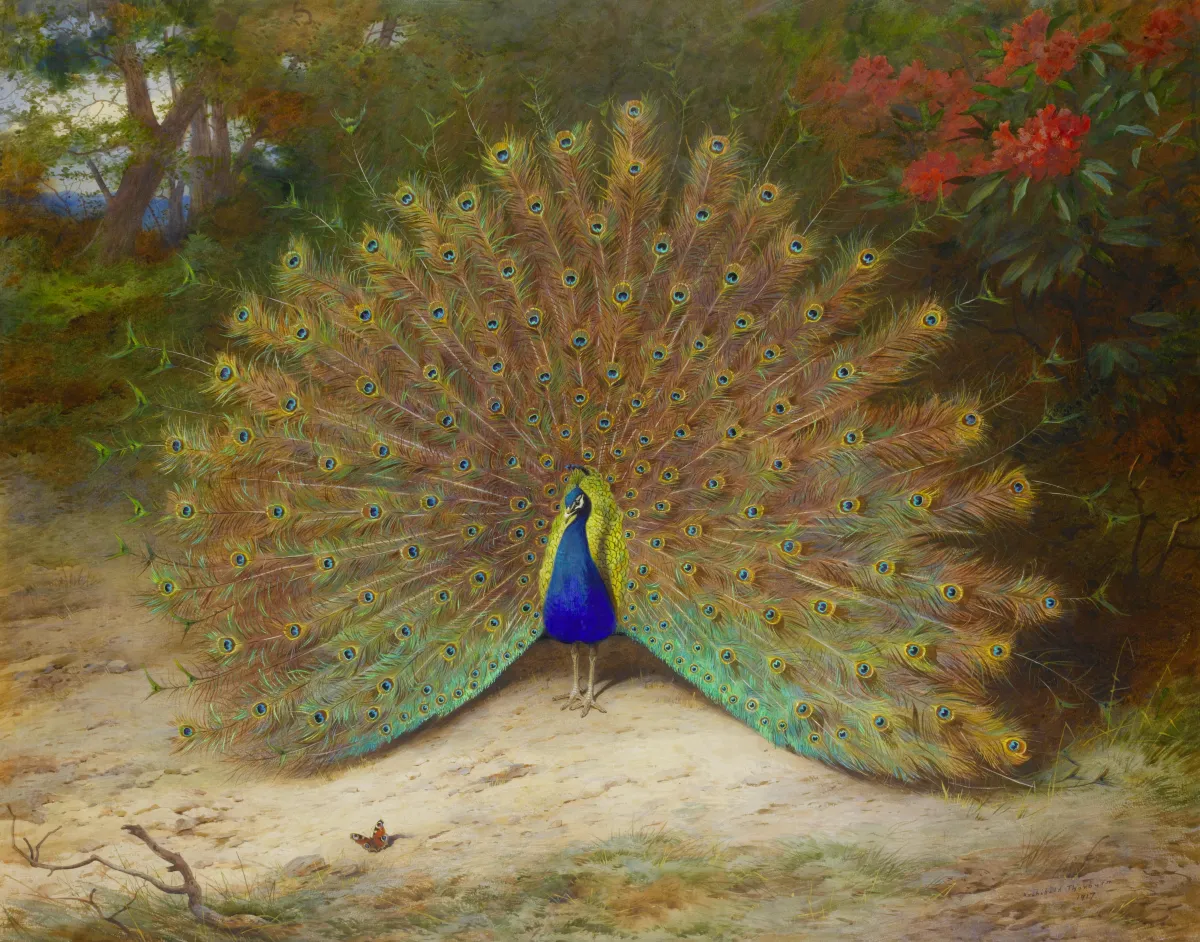
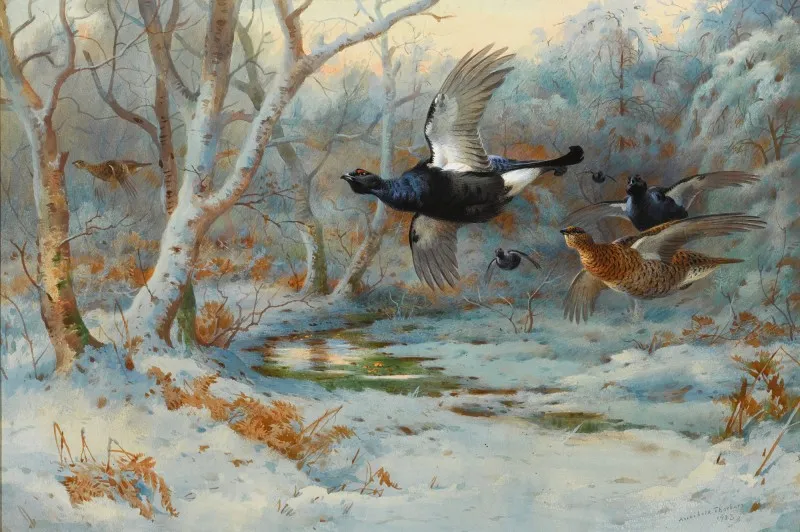
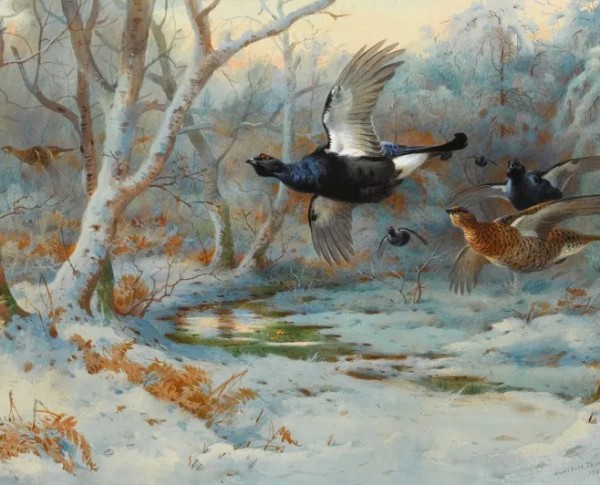
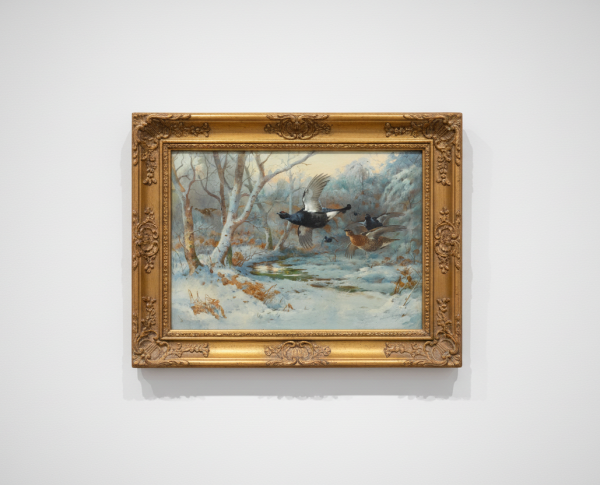
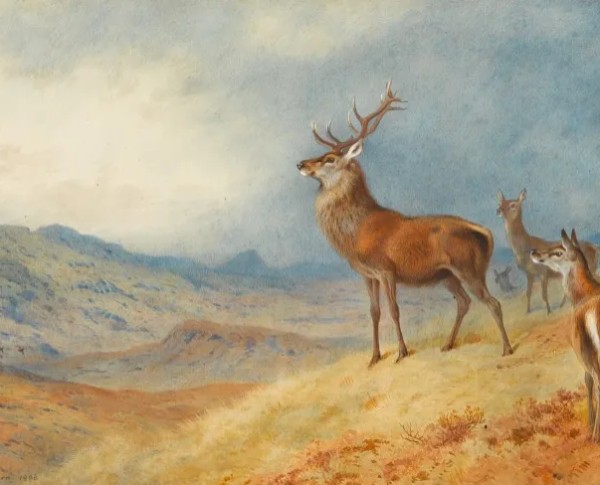
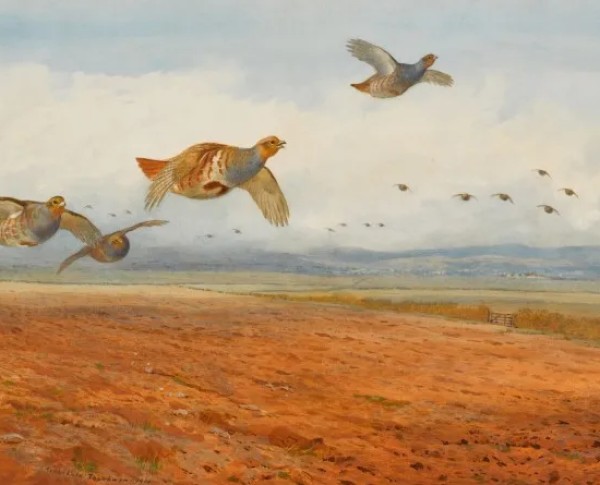
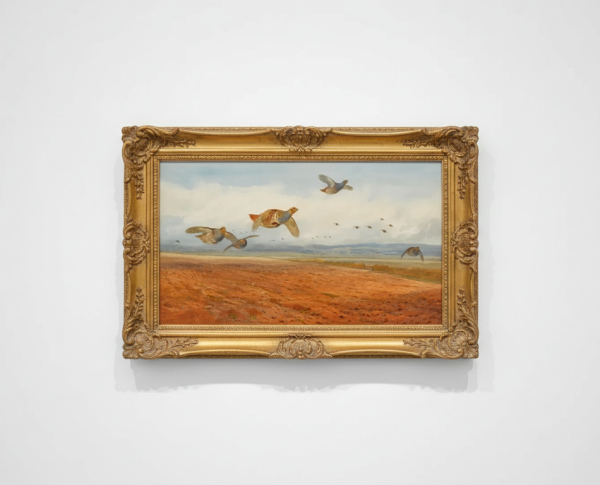
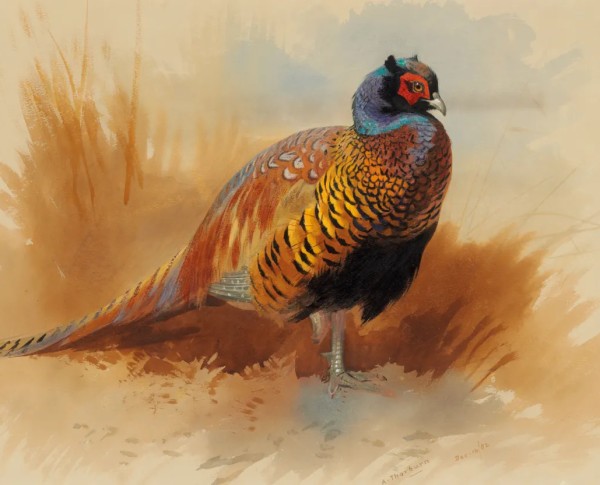
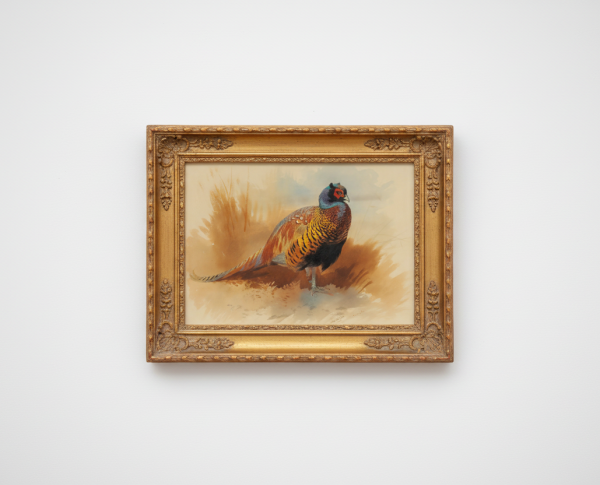
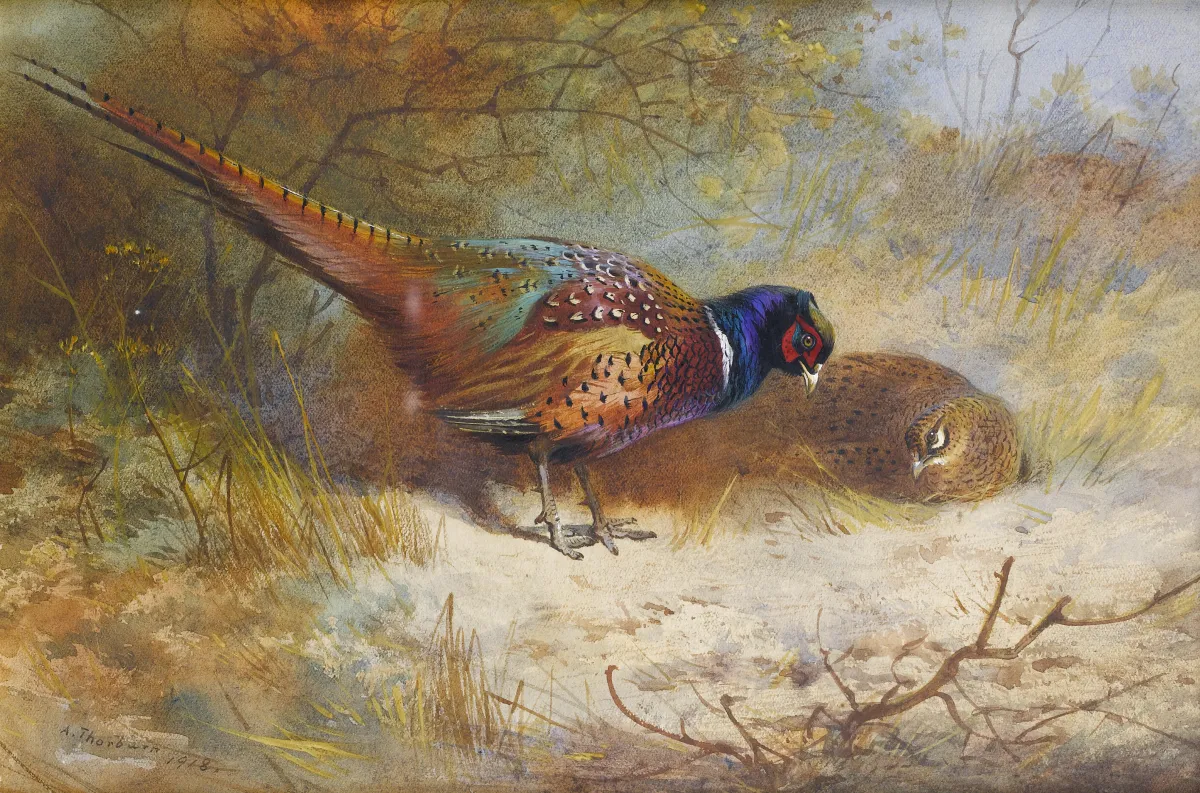
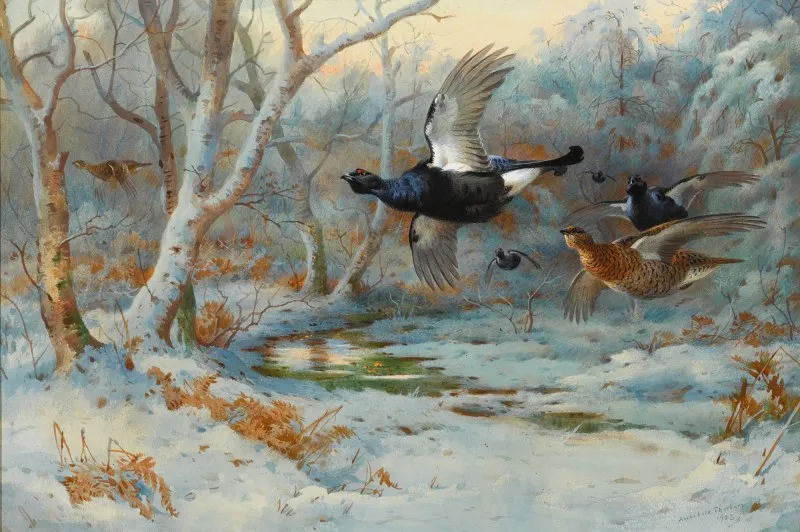
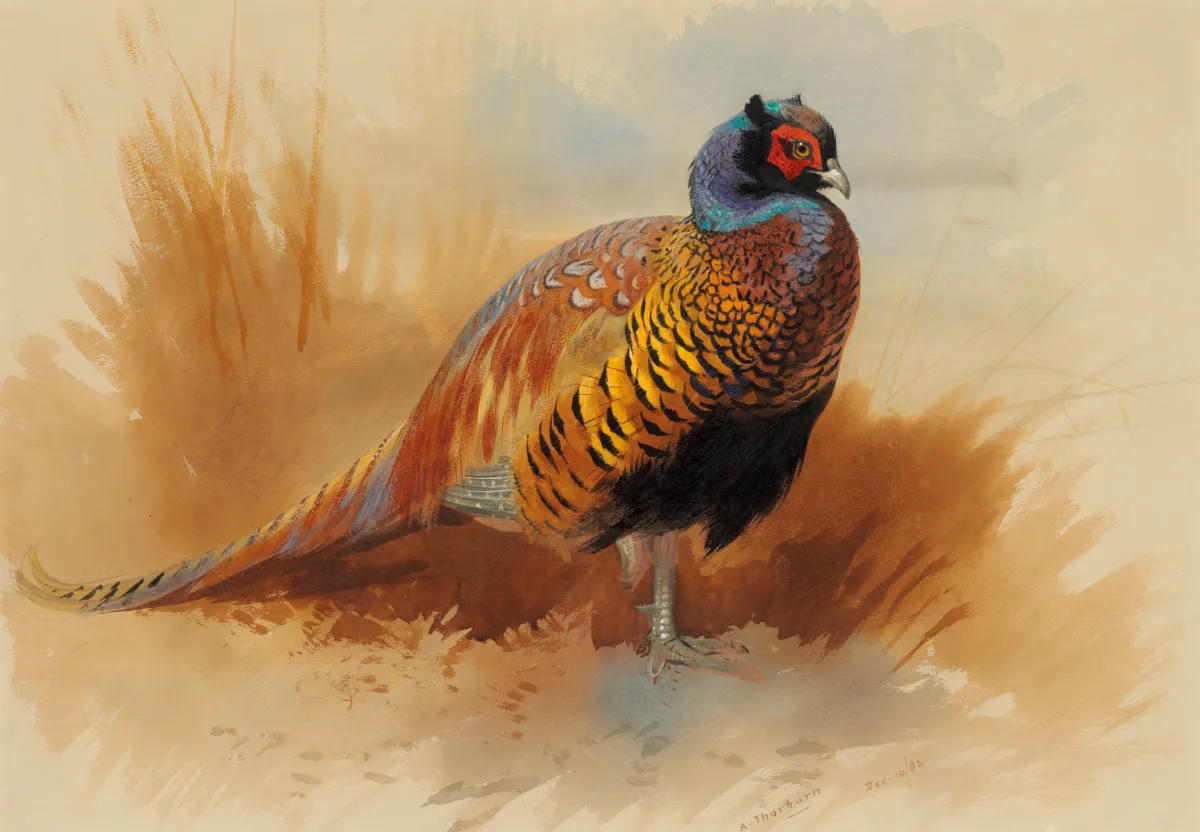
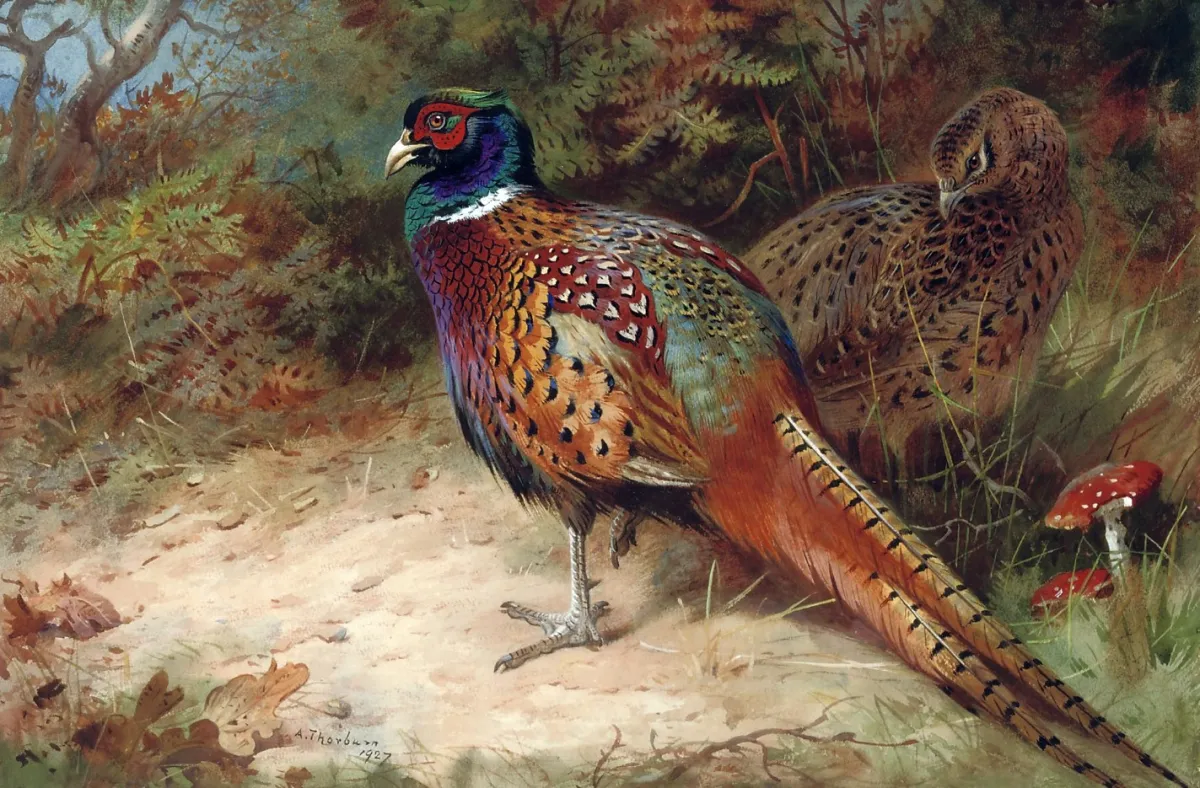
With remarkable attention to detail, Thorburn’s "Pheasants" showcases his mastery in oil on canvas, a medium that brings his subjects to life with remarkable realism. Each stroke reveals Thorburn’s deep understanding of avian anatomy and his commitment to the Naturalism movement. For those enchanted by his skill, related pieces like "Cock and hen pheasant in the undergrowth" and "Winter Woodcock" offer further glimpses into his world of natural beauty.
Within this fine art painting for sale, Thorburn weaves stories of the countryside, symbolizing harmony between wildlife and their habitats. The pheasants, depicted in their natural setting, evoke themes of survival and grace, common motifs in Naturalism. Collectors are drawn to similar works such as "The Covey at Daybreak" and "Cock and hen pheasant in the undergrowth," each painting resonating with rich narrative and symbolic depth.
Owning "Pheasants" by Archibald Thorburn is more than acquiring a beautiful artwork; it is investing in a piece of art history. This hand-painted oil painting is highly sought after by enthusiasts of the Naturalism movement. To enhance a collection, consider related products like "Winter Woodcock" or "Study of a cock pheasant," each offering a unique glimpse into Thorburn’s celebrated artistry and the timeless appeal of wildlife in fine art.
When Art Meets History
Created by Archibald Thorburn, "Pheasants." stands as a testament to the Naturalism movement, which flourished in the late 19th and early 20th centuries. This hand-painted oil painting captures the lifelike details of pheasants in their natural habitat, reflecting Thorburn’s dedication to both artistry and ornithology. The artwork not only highlights the era’s fascination with nature but also cements its place among fine art painting for sale, sought after by enthusiasts of historical wildlife art.
Techniques That Speak
Archibald Thorburn’s mastery is evident in his use of oil on canvas, employing delicate brushstrokes and a keen eye for color gradation. His technique brings the pheasants to life, showcasing their vivid plumage and the subtle interplay of light and shadow. This approach, characteristic of the Naturalism movement, ensures that every detail feels authentic and immersive. Thorburn’s skillful execution places "Pheasants." alongside other renowned oil on canvas works in naturalistic wildlife art.
Emotions on Display
The painting "Pheasants." by Archibald Thorburn evokes a serene yet vibrant atmosphere, immersing viewers in the quiet beauty of the countryside. The hand-painted oil painting conveys a sense of tranquility, admiration for wildlife, and respect for the natural world. Through careful composition and color, Thorburn invites the audience to appreciate the simple joys and delicate balance found in nature, a hallmark of the Naturalism movement and a theme shared with his other wildlife masterpieces.
Coveted by Collectors
"Pheasants." remains a fine art painting for sale that continues to captivate collectors and art lovers alike. Archibald Thorburn’s reputation as a leading figure in the Naturalism movement adds immense value to this piece. The artwork’s realistic portrayal of pheasants and meticulous attention to detail make it a prized possession for those seeking authentic representations of wildlife. Collectors often seek out Thorburn’s works, recognizing their significance in the history of hand-painted oil paintings.
Frequently Asked Questions About Pheasants.
Who is the artist of "Pheasants" and what is his significance in art history?
Archibald Thorburn was a prominent British painter and illustrator known for his detailed and lifelike representations of wildlife, particularly birds. His work is celebrated for its scientific accuracy and artistic finesse, making him a significant figure in the genre of natural history art.
What is the historical context of the painting "Pheasants"?
"Pheasants" was created during the early 20th century, a period marked by a growing interest in wildlife conservation and naturalism. Thorburn's work reflects the era's fascination with the natural world and the importance of documenting species before the impacts of industrialization and habitat loss became pronounced.
What artistic techniques did Archibald Thorburn employ in "Pheasants"?
Thorburn utilized a combination of watercolor and gouache techniques to achieve vibrant colors and intricate details in "Pheasants." His mastery of light and shadow enhances the three-dimensionality of the birds, creating a lifelike representation that draws the viewer into the scene.
What do the pheasants symbolize in this painting?
Pheasants often symbolize beauty, grace, and the splendor of nature. In Thorburn's depiction, they may also represent the fragility of wildlife, highlighting the need for conservation and appreciation of natural habitats.
How does "Pheasants" reflect the characteristics of the Natural History genre?
"Pheasants" exemplifies the Natural History genre through its focus on accurate depictions of wildlife in their natural environments. Thorburn's attention to detail and commitment to portraying the anatomy and behavior of the birds aligns with the genre's objective to educate and inspire appreciation for nature.
In what ways did Archibald Thorburn influence future wildlife artists?
Thorburn's dedication to realism and his ability to blend artistic expression with scientific observation set a standard for future wildlife artists. His work inspired a generation to pursue detailed studies of animals and their habitats, contributing to the evolution of wildlife art as a respected genre.
What materials were commonly used by Thorburn in his paintings, including "Pheasants"?
Thorburn primarily used watercolors, gouache, and sometimes oils to create his works. His choice of materials allowed him to achieve delicate textures and vibrant colors, essential for capturing the essence of the subjects he portrayed.
What role does composition play in "Pheasants"?
The composition of "Pheasants" is thoughtfully arranged to draw the viewer's eye across the canvas, emphasizing the elegance of the birds. Thorburn's strategic placement of the pheasants within a natural setting enhances their beauty while providing context to their environment.
How does "Pheasants" compare to other works by Archibald Thorburn?
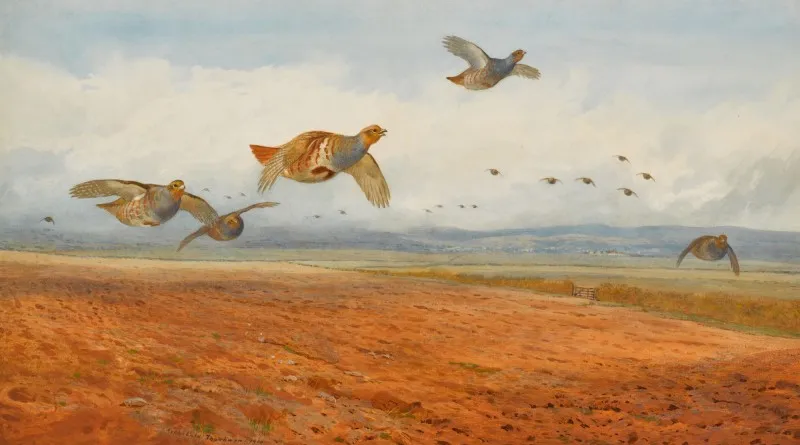
While "Pheasants" showcases Thorburn's exceptional skill in depicting avian subjects, it is part of a broader oeuvre that includes various species and landscapes. Each work reflects his unique style, yet "Pheasants" stands out for its vibrant colors and dynamic portrayal of movement.
What impact did "Pheasants" have on public perception of wildlife art?
"Pheasants" contributed to the growing appreciation for wildlife art in the early 20th century, showcasing the beauty and complexity of avian life. Thorburn's work helped elevate wildlife art from mere illustration to a respected form of artistic expression, fostering a deeper connection between the public and the natural world.






















_GFM_Painting_(1).webp)


 100% Hand-Painted: Finished in 3-6 Weeks

.png)















_(1).webp)