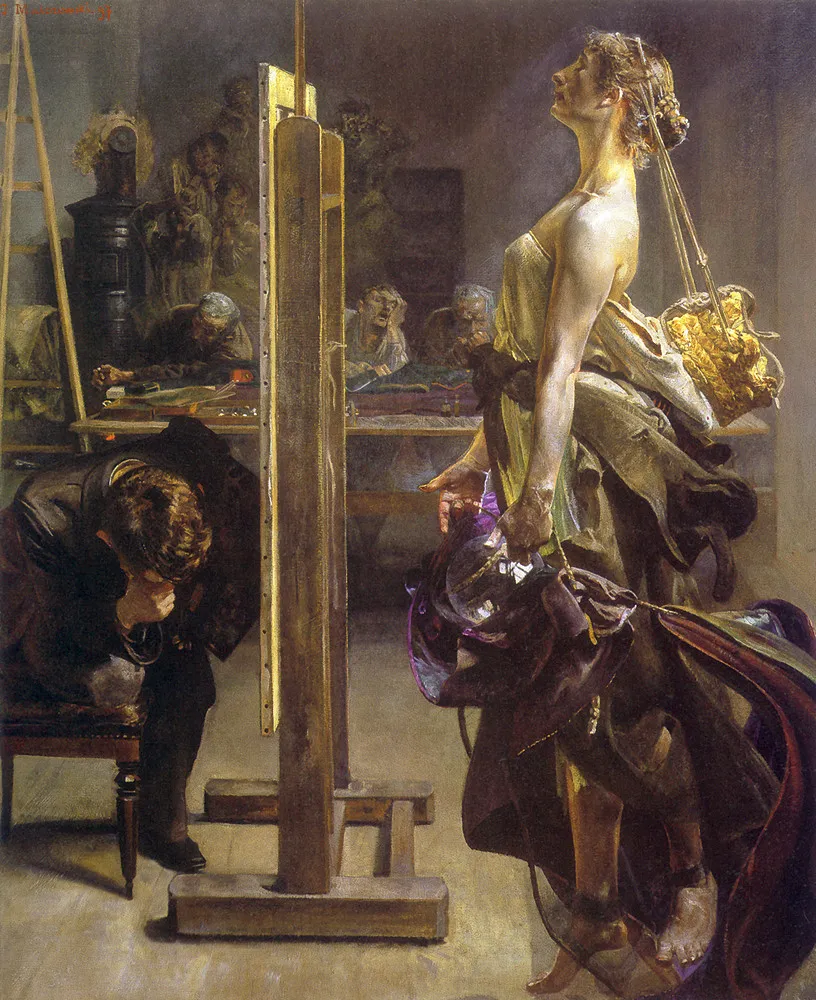
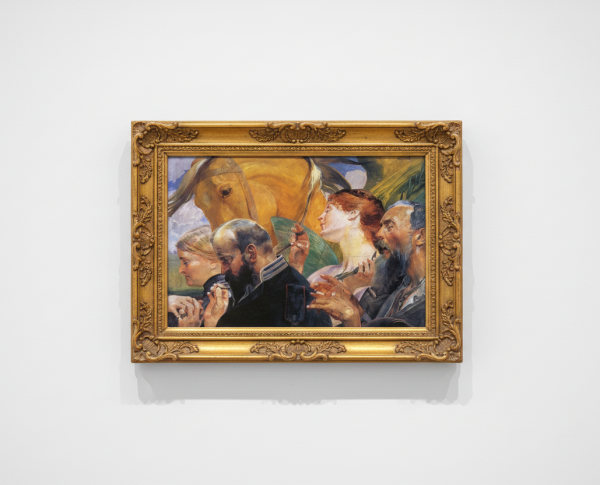
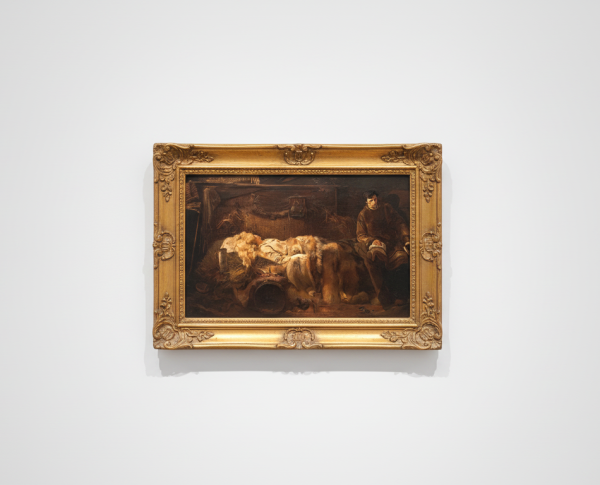
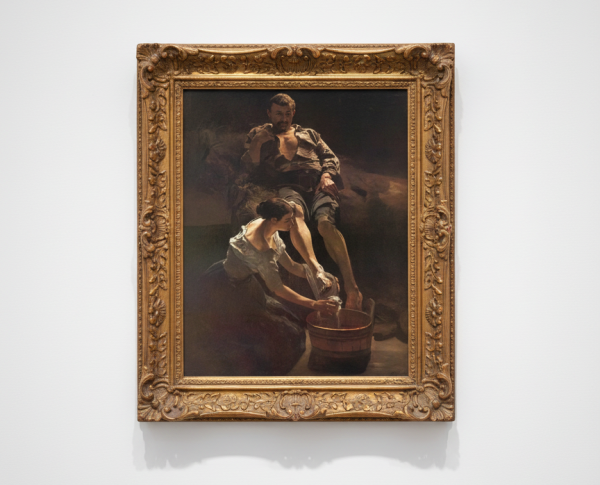
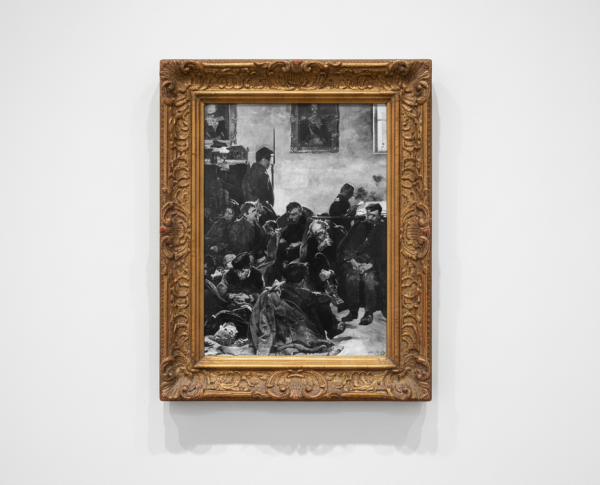
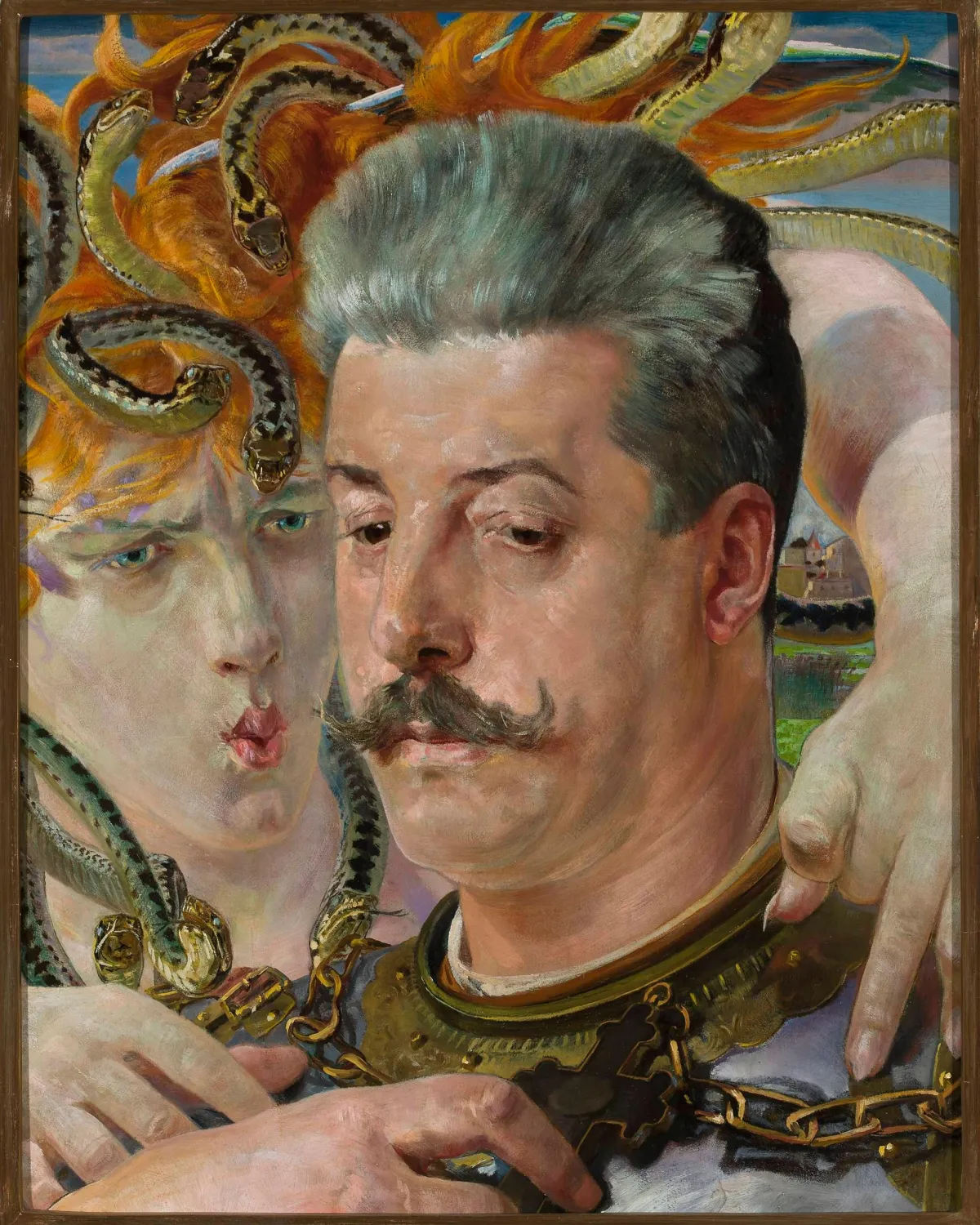
The "Portrait of Tadeusz Blotnicki with Medusa" showcases Malczewski’s technical prowess with oil on canvas. Each brushstroke reveals a meticulous attention to detail, bringing the enigmatic expressions and symbolic elements to life. As with his other masterpieces like "Death of Ellenai" and "Severus," Malczewski’s use of color and texture elevates this artwork to a new level of sophistication, making it a prime example of a hand-painted oil painting from the Symbolism era.
This fine art painting for sale is more than a portrait; it is a narrative woven with myth and meaning. Malczewski’s inclusion of Medusa beside Tadeusz Blotnicki invites viewers to explore themes of transformation, artistry, and the human psyche. Like "The story of a song" and "Vicious circle," this painting challenges viewers to interpret its hidden messages, making it a rich subject for art lovers interested in the Symbolism movement and its layered storytelling.
Owning the "Portrait of Tadeusz Blotnicki with Medusa" connects collectors to the heart of Symbolist innovation. This oil on canvas masterpiece, crafted by Jacek Malczewski, offers a unique blend of portraiture and allegory. Alongside related works such as "Thanatos" and "Severus," it represents a valuable addition to any collection of fine art painting for sale, capturing the imagination of those who appreciate the depth and history of the Symbolism movement.
When Art Meets History
"Portrait of Tadeusz Blotnicki with Medusa," created by Jacek Malczewski, stands as a remarkable example of the Symbolism movement. This hand-painted oil painting masterfully intertwines mythological reference and personal portraiture, reflecting the historical context in which it was conceived. Malczewski’s work, comparable to related paintings such as "Tropical" and "Catalan Camacho," invites viewers to explore the intersection of cultural heritage and artistic innovation, making it a significant piece in art history.
Techniques That Speak
Jacek Malczewski employed intricate oil on canvas techniques in "Portrait of Tadeusz Blotnicki with Medusa," typical of the Symbolism movement. The artist’s brushwork brings depth to both the sitter and the mythic Medusa, blending realism with allegorical elements. This approach is also evident in related works like "Alcalde De Cabezón" and "Maja Maldita," showcasing Malczewski’s ability to convey complex narratives through his unique painterly methods.
Emotions on Display
The emotional resonance in "Portrait of Tadeusz Blotnicki with Medusa" is palpable, as Jacek Malczewski captures both the psychological tension and symbolic meaning inherent in the subject. This fine art painting for sale reveals layers of introspection and myth, much like "‘Manola’ with Mantilla and Fan" and "Catalan Estudi Per A Un Retrat." Viewers are drawn into a world where emotion, symbolism, and artistry converge, hallmarking Malczewski’s contribution to Symbolism.
Coveted by Collectors
As a treasured work within the Symbolism movement, "Portrait of Tadeusz Blotnicki with Medusa" by Jacek Malczewski continues to attract collectors worldwide. The allure of owning a hand-painted oil painting by such a renowned artist is undeniable, especially when compared to related masterpieces like "Tropical" and "Catalan Camacho." Its unique blend of historical depth and artistic mastery makes it a highly sought-after addition to any fine art collection.
Related Symbolism Hand-Painted Oil Paintings by Other Artists
Other Famous Symbolism Artists:
Frequently Asked Questions About Portrait of Tadeusz Blotnicki with Medusa
What is the historical context of "Portrait of Tadeusz Blotnicki with Medusa"?
This painting was created by Jacek Malczewski during the late 19th century, a period marked by a resurgence of interest in national identity and mythology in Poland. The work reflects the socio-political climate of the time, particularly the struggles for Polish independence.
Who is Tadeusz Blotnicki, and why is he significant in this painting?
Tadeusz Blotnicki was a notable figure in Polish culture, known for his contributions to the arts and literature. His portrayal in this painting symbolizes the intellectual and artistic spirit of Poland during a time of national turmoil.
What is the significance of Medusa in this artwork?
Medusa, a figure from Greek mythology, symbolizes both danger and protection. In this context, her presence may represent the duality of beauty and terror, reflecting the complexities of human nature and the struggles faced by the Polish people.
How does Jacek Malczewski's style influence this painting?
Malczewski is known for his Symbolist style, which combines realism with allegorical elements. His use of vibrant colors and intricate details in "Portrait of Tadeusz Blotnicki with Medusa" enhances the emotional depth and invites viewers to explore the underlying themes of identity and mythology.
What artistic techniques did Malczewski employ in this painting?
Malczewski utilized a combination of oil painting techniques, including layering and glazing, to achieve depth and luminosity. His meticulous attention to detail and expressive brushwork create a dynamic interplay between the figures and the background.
What themes are explored in "Portrait of Tadeusz Blotnicki with Medusa"?
The painting explores themes of identity, duality, and the intersection of myth and reality. It reflects the tension between personal and national identity, as well as the struggle between beauty and horror inherent in the human experience.
How does this painting reflect the Symbolist movement?
This work exemplifies the Symbolist movement through its emphasis on emotional experience and the use of mythological references. Malczewski's portrayal of Medusa serves as a metaphor for deeper psychological and cultural truths, characteristic of Symbolist art.
What role does color play in the painting?
Color in "Portrait of Tadeusz Blotnicki with Medusa" is used to evoke mood and highlight the emotional intensity of the subjects. The contrasting hues between Blotnicki and Medusa create a visual dialogue that enhances the narrative of the painting.
In what ways does this painting contribute to our understanding of Polish art history?
This painting is significant in Polish art history as it encapsulates the nationalistic sentiments of the late 19th century while showcasing Malczewski's unique artistic vision. It serves as a bridge between traditional Polish themes and modern artistic expressions.
What is the current status of "Portrait of Tadeusz Blotnicki with Medusa" in the art world?
The painting is regarded as a masterpiece of Polish Symbolism and is celebrated for its historical and artistic significance. It continues to be studied and appreciated in art galleries and exhibitions, contributing to the ongoing discourse on Polish identity and culture.






















_GFM_Painting_(1).webp)


 100% Hand-Painted: Finished in 3-6 Weeks

.png)


















_(1).webp)