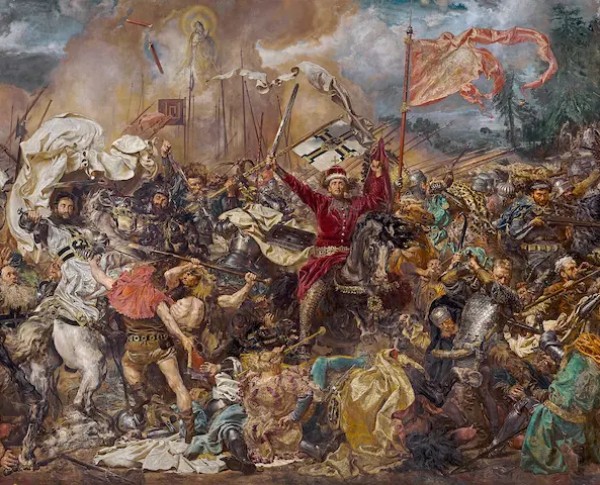
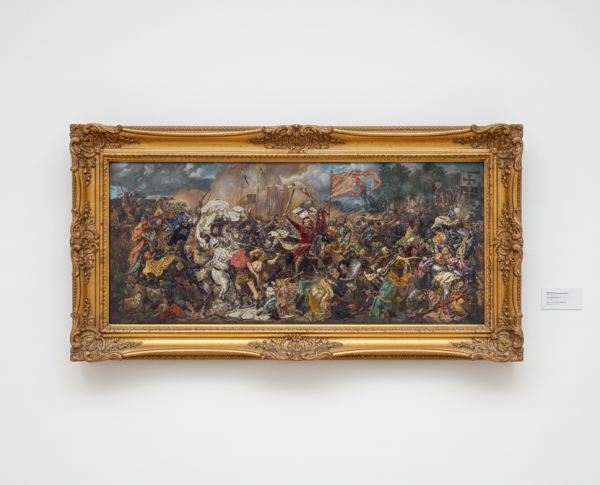
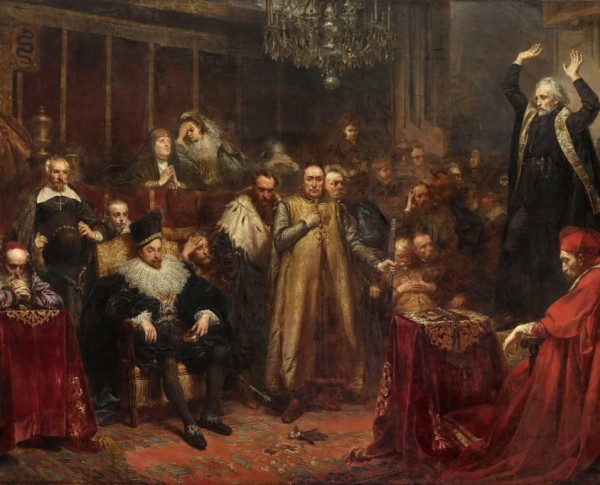
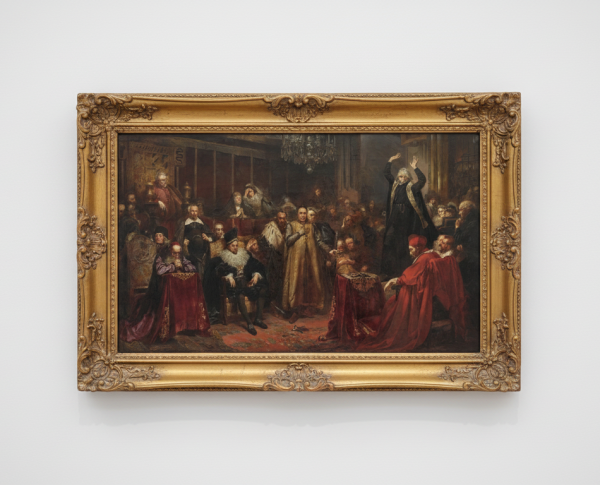
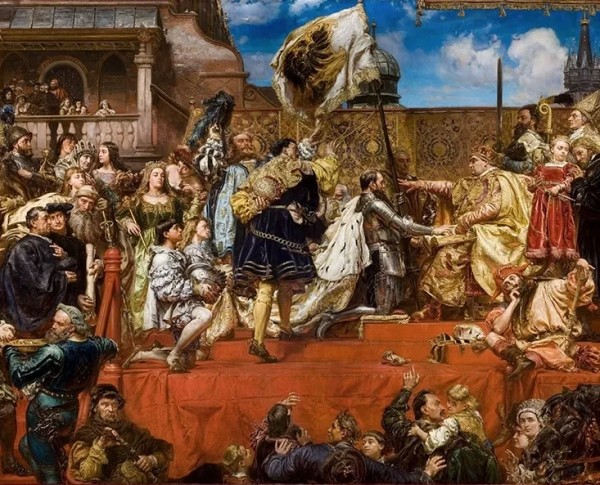
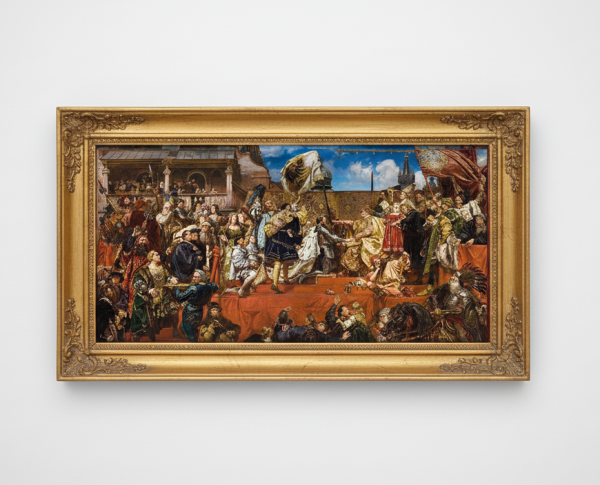
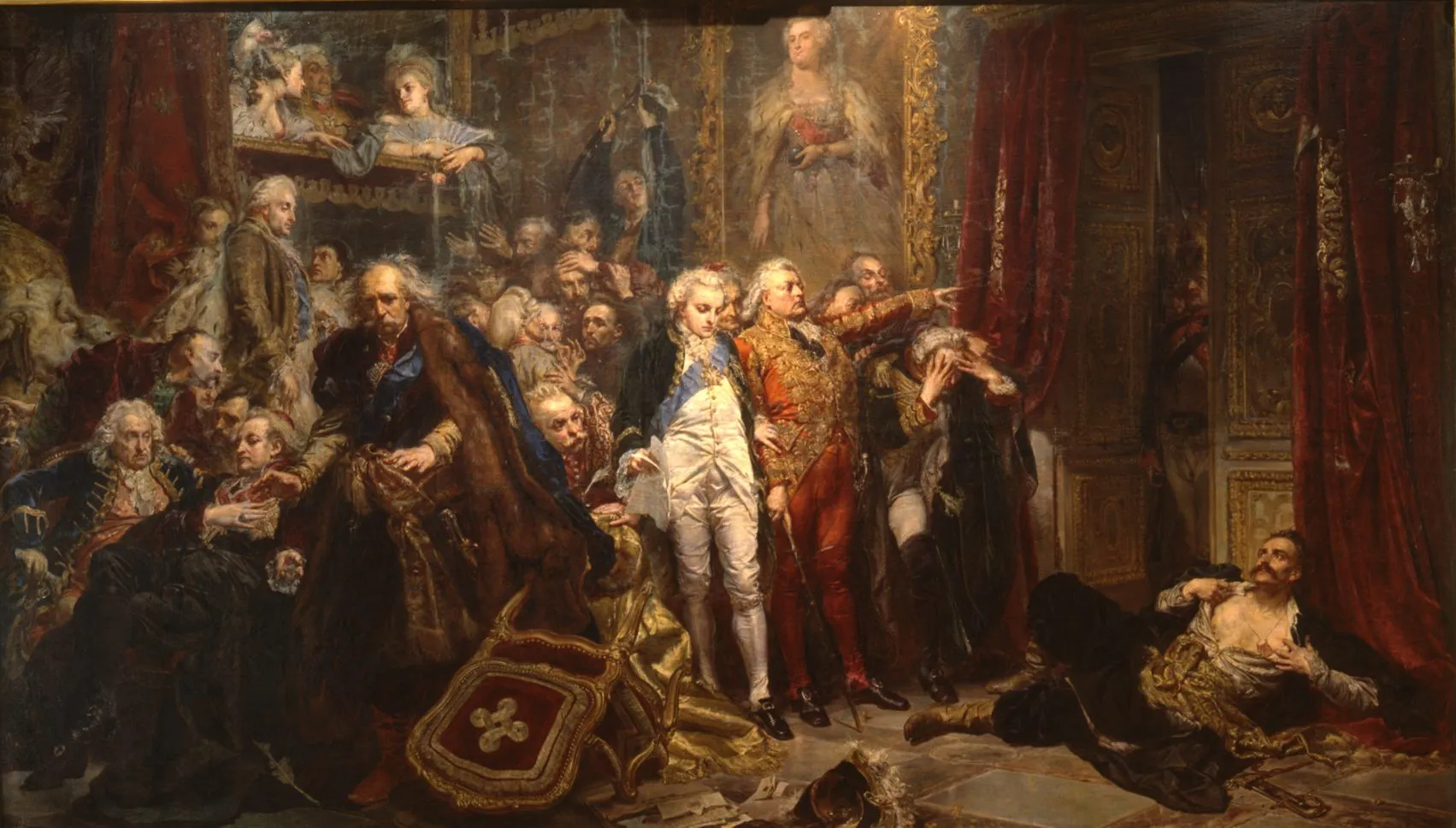
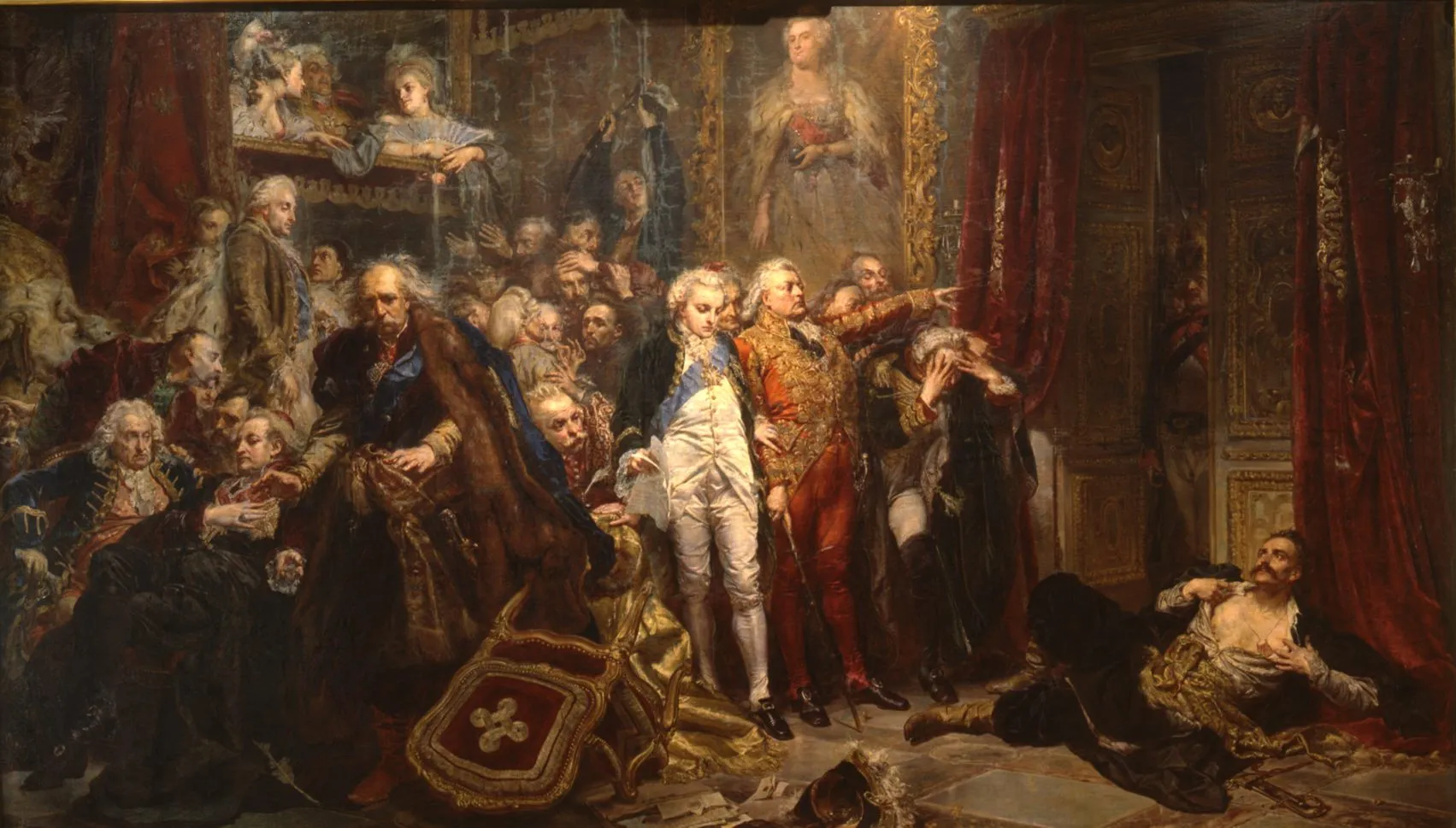
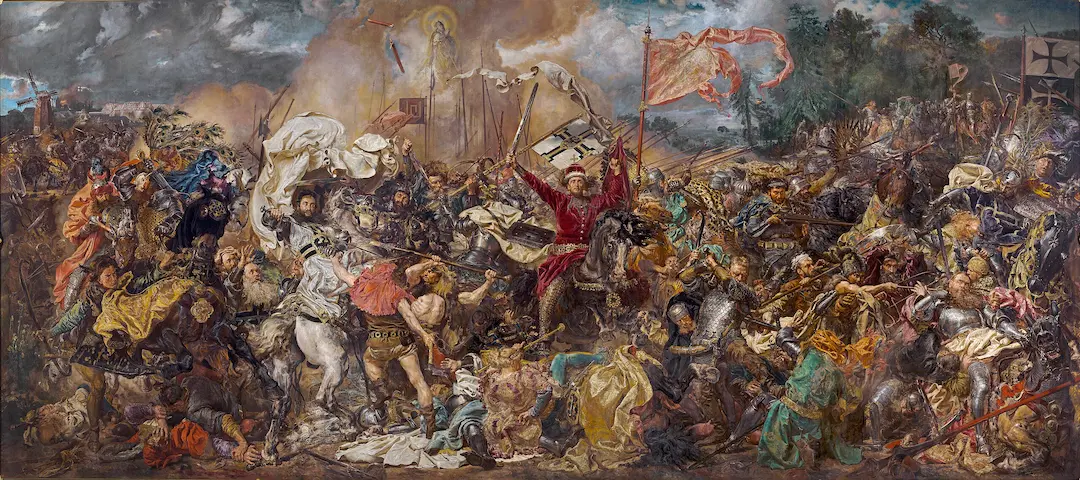
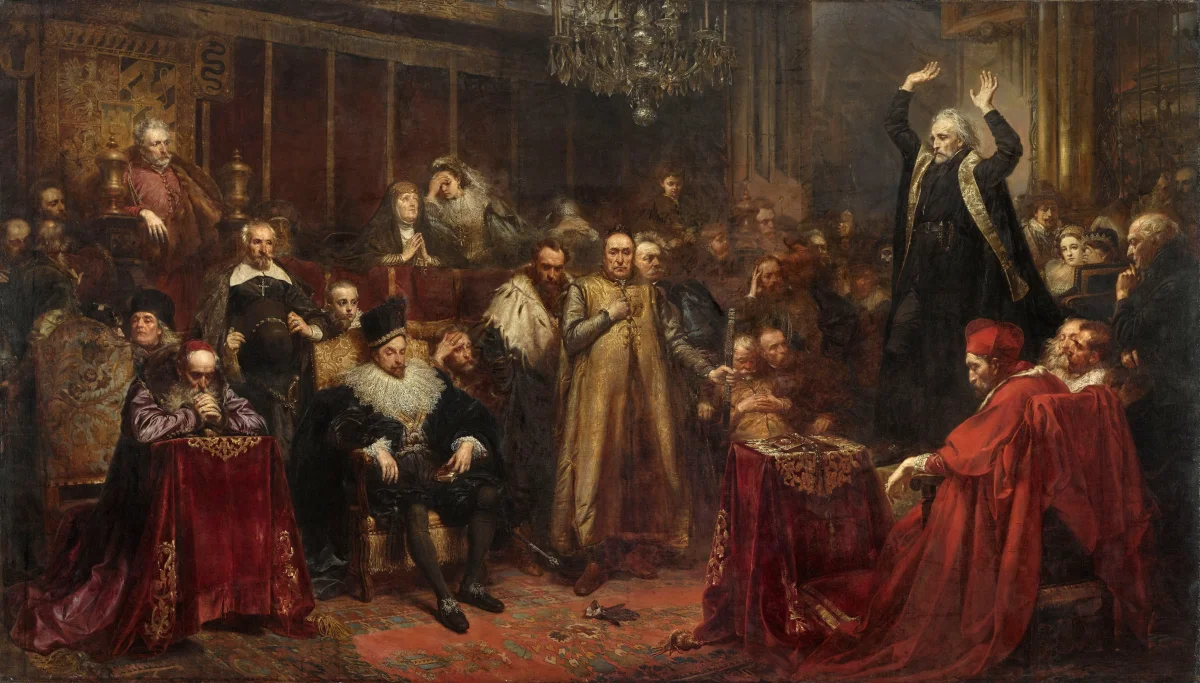
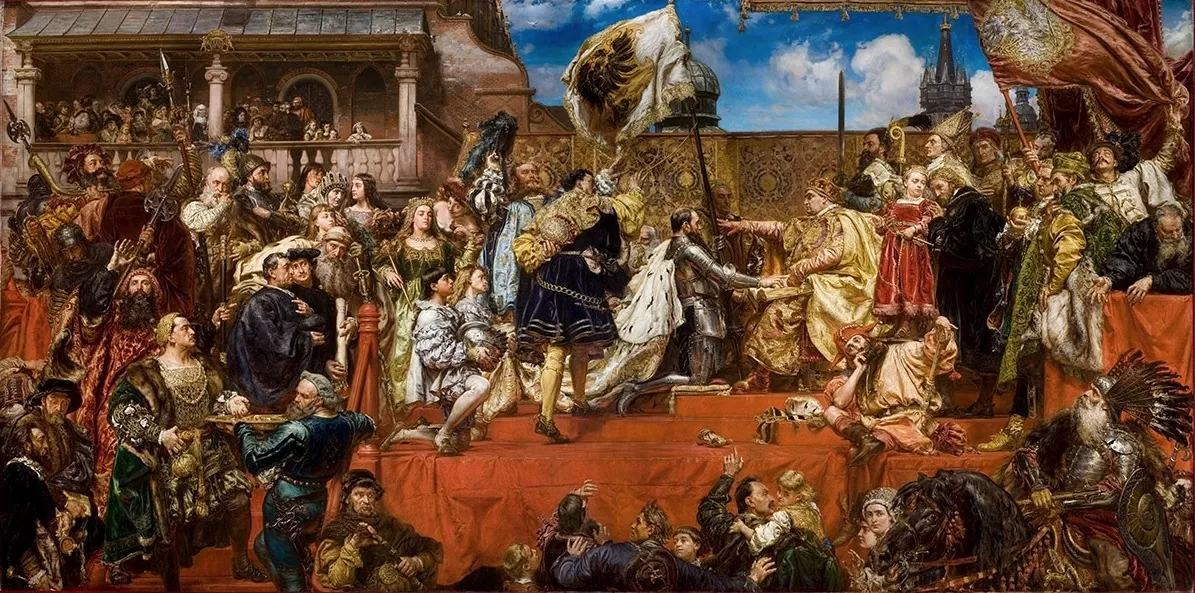
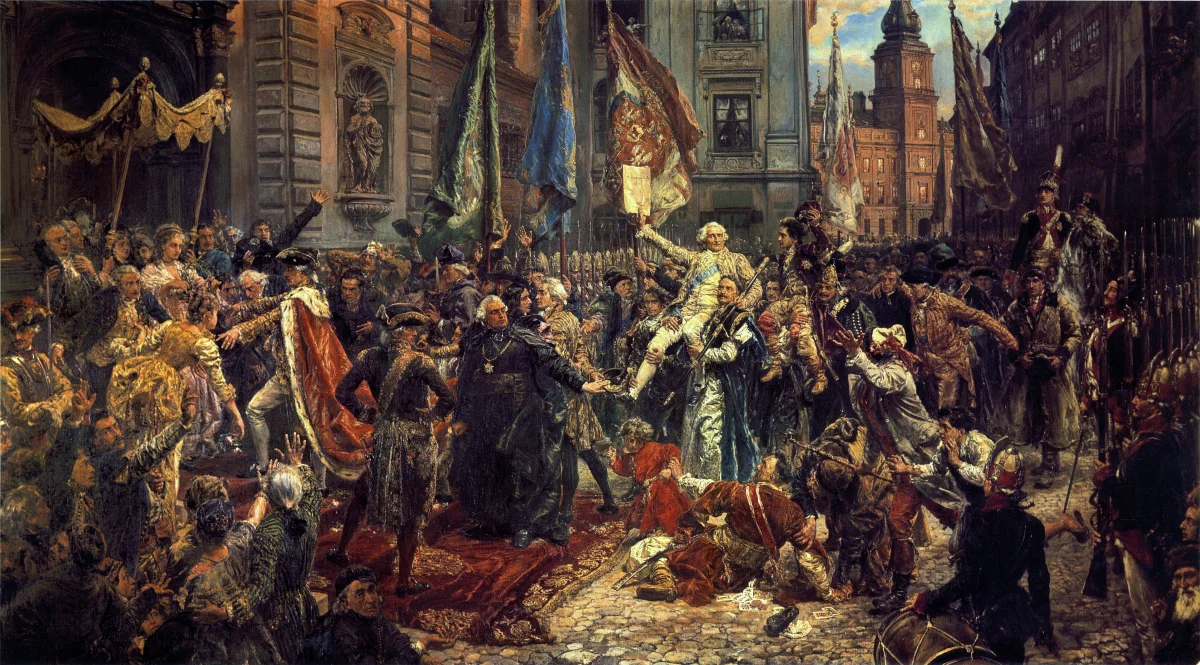
Jan Matejko’s "The Fall of Poland" showcases the artist’s technical brilliance and emotional intensity, characteristic of the Historicism movement. Executed as an oil on canvas, every brushstroke reveals his meticulous attention to detail and historical accuracy. Matejko’s mastery is also evident in related works such as "Skarga's Sermon" and "Constitution of May 3, 1791." This fine art painting for sale is a testament to the enduring value of traditional techniques and historical storytelling in European art.
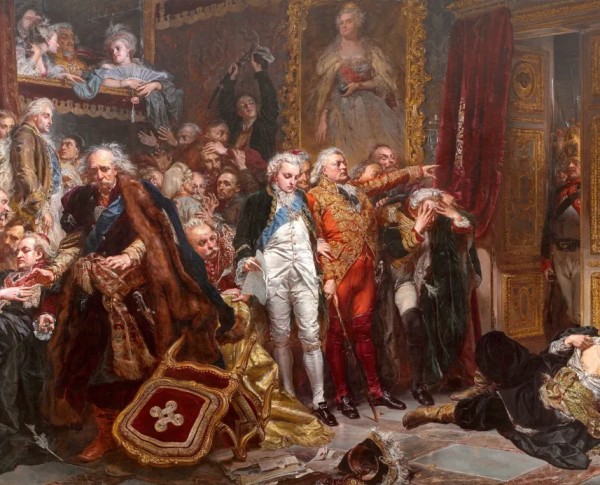
Rich in symbolism, "The Fall of Poland" by Jan Matejko weaves a complex narrative of national tragedy and resilience. The hand-painted oil painting features allegorical figures and historical personalities, each contributing to the larger story of Poland’s partition. Matejko’s other works, including "Polonia" and "Jan Kochanowski over the dead body of his daughter," similarly blend storytelling with political commentary, making them exceptional choices for collectors seeking meaningful fine art painting for sale.
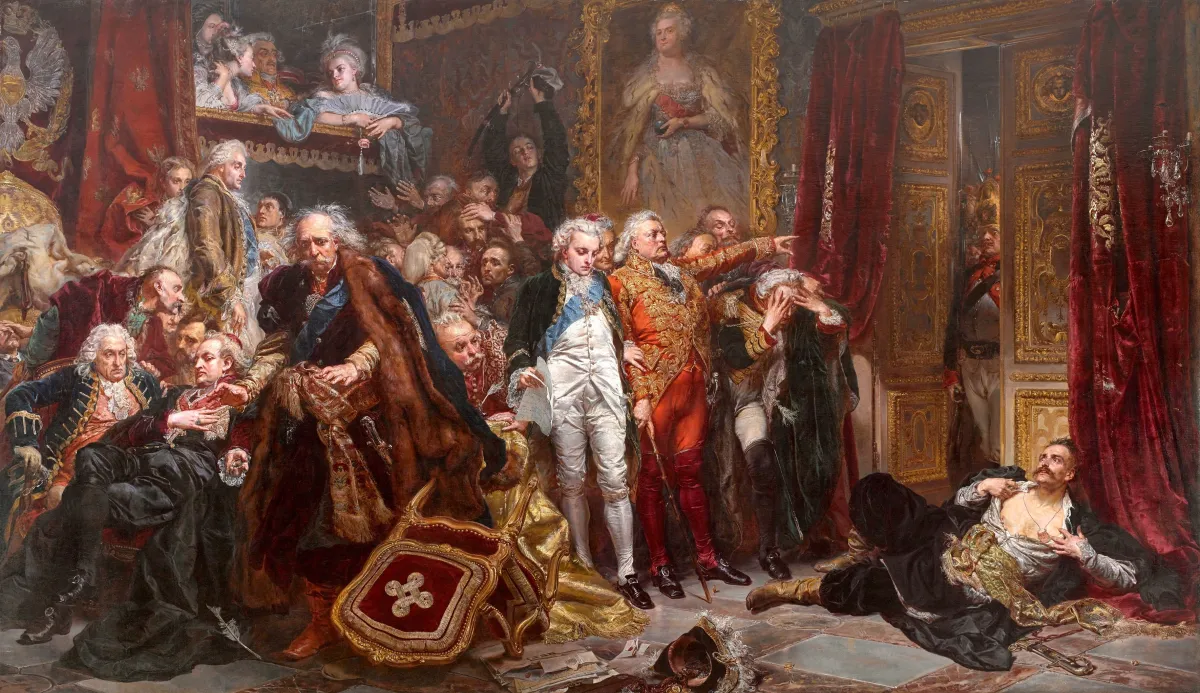
For art enthusiasts, "The Fall of Poland" by Jan Matejko is more than an oil on canvas; it is a collector’s treasure and a piece of Polish heritage. As part of the Historicism movement, this masterpiece, alongside related products like "Rejtan" and "Polonia," offers an unparalleled glimpse into the nation’s past. Investing in such a fine art painting for sale means acquiring not just a beautiful artwork, but a significant chapter of European history.
When Art Meets History
"The Fall of Poland" by Jan Matejko stands as a profound example of the Historicism movement, where the intersection of history and artistry is brilliantly displayed. This hand-painted oil painting captures a pivotal moment in Polish history with meticulous attention to detail. Matejko, renowned for his historical works, brings to life the sorrow and drama of his nation's past. Like his other renowned masterpieces, this painting resonates with anyone passionate about history and art.
Techniques That Speak
Jan Matejko’s "The Fall of Poland" exemplifies his mastery over oil on canvas, a medium favored by many artists of the Historicism movement. Through layered brushstrokes and dramatic lighting, Matejko achieves a sense of depth and realism that draws viewers into the narrative. His technique emphasizes the gravity of the subject, and the painting’s texture and color palette evoke the era’s turmoil. This approach is also evident in his other historical compositions.
Emotions on Display
Every figure and expression in "The Fall of Poland" is meticulously crafted to convey intense emotion. Matejko’s ability to depict despair, determination, and hope in his characters makes this fine art painting for sale truly unique. The Historicism movement encouraged artists to elicit strong emotional responses, and Matejko excels at this through his poignant storytelling. Collectors and art lovers alike are moved by the painting’s powerful portrayal of national tragedy and resilience.
Coveted by Collectors
Jan Matejko’s "The Fall of Poland" is highly sought after by collectors, not only for its historical significance but also for its status as a hand-painted oil painting from the Historicism movement. The painting’s meticulous detail and dramatic composition make it a centerpiece in any art collection. Its connection to Polish history and the artist’s esteemed reputation contribute to its desirability, making it a remarkable example of fine art painting for sale.
Frequently Asked Questions About The Fall of Poland
What historical event does "The Fall of Poland" depict?
"The Fall of Poland" illustrates the tragic events surrounding the partitions of Poland in the late 18th century, specifically focusing on the loss of Polish sovereignty and the subsequent struggles faced by the nation.
Who was Jan Matejko and what is his significance in Polish art?
Jan Matejko was a renowned Polish painter known for his historical paintings that captured significant moments in Polish history. His works are celebrated for their intricate detail and ability to evoke national pride.
What artistic techniques did Matejko employ in "The Fall of Poland"?
Matejko utilized a combination of realism and dramatic composition, employing a rich color palette and meticulous attention to detail to convey the emotional weight of the historical narrative.
What symbols are present in "The Fall of Poland" and what do they represent?
The painting features various symbols, such as the broken sword representing defeat and the fallen flag symbolizing lost sovereignty, which collectively convey the despair and resilience of the Polish people.
How does the composition of the painting enhance its historical narrative?
The composition is dynamic, with figures arranged in a way that draws the viewer's eye across the scene, highlighting the chaos and emotional turmoil of the moment, thus enhancing the historical narrative of loss and struggle.
What role does color play in "The Fall of Poland"?
Color plays a crucial role in evoking emotion; the use of dark, muted tones conveys a sense of mourning and despair, while brighter accents highlight key figures and elements, drawing attention to their significance in the narrative.
In what ways does "The Fall of Poland" reflect Polish national identity?
The painting reflects Polish national identity by portraying the collective suffering and resilience of the Polish people, serving as a reminder of their historical struggles and the enduring spirit of the nation.
What was the public's reaction to "The Fall of Poland" upon its completion?
Upon its completion, "The Fall of Poland" was met with acclaim for its powerful depiction of Polish history, resonating deeply with the public and reinforcing Matejko's status as a national artist.
How does "The Fall of Poland" compare to other works by Jan Matejko?
Compared to other works by Matejko, "The Fall of Poland" stands out for its intense emotional depth and focus on a pivotal moment of national tragedy, showcasing his ability to capture the essence of Polish history.
What impact has "The Fall of Poland" had on contemporary Polish culture?
The painting has had a lasting impact on contemporary Polish culture, often referenced in discussions about national identity and historical memory, and continues to inspire artists and historians alike.























_GFM_Painting_(1).webp)


 100% Hand-Painted: Finished in 3-6 Weeks

.png)















_(1).webp)