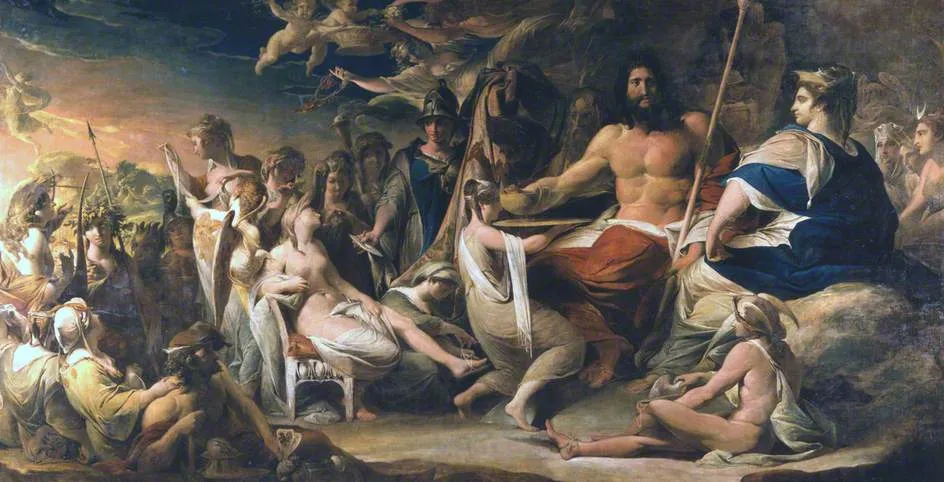
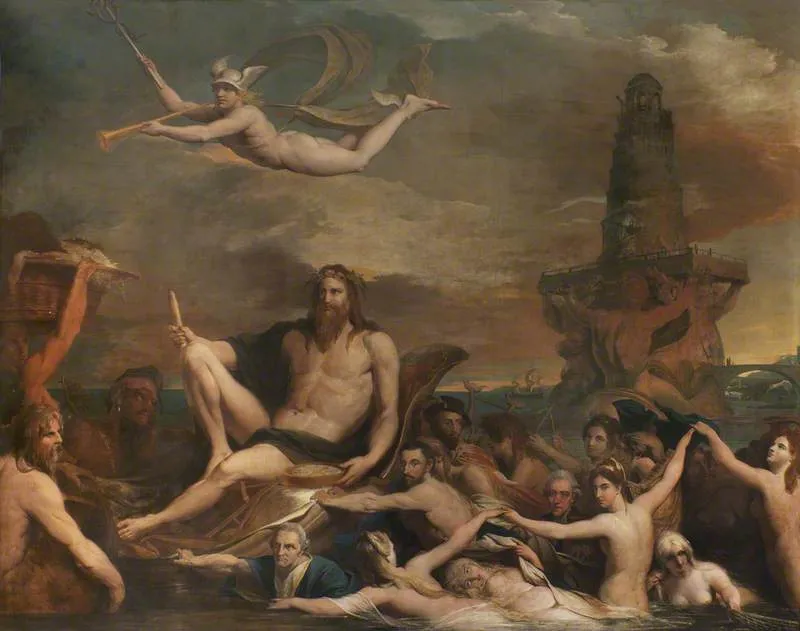
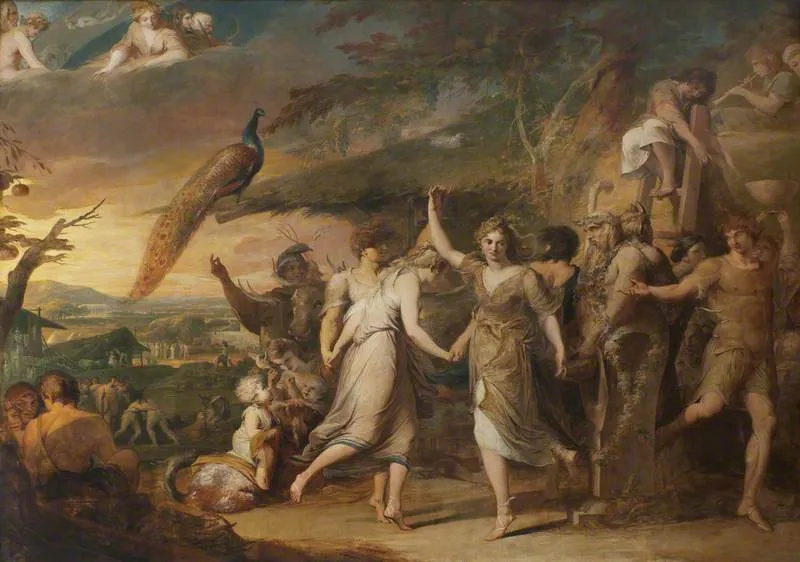
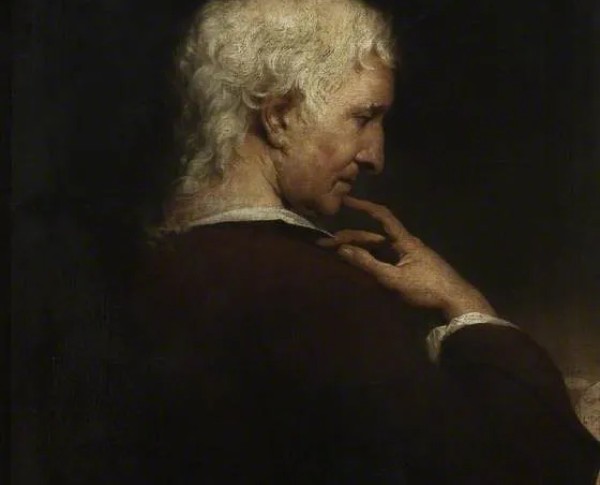
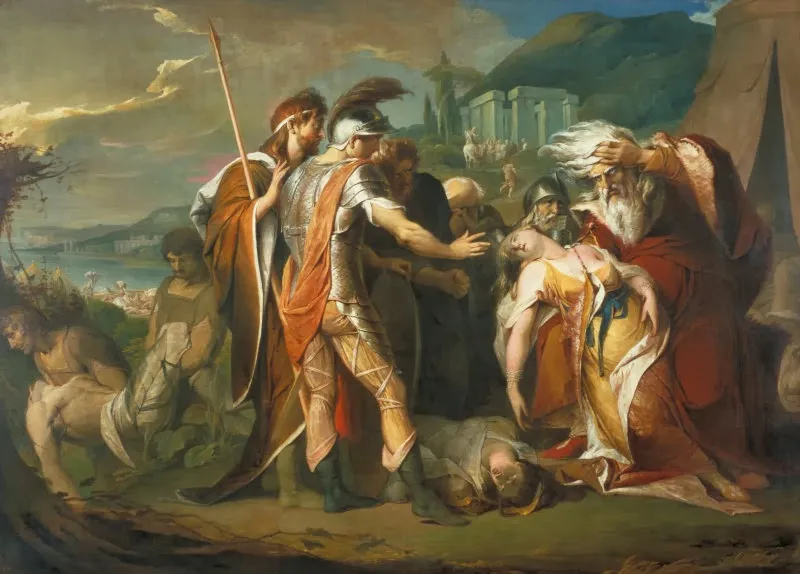
James Barry’s "King Lear Weeping over the Dead Body of Cordelia" showcases his technical prowess with oil on canvas. The brushwork reveals a nuanced understanding of light, shadow, and human emotion, hallmarks of the Romanticism movement. Each detail is meticulously rendered, inviting viewers to appreciate the artist’s skill. Collectors of fine art will find comparable quality in related works like "Jupiter Beguiled by Juno on Mount Ida" and "Commerce, or the Triumph of the Thames."
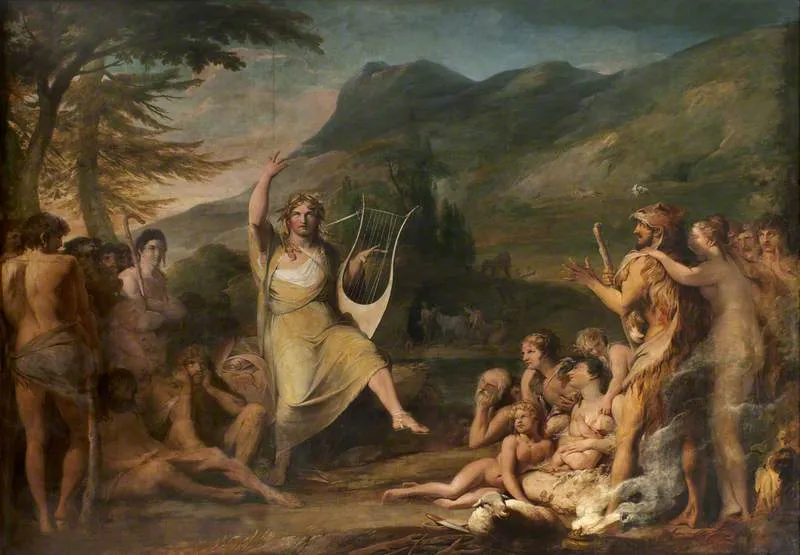
This fine art painting for sale delves deep into Shakespeare’s tragic narrative, capturing the poignant moment of loss between King Lear and Cordelia. Barry masterfully infuses symbolic elements within the composition, reflecting the turmoil and depth of human experience central to Romanticism. Art lovers interested in mythological and allegorical themes may also appreciate related pieces such as "Ceres, Bacchus" and "A Grecian Harvest Home, or Thanksgiving to the Rural Deities."
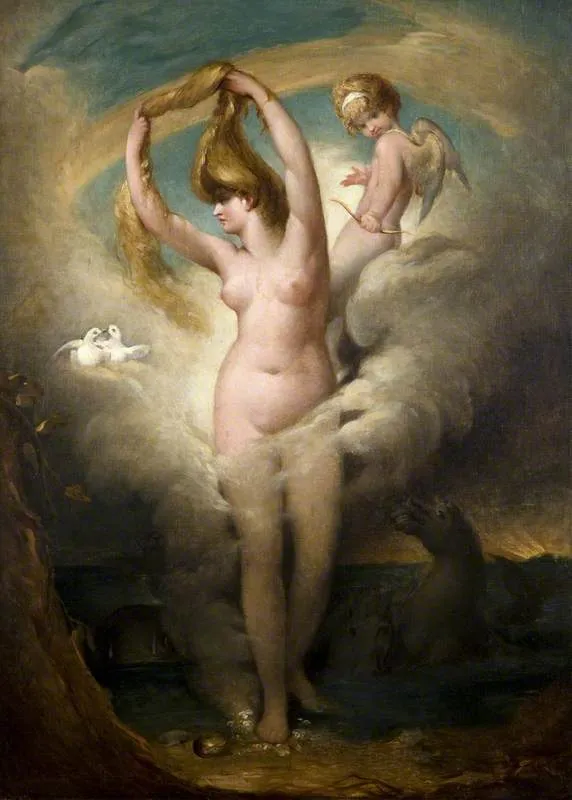
Owning "King Lear Weeping over the Dead Body of Cordelia" by James Barry means possessing a vital part of Romanticism. This hand-painted oil painting not only enhances any collection but also connects its owner to a rich artistic legacy. Those seeking to expand their collection can explore related products like "Hendrickje Stoffels in a White Cloak" or "Venus Anadyomene," each offering a unique window into the era’s passion and artistic innovation.
When Art Meets History
"King Lear Weeping over the Dead Body of Cordelia" by James Barry is a profound hand-painted oil painting from the Romanticism movement. Created during a time when emotion and drama shaped artistic expression, this masterpiece draws inspiration from Shakespeare’s tragic play. Like Barry’s other works—such as "A Full Length Portrait of Sam Houston" and "Scientists At Work"—the painting captures a pivotal historical moment, blending literary depth with visual storytelling and solidifying its place in art history.
Techniques That Speak
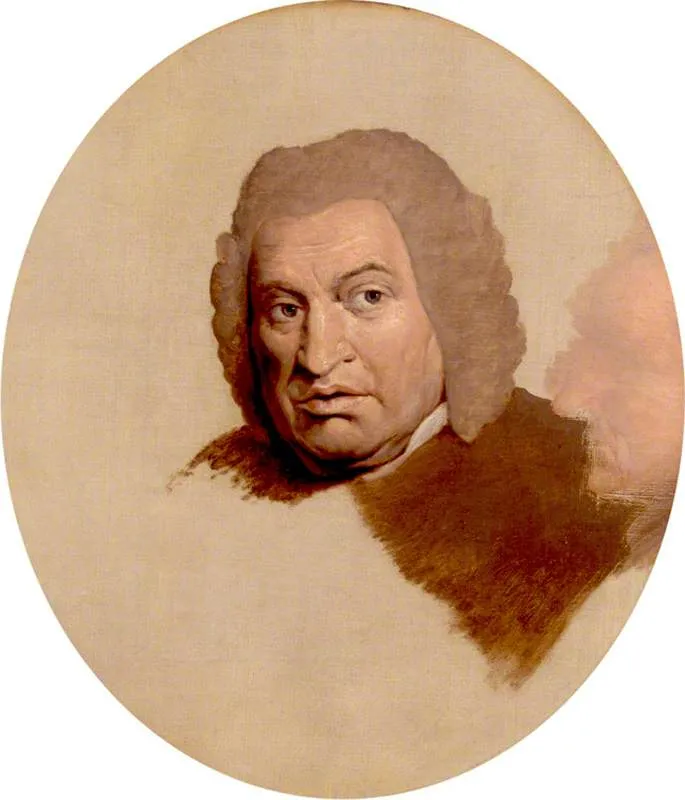
James Barry’s use of oil on canvas in "King Lear Weeping over the Dead Body of Cordelia" showcases his mastery of Romantic techniques. The brushwork and layered textures evoke intense emotion and realism, similar to his approach in "His Majesty Receives" and "Portrait of a Gentleman." Barry’s careful manipulation of light and shadow enhances the narrative, demonstrating why oil on canvas was favored for dramatic scenes during the Romanticism era and why his works remain influential today.
Emotions on Display
This fine art painting for sale captures the raw grief of King Lear, a theme that resonates through Romanticism. James Barry’s depiction of heartbreak and loss, mirrored in works like "Granada," invites viewers to connect deeply with the characters. The expressive faces and somber tones highlight the emotional power of hand-painted oil paintings, making "King Lear Weeping over the Dead Body of Cordelia" a compelling example of how art can evoke empathy and reflection in its audience.
Coveted by Collectors
As a celebrated piece of Romanticism, "King Lear Weeping over the Dead Body of Cordelia" by James Barry is highly sought after in art circles. Collectors prize this oil on canvas for its dramatic storytelling and technical brilliance. Alongside related paintings like "Scientists At Work" and "Granada," this masterpiece exemplifies the enduring appeal and investment value of a fine art painting for sale, making it a treasured addition to any distinguished collection.
Related Romanticism Hand-Painted Oil Paintings by Other Artists
Other Famous Romanticism Artists:
Frequently Asked Questions About King Lear Weeping over the Dead Body of Cordelia
What is the historical context of "King Lear Weeping over the Dead Body of Cordelia"?
This painting, created by James Barry in the late 18th century, is inspired by William Shakespeare's tragedy "King Lear," which explores themes of power, betrayal, and familial relationships. Barry's work reflects the Romantic era's interest in emotion and the human condition.
What artistic techniques did James Barry employ in this painting?
James Barry utilized dramatic lighting and rich color palettes to evoke deep emotional responses. His use of chiaroscuro enhances the contrast between light and shadow, emphasizing the sorrowful moment of Lear's grief.
What symbols are present in the painting?
The dead body of Cordelia symbolizes innocence and the tragic consequences of Lear's actions. Lear's posture and expression convey profound despair, representing the loss of love and the weight of regret.
How does this painting reflect the themes of Shakespeare's "King Lear"?
The painting encapsulates the central themes of the play, including the folly of pride, the complexities of familial love, and the inevitability of suffering. Barry captures the moment of realization and remorse that defines Lear's character arc.
What is the significance of the color palette used in the painting?
The somber color palette, dominated by dark hues and muted tones, reflects the tragic nature of the scene. The use of reds and browns adds to the emotional intensity, symbolizing both grief and the bloodshed that accompanies Lear's downfall.
In what way does Barry's interpretation differ from other artists' depictions of this scene?
Barry's interpretation is notable for its focus on emotional depth rather than mere representation. Unlike many contemporary artists, he emphasizes the psychological turmoil of Lear, inviting viewers to engage with the emotional landscape of the characters.
What role does composition play in conveying the painting's message?
The composition is carefully arranged to draw the viewer's eye to Lear and Cordelia, with the figures positioned in a triangular formation that creates a sense of intimacy and urgency. This arrangement enhances the emotional impact of the scene.
How does this painting fit within the broader context of Romantic art?
This painting aligns with Romantic ideals by emphasizing individual emotion and the sublime experience of tragedy. Barry's focus on the human experience and emotional expression is characteristic of the Romantic movement, which sought to explore the depths of human feeling.
What impact did "King Lear Weeping over the Dead Body of Cordelia" have on contemporary audiences?
Upon its exhibition, the painting garnered attention for its emotional depth and dramatic portrayal of a well-known literary moment. It challenged audiences to confront the complexities of human relationships and the consequences of personal choices, resonating deeply with viewers of the time.
What legacy has this painting left in the art world?
The painting has been influential in how subsequent artists approach themes of tragedy and emotion. It serves as a reference point for discussions about the intersection of literature and visual art, highlighting the enduring power of storytelling through imagery.























_GFM_Painting_(1).webp)


 100% Hand-Painted: Finished in 3-6 Weeks

.png)















_(1).webp)