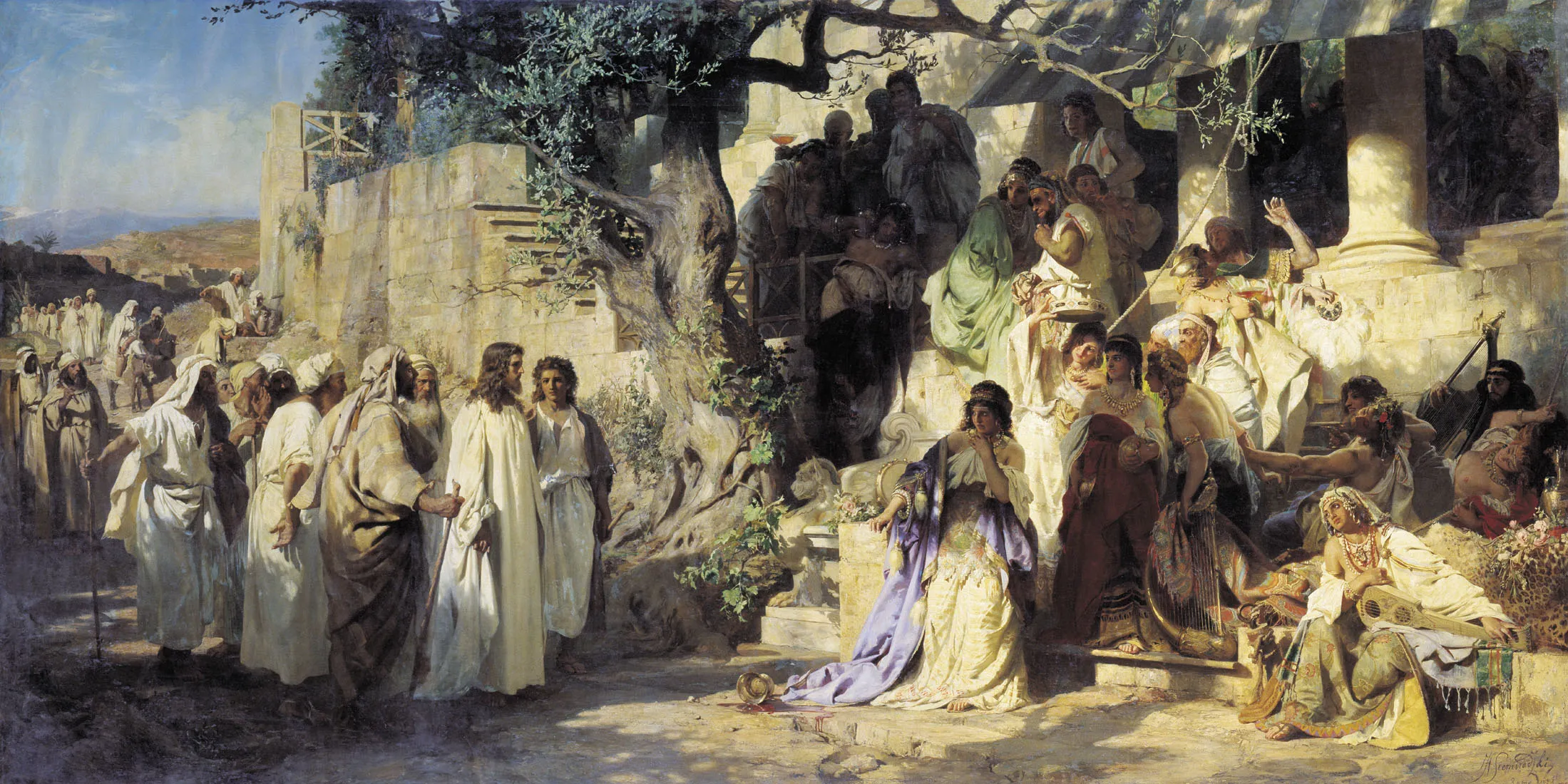
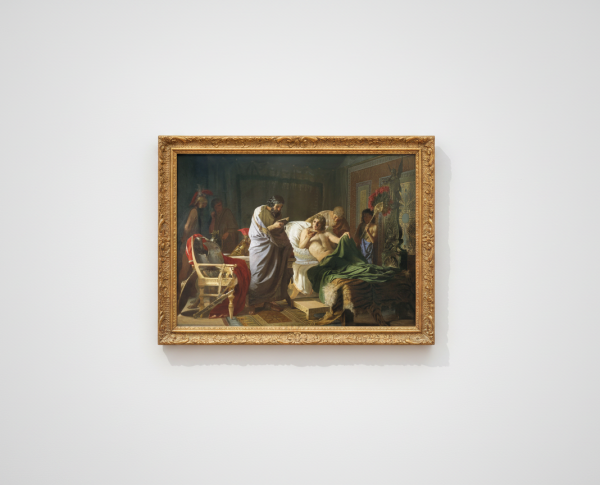
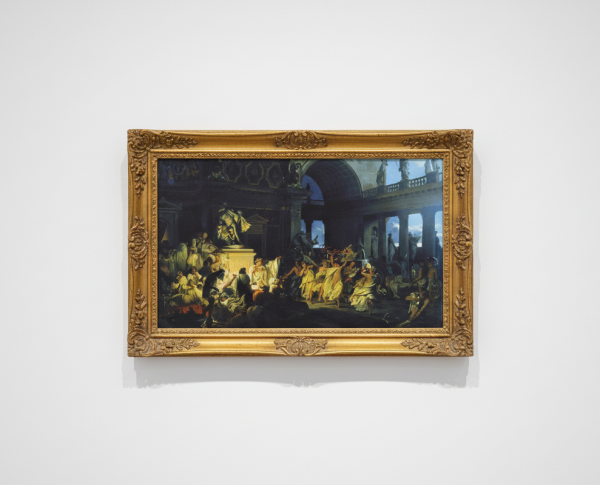
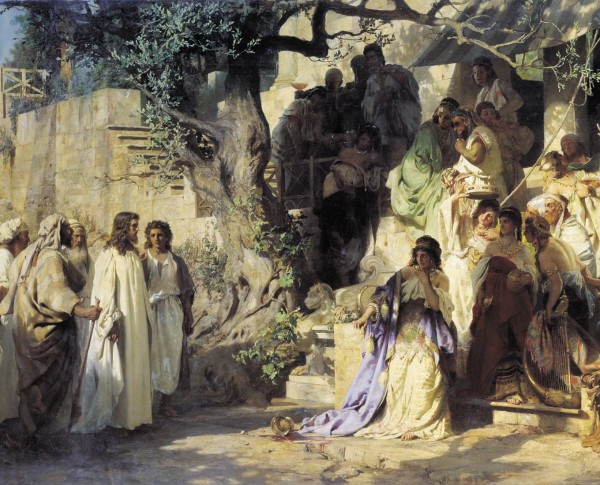
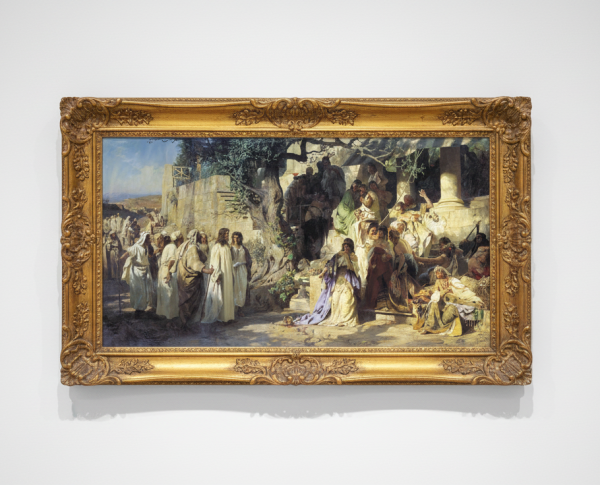
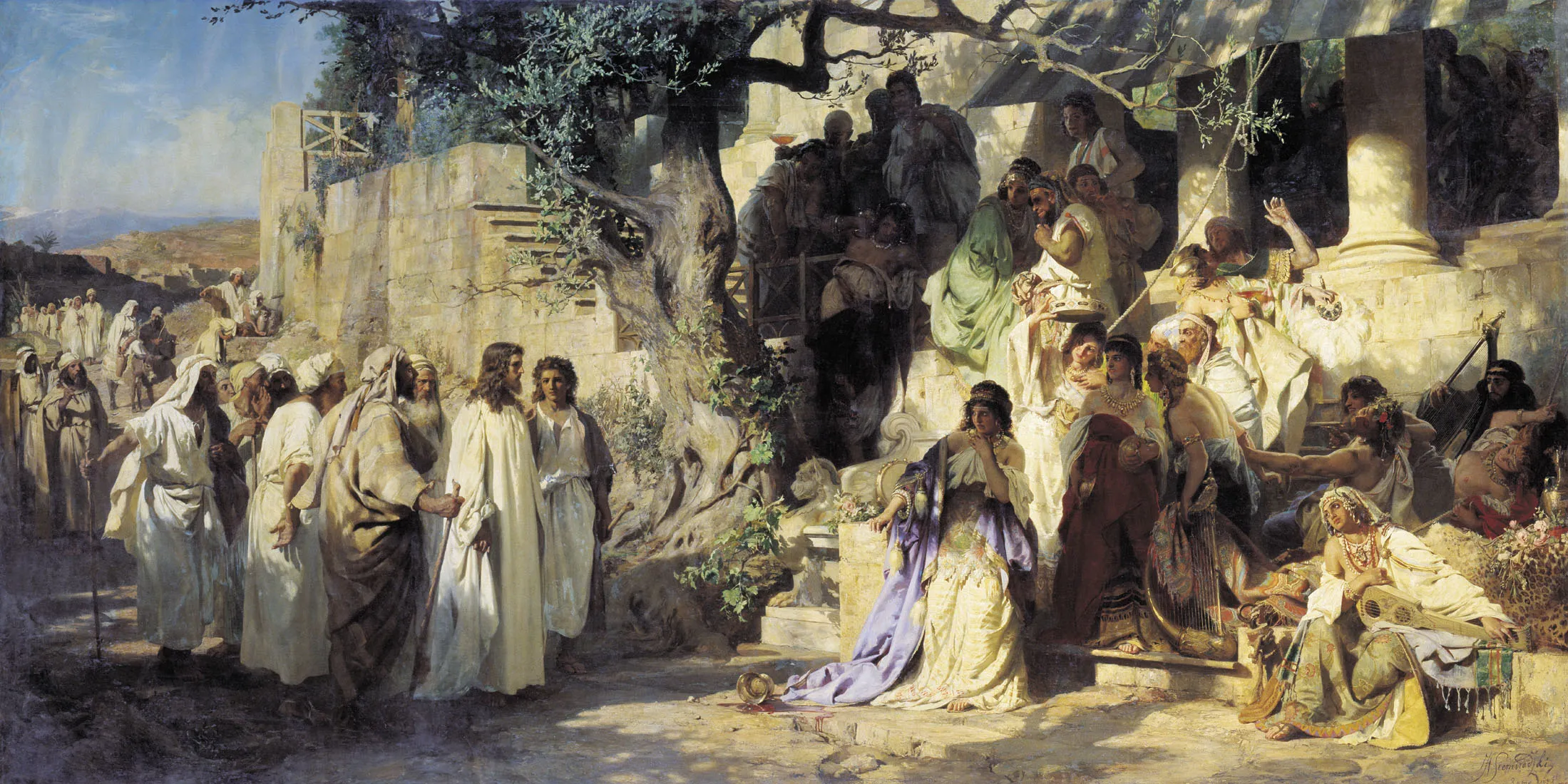
Henryk Siemiradzki's "Christ and Sinner" is a remarkable example of oil on canvas artistry, where every brushstroke reveals the artist’s dedication to detail and realism. As a prominent figure in the Academic Art movement, Siemiradzki brings classical techniques to life, making this work a visual marvel. Fans of Siemiradzki’s other works, such as "Alexander of Macedon Trust's the Doctor Philip," will recognize his signature style and meticulous execution in this stunning composition.
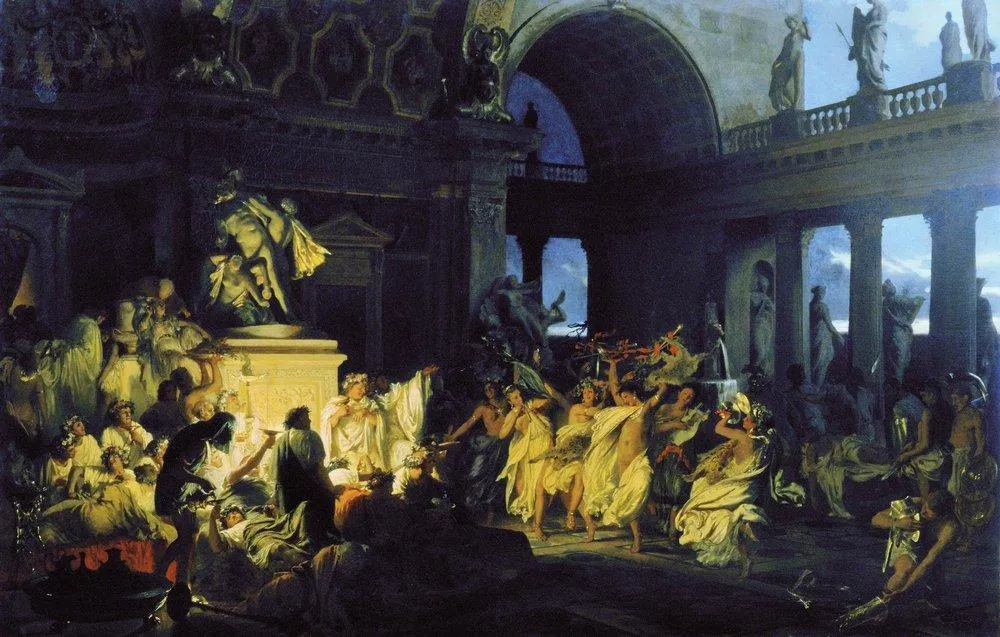
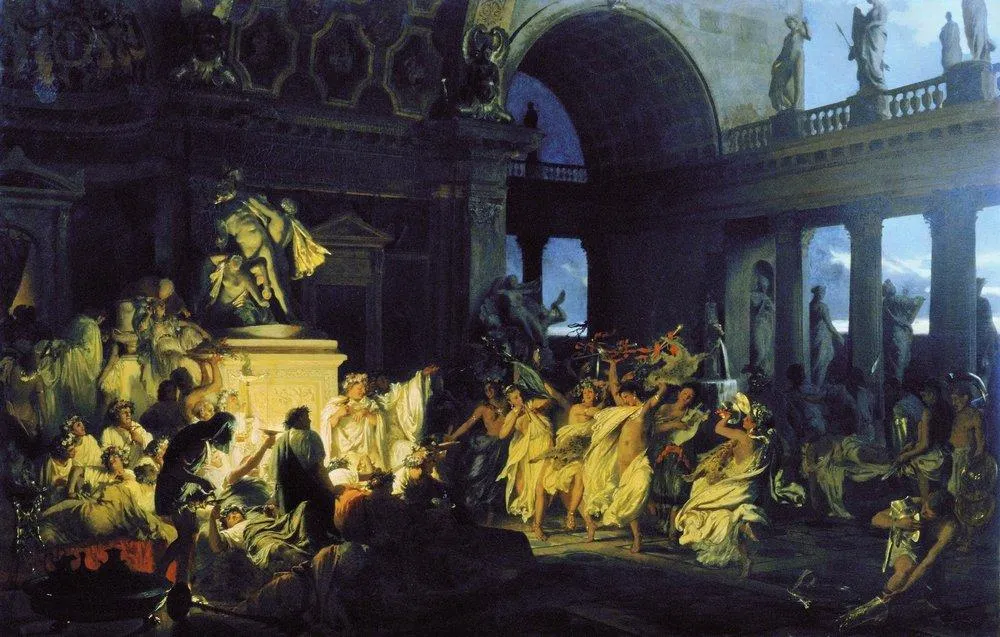
In "Christ and Sinner," Siemiradzki weaves a compelling narrative, using symbolic elements that invite viewers to reflect on themes of forgiveness and redemption. This fine art painting for sale is not only a visual feast but also a story told through color, light, and expression. The Academic Art movement’s focus on storytelling is evident, making it a perfect companion to related pieces like "Roman Orgy in the Time of Caesars" for collectors who appreciate historical depth.
Owning "Christ and Sinner" by Henryk Siemiradzki means possessing a piece of Academic Art history. This hand-painted oil painting exemplifies the pinnacle of 19th-century craftsmanship and spiritual narrative. For those searching for an exquisite fine art painting for sale, this work stands alongside masterpieces like "Prince Alexander Nevsky Receiving Papal Legates" and "Roman Orgy in the Time of Caesars," offering both aesthetic beauty and cultural significance for discerning collectors.
When Art Meets History
Henryk Siemiradzki’s "Christ and Sinner" stands as a remarkable example of the Academic Art movement, blending biblical narrative with grand visual storytelling. This hand-painted oil painting captures a pivotal moment, reflecting the artist’s deep understanding of historical and religious themes. Siemiradzki, known for masterpieces like "Jeweled still life" and "The Wave," uses his signature style to immerse viewers in history, establishing "Christ and Sinner" as an essential work in nineteenth-century European art.
Techniques That Speak
Siemiradzki’s mastery is evident in his oil on canvas technique, where meticulous brushwork and luminous color palettes define the composition. The Academic Art movement prized technical excellence, and "Christ and Sinner" exemplifies this with its realistic textures and detailed backgrounds. Similar to works such as "Allegory of Summer" and "Double portrait of the artist's daughters," this painting showcases Siemiradzki’s ability to breathe life into classical subjects and elevate them through technical prowess.
Emotions on Display
"Christ and Sinner" is a fine art painting for sale that evokes deep empathy and introspection. Siemiradzki skillfully portrays the emotional tension between the central figures, using light and gesture to highlight themes of forgiveness and redemption. Like his depiction of human drama in "Marie and Hedwig Knaus" and "Drunken peasants," Siemiradzki brings raw emotion to the canvas, making this work resonate with audiences seeking meaning and beauty in religious art.
Coveted by Collectors
Collectors highly value "Christ and Sinner" for its combination of historical significance and exquisite artistry. As a hand-painted oil painting by a master of the Academic Art movement, it stands alongside related works like "Jeweled still life" and "The Wave" in desirability. Siemiradzki’s paintings, known for their narrative depth and technical skill, are sought after by museums and private collectors alike, ensuring that "Christ and Sinner" remains a treasured piece in the world of art collecting.
Related Academic Art Hand-Painted Oil Paintings by Other Artists
Other Famous Academic Art Artists:
Frequently Asked Questions About Christ and Sinner
What is the historical context of "Christ and Sinner"?
"Christ and Sinner" was painted by Henryk Siemiradzki in 1880, during a period marked by a fascination with religious themes and moral narratives in art. This work reflects the late 19th-century European interest in realism and the portrayal of human emotions.
What artistic techniques did Siemiradzki employ in this painting?
Siemiradzki utilized a combination of chiaroscuro and vibrant color palettes to enhance the emotional intensity of the scene. His meticulous attention to detail and skillful rendering of textures contribute to the overall realism of the composition.
What is the central theme of "Christ and Sinner"?
The central theme revolves around redemption and forgiveness. The painting depicts a moment of interaction between Christ and a sinner, emphasizing the possibility of salvation and the transformative power of compassion.
How does Siemiradzki portray the character of Christ in this painting?
In "Christ and Sinner," Siemiradzki presents Christ with a serene and compassionate expression, embodying grace and understanding. This portrayal invites viewers to reflect on the themes of mercy and divine love.
What symbolic elements are present in "Christ and Sinner"?
The painting features several symbolic elements, including the contrasting figures of Christ and the sinner, which represent the dichotomy of sin and redemption. The light surrounding Christ symbolizes divine presence and hope.
How does the composition of the painting influence its message?
The composition is carefully arranged to draw the viewer's eye towards the interaction between Christ and the sinner. This focus reinforces the narrative of forgiveness and highlights the emotional gravity of the moment.
What influences can be seen in Siemiradzki's style in this work?
Siemiradzki's style in "Christ and Sinner" exhibits influences from the academic tradition, particularly in his attention to anatomical accuracy and the use of classical themes. His work also reflects the influence of Romanticism in its emotional depth.
What role does the setting play in "Christ and Sinner"?
The setting of the painting, with its soft, muted background, serves to emphasize the figures of Christ and the sinner. This choice creates a contemplative atmosphere, allowing viewers to focus on the emotional exchange between the two characters.
How has "Christ and Sinner" been received by critics and art historians?
Critics and art historians have praised "Christ and Sinner" for its emotional depth and technical mastery. The painting is often discussed in the context of Siemiradzki's contributions to religious art and the broader narrative of 19th-century European painting.
What legacy has "Christ and Sinner" left in the art world?
"Christ and Sinner" continues to be recognized as a significant work within the canon of religious art. Its exploration of themes such as redemption and compassion resonates with audiences, ensuring its relevance in contemporary discussions of morality and faith in art.























_GFM_Painting_(1).webp)

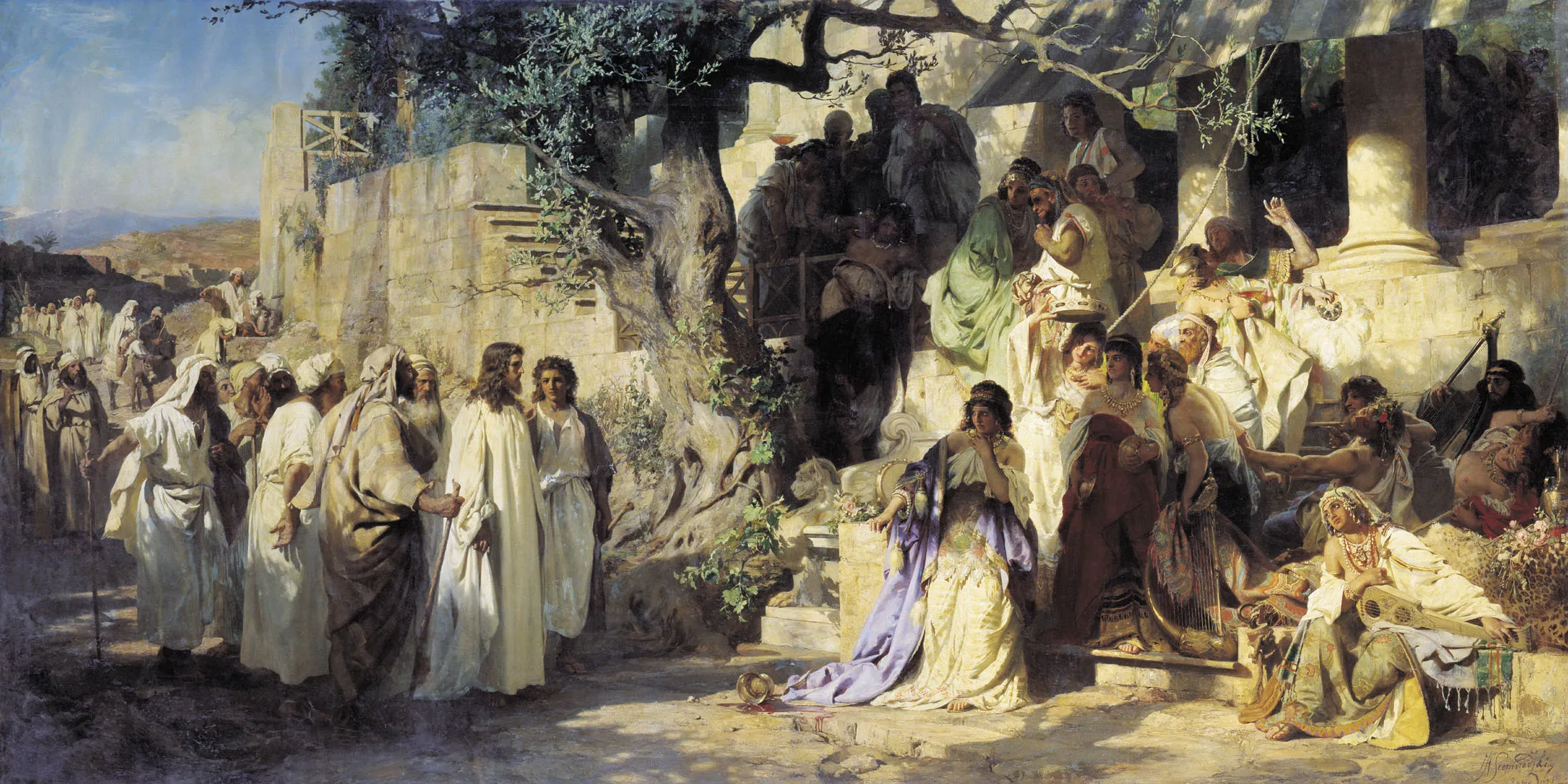

 100% Hand-Painted: Finished in 3-6 Weeks

.png)

















_(1).webp)