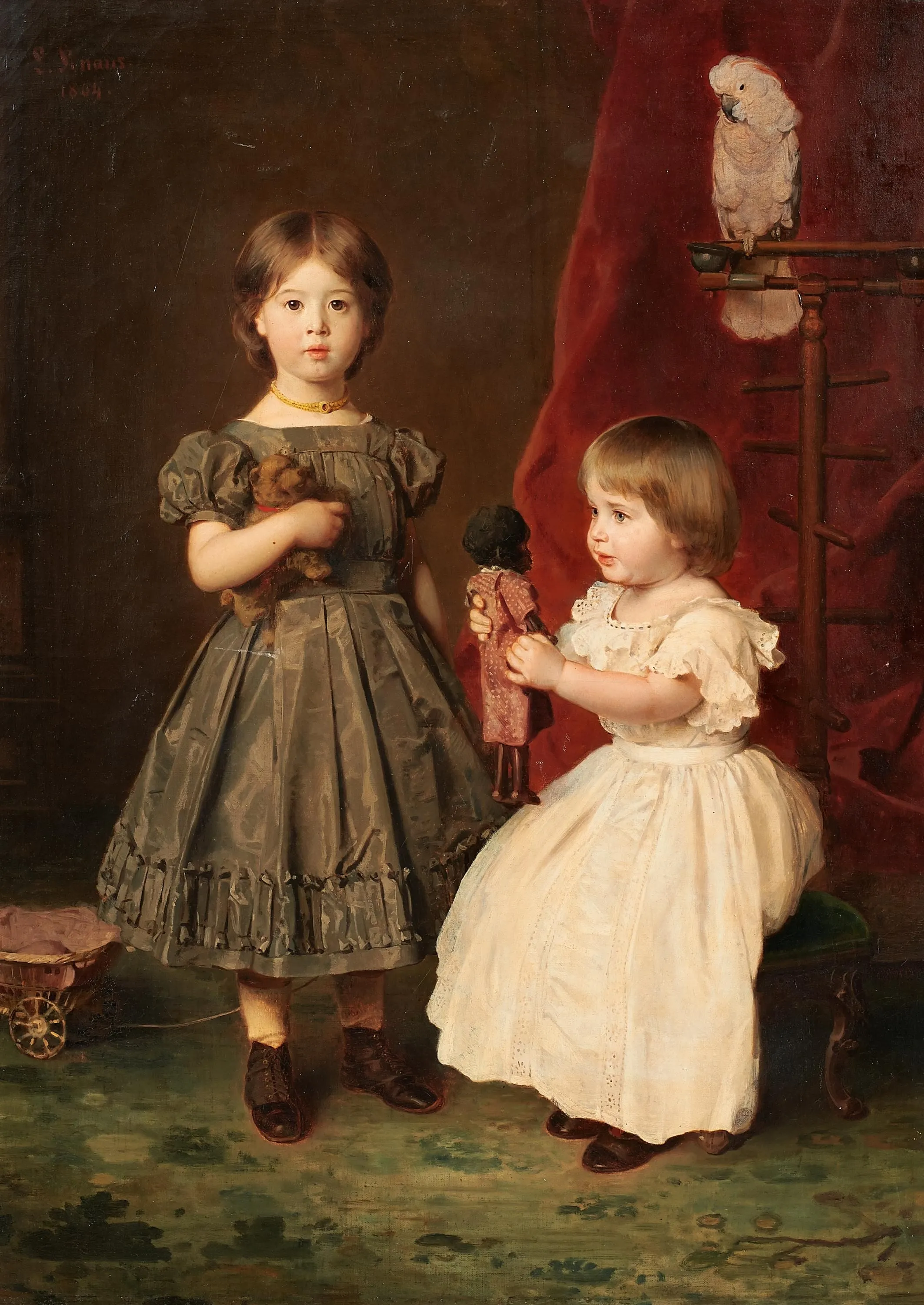
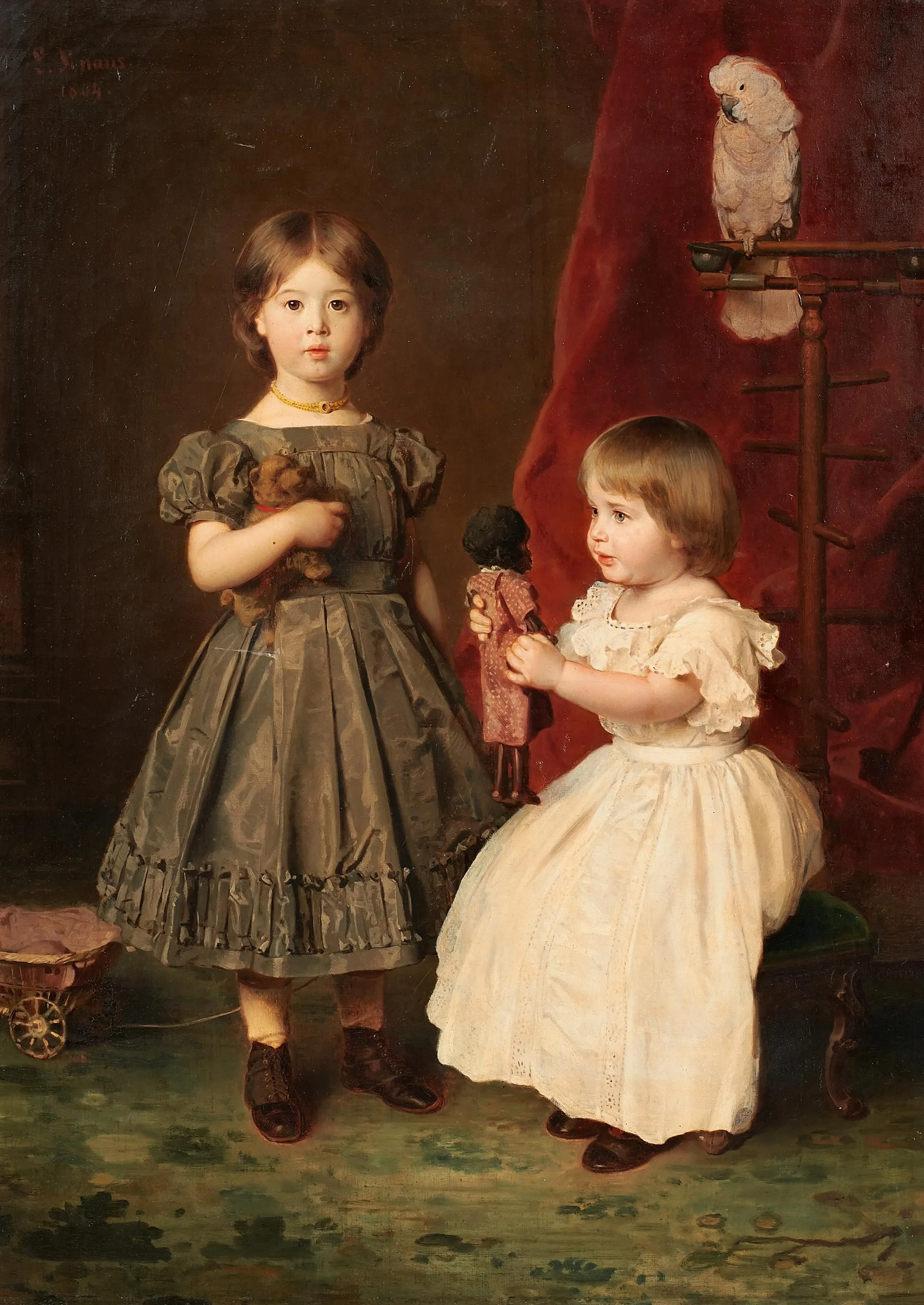
Ludwig Knaus's "Double portrait of the artist's daughters, Marie and Hedwig Knaus" exemplifies the refined techniques characteristic of Academic Art. The oil on canvas medium allows for vibrant detail and depth, showcasing Knaus's ability to bring his subjects to life. This fine art painting for sale pairs beautifully with other works like "Portrait of a boy with dog in a forest" and "The morning after the celebration," highlighting the artist’s consistency in quality and emotion.
Every element in "Double portrait of the artist's daughters, Marie and Hedwig Knaus" tells a story, reflecting Ludwig Knaus's deep connection to his family and the Academic Art movement. This hand-painted oil painting draws viewers into an intimate world, where subtle gestures and shared glances speak volumes. Collectors often pair this piece with related products such as "Portrait Of The Painter's Wife. Henriette Knaus, née Hoffmann" to enrich their understanding of Knaus's symbolic storytelling.
For collectors seeking a remarkable oil on canvas masterpiece, "Double portrait of the artist's daughters, Marie and Hedwig Knaus" by Ludwig Knaus is a standout choice in the Academic Art tradition. This fine art painting for sale complements other significant works like "The sleight of hand in the barn," making it an essential addition to any curated collection. Its timeless beauty and historical significance ensure lasting value and admiration among art enthusiasts.
When Art Meets History
Ludwig Knaus, a master of the Academic Art movement, created the evocative "Double portrait of the artist's daughters, Marie and Hedwig Knaus." This hand-painted oil painting captures not only the likeness of his daughters but also the cultural atmosphere of 19th-century Europe. The work stands among other notable pieces like "Reunited," "Vercingetorix throws down his arms at the feet of Julius Caesar," and "Odalisque," reflecting the era's emphasis on realism and emotional depth.
Techniques That Speak
Utilizing the oil on canvas medium, Ludwig Knaus demonstrates his mastery through intricate brushwork and careful attention to detail in "Double portrait of the artist's daughters, Marie and Hedwig Knaus." The Academic Art movement prized such technical excellence, as seen in related paintings like "The Hunchback of Notre-Dame." Each stroke enhances the lifelike quality of the composition, making this oil on canvas a testament to the enduring legacy of traditional fine art techniques.
Emotions on Display
In "Double portrait of the artist's daughters, Marie and Hedwig Knaus," Ludwig Knaus skillfully conveys a tender familial bond, a hallmark of the Academic Art movement. This fine art painting for sale draws viewers into the intimate world of the artist, inviting comparisons to works like "Love's Offering." The gentle expressions and soft lighting evoke feelings of warmth and affection, making this piece resonate emotionally with collectors and art lovers alike.
Coveted by Collectors
Ludwig Knaus’s "Double portrait of the artist's daughters, Marie and Hedwig Knaus" is a hand-painted oil painting highly sought after by collectors of Academic Art. Its historical significance and technical brilliance place it alongside masterpieces like "Odalisque" and "Vercingetorix throws down his arms at the feet of Julius Caesar." As a fine art painting for sale, it represents a timeless investment for those passionate about classic portraiture and the enduring beauty of oil on canvas.
Related Academic Art Hand-Painted Oil Paintings by Other Artists
Other Famous Academic Art Artists:
Frequently Asked Questions About Double portrait of the artist's daughters, Marie and Hedwig Knaus
What is the historical context of "Double portrait of the artist's daughters, Marie and Hedwig Knaus"?
This painting was created during the late 19th century, a time when portraiture was a significant genre in the art world, reflecting both personal and societal values of the era.
Who was Ludwig Knaus and what was his significance in the art world?
Ludwig Knaus was a prominent German painter known for his realistic portrayals and depictions of everyday life, contributing significantly to the genre of portraiture in the 19th century.
What artistic techniques did Knaus employ in this portrait?
Knaus utilized oil paint to create rich textures and lifelike details, employing techniques such as chiaroscuro to enhance the depth and dimensionality of the figures.
What is the significance of the subjects, Marie and Hedwig Knaus?
Marie and Hedwig Knaus, as the artist's daughters, symbolize familial bonds and the intimate connection between the artist and his subjects, reflecting personal themes in Knaus's work.
How does this painting reflect the values of the time period?
The portrait exemplifies the 19th-century emphasis on realism and the importance of family, showcasing the societal values of nurturing and domesticity prevalent during that era.
What emotions are conveyed through the expressions of the daughters in the portrait?
The expressions of Marie and Hedwig convey a sense of innocence and tranquility, inviting viewers to reflect on the purity of childhood and familial love.
What role does color play in this painting?
Knaus's use of color enhances the emotional tone of the portrait, with soft hues that evoke warmth and intimacy, drawing attention to the subjects' features and expressions.
Are there any symbolic elements present in the painting?
Yes, the positioning and attire of the daughters may symbolize their roles within the family and society, reflecting the expectations of women during the 19th century.
How does this work compare to other portraits of children from the same period?
Compared to other portraits of children from the same period, Knaus's work stands out for its emotional depth and focus on the individual personality of each child, rather than merely idealized representations.
What impact did this painting have on Knaus's career?
This portrait solidified Knaus's reputation as a skilled portrait artist, showcasing his ability to capture the essence of his subjects and contributing to his recognition in the art community.























_GFM_Painting_(1).webp)


 100% Hand-Painted: Finished in 3-6 Weeks

.png)















_(1).webp)