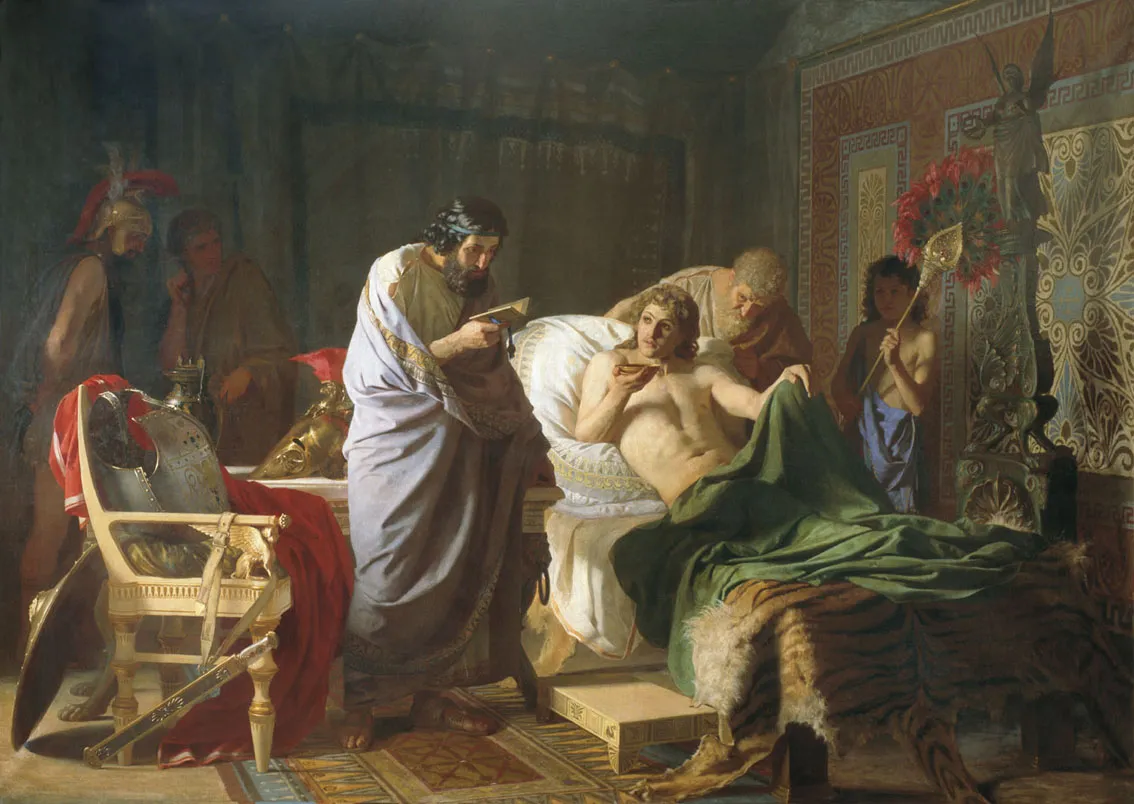
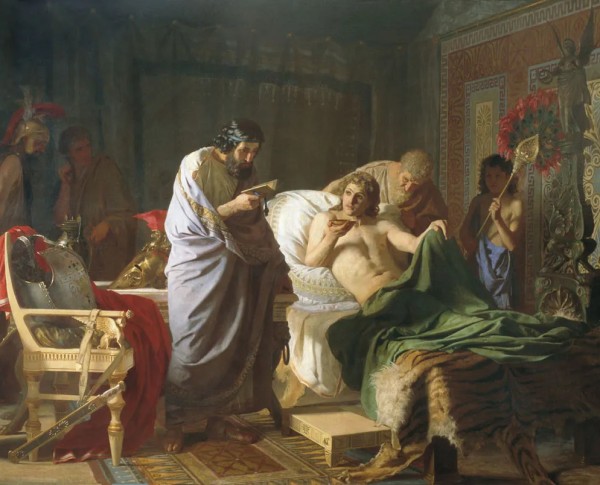
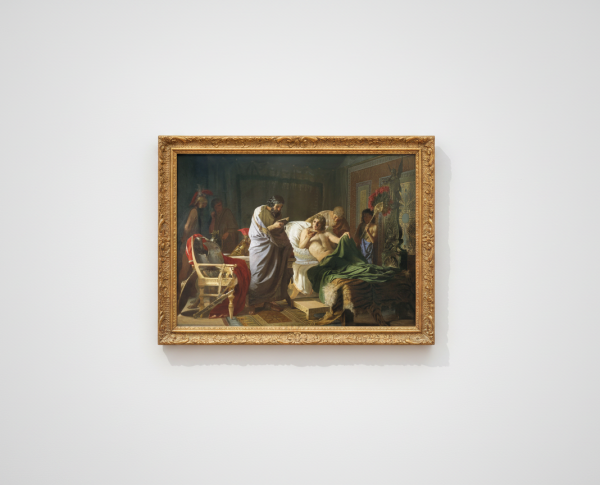
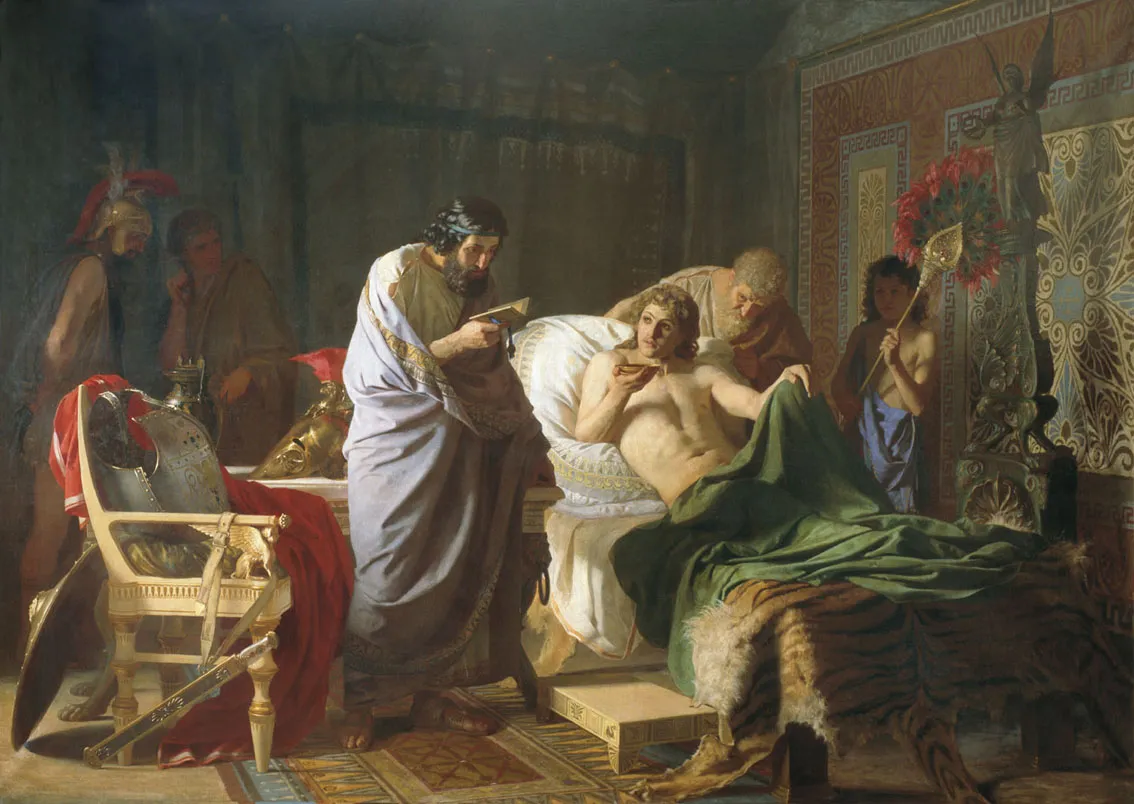
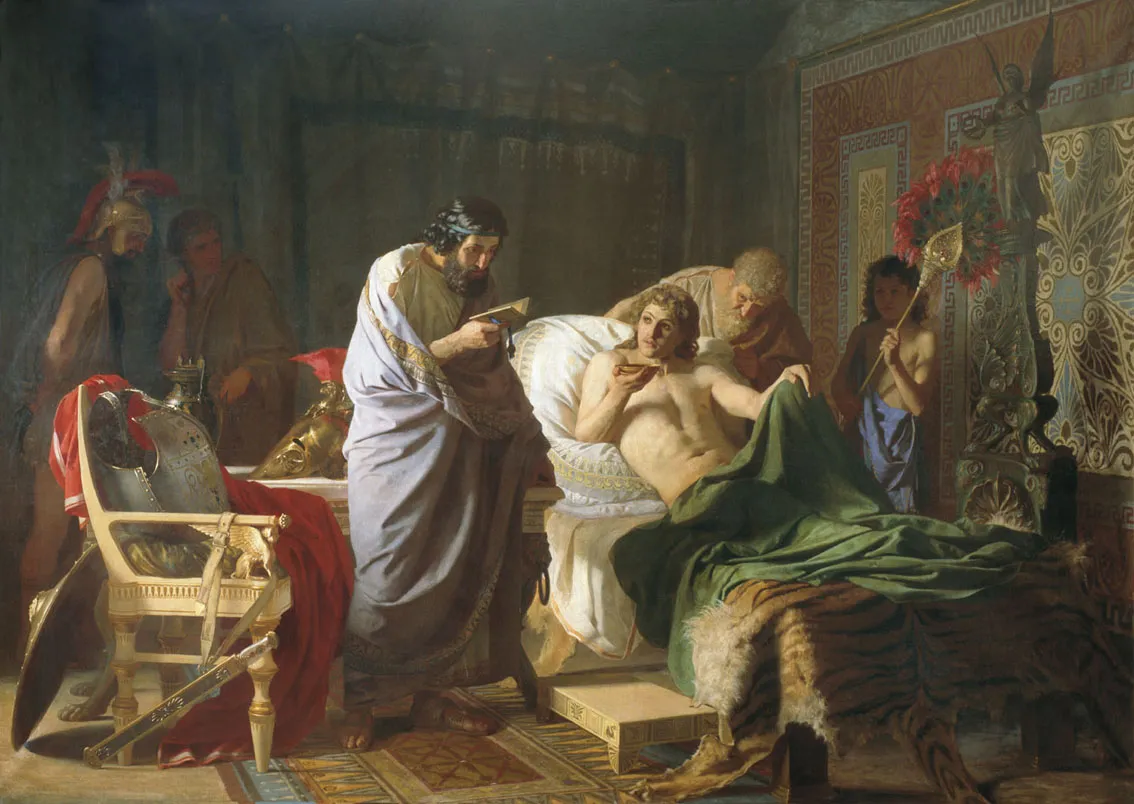
Henryk Siemiradzki’s "Alexander of Macedon Trust's the Doctor Philip" exemplifies the technical prowess of oil on canvas. The artist’s attention to detail and luminous color palette bring the scene to life, showcasing the elegance and precision of the Academic Art movement. Each brushstroke enhances the emotional intensity between the figures, demonstrating Siemiradzki’s mastery in rendering both human form and dramatic atmosphere, making this artwork a standout in 19th-century European painting.
This fine art painting for sale tells a powerful story of loyalty and courage. Siemiradzki’s depiction of Alexander and Doctor Philip is rich with symbolism, emphasizing themes of trust, leadership, and healing. The intricate composition and thoughtful gestures reveal the artist’s narrative expertise, a hallmark of the Academic Art movement. Collectors and art enthusiasts alike are drawn to the depth and historical resonance embedded within this masterfully crafted artwork by Henryk Siemiradzki.
"Alexander of Macedon Trust's the Doctor Philip" is a hand-painted oil painting that would make a prestigious addition to any fine art collection. The work’s provenance, combined with Siemiradzki’s reputation in the Academic Art movement, ensures its status as a collector’s treasure. The painting’s grandeur and historical significance make it highly sought after by those seeking an authentic piece of art history, highlighting the lasting value of such exceptional oil on canvas masterpieces.
When Art Meets History
"Alexander of Macedon Trusts the Doctor Philip" by Henryk Siemiradzki is a remarkable example of the Academic Art movement, capturing a dramatic moment from ancient history. This hand-painted oil painting showcases Siemiradzki’s passion for historical subjects, similar to his contemporaries. The narrative power of this piece rivals related paintings like "Drunken Peasants" and "The Hunchback of Notre-Dame," making it a must-see for enthusiasts of both fine art and classical tales.
Techniques That Speak
Siemiradzki’s mastery of oil on canvas is evident in every brushstroke of "Alexander of Macedon Trusts the Doctor Philip." His attention to detail, use of light, and precise composition demonstrate hallmarks of the Academic Art movement. Like in "Le Goût" and "BRIC-À-BRAC," his technical prowess brings the scene to life, immersing viewers in the tension and trust between Alexander and his physician. The realism and depth highlight Siemiradzki’s exceptional talent.
Emotions on Display
This fine art painting for sale conveys a powerful spectrum of emotions, from Alexander’s vulnerability to the doctor’s steadfast confidence. Siemiradzki’s ability to portray complex feelings is reminiscent of works like "The Gypsy Camp." Through subtle expressions and body language, the artist invites viewers to empathize with the historical figures, creating a timeless connection. The Academic Art movement’s focus on emotional storytelling is brilliantly realized in this masterpiece.
Coveted by Collectors
Collectors and art lovers highly prize "Alexander of Macedon Trusts the Doctor Philip," recognizing its value as a hand-painted oil painting by Henryk Siemiradzki. The painting’s historical significance and exquisite technique, shared with related paintings such as "Drunken Peasants" and "Le Goût," make it a standout piece in any collection. As a shining example of Academic Art, it continues to attract those seeking exceptional fine art painting for sale.
Related Academic Art Hand-Painted Oil Paintings by Other Artists
Other Famous Academic Art Artists:
Frequently Asked Questions About Alexander of Macedon Trust's the Doctor Philip
What is the historical significance of "Alexander of Macedon Trust's the Doctor Philip"?
This painting reflects the cultural and intellectual climate of the late 19th century, emphasizing the intersection of history and mythology, particularly in relation to Alexander the Great's legacy.
Who was Henryk Siemiradzki and what is his contribution to art?
Henryk Siemiradzki was a prominent Polish painter known for his historical and mythological scenes. His work often combines academic techniques with vibrant colors and dramatic compositions, making significant contributions to 19th-century European art.
What themes are explored in this painting?
The painting explores themes of trust, wisdom, and the relationship between a ruler and his advisor, symbolizing the importance of knowledge and guidance in leadership.
What artistic techniques did Siemiradzki employ in this work?
Siemiradzki utilized a combination of realism and idealism, employing meticulous detail, rich color palettes, and dramatic lighting to enhance the emotional impact of the scene.
How does the painting depict the character of Doctor Philip?
Doctor Philip is portrayed as a wise and composed figure, embodying the archetype of the sage. His posture and expression convey a sense of authority and reassurance, highlighting his role as a trusted advisor.
What is the significance of the setting in the painting?
The setting, likely inspired by classical architecture, serves to elevate the historical context, reinforcing the grandeur associated with Alexander the Great and the intellectual pursuits of his time.
Are there any symbolic elements present in the painting?
Yes, various symbolic elements such as the scrolls and books represent knowledge and wisdom, while the presence of light symbolizes enlightenment and the pursuit of truth.
How does this painting compare to other works by Siemiradzki?
This painting shares thematic similarities with other works by Siemiradzki, particularly in its focus on historical narratives and the human condition, while showcasing his evolution in technique and composition.
What impact did this painting have on contemporary art movements?
"Alexander of Macedon Trust's the Doctor Philip" contributed to the academic art movement by reinforcing the value of historical subjects, influencing future artists to explore similar themes through a lens of realism and classical inspiration.
What can we learn from the portrayal of Alexander in this painting?
The portrayal of Alexander emphasizes the complexities of leadership, illustrating that even great conquerors require wise counsel and the importance of collaboration in achieving greatness.























_GFM_Painting_(1).webp)


 100% Hand-Painted: Finished in 3-6 Weeks

.png)















_(1).webp)