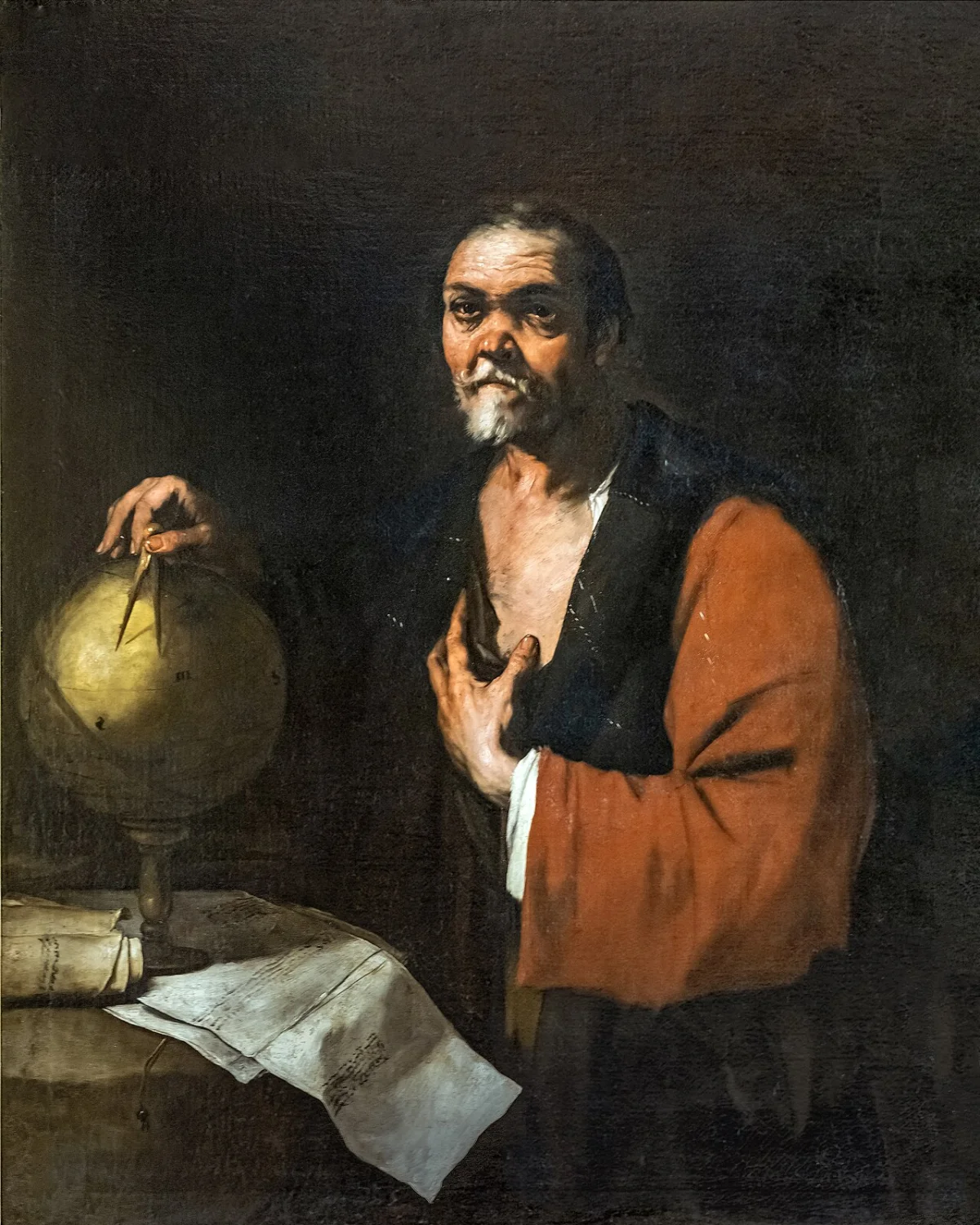
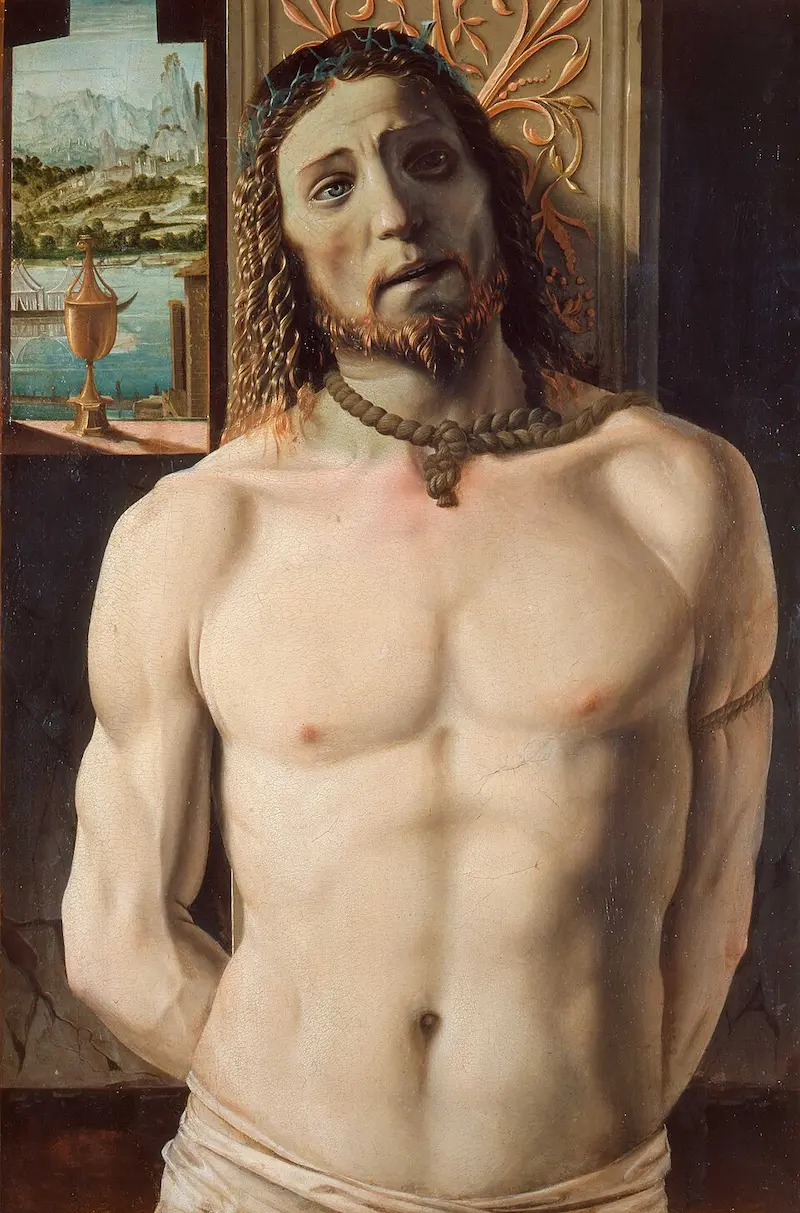
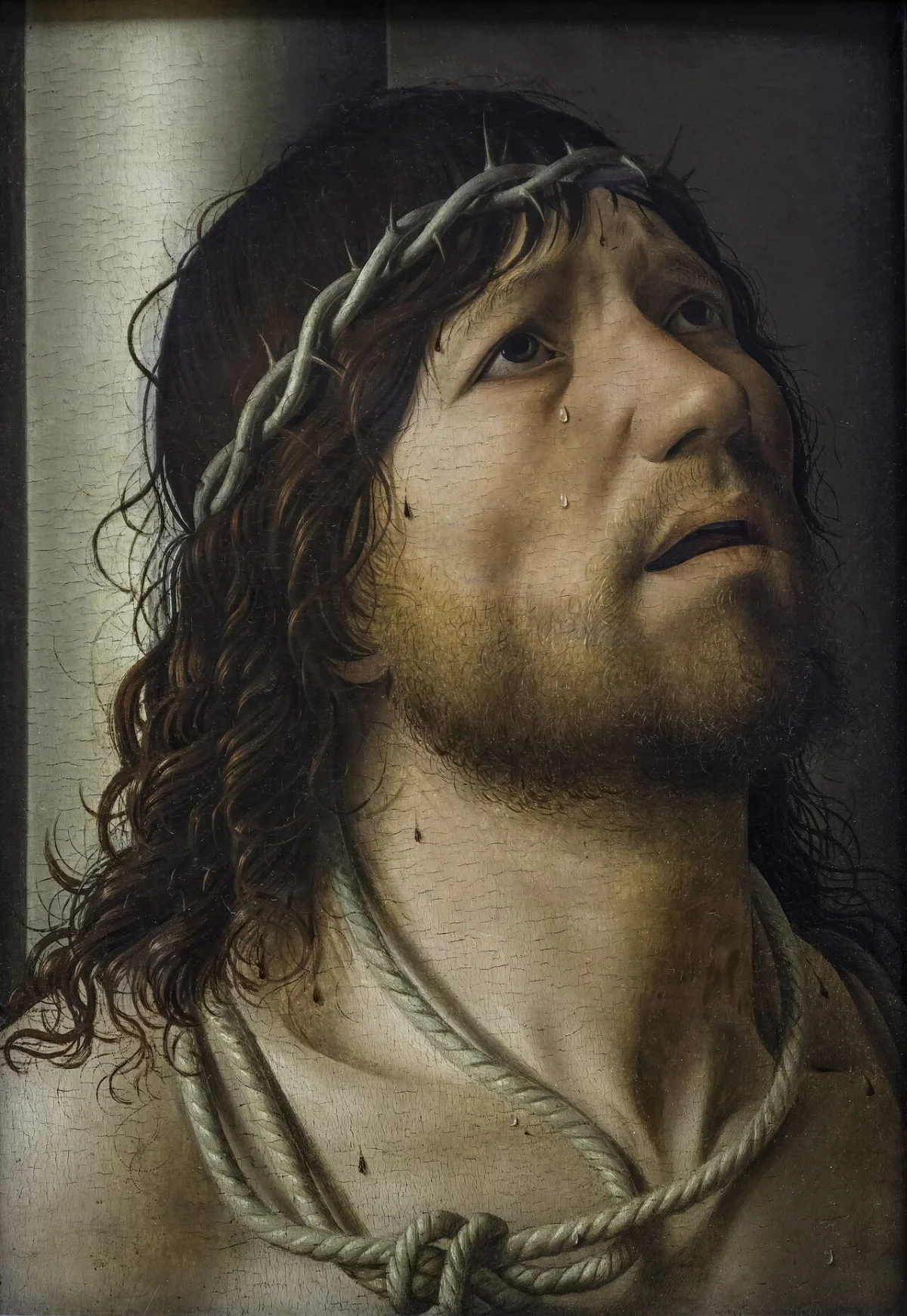
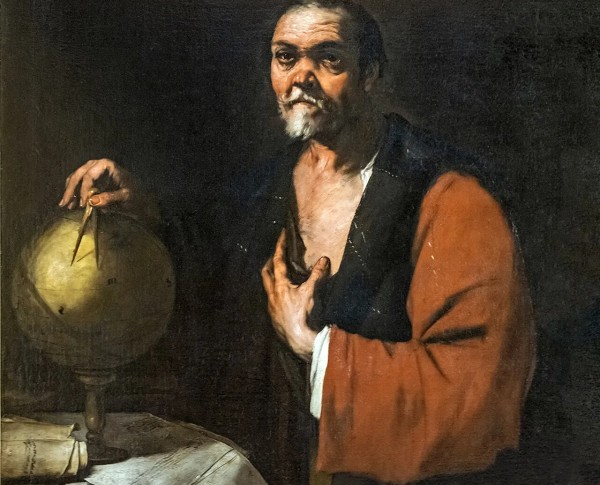
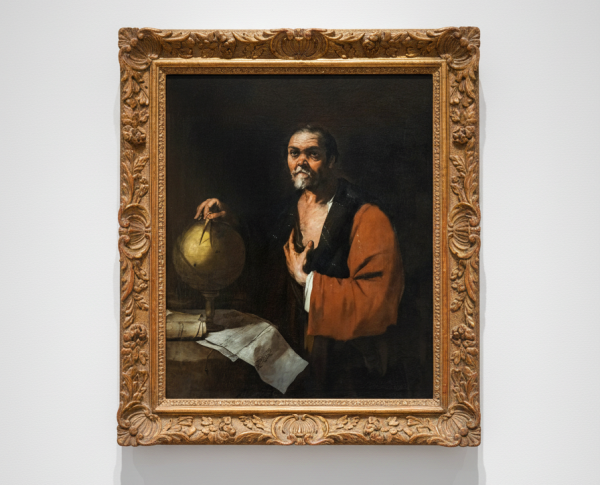
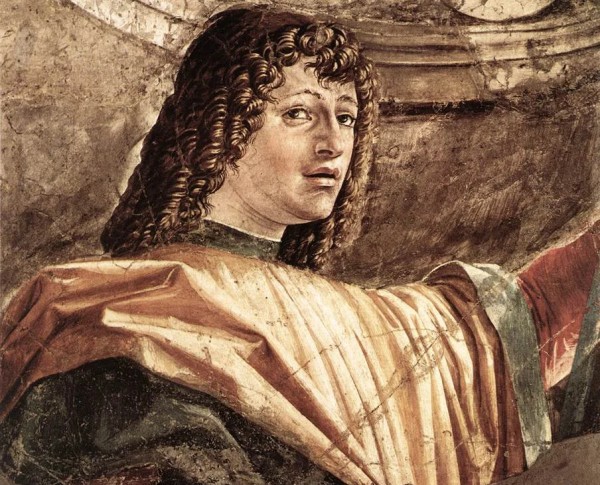
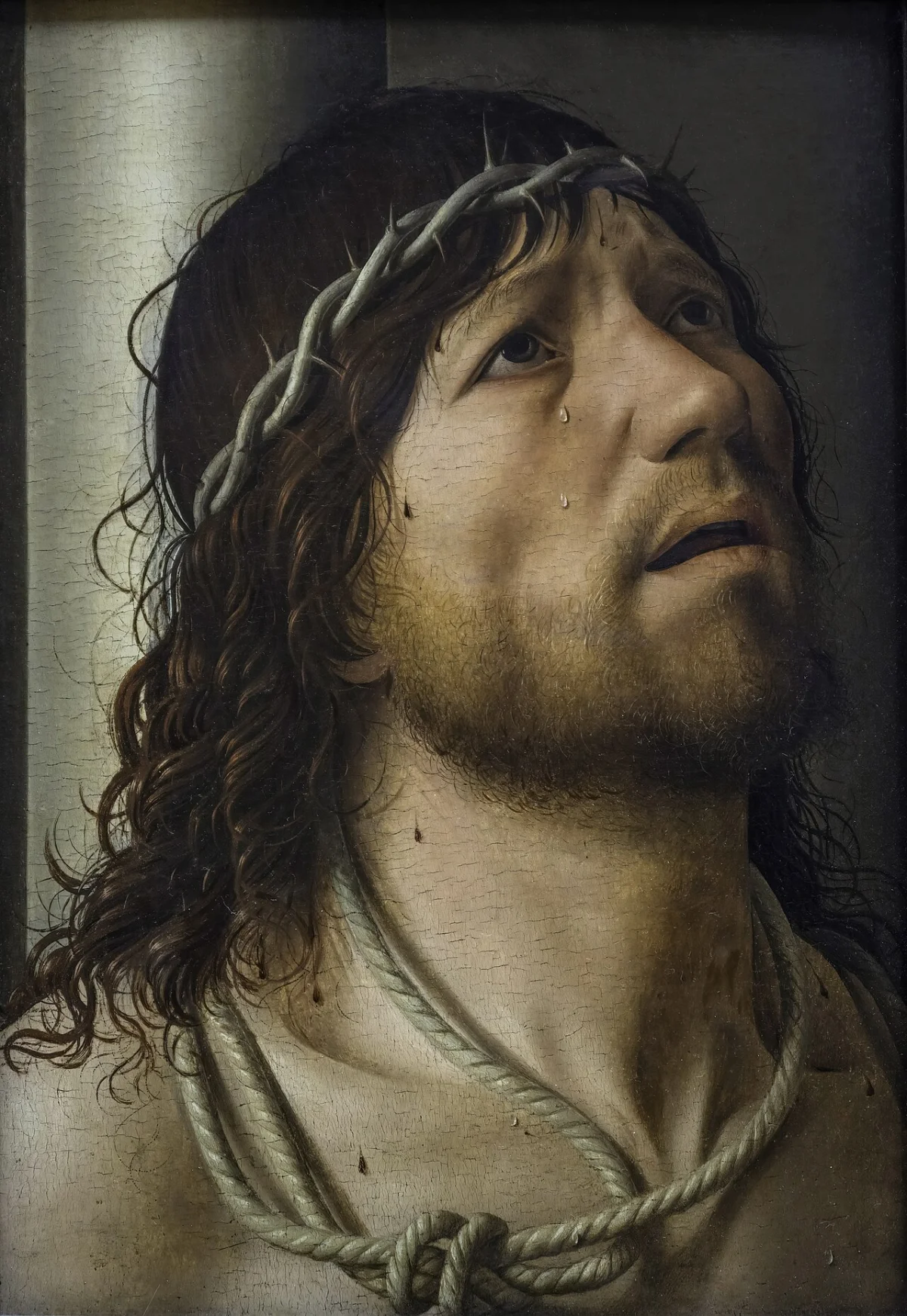
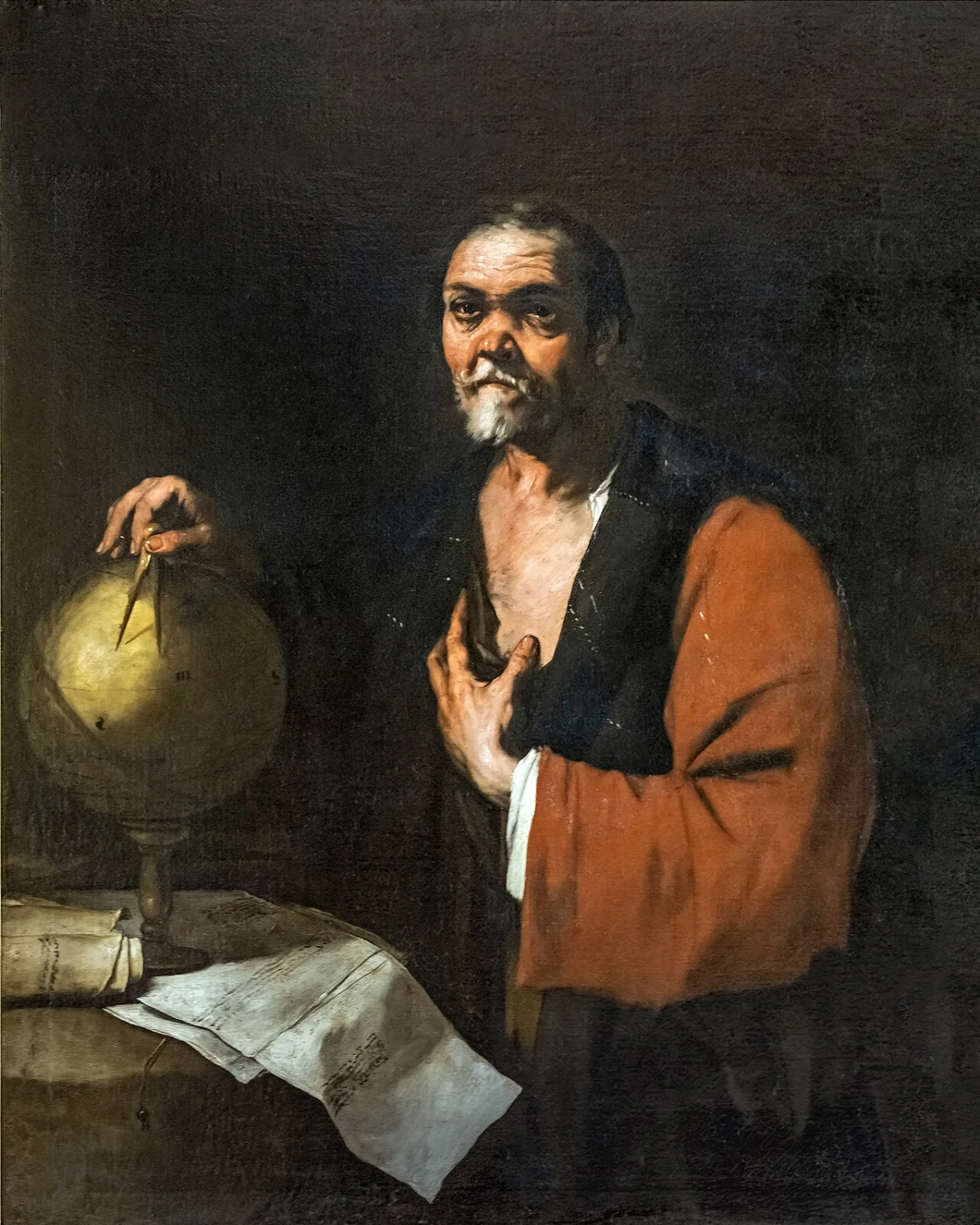
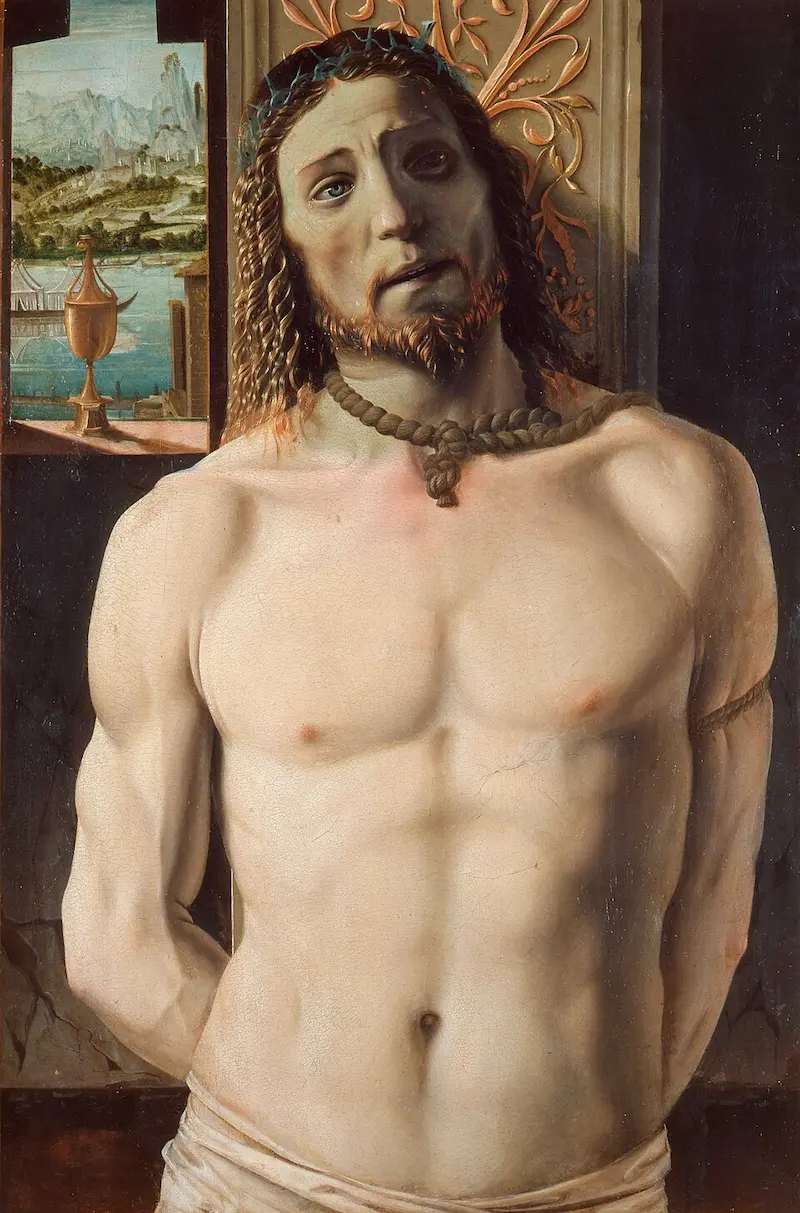
Rendered in exquisite oil on canvas, "Crying Heraclitus and Laughing Democritus" showcases Bramante’s unparalleled mastery of the High Renaissance style. The artist’s dynamic brushwork and harmonious composition bring the ancient philosophers to life. This painting’s refined technique aligns it with other notable pieces like "Christ at the Column" and "Heraclitus and Democritus," making it a highlight among oil paintings from this influential period.
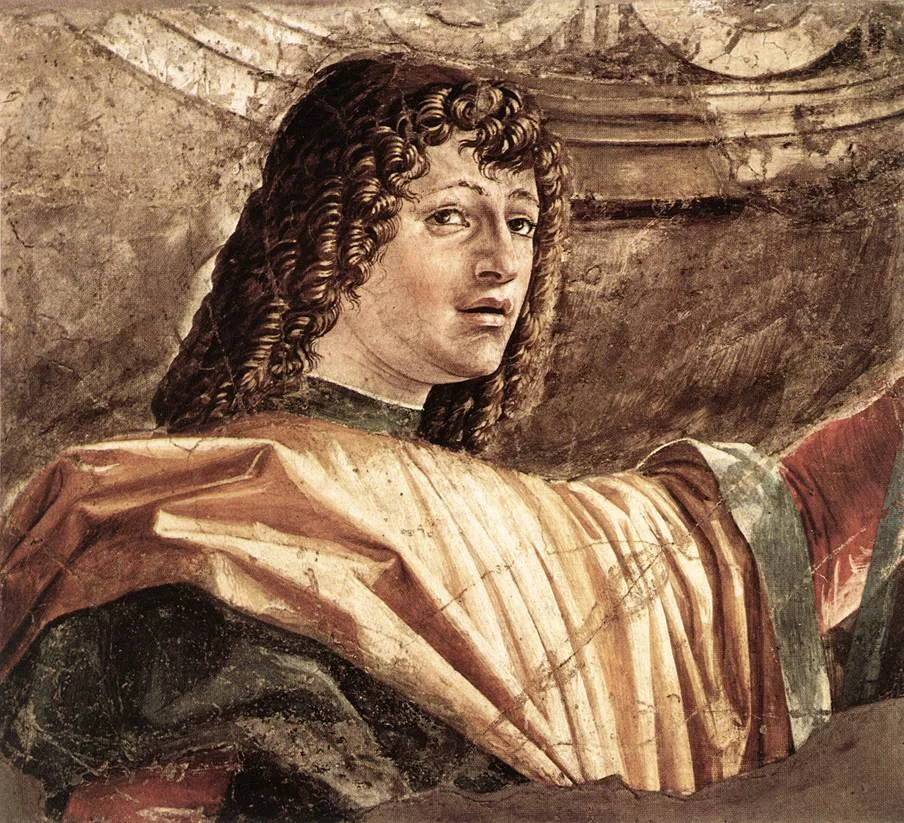
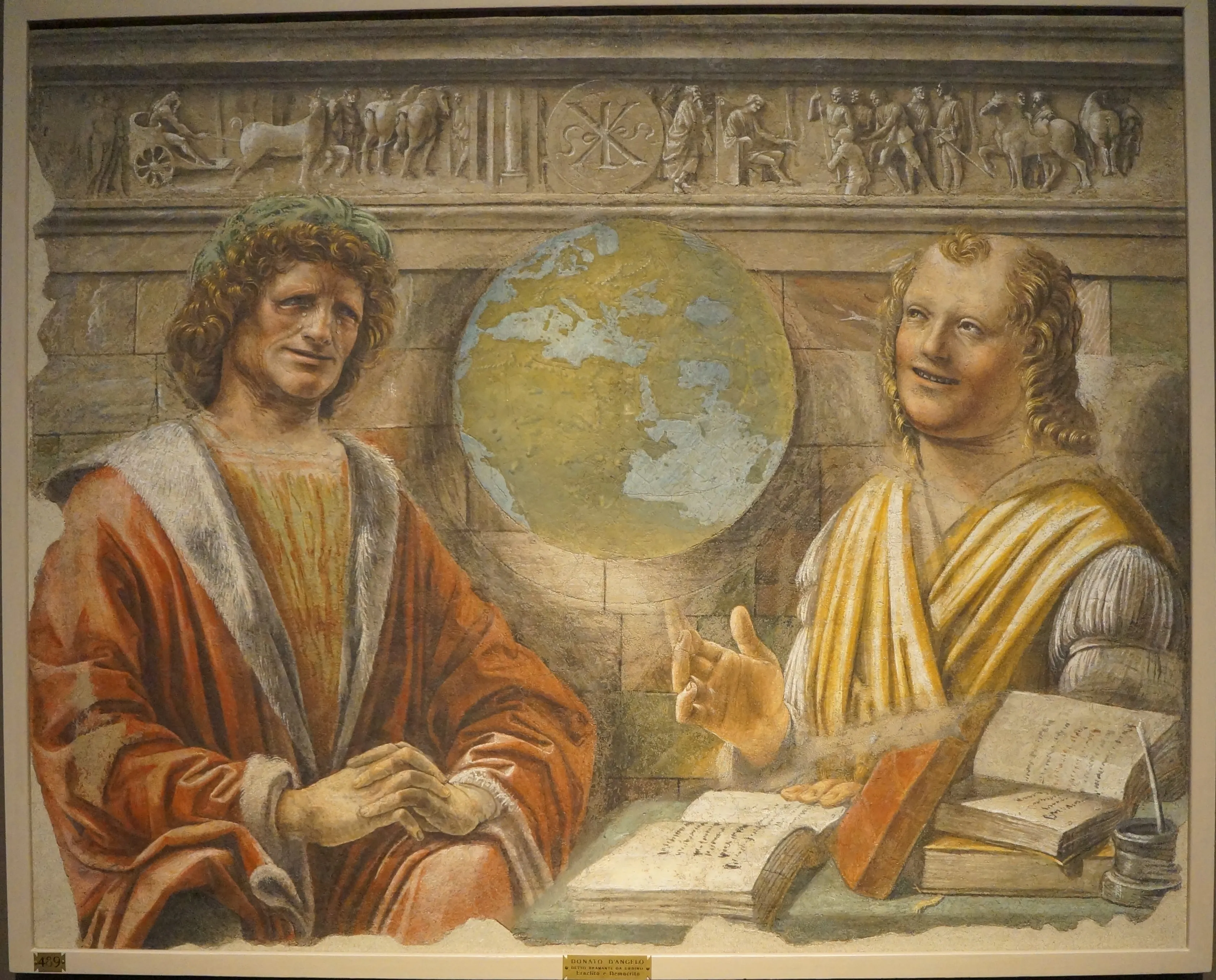
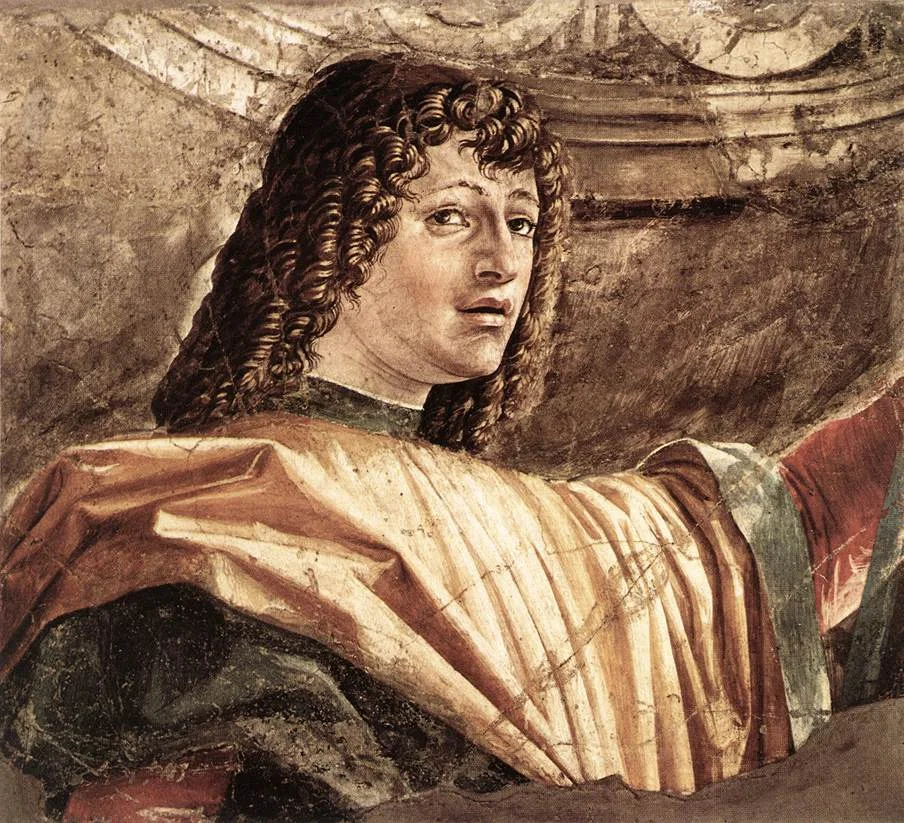
In "Crying Heraclitus and Laughing Democritus," Donato Bramante weaves deep symbolism into his fine art painting for sale, contrasting the melancholic Heraclitus with the cheerful Democritus. Their expressions and gestures represent humanity’s eternal struggle between despair and mirth. The High Renaissance movement’s love for allegory and intellect shines through, paralleling themes found in works like "Man with a Halbard" and "Heraclitus and Democritus."
This hand-painted oil painting by Donato Bramante is more than just a visual delight—it is a collector’s treasure from the High Renaissance. "Crying Heraclitus and Laughing Democritus" invites admiration for its craftsmanship and narrative depth. Collectors seeking oil on canvas masterpieces will find it a perfect complement to related products such as "Christ at the Column (Bramante)," "Christ at the Column," and "Man with a Halbard."
When Art Meets History
Donato Bramante's "Crying Heraclitus and Laughing Democritus" captures a pivotal moment in the High Renaissance movement, blending philosophical depth with artistic mastery. As a hand-painted oil painting, this work reflects Bramante’s keen interest in classical antiquity, echoing the intellectual vibrancy of his era. Related paintings like "Annunciation" and "The Last Supper 1498" further illustrate the artist’s role in shaping Renaissance art, making this piece a vital link between history and creative expression.
Techniques That Speak
This remarkable oil on canvas showcases Bramante's refined technique, characteristic of the High Renaissance. The artist’s skillful use of light and shadow highlights the emotional contrasts between Heraclitus and Democritus. Intricate brushstrokes and balanced composition, also seen in works like "The Triumph Of Galatea" and "The Transfiguration," demonstrate Bramante’s mastery. The painting’s technical brilliance elevates it among his finest achievements, making it a standout oil on canvas in the world of Renaissance art.
Emotions on Display
Bramante’s "Crying Heraclitus and Laughing Democritus" is a fine art painting for sale that masterfully conveys the stark emotional dichotomy between sorrow and joy. The expressive faces and body language of the philosophers invite viewers to contemplate life’s paradoxes. Evoking similar emotional depth as seen in "Landscape drawing for Santa Maria della Neve," Bramante’s work encapsulates the Renaissance fascination with human emotion, making it a compelling acquisition for those who appreciate profound artistic narratives.
Coveted by Collectors
As a celebrated hand-painted oil painting from the High Renaissance, "Crying Heraclitus and Laughing Democritus" is highly sought after by art collectors worldwide. Donato Bramante’s legacy, affirmed by masterpieces such as "The Transfiguration" and "The Last Supper 1498," enhances the desirability of this piece. Its historical significance and exquisite craftsmanship make it a prized addition to any collection, appealing to those searching for an exceptional fine art painting for sale.
Related High Renaissance Hand-Painted Oil Paintings by Other Artists
Other Famous High Renaissance Artists:
Frequently Asked Questions About Crying Heraclitus and Laughing Democritus
What is the historical context of "Crying Heraclitus and Laughing Democritus"?
This painting reflects the philosophical dichotomy between the views of Heraclitus, who believed in the constant change and sorrow of life, and Democritus, who advocated for a more optimistic view of existence. Created during the Renaissance, it embodies the era's fascination with classical philosophy.
Who were Heraclitus and Democritus?
Heraclitus was a pre-Socratic philosopher known for his doctrine that change is central to the universe, famously stating that "you cannot step into the same river twice." Democritus, on the other hand, is recognized for his atomic theory and a more cheerful outlook on life, often emphasizing the pursuit of happiness.
What artistic techniques did Donato Bramante use in this painting?
Bramante employed chiaroscuro to create depth and dimension, contrasting light and shadow to enhance the emotional expressions of the figures. The use of vibrant colors also serves to highlight the differing philosophies represented by the two characters.
What is the significance of the contrasting emotions depicted in the painting?
The juxtaposition of Heraclitus's sorrow and Democritus's laughter symbolizes the duality of human experience—suffering and joy. This contrast invites viewers to reflect on their own emotional states and the philosophical implications of happiness and despair.
How does this painting relate to the broader themes of the Renaissance?
The painting exemplifies the Renaissance's revival of classical philosophy and humanism, emphasizing the importance of individual thought and the exploration of human emotions. It showcases the era's interest in blending art with intellectual inquiry.
What symbolism can be found in the figures of Heraclitus and Democritus?
Heraclitus is often associated with the concept of flux and the inevitability of change, symbolizing the transient nature of life. Democritus represents the pursuit of happiness and the idea that joy can be found despite life's challenges, embodying a more optimistic worldview.
What influence did this painting have on later artists?
The themes and techniques present in "Crying Heraclitus and Laughing Democritus" influenced later artists who explored similar philosophical themes and emotional contrasts in their work, contributing to the evolution of narrative and emotional expression in Western art.
What materials were used in the creation of this painting?
Bramante likely used oil on canvas, a common medium during the Renaissance that allowed for rich color and detailed textures, enhancing the emotional depth of the figures depicted in the artwork.
How does this painting reflect the philosophical debates of its time?
The painting serves as a visual representation of the philosophical debates surrounding ethics, existence, and the nature of happiness during the Renaissance, encouraging viewers to engage with these complex ideas through the lens of art.
What is the legacy of "Crying Heraclitus and Laughing Democritus" in art history?
This painting remains a significant work in art history for its innovative portrayal of philosophical concepts through visual art. It continues to inspire discussions about the interplay of emotion, philosophy, and artistic expression in the context of the human experience.






















_GFM_Painting_(1).webp)


 100% Hand-Painted: Finished in 3-6 Weeks

.png)















_(1).webp)