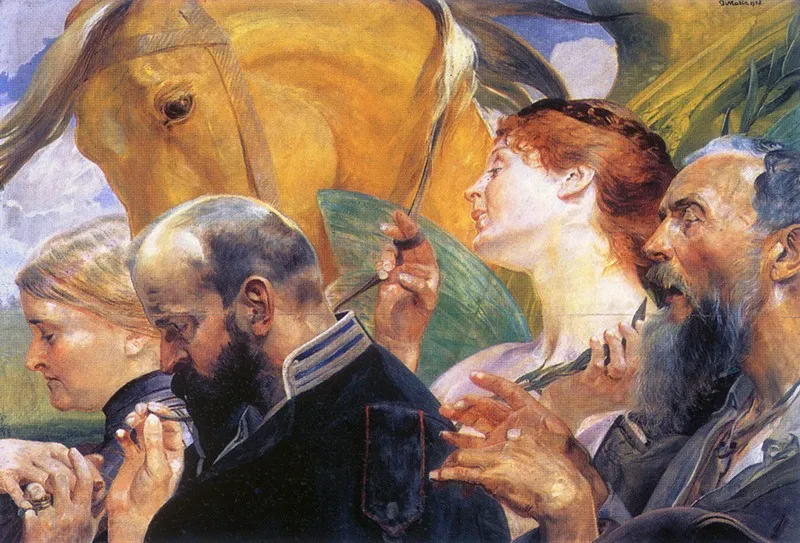
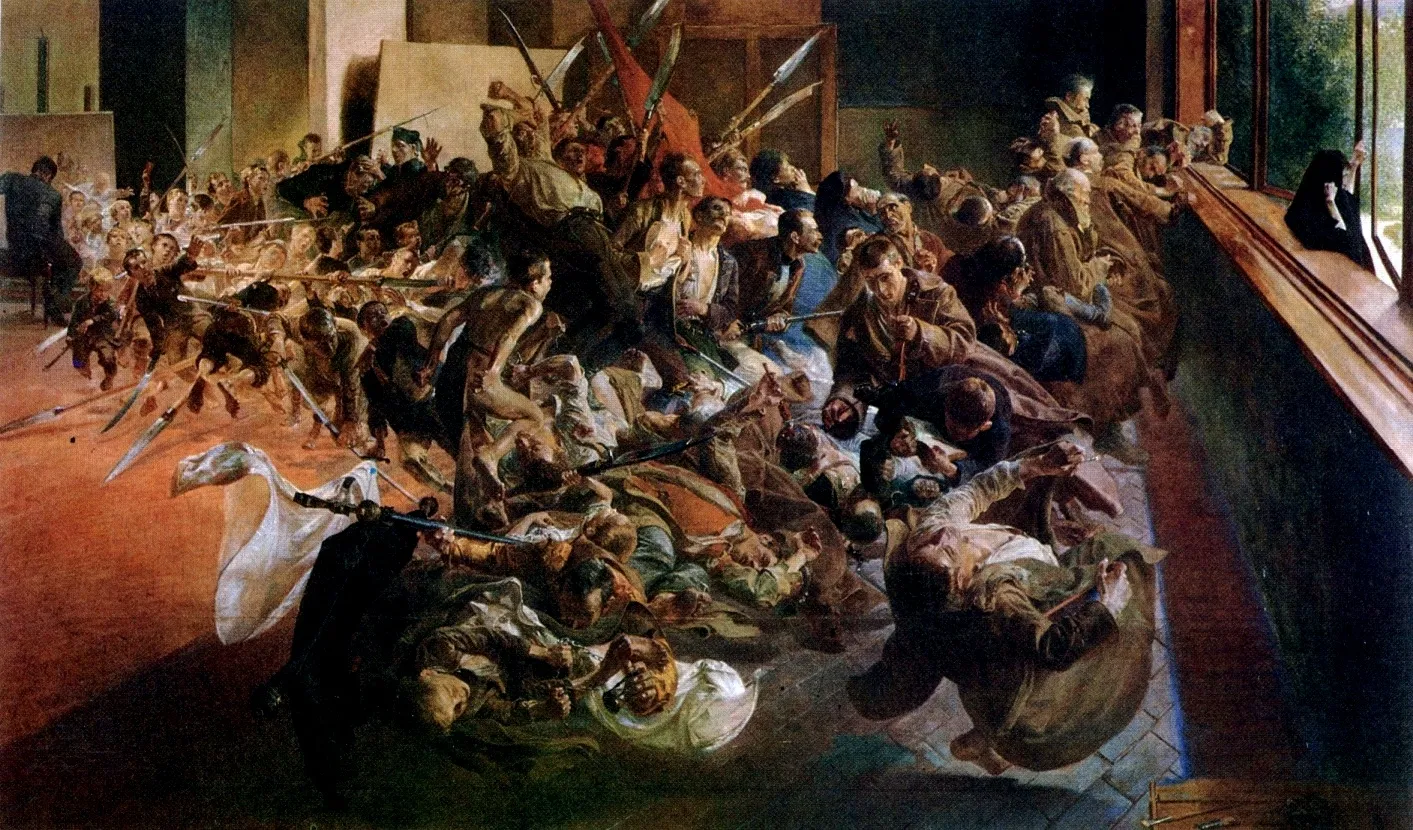
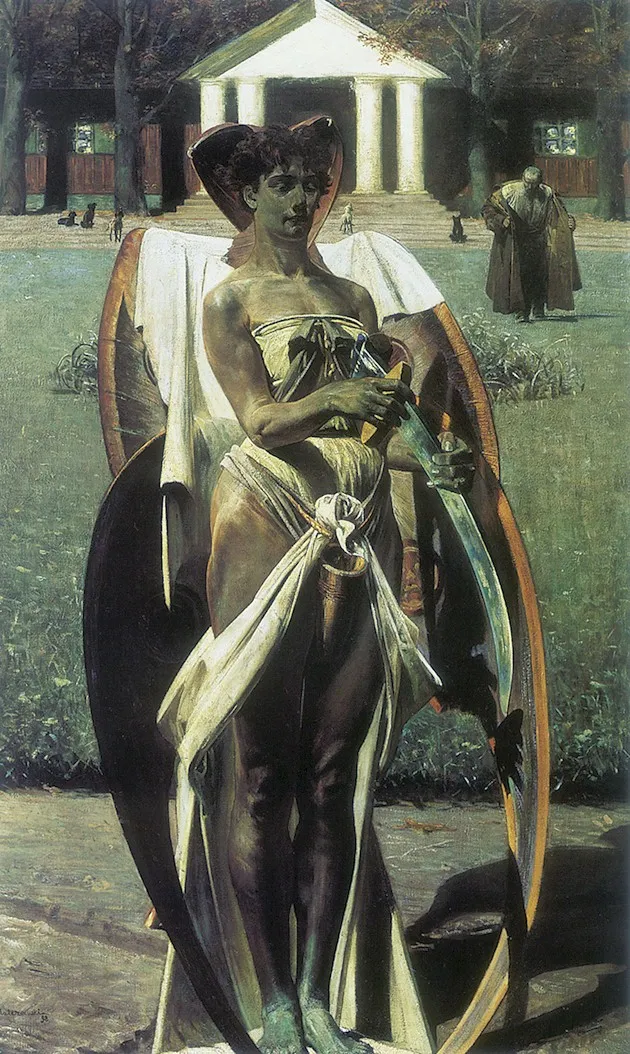
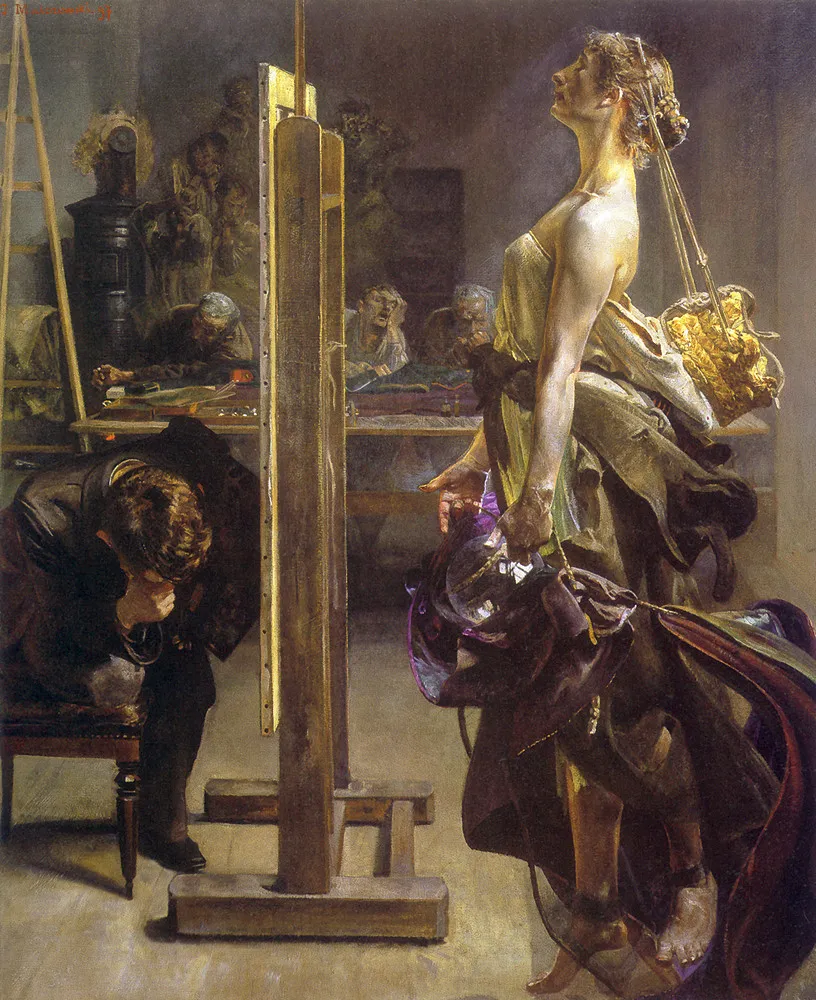
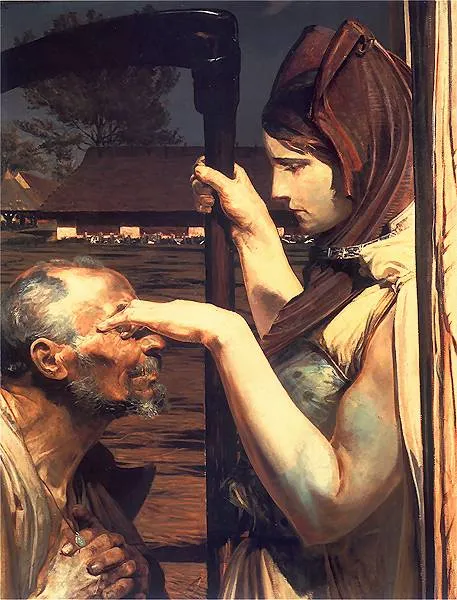
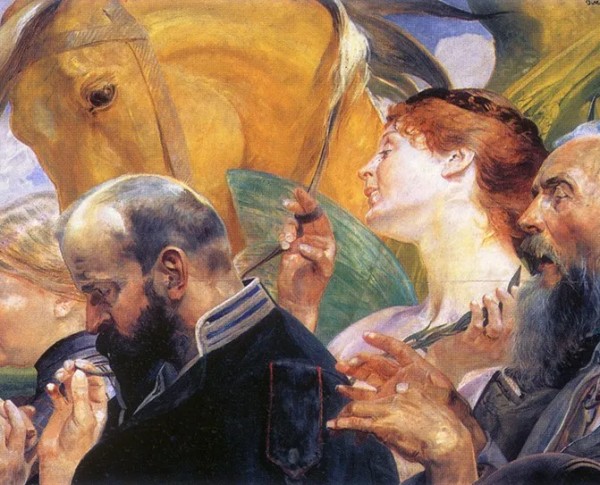
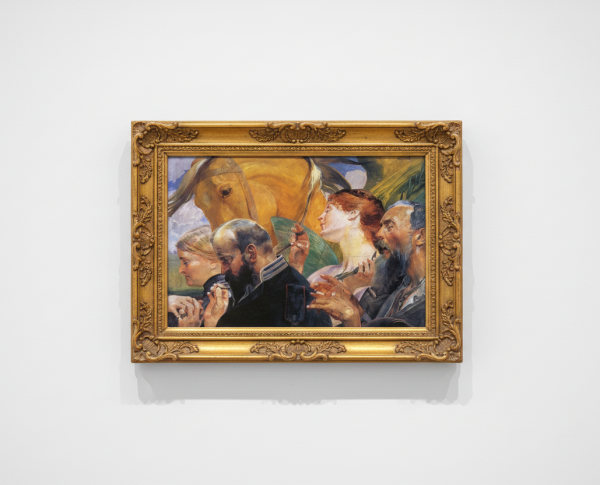
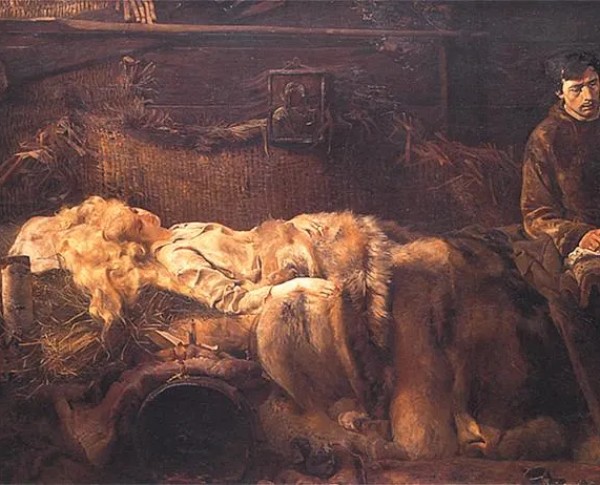
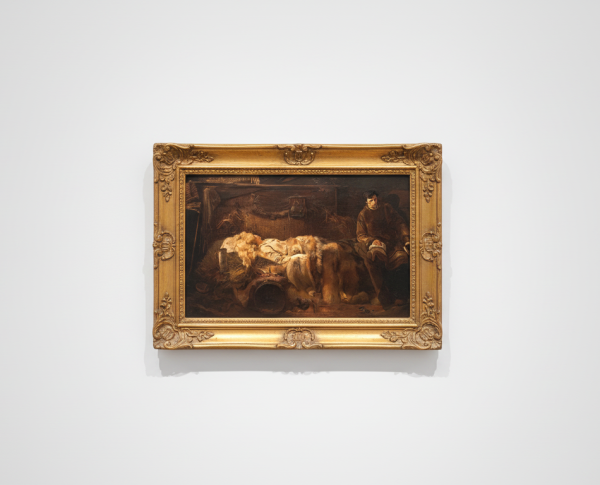
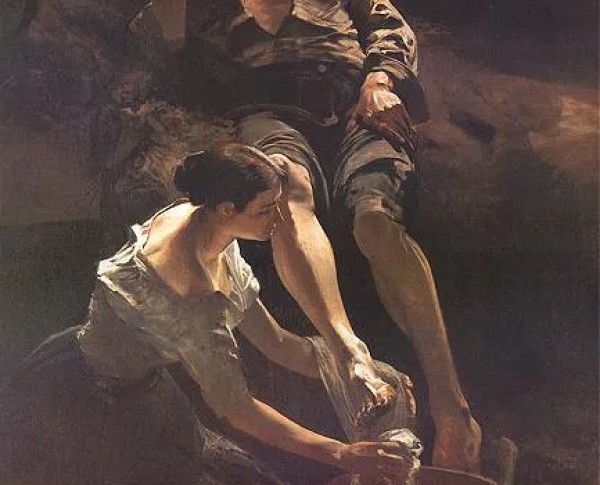
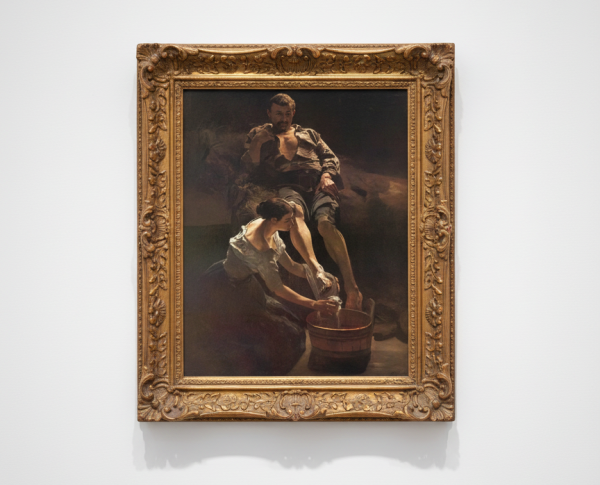
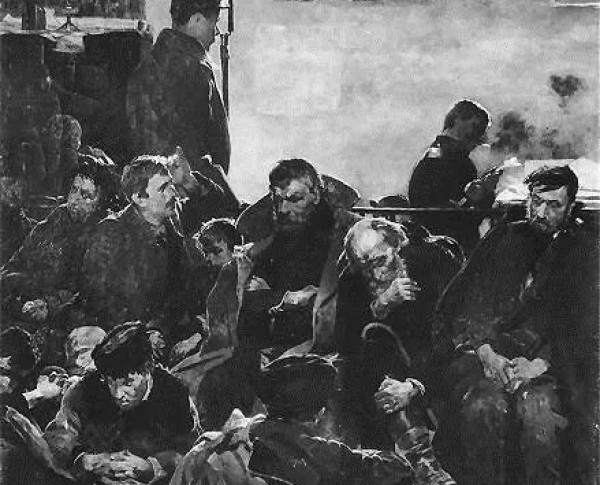
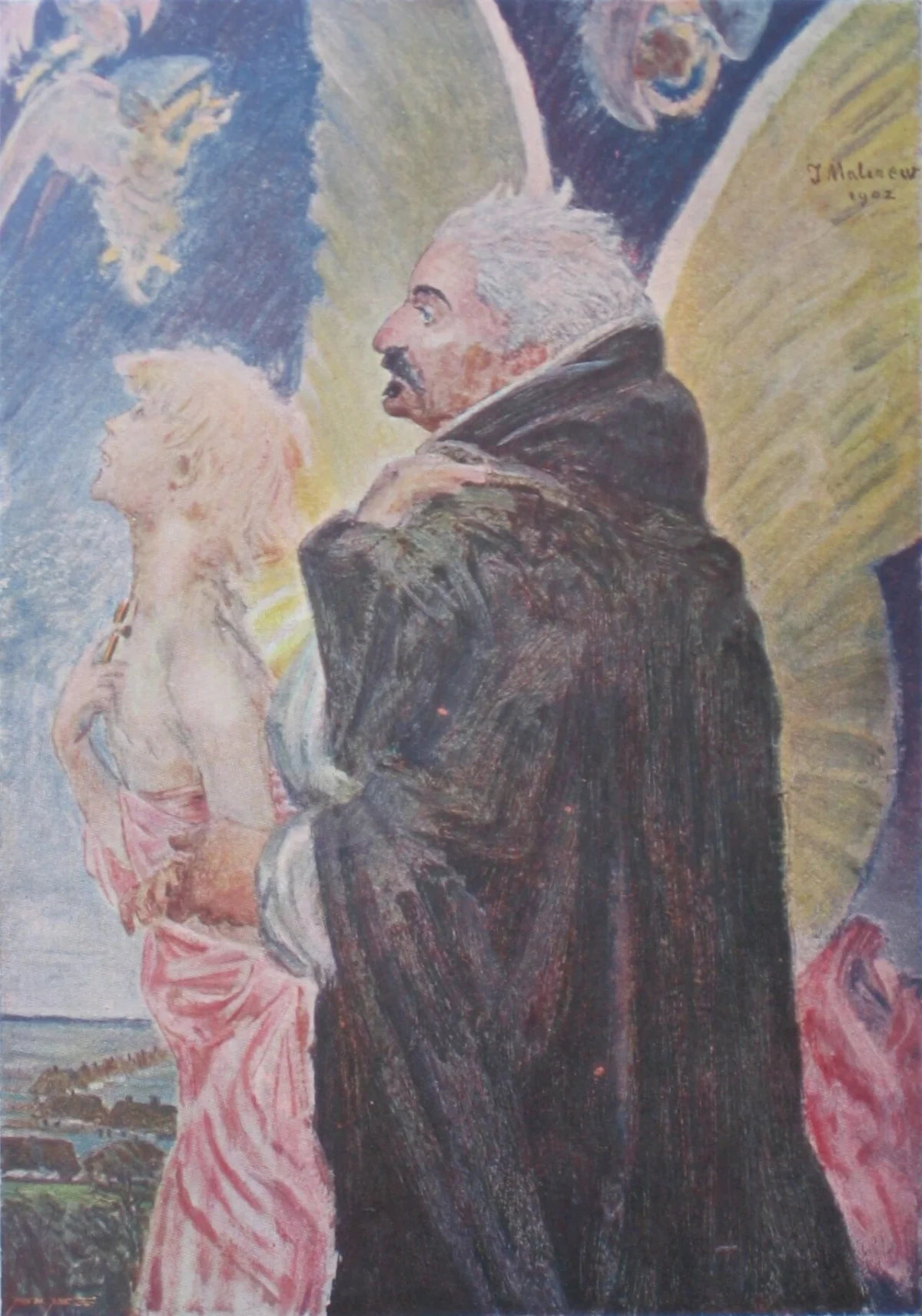
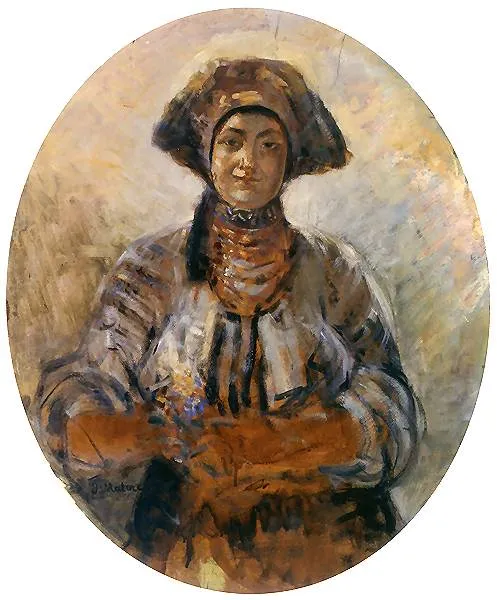
"Ignacy Maciejowski" is a striking hand-painted oil painting by the renowned Polish artist Jacek Malczewski, a leading figure in the Symbolism movement. This masterpiece captures the deep introspection and emotional intensity that define Malczewski’s portraiture. As with his other celebrated works like "Portrait of Tadeusz Blotnicki with Medusa" and "Thanatos," this piece reflects the artist’s dedication to conveying profound narratives through his unique vision and exceptional technique.
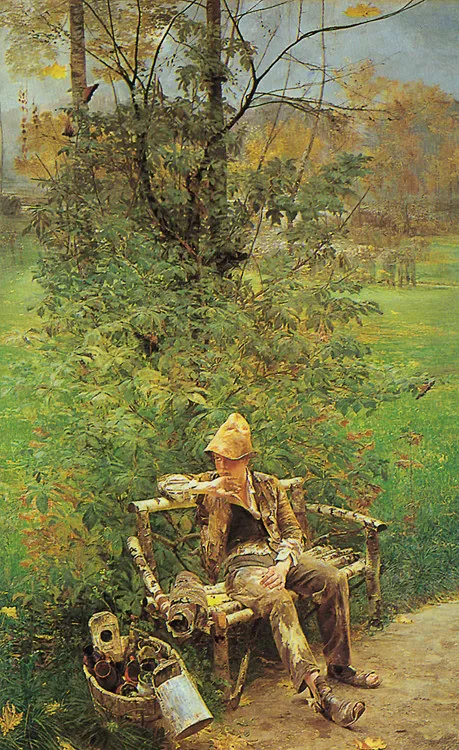
Jacek Malczewski’s expertise is evident in every detail of this oil on canvas creation. The artist’s masterful brushwork and subtle use of color bring Ignacy Maciejowski’s character to life, making it a standout in the Symbolism movement. Like other works such as "Ukrainian" and "The Painter Boy," this painting demonstrates Malczewski’s ability to blend realism with symbolic meaning, solidifying his reputation as a true master of his craft.
Every fine art painting for sale by Jacek Malczewski, including "Ignacy Maciejowski," is infused with layers of symbolism and narrative depth. The Symbolism movement thrives on hidden meanings and allegories, and this portrait is no exception. It invites viewers to explore the personal stories and mythic allusions within the sitter’s gaze, much like in "The story of a song" and "Portrait of Stanislaw Witkiewicz," encouraging deeper reflection and interpretation.
Owning a hand-painted oil painting like "Ignacy Maciejowski" is a rare opportunity for collectors of Symbolism and fans of Jacek Malczewski. This fine art painting for sale stands alongside masterpieces such as "Thanatos" and "Portrait of Tadeusz Blotnicki with Medusa," offering both aesthetic pleasure and historical significance. It is a testament to Malczewski’s enduring legacy and a prized addition to any discerning art collection.
When Art Meets History
"Ignacy Maciejowski" by Jacek Malczewski stands as a remarkable example of the Symbolism movement, blending historical resonance with personal narrative. This hand-painted oil painting encapsulates the socio-political climate of its era, inviting viewers to reflect on the identity and struggles of its subject. Malczewski, renowned for works like "Granada" and "Susanna," masterfully connects past and present, making this piece a significant artifact for those passionate about art history and the Symbolist tradition.
Techniques That Speak
Jacek Malczewski’s "Ignacy Maciejowski" showcases his signature oil on canvas technique, evident in the intricate brushwork and layered textures. The artist employs a subtle palette, enhancing the symbolic elements that define the Symbolism movement. This approach mirrors his finesse seen in related paintings such as "Manola with Mantilla and Fan" and "Maja Maldita," where technical excellence pairs seamlessly with deep thematic exploration, further establishing Malczewski’s reputation among collectors and critics alike.
Emotions on Display
Within "Ignacy Maciejowski," Malczewski channels profound emotion through expressive features and evocative symbolism, hallmarks of a fine art painting for sale from the Symbolism era. The sitter’s intense gaze and thoughtful posture evoke themes of introspection and resilience, resonating with viewers on a personal level. Similar emotional depth can be seen in Malczewski’s other works, including "Catalan Camacho" and "Alcalde De Cabezón," each inviting contemplation and emotional engagement.
Coveted by Collectors
As a prized hand-painted oil painting by Jacek Malczewski, "Ignacy Maciejowski" holds significant allure for collectors of Symbolism art. Its rarity and historical context ensure its status as a fine art painting for sale that stands out in any collection. Alongside masterpieces like "Granada" and "Susanna," this work continues to captivate art enthusiasts and maintain its esteemed position within galleries and private collections worldwide.
Related Symbolism Hand-Painted Oil Paintings by Other Artists
Other Famous Symbolism Artists:
Frequently Asked Questions About Ignacy Maciejowski
What is the historical context of "Ignacy Maciejowski"?
"Ignacy Maciejowski" was painted during a period of significant social and political change in Poland. Jacek Malczewski, a prominent figure in Polish Symbolism, created this work in the early 20th century, reflecting the national identity and cultural revival of Poland during a time of partition and struggle for independence.
What artistic style is represented in "Ignacy Maciejowski"?
The painting exemplifies the Symbolist movement, characterized by its use of allegory and rich symbolism. Malczewski's style combines elements of realism with dreamlike imagery, creating a narrative that transcends mere representation.
Who is the subject of the painting and what is their significance?
The subject, Ignacy Maciejowski, is a notable figure in Polish history, recognized for his contributions to literature and culture. By portraying him, Malczewski not only honors Maciejowski's legacy but also emphasizes the importance of intellectual and artistic figures in the national consciousness.
What symbols are present in "Ignacy Maciejowski" and what do they represent?
The painting is rich with symbols, including elements that represent Polish folklore and mythology. These symbols serve to evoke a sense of national pride and cultural heritage, reinforcing the connection between the individual and the collective identity of Poland.
How does Malczewski use color in "Ignacy Maciejowski"?
Malczewski employs a vibrant yet somber color palette to convey the emotional depth of the subject. The use of warm tones juxtaposed with cooler hues creates a dynamic tension, reflecting the complexities of the human experience and the historical context of Poland.
What techniques did Malczewski use in the creation of this painting?
Malczewski utilized oil on canvas, employing techniques such as layering and glazing to achieve depth and luminosity. His brushwork varies from detailed realism in the figure to more abstract forms in the background, enhancing the overall narrative quality of the piece.
In what way does "Ignacy Maciejowski" reflect the themes of identity and memory?
The painting reflects themes of identity and memory through its portrayal of a historical figure who embodies the cultural aspirations of Poland. Malczewski's work invites viewers to reflect on their own connections to history and the collective memory of their nation.
What influences can be seen in Malczewski's work, particularly in "Ignacy Maciejowski"?
Malczewski was influenced by various artistic movements, including Impressionism and Art Nouveau, as well as Polish folklore and mythology. These influences are evident in the intricate details and the emotional resonance of the painting, which blends personal and national narratives.
How is the composition of "Ignacy Maciejowski" structured?
The composition is carefully structured to draw the viewer's eye toward the central figure of Maciejowski, with surrounding elements that enrich the narrative context. The balance of foreground and background creates a sense of depth, inviting contemplation of the themes presented.
What impact did "Ignacy Maciejowski" have on Polish art and culture?
This painting has had a lasting impact on Polish art and culture by reinforcing the significance of national identity through art. Malczewski's work inspired future generations of artists to explore themes of heritage, memory, and the role of the individual within the larger narrative of Polish history.























_GFM_Painting_(1).webp)


 100% Hand-Painted: Finished in 3-6 Weeks

.png)















_(1).webp)