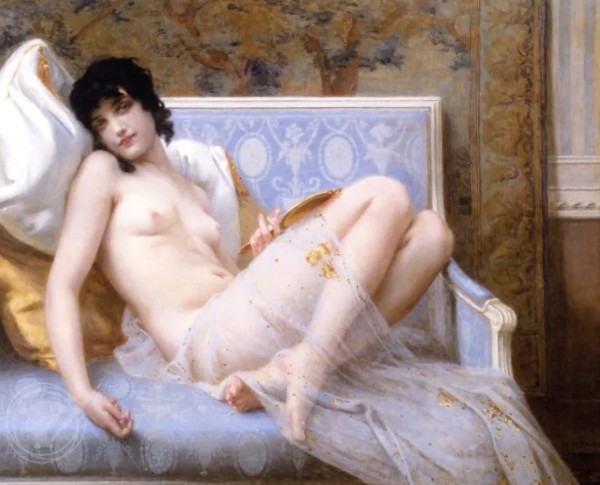
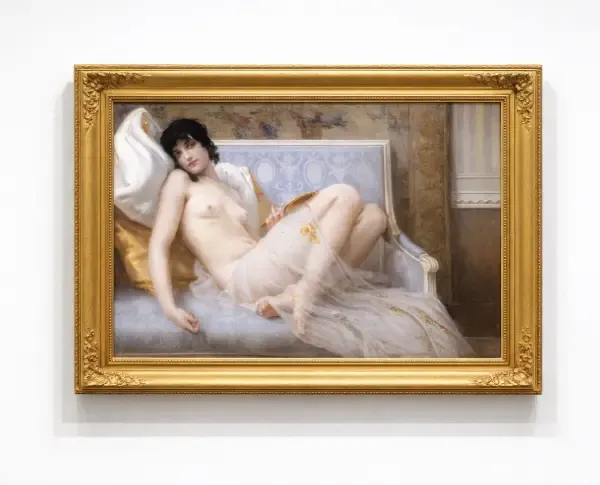
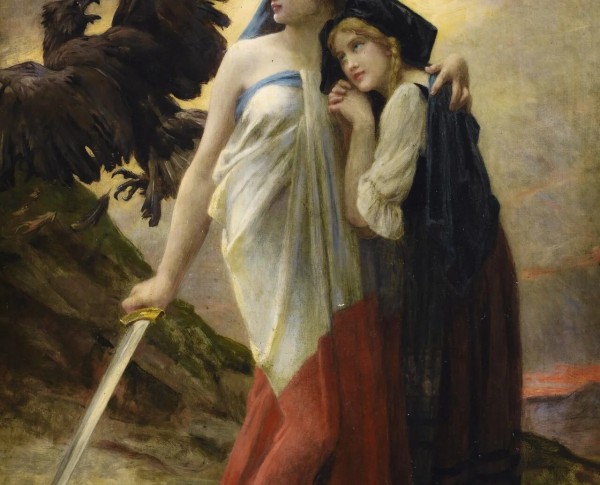
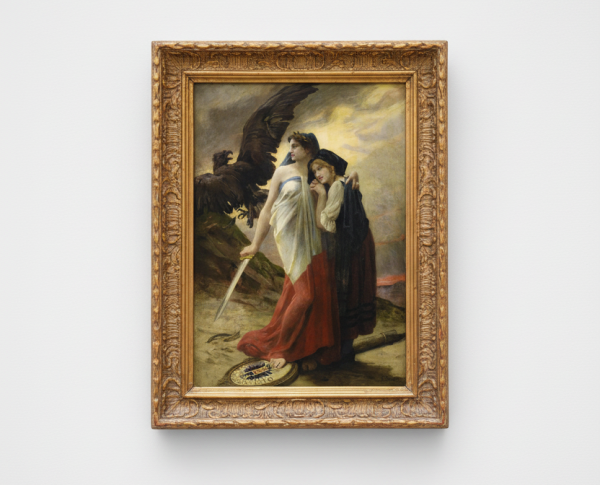
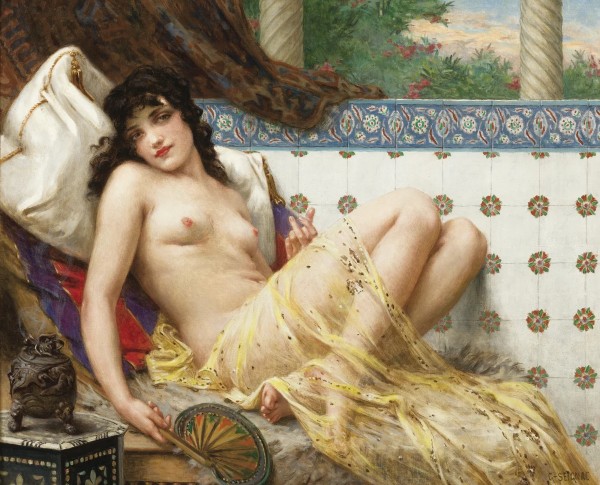
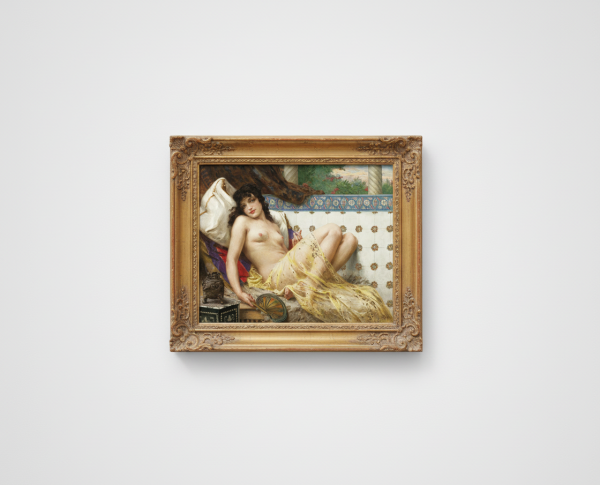
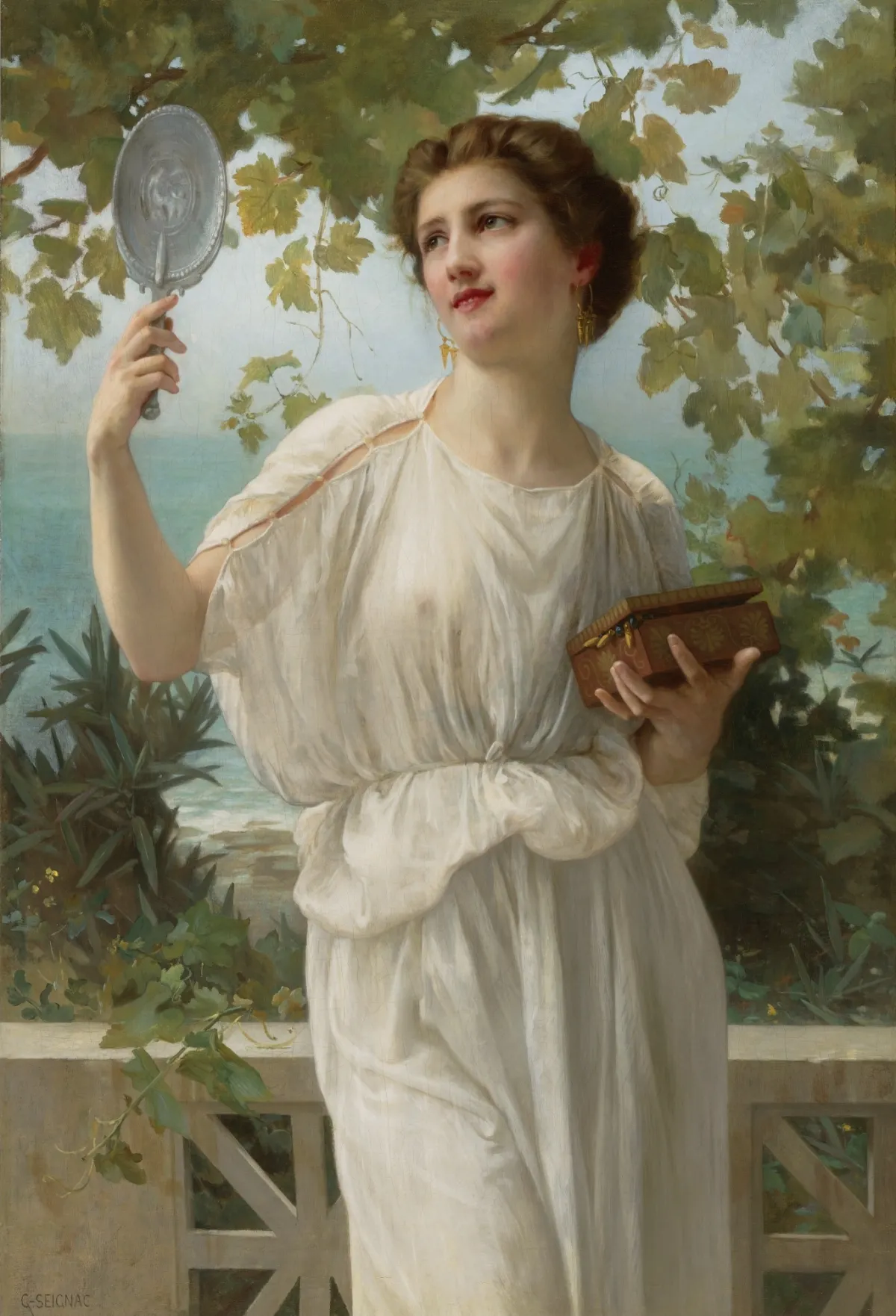
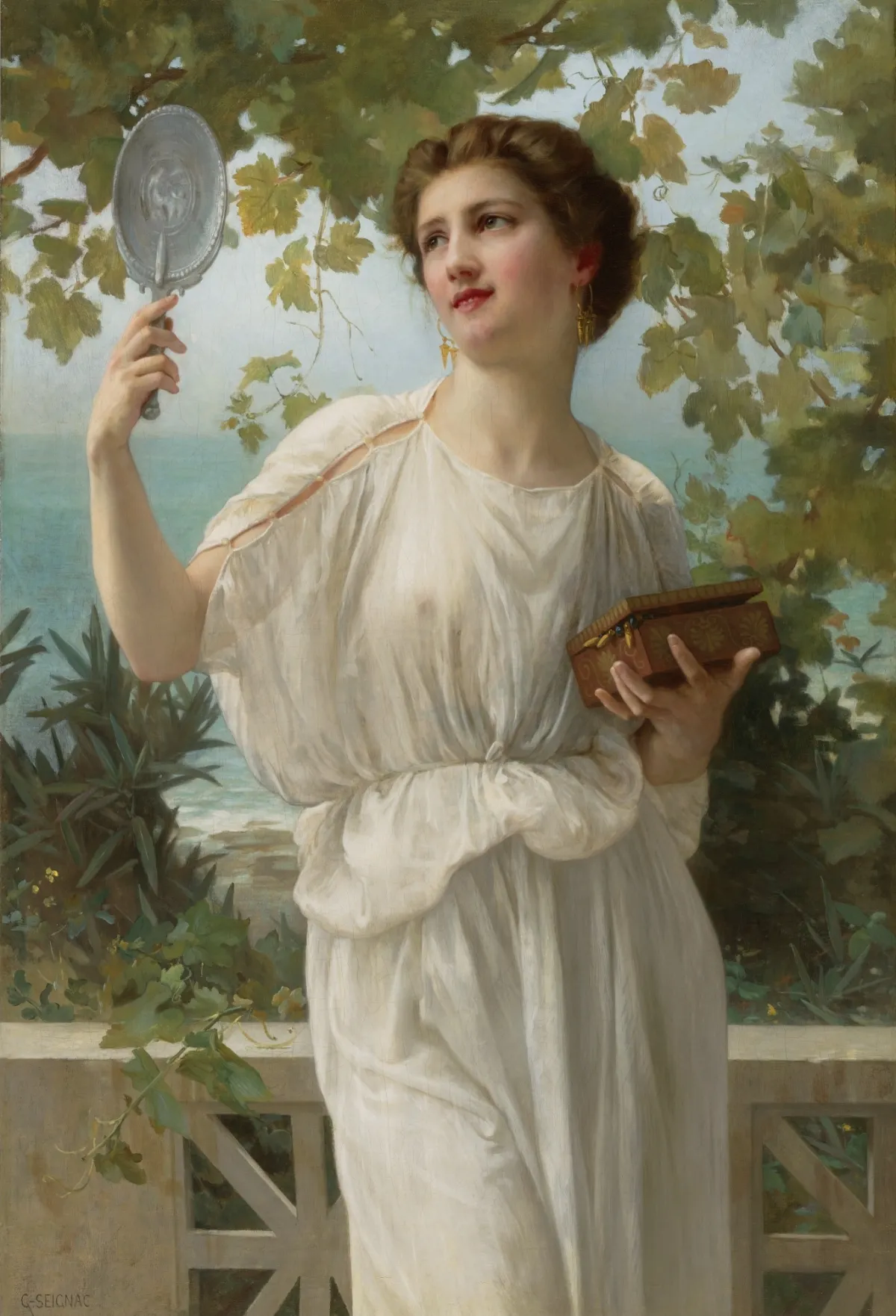
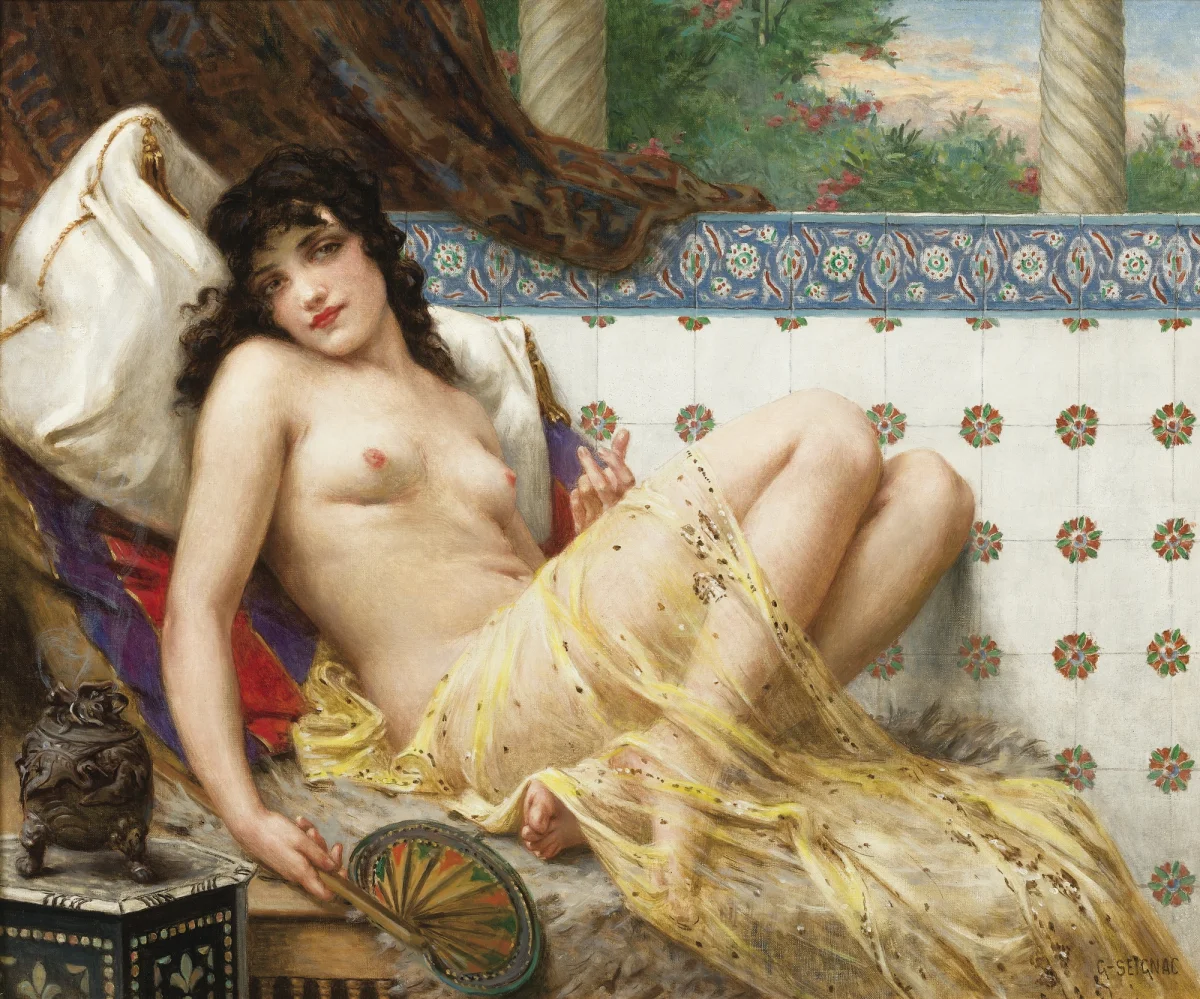
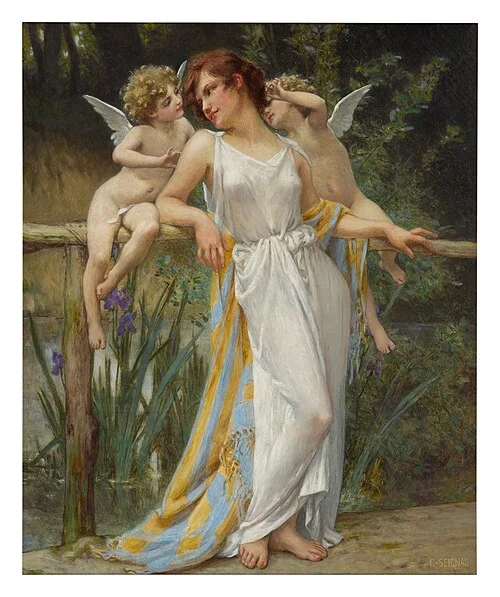
Guillaume Seignac’s "Admiring Beauty" showcases his expertise with oil on canvas, revealing intricate details and lifelike textures characteristic of the Academic Art movement. Each brushstroke is meticulously crafted, reflecting his command of light, shadow, and form. Art admirers frequently pair this painting with related works like "A Nymph by a Fountain" or "Odalisque with a Fan," appreciating the technical prowess and harmonious compositions found in Seignac’s celebrated portfolio.
Within "Admiring Beauty," Guillaume Seignac weaves subtle narratives through symbolism and composition, hallmarks of Academic Art. The subject’s graceful pose and serene expression invite viewers to contemplate ideals of beauty and admiration. As a fine art painting for sale, it resonates with collectors searching for deeper meaning. Related pieces, such as "Love's Offering" and "Diana the Huntress," similarly explore mythological and allegorical themes, enriching any sophisticated art collection.
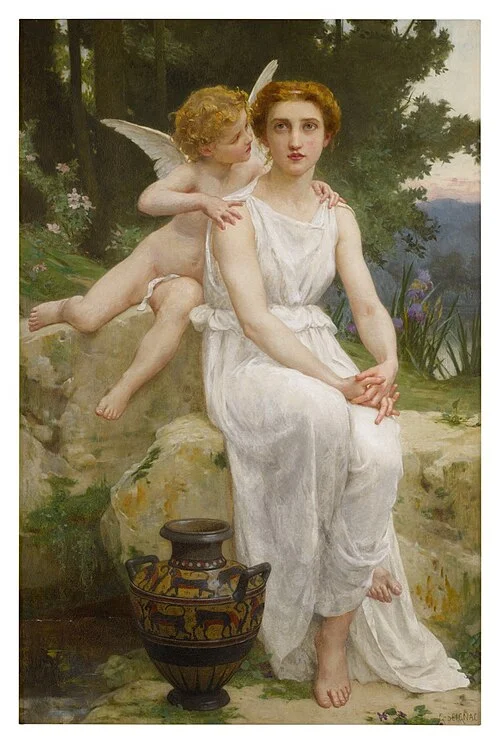
For art collectors, owning "Admiring Beauty" by Guillaume Seignac means possessing a true gem from the Academic Art movement. This hand-painted oil painting elevates any space with its timeless allure and exquisite craftsmanship. Collectors often seek complementary works like "Reunited" or "Cupid" to build a cohesive and distinguished gallery. Investing in such masterpieces not only enhances aesthetic appeal but also preserves the enduring value of classical fine art for future generations.
When Art Meets History
"Admiring Beauty" by Guillaume Seignac is a prime example of the Academic Art movement, capturing the elegance and grace of its era. This hand-painted oil painting reflects Seignac's mastery in depicting classical themes, much like his other works such as "The Wolf of Agubbio" and "Mud Pies." Through his detailed brushwork and refined technique, Seignac brings historical narratives to life, making each piece a testament to the enduring legacy of Academic Art.
Techniques That Speak
Guillaume Seignac’s "Admiring Beauty" showcases the artist’s remarkable command of oil on canvas, a hallmark of the Academic Art movement. The smooth blending of colors and meticulous attention to anatomical accuracy are evident, similar to his approach in "Study for the Head of an Angel in Saint Isidore." These techniques create a lifelike quality and depth, inviting viewers to appreciate the craftsmanship behind every stroke of this exquisite oil on canvas masterpiece.
Emotions on Display
In "Admiring Beauty," Seignac captures a serene and contemplative mood, inviting viewers to connect emotionally with the subject. The painting’s gentle expressions and soft lighting evoke a sense of admiration and tranquility, qualities also found in "Le Goût." This fine art painting for sale beautifully conveys the subtle power of emotion, making it a timeless piece that resonates with art lovers and collectors who value the expressive potential of Academic Art.
Coveted by Collectors
Collectors are drawn to "Admiring Beauty" for its exquisite representation of the Academic Art movement and Seignac’s renowned style. As with "A Forester at Home," the painting’s detailed execution and classical composition make it a prized addition to any collection. Its status as a hand-painted oil painting by a celebrated artist ensures continued demand, appealing to those seeking a fine art painting for sale that embodies elegance, history, and artistic mastery.
Related Academic Art Hand-Painted Oil Paintings by Other Artists
Other Famous Academic Art Artists:
Frequently Asked Questions About Admiring Beauty
What is the historical context of "Admiring Beauty"?
"Admiring Beauty" was created during the early 20th century, a time when the art world was experiencing significant shifts towards modernism while still holding onto traditional themes of beauty and femininity.
Who is the artist behind "Admiring Beauty"?
The painting is by Guillaume Seignac, a French painter known for his depictions of the female form and his ability to convey emotion through classical techniques.
What artistic techniques are employed in "Admiring Beauty"?
Seignac utilizes oil on canvas to achieve a rich texture and depth, employing techniques such as chiaroscuro to enhance the three-dimensionality of the figures and create a sense of intimacy.
What themes are explored in "Admiring Beauty"?
The painting explores themes of beauty, admiration, and the relationship between the observer and the observed, reflecting the ideals of femininity and aesthetic appreciation prevalent in early 20th-century art.
How does "Admiring Beauty" reflect the artistic movements of its time?
The work embodies elements of both academic realism and the emerging modernist movement, showcasing Seignac's mastery of traditional techniques while hinting at the evolving perceptions of beauty and form.
What symbols are present in "Admiring Beauty"?
The painting features symbolic elements such as flowers, which often represent beauty and transience, and the pose of the figure, which conveys a sense of contemplation and reverence for beauty itself.
In what ways does "Admiring Beauty" challenge traditional representations of women?
While the painting adheres to traditional aesthetics, it also invites viewers to consider the subject's agency and the complexity of female beauty, moving beyond mere objectification to a portrayal of introspection.
What influences can be seen in Seignac's style in "Admiring Beauty"?
Seignac's style is influenced by the academic traditions of the 19th century, particularly the works of the French academicians, as well as the burgeoning symbolist movement that sought to convey deeper emotional truths.
How has "Admiring Beauty" been received by critics and art historians?
Critics have praised "Admiring Beauty" for its technical skill and emotional depth, often highlighting Seignac's ability to blend traditional and modern elements in a way that resonates with contemporary audiences.
What is the significance of the title "Admiring Beauty"?
The title encapsulates the essence of the painting, inviting viewers to reflect on their own perceptions of beauty and the act of admiration, thus creating a dialogue between the artwork and its audience.






















_GFM_Painting_(1).webp)


 100% Hand-Painted: Finished in 3-6 Weeks

.png)















_(1).webp)