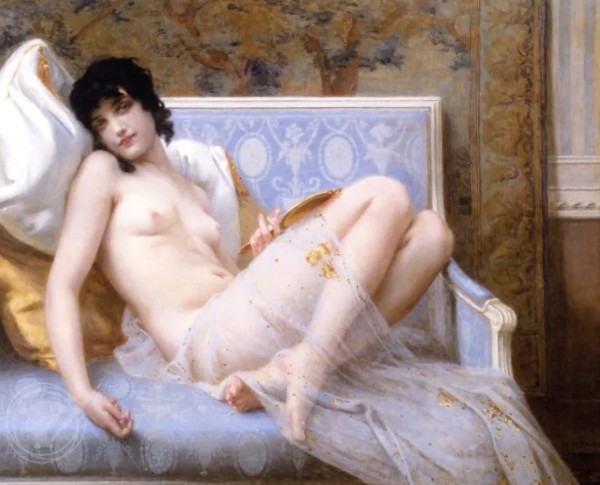
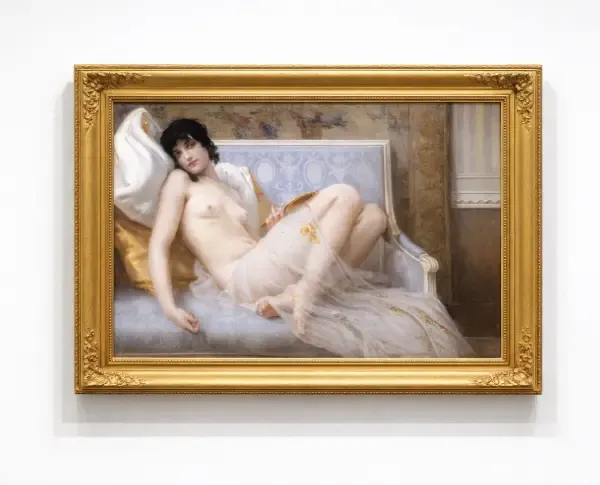
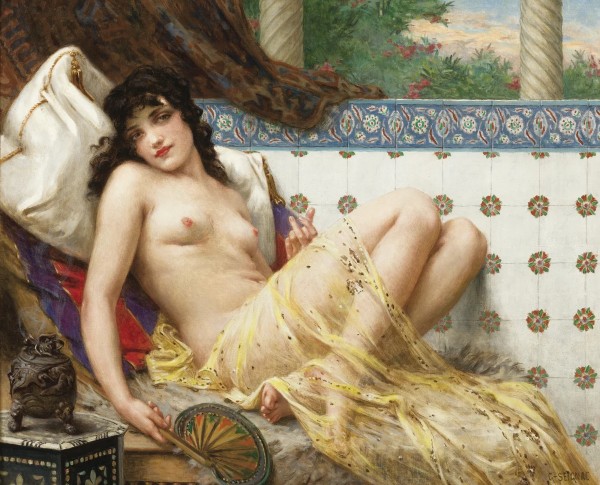
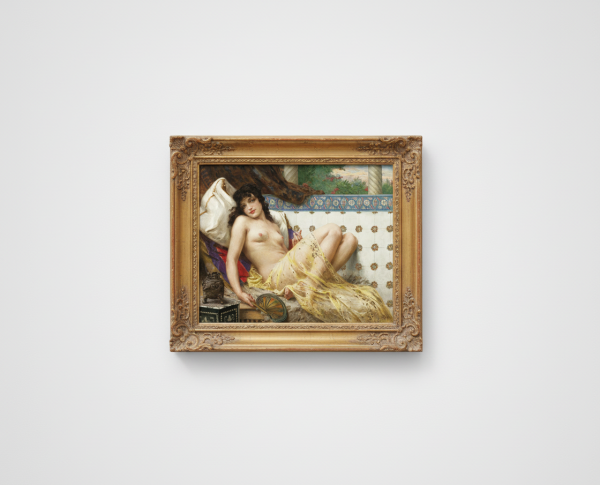
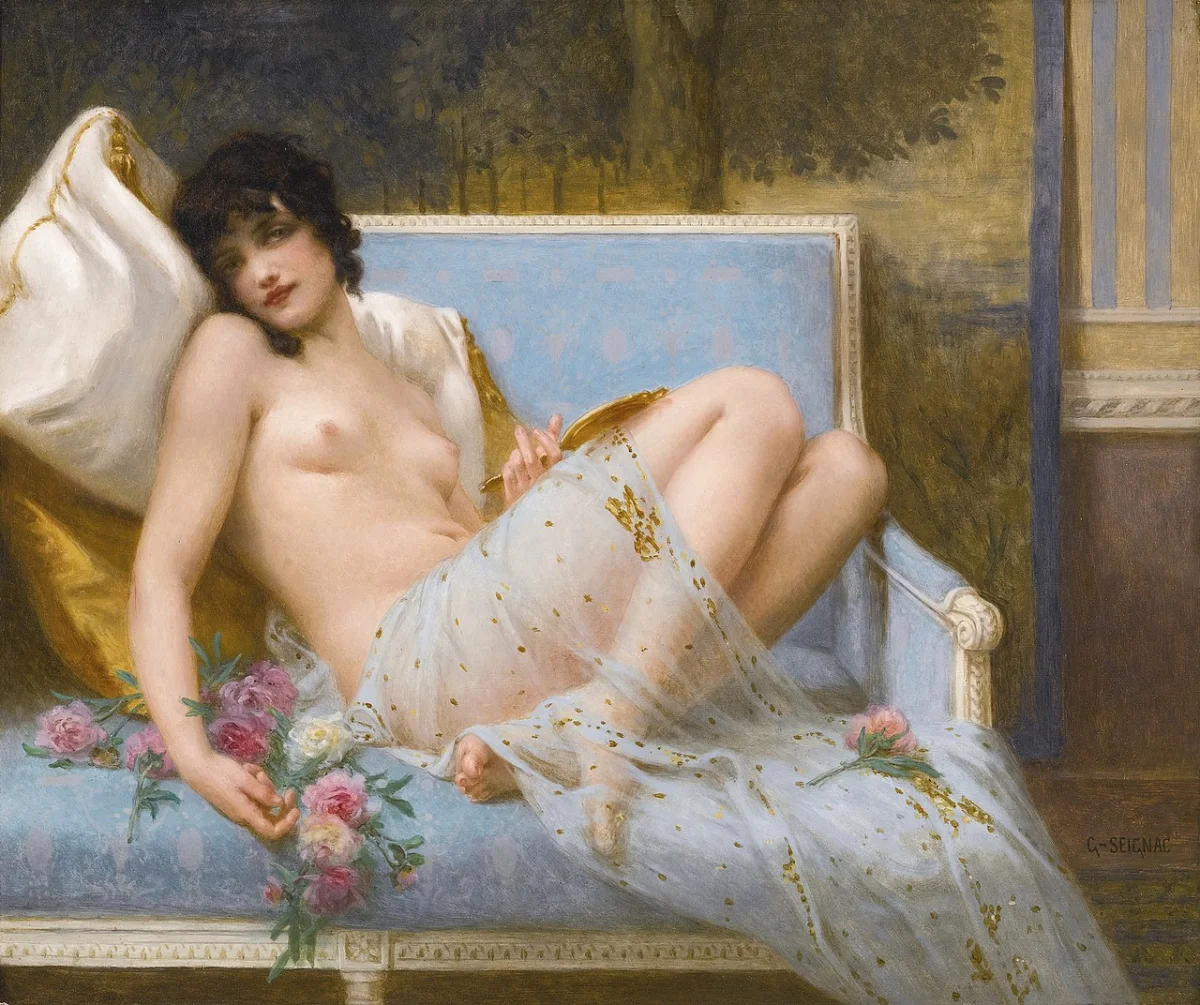
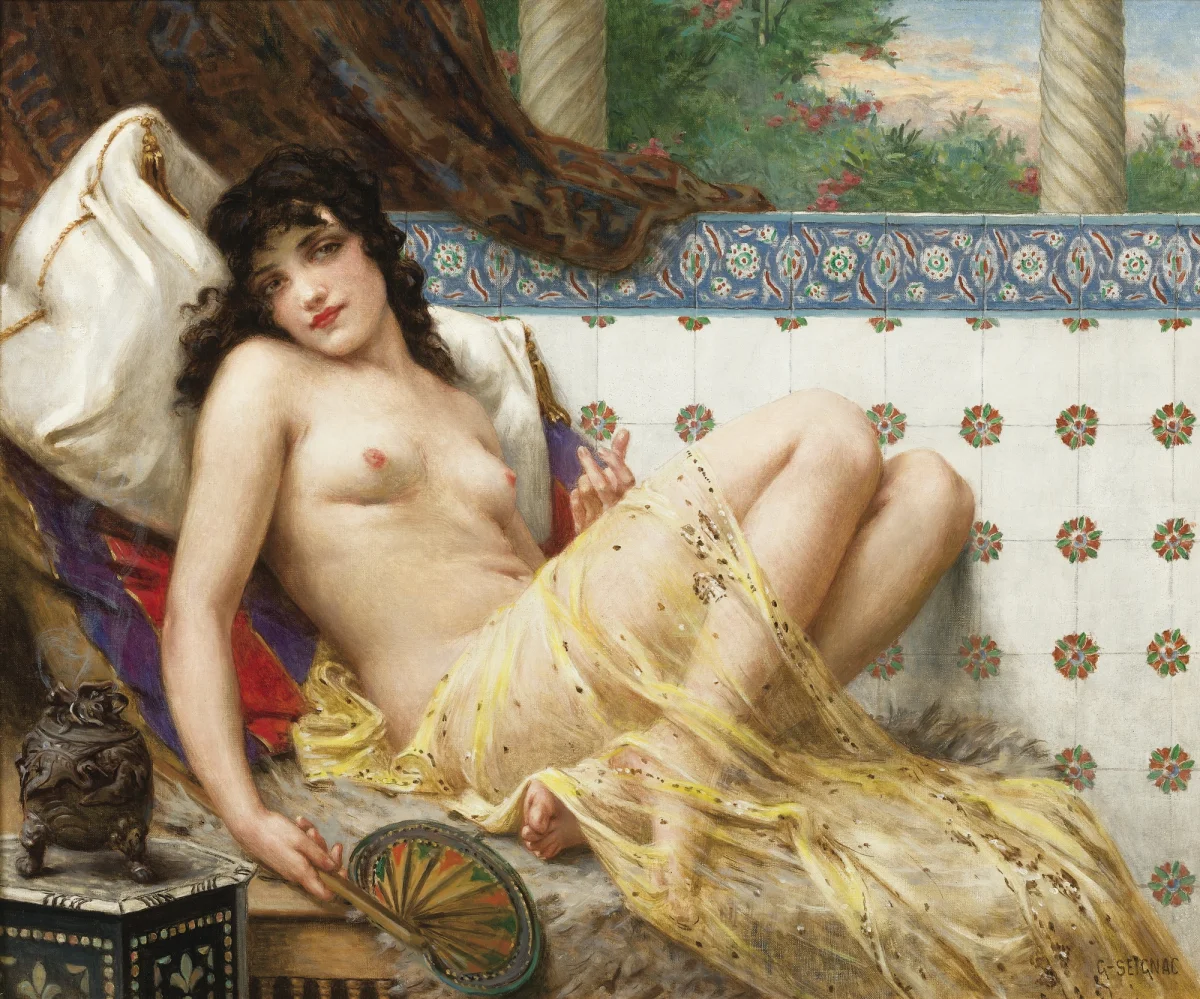
Created using oil on canvas, “Reclining Odalisque” showcases Guillaume Seignac’s exceptional skill in rendering lifelike textures and subtle gradations of light. The careful composition and harmonious color palette reflect the ideals of the Academic Art movement. This painting, along with others like “Odalisque and “Diana the Huntress,” demonstrates Seignac’s dedication to classical beauty and technical mastery, making each work a testament to his enduring legacy.
In “Reclining Odalisque,” Guillaume Seignac invites viewers into a world rich with symbolism and narrative. The pose and setting evoke themes of luxury and exoticism, hallmarks of Academic Art. Each fine art painting for sale, including “Reflections” and “A Nymph by a Fountain,” tells a unique story through expressive figures and evocative backgrounds. Seignac’s work continues to inspire those who appreciate the intricate blend of storytelling and visual splendor.
Owning “Reclining Odalisque” by Guillaume Seignac is more than acquiring a beautiful oil on canvas; it is an investment in the rich heritage of Academic Art. This masterpiece and related products like “A Beauty of Nature” and “Odalisque” are sought after by discerning collectors. Each piece not only enhances a collection but also brings the timeless elegance and technical brilliance of Seignac’s fine art painting for sale into any space.
When Art Meets History
"Reclining Odalisque" by Guillaume Seignac exemplifies the elegance and allure of the Academic Art movement. This hand-painted oil painting captures the fascination with classical themes and idealized beauty that defined the late 19th and early 20th centuries. Seignac, renowned for his mastery, drew inspiration from related works such as "The Vision" and "Legend of the 14th Century," creating a timeless piece that continues to captivate art lovers and historians alike.
Techniques That Speak
Guillaume Seignac's "Reclining Odalisque" is a testament to his technical prowess, utilizing oil on canvas to achieve rich textures and lifelike forms. The Academic Art movement emphasized precision and realism, which Seignac conveyed through meticulous brushwork and subtle gradations of light. Similar attention to detail can be seen in related paintings. where classical techniques breathe life into mythological and historical subjects.
Emotions on Display
In "Reclining Odalisque," Seignac masterfully expresses serenity and sensuality, hallmarks of Academic Art. The subject's relaxed pose and gentle gaze invite viewers into a world of tranquility and contemplation. This fine art painting for sale resonates with the same emotive power found in works allowing collectors to experience the depth of feeling that characterizes Seignac's artistic vision.
Coveted by Collectors
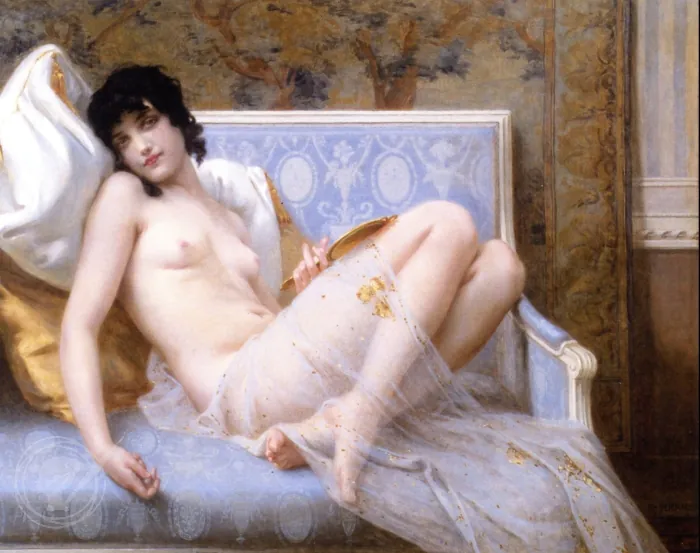
Guillaume Seignac's "Reclining Odalisque" holds a special place among collectors of Academic Art. Its combination of historical significance, technical excellence, and emotional depth makes it a sought-after hand-painted oil painting. Alongside masterpieces like "The Vision" and "Legend of the 14th Century," this work continues to inspire admiration and demand, solidifying Seignac's reputation as a leading figure in fine art painting for sale.
Related Academic Art Hand-Painted Oil Paintings by Other Artists
Other Famous Academic Art Artists:
Frequently Asked Questions About Reclining Odalisque
What is the historical context of "Reclining Odalisque"?
"Reclining Odalisque" was painted by Guillaume Seignac in the early 20th century, a period marked by a fascination with Orientalism in European art. This movement often romanticized and idealized Eastern cultures, reflecting the West's complex relationship with the East during this time.
Who was Guillaume Seignac?
Guillaume Seignac was a French painter known for his depictions of female figures, often in classical poses. His work is characterized by a blend of realism and idealism, drawing inspiration from both the academic traditions of his time and the emerging modernist movements.
What artistic techniques are employed in "Reclining Odalisque"?
The painting showcases Seignac's mastery of color and light, utilizing soft brushwork to create a sense of depth and texture. The use of chiaroscuro enhances the three-dimensional quality of the figure, while the warm palette evokes a sense of intimacy and sensuality.
What does the term "odalisque" signify in art?
An "odalisque" refers to a female slave or concubine in a harem, often depicted in a sensual and exotic manner in art. This term reflects the Western fascination with the East, where such figures were idealized and portrayed in a romanticized light.
What symbolic elements are present in "Reclining Odalisque"?
The reclining pose of the figure symbolizes relaxation and sensuality, while the luxurious fabrics and rich colors suggest opulence and desire. The composition invites viewers to contemplate themes of beauty, femininity, and the allure of the exotic.
How does "Reclining Odalisque" reflect Orientalist themes?
The painting embodies Orientalist themes through its portrayal of an exoticized female figure, set against a backdrop that suggests an opulent Eastern setting. This reflects the Western artistic tradition of interpreting and representing Eastern cultures through a lens of fantasy and desire.
What influences can be seen in Seignac's style in this painting?
Seignac's style in "Reclining Odalisque" is influenced by the academic tradition of the 19th century, particularly the works of artists like Ingres and Delacroix. His emphasis on the female form and the use of soft, flowing lines demonstrate a blend of classical training and personal expression.
What role does the female figure play in "Reclining Odalisque"?
The female figure is central to the composition, serving as both the subject and the focal point of the painting. She embodies ideals of beauty and sensuality, inviting viewers to engage with the themes of femininity and desire that are prevalent in Seignac's work.
How has "Reclining Odalisque" been received by critics and art historians?
Critics and art historians have often praised "Reclining Odalisque" for its technical skill and its embodiment of Orientalist themes. While some view it as a celebration of beauty, others critique it for perpetuating stereotypes about Eastern cultures, reflecting the complexities of its historical context.
What impact did "Reclining Odalisque" have on subsequent art movements?
"Reclining Odalisque" contributed to the ongoing dialogue about the representation of the female form and exoticism in art. Its influence can be seen in later movements that challenge traditional depictions of women and explore themes of identity, sexuality, and cultural representation.






















_GFM_Painting_(1).webp)


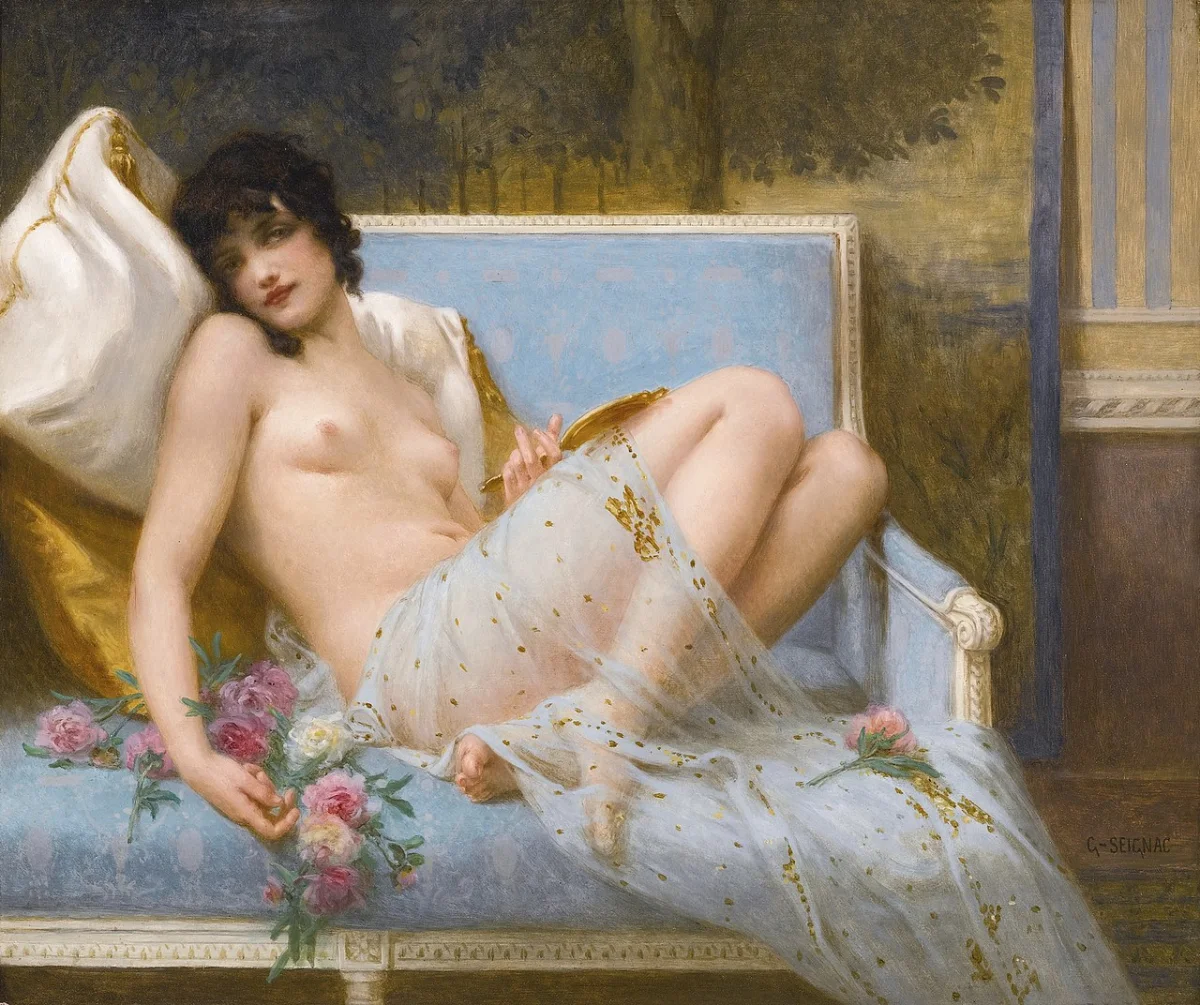
 100% Hand-Painted: Finished in 3-6 Weeks

.png)















_(1).webp)