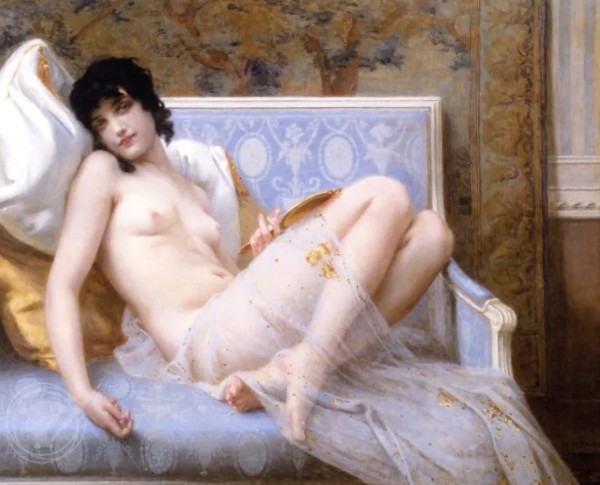
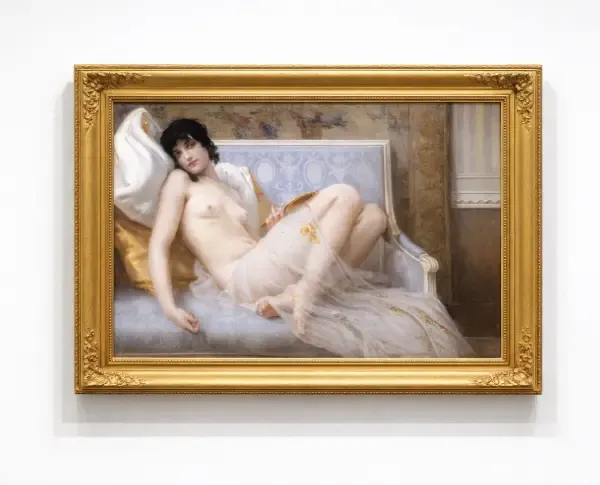
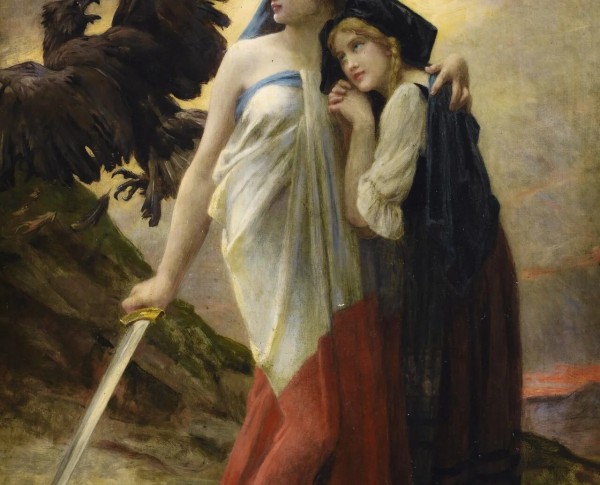
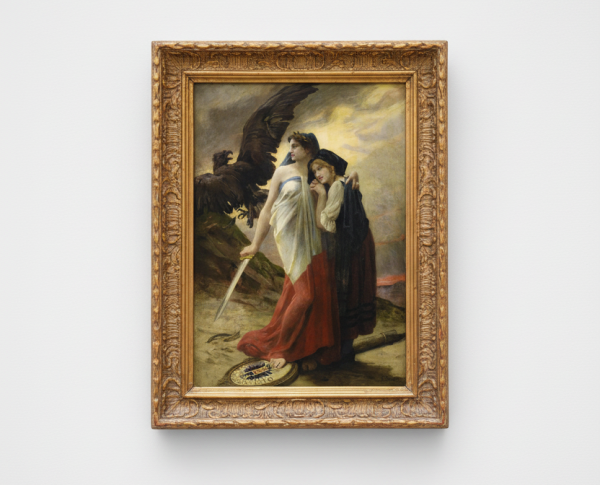
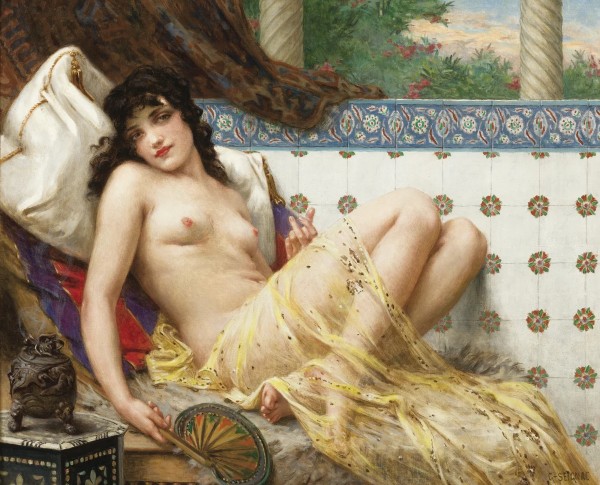
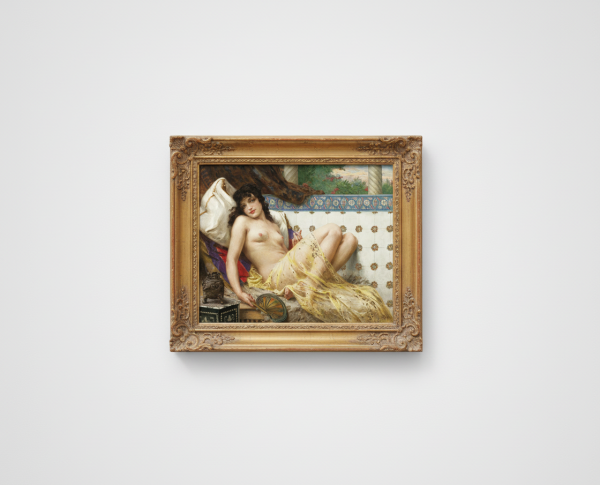
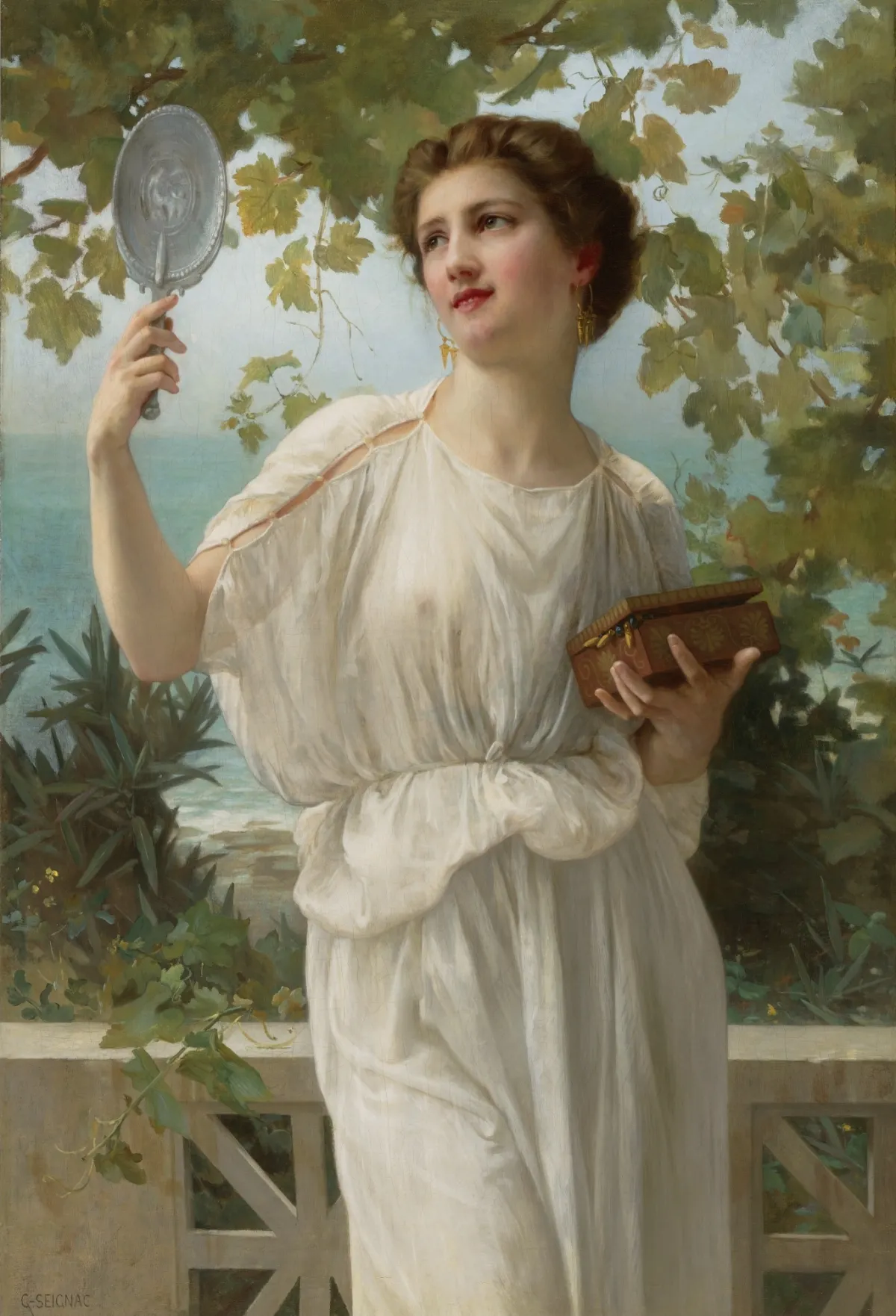
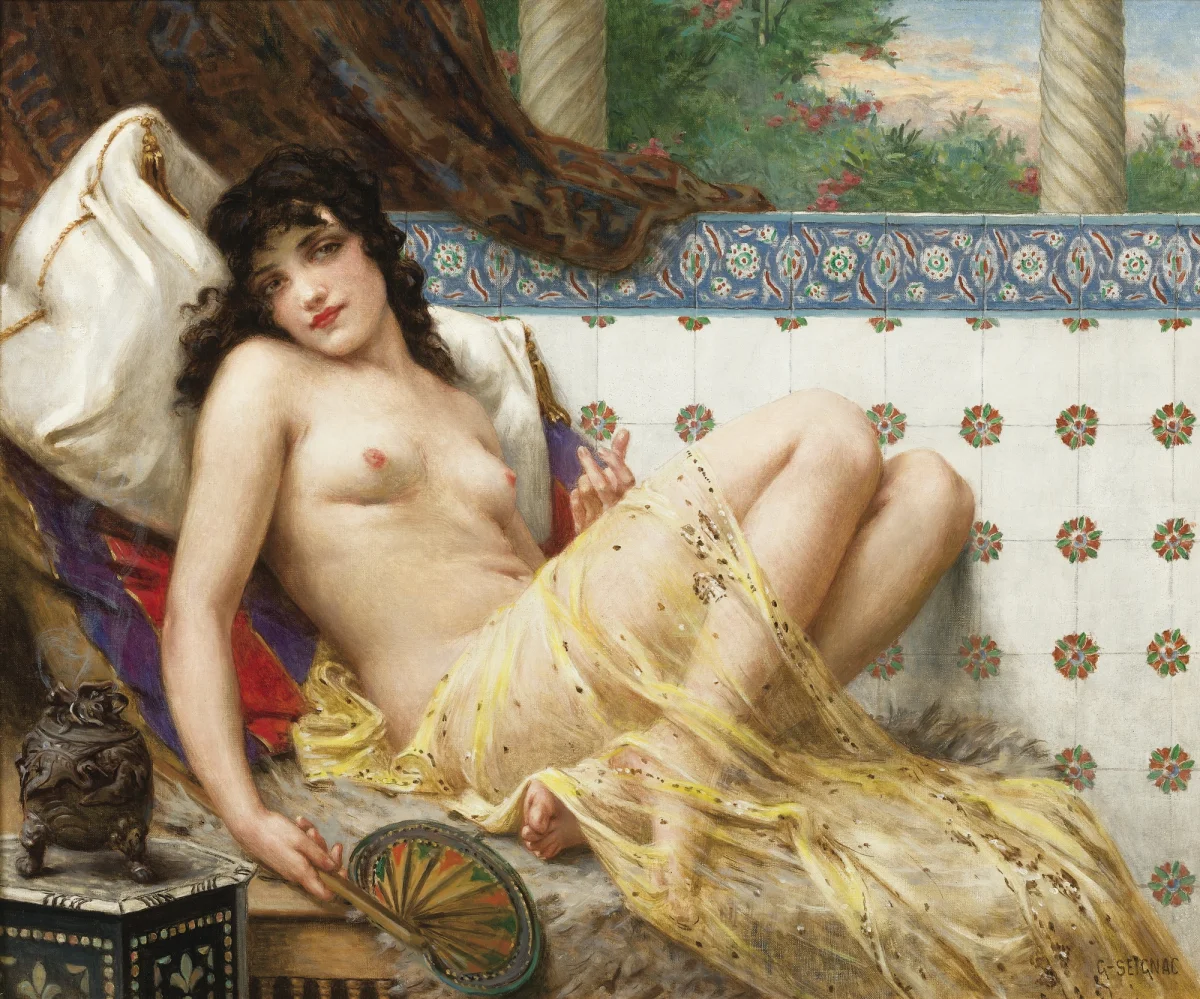
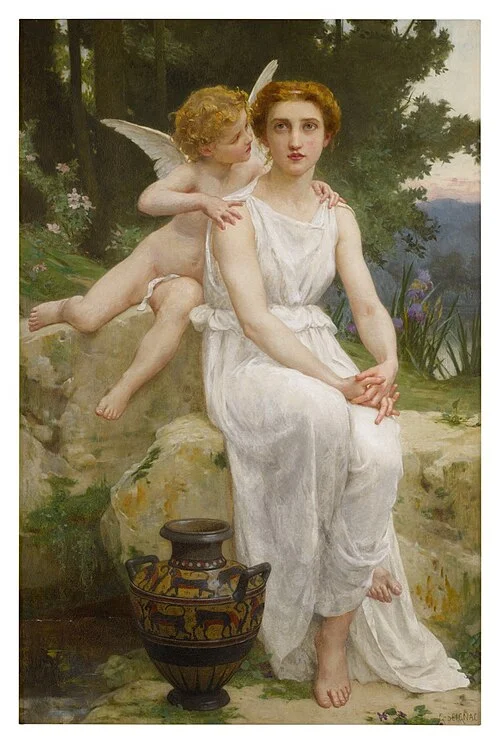
Guillaume Seignac’s attention to detail and refined technique are evident in "A Beauty of Nature," an exquisite oil on canvas creation. The painting’s delicate rendering of form and subtle play of light exemplify the hallmarks of Academic Art. Each stroke reveals the artist’s dedication to realism and harmony, inviting viewers into a world of serene elegance. Interested collectors often seek complementary works such as "Odalisque" and "Reclining Odalisque" to enrich their collections.
Within "A Beauty of Nature," Seignac weaves a narrative that transcends mere portraiture, embedding symbolism and emotion through his expert use of oil on canvas. The subject’s poised expression and natural surroundings reflect ideals of purity and grace central to Academic Art. This fine art painting for sale not only showcases Seignac’s storytelling ability but also invites reflection on humanity’s connection to nature. For similar themes, explore "Diana the Huntress" or "The Wave."
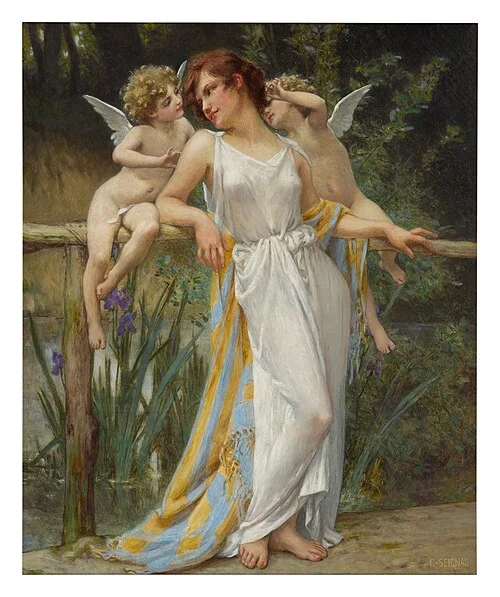
As a fine art painting for sale, "A Beauty of Nature" by Guillaume Seignac appeals to collectors seeking both beauty and historical significance. Its status within the Academic Art movement ensures lasting value and admiration. The hand-painted oil painting technique enhances its desirability, making it a standout piece among Seignac’s works. Pairing this artwork with related products like "Cupid" or "The Wave" allows for a curated display of classical elegance and artistic mastery.
When Art Meets History
"A Beauty of Nature" by Guillaume Seignac stands as a testament to the Academic Art movement, blending classical beauty with historical reverence. This hand-painted oil painting captures the refined elegance typical of Seignac's era, much like his other works such as "The Hunchback of Notre-Dame" and "Le Goût." The painting's historical context and artistic mastery make it a significant piece, appealing to those who appreciate the legacy and tradition of Academic Art.
Techniques That Speak
Guillaume Seignac's "A Beauty of Nature" showcases his expert use of oil on canvas, a hallmark of the Academic Art movement. The meticulous brushwork and delicate use of light and shadow are reminiscent of his approach in works like "General Gaston de Sonis" and "The Wolf of Agubbio." This technique allows for breathtaking realism and a lifelike portrayal, drawing viewers into a world where every detail is thoughtfully rendered and every texture comes alive.
Emotions on Display
In "A Beauty of Nature," Seignac masterfully evokes emotion through serene expressions and harmonious composition, qualities that define his finest creations. This fine art painting for sale radiates tranquility and grace, inviting viewers to connect with the subject’s gentle aura. Similar to his work in "Le Goût," Seignac’s ability to convey subtle feelings ensures that each piece resonates on a personal level, making his Academic Art paintings timeless treasures for art lovers.
Coveted by Collectors
Collectors are drawn to Guillaume Seignac’s "A Beauty of Nature" for its exemplary representation of Academic Art and the artist’s celebrated style. This hand-painted oil painting, along with related works like "The Hunchback of Notre-Dame" and "General Gaston de Sonis," remains highly sought after in the fine art market. The enduring appeal of Seignac’s artistry ensures that each acquisition is both a cultural investment and a source of lasting aesthetic pleasure.
Related Academic Art Hand-Painted Oil Paintings by Other Artists
Other Famous Academic Art Artists:
Frequently Asked Questions About A Beauty of Nature
What is the historical context of "A Beauty of Nature"?
"A Beauty of Nature" was created during the early 20th century, a period marked by a resurgence of interest in classical themes and natural beauty in art, reflecting the Romantic ideals of the previous century.
Who is Guillaume Seignac and what is his significance in art history?
Guillaume Seignac was a French painter known for his depictions of the female form and nature. His work is significant for its blend of academic realism and romanticism, contributing to the Symbolist movement in art.
What artistic techniques are employed in "A Beauty of Nature"?
The painting showcases Seignac's mastery of oil painting, utilizing soft brushwork and a harmonious color palette to evoke a sense of tranquility and beauty in the natural world.
What symbols are present in "A Beauty of Nature"?
The painting features various elements of nature, such as flowers and foliage, symbolizing fertility, beauty, and the interconnectedness of life, which are central themes in Seignac's work.
How does "A Beauty of Nature" reflect the ideals of the Symbolist movement?
The painting embodies Symbolist ideals by emphasizing emotional experience and the beauty of nature as a means of expressing deeper truths and human emotions, rather than mere representation.
What influences can be seen in Seignac's style in this painting?
Seignac's style in "A Beauty of Nature" shows influences from the academic tradition, as well as the emerging trends of Impressionism, evident in his use of light and color to capture the essence of the moment.
What role does light play in "A Beauty of Nature"?
Light in "A Beauty of Nature" is used to create depth and dimension, highlighting the figures and natural elements, which enhances the overall sense of serenity and harmony within the composition.
How does "A Beauty of Nature" compare to other works by Seignac?
Compared to other works by Seignac, "A Beauty of Nature" exemplifies his focus on the female figure intertwined with nature, showcasing his signature style while also reflecting a more serene and contemplative mood.
What is the significance of the female figure in "A Beauty of Nature"?
The female figure in the painting represents the ideal of beauty and purity, often seen in Seignac's work as a symbol of nature itself, embodying the harmony and grace of the natural world.
What impact did "A Beauty of Nature" have on contemporary artists?
"A Beauty of Nature" has influenced contemporary artists by demonstrating the enduring appeal of classical themes and the integration of natural beauty with human emotion, inspiring a continued exploration of these motifs in modern art.






















_GFM_Painting_(1).webp)


 100% Hand-Painted: Finished in 3-6 Weeks

.png)















_(1).webp)