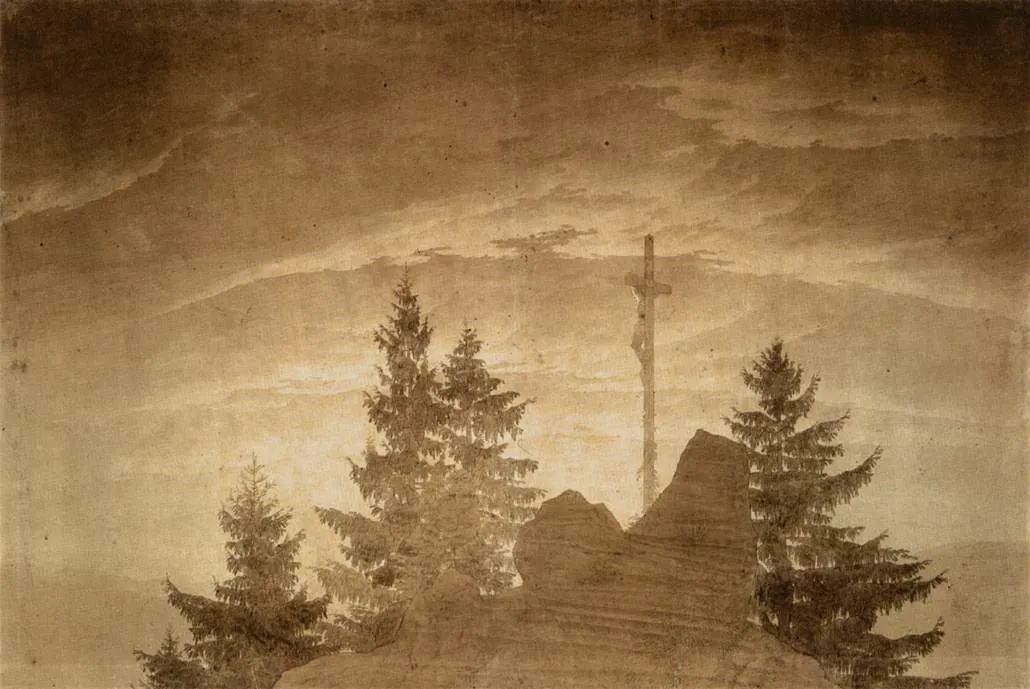
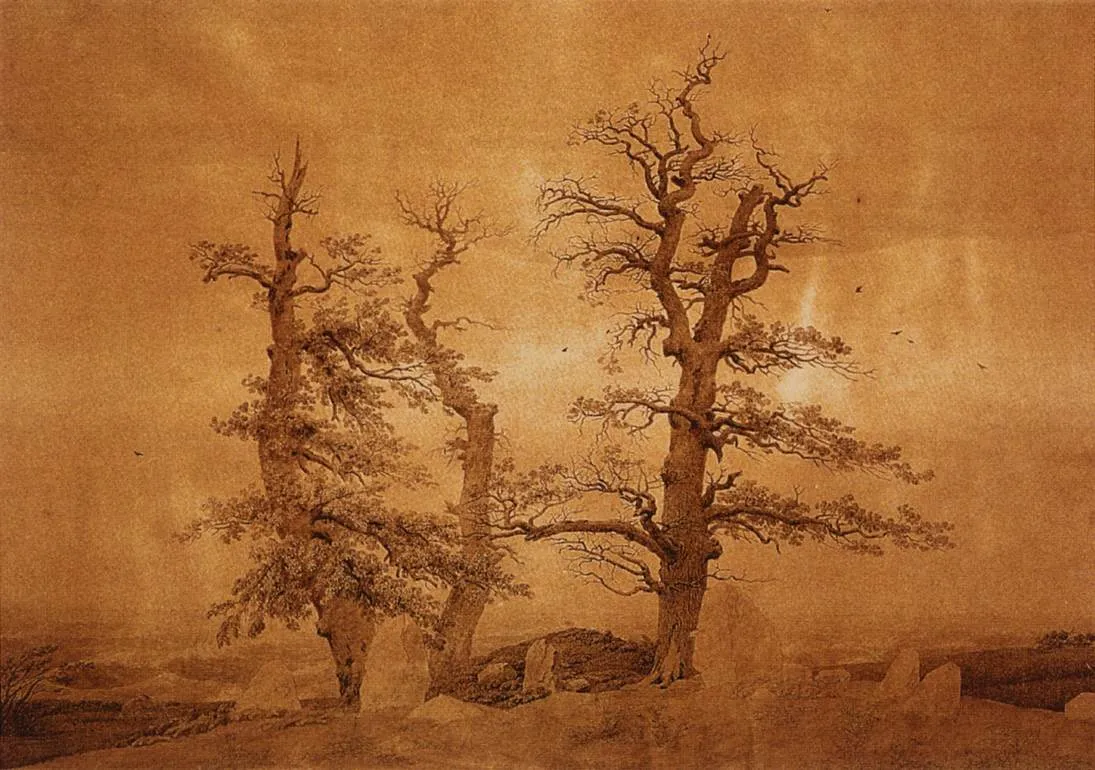
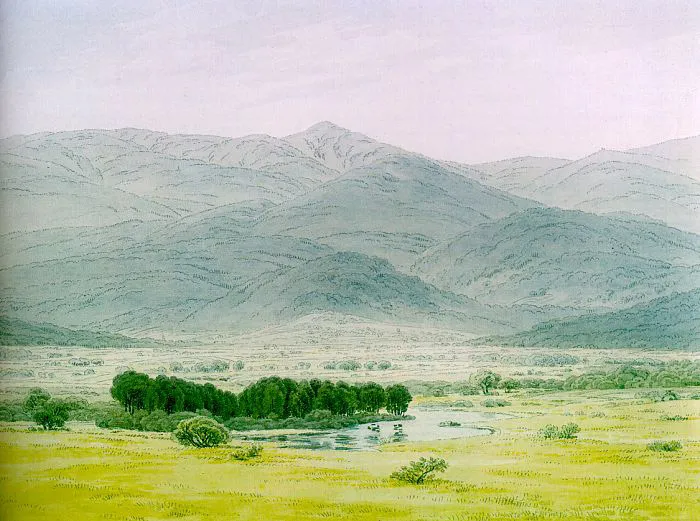
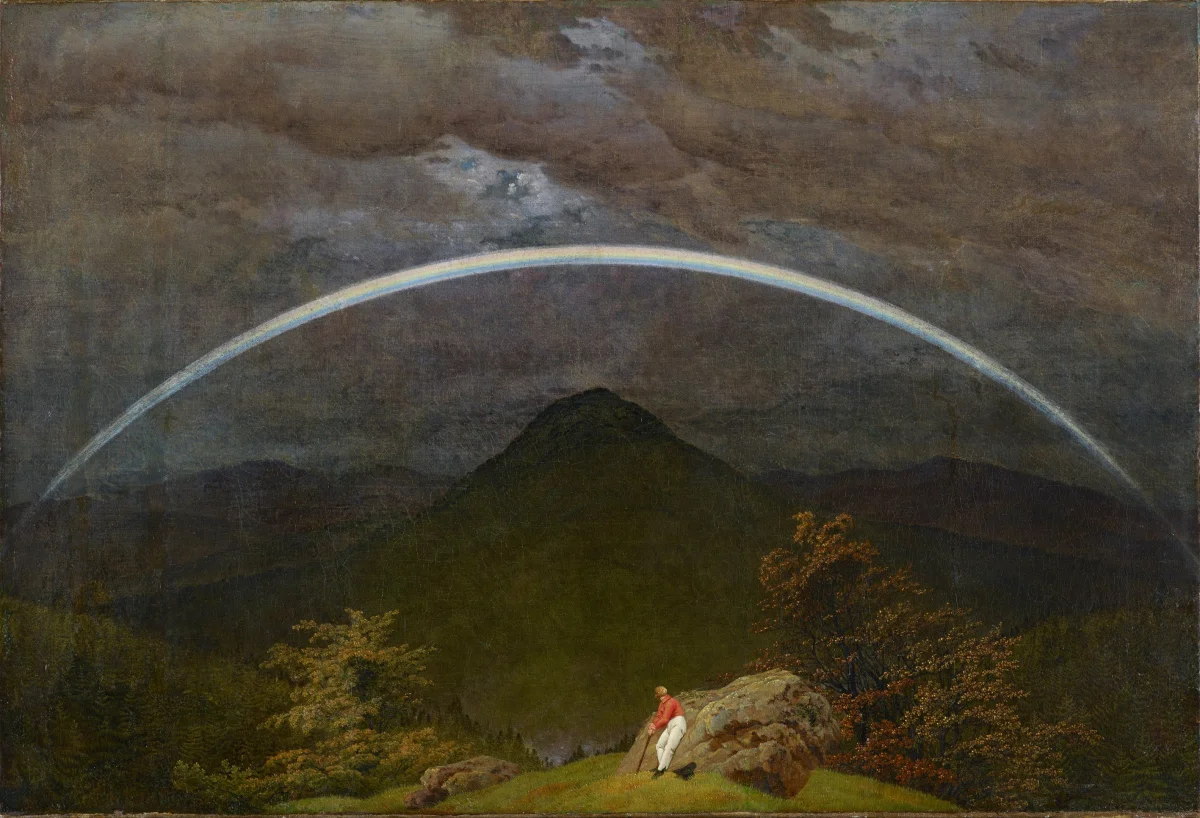
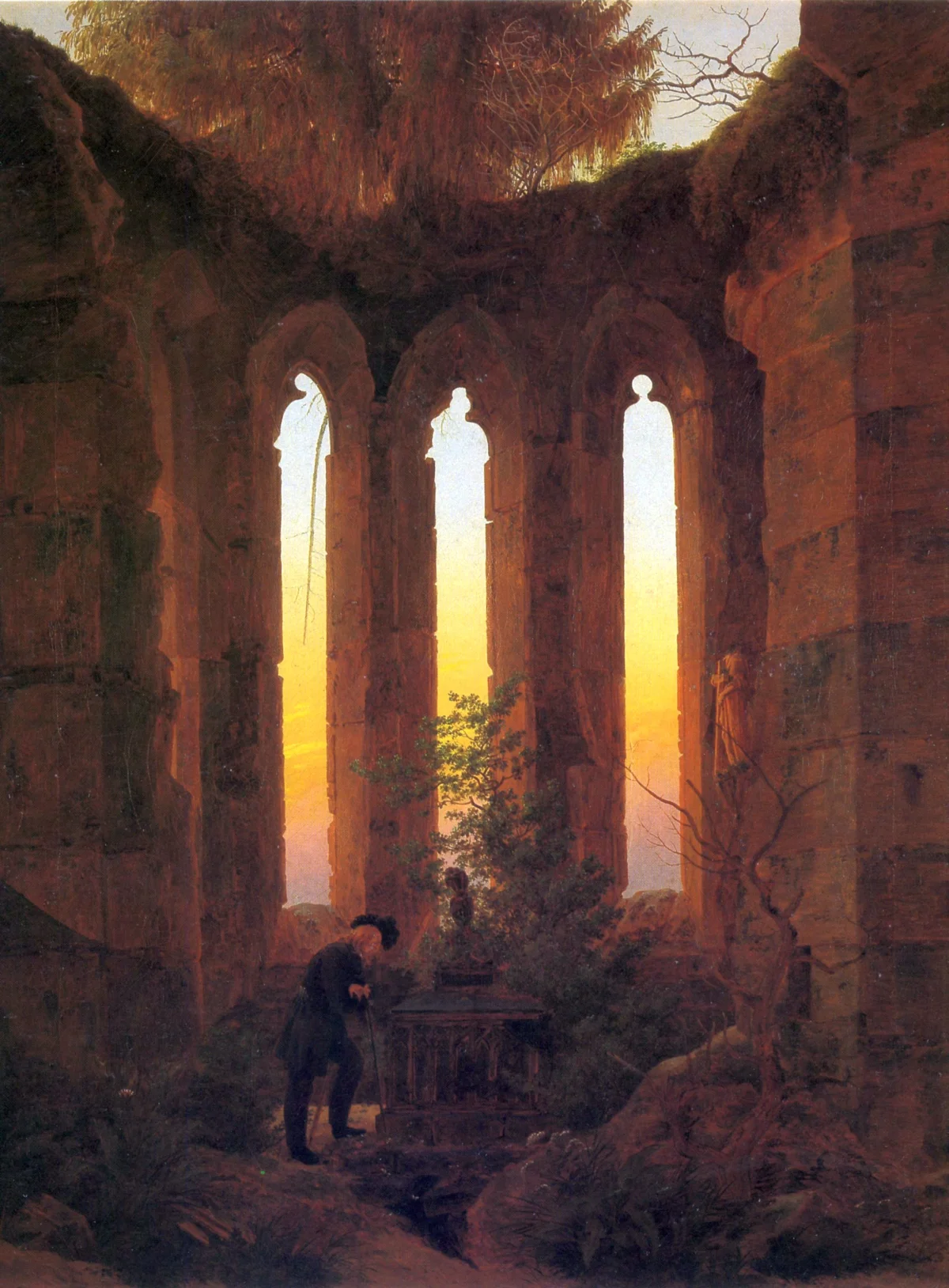
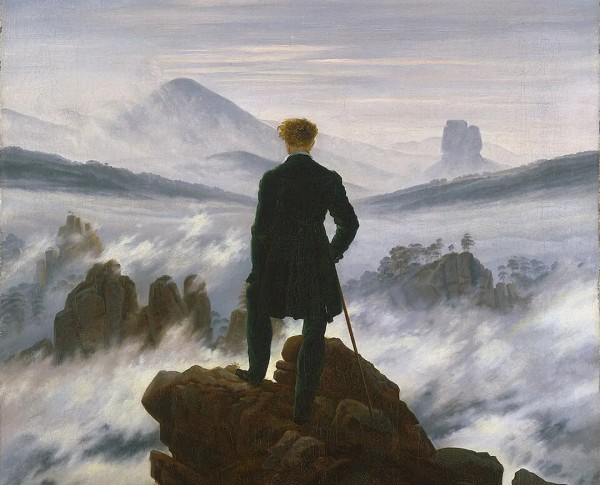
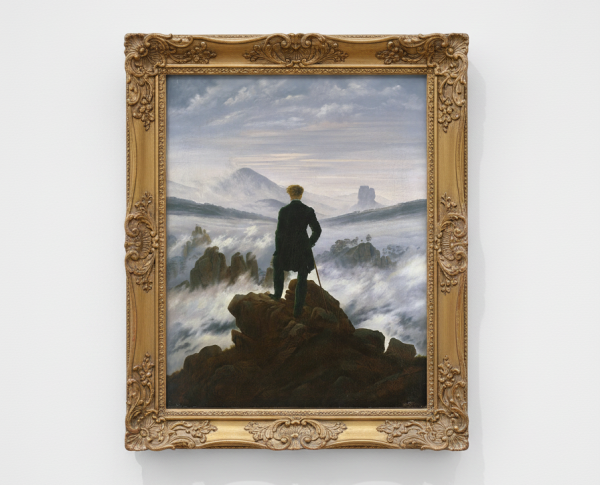
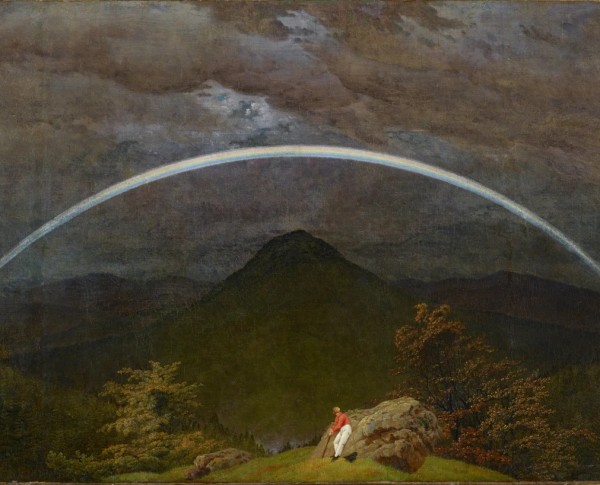
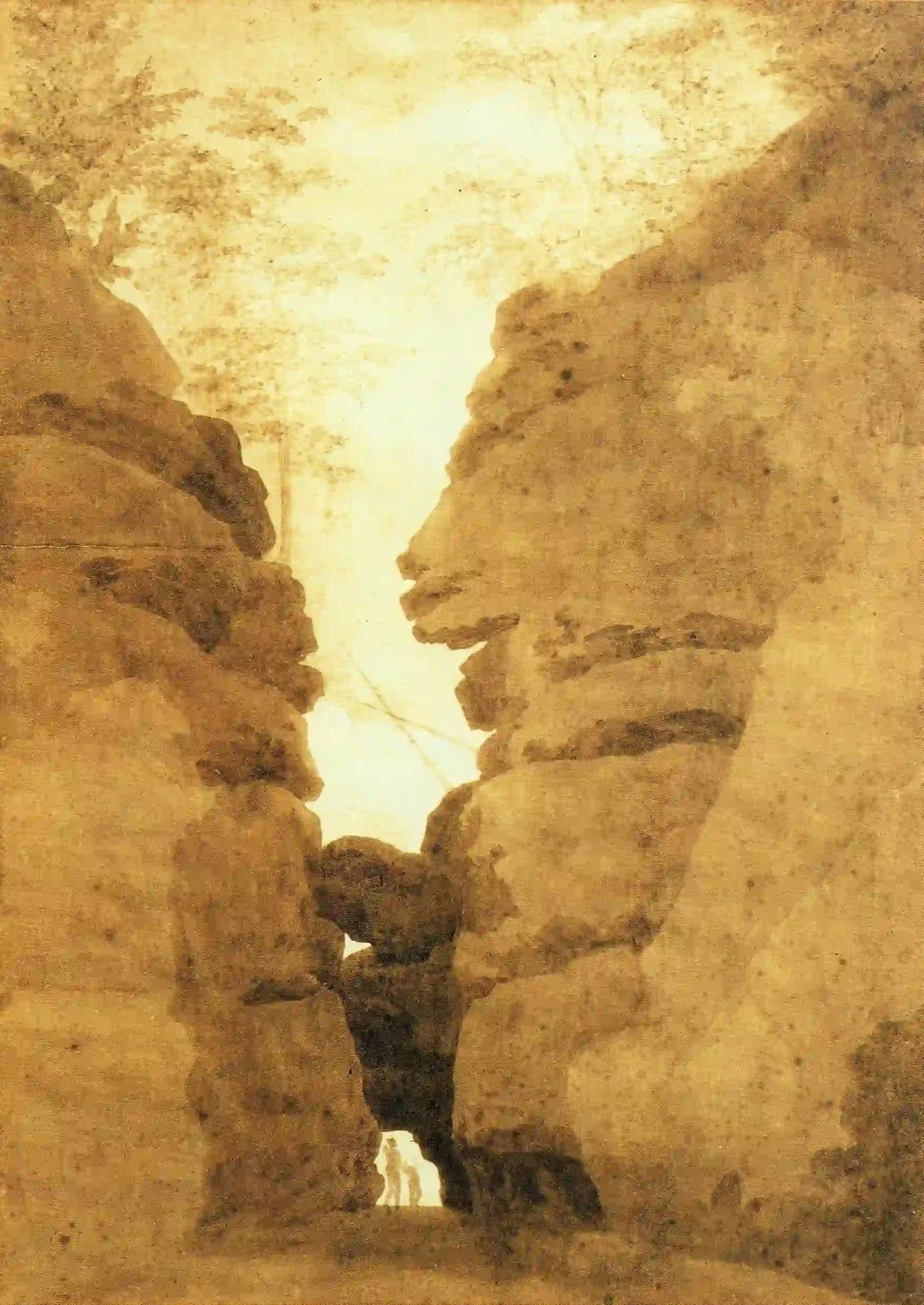
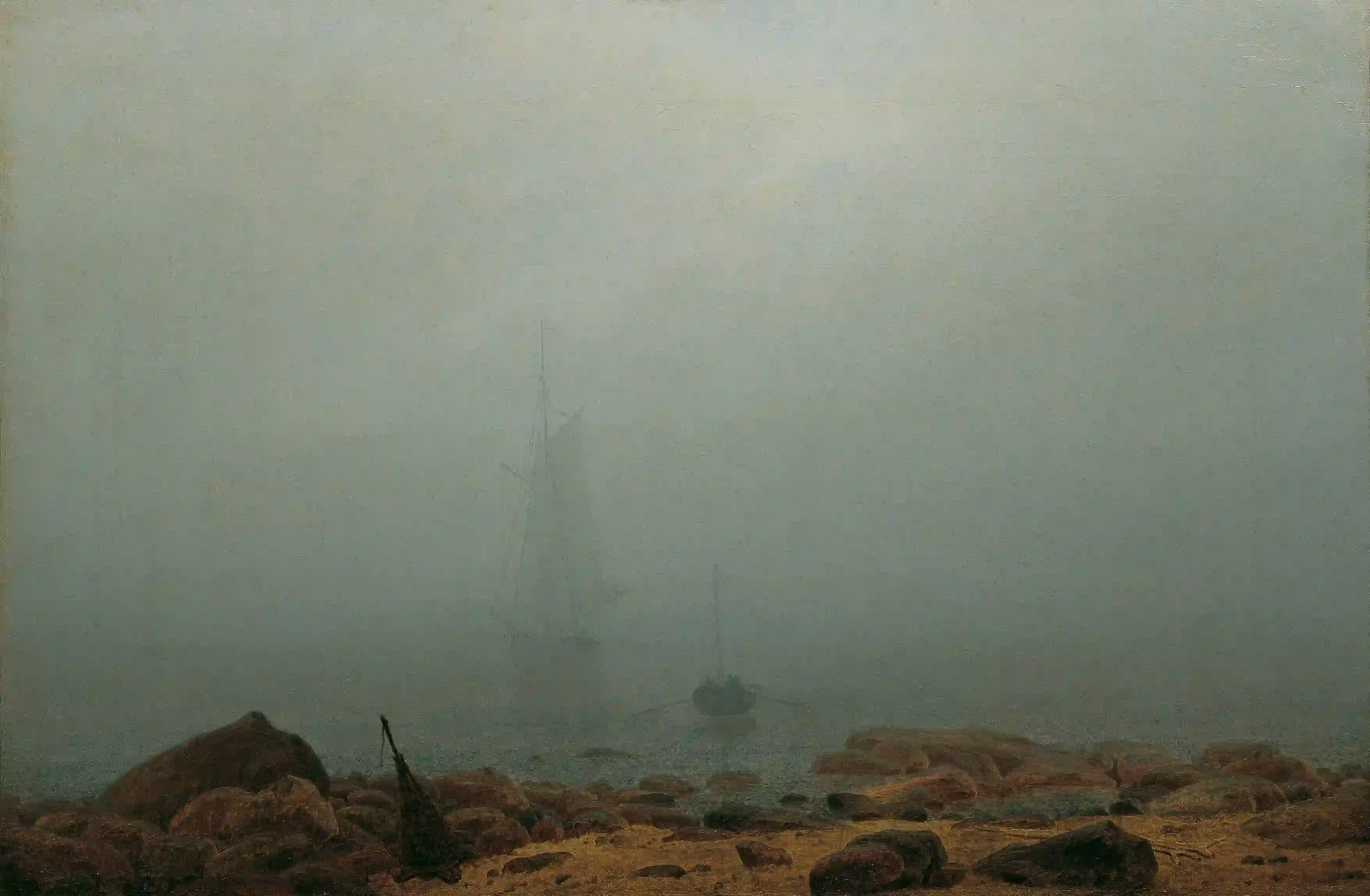
Caspar David Friedrich’s "Rock arch in the Uttewalder Grund" displays exquisite technique and attention to detail, hallmarks of an oil on canvas masterpiece. The artist’s mastery is evident in the play of light and shadow, capturing the mystical atmosphere of the landscape. This work, much like "Self-portrait as a young man" or "Landscape in the Riesengebirge," showcases Friedrich’s unique ability to evoke emotion through nature, making each oil on canvas a prized addition to any collection.
With "Rock arch in the Uttewalder Grund," Friedrich invites viewers to explore the symbolic depth found in Romanticism. The painting’s mysterious archway and lush scenery evoke themes of solitude and transcendence, similar to his other works such as "Wolves in the Forest in Front of a Cave" and "Hutten Grave." This hand-painted oil painting is more than a landscape; it is a narrative woven with emotion and symbolism, appealing to those seeking meaning in fine art painting for sale.
Owning "Rock arch in the Uttewalder Grund" means possessing a piece of Romanticism’s finest. Caspar David Friedrich’s evocative style ensures this oil on canvas stands out among fine art painting for sale. Collectors often pair it with related works like "Ship in the Arctic Ocean" or "Landscape in the Riesengebirge" to showcase the breadth of Friedrich’s genius. Each painting offers a glimpse into the soul of an era, making it a true collector’s treasure.
When Art Meets History
"Rock arch in the Uttewalder Grund" by Caspar David Friedrich stands as a testament to the Romanticism movement’s fascination with nature and the sublime. Created in oil on canvas, this masterpiece echoes the spirit of its era, much like related paintings such as "Portrait of a Gentleman" and "The Hay Wain, 1821." Friedrich’s hand-painted oil painting captures a historic landscape, inviting viewers to reflect on humanity’s relationship with the natural world during the 19th century.
Techniques That Speak
Caspar David Friedrich’s meticulous brushwork in "Rock arch in the Uttewalder Grund" showcases the artist’s mastery of oil on canvas. Soft, atmospheric lighting and detailed textures create a sense of depth and tranquility, hallmarks of the Romanticism movement. This hand-painted oil painting demonstrates Friedrich’s unique approach, setting it alongside works like "Portrait of Antoniet Vitali Sola" and "Aristides," which also employ subtle gradations of color and careful composition to evoke emotion.
Emotions on Display
The evocative landscape of "Rock arch in the Uttewalder Grund" stirs profound emotions, a defining trait of Romanticism. Caspar David Friedrich’s fine art painting for sale draws viewers into a world of solitude and reflection, much like "Dawn at the Alamo." The interplay of shadow and light in this oil on canvas piece encourages contemplation, making it a sought-after artwork for those who appreciate the emotional depth and spiritual resonance of Romantic landscapes.
Coveted by Collectors
Collectors are continually drawn to Caspar David Friedrich’s "Rock arch in the Uttewalder Grund" for its enduring beauty and historical significance within the Romanticism movement. As a hand-painted oil painting, it stands proudly alongside related masterpieces such as "The Hay Wain, 1821" and "Portrait of a Gentleman." This fine art painting for sale not only enriches any collection but also offers a timeless glimpse into the artistic and emotional landscape of the 19th century.
Related Romanticism Hand-Painted Oil Paintings by Other Artists
Other Famous Romanticism Artists:
Frequently Asked Questions About Rock arch in the Uttewalder Grund
What is the historical significance of "Rock arch in the Uttewalder Grund"?
This painting, created by Caspar David Friedrich in 1824, is significant as it exemplifies the Romantic movement in art, emphasizing nature's grandeur and the sublime experience it evokes in the viewer.
What artistic techniques did Caspar David Friedrich employ in this painting?
Friedrich utilized a combination of chiaroscuro and detailed brushwork to create a sense of depth and realism, while also employing a muted color palette to enhance the mood of solitude and contemplation.
What themes are explored in "Rock arch in the Uttewalder Grund"?
The painting explores themes of nature, solitude, and the sublime, reflecting the Romantic ideal of finding beauty and meaning in the natural world, as well as the emotional responses it can invoke.
How does "Rock arch in the Uttewalder Grund" reflect the Romantic movement?
This artwork reflects the Romantic movement through its emphasis on individual experience, emotional depth, and the awe-inspiring power of nature, which are central tenets of Romantic philosophy.
What symbolism can be found in the composition of the painting?
The rock arch symbolizes the passage of time and the permanence of nature, while the figures in the foreground represent humanity's smallness in the face of the vast, unyielding landscape, highlighting the tension between man and nature.
What is the significance of the location depicted in the painting?
The Uttewalder Grund, located in Saxony, Germany, is significant as it represents Friedrich's deep connection to the German landscape, which he often portrayed as a source of inspiration and reflection on human existence.
How does the use of light contribute to the painting's mood?
The strategic use of light in "Rock arch in the Uttewalder Grund" creates a dramatic contrast between the illuminated rock formation and the shadowy surroundings, enhancing the sense of mystery and introspection.
What role do the figures play in the painting?
The figures in the painting serve as a point of reference for the viewer, emphasizing the scale of the natural landscape and inviting contemplation on humanity's relationship with nature.
How does this painting compare to other works by Caspar David Friedrich?
What impact did "Rock arch in the Uttewalder Grund" have on later artists?
This painting influenced later artists by reinforcing the Romantic ideals of nature and emotion, inspiring movements such as Symbolism and Impressionism, which further explored the relationship between landscape and human experience.























_GFM_Painting_(1).webp)


 100% Hand-Painted: Finished in 3-6 Weeks

.png)















_(1).webp)