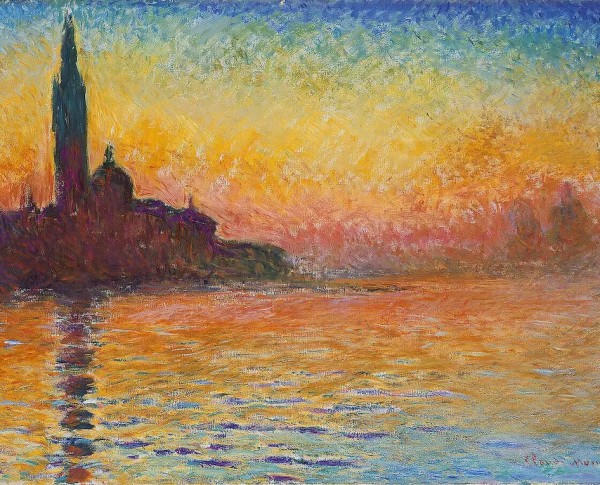
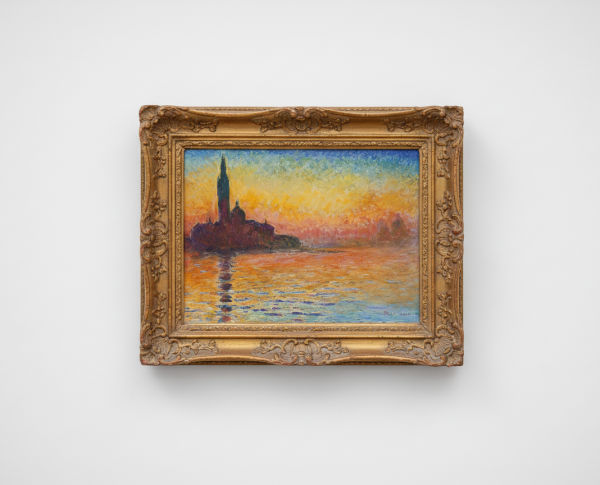
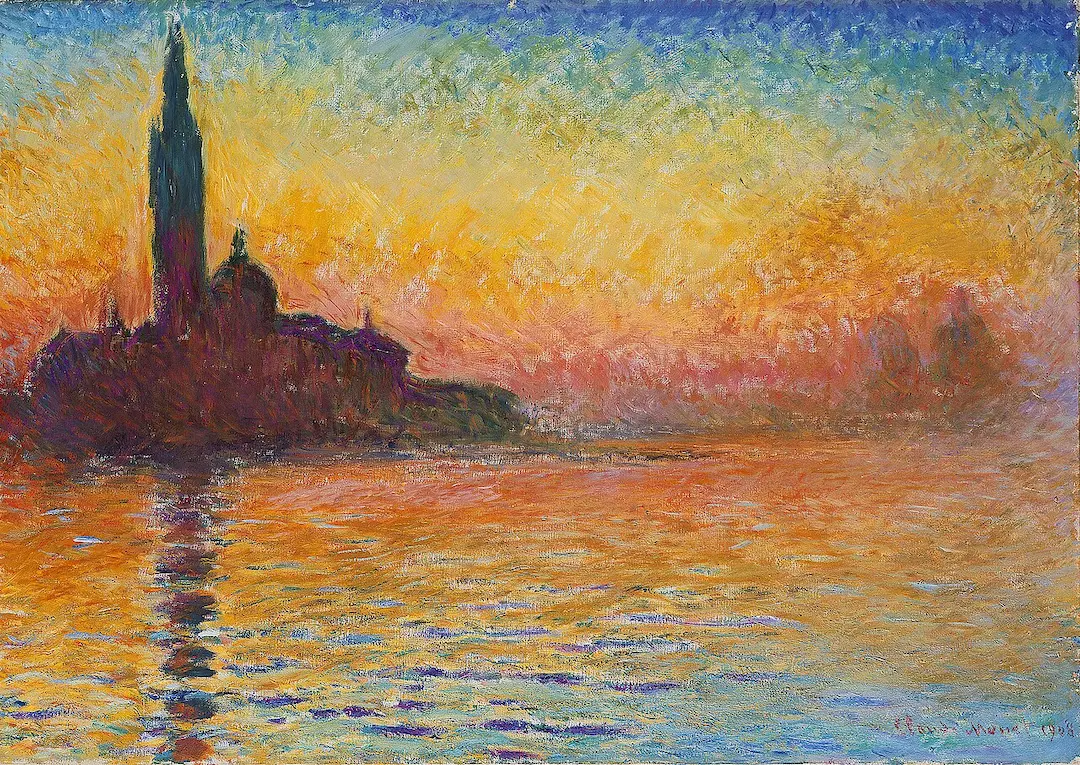
Monet’s mastery is evident in every brushstroke of this remarkable oil on canvas. The atmospheric depiction of San Giorgio Maggiore at dusk demonstrates his innovative approach to capturing fleeting moments and reflections. The soft blending of hues and dynamic composition make this piece a prime example of Impressionist technique. For those who appreciate Monet’s artistry, related paintings like "Les Tilleuls à Poissy" and "The Cliffs at Étretat" are also highly recommended.
"San Giorgio Maggiore At Dusk" is more than just a scenic view; it’s a poetic reflection of Monet’s deep connection to nature and his explorations of light. This fine art painting for sale invites viewers to contemplate the interplay of architecture and water, symbolizing the harmony between human achievement and the natural world. Other narrative-rich works from Monet, such as "Women in the Garden" and "The Railway Bridge at Argenteuil," offer similar symbolic depth.
For art collectors, owning "San Giorgio Maggiore At Dusk" by Claude Monet represents an opportunity to possess a masterpiece from the Impressionism era. This hand-painted oil painting is a prized addition to any collection, embodying the innovation and beauty that define Monet’s legacy. Explore related products like "Wild Poppies, Near Argenteuil" and "Les Tilleuls à Poissy" to further enhance your fine art collection with distinguished Impressionist works.
When Art Meets History
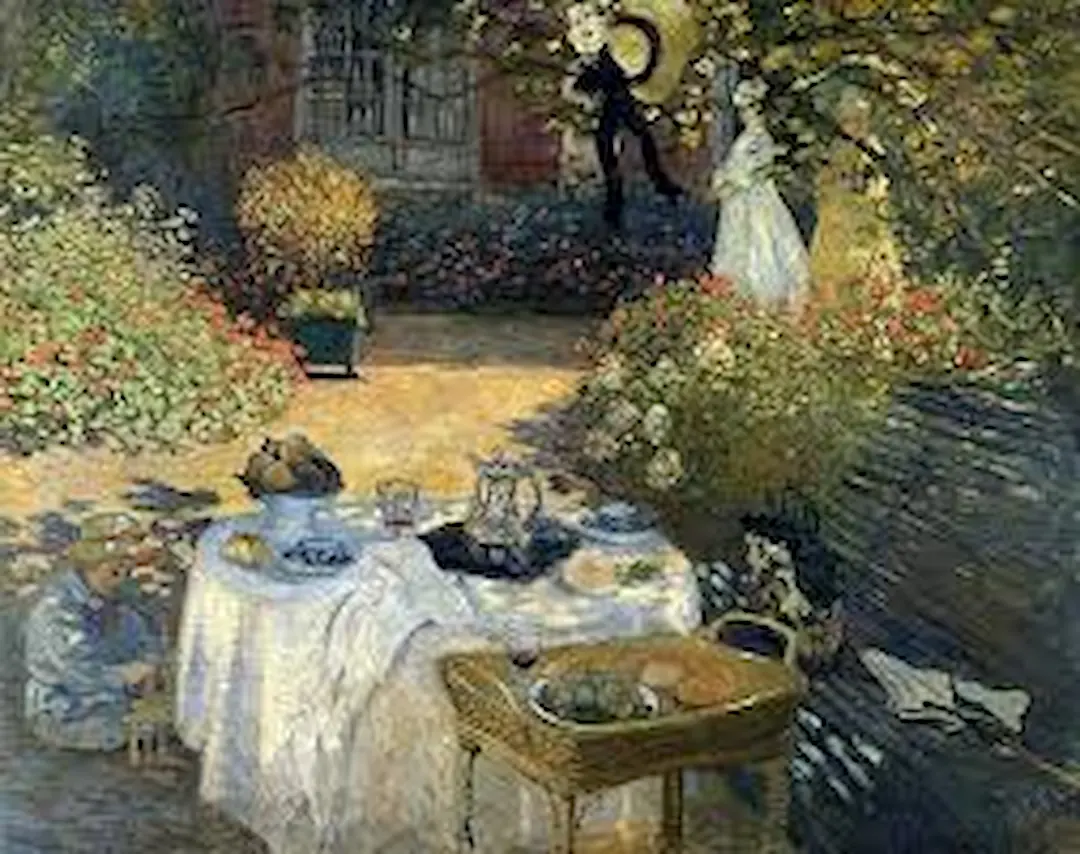
"San Giorgio Maggiore At Dusk" by Claude Monet stands as a luminous testament to the Impressionism movement. Painted during Monet’s stay in Venice, this hand-painted oil painting captures the ethereal beauty of the city at twilight. Monet’s fascination with light and atmosphere is evident, much like in his other works such as "Woman wiping her left foot" and "Luncheon Of The Boating Party." The painting immortalizes a historical moment, blending art with the timeless charm of Venice.
Techniques That Speak
Monet’s mastery of oil on canvas shines through in "San Giorgio Maggiore At Dusk." Utilizing rapid brushstrokes and a vibrant color palette, he conveys the fleeting effects of dusk over the Venetian lagoon. This technique, characteristic of Impressionism, creates a sense of movement and immediacy. Similar approaches can be seen in related paintings like "A Girl with a Watering Can" and "Le champ de courses. Jockeys amateurs près d'une voiture," where the artist’s skill with oil on canvas is equally celebrated.
Emotions on Display
In this fine art painting for sale, Monet evokes a deep sense of tranquility and wonder. The interplay of light and shadow across the water invites viewers to experience Venice’s serene evening ambiance. This emotional resonance is a hallmark of Impressionism, as seen in works like "Dancers In Pink." Monet’s ability to capture fleeting emotions and atmospheric conditions makes "San Giorgio Maggiore At Dusk" a truly moving piece among his celebrated oeuvre.
Coveted by Collectors
"San Giorgio Maggiore At Dusk" remains highly sought after by collectors worldwide, thanks to its status as a quintessential Impressionist masterpiece. As a hand-painted oil painting by Claude Monet, it represents the pinnacle of fine art collecting. Art enthusiasts often pursue related paintings such as "Luncheon Of The Boating Party" and "Dancers In Pink," drawn to Monet’s unique vision. This painting’s enduring appeal underscores its value and significance in the art market.
Related Impressionism Hand-Painted Oil Paintings by Other Artists
Other Famous Impressionism Artists:
Frequently Asked Questions About San Giorgio Maggiore At Dusk
What is the historical significance of "San Giorgio Maggiore At Dusk"?
"San Giorgio Maggiore At Dusk" is significant as it reflects Claude Monet's exploration of light and atmosphere, key themes in Impressionism, during his time in Venice in 1908.
What artistic techniques did Monet use in this painting?
Monet employed loose brushwork and a vibrant color palette to capture the fleeting effects of light at dusk, emphasizing the interplay between water and sky.
How does this painting exemplify Impressionism?
This painting exemplifies Impressionism through its focus on capturing a moment in time, the use of natural light, and the depiction of everyday scenes, all hallmarks of the movement.
What symbolism can be found in "San Giorgio Maggiore At Dusk"?
The painting symbolizes tranquility and the passage of time, with the serene water and soft colors evoking a sense of peace as day transitions to night.
What inspired Monet to paint "San Giorgio Maggiore At Dusk"?
Monet was inspired by the unique light and atmosphere of Venice, particularly at dusk, which allowed him to experiment with color and form in a new way.
In what ways does this painting reflect Monet's later style?
This painting reflects Monet's later style through its emphasis on color and light over detail, showcasing his evolution as an artist focused on impressionistic effects.
What are the main colors used in "San Giorgio Maggiore At Dusk" and their significance?
The main colors include soft blues, purples, and warm oranges, which together create a harmonious atmosphere and convey the beauty of the Venetian landscape at dusk.
How does "San Giorgio Maggiore At Dusk" compare to other works by Monet?
Compared to other works by Monet, this painting showcases a more subdued palette and a focus on atmospheric effects, differing from his earlier, more vibrant compositions.
What role does water play in "San Giorgio Maggiore At Dusk"?
Water plays a crucial role in the painting, reflecting the sky and creating a sense of depth, while also serving as a medium through which light is expressed.
What impact did "San Giorgio Maggiore At Dusk" have on later artists?
The painting had a significant impact on later artists by influencing the use of color and light in landscape painting, paving the way for future movements such as Post-Impressionism.






















_GFM_Painting_(1).webp)


 100% Hand-Painted: Finished in 3-6 Weeks

.png)















_(1).webp)